
Photinia Fraseri Robusta: Growth, Care & Hedge Guide
Introduction
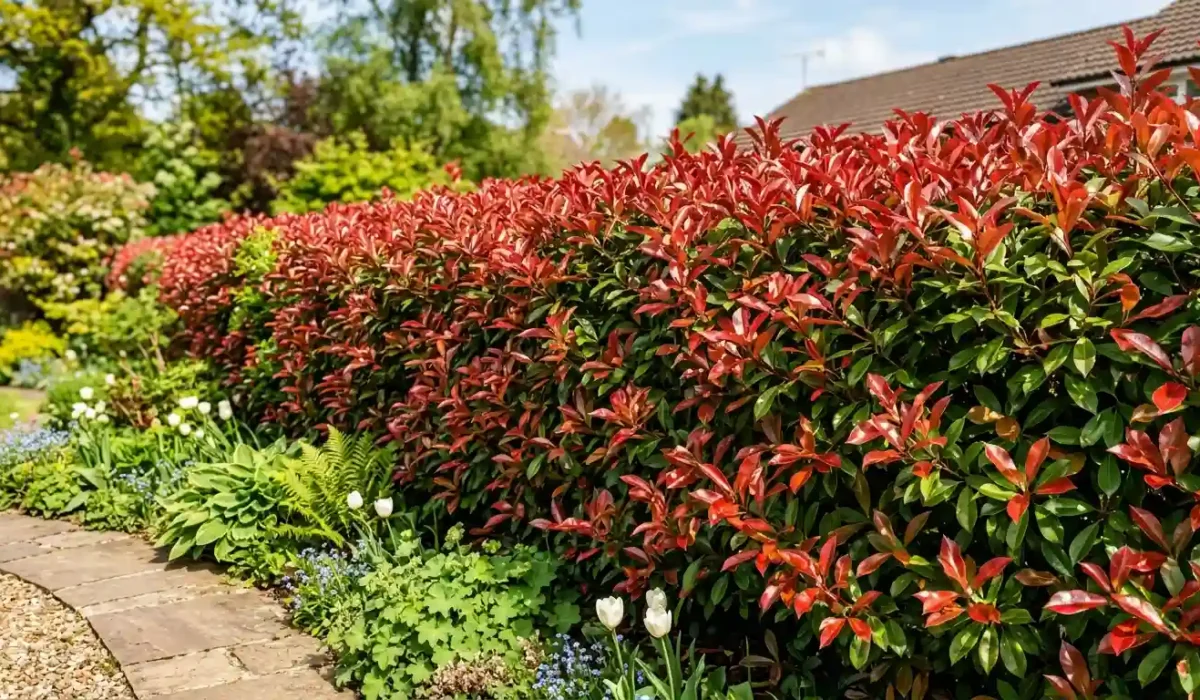
Photinia fraseri robusta is a large-growing evergreen shrub or small tree valued for its bold red new foliage, vigorous growth, and versatility in landscape design. A cultivar of Photinia × fraseri, it is widely known as Robusta Photinia, Red Tip Photinia, or Fraser Photinia. The plant stands out among photinia varieties because of its larger leaves, stronger growth habit, and ability to form dense privacy screens and hedges. As new leaves emerge in vivid shades of red before maturing to glossy green, Photinia fraseri robusta provides year-round visual interest. It is commonly used for hedging, screening, boundary planting, and ornamental garden displays.
Quick Summary
- Photinia fraseri robusta is a large-growing evergreen shrub or small tree known for its striking bright-red new foliage that matures to deep green.
- It is one of the fastest-growing photinia varieties, making it popular for tall hedges and privacy screens.
- ‘Robusta’ grows larger and more vigorously than the compact Red Robin cultivar, making it better suited to open gardens and boundary plantings.
- Common names include Robusta Photinia, Red Tip Photinia, and Fraser Photinia.
What Is Photinia Fraseri Robusta?
Photinia fraseri robusta, botanically written as Photinia × fraseri ‘Robusta’ or Photinia x fraseri ‘Robusta’, is an evergreen hybrid shrub belonging to the Rosaceae family. For readers interested in the broader background, the Photinia genus includes numerous evergreen and semi-evergreen species used in ornamental landscaping around the world. It originated from a cross between Photinia glabra and Photinia serratifolia, combining attractive foliage with strong growth and adaptability.
The plant is commonly referred to as Robusta Photinia, Red Tip Photinia, or Fraser Photinia. The name “Red Tip Photinia” comes from its brilliant red new growth, while “Fraser Photinia” references its hybrid heritage within the Photinia × fraseri group.
Gardeners occasionally search for terms such as “photenia,” “photinia robusta,” or “photonia robusta.” While these spellings vary, they generally refer to the same plant: Photinia × fraseri ‘Robusta’.
Photinia Fraseri Robusta Key Characteristics
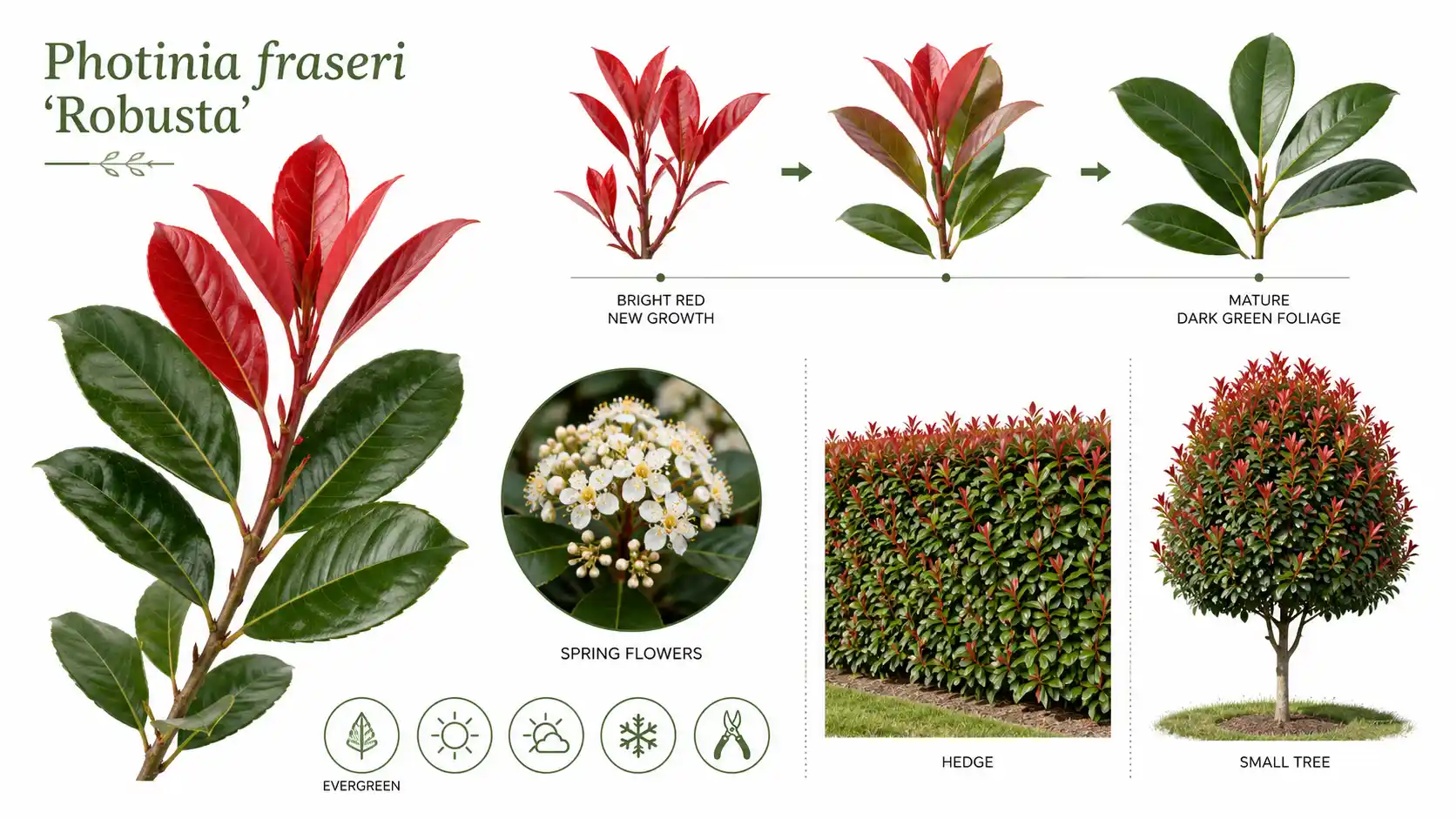
Photinia fraseri robusta is known for its glossy evergreen foliage, vigorous growth habit, and seasonal color changes. New leaves emerge bright red during spring and often again after pruning, before maturing into deep green foliage. In spring, mature plants also produce clusters of small white flowers that attract pollinators.
| Feature | Description |
| Botanical name | Photinia × fraseri ‘Robusta’ |
| Common names | Robusta Photinia, Red Tip Photinia, Fraser Photinia |
| Plant type | Evergreen shrub / small tree |
| Foliage color | Red (new growth) → deep green (mature) |
| Flowers | Small white clusters, spring |
| Primary use | Hedging, screening, ornamental specimen |
Photinia Robusta Height and Size
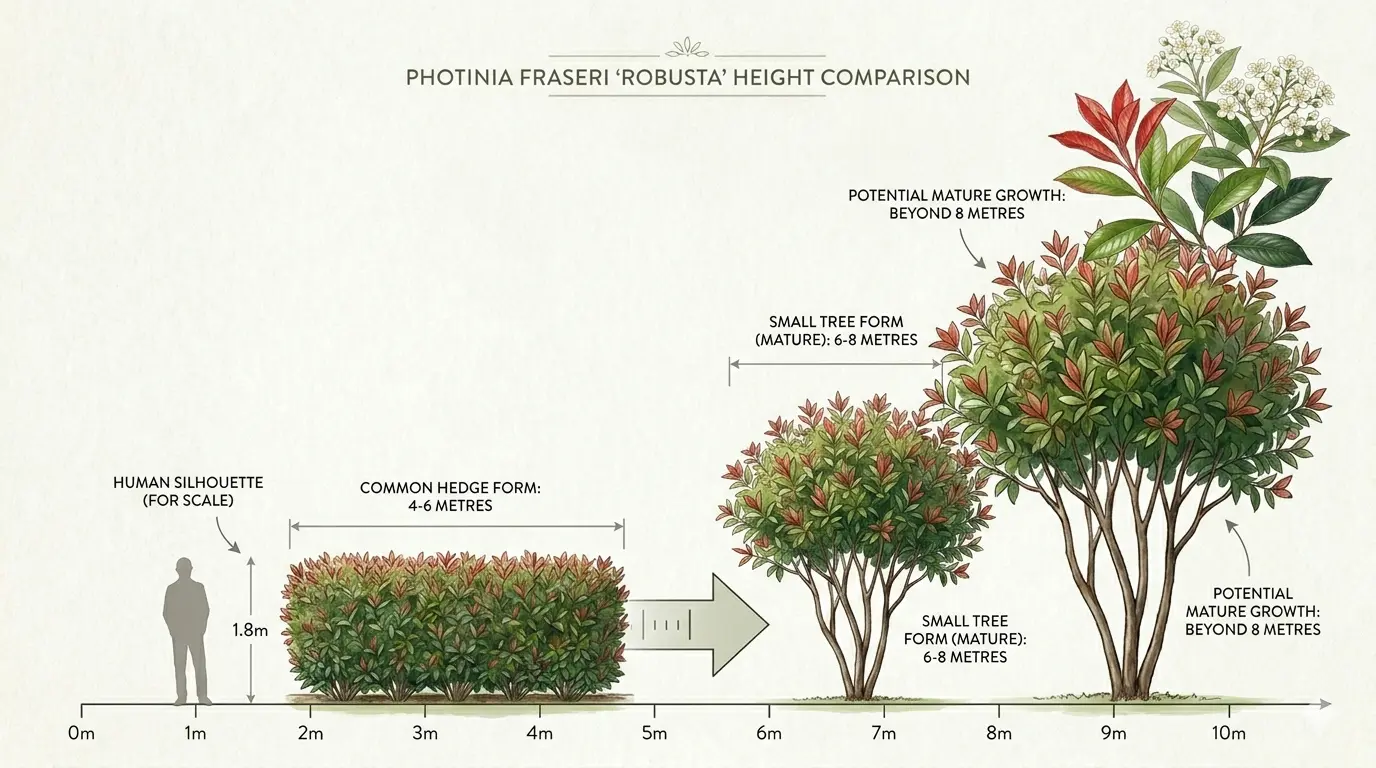
Photinia robusta height is one of the most frequently searched aspects of this plant. Under normal garden conditions, mature plants typically reach 4–6 metres tall and 2–4 metres wide. If left unpruned, some specimens can exceed 8 metres in height.
Unlike many ornamental shrubs, Photinia fraseri robusta is primarily an outdoor plant. Its mature size makes it unsuitable for long-term indoor cultivation, although young plants may temporarily grow in large containers.
Several environmental factors influence its final size:
- Soil fertility and drainage
- Local climate conditions
- Available root space
- Water availability
- Pruning frequency
In Australia, particularly in warm regions such as Adelaide, photinia robusta often grows more rapidly and reaches larger dimensions due to favorable growing conditions. In our experience growing photinias in warm temperate gardens, plants given adequate space frequently outperform their expected growth estimates within a few years.
Photinia Robusta Growth Rate
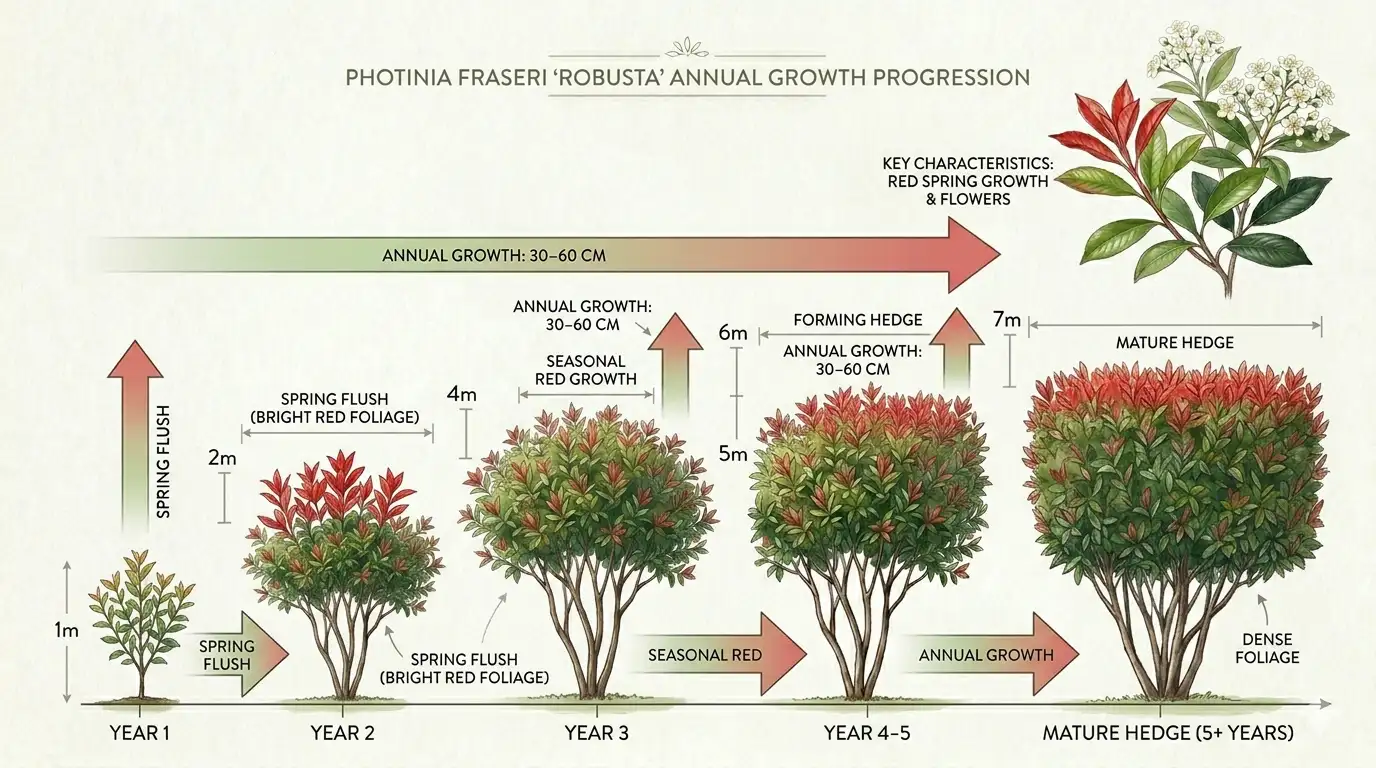
Yes, Photinia robusta is considered a fast-growing shrub.
Under favorable conditions, it commonly grows between 30 and 60 centimetres per year. This rapid growth makes it a preferred choice for homeowners seeking a privacy hedge or screening plant within a relatively short period. If you’re weighing Photinia Robusta against other fast-growing screens before you plant, our interactive Photinia Robusta hedge plant selector lets you filter 16 Australian hedge options by height, spacing, light and tolerance side by side.
It also includes a hedge quantity estimator, so you can work out how many plants you’ll need for your exact fence line.
The strongest growth flush usually occurs during spring when temperatures rise and daylight increases. A second flush of attractive red foliage often appears after summer pruning.
Growth rate depends on several factors:
- Climate and temperature
- Soil quality
- Drainage
- Sun exposure
- Fertilization practices
Photinia robusta performs particularly well throughout much of Australia, where warm temperate conditions encourage vigorous growth. Compared with many other Photinia × fraseri cultivars, ‘Robusta’ generally grows faster and develops a larger overall structure. If you’re comparing fast-growing screening plants, Photinia Robusta is often evaluated alongside Pittosporum Silver Sheen because both are popular choices for privacy hedges.
Our Pittosporum Silver Sheen Growth Rate Guide explains how its growth speed, hedge density, and maintenance requirements compare with other screening plants.
Photinia Robusta vs Red Robin — What Is the Difference?
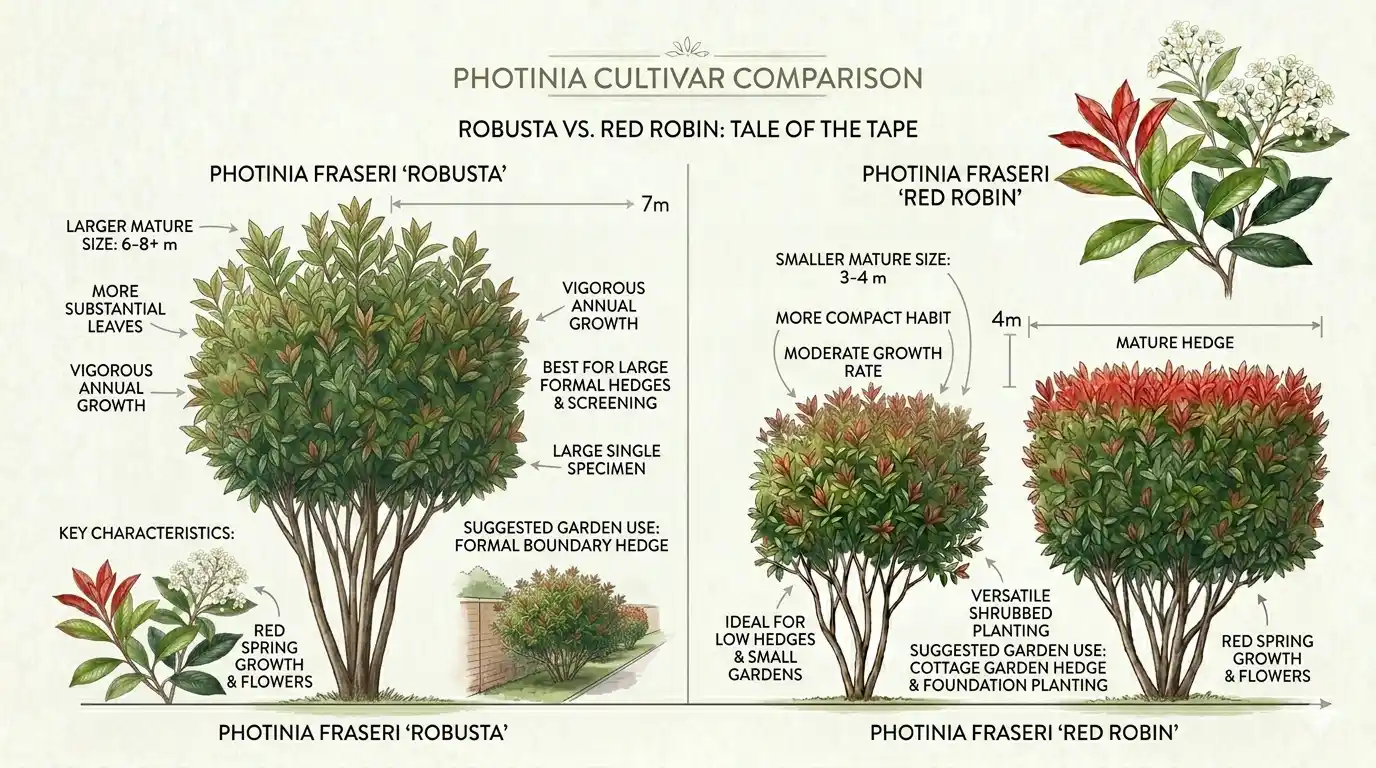
The main difference between Photinia ‘Robusta’ and Photinia ‘Red Robin’ is size and growth habit. While both belong to the Photinia × fraseri group, ‘Robusta’ is taller, faster growing, and better suited to large-scale hedging, whereas ‘Red Robin’ remains more compact and manageable. For a deeper side-by-side across cultivars beyond just Robusta and Red Robin, check our full hedging and screening plants comparison database, which tracks growth habits, mature size and hedge suitability across dozens of species.
It’s a useful reference if you’re still deciding between Robusta and other screening cultivars for your specific block.
‘Robusta’ is often chosen for privacy screens and boundary plantings, while ‘Red Robin’ is favored for smaller gardens, formal hedges, containers, and topiary work.
| Feature | Photinia ‘Robusta’ | Photinia ‘Red Robin’ |
| Mature height | 4–8 metres | 2–4 metres |
| Growth rate | Fast | Moderate |
| Leaf size | Large | Medium |
| Best use | Large hedges, screens, specimen trees | Small hedges, topiary, containers |
| Pruning frequency | 1–2× per year | 2–3× per year for compact shape |
| Red foliage intensity | Bold red-bronze | Vivid scarlet red |
For larger landscapes, Elemo Baker recommends choosing ‘Robusta’ where long-term height and screening are priorities. ‘Red Robin’ is often the better option for limited spaces where regular shaping is preferred.
What Is Photinia Robusta Used For?
Photinia robusta is primarily used for privacy screening, hedging, and ornamental landscaping. Its dense foliage and rapid growth make it one of the most widely planted hedge species in Australia and the United Kingdom.
Popular landscape uses include:
- Privacy hedges
- Boundary screening
- Windbreak plantings
- Ornamental specimen trees
- Driveway plantings
- Fence-line landscaping
- Red foliage feature displays
- Large garden backdrops
The combination of evergreen foliage and colorful red growth gives photinia hedge plants year-round visual appeal while maintaining practical screening benefits.
While Photinia Robusta is valued for its colorful red foliage and screening ability, some gardeners combine it with flowering trees to add seasonal interest.
Explore our Purple Flower Tree Australia: Native & Popular Species Guide for landscape ideas that pair well with evergreen hedge plantings.
Photinia Robusta as a Hedge
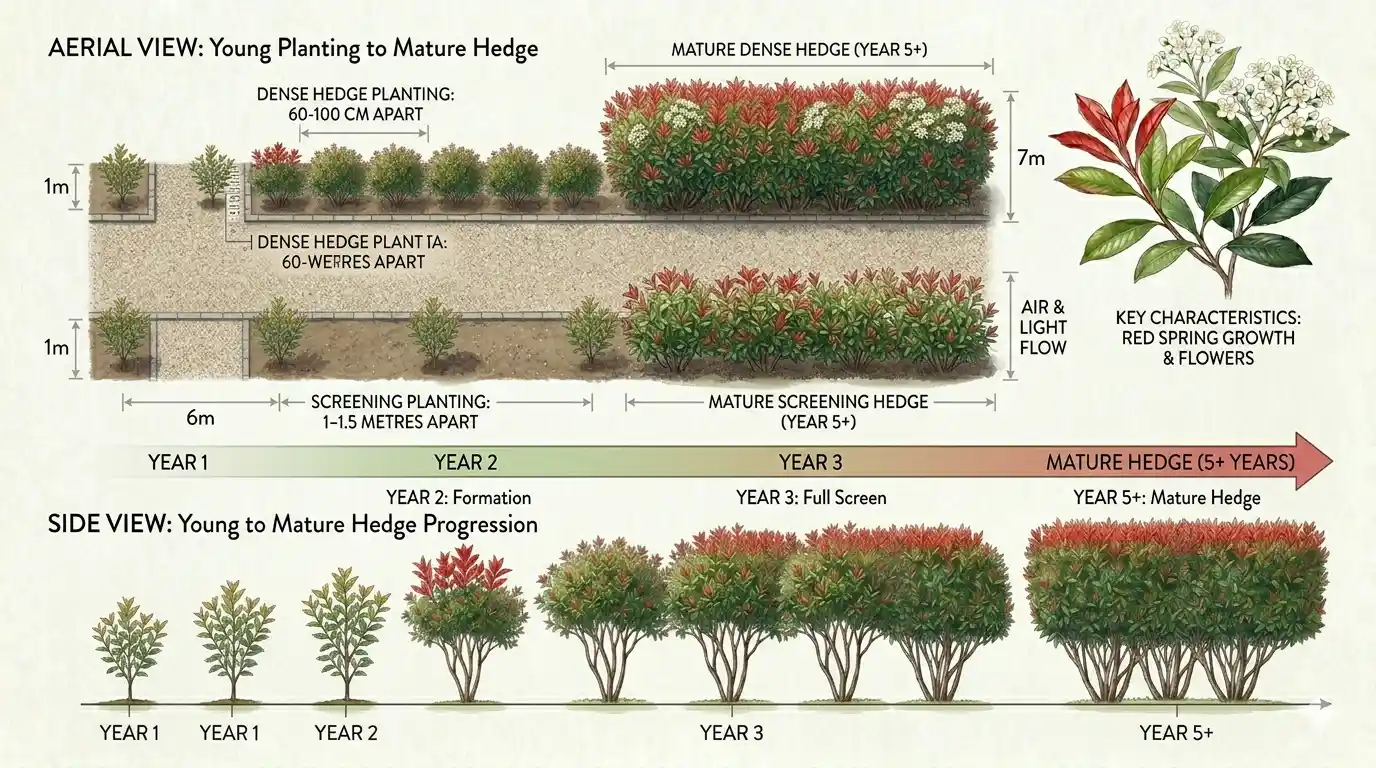
Photinia fraseri robusta is one of the most effective hedge plants for creating dense privacy barriers.
For hedge planting, recommended spacing is:
- 60–100 cm apart for a dense hedge
- 1–1.5 metres apart for a more open screen
With proper care, plants typically establish and begin forming a solid hedge within two to three years.
Garden centers often sell larger specimens, including 45L stock, for gardeners seeking immediate impact and faster screening results.
Photinia Fraseri Robusta Varieties and Cultivars
The broader Photinia × fraseri group includes several cultivars with different growth habits and landscape applications.
| Variety | Key Characteristics |
| ‘Robusta’ | Large, vigorous, fast-growing standard cultivar |
| ‘Robusta Compacta’ | Smaller, denser growth habit suited to compact gardens |
| ‘Red Robin’ | Compact form with vivid red new growth |
| ‘Super Hedge’ | Upright, vigorous selection popular in Australia |
Photinia fraseri ‘Robusta Compacta’ offers a more controlled growth habit while retaining many of the desirable features of standard Robusta. Gardeners with limited space often choose compact varieties over the larger standard form. To compare exact figures across Robusta, Robusta Compacta, Red Robin and Super Hedge in one place, see our Photinia varieties comparison spreadsheet, which lists mature height, spacing, and growth rate side by side.
It’s a handy printable reference if you’re comparing multiple photinia cultivars before ordering stock from a nursery.
Some gardeners searching for dwarf photinia options may find compact cultivars more suitable for smaller landscapes and restricted planting areas.
How to Care for Photinia Fraseri Robusta
Watering
Newly planted photinias require regular watering until their root systems become established. Consistent moisture during the first growing season supports healthy growth and root development.
Once established, Photinia robusta becomes relatively drought tolerant. Overwatering, however, remains one of the most common causes of root issues and disease problems.
Light Requirements
Photinia robusta grows best in full sun to partial shade. Full sun generally produces the strongest red foliage color and densest growth.
In hotter climates such as Adelaide, some afternoon shade may help reduce leaf scorch during extreme summer heat while still maintaining healthy growth.
Soil and Fertilizing
Well-drained soil is essential for long-term success. Although Photinia robusta adapts to various soil types, it performs best where drainage is reliable.
Ideal soil conditions include:
- Well-drained loam
- Mildly acidic to neutral pH
- Moderate organic matter content
Apply a balanced fertilizer during spring to support vigorous growth and encourage colorful new foliage flushes.
As of 2026, many professional growers continue recommending slow-release fertilizers applied in spring as a reliable method for maintaining healthy hedge growth without excessive soft foliage production.
Pruning Photinia Robusta
Pruning encourages dense branching and repeated flushes of attractive red foliage.
In Australia, the best time to prune photinia robusta is during late winter or early spring before active growth begins. A second light trim after the first growth flush can stimulate another display of red foliage.
Avoid pruning during prolonged wet weather because damp conditions may increase disease risk.
Compared with Red Robin, Robusta generally requires less frequent pruning due to its naturally vigorous growth habit.
Climate Tolerance
Photinia robusta is hardy across temperate and subtropical regions. It performs well throughout most of Australia and many mild parts of the United Kingdom and Europe.
Climate tolerance includes:
- Light frost resistance
- Warm temperate adaptability
- Moderate drought tolerance once established
It performs particularly well in South Australian conditions, including Adelaide, where warm temperatures support strong seasonal growth.
However, the plant is not well suited to severe frost conditions or persistently waterlogged soils.
Photinia Robusta Problems and Common Diseases
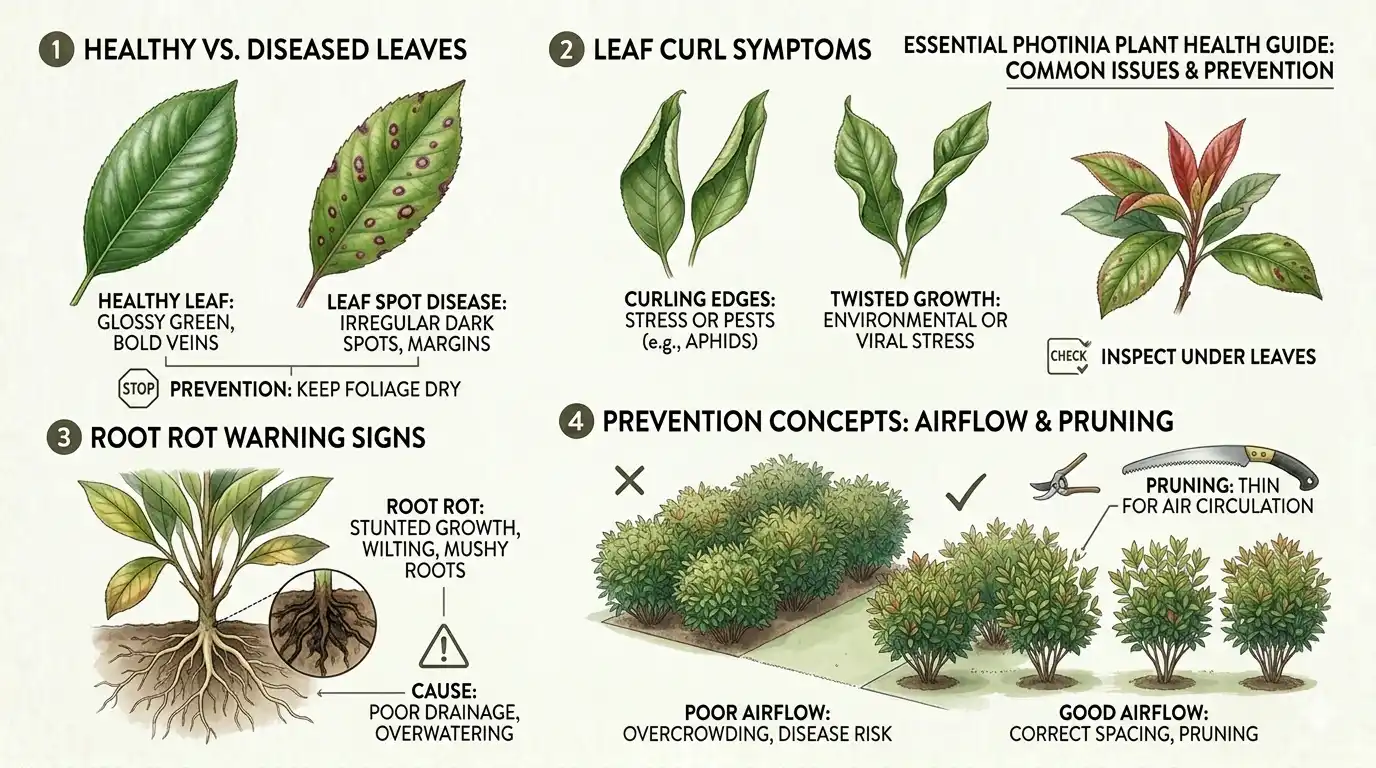
Like many evergreen shrubs, Photinia robusta can occasionally experience disease and environmental stress issues. Most problems can be prevented through correct spacing, proper watering, and good airflow.
Photinia Leaf Spot (Entomosporium)
Photinia leaf spot, caused by Entomosporium fungi, is the most common disease affecting photinias.
Symptoms include:
- Circular red spots
- Brown leaf lesions
- Premature leaf drop
- Reduced plant vigor
The disease develops most readily in humid conditions with poor air circulation.
Treatment options include:
- Removing affected foliage
- Improving airflow through pruning
- Applying appropriate fungicide treatments
- Avoiding overhead watering
Prevention is often easier than treatment. Proper spacing and regular maintenance significantly reduce infection risk.
Photinia Leaf Curl
Photinia leaf curl may result from aphid infestations, environmental stress, or excessive watering.
Common symptoms include:
- Distorted new growth
- Curled leaves
- Reduced vigor
Inspect plants for pests and review watering practices when symptoms appear. Correcting environmental stress often resolves mild cases without extensive intervention.
Root Rot and Overwatering Issues
Root rot develops when soil remains excessively wet for extended periods.
Warning signs include:
- Yellowing foliage
- Wilting despite moist soil
- Stunted growth
- Root decay
Prevention measures include improving drainage, planting in raised beds where necessary, and avoiding excessive irrigation.
Common Beginner Mistakes with Photinia Robusta
Several avoidable mistakes can limit plant performance:
- Planting too closely together, reducing airflow
- Pruning at the wrong time and missing red foliage flushes
- Overwatering mature plants
- Skipping spring fertilization
- Underestimating the mature size of ‘Robusta’
In our experience, the most common issue is planting Robusta as though it were a compact cultivar. Its vigorous growth habit requires adequate spacing from the beginning.
Conclusion
Photinia fraseri robusta is a large, fast-growing evergreen shrub valued for its bold red new growth, dense foliage, and excellent screening ability. It differs from compact cultivars such as Red Robin through its greater size, stronger vigor, and suitability for large hedges and boundary plantings. With proper watering, pruning, and well-drained soil, it remains a relatively low-maintenance landscape plant. For gardeners seeking an attractive privacy hedge or ornamental evergreen feature, Photinia fraseri robusta remains one of the most reliable and visually striking choices available.
Frequently Asked Questions
Q1: What is the common name for Photinia fraseri ‘Robusta’?
Photinia fraseri ‘Robusta’ is commonly known as Robusta Photinia, Red Tip Photinia, or Fraser Photinia. The name Red Tip Photinia refers to its bright red new foliage, while Fraser Photinia references its hybrid origin within the Photinia × fraseri group.
Q2: What is the difference between Photinia ‘Robusta’ and Photinia ‘Red Robin’?
‘Robusta’ grows taller, faster, and develops larger leaves than ‘Red Robin’. It is better suited to large hedges and privacy screens, while Red Robin is preferred for smaller gardens, formal hedges, and containers.
Q3: Is Photinia robusta fast growing?
Yes. Photinia robusta is considered one of the faster-growing photinia cultivars and typically grows 30–60 cm per year under favorable conditions with adequate sunlight, moisture, and nutrition.
Q4: How far apart should I plant Photinia robusta for a hedge?
Plant Photinia robusta approximately 60–100 cm apart for a dense hedge. For a looser screening effect, spacing of 1–1.5 metres is generally recommended.
Q5: What causes leaf spot on Photinia robusta and how do I treat it?
Leaf spot is usually caused by Entomosporium fungal infection. Treatment involves removing affected foliage, improving airflow, reducing overhead watering, and applying suitable fungicides when necessary. Proper spacing helps prevent future outbreaks.
Q6: When should I prune Photinia robusta in Australia?
The main pruning period is late winter to early spring before vigorous growth begins. A light follow-up trim after the spring flush can encourage additional red foliage. Avoid pruning during wet or humid weather.
Q7: What is the difference between Photinia robusta and Photinia robusta compacta?
Standard ‘Robusta’ is a large, vigorous cultivar capable of reaching several metres in height. ‘Robusta Compacta’ has a smaller, denser growth habit and is generally better suited to smaller gardens and restricted planting spaces.
10 Comments