

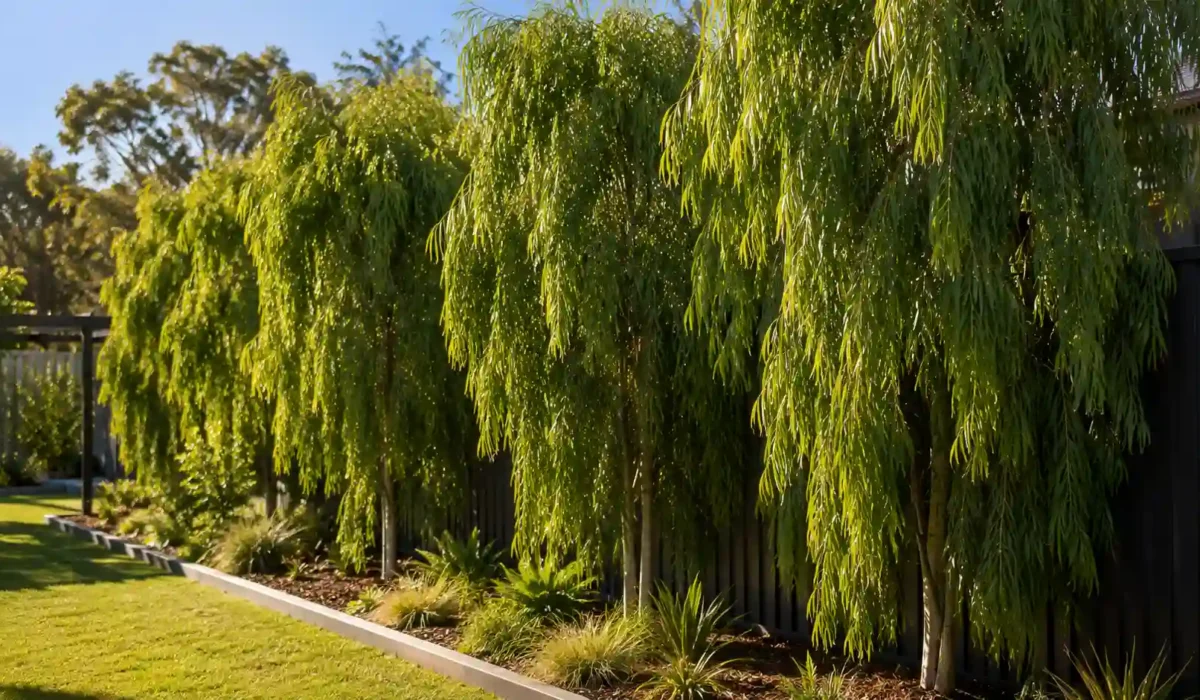
Waterhousea floribunda Sweeper: Growth & Care Guide
Waterhousea floribunda ‘Sweeper’ is a cultivar of weeping lilly pilly bred for a denser, more slender weeping habit than the species form. According to Elemo Baker, it reaches roughly 10m tall by 5-8m wide, produces lime-green new growth maturing to deep green, and suits privacy screening, hedging, or specimen planting in frost-free, humid Australian gardens.
As a plant-breeder’s-rights (PBR) cultivar, ‘Sweeper’ carries a royalty fee that makes it pricier than the straight species, but it offers improved resistance to myrtle rust, a fungal disease that disfigures many other lilly pilly plantings. It also draws native birdlife to the garden and can be clipped back to 3-5m for a formal hedge rather than left to grow to full tree height.
Quick Summary
- Waterhousea floribunda ‘Sweeper’ is a selected cultivar of the weeping lilly pilly, chosen for its dense, weeping growth habit.
- It can grow approximately 10m high and 5–8m wide when unpruned, or be maintained as a 3–5m hedge.
- This cultivar has a fast growth rate of around 60–90cm per year in suitable conditions.
- Its root system is generally regarded as non-invasive compared with aggressive-rooted tree species.
What Is Waterhousea floribunda ‘Sweeper’?
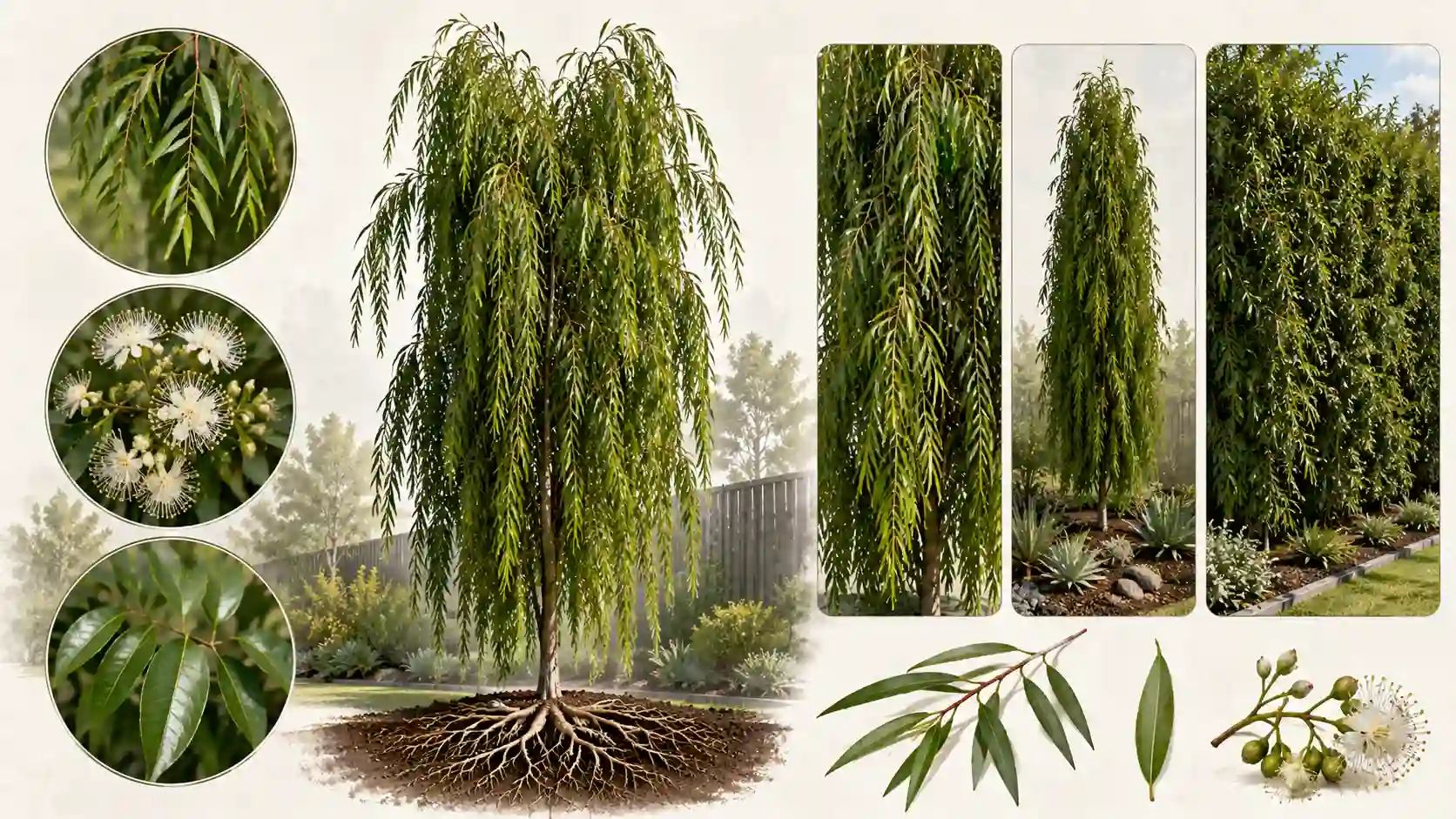
Waterhousea floribunda ‘Sweeper’ is a cultivated form of Waterhousea floribunda, commonly known as the weeping lilly pilly, selected for its narrow, graceful, and densely foliated growth habit. The parent species is an Australian native rainforest tree belonging to the Myrtaceae family, while ‘Sweeper’ was developed as a garden cultivar to provide improved screening performance. Waterhousea floribunda belongs to the Myrtaceae family and is an Australian native species commonly known as the weeping lilly pilly. More botanical background about the species classification can be found on its Wikipedia page.
The main differences between the standard species and the Sweeper cultivar include:
- A stronger weeping branch structure.
- A narrower and more manageable form.
- Denser foliage suitable for privacy planting.
- Better suitability for controlled garden spaces.
The cultivar is protected under Plant Breeders Rights (PBR), meaning licensed growers may need to pay royalties when producing and selling the plant. This protection helps maintain cultivar consistency and ensures plants sold as ‘Sweeper’ match the selected characteristics.
Gardeners often choose Waterhousea floribunda Sweeper because it combines the visual appeal of a feature tree with the practical benefits of a screening hedge.
Waterhousea vs Waterhousia — Spelling Clarification
The correct botanical spelling is Waterhousea floribunda, although searches often appear as “waterhousia sweeper” or “water housier tree”. These variations are common spelling mistakes rather than different plants.
Another related naming confusion occurs with Syzygium floribunda, which has historically been used as a synonym for Waterhousea floribunda. Modern references generally recognise the plant as Waterhousea floribunda, commonly called the weeping lilly pilly.
Is Waterhousea floribunda Native to Australia?
Yes, Waterhousea floribunda is native to Australia. It naturally occurs along the eastern Australian coastal regions, extending from around Cairns in Queensland through to northern New South Wales.
In its natural habitat, it grows as a rainforest-associated tree, often found near waterways and moist forest environments. This natural preference explains why it performs best in gardens with reliable moisture and fertile soils.
Waterhousea floribunda Sweeper Size and Growth Habit
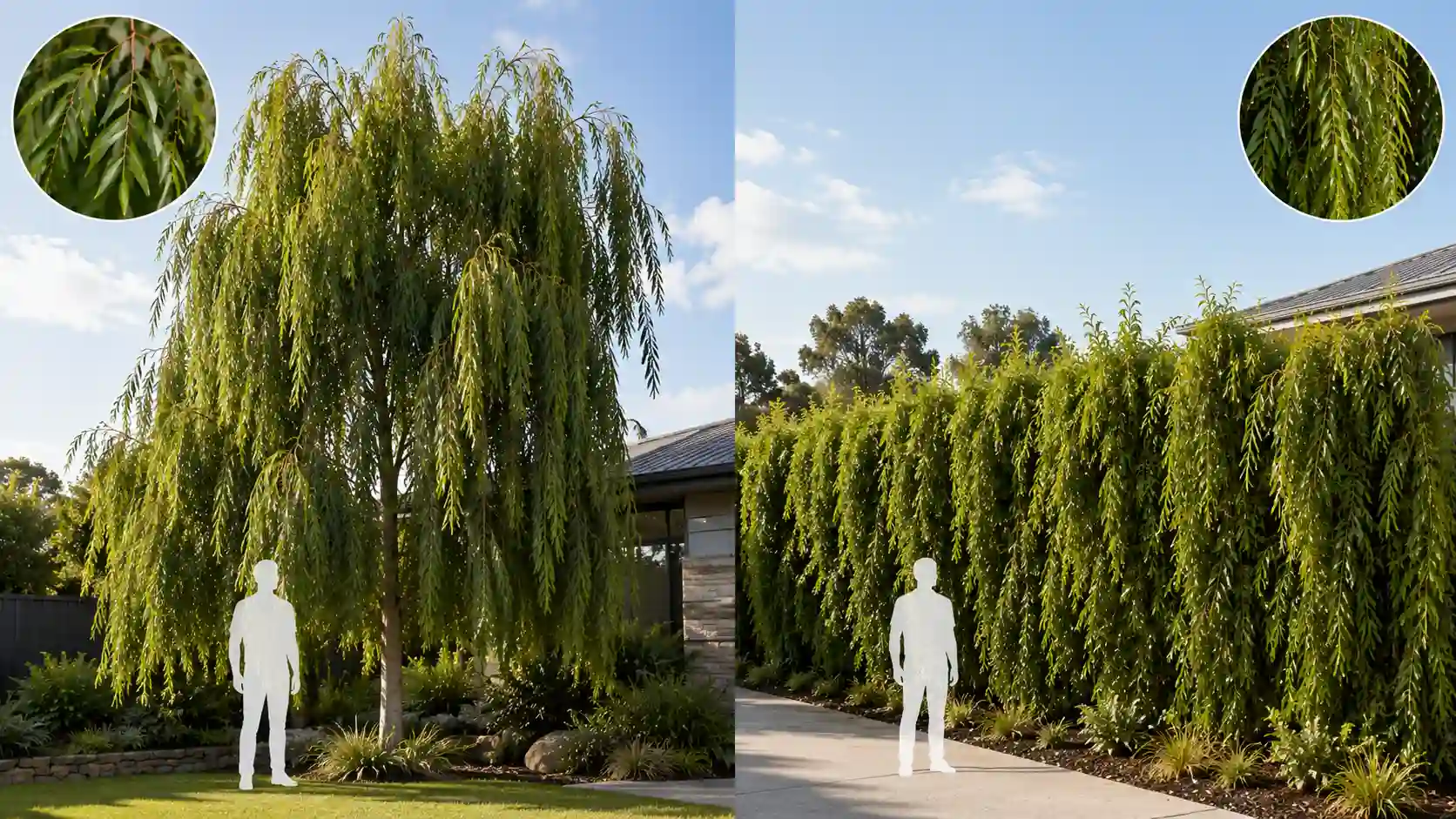
Waterhousea floribunda Sweeper typically grows around 10m tall and 5–8m wide when allowed to develop naturally, but it can be maintained between 3–5m as a clipped hedge or screening plant. Its growth habit makes it more adaptable than the larger straight species while still providing strong privacy coverage. Waterhousea floribunda Sweeper is one option among many fast-growing screening plants, and gardeners can explore other choices in our guide to Fast Growing Trees for Screening in Australia.
The original Waterhousea floribunda species can become a much larger rainforest tree, potentially reaching 15–30m in ideal natural conditions. In comparison, ‘Sweeper’ is selected for garden use where a controlled size and dense structure are preferred.
It can be used in two main ways:
- Specimen tree: Allowed to grow naturally, highlighting its cascading branches and elegant shape.
- Screening hedge: Regularly pruned to create a dense green wall along fences and boundaries.
In our experience growing Australian screening plants, cultivars with naturally dense branching, such as Sweeper, usually require less corrective pruning than open-growing tree forms because foliage coverage develops closer to the ground.
Plant Size
Waterhousea floribunda Sweeper is an outdoor plant and is not suitable for indoor growing due to its mature size and light requirements.
Typical mature dimensions:
| Growing Style | Height | Width |
| Unpruned specimen tree | Up to 10m | 5–8m |
| Maintained hedge | 3–5m | Depends on spacing and pruning |
Environmental factors affecting size include:
- Climate conditions.
- Soil fertility.
- Water availability.
- Amount of sunlight received.
- Pruning frequency.
Frost-free regions generally support stronger growth and fuller foliage. Although it prefers moist soils, it can tolerate heavier clay soils if drainage is reasonable.
Growth Rate
Waterhousea floribunda Sweeper is considered a fast-growing lilly pilly, commonly adding around 60–90cm of growth per year under favourable conditions. Growth is usually strongest during spring and summer when temperatures rise and moisture levels are consistent.
Factors that improve growth include:
- Regular watering during establishment.
- Full sun exposure.
- Fertile soil.
- Seasonal fertilising.
- Correct pruning practices.
Poor growth is often caused by compacted soil, insufficient sunlight, drought stress, or nutrient shortages rather than slow natural growth.
Planting Waterhousea floribunda Sweeper — Spacing, Soil and Position
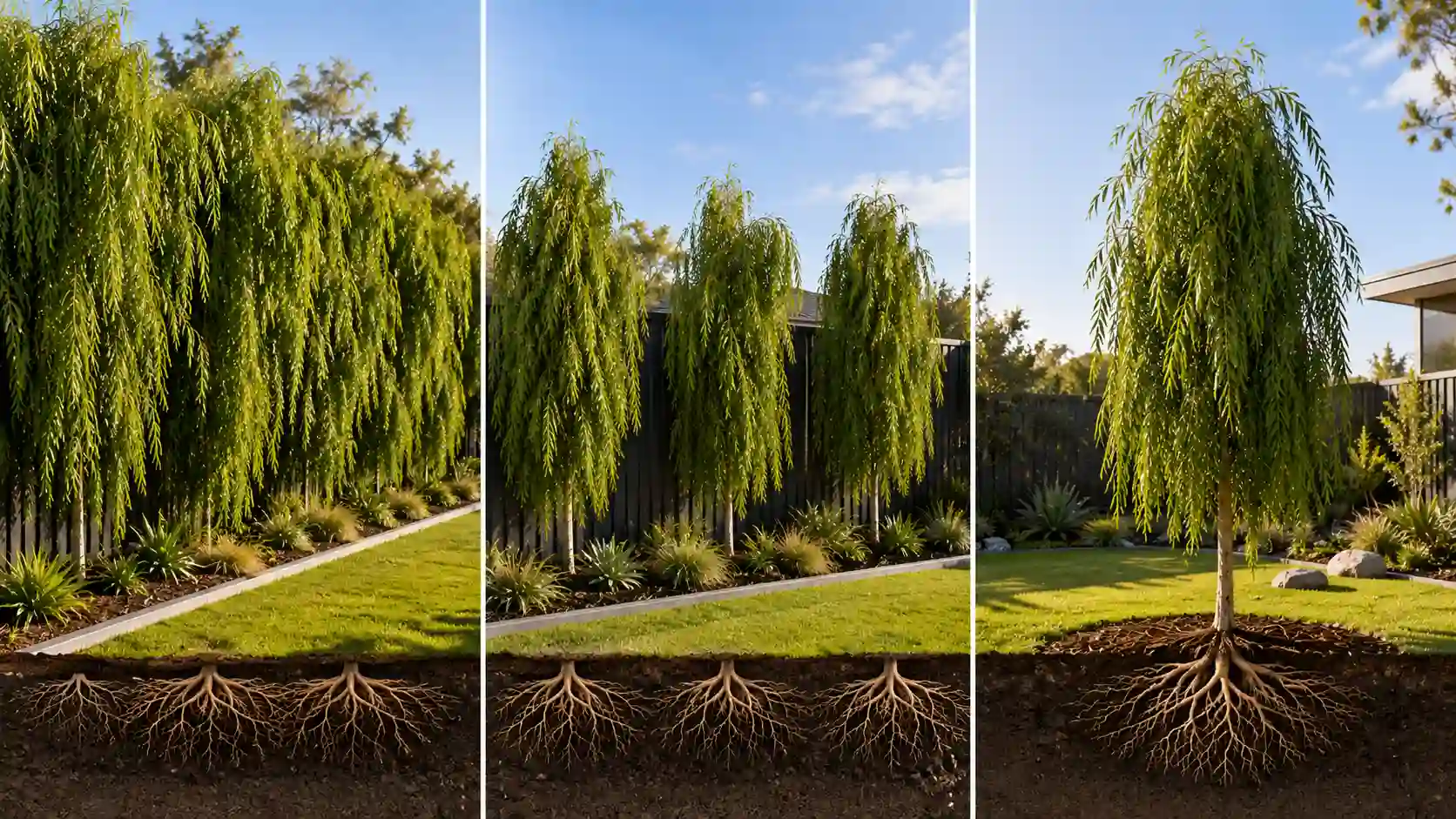
Waterhousea floribunda Sweeper performs best when planted in full sun to part shade with enough space for its roots and canopy to develop. For hedges, spacing depends on how quickly a dense screen is required, while specimen trees need greater separation.
When planting near fences, allow enough room for future maintenance and airflow. A common mistake among beginners is planting screening plants too close together, which can create overcrowding and increase competition for water and nutrients.
Recommended planting conditions:
- Sunlight: Full sun to part shade.
- Soil: Well-drained loam or sandy loam preferred.
- Clay tolerance: Can tolerate clay soils if drainage is improved.
- Moisture: Prefers consistent moisture, especially while establishing.
Recommended Planting Spacing
| Purpose | Recommended Distance | Notes |
| Dense hedge | 1–1.5m apart | Creates faster privacy coverage |
| Loose screen | 2–3m apart | Allows a more natural tree form |
| Feature specimen | 4m+ apart | Provides space for canopy development |
For a boundary hedge, planting around 1–1.5m apart usually provides a balance between quick coverage and healthy plant development.
Are Waterhousea floribunda Sweeper Roots Invasive?
Waterhousea floribunda Sweeper is generally considered to have a non-invasive root system and is not commonly associated with aggressive root damage. Its roots are typically fibrous and spreading, allowing the tree to absorb moisture and nutrients efficiently without the aggressive behaviour seen in some problematic species.
Lilly pilly roots generally develop as a network of smaller roots rather than large, destructive surface roots. However, like any tree, planting too close to buildings, pipes, or hard landscaping can create problems as the plant matures.
Compared with highly aggressive-rooted trees such as some willow species and large figs, Waterhousea floribunda Sweeper is considered a safer option for residential gardens.
When choosing low-disturbance trees, gardeners often look for species with manageable root systems, while avoiding species known for extensive invasive growth.
Caring for Waterhousea floribunda Sweeper
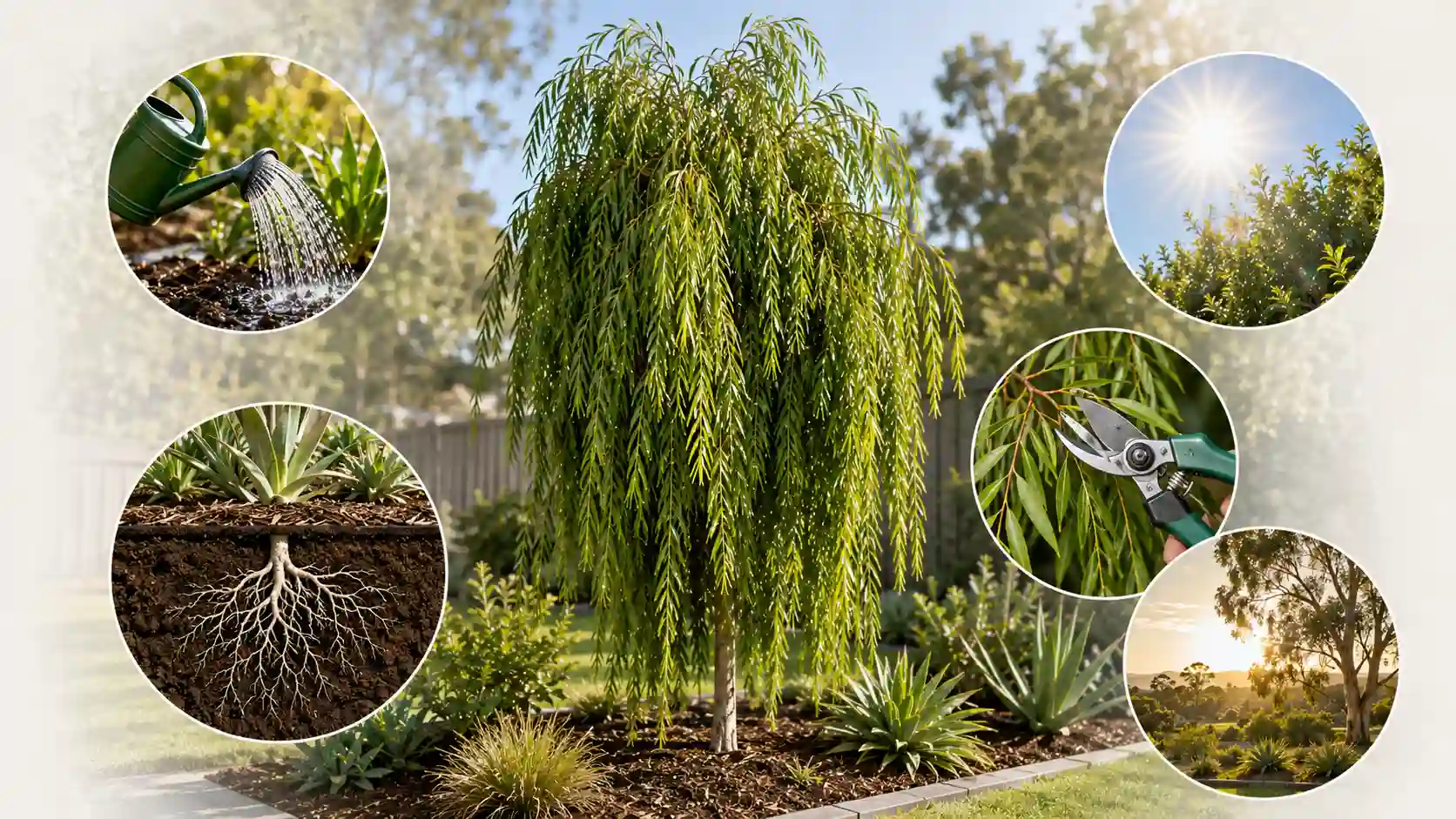
Waterhousea floribunda Sweeper is a low-maintenance screening plant once established, but consistent watering, suitable soil, seasonal feeding, and regular pruning are essential for healthy growth and dense foliage. Like many Australian native plants, it performs best when its basic environmental needs are matched rather than heavily managed.
Elemo Baker recommends focusing on strong establishment during the first year, as well-developed roots create a more resilient plant that requires less attention later.
Watering
Newly planted Waterhousea floribunda Sweeper requires regular watering during its establishment period, usually the first 12 weeks after planting. This helps encourage deeper root development and reduces transplant stress.
After establishment, the plant becomes moderately drought tolerant, although it performs best with consistent moisture.
Recommended watering approach:
- Water deeply 1–2 times per week during the establishment period, depending on weather and soil type.
- Reduce watering once roots are established.
- Provide extra water during prolonged dry periods, especially in hot summers.
- Avoid constant shallow watering, which encourages weak surface roots.
A common mistake is overwatering established lilly pillies. Excess moisture combined with poor drainage can increase the risk of root problems.
Light Requirements
Waterhousea floribunda Sweeper grows best in full sun to part shade.
Full sun conditions generally encourage:
- Faster growth.
- Denser foliage.
- Better hedge formation.
- Stronger branching.
Part shade is tolerated, particularly in warmer climates, but plants may grow more slowly and become slightly less dense.
Soil Preferences
The preferred soil type for Waterhousea floribunda Sweeper is fertile, well-drained loam or sandy loam. However, it is adaptable and can tolerate heavier clay soils if drainage is improved.
Ideal soil conditions include:
- Good moisture retention without waterlogging.
- Organic matter to improve structure.
- Slightly acidic to neutral soil conditions.
For clay soils, adding compost or improving drainage before planting can help prevent slow growth and root stress.
Fertilisation
Waterhousea floribunda Sweeper benefits from seasonal feeding, particularly when grown as a hedge where regular trimming removes nutrients.
Recommended fertilising practices:
- Apply a slow-release native fertiliser in spring.
- Follow product instructions to avoid overfeeding.
- Add organic mulch around the root zone to improve soil health.
Avoid placing fertiliser directly against the trunk, as concentrated nutrients can damage young roots.
Pruning
Waterhousea floribunda Sweeper should be pruned annually to encourage dense growth and maintain its preferred hedge shape. The best time to prune is generally early spring or after flowering.
Pruning helps:
- Maintain a compact 3–5m hedge height.
- Encourage branching.
- Improve foliage density.
- Control overall size.
For screening plants, light and regular trimming is usually better than occasional heavy pruning because it keeps foliage distributed throughout the plant.
In established gardens, pruning after flowering can also help maintain the plant’s natural weeping appearance while controlling growth.
Climate Tolerance
Waterhousea floribunda Sweeper prefers warm Australian climates and performs best in tropical, subtropical, and warm temperate regions.
Ideal conditions include:
- Frost-free environments.
- Reliable rainfall or irrigation.
- Warm summers.
- Moist soils.
It is less suitable for dry inland areas, exposed cold locations, or gardens with repeated heavy frost. In colder regions, protection from strong frost and cold winds can improve survival.
As of 2026, gardeners are increasingly selecting drought-aware planting positions and improving soil moisture retention through mulching, especially as Australian gardens experience more variable seasonal conditions.
Flowers and Fruit of Waterhousea floribunda Sweeper
Waterhousea floribunda Sweeper produces clusters of fluffy white flowers in summer, followed by small pale pink to green berries. These seasonal features add ornamental value, although the cultivar is mainly grown for its foliage and screening ability. While Waterhousea floribunda Sweeper is mainly grown for ornamental screening, other lilly pilly species such as Lilly Pilly Australe (Syzygium Australe) are more commonly recognised for their edible berries and versatile garden uses.
The flowers are typically:
- Small and white.
- Produced in clusters.
- Attractive to pollinating insects.
The fruit develops after flowering and appears as small berries. While lilly pilly fruits are generally associated with edible native fruits, Waterhousea floribunda Sweeper is not commonly grown as a bush-tucker plant.
Compared with edible-focused lilly pillies such as some Syzygium australe cultivars, Sweeper is primarily selected for:
- Privacy screening.
- Dense foliage.
- Landscape structure.
- Low-maintenance garden design.
Common Problems With Waterhousea floribunda Sweeper (Problem–Solution Coverage)
Waterhousea floribunda Sweeper is generally hardy, but common issues can occur when growing conditions are unsuitable or plants experience stress. Most problems can be prevented through correct watering, soil preparation, and regular plant care.
Psyllid Insect Damage
Lilly pilly psyllids are sap-sucking insects that can affect new growth. They often cause small raised bumps or distorted “pimpled” leaves.
Common causes include:
- Stress from inconsistent watering.
- Weak plant growth.
- Dense untreated foliage.
Solutions:
- Remove badly affected leaves where practical.
- Use horticultural white oil or neem-based products for mild infestations.
- Encourage strong plant health through correct watering and fertilising.
- Avoid excessive nitrogen fertiliser, which can encourage soft growth.
Regular monitoring of new leaves helps identify problems early. Correct pest identification is important when treating plant damage, and our Garden Pest Identification Guide for Australian Gardens explains common garden insects and their symptoms.
Root Rot
Root rot usually occurs because of poor drainage or excessive watering. Although Waterhousea floribunda tolerates moisture, constantly waterlogged soil can damage roots.
Signs include:
- Yellowing leaves.
- Poor growth.
- General plant decline despite watering.
Prevention methods:
- Improve drainage before planting.
- Avoid planting in areas where water pools.
- Reduce irrigation frequency if soil remains wet.
Slow or Stunted Growth
Slow growth is often linked to environmental problems rather than the plant’s natural growth rate.
Common causes include:
- Insufficient sunlight.
- Compacted soil.
- Nutrient deficiency.
- Poor establishment after planting.
Improving soil quality, increasing sunlight exposure, and providing appropriate fertiliser can usually restore healthier growth.
Is Waterhousea floribunda Sweeper Easy to Care For?
Yes, Waterhousea floribunda Sweeper is considered an easy-care plant once established, with most maintenance focused on early watering and occasional pruning.
Its main advantages include:
- Fast growth.
- Strong screening ability.
- Adaptability to different soils.
- Good response to trimming.
- Low ongoing maintenance requirements.
The most important stage is establishment. A well-planted and correctly watered Sweeper will usually become a reliable long-term hedge or feature tree.
Waterhousea floribunda Sweeper vs Other Weeping Lilly Pilly Cultivars
Different lilly pilly cultivars have been selected for different garden purposes. Waterhousea floribunda Sweeper is particularly valued for its graceful weeping habit and screening performance.
| Cultivar | Growth Habit | Density | Typical Use | Key Feature |
| Waterhousea floribunda ‘Sweeper’ | Weeping, upright | Very dense | Privacy screens, feature trees | Elegant cascading form |
| ‘Green Avenue’ | Upright and compact | Dense | Formal hedges | Narrow growth habit |
| ‘Amaroo’ | Bushy and rounded | Dense | Hedges and gardens | Compact appearance |
| ‘Whisper’ | Fine-leaf, upright | Moderate to dense | Screening | Softer foliage texture |
When comparing fast-growing lilly pillies, growth speed depends heavily on climate, soil, and care. Sweeper is among the faster options when grown in suitable warm conditions, while other cultivars may be preferred where smaller size or tighter spaces are priorities.
Are Lilly Pilly Trees Poisonous to Dogs?
Lilly pilly trees are not commonly listed as toxic to dogs, and their berries are generally considered edible-type fruits; however, eating large quantities of any plant material can cause digestive upset in pets.
Waterhousea floribunda Sweeper is not typically regarded as a poisonous garden plant for dogs. The small berries produced by lilly pilly species are often eaten by wildlife and some varieties are used for human consumption.
Pet owners should still consider:
- Preventing dogs from eating large amounts of berries or leaves.
- Monitoring pets for vomiting, diarrhoea, or unusual behaviour after plant ingestion.
- Contacting a veterinarian if a dog consumes a large quantity or shows signs of illness.
Individual animals can react differently to plants, so responsible supervision is recommended. For specific pet safety concerns, always seek advice from a qualified veterinarian.
Best Uses for Waterhousea floribunda Sweeper in the Garden
Waterhousea floribunda Sweeper is best used as a fast-growing privacy plant, boundary screen, or feature tree where a dense green structure is required. Its combination of rapid growth, weeping form, and thick foliage makes it suitable for many Australian landscape applications.
Privacy Screening and Noise Reduction
Sweeper is widely planted as a living screen because its dense foliage creates an effective visual barrier.
Benefits include:
- Blocking unwanted views.
- Creating garden privacy.
- Reducing wind exposure.
- Providing some noise buffering when planted densely.
For screening purposes, regular pruning helps maintain foliage from the base of the plant upwards, preventing gaps that can develop in poorly maintained hedges. For gardeners comparing evergreen privacy plants, alternatives such as Ficus Hillii ‘Flash’ are also popular for dense screening and fast-growing hedge applications.
Boundary Hedge
Waterhousea floribunda Sweeper works well along property boundaries because it can be trimmed into a controlled hedge while maintaining strong growth. Gardeners looking for a more formal screening style may also consider trained options such as a Pleached Lilly Pilly, which creates a structured living wall effect along fences and boundaries.
For boundary planting:
- Space plants approximately 1–1.5m apart for dense coverage.
- Prune annually to maintain height and width.
- Allow enough room from fences for airflow and maintenance access.
Its ability to tolerate trimming makes it a practical alternative to some more demanding hedge plants.
Feature or Specimen Tree
When grown without heavy pruning, Sweeper develops a graceful weeping shape that works well as a garden feature.
As a specimen tree, it provides:
- A flowing branch structure.
- Evergreen foliage.
- Seasonal flowers and berries.
- A natural focal point.
This planting style allows the cultivar’s unique weeping habit to become the main landscape feature.
Bird-Attracting Garden
Like many Australian native plants, Waterhousea floribunda can contribute to wildlife-friendly gardens.
Its flowers and fruit may attract:
- Native birds.
- Pollinating insects.
- Small garden wildlife.
While it is not primarily grown as a food-producing native plant, it can still support biodiversity within a well-planned garden.
Is Waterhousea floribunda Sweeper Suitable for Pots?
Waterhousea floribunda Sweeper is generally not suitable for pots because of its large mature size and vigorous outdoor growth habit.
For container gardening, smaller lilly pilly cultivars are usually a better choice because they remain more compact and require less root space.
Conclusion
Waterhousea floribunda Sweeper is a fast-growing, low-maintenance weeping lilly pilly cultivar valued for dense screening, attractive form, and reliable performance in suitable Australian climates. Its slender weeping habit separates it from the standard Waterhousea floribunda species, making it easier to manage in residential gardens.
With a mature size of around 10m high and 5–8m wide when unpruned, Sweeper can also be maintained as a 3–5m hedge through regular pruning. It grows quickly, generally develops a non-invasive root system, and adapts well to full sun, part shade, and a range of soils. Choosing the right evergreen trees and shrubs is an important part of Australian garden planning, especially when selecting plants for privacy, structure, and long-term growth. Our guide to Best Trees and Shrubs for Australian Gardens explains suitable species for different landscapes and conditions.
For gardeners wanting an evergreen privacy screen, feature tree, or wildlife-friendly planting option in frost-free regions, Waterhousea floribunda Sweeper is a reliable and attractive choice.
Frequently Asked Questions (FAQs)
How fast does Waterhousea floribunda ‘Sweeper’ grow?
Waterhousea floribunda ‘Sweeper’ grows quickly, typically adding around 60–90cm of growth per year under good conditions. Growth is fastest during spring and summer when the plant receives adequate water, sunlight, and nutrients.
Does Waterhousea floribunda have invasive roots?
No, Waterhousea floribunda is generally not considered to have invasive roots. Its root system is mainly fibrous and spreading rather than aggressively destructive. However, like any tree, it should not be planted too close to buildings, pipes, or paved areas without considering mature size.
How big does Waterhousea floribunda ‘Sweeper’ get?
Waterhousea floribunda ‘Sweeper’ can reach approximately 10m high and 5–8m wide if left unpruned. When grown as a hedge or privacy screen, it is commonly maintained between 3–5m tall through regular pruning.
What is the common name for Waterhousea floribunda?
The common name for Waterhousea floribunda is weeping lilly pilly. It is an Australian native rainforest tree from the Myrtaceae family and is sometimes associated with the older botanical name Syzygium floribundum.
Is Waterhousea floribunda fruit edible?
Waterhousea floribunda produces small berries that are not typically grown as an edible fruit crop. While some lilly pilly species produce popular bush-tucker fruits, Sweeper is mainly cultivated for ornamental screening and garden structure.
How far apart should you plant Waterhousea floribunda ‘Sweeper’ for a hedge?
For a dense hedge, Waterhousea floribunda ‘Sweeper’ is commonly planted around 1–1.5m apart. Wider spacing of 2–3m can be used for a looser screen where a more natural tree form is preferred.
When should you prune Waterhousea floribunda?
The best time to prune Waterhousea floribunda is usually early spring or after flowering. Regular annual pruning encourages dense foliage, maintains hedge shape, and helps control the plant’s mature size.