
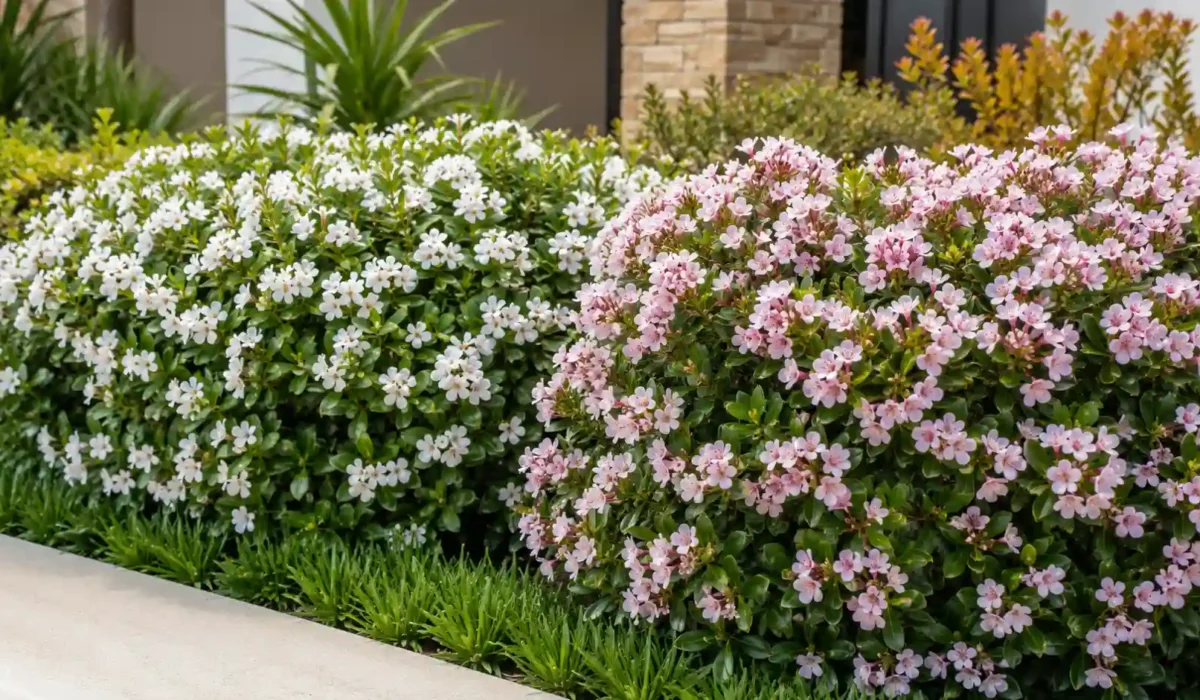
Snow Maiden Oriental Pearl Plant: Growing Guide & Comparison
Introduction
The snow maiden oriental pearl plant is a popular evergreen shrub choice for gardeners seeking attractive, low-maintenance landscaping plants. Both Snow Maiden and Oriental Pearl belong to the Rhaphiolepis indica group, commonly known as Indian Hawthorn. These shrubs are widely used throughout Australian and subtropical gardens for hedging, borders, and foundation planting. A common source of confusion is that Snow Maiden and Oriental Pearl are not the same cultivar, even though they share many characteristics. Understanding the differences between these two Rhaphiolepis varieties helps gardeners choose the right plant for their available space, design goals, and maintenance preferences.
Quick Summary
- Snow Maiden and Oriental Pearl are popular cultivars of Rhaphiolepis indica (Indian Hawthorn).
- Both are evergreen, drought-tolerant shrubs suitable for hedges, borders, and landscaping.
- Oriental Pearl typically grows larger than Snow Maiden and is better suited to screening hedges.
- Snow Maiden is ideal for compact gardens, low borders, and container growing.
- Both cultivars are easy to maintain but can develop leaf spot disease and drainage-related problems.
What Is the Snow Maiden Oriental Pearl Plant?
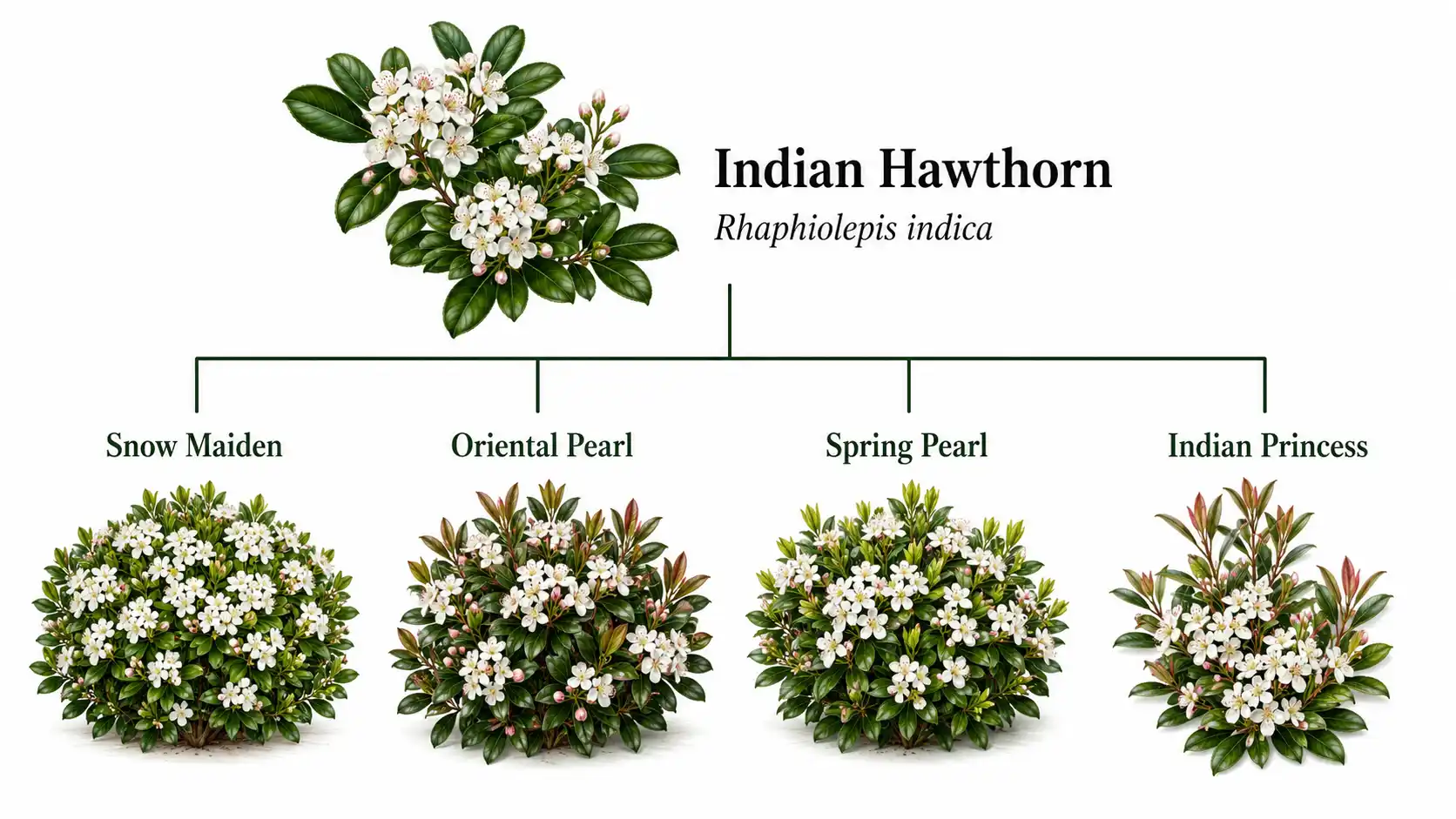
Rhaphiolepis indica is an evergreen shrub native to southern China and Japan and belongs to the Rosaceae (rose) family. Snow Maiden and Oriental Pearl are cultivated varieties of this species rather than separate plant species.
Snow Maiden and Oriental Pearl are cultivars of Rhaphiolepis indica, an evergreen shrub species commonly known as Indian Hawthorn and widely used in ornamental landscaping.
These cultivars share many desirable traits, including glossy green foliage, spring flowers, ornamental berries, and a naturally compact growth habit. They are widely planted in residential landscapes because they require relatively little maintenance once established.
The naming confusion often occurs because gardeners may encounter terms such as Oriental Pearl plant, Oriental Pearls, Rhaphiolepis Oriental Pearl, Snow Maiden, and Indian Hawthorn used interchangeably. In reality, these names refer to different cultivars within the same species group.
Key Characteristics of Rhaphiolepis indica Cultivars
Most Rhaphiolepis cultivars share the following characteristics:
- Evergreen foliage year-round
- Drought tolerance once established
- Salt tolerance suitable for coastal gardens
- Low maintenance requirements
- Attractive spring flowering displays
- Adaptability to a range of soil types
- Compact growth habits suitable for hedging
Other popular Rhaphiolepis varieties include Spring Pearl, Indian Princess, and Cosmic White. Choosing the right cultivar depends largely on mature size, flower characteristics, and intended landscape use.
Snow Maiden vs Oriental Pearl — What Is the Difference?
The primary difference between Snow Maiden and Oriental Pearl is their mature size. While both belong to the same species and have similar care requirements, Oriental Pearl grows significantly larger and is often selected for medium-height hedges. Snow Maiden remains smaller and more compact.
Because nurseries sometimes market both under the broader Indian Hawthorn name, many gardeners mistakenly assume they are identical plants.
Size and Height Comparison
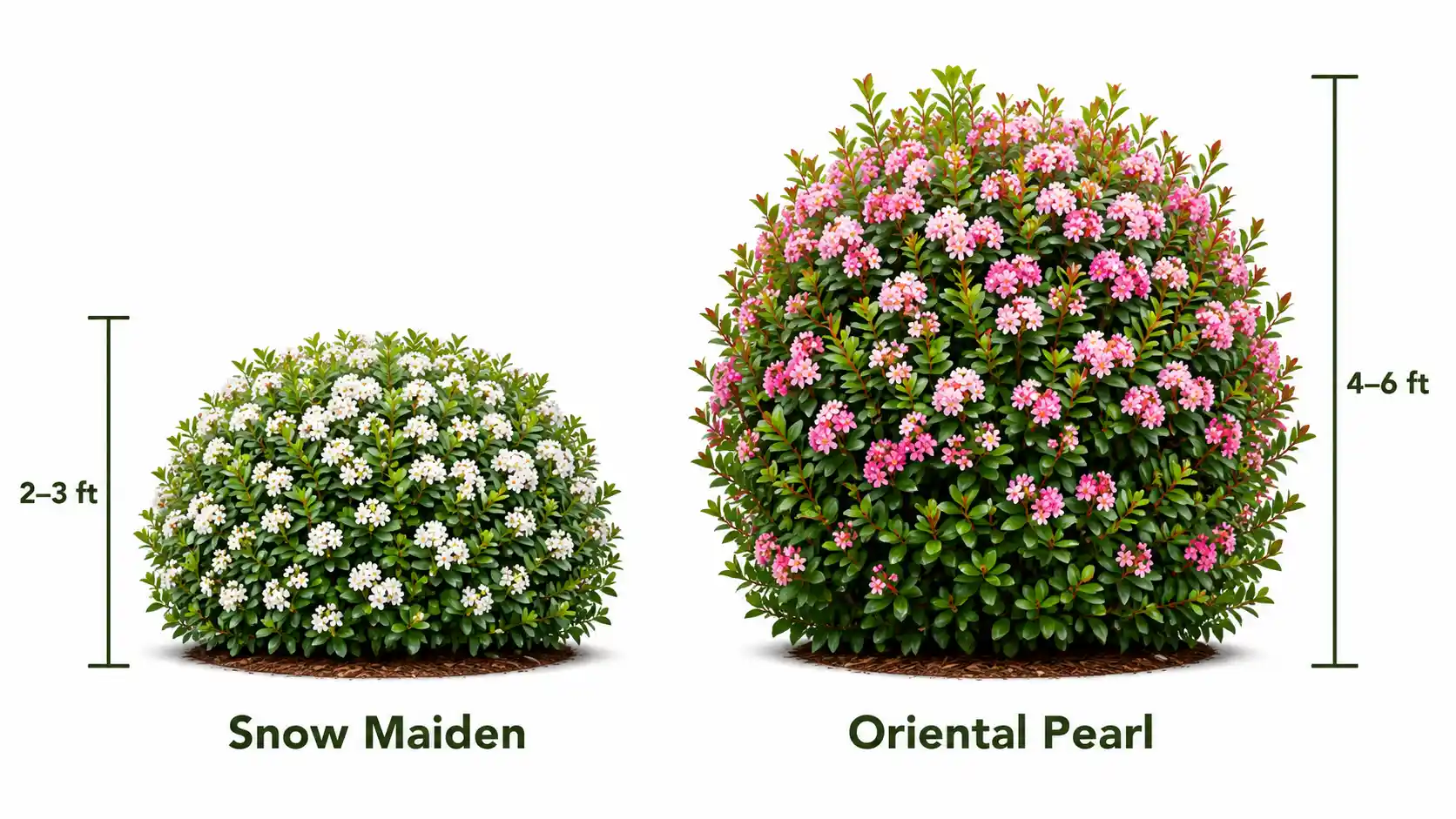
Snow Maiden typically reaches 60–90 cm in height and width. Its compact shape makes it ideal for small garden beds, edging, and low borders.
Oriental Pearl generally grows between 1 and 1.5 metres tall and can reach similar widths under ideal conditions. This larger size makes it better suited for screening and medium-height hedges.
In our experience growing Rhaphiolepis cultivars, Snow Maiden requires less frequent pruning to maintain a neat shape, while Oriental Pearl can quickly fill larger landscape spaces.
Flower and Foliage Differences
Snow Maiden produces masses of white flowers and features relatively small leaves with a dense growth habit.
Oriental Pearl produces white to pale pink blooms and tends to have slightly larger, glossier foliage. Both cultivars flower heavily during spring and are followed by small ornamental berries that attract birds.
The spring flowering display is one of the main reasons these plants remain popular among Australian gardeners.
Comparison Table — Snow Maiden vs Oriental Pearl
| Feature | Snow Maiden | Oriental Pearl |
| Mature Height | 60–90 cm | 1–1.5 m |
| Mature Width | 60–90 cm | 1–1.2 m |
| Flower Colour | White | White to pale pink |
| Growth Rate | Moderate | Moderate |
| Best Use | Low border, edging | Hedge, screening |
| Drought Tolerance | High | High |
| Suitable Climate | Temperate–subtropical | Temperate–subtropical |
Oriental Pearl Plant — Full Growing Guide
Oriental Pearl is valued for its versatility, resilience, and ability to form attractive medium-height hedges.
Sunlight Requirements
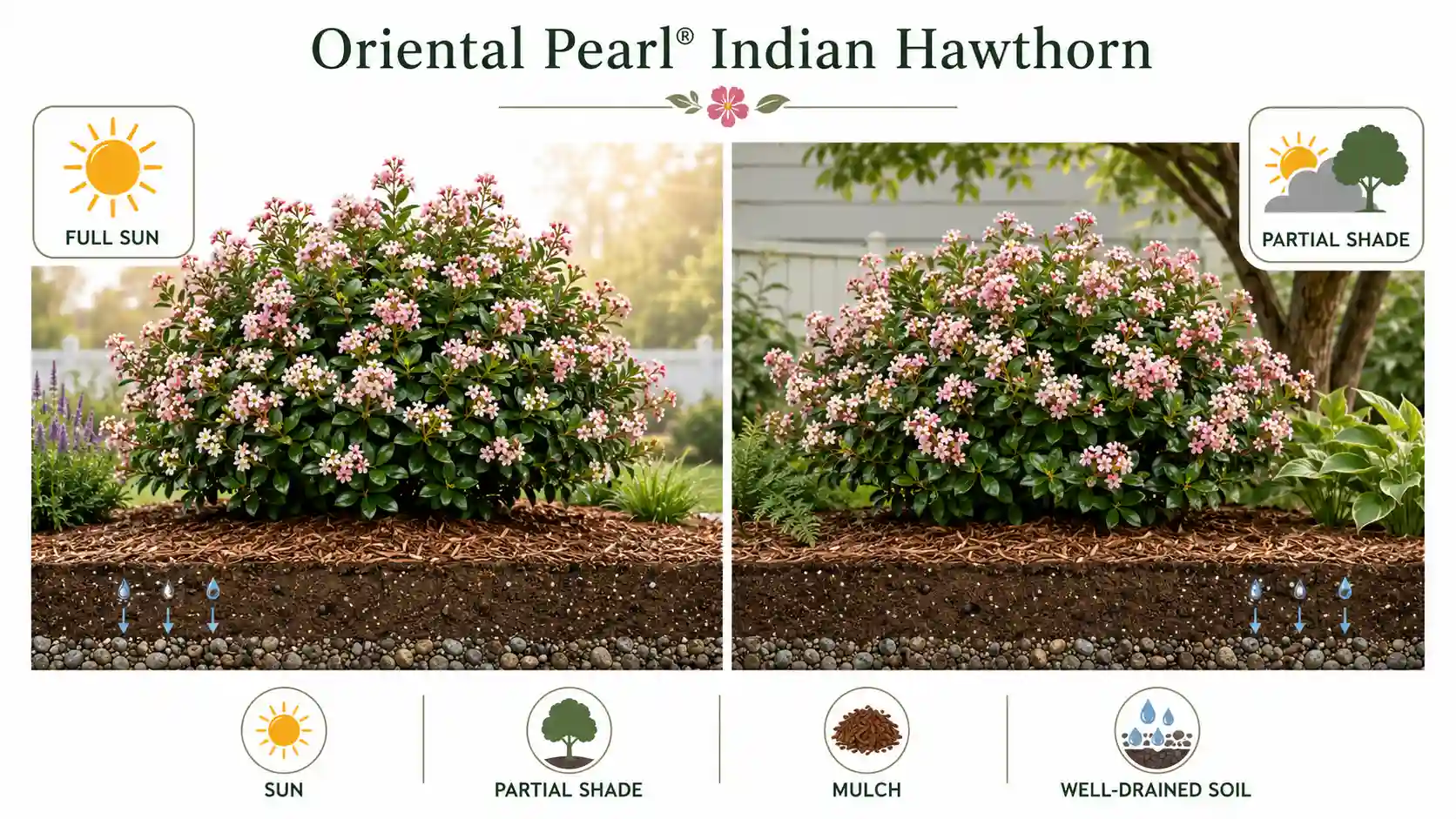
Oriental Pearl performs best in full sun to partial shade. Plants grown in full sun generally develop denser foliage and produce more flowers.
North-facing and east-facing garden positions typically provide ideal growing conditions.
Watering Needs
Newly planted Oriental Pearl shrubs should be watered regularly during their first 6–12 weeks.
Once established, they become highly drought-tolerant and generally require supplemental watering only during prolonged dry periods.
Overwatering often causes yellow leaves and root stress. Mulching around the root zone helps conserve moisture and regulate soil temperature.
Soil Preferences
Well-draining soil is essential for healthy growth. Although Oriental Pearl can tolerate heavier soils, drainage improvements are recommended for clay-based gardens.
The preferred soil pH ranges from 6.0 to 7.0.
Adding compost before planting improves soil structure and encourages root development.
Fertilisation
Apply a balanced slow-release fertiliser during spring to support healthy growth and flowering.
Elemo Baker recommends avoiding excessive fertiliser applications, as overly soft growth can become more susceptible to fungal diseases.
Both organic and synthetic fertilisers can produce excellent results when applied according to label directions.
Pruning
Light pruning immediately after flowering helps maintain shape and encourages dense growth.
Oriental Pearl responds well to hard pruning if it becomes overgrown. Sharp pruning tools should always be used to create clean cuts and reduce plant stress.
Gardeners looking for more suitable indoor and outdoor plant choices can also explore our Australian Plants Guide: Indoor Houseplants & Garden Design.
Snow Maiden Plant — Full Growing Guide
Snow Maiden is one of the most beginner-friendly hedging shrubs available. Its compact size and adaptability make it particularly useful for smaller gardens.
Ideal Growing Conditions for Snow Maiden
Snow Maiden thrives in warm temperate and subtropical climates. Young plants may experience minor frost damage, although mature specimens generally tolerate light frosts.
The cultivar performs exceptionally well in coastal gardens because of its tolerance to salt spray and wind.
Snow Maiden also grows successfully in containers, making it suitable for patios, courtyards, and balconies.
Snow Maiden as a Hedge Plant
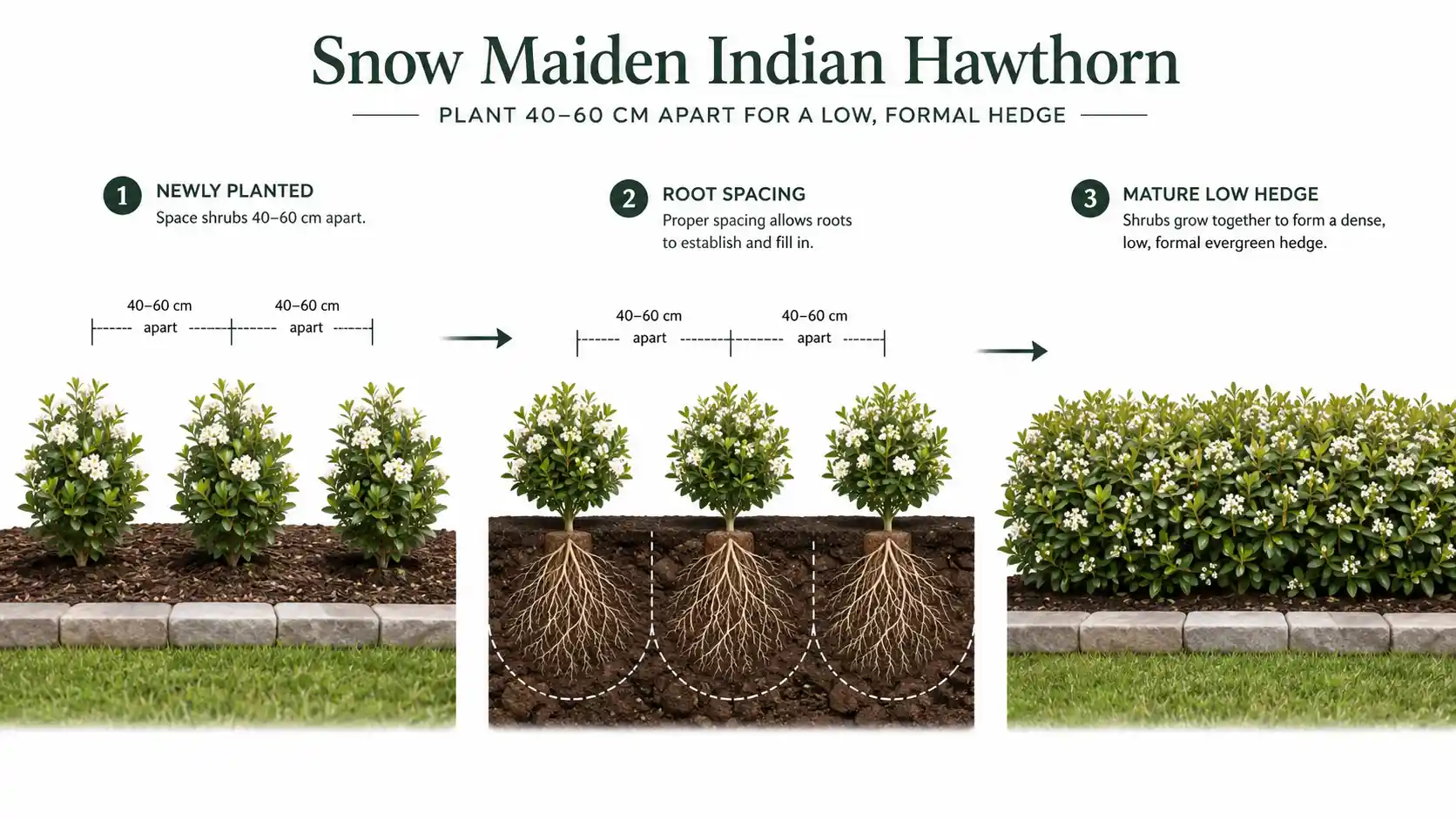
For dense hedging, plants should be spaced approximately 40–60 cm apart.
Under good growing conditions, a complete hedge usually develops within one to two growing seasons.
Formal hedges require more frequent trimming, while informal hedges can be maintained with occasional pruning.
In our experience, Snow Maiden creates one of the neatest low hedges available for residential landscapes.
Oriental Pearl as a Hedge — Planting and Spacing Guide
Oriental Pearl is widely used for medium-height screening hedges.
Spacing plants 60–80 cm apart typically produces an attractive dense hedge while allowing adequate airflow between plants.
Most Oriental Pearl hedges become established within two to three years.
Compared with Snow Maiden, Oriental Pearl offers greater height and screening capability while maintaining a similar low-maintenance profile.
For taller privacy screens, many landscapers also compare Oriental Pearl with Photinia Fraseri Robusta: Growth, Care & Hedge Guide, another widely used hedge plant for Australian gardens. If you’re weighing Oriental Pearl against other screening shrubs for your project, browse our Hedging & Screening Shrub Reference Database Australia.
It catalogues spacing, growth habit, and screening height for dozens of Australian hedge and privacy plants beyond just Rhaphiolepis.
Plant Size and Mature Growth of Both Cultivars
Plant size is influenced by environmental conditions, maintenance practices, and growing location.
Snow Maiden generally reaches 60–90 cm tall and wide.
Oriental Pearl commonly reaches 1–1.5 metres in height and around 1–1.2 metres in width.
Factors influencing mature size include:
- Sunlight exposure
- Soil fertility
- Water availability
- Pruning frequency
- Climate conditions
Although primarily outdoor shrubs, both cultivars can be grown in large containers. Container-grown plants usually remain smaller than those planted directly in the ground.
Growth is most active during spring and autumn. To compare mature size figures across a wider range of hedging species at a glance, check our Hedging Screening Shrub Comparison spreadsheet.
It lists height, width, and growth data side-by-side so you can benchmark Snow Maiden and Oriental Pearl against other popular screening shrubs.
While Snow Maiden and Oriental Pearl are primarily outdoor plants, gardeners looking for decorative container specimens indoors may find the Dracaena Plant Indoor Benefits, Care, Meaning & Propagation guide helpful.
Growth Rate — How Long Does Snow Maiden Take to Grow?
Snow Maiden typically grows between 15 and 30 cm per year under favourable conditions.
Most plants require approximately two to three years to develop their mature form and landscape presence.
Growth speed depends on:
- Soil quality
- Fertiliser use
- Water availability
- Sunlight levels
- Climate conditions
Oriental Pearl exhibits a similar growth rate but ultimately achieves a larger mature size. As of 2026, many Australian growers continue recommending spring and autumn planting to maximise establishment and growth performance. Gardeners comparing hedge plants may also want to explore the Pittosporum Silver Sheen Growth Rate Guide, which explains how another popular screening shrub develops compared to Rhaphiolepis cultivars.
Benefits of Oriental Pearl and Snow Maiden Plants
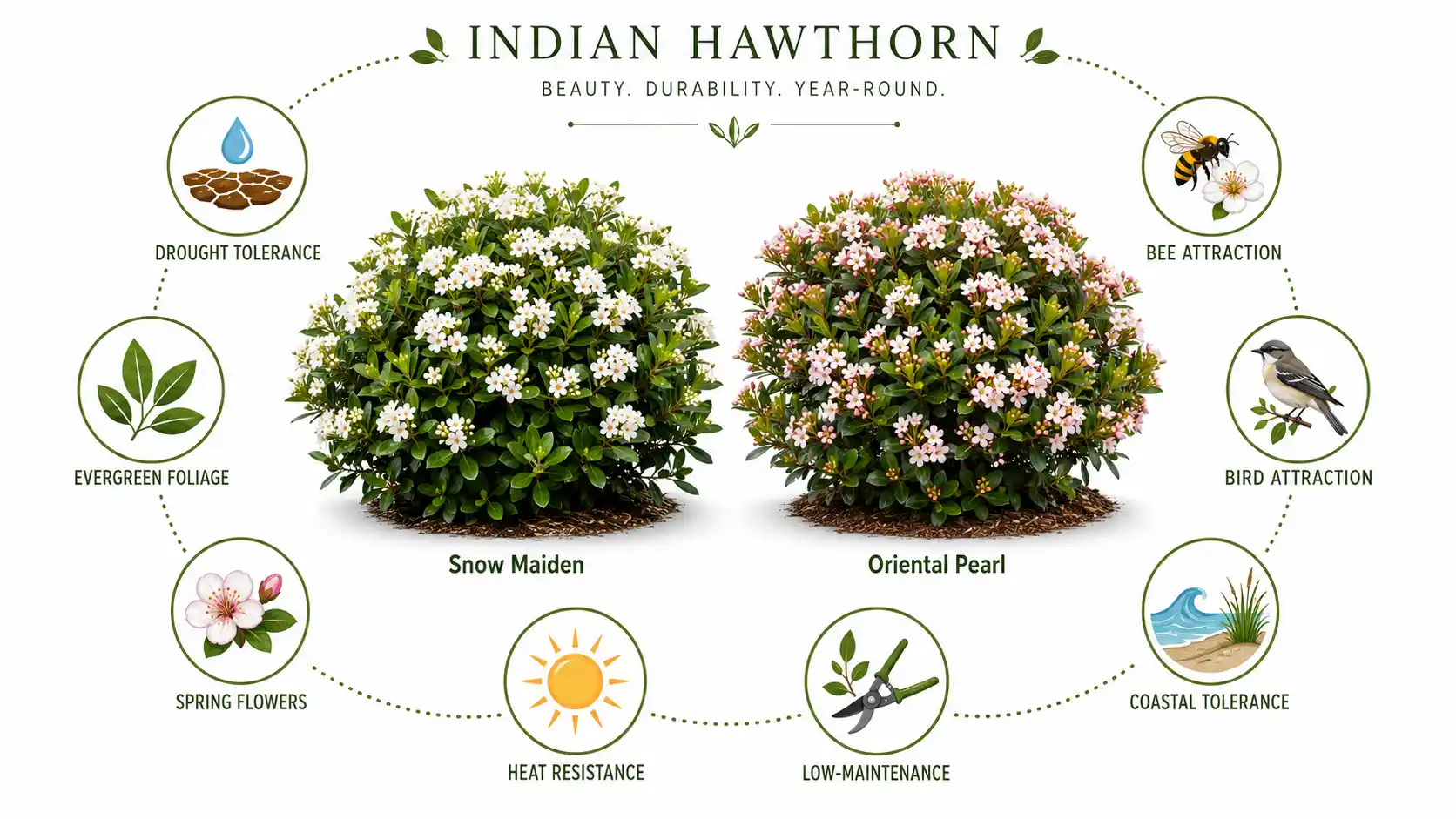
These cultivars provide numerous practical and aesthetic advantages.
Key benefits include:
- Low maintenance requirements
- Excellent drought tolerance
- Evergreen year-round coverage
- Attractive spring flowers
- Wildlife support for bees and birds
- Salt tolerance for coastal locations
- Heat tolerance in warm climates
- Versatile landscape applications
The glossy foliage provides visual interest throughout the year, even when plants are not flowering. Another advantage is their widespread availability through garden centres, independent nurseries, and major retailers.
If you are planning a complete landscape design, pairing these evergreen shrubs with flowering trees featured in the Purple Flower Tree Australia: Native & Popular Species Guide can create year-round colour and structure. To further enhance pollinator activity around your garden, consider combining these shrubs with plants discussed in Benefits of Lavender Plant at Home, which are also valued for attracting bees and beneficial insects.
Homeowners interested in both indoor and outdoor greenery may also enjoy learning about the 10 Benefits of Snake Plant for Home and Health, another low-maintenance plant known for its adaptability.
Common Problems — Snow Maiden Oriental Pearl Plant Problems
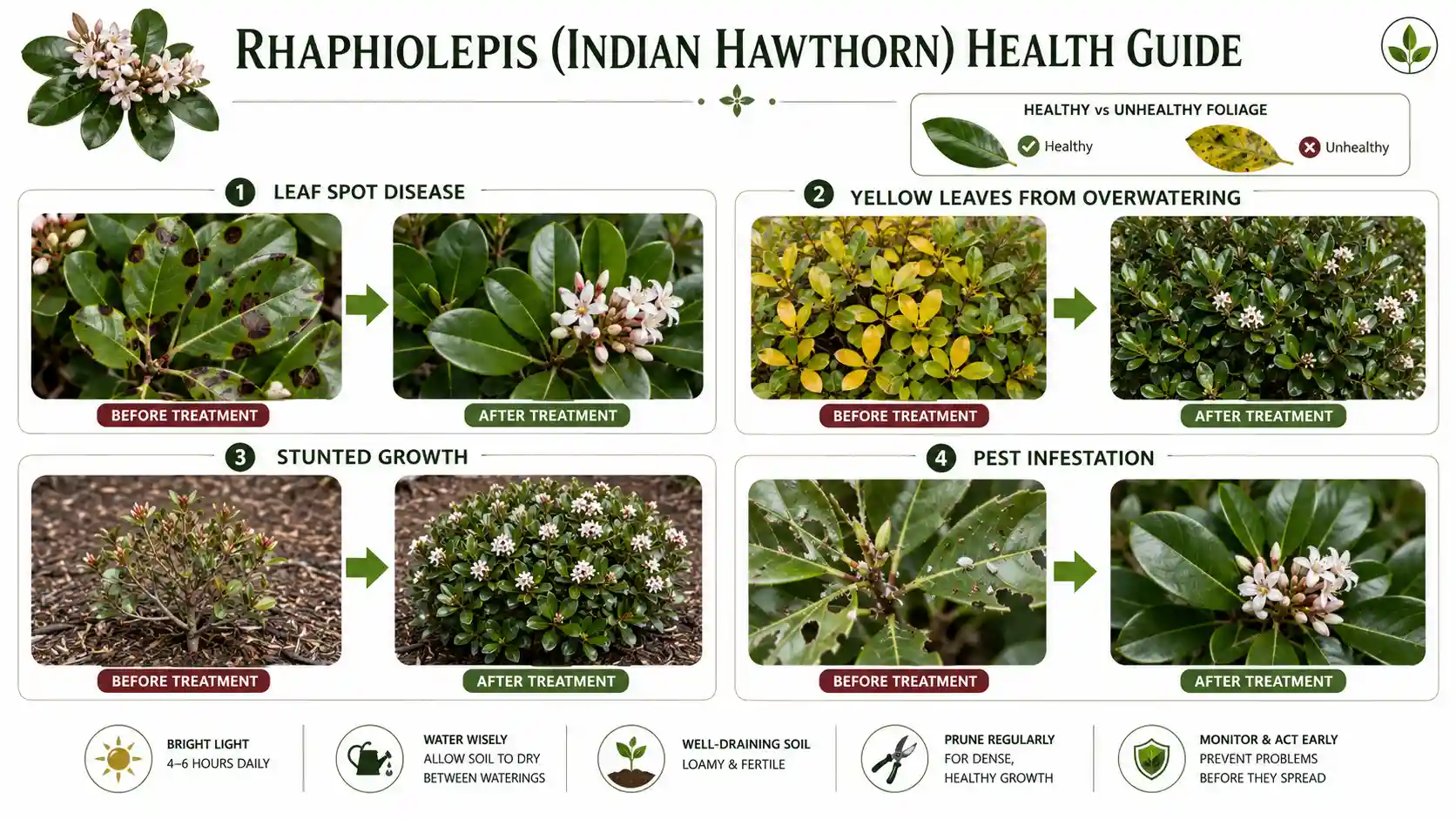
Although generally reliable plants, several issues can occasionally occur.
Leaf Spot Disease (Entomosporium Leaf Spot)
This is the most common disease affecting Rhaphiolepis cultivars.
Symptoms include:
- Red or grey leaf spots
- Premature leaf drop
- Reduced plant appearance
Cause:
- Fungal infection encouraged by humidity and poor airflow
Fix:
- Remove affected foliage
- Improve air circulation
- Apply appropriate fungicide when necessary
Prevention:
- Avoid overhead watering
- Maintain proper spacing between plants
Yellow Leaves — Causes and Solutions
Yellowing foliage commonly results from:
- Overwatering
- Poor drainage
- Iron deficiency
Overwatered plants often display soft yellow leaves, while drought-stressed plants may show dry leaf edges.
Solutions include improving drainage, adjusting irrigation practices, and applying chelated iron where deficiencies are confirmed.
Slow or Stunted Growth
Common causes include:
- Compacted soil
- Insufficient sunlight
- Root-bound containers
- Lack of nutrients
Correcting the underlying issue usually restores healthy growth.
Pest Issues
Occasional pests include:
- Scale insects
- Aphids
- Caterpillars
Organic treatment options include horticultural oils and insecticidal soaps. Early intervention helps prevent serious infestations.
Rhaphiolepis Varieties — How Snow Maiden and Oriental Pearl Compare to Other Cultivars
Several attractive Rhaphiolepis cultivars are available to gardeners.
| Variety | Size | Flower Colour | Best Use |
| Snow Maiden | Compact | White | Borders, low hedges |
| Oriental Pearl | Medium | White to pale pink | Screening hedges |
| Spring Pearl | Medium | White | General landscaping |
| Indian Princess | Medium-Large | Pink | Feature planting |
| Cosmic White | Compact-Medium | White | Formal gardens |
Gardeners should select cultivars based on available space, desired flower colour, and intended landscape function. For a complete side-by-side breakdown of every cultivar mentioned above — including Clara, Enchantress, Majestic Beauty, and Georgia Petite — see our full Rhaphiolepis Cultivar Reference Guide.
This lookup table covers exact height, width, flower colour, and container suitability for each Indian Hawthorn variety in one place.
Where to Buy Snow Maiden and Oriental Pearl Plants
Snow Maiden and Oriental Pearl plants are commonly available throughout Australia.
Potential sources include:
- Bunnings garden centres
- Independent nurseries
- Specialist native and ornamental plant nurseries
- Online plant retailers
When purchasing, inspect plants for:
- Healthy green foliage
- Strong root systems
- Absence of disease symptoms
- Appropriate pot size
Autumn and spring are generally considered the best planting seasons because moderate temperatures encourage root establishment.
Conclusion
The snow maiden oriental pearl plant refers to two highly popular Rhaphiolepis indica cultivars that offer attractive foliage, spring flowers, and dependable garden performance. Snow Maiden is the better choice for compact borders, small gardens, and low hedges, while Oriental Pearl provides greater height and screening capability. Both cultivars are drought-tolerant, relatively easy to maintain, and well suited to Australian growing conditions. Selecting the right cultivar ultimately depends on the available space and the intended landscape purpose. With proper planting and care, both varieties can provide many years of reliable ornamental value.
Frequently Asked Questions (FAQs)
What is the difference between Snow Maiden and Oriental Pearl?
Snow Maiden is a compact cultivar that typically grows 60–90 cm tall, while Oriental Pearl grows 1–1.5 metres tall. Snow Maiden is best for borders and edging, whereas Oriental Pearl is more suitable for screening and hedging.
Is the Snow Maiden plant easy to grow?
Yes. Snow Maiden is considered one of the easiest hedging plants for beginner gardeners. It requires minimal pruning, tolerates drought once established, and adapts to various soil conditions when drainage is adequate.
What are the benefits of Oriental Pearl plants?
Oriental Pearl offers evergreen foliage, drought tolerance, attractive spring flowers, wildlife value, and low maintenance requirements. It is also suitable for Australian climates and coastal gardens.
How long does a Snow Maiden plant take to grow to full size?
Most Snow Maiden plants reach their mature size within two to three years. Growth rates average 15–30 cm annually under favourable growing conditions.
Can Oriental Pearl and Snow Maiden be used as hedge plants?
Yes. Snow Maiden is commonly used for low hedges under one metre tall, while Oriental Pearl is preferred for medium-height screening hedges reaching approximately 1–1.5 metres.
Where can I buy a Snow Maiden or Oriental Pearl plant in Australia?
These plants are available from Bunnings, independent nurseries, specialist garden centres, and online plant retailers. Spring and autumn are typically the best times to purchase and plant them.
What problems affect the Snow Maiden Oriental Pearl plant?
The most common issues include Entomosporium leaf spot disease, yellowing leaves caused by drainage problems or nutrient deficiencies, slow growth due to poor growing conditions, and occasional pest infestations such as aphids and scale insects.
1 Comment