

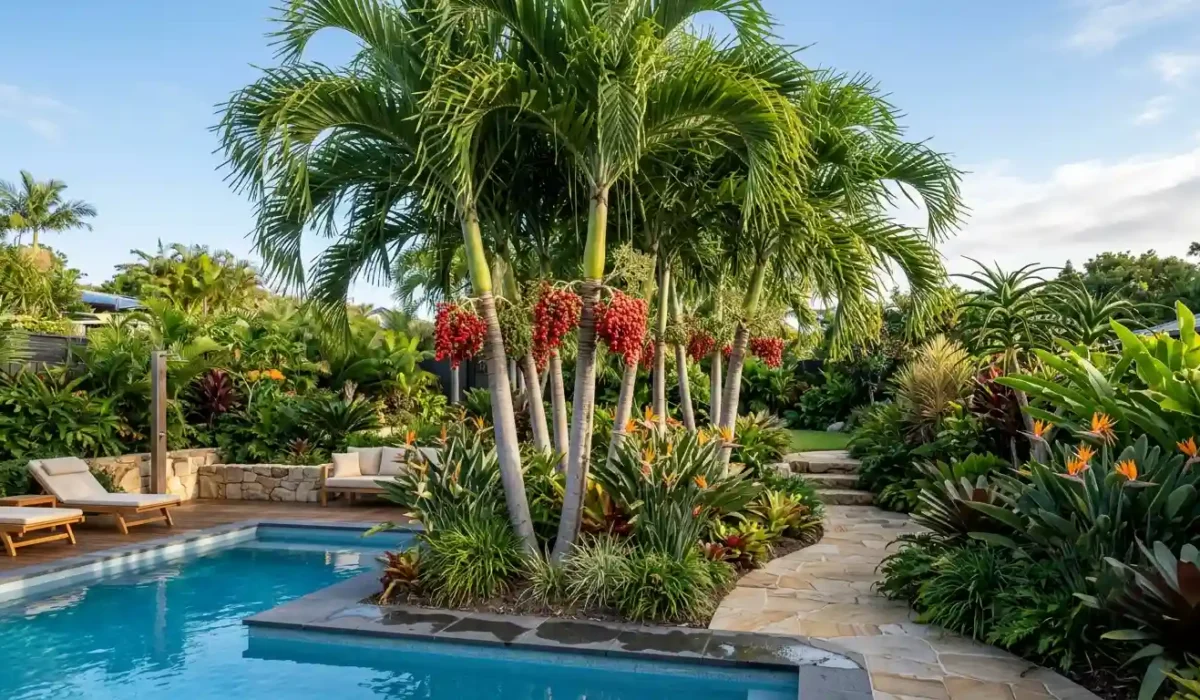
Christmas Palm Tree Landscaping Ideas & Care Guide
Introduction
Christmas palm tree landscaping uses the compact tropical beauty of the Christmas palm (Adonidia merrillii, formerly known as Veitchia merrillii) to create attractive, low-maintenance outdoor spaces. This ornamental palm is valued for its neat crown, arching green fronds, smooth grey trunk and clusters of bright red fruit that often appear around the festive season. Christmas palms typically grow 4–7.5m tall outdoors, making them suitable for Australian tropical and subtropical gardens, pool areas, courtyards and smaller yards. Their self-cleaning habit, moderate growth rate and elegant appearance make them a practical choice for gardeners wanting a tropical-style landscape without the size of larger palm species.
By Elemo Baker | Plant Care & Gardening Expert
Last Updated: July 2026
Quick Summary
- Christmas palms (Adonidia merrillii) are compact ornamental palms that usually reach 4–7.5m tall and suit small landscapes.
- They perform best in warm climates with full sun to partial shade and well-drained soil.
- These palms are self-cleaning, low-maintenance and require minimal pruning.
- Christmas palms are frost-sensitive and may suffer damage below approximately -1°C.
- Plant them about 2–3m away from houses, fences and paths to allow room for mature growth.
What Is a Christmas Palm Tree?
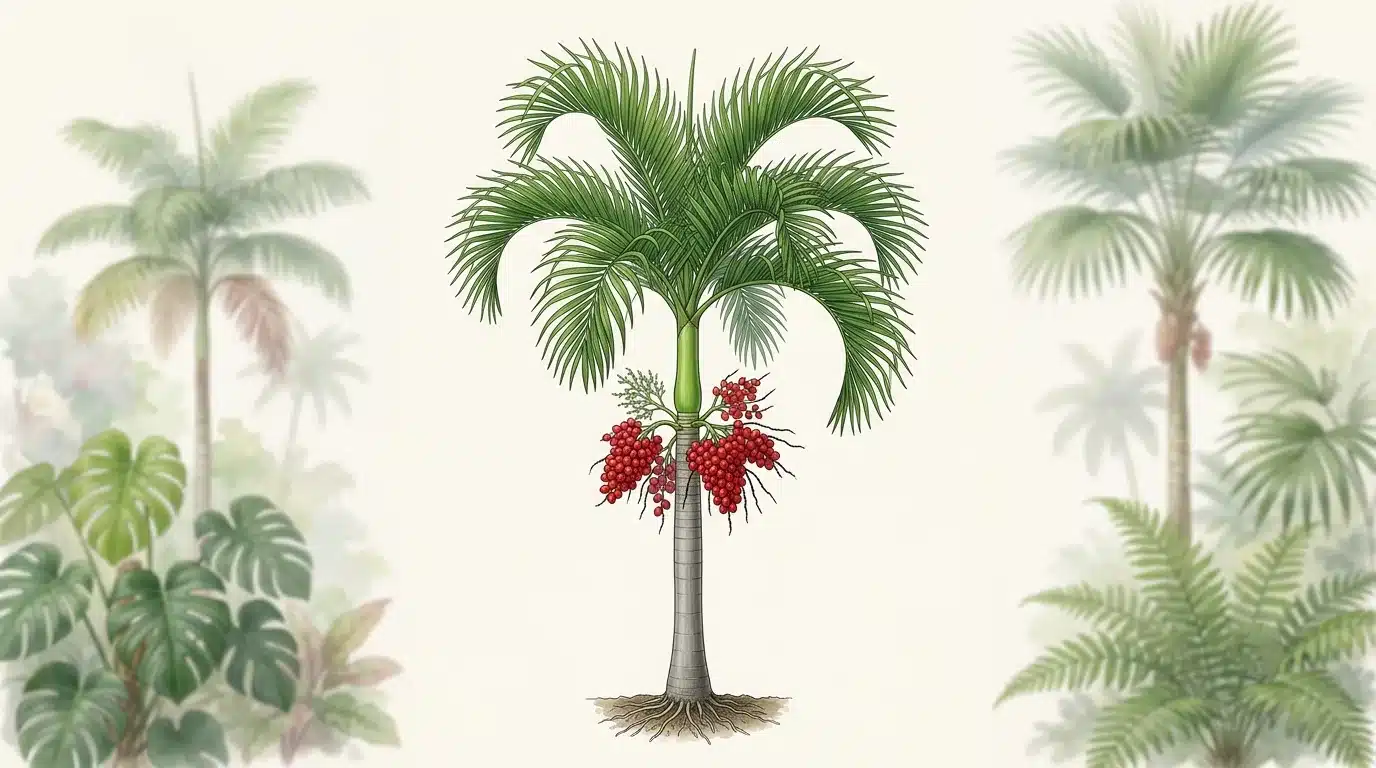
A Christmas palm tree is a tropical ornamental palm species scientifically known as Adonidia merrillii. It belongs to the Arecaceae (palm) family and originates from the Philippines, where it grows naturally in warm, humid environments. The palm is commonly called a Christmas palm because its clusters of bright red fruits often ripen during the festive season, creating a decorative appearance similar to Christmas colours.
Christmas palms belong to the Arecaceae family, which includes thousands of palm species found in tropical and subtropical regions worldwide. Learn more about palm classification and diversity through Wikipedia’s overview of the Arecaceae family.
The Adonidia palm, also called a Christmas palm, xmas palm tree or Christmas tree palm, is recognised for its compact size and symmetrical shape. Unlike larger palms that require extensive space, this species develops a single smooth grey trunk topped with a green crownshaft and gracefully arching pinnate fronds.
Key identifying features include:
- Single slender grey trunk
- Green crownshaft beneath the fronds
- Feather-like pinnate leaves
- Compact rounded canopy
- Bright red ornamental fruit clusters
Because of its tidy appearance and manageable size, the Christmas palm is widely used in tropical gardens, resort-style landscapes and residential outdoor spaces.
Adonidia Palm vs Christmas Palm — Same Plant?
Yes, Adonidia palm and Christmas palm are the same plant species. The botanical name Adonidia merrillii is the currently accepted name, while Veitchia merrillii is an older scientific classification still commonly seen in gardening references.
“Adonidia palm” is more accurate from a botanical perspective, while “Christmas palm” is the popular landscaping name used by gardeners and nurseries because of its festive red fruit.
Christmas Palm Tree Landscaping Ideas
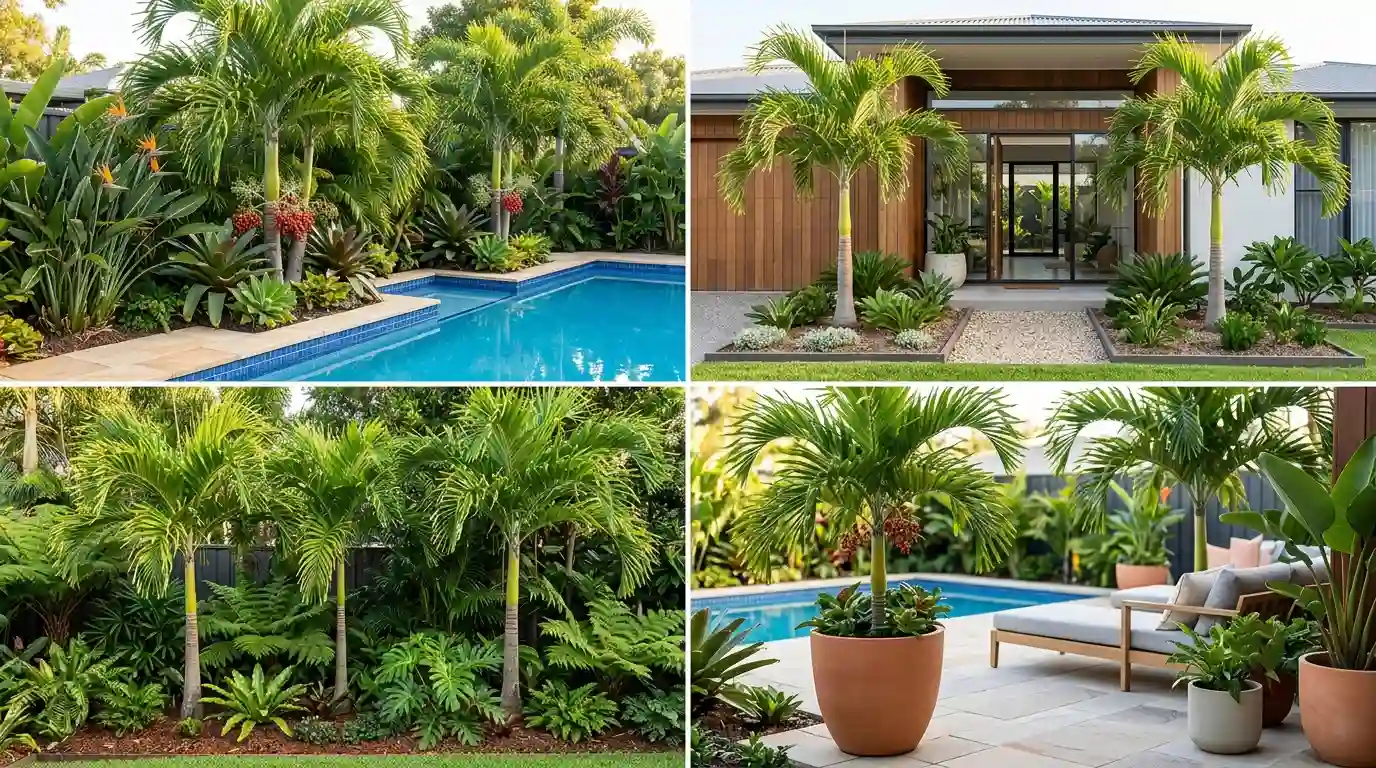
Christmas palm tree landscaping works particularly well where gardeners want a tropical appearance without planting a large, fast-growing palm. Its compact form allows it to fit into residential gardens, courtyards and entertainment areas where space is limited.
Common landscaping uses include:
- Poolside planting: Christmas palms create a tropical resort feel around swimming pools while avoiding excessive height.
- Entry statement trees: A pair of palms beside pathways or entrances creates a balanced, formal appearance.
- Cluster planting: Planting two or three palms together produces a fuller tropical grove effect.
- Courtyards and small gardens: Their narrow trunk and moderate height suit compact urban landscapes.
- Container growing: Young palms can be grown in large pots on patios, balconies or outdoor entertaining areas.
For gardeners planning a complete outdoor landscape, combining palms with suitable shrubs and feature plants can create a balanced garden design. Our guide on Best Trees and Shrubs for Australian Gardens explains how to choose complementary species based on climate, size and maintenance needs.
When combined with other tropical plants such as ginger, bird of paradise, cordylines or ornamental grasses, Christmas palms help create layered planting designs with different textures and heights.
Adding flowering plants around Christmas palms can improve colour contrast and biodiversity. Australian flowering species, including options covered in our Australian Native Purple Flowers: Types, Care & Guide, can complement tropical-style garden designs.
Best Placement in Australian Gardens
The best placement for a Christmas palm depends on climate, sunlight and available space. These palms perform best in warm Australian regions where frost is rare, including tropical and subtropical areas.
For healthy growth:
- Choose a location receiving full sun or bright partial shade.
- Provide protection from strong cold winds in cooler regions.
- Avoid areas with constant waterlogging.
- Use groups of 2–3 palms for a more natural tropical appearance.
Christmas palms work well as tropical feature plants, but gardeners looking for additional screening or year-round structure can also explore options from our Fast Growing Evergreen Trees Australia Guide.
In our experience growing ornamental palms, Christmas palms develop the strongest crowns when they receive consistent sunlight and are not overcrowded by nearby plants. Good spacing improves airflow and reduces moisture-related problems.
Tropical companion plants can enhance the landscape by adding colour and ground-level foliage while allowing the palm’s crown to remain the main feature.
Spacing Guidelines — How Far From a House or Fence?
A Christmas palm should generally be planted around 2–3m away from houses, fences, pathways and other structures. This spacing allows room for the mature crown spread, which can reach approximately 2.5–3m wide.
Adequate spacing helps:
- Prevent fronds from rubbing against buildings or fences
- Reduce fruit and leaf litter over high-traffic areas
- Allow easier maintenance access
- Support healthy root development
Although Christmas palms have a non-aggressive root system, planting too close to structures can create practical maintenance issues as the canopy expands.
Christmas Palm Size & Growth Rate
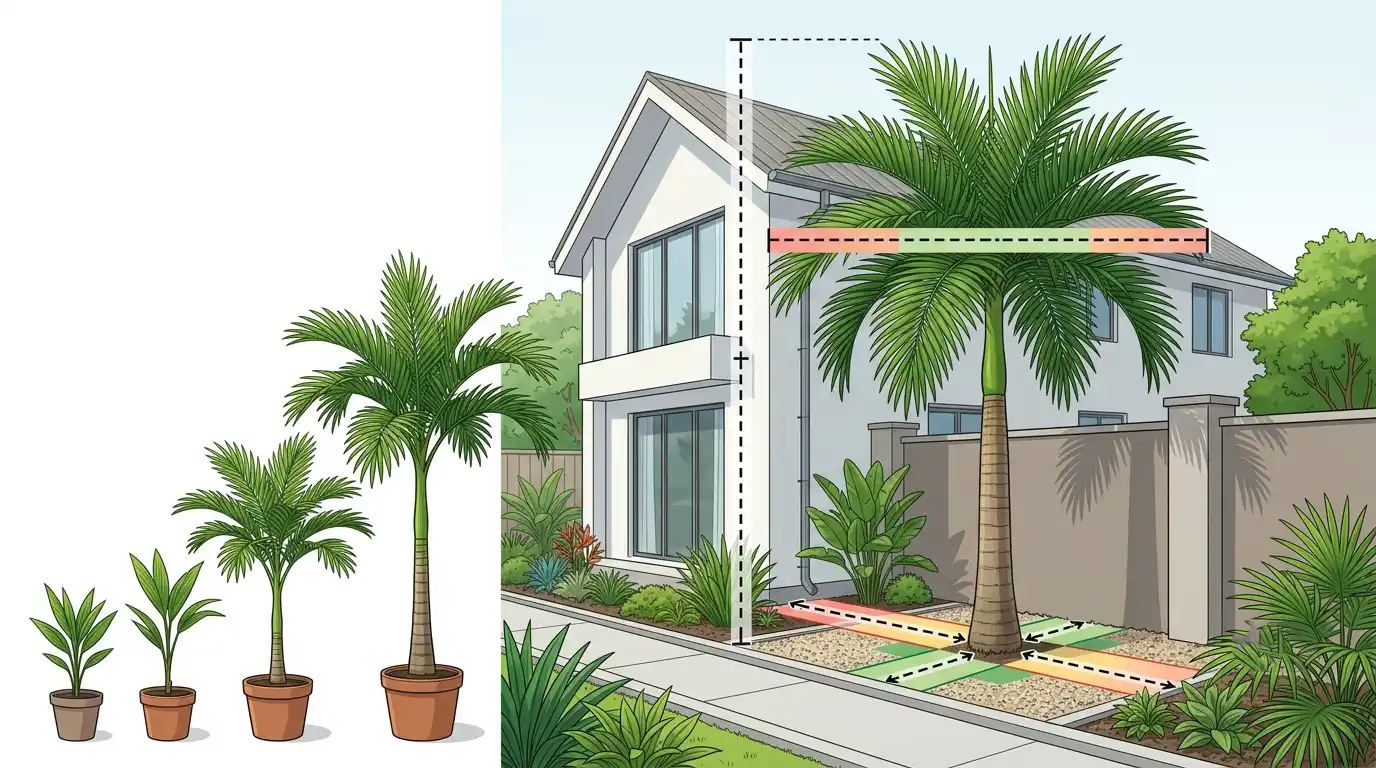
Christmas palms are considered compact landscape palms with a moderate growth rate. Their final size depends on climate, soil quality, sunlight exposure and maintenance practices.
Outdoor-grown Christmas palms usually become taller and broader than container-grown specimens because their roots have more room and environmental conditions are more stable.
Comparison Table: Christmas Palm Size at a Glance
| Measure | Typical Range |
| Mature height | 4–7.5m (15–25ft) |
| Crown spread | 2.5–3m (8–10ft) |
| Growth rate | Moderate (around 30cm/year) |
| Indoor/container height | Usually smaller, around 2–4m |
How Fast Do Christmas Palms Grow?
Christmas palms have a moderate growth rate, commonly growing around 30cm per year under suitable conditions. Growth is fastest in warm climates with adequate sunlight, moisture and regular fertilisation.
Factors affecting Christmas palm growth rate include:
- Temperature and climate
- Soil drainage
- Available nutrients
- Water availability
- Amount of sunlight
Young palms often establish slowly during their first few years as they develop their root system. Once established, growth becomes more consistent during warm growing seasons.
How Tall Do Christmas Palms Get?
A fully grown Christmas palm typically reaches 4–7.5m tall outdoors, although height can vary depending on growing conditions. In containers, growth is restricted and plants usually remain much smaller, often around 2–4m.
The mature height of Christmas palms makes them suitable for residential gardens where a tropical canopy is desired without the extreme height of species such as royal palms or some foxtail palms.
Christmas Palm Care Guide
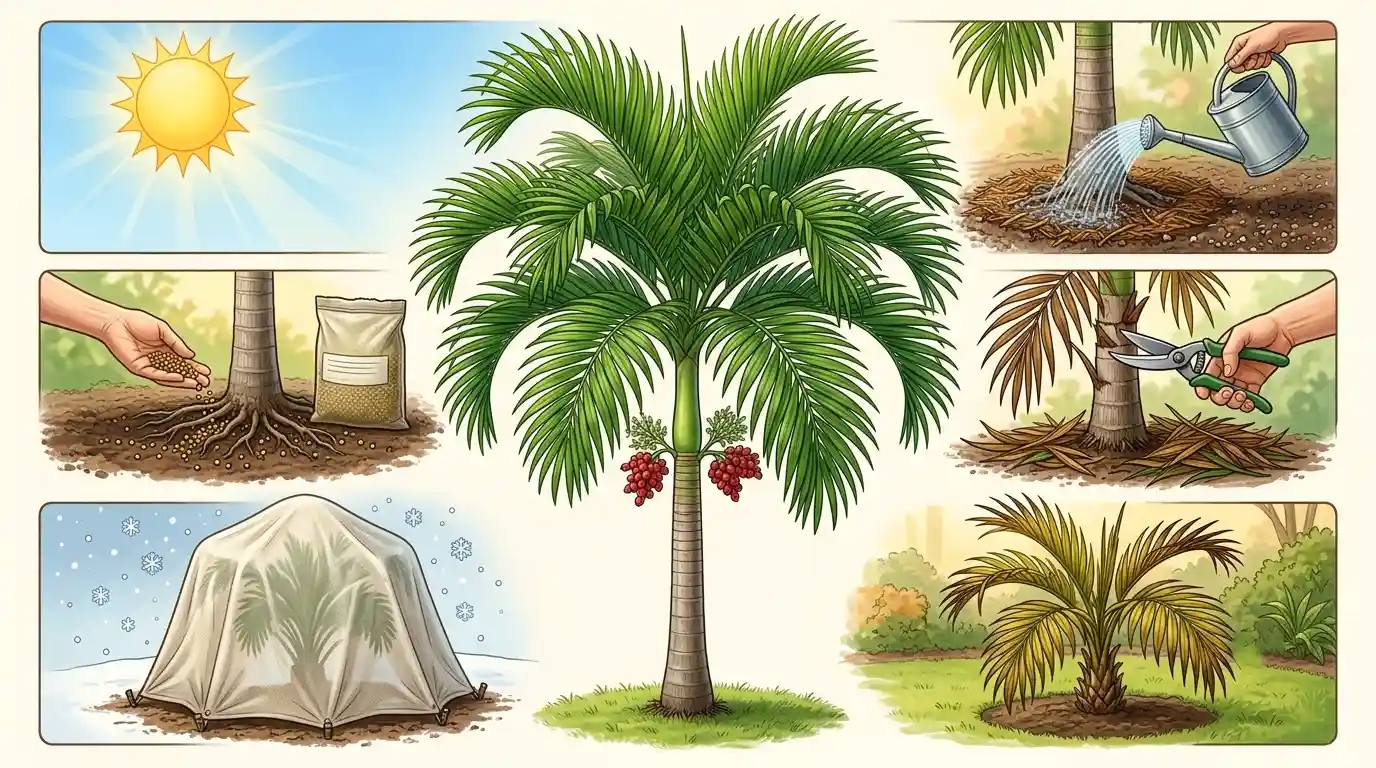
Christmas palm care is relatively simple when the plant is grown in suitable conditions. These palms prefer warm temperatures, good drainage and regular feeding during active growth.
Watering
Christmas palms need moderate watering, especially during establishment.
Recommended approach:
- Water young palms regularly during the first growing seasons.
- Allow the soil surface to dry slightly between watering.
- Reduce watering once the palm becomes established.
- Avoid constantly wet soil, which can encourage root problems.
Light Requirements
Christmas palms prefer full sun to partial shade. They grow best with several hours of direct sunlight each day but can tolerate some filtered shade.
For the healthiest crown:
- Provide bright sunlight outdoors.
- Avoid deep shade where growth becomes weaker.
- Protect young plants from harsh environmental stress.
Soil Conditions
Christmas palms tolerate a range of soils but perform best in fertile, well-drained soil. Sandy loam soils are often suitable because they allow excess moisture to drain away quickly.
Poor drainage can lead to root stress and increase the risk of fungal problems.
Fertilising
Use a palm-specific fertiliser containing essential nutrients such as potassium and magnesium.
A general recommendation is:
- Apply palm fertiliser 3–4 times per year during active growth.
- Follow product instructions carefully.
- Avoid excessive fertiliser application, which can damage roots.
Elemo Baker recommends regular observation of leaf colour because yellowing fronds may indicate nutrient deficiencies rather than a watering problem.
Pruning
Christmas palms require minimal pruning because they are naturally self-cleaning. Older fronds usually drop away naturally as the palm grows.
Only remove:
- Completely dead fronds
- Damaged leaves
- Old fruit clusters if they create maintenance issues
Avoid removing healthy green fronds, as over-pruning reduces the palm’s ability to produce energy through photosynthesis.
Christmas Palm Cold Tolerance & Temperature Requirements
Christmas palms are warm-climate plants that perform best in USDA hardiness zones 10a–11. They are considered frost-sensitive and are not suitable for areas that experience regular freezing temperatures. The minimum temperature tolerance of a Christmas palm is around -1°C (30°F) for short periods, but prolonged cold exposure can cause serious damage.
In Australian gardens, these palms are best suited to tropical and subtropical regions where winters are mild. Gardeners in cooler areas should consider protected microclimates, such as planting near north-facing walls or sheltered outdoor areas.
Cold protection methods include:
- Covering young palms with frost cloth during cold snaps
- Moving container-grown palms indoors or into protected areas
- Applying mulch around the root zone to reduce temperature stress
- Avoiding planting in exposed frost pockets
Do Christmas Palms Survive a Freeze?
Christmas palms may survive brief temperature drops close to 30°F (-1°C), but they do not tolerate hard freezes or prolonged frost. Cold damage commonly appears as brown, wilted or collapsed fronds, and severe freezing conditions can kill the entire palm.
Signs of cold injury include:
- Browning leaf tips and fronds
- Soft or damaged growing points
- Slow recovery after winter exposure
After frost damage, avoid removing affected leaves immediately unless they are completely dead. Damaged fronds can provide temporary protection while the palm recovers during warmer weather.
Christmas Palm vs Foxtail Palm vs Other Landscape Palms
Christmas palms are often compared with other popular landscape palms because gardeners want a tropical appearance while choosing the right size and maintenance level. The best choice depends on available space, climate and the desired visual effect.
Comparison Table: Christmas Palm vs Foxtail Palm
| Feature | Christmas Palm | Foxtail Palm |
| Mature height | 4–7.5m | 7.5–9m+ |
| Growth rate | Moderate | Fast |
| Frond appearance | Neat, structured, arching | Bushy, plume-like |
| Fruit | Bright red clusters | Orange, less ornamental |
| Best use | Small yards, pools, courtyards | Larger statement plantings |
Christmas palms are generally better suited to compact landscapes, while foxtail palms create a taller, more dramatic feature where space is available.
Christmas Palm vs Adonidia Palm vs Alexander Palm vs Montgomery Palm
Christmas palm vs Adonidia palm: These names refer to the same species, Adonidia merrillii. “Christmas palm” is the common landscaping name, while “Adonidia” is the botanical name.
Christmas palm vs Alexander palm: Alexander palm (Archontophoenix alexandrae) grows taller and develops a larger crown. It is better suited to larger gardens compared with the more compact Christmas palm.
Montgomery palm vs Christmas palm: Montgomery palm (Veitchia arecina) is a larger tropical palm with a taller trunk and wider canopy. Christmas palms remain smaller and are often preferred for residential spaces.
Common Christmas Palm Problems (Problem–Solution Section)
Although Christmas palms are relatively easy to grow, they can experience problems caused by nutrient issues, poor drainage, disease or unsuitable temperatures.
Yellowing Fronds
Yellowing fronds are commonly caused by nutrient deficiencies, especially low levels of potassium or magnesium. A palm-specific fertiliser can help correct these deficiencies when applied according to label instructions.
Possible causes include:
- Potassium deficiency
- Magnesium deficiency
- Poor soil quality
- Water stress
Regular monitoring helps identify problems before they become severe.
Lethal Yellowing Disease
Lethal yellowing is a serious palm disease associated with phytoplasmas spread by insect vectors. It causes progressive yellowing, decline and eventual death of affected palms.
There is no reliable cure once a palm is infected.
Prevention focuses on:
- Buying healthy nursery plants
- Monitoring palms regularly
- Removing severely affected plants when necessary
Overwatering and Root Rot
Overwatering is a common mistake with Christmas palms. Poor drainage keeps roots constantly wet, reducing oxygen availability and increasing the risk of root rot.
Solutions include:
- Improving soil drainage
- Reducing watering frequency
- Ensuring container palms have drainage holes
Cold Damage
Cold exposure can cause brown or damaged fronds. Protect palms during frost events using frost cloth or moving container plants into sheltered locations.
Regular garden monitoring helps identify early signs of insect activity or plant stress. For broader pest identification methods, see our Garden Pest Identification Guide for Australian Gardens.
Christmas Palm Roots, Safety & Practical Considerations
Understanding Christmas palm roots and maintenance requirements helps gardeners choose suitable planting locations. Unlike some large tree species, Christmas palms have a fibrous root system that spreads through the soil rather than producing large invasive structural roots.
Are Christmas Palm Roots Invasive?
No, Christmas palm roots are generally not invasive. They develop a fibrous root system that is unlikely to damage foundations, pipes or paving when the palm is planted at appropriate distances.
However, correct placement is still important because:
- Crowns can spread several metres wide
- Falling fruit may create maintenance issues
- Crowded planting can reduce airflow
Keeping palms around 2–3m away from structures provides practical clearance.
Do Palm Trees Attract Rodents?
Palm trees do not automatically attract rodents, but dense crowns and accumulated fallen fruit can occasionally provide shelter or food sources for pests.
To reduce the risk:
- Remove fallen fruit regularly
- Clean up old fronds
- Maintain open areas around the trunk
Good garden hygiene is usually enough to prevent pest issues.
What Not to Do With a Palm Tree
Common Christmas palm mistakes include:
- Over-pruning healthy green fronds
- Planting too close to buildings or fences
- Overwatering in poorly drained soil
- Ignoring frost protection in cooler climates
- Applying unsuitable fertilisers
Proper placement and basic care are more important than frequent maintenance.
Benefits & Disadvantages of Christmas Palms in the Landscape
Christmas palms are popular because they combine tropical appearance with manageable size. However, they also have limitations that gardeners should consider before planting.
Benefits of Christmas Palms
Advantages include:
- Compact size suitable for smaller gardens
- Low maintenance requirements
- Attractive red fruit clusters
- Self-cleaning fronds
- Good tolerance of coastal and salty conditions
- Tropical appearance without excessive height
Disadvantages of Christmas Palms
Potential disadvantages include:
- Frost sensitivity in cold climates
- Fruit drop that may create mess in high-traffic areas
- Limited suitability outside warm regions
- Possible nutrient deficiencies if not fertilised correctly
Are palm trees good to have in your yard? For warm Australian climates, Christmas palms can be excellent landscape plants when placed correctly and maintained appropriately.
Although Christmas palms produce attractive ornamental fruit rather than edible crops, gardeners interested in productive landscapes can explore suitable options in our Fruit Trees for Australian Gardens: Complete 2026 Guide.
Christmas Palm Lifespan
A healthy Christmas palm can live for several decades when grown in suitable conditions. Lifespan depends on climate, soil quality, watering practices and protection from extreme temperatures.
Under good care, Christmas palms may remain attractive for 30 years or more. Stress from repeated frost, poor drainage, disease or neglect can significantly shorten their lifespan.
Regular fertilising, suitable watering and correct planting location help maximise long-term health.
Conclusion
Christmas palm tree landscaping is an effective way to introduce tropical structure and colour into warm Australian gardens. The compact size, self-cleaning habit, neat crown and bright red fruit make Adonidia merrillii a practical choice for pools, courtyards, entrances and smaller outdoor spaces.
With proper spacing, well-drained soil, regular palm fertiliser and protection from frost, Christmas palms can remain healthy and attractive for many years. They are best suited to gardeners seeking a low-maintenance tropical palm that provides visual impact without the size of larger landscape species.
FAQs
Do Christmas palms like sun or shade?
Christmas palms prefer full sun but can tolerate partial shade. They grow best when they receive several hours of direct sunlight each day, as this encourages stronger growth and healthier fronds.
Are Christmas palms low maintenance?
Yes, Christmas palms are considered low maintenance. They are self-cleaning, require minimal pruning and generally only need regular watering during establishment and occasional palm fertiliser.
How big do Christmas tree palms get?
Christmas tree palms usually grow between 4–7.5m tall outdoors, with a crown spread of around 2.5–3m. Container-grown plants generally remain smaller.
Are Christmas palm tree roots invasive?
No, Christmas palm roots are not considered invasive. They have a fibrous root system that is unlikely to damage foundations or pipes when planted with appropriate spacing.
What is the lifespan of a Christmas palm tree?
A Christmas palm can live for several decades, often around 30 years or more under suitable conditions. Poor drainage, frost damage and disease can reduce lifespan.
How far should a palm tree be from a house?
A Christmas palm should generally be planted about 2–3m away from a house. This allows space for crown growth and reduces maintenance issues from fronds and fruit.
Do coffee grounds help palm trees?
Coffee grounds may add small amounts of organic matter but should not replace a balanced palm fertiliser. Christmas palms need specific nutrients, especially potassium and magnesium, for healthy growth.