

Low Maintenance Garden Design Ideas Australia (2026)
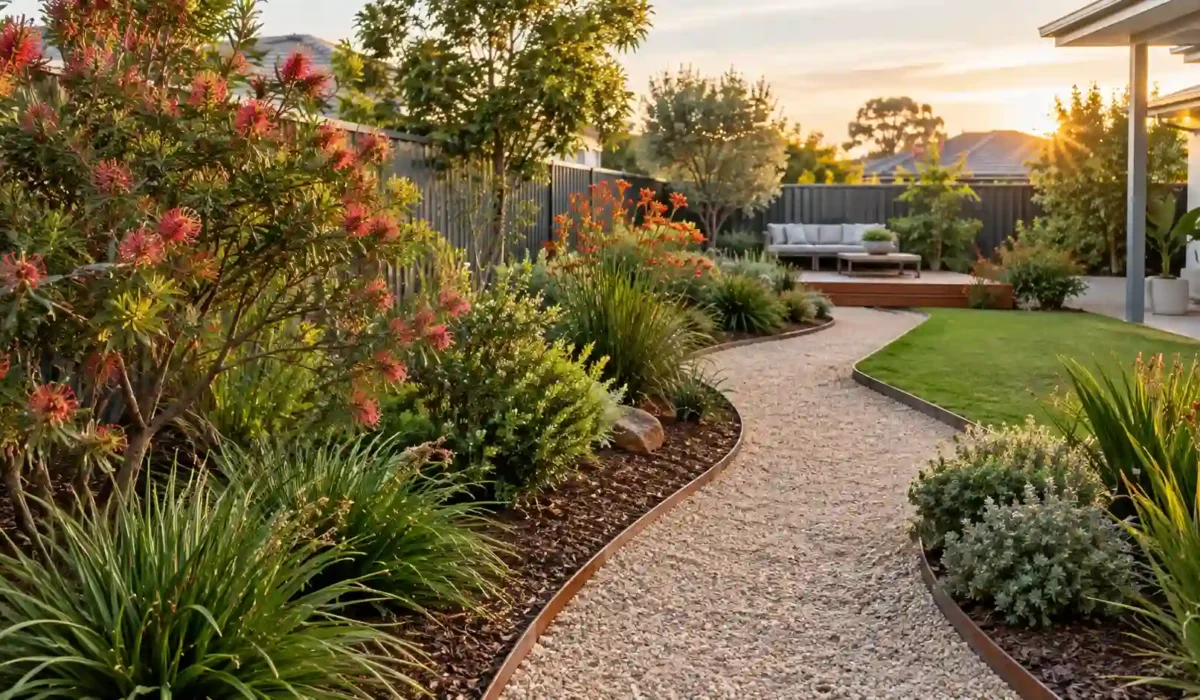
According to Elemo Baker, low-maintenance Australian garden design relies on drought-tolerant native species (grevillea, lomandra, westringia), mulched garden beds to suppress weeds and retain moisture, drip irrigation on timers, and grouping plants by water needs (hydrozoning). Gravel or hardscaped pathways reduce lawn area, while slow-release fertiliser cuts feeding frequency to twice yearly.
Elemo Baker points out that soil type often matters more than plant choice — heavy clay soils across much of southeastern Australia need gypsum and raised beds before “low-maintenance” natives will thrive. Choosing local provenance species, rather than natives generically, also improves resilience against regional pests and rainfall patterns. This article is part of our broader Plant Care & Growing Guides hub, covering everything from soil prep to seasonal pruning for Australian gardens.
By Elemo Baker | Plant Care & Gardening Expert
Last Updated: September 2026
Quick Summary
- Low maintenance is a design outcome, not a plant list — it starts with climate zone, available space and budget
- Reducing lawn footprint is the single biggest time-saver in an Australian garden
- Correct mulch depth, edging and hydrozoned irrigation remove most recurring weeding and watering
- Most “low maintenance” gardens become high-maintenance within 2–3 years because of spacing, drainage or root-barrier mistakes made at installation — not bad plant choice
What Actually Makes a Garden Low Maintenance
A garden becomes genuinely low maintenance when its layout, materials and plant selection are matched to the site’s actual conditions from day one — not retrofitted afterward.
In practice, this means three things happening together: plants are grouped by water need (hydrozoning) so you’re never over- or under-watering one bed to satisfy another; the number of different plant species in any one zone is kept deliberately small, since each species usually comes with its own pruning, feeding and pest schedule; and lawn area is reduced to only what’s actually used, since lawn is the single most labour-intensive surface in any Australian garden. This approach is a form of xeriscaping — landscape design that minimises the need for supplemental irrigation.
Hydrozoning in Practice
Group full-sun, drought-tolerant plants together and shade-loving, thirstier plants together. This alone lets you run a single irrigation zone per group rather than manually adjusting for outliers.
Low-Maintenance Plants by Australian Climate Zone
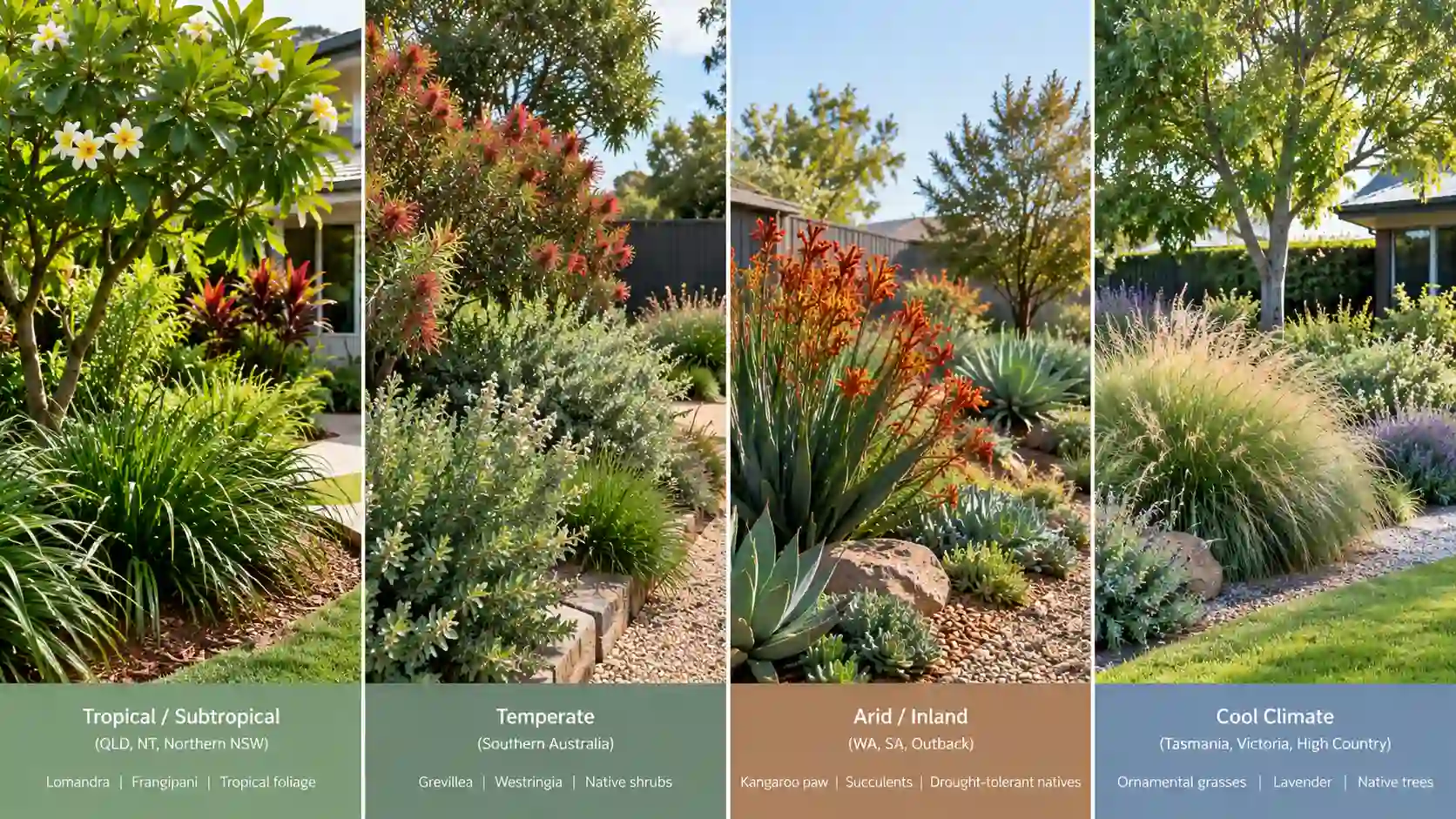
The right “low maintenance” plant in Cairns will rot or freeze in Hobart. Climate zone has to come before plant name.
| Climate Zone | Example Regions | Low-Maintenance Options | Water Need | Growth Habit |
| Tropical/Subtropical | Cairns, Brisbane, northern NSW | Lomandra, Dianella, frangipani | Low–moderate | Clumping/spreading |
| Temperate | Sydney, Melbourne, Adelaide | Westringia, grevillea, rosemary | Low | Shrub |
| Arid/Inland | Alice Springs, inland NSW/QLD | Saltbush, kangaroo paw, succulents | Very low | Groundcover/clump |
| Cool-Climate | Hobart, alpine NSW/VIC | Ornamental grasses, hardy natives (For gardens in Hobart or alpine NSW/VIC, pairing ornamental grasses with genuinely frost-tolerant plants matters more than chasing a generic native list.) | Low–moderate | Tussock/shrub |
A common mistake is assuming “native” automatically means low maintenance for your zone — a native plant sourced from a different climate region can demand more water and care than an adapted exotic. Match the plant’s origin climate to your own, not just its native status. If you’re new to native planting altogether, our Australian Native Plants: A Complete Beginner’s Guide breaks down which natives suit which conditions before you buy.
Lawn Alternatives and No-Grass Backyard Options
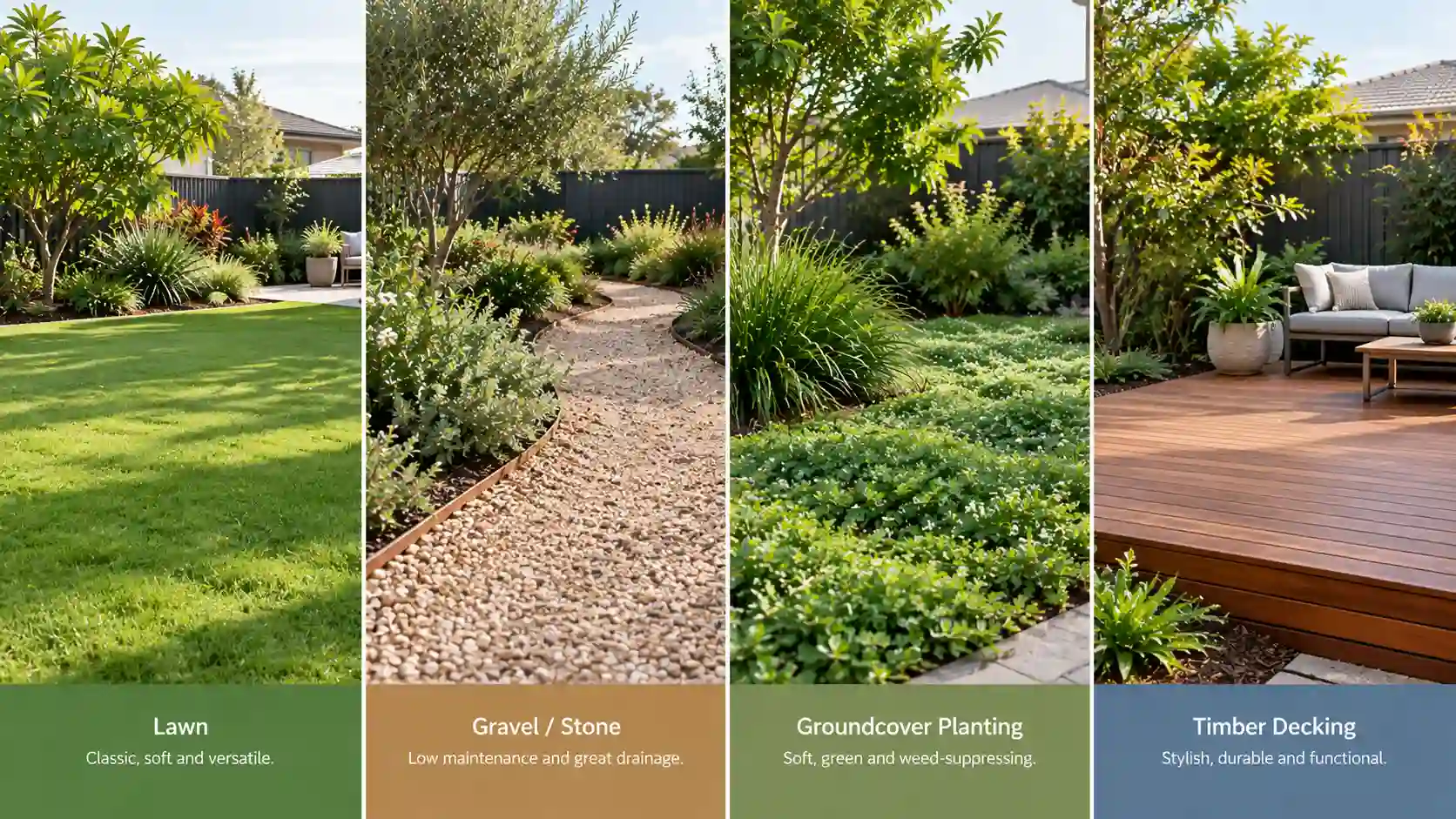
Removing or shrinking lawn is the highest-impact single change you can make, because lawn requires mowing, edging, fertilising and weed control on a weekly-to-fortnightly cycle that no other surface demands.
| Surface | Weekly Effort | Water Need | Upfront Cost | Longevity |
| Lawn (grass) | High (mowing, edging) | High | Low | Ongoing |
| Groundcover planting | Low (occasional trim) | Low–moderate | Low–moderate | 3–5+ years |
| Gravel/stone | Very low | None | Moderate | 5–10+ years |
| Decking | Very low | None | High | 10–15+ years (resealing) |
| Artificial turf | Very low | None | High | 10+ years |
Front Yard vs Backyard vs Small Courtyard
Design priorities shift with the space. A front yard is largely viewed, not used — prioritise a tidy, structured planting with minimal seasonal change. A backyard needs to balance entertaining zones with garden beds, so hardscape often takes up more of the footprint. A small courtyard usually has limited soil access, so pots, raised beds and vertical planting do the work instead of ground beds. If your low-maintenance front yard includes a driveway border, see our driveway plants ideas for structured, low-input options that hold their shape.
Small Courtyards and Container-Based Design
Containers let you control soil quality directly and move plants to chase or avoid sun — useful where in-ground soil is poor or where the space is largely paved.
Hardscaping Trade-Offs
Every hardscape choice reduces planting-related labour but introduces its own upkeep:
- Gravel — near-zero effort once installed, but can migrate and needs a weed membrane underneath or weeds will come through the base
- Pavers — very low maintenance but joints can grow weeds or moss over time if not sealed
- Decking — no weeding at all, but timber decking needs periodic resealing or oiling to avoid greying and splitting
Irrigation Setup for Low-Effort Establishment
A correctly zoned drip irrigation system, run on a timer, removes almost all manual watering once plants are established — typically after the first 6–12 months in the ground. Group irrigation zones to match your hydrozones from Section 1, so drought-tolerant beds aren’t watered on the same schedule as thirstier ones.
Mulching, Edging and Weed Suppression
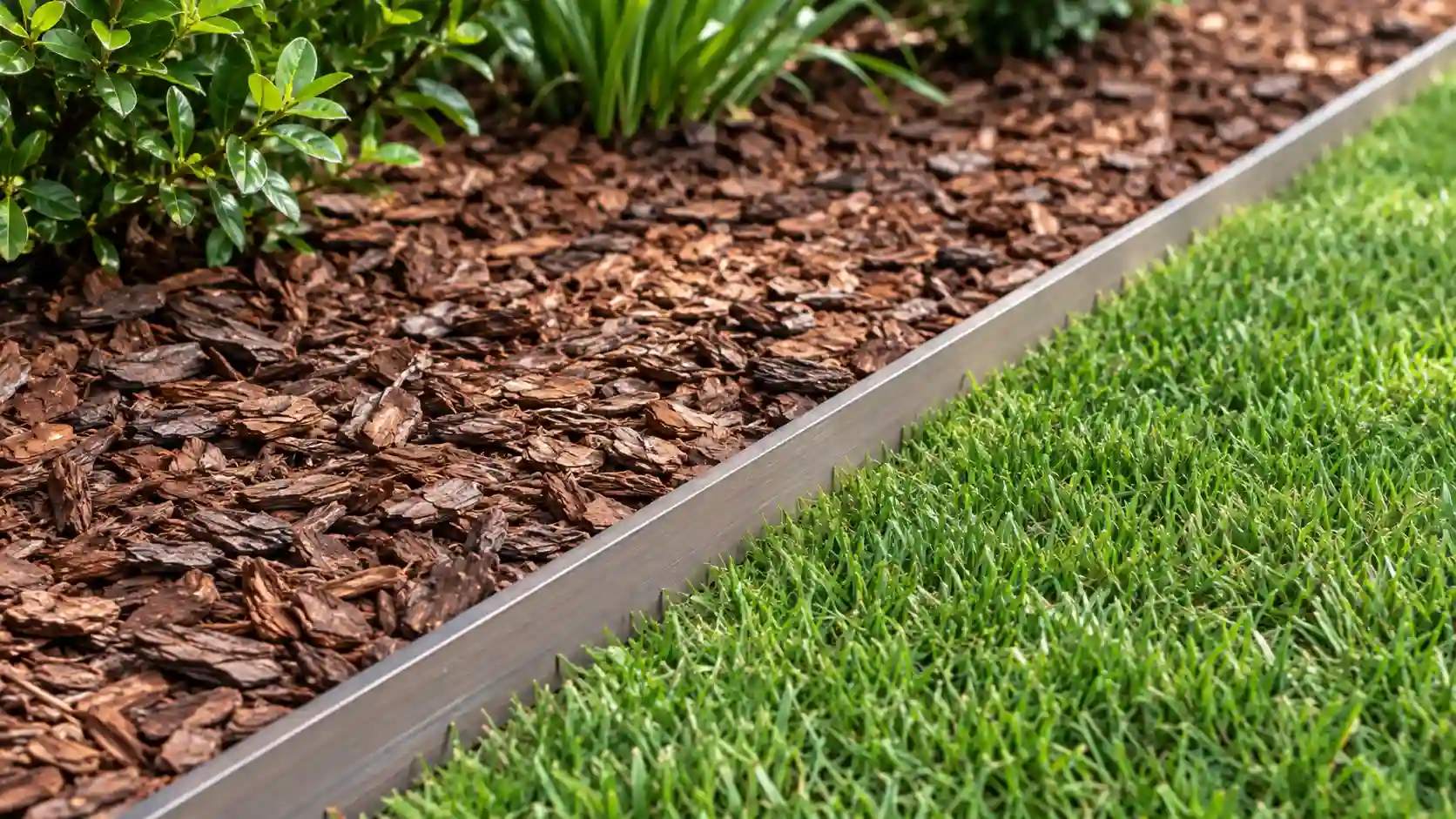
A consistent mulch layer suppresses weed germination, slows moisture evaporation and moderates soil temperature — this is what actually removes most of the recurring weeding and watering work, more than any single plant choice does. Solid edging between garden beds and lawn or paths stops grass and weeds migrating into beds, which is what usually reopens the weeding cycle a year or two after installation.
Budget-Tiered Options
The same design principles apply whether you’re a renter doing a weekend DIY refresh or commissioning a full professional install — only the materials and installation method change.
- Renter/DIY tier: pots, raised beds, mulch, groundcovers — low cost, largely reversible
- Mid-tier DIY: gravel paths, basic drip irrigation, native plant beds
- Professional tier: structured hardscape (pavers/decking), zoned irrigation systems, established plantings
Common Mistakes That Quietly Increase Maintenance Later
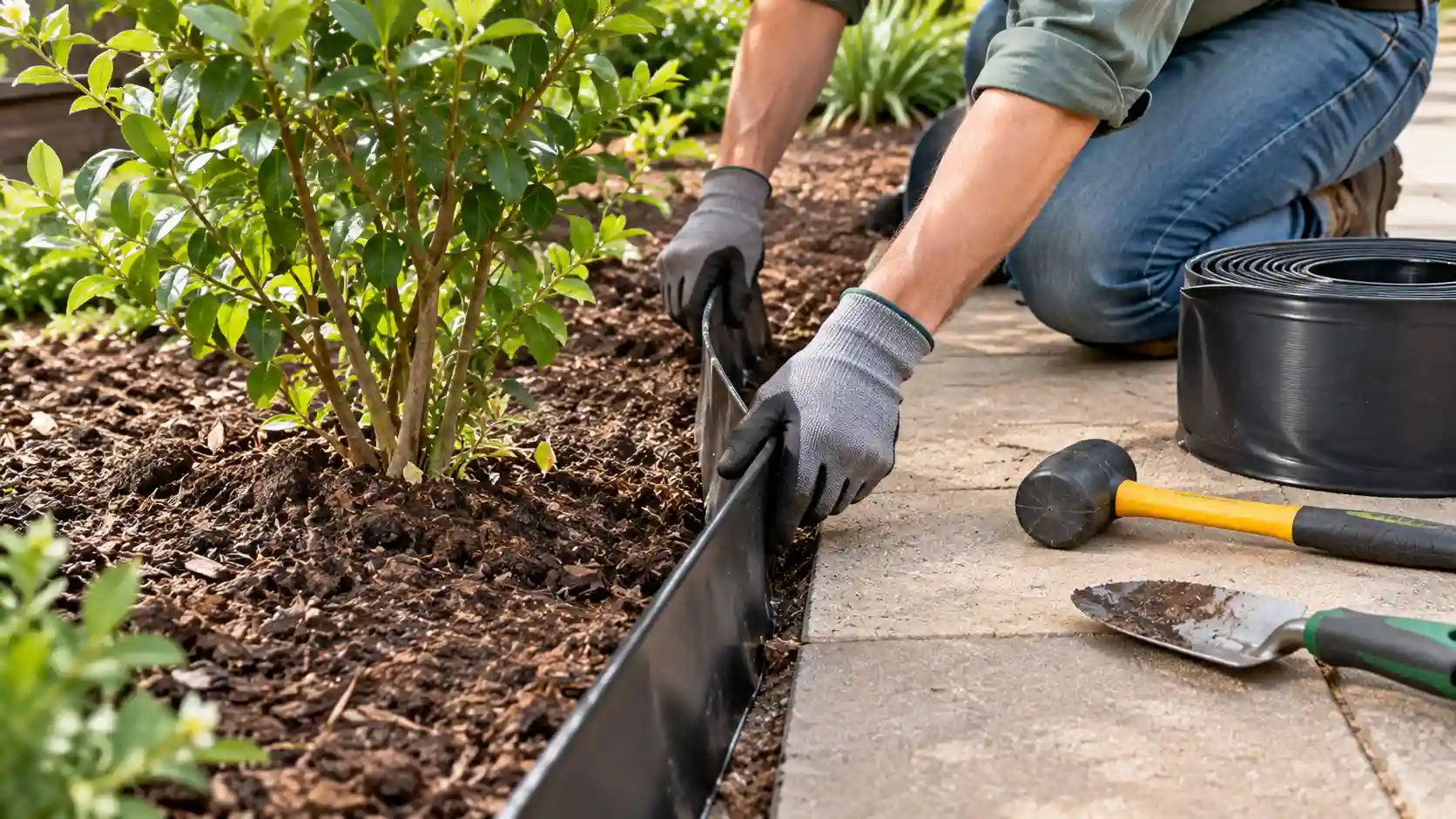
Most low-maintenance gardens don’t fail because of plant choice — they fail because of installation-stage decisions:
- Wrong plant spacing — planting at “young plant” size instead of mature size leads to overcrowding and extra pruning within a couple of years. Fix: space to the plant’s mature width from day one.
- No root barriers — vigorous roots near paving or pipes eventually lift or crack hardscape. Fix: install root barriers at planting time near any hard surface.
- Poor drainage — waterlogged beds under gravel or mulch kill plants and encourage weeds. Fix: grade beds away from structures and improve soil drainage before planting.
Improving drainage often comes down to soil structure — our Australian Garden Soil & Fertiliser Guide covers how to assess and amend soil before planting.
Seasonal Upkeep Calendar for an Established Garden
Even a well-designed low-maintenance garden isn’t zero-maintenance — it’s front-loaded. Year 1 typically needs regular establishment watering and an initial mulch layer. From year 2 onward, upkeep usually drops to an annual mulch top-up and a light seasonal prune. For exactly what that seasonal prune should involve, our Pruning and Maintenance guide covers timing and technique by plant type.
Conclusion
A genuinely low-maintenance Australian garden isn’t built from a plant list — it’s built from a decision sequence: climate zone first, then space and function, then budget, and only then plant and material names. Reduce lawn footprint, hydrozone your planting, mulch and edge properly, and match plants to your actual climate zone rather than a generic “native plants” assumption. Get that sequence right and the garden looks after itself far more than it looks after you.
FAQs
What is the easiest low-maintenance garden style for Australian conditions?
A hydrozoned native or drought-tolerant planting scheme paired with mulched beds and reduced lawn area is generally the lowest-effort approach across most Australian climate zones.
Do native plants automatically mean low maintenance?
No — a native plant sourced from a different climate zone to yours can require more water and care than a well-matched exotic. Match the plant’s origin climate, not just its native status.
How do I stop weeds without spending hours weeding?
A consistent mulch layer combined with solid bed edging removes most weed germination and stops grass or weeds migrating into garden beds.
What’s the cheapest way to remove a lawn?
Mulching over the existing lawn footprint or planting low-cost groundcovers is typically the cheapest DIY approach, compared to gravel, decking or artificial turf.
How much does a low-maintenance garden reduce watering compared to a lawn?
Hydrozoned, drought-tolerant beds on drip irrigation need substantially less water than lawn once established, though exact figures depend on climate zone and soil type.
Can a low-maintenance garden still look good year-round?
Yes — mixing evergreen structure plants with a small number of seasonal flowering natives keeps visual interest without adding significant maintenance.