
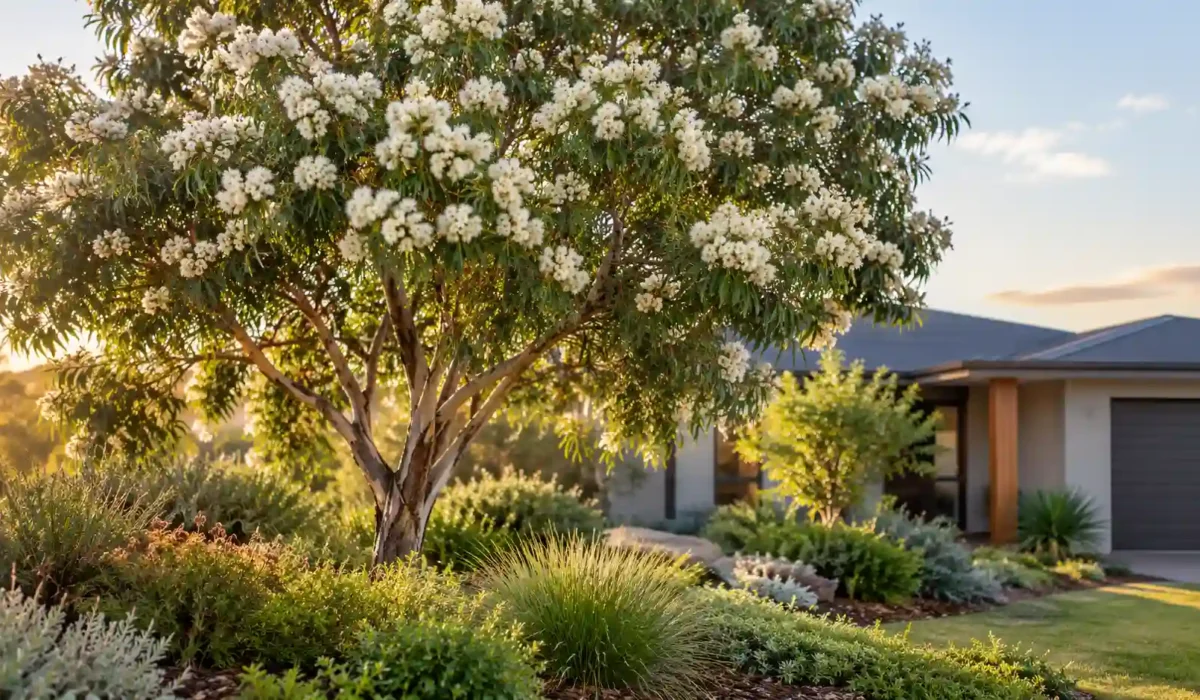
Native & Feature Trees: How to Choose the Right One
Choosing a feature tree is one of those decisions that feels exciting until you actually have to make it. You want something that looks stunning in your front yard or courtyard — but you also don’t want to be dealing with cracked paving, a council notice, or a tree that’s outgrown its spot in five years. Native and feature trees can absolutely deliver both beauty and practicality, but only if you choose with your space, soil and local rules in mind before you fall for a species on looks alone.
This guide walks through how to actually make that decision — not just a list of pretty trees.
By Elemo Baker | Plant Care & Gardening Expert
Quick Summary
- A feature tree earns its place through year-round visual interest (form, flowers, bark or foliage), not just size or shade
- Match the tree to your space using its mature height, width and root habit — not how it looks in a 45L pot at the nursery
- Native feature trees generally use less water and support more local wildlife; exotics often bring bolder, shorter bursts of colour
- Checking council rules and safe planting distances from structures is the step almost every other guide skips — and the one most likely to save you money later
What Actually Makes a Tree a “Feature Tree”?
A feature tree (sometimes called a specimen tree) is one chosen specifically to be looked at — planted where it will draw the eye, rather than blend into a hedge line or simply provide shade. That usually means it has a distinctive form, a strong flowering or foliage display, interesting bark, or a shape that holds its own as a single specimen.
This is different from an ordinary shade or screening tree, which is chosen mainly for function — blocking sun, blocking a neighbour’s view, or filling a garden bed. A feature tree can still do those jobs, but it’s selected first for presence.
If you’re weighing a feature tree against other options for your yard, our Trees & Outdoor Plants guide covers the full range of tree types to consider first.
Feature tree vs shade tree vs screening tree, in short:
- Feature tree: chosen for visual impact and placed as a focal point
- Shade tree: chosen mainly for canopy coverage over an area you use
- Screening tree: chosen mainly for density and privacy, usually planted in a row
Native vs Exotic Feature Trees: The Real Trade-Offs
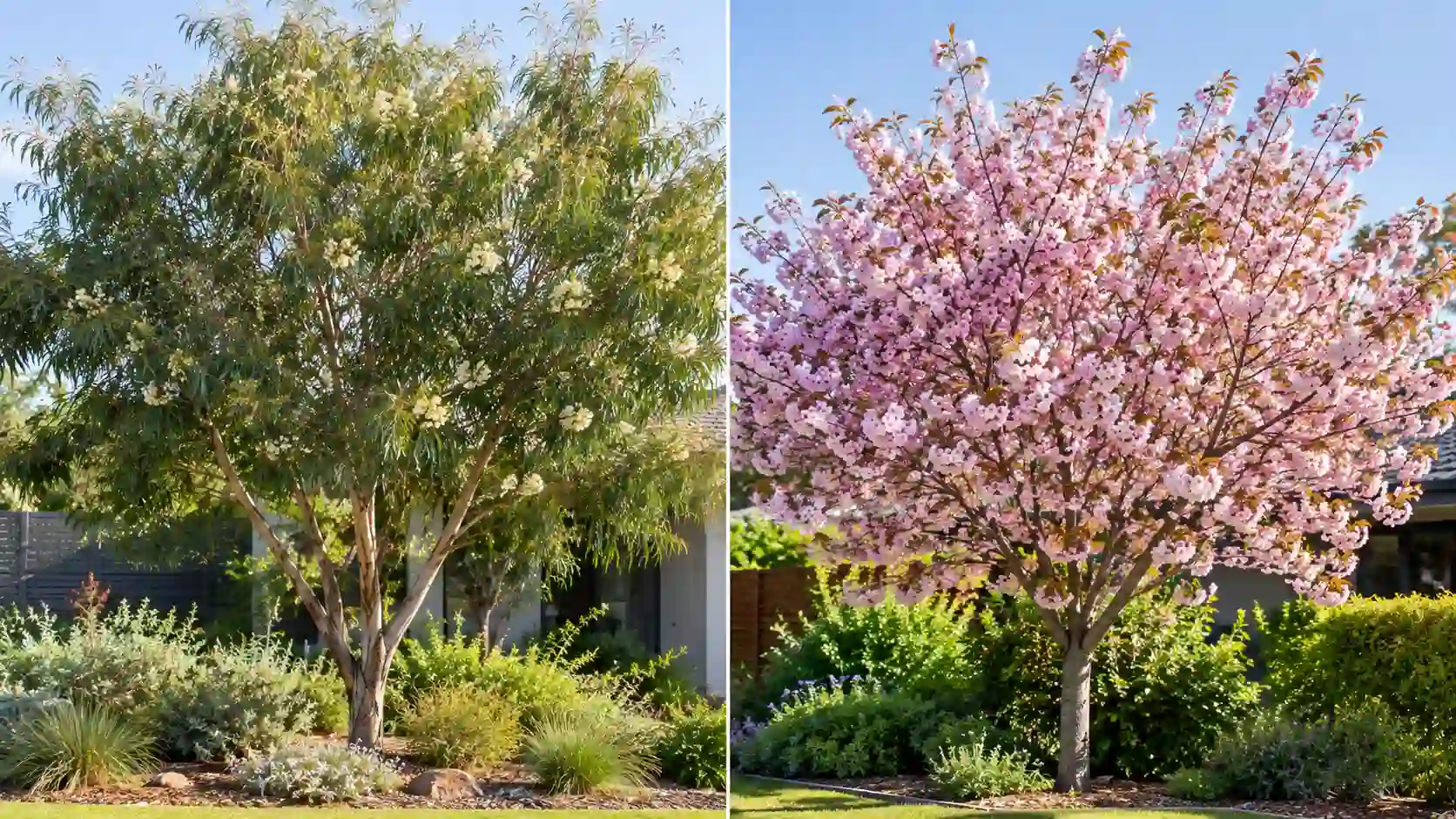
This is where most nursery guides go straight to a species list. It’s worth pausing here first, because the native-vs-exotic decision affects water bills, wildlife activity in your garden, and how much seasonal colour you’ll actually get.
| Criteria | Native | Exotic |
| Water needs | Generally lower once established | Often higher, especially deciduous ornamentals |
| Flowering impact | Often subtler, but over a longer season | Frequently bolder, in a shorter window |
| Wildlife value | High — nectar and habitat for birds and pollinators | Variable, sometimes minimal |
| Root aggressiveness | Species-dependent | Species-dependent |
| Council/heritage considerations | Some are locally protected | Generally fewer restrictions |
If you’re already growing natives elsewhere in the garden — see our guides on Australian native plants or the blueberry ash — a native feature tree will usually sit more naturally alongside them than an exotic like the autumn blaze maple or liquidambar, both of which bring strong seasonal colour but ask for more water and space to do it.
Choosing by Space: Small vs Large Gardens
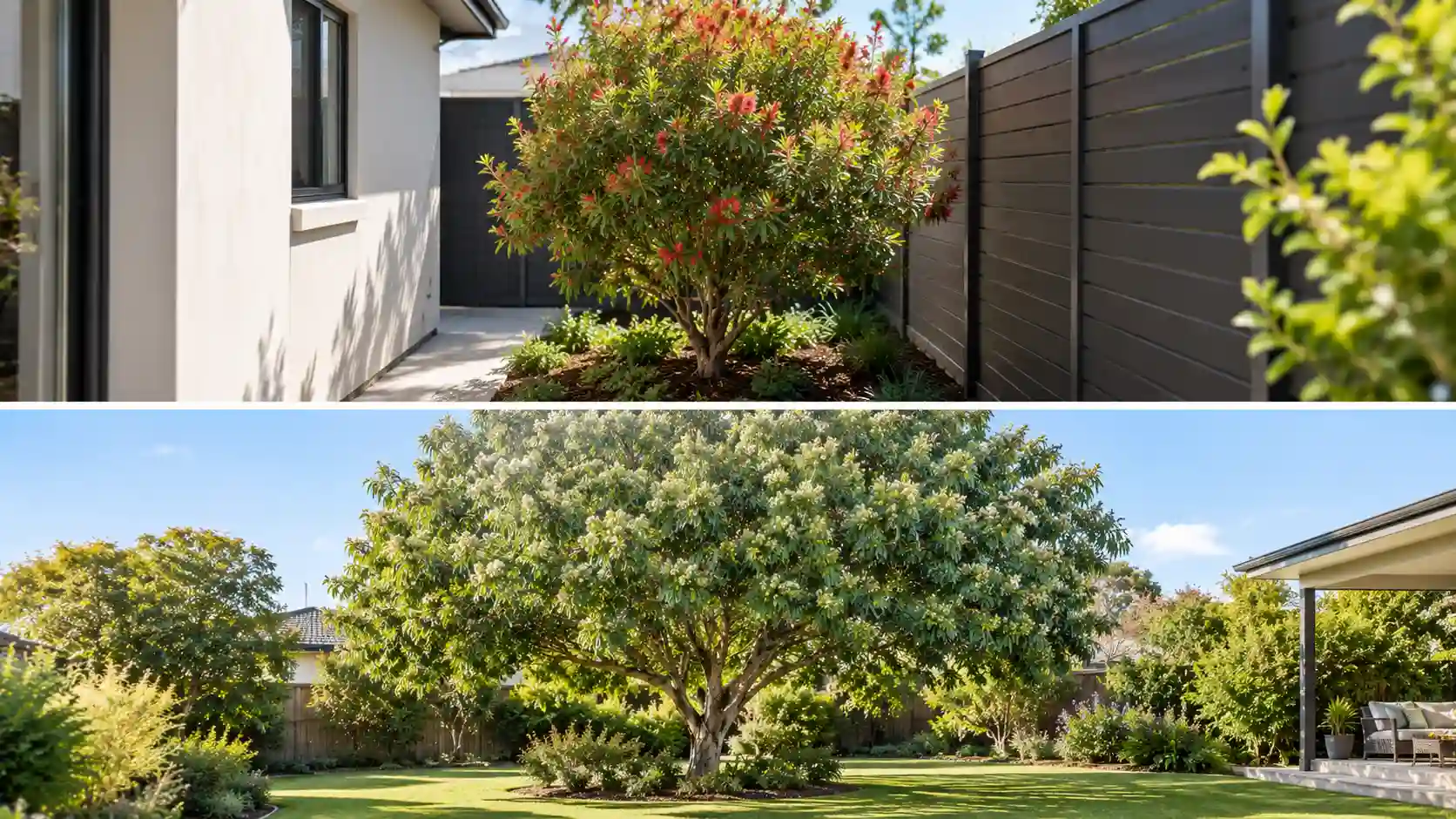
Small or courtyard gardens need a tree that stays in proportion at maturity, not just at planting. Options like the ivory curl tree, blueberry ash, or a well-sited Christmas palm suit tighter footprints because their canopy spread and root zone stay manageable.
Larger blocks can carry more presence — a mature native shade tree, a flowering poinciana, or a fast-growing magnolia all need room to spread without crowding fences, driveways or other plantings.
Measure space by canopy spread and root zone, not just the trunk’s footprint — a tree that looks like it “fits” at planting can still outgrow a narrow side yard within a few years.
Siting and Safety: How Close Can a Feature Tree Actually Go?
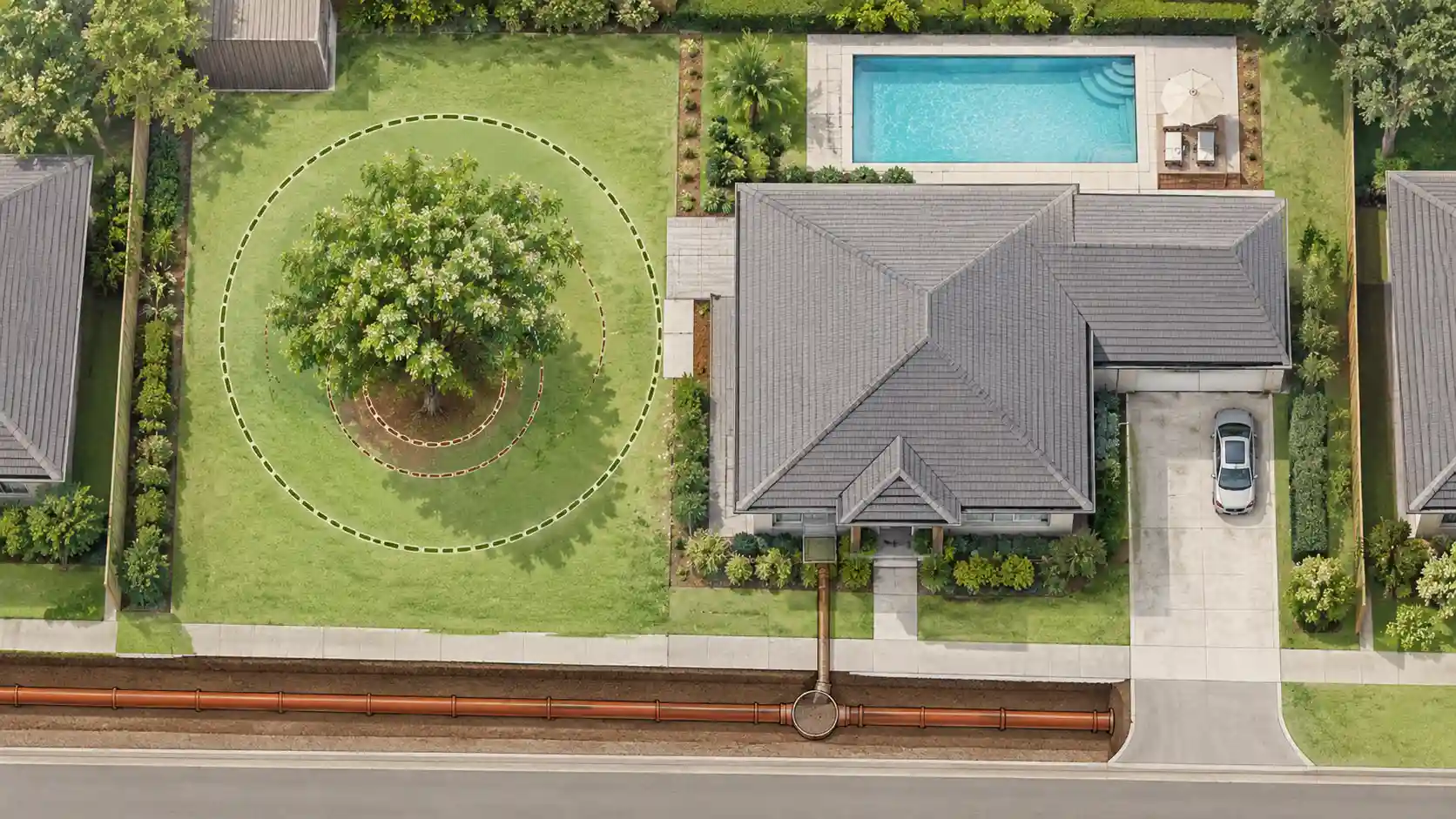
This is the section almost every ranking page skips, and it’s usually the difference between a tree that thrives and one that ends up in a dispute with a neighbour or an insurer.
As a general rule of thumb, plant a feature tree roughly half its expected mature height away from a house foundation, and give pools, paving and driveways at least 3–5 metres depending on the species’ root habit. Sewer and stormwater lines deserve similar caution — anywhere from 3 to 10 metres depending on how large and water-seeking the species is. For species-specific advice , Arboriculture Australia publishes nationally reviewed standards used by qualified arborists across the country.
Roots don’t deliberately seek out and attack structures; they grow toward moisture and loose soil, which is exactly what a leaking pipe or a poorly drained garden bed provides. That’s why species with fibrous, non-invasive root systems (crepe myrtle, dogwood, tibouchina, and similar) are lower risk near structures than aggressive water-seekers. hese distances are grounded in the same root-zone principles set out in AS 4970, the Australian Standard for tree protection on development sites.
Do You Need Council Approval to Plant or Remove a Feature Tree?
In many Australian councils, established or significant trees are covered by tree protection controls, heritage overlays, or a significant tree register — meaning you may need approval before removing (and sometimes before planting) a large specimen, particularly on a smaller block. Rules vary significantly by local government area, so always check with your council before committing to removal or a very large-growing species. Requirements vary by area — see this council fact sheet on tree planting and removal as an example of how local rules are typically set out.
Low-Mess, Pool-Safe and Wildlife-Friendly Options
If your feature tree will sit near a pool, paving or an entertaining area, prioritise species with non-invasive roots and minimal leaf, flower or fruit drop — staining flowers and heavy leaf litter are a bigger headache near water than most buying guides admit.
Attracting Birds Without High Maintenance
Many native feature trees attract birds through nectar or fruit — but the same features that draw wildlife (fruit drop, nectar mess) can add to your cleanup. Look for species that balance wildlife value with a manageable drop period rather than assuming “native” automatically means “low mess.”
State-by-State Native Feature Tree Options
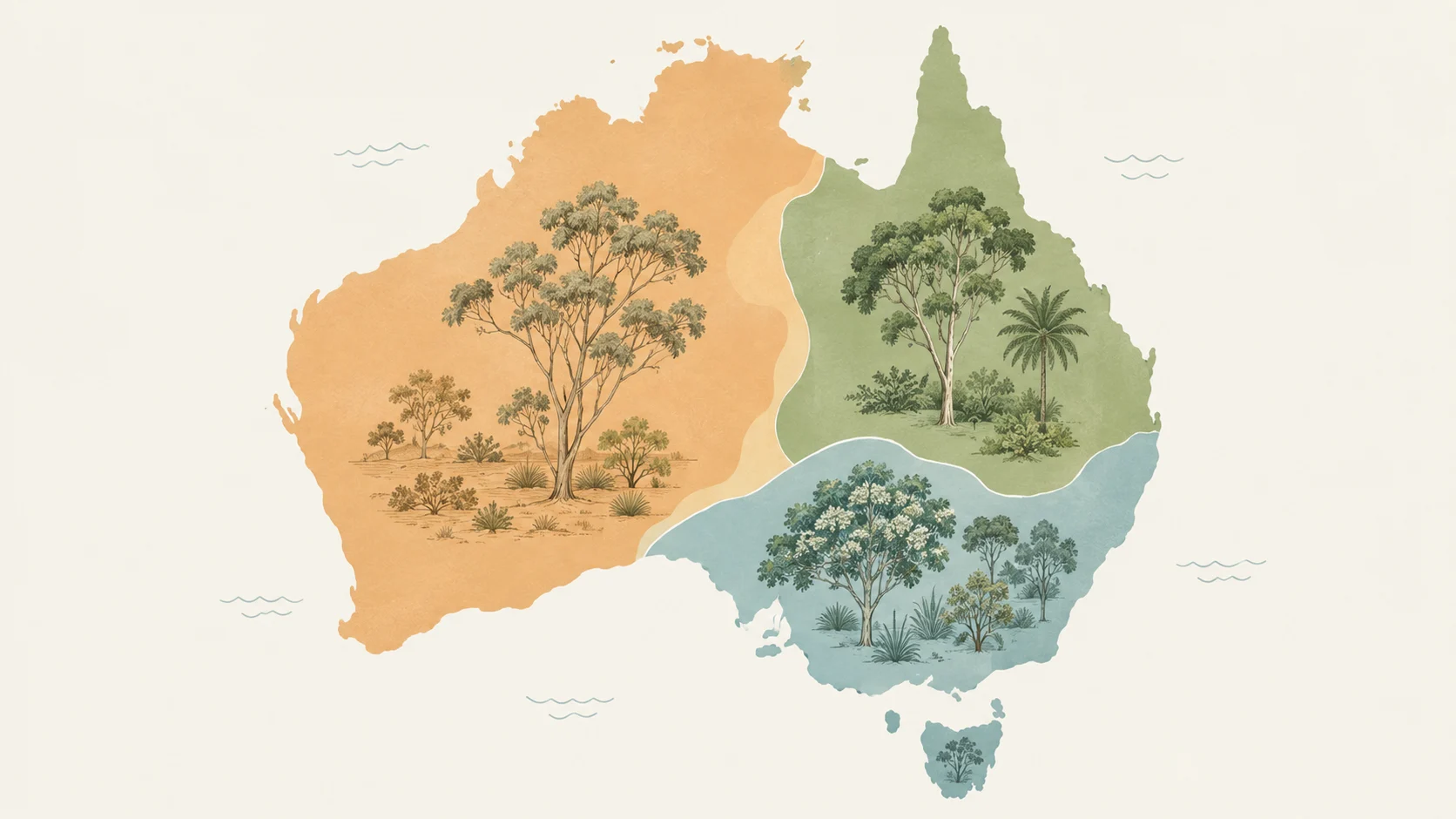
Because Australia’s climate zones vary so widely, a single national species list rarely serves anyone well.
- Cool-climate natives (VIC/TAS): favour hardy species tolerant of frost and heavier, slower-draining soils
- Subtropical natives (QLD/NSW): thrive with higher humidity and rainfall, and often flower more reliably in warmer conditions
- Western Australian natives: typically suited to free-draining, often sandy soils and a drier summer pattern
Matching your feature tree choice to your actual climate zone — not just what looks good on a nursery’s national website — is one of the simplest ways to avoid an underperforming or short-lived tree.
Designing Around a Single Feature Tree
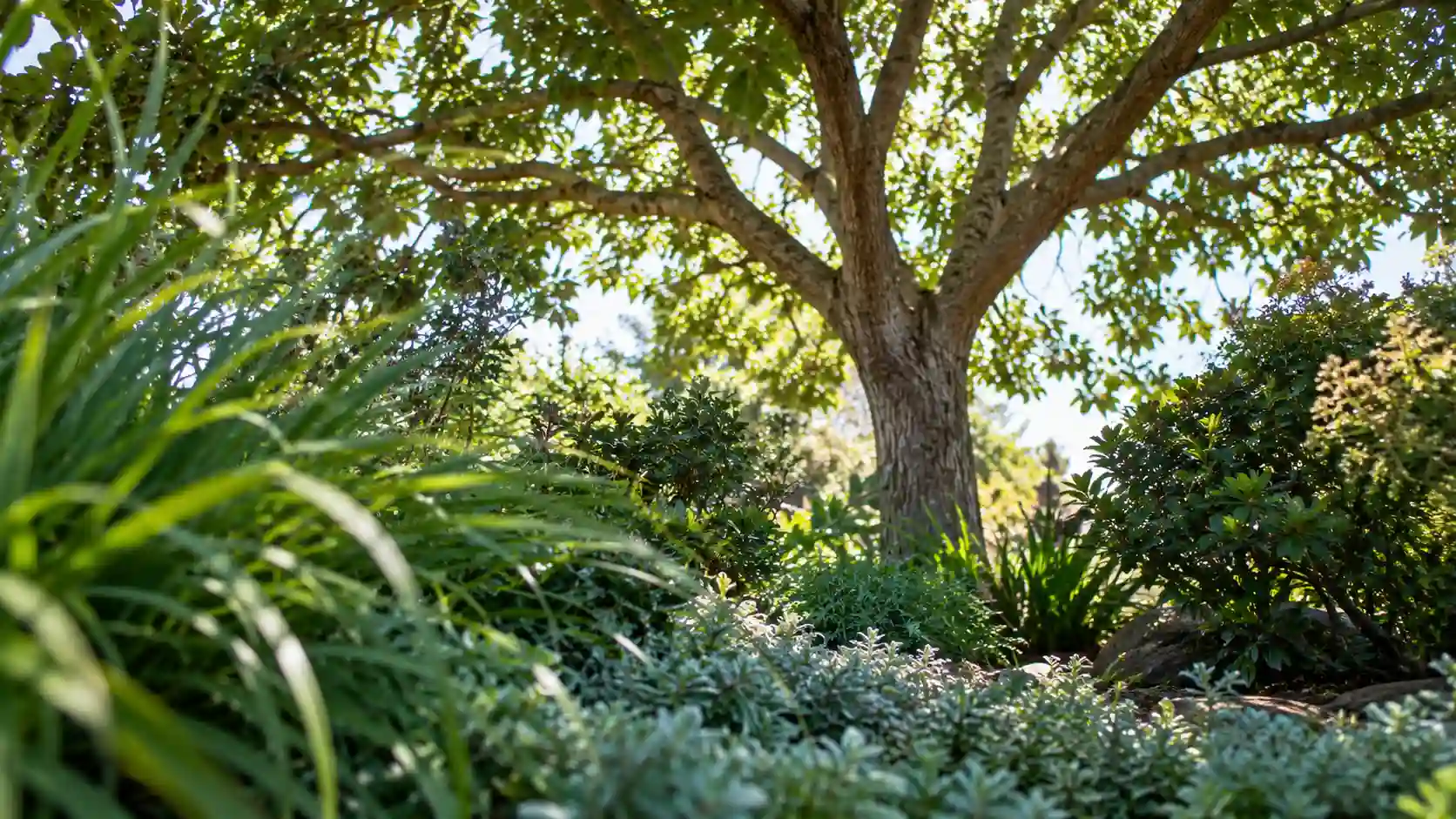
A feature tree looks more intentional, not less, when it’s underplanted well. Match understorey planting’s water needs to the feature tree’s root zone, and layer heights so the tree remains the visual anchor rather than competing with what’s beneath it.
A few pairing directions by style:
- Native gardens: low grasses and groundcovers with similar water needs
- Tropical-leaning gardens: broad-leafed shade-tolerant underplanting
- Formal gardens: structured, repeated low hedging beneath the canopy line
Common Mistakes When Choosing a Feature Tree
- Buying for the flower photo, not the mature size — happens because the display tree at the nursery is young; fix it by checking mature height and width before purchase, and prevent it by planning the space first, species second.
- Planting too close to structures before checking root habit — happens from underestimating root spread; fix by relocating or removing early if planted too close; prevent by using the siting distances above before digging.
- Ignoring council or heritage rules — happens because most buyers assume their own property, their own rules; fix by contacting council before removal disputes arise; prevent by checking early, especially for large or long-established species.
- Choosing high-litter species near pools or entertaining areas — happens from prioritising flowers over practicality; fix with more frequent cleanup or relocation; prevent by choosing low-litter species from the start.
Beginner Considerations
Planting timing varies by state — generally autumn to early spring gives roots time to establish before summer heat. Water deeply and consistently through the first two dry seasons while the root system develops, and if a newly planted tree shows poor growth or dieback, check for waterlogging or transplant shock before assuming the species itself was a poor choice.
Conclusion
Choosing a native or feature tree well comes down to more than which species looks best in a photo. Function, available space, safe siting distances, and your specific climate zone all matter more than aesthetics alone — and checking council requirements early can save real cost and stress later. Use the framework above before you commit to a species, and your feature tree is far more likely to still be a highlight of the garden in ten years’ time, not a problem to solve.
FAQs
What is the difference between a feature tree and a specimen tree?
The terms are largely interchangeable — both describe a tree chosen and placed specifically to be a visual focal point, rather than for shade or screening alone.
Can I plant a native feature tree near my pool?
Yes, provided you choose a species with non-invasive roots and low leaf, flower or fruit drop, and still keep a safe distance based on its mature root spread.
Do I need council approval to plant a large tree in my backyard?
It depends on your local government area — some councils regulate significant or large-growing trees through tree protection controls or heritage overlays, so it’s worth checking before planting a large species.
How far should a feature tree be from my house foundation?
As a general guide, aim for roughly half the tree’s expected mature height, adjusted for its specific root habit — always confirm with an arborist for larger or more aggressive-rooted species.
What are the best low-mess native feature trees for small gardens?
Look for compact natives with fibrous, non-invasive roots and a manageable leaf and flower drop — species suited to courtyards and small blocks rather than those bred for large-scale canopy coverage.
Can a native and an exotic feature tree be planted together in the same garden?
Yes — many Australian gardens successfully combine both, as long as each tree’s water needs, root habit and mature size are considered relative to the other plantings around it.