
Tibouchina Alstonville Tree: Care, Size & Flower Guide
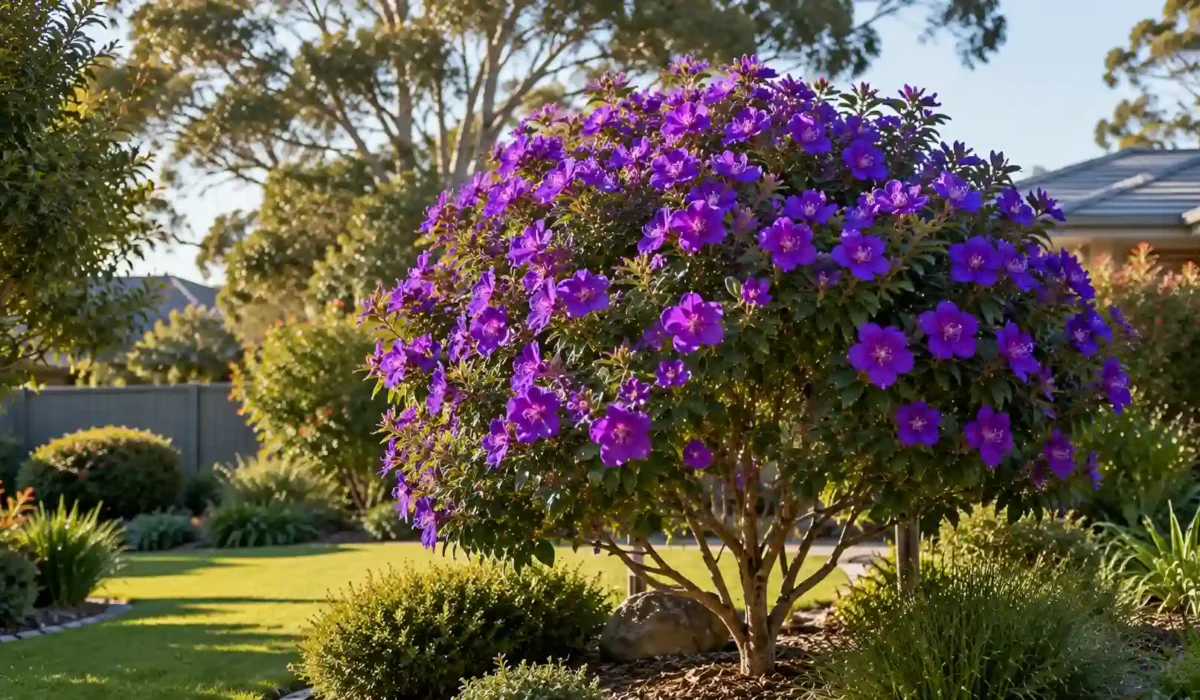
The Tibouchina Alstonville tree is a popular flowering ornamental tree or large shrub grown throughout Australian gardens for its spectacular purple blooms that appear from late summer through autumn. Scientifically known as Tibouchina lepidota ‘Alstonville’, this evergreen cultivar belongs to the Melastomataceae family and is valued for its attractive foliage, graceful shape, and reliable seasonal colour. Originally developed in Alstonville, New South Wales, it was selected from South American Tibouchina species for Australian garden conditions. The Tibouchina Alstonville tree typically grows 4–6 metres tall, prefers warm climates, and performs best in sunny, sheltered positions with fertile, well-drained soil.
Quick Summary
- Tibouchina Alstonville is an evergreen flowering tree reaching around 4–6m tall with vibrant purple flowers from late summer to autumn.
- It is frost-tender rather than frost tolerant and grows best in warm, sheltered Australian climates.
- The cultivar originated from South American Tibouchina species and was developed in Alstonville, NSW.
- Regular pruning after flowering maintains shape, improves branching, and encourages future blooms.
- It prefers full sun to part shade, slightly acidic soil, and consistent moisture during establishment.
What Is a Tibouchina Alstonville Tree?
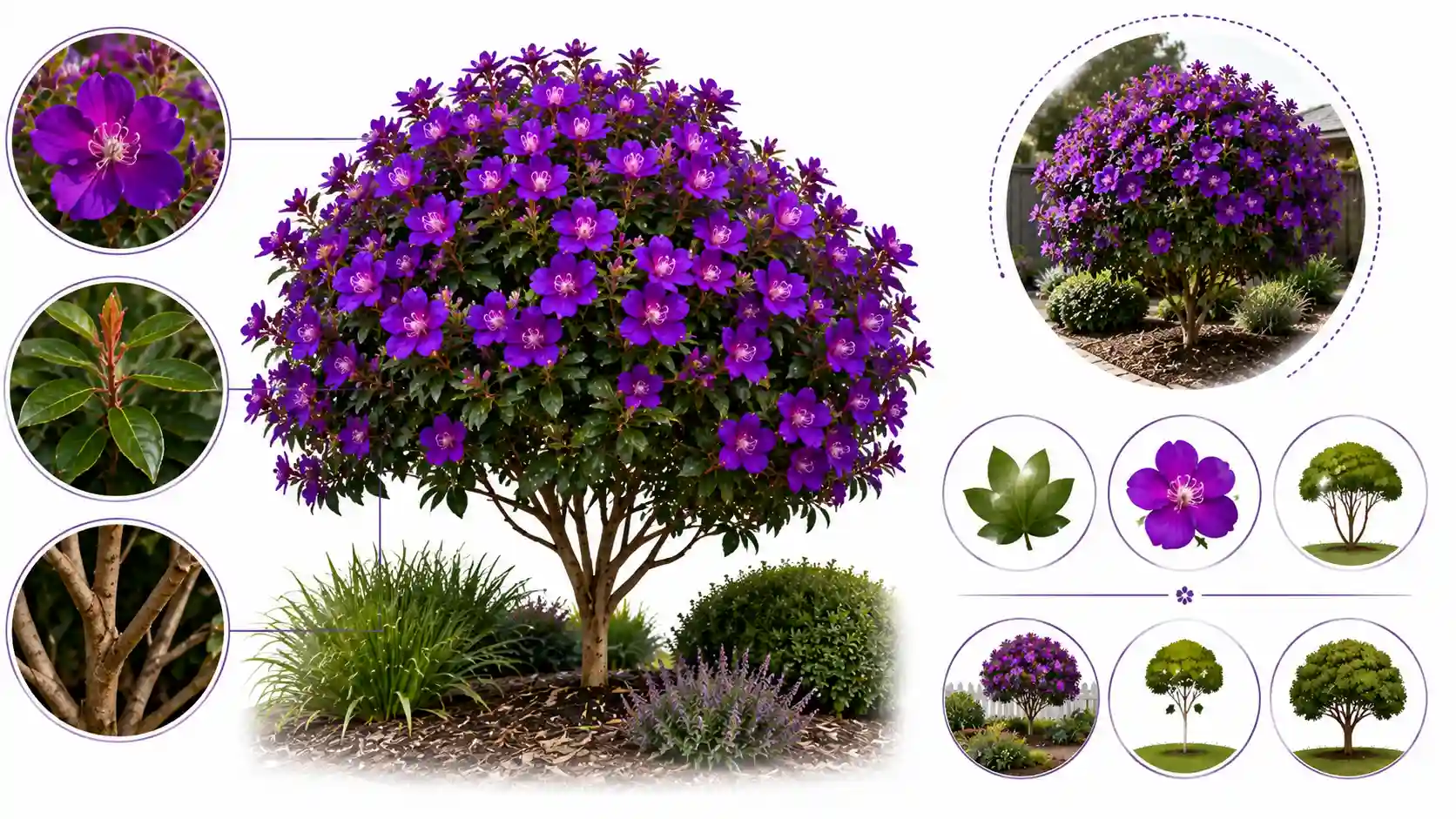
The Tibouchina Alstonville tree is a cultivated evergreen flowering shrub or small tree known for its large purple flowers, velvety green leaves, and attractive spreading form. Its botanical name is Tibouchina lepidota ‘Alstonville’, and it belongs to the Melastomataceae family, a group of flowering plants mainly native to tropical and subtropical regions of Central and South America.
The common name “Alstonville Tibouchina” comes from its development in Alstonville, New South Wales, where horticulturist Ken Dunstan selected and developed this popular ornamental cultivar from Tibouchina lepidota stock. Today, it is widely planted across Australian backyards, streetscapes, parks, and gardens because of its long flowering season and ability to create a colourful feature display. Tibouchina Alstonville is one of the most recognised purple flowering trees grown in Australian gardens, alongside other popular choices covered in our guide to Purple Flower Tree Australia: Native & Popular Species Guide.
In nurseries and garden centres, it may simply be labelled as a tibouchina tree, tibouchina plant, or Alstonville tree. Although often described as a tree, its final form depends heavily on pruning and training.
The main features of Tibouchina Alstonville include:
- Evergreen foliage in warm climates
- Large purple flowers with prominent stamens
- Soft, slightly hairy leaves and stems
- A naturally rounded growth habit
- Strong ornamental value as a feature plant or screening tree
Unlike many Australian native garden plants, Tibouchina Alstonville is not native to Australia. It is a cultivated ornamental introduced for its outstanding flowering performance.
Is Tibouchina Alstonville a Tree or a Shrub?
Tibouchina Alstonville can be classified as both a shrub and a small tree depending on how it is grown and pruned. Naturally, it develops as a multi-stemmed large shrub, but gardeners can train it into a tree-like form by selecting a strong central stem and removing lower branches.
When left unpruned:
- It usually grows as a broad, bushy shrub.
- Multiple stems develop from the base.
- The plant maintains a rounded canopy.
When trained as a tree:
- Lower branches are removed to create a clear trunk.
- The upper canopy forms a small ornamental tree shape.
- It becomes suitable for lawns, entrances, and feature planting areas.
This flexibility is one reason Tibouchina Alstonville is popular in Australian gardens. Its final size and appearance depend on climate, pruning style, soil quality, and available growing space.
Are Tibouchina Trees Native to Australia?
No, Tibouchina trees are not native to Australia. The original Tibouchina species come from South America, particularly regions including Brazil and areas with tropical and subtropical climates.
The Tibouchina lepidota ‘Alstonville’ cultivar was developed in Australia from imported South American plant material. It is therefore considered a cultivated ornamental plant rather than an Australian native species. Tibouchina belongs to a large genus of flowering plants from the Melastomataceae family, with many species originating from tropical regions of the Americas. More botanical background can be found on the Tibouchina genus page on Wikipedia.
Although it is not native, Tibouchina Alstonville has become a familiar garden plant in many Australian regions, especially:
- Coastal Queensland
- Northern New South Wales
- Warm-temperate gardens
- Protected suburban landscapes
Its popularity comes from its reliable flowering, attractive evergreen foliage, and adaptability in suitable climates.
Tibouchina Alstonville Tree Size and Growth Rate
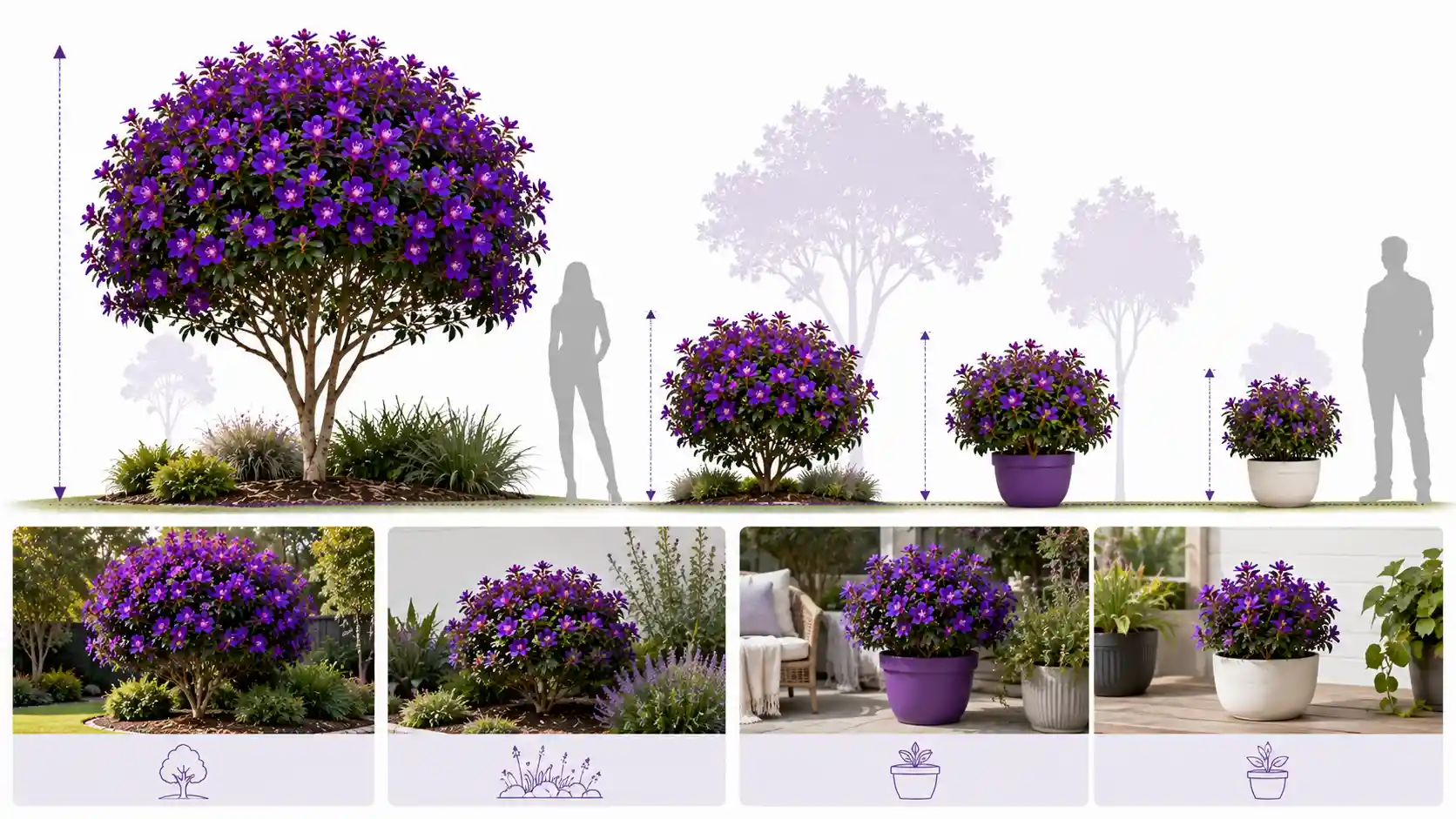
The mature size of a Tibouchina Alstonville tree is generally around 4–6 metres tall and 3–4 metres wide when grown in favourable garden conditions. Some established specimens in ideal climates may reach approximately 6–7 metres in height when allowed to grow without regular pruning. Gardeners looking for more evergreen screening and feature tree options can also explore our guide to Fast Growing Evergreen Trees Australia Guide, which covers other reliable fast-establishing choices.
Growth size varies depending on:
- Climate warmth
- Soil fertility
- Water availability
- Sun exposure
- Pruning frequency
- Growing space
In open garden beds, Tibouchina Alstonville develops a wider canopy and can become a small feature tree. In restricted spaces or containers, its growth remains much smaller because root development is limited.
| Growing Situation | Typical Size |
| Garden-grown tree form | 4–6m tall, 3–4m wide |
| Large landscape planting | Up to around 6–7m tall |
| Container-grown plant | Much smaller, depending on pot size |
| Regularly pruned hedge form | Maintained at a lower height |
For Australian gardens, planning adequate space is important because a mature Tibouchina Alstonville can become wider than expected if it is not regularly shaped.
Is Tibouchina Alstonville Fast Growing?
Yes, Tibouchina Alstonville is considered a moderate-to-fast growing ornamental plant, especially during its early establishment years. Young plants often grow quickly when provided with warm temperatures, sufficient sunlight, fertile soil, and regular watering.
Growth is usually strongest during:
- Spring when temperatures increase
- Summer when moisture is available
- Early years after planting
Growth slows as the plant reaches maturity and develops its permanent framework.
Factors that influence growth rate include:
- Sunlight: Plants receiving adequate sunlight generally grow more strongly and flower better.
- Soil quality: Nutrient-rich, well-drained soil supports healthier development.
- Water availability: Regular moisture encourages faster establishment.
- Climate: Warm subtropical conditions produce the best growth.
In our experience growing flowering Tibouchina varieties, plants established in warm coastal gardens generally develop much faster than those planted in cold, exposed locations. Providing protection during early growth often makes a noticeable difference in plant health and flowering performance.
Tibouchina Alstonville vs Dwarf Varieties (Jazzie, Jules, Groovy Baby)
Several compact Tibouchina cultivars are available for smaller gardens, pots, and borders. They provide similar purple flowers while remaining much smaller than the traditional Alstonville form.
| Cultivar | Mature Height | Mature Width | Best Use |
| Tibouchina Alstonville | 4–6m | 3–4m | Feature tree, screening, large gardens |
| Tibouchina ‘Jazzie’ | Around 1–1.5m | Similar width | Pots, borders, small gardens |
| Tibouchina ‘Jules’ | Around 60cm | Compact | Low hedging and garden edging |
| Tibouchina ‘Groovy Baby’ | Around 45cm | Compact | Containers and small spaces |
The Alstonville variety is best suited to gardeners wanting a flowering tree effect, while dwarf Tibouchina varieties are better choices for patios, balconies, and limited garden areas.
Climate, Frost Tolerance and Growing Conditions
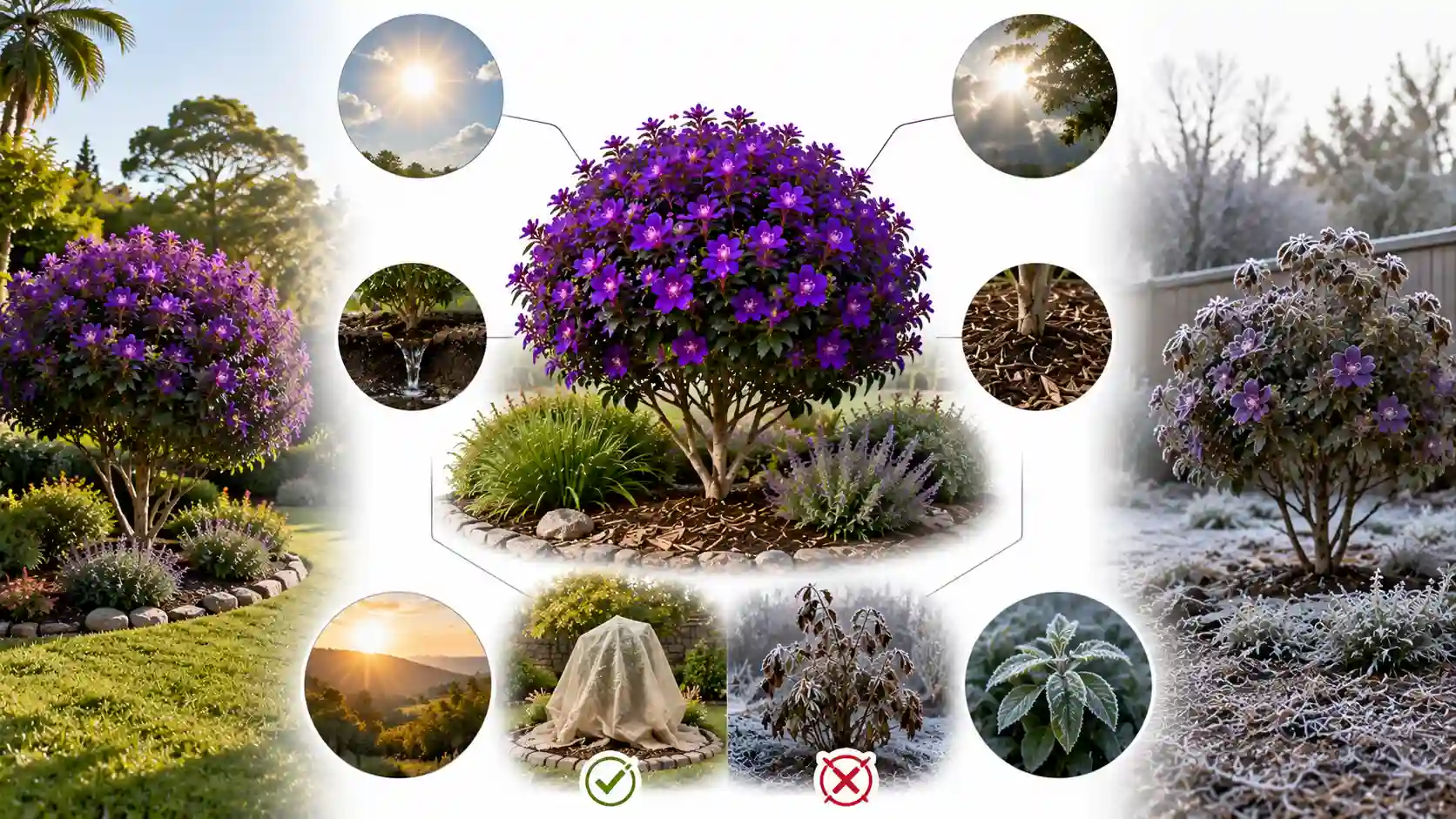
Tibouchina Alstonville is frost-tender, meaning it does not tolerate severe or prolonged frost. It performs best in warm-temperate to subtropical Australian climates where winters are mild and growing conditions remain relatively warm.
Young plants are especially vulnerable to cold damage.
Established plants may survive brief light frosts, but heavy frost can cause:
- Leaf damage
- Flower bud loss
- Stem dieback
- Reduced spring growth
The best locations for Tibouchina Alstonville include:
- Coastal Queensland
- Northern and coastal New South Wales
- Sheltered warm gardens in cooler regions
In colder inland or southern areas, planting near walls, fences, or protected courtyards can create a warmer microclimate and improve survival.
As of July 2026, gardeners are increasingly using sheltered planting positions and improved mulching practices to reduce climate stress on frost-sensitive ornamental plants.
What Soil Does Tibouchina Like?
Tibouchina prefers well-drained, fertile soil that is slightly acidic to neutral. It performs best in soil enriched with organic matter because this improves moisture retention while maintaining good drainage.
Ideal soil conditions include:
- pH around slightly acidic to neutral
- Good drainage to prevent waterlogging
- Organic compost or aged manure additions
- Consistent moisture without soggy roots
Poor drainage is one of the most common causes of Tibouchina problems because constantly wet roots can lead to stress and root-related diseases.
Before planting, improving heavy clay soil with organic matter and drainage material can help create a healthier growing environment.
Tibouchina Alstonville Care Guide
The Tibouchina Alstonville tree is relatively easy to maintain once established, but it performs best when its basic growing requirements are met. Consistent moisture, adequate sunlight, suitable soil, seasonal feeding, and correct pruning are the main factors that influence flowering, plant shape, and long-term health.
Watering Requirements
Young Tibouchina Alstonville trees need regular watering while their root system develops. During the first growing seasons, keep the soil consistently moist but avoid allowing water to remain around the roots.
A practical watering approach:
- Water deeply once or twice a week during hot, dry periods.
- Reduce watering after establishment, as mature plants become more drought tolerant.
- Increase watering during heatwaves or extended dry conditions.
- Avoid frequent shallow watering, which encourages weak surface roots.
Overwatering is a common mistake because Tibouchina prefers moisture but does not tolerate permanently wet soil. Good drainage is essential for healthy root development.
Light Requirements
Tibouchina Alstonville grows best in full sun to part shade. A position receiving several hours of direct sunlight encourages stronger growth and heavier flowering.
Ideal placement includes:
- Full morning sun with protection from harsh afternoon heat in inland climates.
- Bright filtered light in very hot regions.
- Sheltered locations protected from strong winds.
Plants grown in too much shade often become stretched, produce fewer flowers, and develop weaker branches.
Soil Requirements
The ideal soil for Tibouchina Alstonville is fertile, well-drained, and enriched with organic matter. Adding compost before planting improves soil structure and supports healthier growth.
Avoid planting in:
- Heavy compacted clay without improvement.
- Areas where water pools after rain.
- Extremely alkaline soils.
A balanced soil environment helps the plant absorb nutrients efficiently and supports consistent flowering.
Fertilising Tibouchina Alstonville
Tibouchina benefits from seasonal feeding, particularly before its active growth and flowering period. A slow-release fertiliser applied in spring can encourage healthy foliage and flower production.
Recommended fertilising practices:
- Apply a quality slow-release fertiliser in spring.
- Use a fertiliser suitable for flowering shrubs.
- Avoid excessive high-nitrogen fertilisers, as they can encourage leafy growth instead of flowers.
- Add compost or organic mulch to improve soil health.
Pruning Tibouchina Alstonville
Yes, Tibouchina Alstonville should be cut back, especially after flowering. Pruning helps maintain a compact shape, prevents the plant from becoming too leggy, and encourages stronger branching.
The best pruning approach is:
- Perform major pruning after flowering finishes.
- Remove damaged, weak, or crossing branches.
- Reduce long shoots to encourage bushier growth.
- Lightly tip-prune during the growing season if a denser shape is desired.
Elemo Baker recommends pruning after the main autumn flowering period because removing branches too late may reduce the following season’s flower display.
Climate Tolerance
Tibouchina Alstonville is best suited to warm-temperate and subtropical climates. It can adapt to different Australian regions when planted in suitable positions but requires protection from severe cold.
To improve climate tolerance:
- Mulch around the root zone before winter.
- Protect young plants from frost.
- Plant near sheltered structures in cooler regions.
- Avoid exposed windy positions.
Do Tibouchina Alstonville Trees Flower All Year Round?
No, Tibouchina Alstonville trees do not flower all year round. Their main flowering period is seasonal, usually from late summer through autumn, when the plant produces masses of purple flowers.
Some nursery-grown plants may flower outside this period due to controlled growing conditions, but established garden plants generally follow a seasonal flowering cycle.
Flowering is influenced by:
- Sun exposure
- Temperature patterns
- Plant maturity
- Pruning timing
- Overall plant health
The autumn flower display is one of the main reasons Tibouchina Alstonville is planted as a feature tree in Australian gardens.
Why Isn’t My Tibouchina Flowering?
A Tibouchina that fails to flower is usually affected by environmental conditions, incorrect care, or plant stress.
The most common causes include:
- Insufficient sunlight: Plants growing in heavy shade often produce fewer flowers.
- Too much nitrogen fertiliser: Excess nitrogen encourages leaves rather than blooms.
- Incorrect pruning timing: Cutting branches after flower buds have formed can remove future flowers.
- Young plant age: Newly planted Tibouchina may need time to establish before flowering heavily.
- Frost damage: Cold temperatures can damage developing flower buds.
Improving sunlight, adjusting fertiliser use, and pruning at the correct time usually improves flowering performance.
Do Tibouchina Trees Lose Their Leaves?
Tibouchina trees are generally evergreen in warm Australian climates, meaning they keep their foliage throughout the year. However, they may lose some leaves during cold periods, frost events, drought stress, or sudden environmental changes.
Leaf drop can occur because of:
- Frost exposure
- Cold winter temperatures
- Extended dry conditions
- Root stress from poor drainage
Unlike deciduous trees, Tibouchina does not naturally lose all its leaves during winter. Partial leaf loss is usually a response to environmental stress rather than a normal seasonal cycle.
Common Tibouchina Alstonville Tree Problems
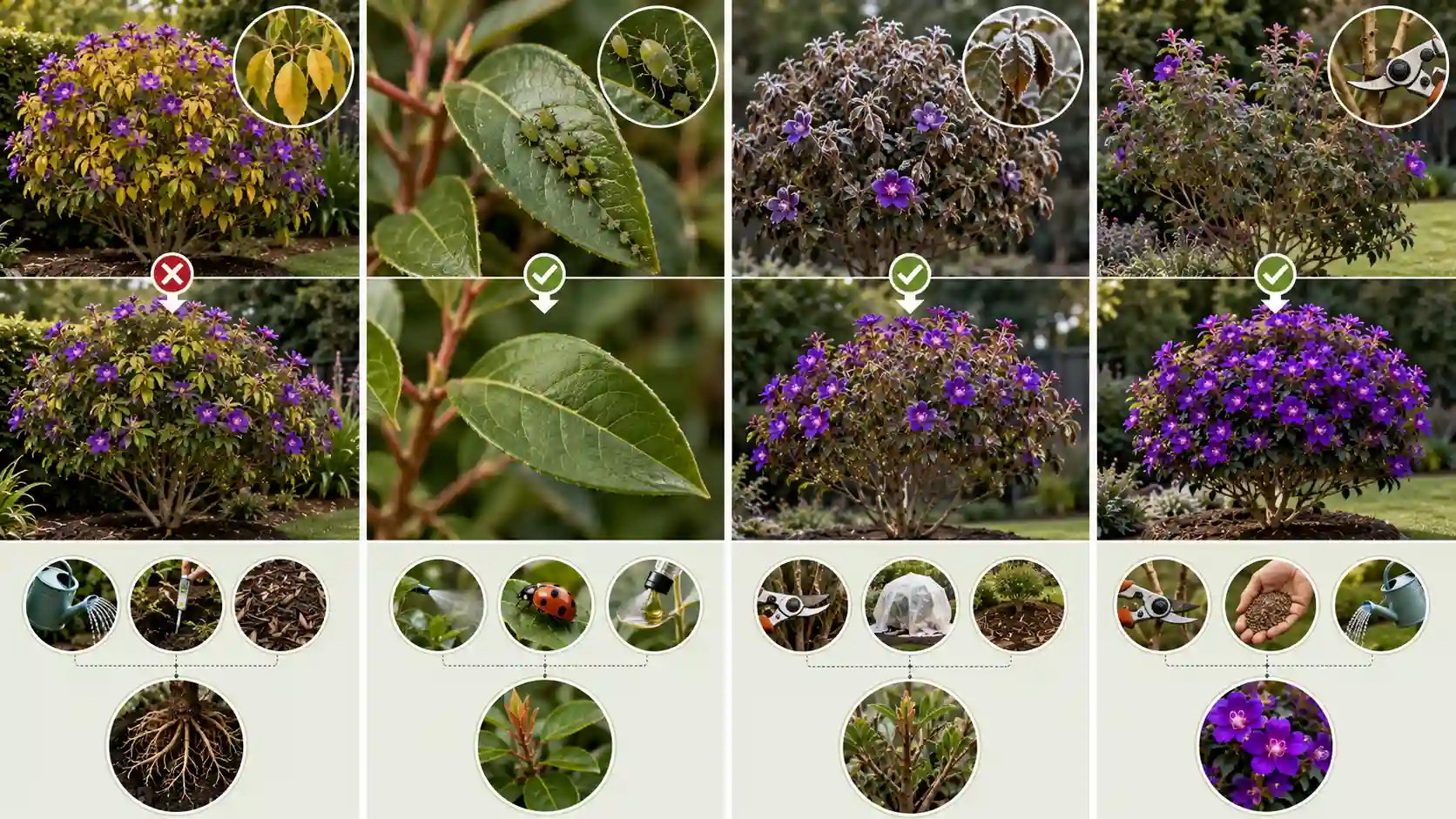
Although Tibouchina Alstonville is generally a reliable ornamental plant, several common issues can affect growth, appearance, and flowering. Most problems are linked to watering, climate stress, soil conditions, or incorrect placement. Many ornamental plants can experience climate-related stress, and similar troubleshooting approaches are discussed in our guide to Woolly Bush Problems: Causes, Solutions and Care Guide.
Yellowing Leaves
Yellow leaves on Tibouchina are commonly caused by:
- Overwatering
- Poor soil drainage
- Nutrient deficiencies
- Root stress
Solutions include:
- Improving drainage around the root zone.
- Reducing watering frequency if soil remains wet.
- Applying a balanced fertiliser if nutrient deficiency is suspected.
- Adding compost to improve soil quality.
Healthy Tibouchina leaves should normally appear green and vigorous.
Pest Infestations
Tibouchina can occasionally experience pests such as aphids and spider mites, especially during dry weather or when plants are stressed.
Signs of pest problems include:
- Sticky leaves
- Distorted new growth
- Fine webbing on foliage
- Small insects on stems or leaves
Treatment options include:
- Washing pests away with water.
- Using insecticidal soap.
- Applying a mild soapy water spray when appropriate.
- Improving plant health through correct watering and feeding.
Slow or Stalled Growth
Slow growth may occur when Tibouchina lacks the conditions needed for strong development.
Common causes include:
- Too much shade.
- Poor soil quality.
- Root competition from nearby plants.
- Lack of moisture during establishment.
Improving sunlight, adding organic matter, and reducing competition around the root zone can encourage stronger growth.
Frost Damage and Dieback
Frost damage is one of the most common climate-related problems for Tibouchina Alstonville.
Symptoms include:
- Brown or blackened leaves.
- Dead branch tips.
- Reduced spring growth.
To minimise frost damage:
- Plant in protected locations.
- Apply mulch around roots.
- Cover young plants during severe frost events.
- Delay pruning damaged branches until new growth appears.
Brittle Stem Breakage in Wind
Tibouchina stems can be relatively brittle, especially when young. Strong winds may damage branches if the plant is exposed.
Prevent damage by:
- Planting in sheltered positions.
- Using temporary support for young trees.
- Pruning to create a balanced structure.
- Removing weak branches.
Do Tibouchina Trees Have Invasive Roots?
No, Tibouchina Alstonville is not generally known to have aggressive or invasive root systems. It is considered a safer choice near garden structures compared with trees known for destructive surface roots.
However, normal planting precautions should still be followed:
- Avoid planting directly against foundations.
- Allow reasonable space from pipes and paved areas.
- Consider the mature canopy size when selecting a location.
Good garden planning helps prevent future maintenance issues.
Are Tibouchina Trees Toxic to Pets?
Tibouchina trees are generally considered non-toxic to common household pets such as dogs and cats. They are not widely recognised as plants containing dangerous toxins.
However, eating large amounts of any ornamental plant material may cause mild digestive discomfort, including:
- Vomiting
- Stomach irritation
- Temporary digestive upset
As a precaution, pets should be discouraged from regularly chewing garden plants.
Is Tibouchina Considered an Invasive Plant?
Tibouchina is not considered an invasive garden plant across most Australian home landscapes. Tibouchina Alstonville is widely grown as a cultivated ornamental and is generally well behaved when planted and maintained in gardens.
However, some Tibouchina species have become invasive in certain overseas environments, including parts of Hawaii, where they have escaped cultivation and spread into natural ecosystems.
The difference is important:
- In Australian gardens: Tibouchina Alstonville is mainly a managed ornamental plant.
- In some overseas regions: certain Tibouchina species can become invasive outside cultivation.
For Australian gardeners, the main consideration is selecting the right plant for the local climate and maintaining it through normal pruning and garden care.
Benefits of Growing Tibouchina Alstonville
Growing a Tibouchina Alstonville tree provides several advantages for Australian gardens:
- Outstanding purple flowers: Produces a highly visible seasonal flower display.
- Evergreen structure: Maintains attractive foliage throughout most of the year.
- Flexible growth habit: Can be grown as a tree or large shrub.
- Low root concerns: Does not typically develop invasive roots.
- Pollinator value: Flowers can attract bees and other beneficial insects.
- Versatile planting uses: Suitable as a feature tree, screening plant, or garden specimen.
Once established in the correct climate, Tibouchina Alstonville requires relatively low maintenance while providing strong ornamental appeal.
Conclusion
The Tibouchina Alstonville tree is a popular Australian garden feature plant valued for its evergreen foliage, fast establishment, and spectacular purple flowers from late summer into autumn. Although it is not frost tolerant, it performs exceptionally well in warm-temperate and subtropical climates when planted in a sunny, sheltered position with fertile, well-drained soil.
With a mature size of around 4–6 metres, regular pruning is important for maintaining shape and encouraging better flowering. Choosing the right location, providing consistent moisture during establishment, and protecting the plant from severe frost will help ensure long-term success. For gardeners planning a complete landscape design, choosing the right combination of flowering trees and shrubs is essential. Our guide to Best Trees and Shrubs for Australian Gardens covers more suitable options for different climates, garden sizes, and planting purposes.
Frequently Asked Questions
Is Tibouchina Alstonville fast growing?
Yes, Tibouchina Alstonville has a moderate-to-fast growth rate, especially during its early years. Growth slows as the plant matures and depends on sunlight, soil quality, moisture, and climate conditions.
Is Tibouchina frost tolerant?
No, Tibouchina Alstonville is frost-tender rather than frost tolerant. It may survive light frost when established but requires protection from severe or prolonged cold conditions.
Do Tibouchina trees have invasive roots?
No, Tibouchina trees are not generally known for invasive roots. However, normal planting distances from structures, pipes, and paving should still be maintained.
Are Tibouchina trees native to Australia?
No, Tibouchina trees originate from South America. The Alstonville cultivar was developed in New South Wales from South American Tibouchina species.
Are Tibouchina trees toxic to pets?
Tibouchina trees are generally considered non-toxic to dogs and cats, although consuming large amounts of plant material may cause mild stomach upset.
Should Tibouchina be cut back?
Yes, Tibouchina should be pruned after flowering to maintain shape, encourage branching, and support future flower production.
Is there a dwarf Tibouchina?
Yes, dwarf Tibouchina varieties are available, including cultivars such as ‘Jazzie’, ‘Jules’, and ‘Groovy Baby’, which are suitable for pots, borders, and smaller gardens.