
Why Is My Indoor Plant Dying? Symptom-by-Symptom Fix Guide
If your indoor plant is dying, the most likely culprit is one of a short list: overwatering and root rot, underwatering, poor light, pests, or fertiliser burn — with root rot topping the list as the single most common killer of houseplants. The fastest way to work out which one you’re dealing with isn’t reading through every possible cause, it’s matching your plant’s exact symptoms — leaf colour, texture, and how quickly things changed — to a likely cause, then confirming it before you act. This guide walks you through that process step by step, with an Australian lens most advice skips entirely: our reverse-cycle heating, aircon-heavy summers, and mains, tank or bore water all shape what’s actually going wrong indoors here.
Quick Summary
- Most indoor plant deaths trace back to overwatering and root rot, light mismatch, pests, or fertiliser burn — genuine “mystery” causes are rare.
- Diagnose by symptom combination (colour + texture + speed of onset), not by guessing at causes first.
- Australian conditions — reverse-cycle heating, aircon, and water hardness that varies by state — commonly get missed in overseas-authored plant advice.
- Most declining plants are salvageable if you check the roots and stem before trying further fixes.
Quick Symptom-to-Cause Diagnosis Table
Use the table below to jump straight to your plant’s most likely cause, then confirm it with the check listed alongside.
| Symptom Combination | Most Likely Cause | Confirm It |
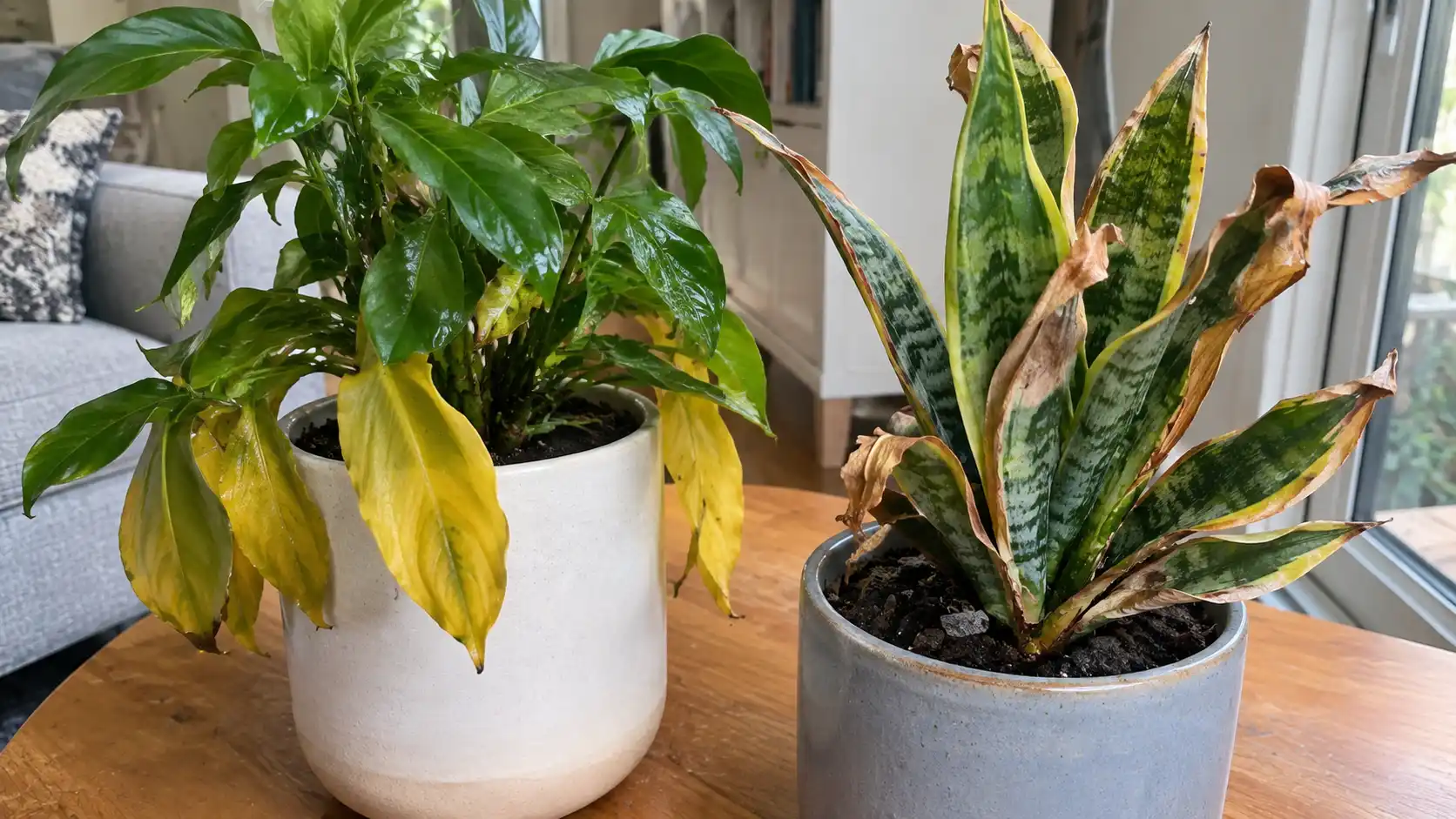
| Yellow leaves that feel soft or mushy | Overwatering / root rot | Check soil moisture at 5cm depth; if wet and roots smell sour, it’s root rot |
| Yellow leaves that are dry and crispy | Underwatering or low humidity | Check soil moisture; if bone-dry and pulling from the pot’s edge, it’s underwatering |
| Brown tips only, rest of the leaf green and healthy | Water quality, fertiliser salt build-up, or low humidity | Check for white crust on soil surface (salt build-up) or recent fertilising |
| Sudden, widespread leaf drop | Shock — repotting, temperature change, draught | Note timing: did it follow a move, a repot, or a cold snap? |
| Wilting despite visibly moist soil | Root rot (roots can’t take up water even in wet soil) | Slide the plant out of its pot and check root colour and firmness |
| Curling or drooping leaves with no colour change | Light stress, heat/aircon airflow, or early pest activity | Check leaf undersides for pests; note proximity to a vent or window |
What Your Plant’s Symptoms Are Telling You
Each row in the table above deserves a closer look, because the same broad symptom can point to different things depending on exactly how it presents.
Yellow, Soft or Mushy Leaves
This combination points to overwatering and, often, root rot already underway.
Why it happens: Roots need oxygen as well as water. When soil stays saturated, oxygen in the root zone runs out, roots suffocate, and fungal pathogens that thrive in wet, low-oxygen soil move in. Once roots are damaged, the plant can’t take up nutrients properly, and yellowing spreads.
Soft, mushy yellowing typically shows up on lower and inner leaves first, often with a slightly translucent or waterlogged look to the leaf tissue — different from the papery yellow of natural leaf ageing. Related reading: our guide on yellow leaves on indoor plants in Australian conditions covers this in more depth, including how humidity and season change the picture.
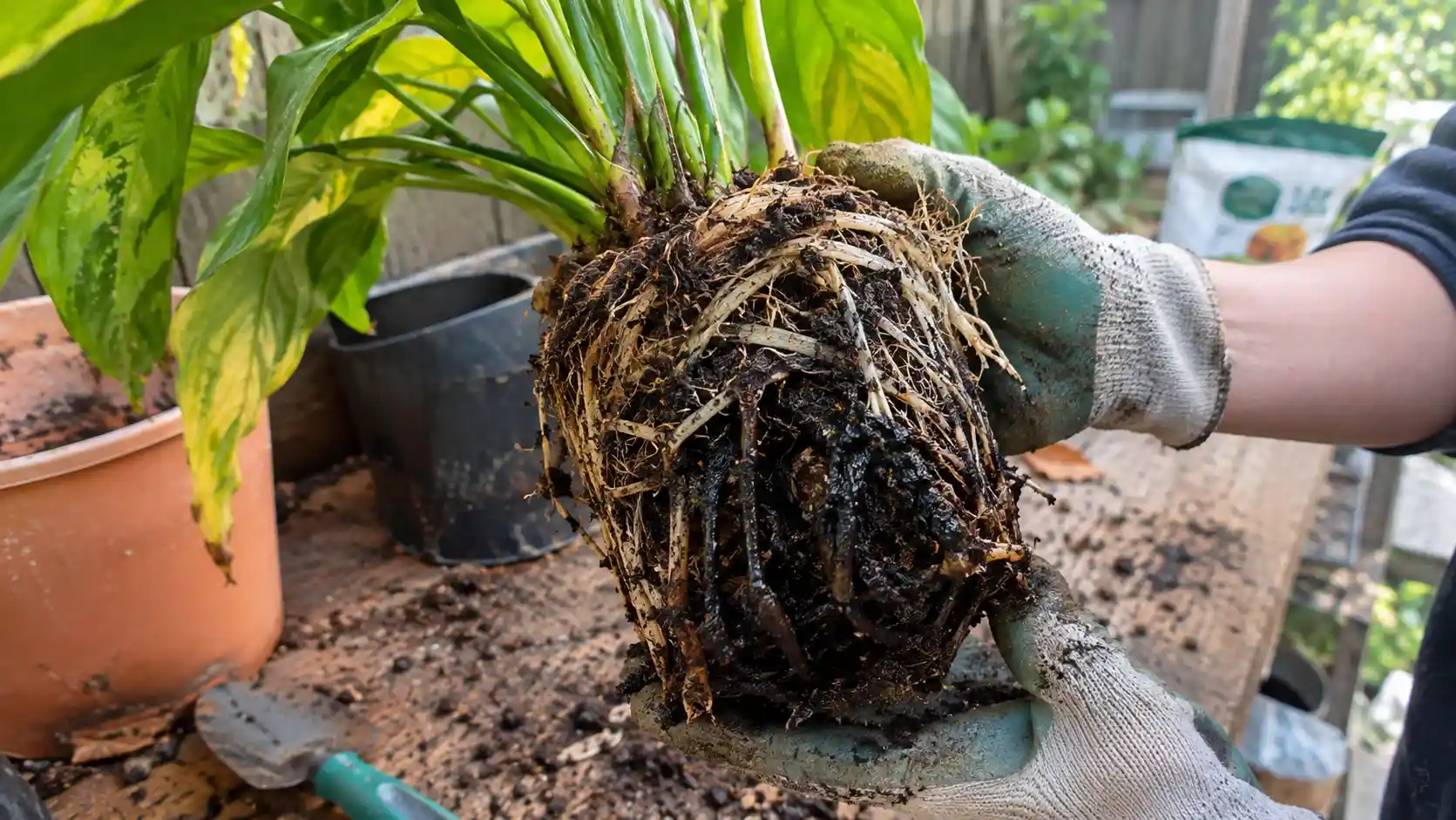
The University of Maryland Extension’s guide to root rots of indoor plants confirms that damaged roots often turn brown to black and mushy, with the outer root tissue pulling away easily from the core — a useful physical check when you’re inspecting your own plant.
Yellow, Crispy or Dry Leaves
This combination usually means underwatering or persistently low humidity, not overwatering.
Why it happens: Without enough water reaching the leaf tissue, cells dehydrate and die from the edges inward, leaving a dry, brittle texture rather than the soft mushiness of overwatering.
Crispy yellowing tends to start at leaf edges and tips before spreading inward, and is frequently accompanied by dry, pulling-away soil that has shrunk from the pot’s sides.
Brown Leaf Tips Only
Isolated brown tips, with the rest of the leaf otherwise healthy, usually point to water quality, fertiliser salt build-up, or low ambient humidity — not a root problem.
Why it happens: Chlorine, fluoride, and dissolved salts in tap water (and in fertiliser applied slightly too generously) accumulate at leaf tips, where the plant’s own water transport system deposits mineral residue.
A white or crusty build-up on the soil surface is a strong sign of salt accumulation from water or fertiliser. See also our best soil and fertiliser guide for Australia for how to avoid over-application in the first place.
Sudden Leaf Drop
A fast, whole-plant leaf drop is almost always a shock response to a recent change — not a slow-developing disease.
Why it happens: Many indoor plants respond to sudden changes in light, temperature, or root disturbance by shedding leaves to reduce stress on the plant, rather than trying to support leaves it can no longer sustain.
The timing is the giveaway here — leaf drop that follows within days of a repot, a house move, or being placed near a cold draught or a heater vent is shock, not pest or disease damage.
Wilting Despite Moist Soil
This is one of the more counterintuitive symptoms and is a strong red flag for root rot, not underwatering.
Why it happens: When roots have rotted, they can no longer draw up the water that’s sitting right there in the pot, so the plant wilts as if dry — even though the soil is saturated.
If you water a wilting plant and it doesn’t perk up within a day or two, and the soil was already moist, check the roots before adding more water.
Curling or Drooping Leaves
Curling or drooping without any colour change is often a light or airflow issue, or the very early stages of a pest problem.
Why it happens: Leaves curl to reduce surface area exposed to excess light or hot, dry air (such as direct aircon or heater airflow), and sap-sucking pests like spider mites can cause similar curling as they feed.
Check leaf undersides closely for tiny moving specks, webbing, or sticky residue before assuming it’s environmental. Our garden pest identification guide is useful for confirming what you’re looking at.
The Most Common Causes of Indoor Plant Decline
Overwatering and Root Rot
Consistently flagged as the single most common cause of houseplant death, overwatering usually isn’t about how much water you give at once — it’s about how often, and whether the soil is allowed to dry out between waterings.
Underwatering
Less common than overwatering but still frequent, particularly with plants that dry out fast in small pots or during hot Australian summers when aircon is also pulling moisture from the air.
Insufficient or Incorrect Light
Too little light leads to slow decline, leggy growth, and pale leaves; too much direct sun (especially through unshaded west-facing windows in summer) can scorch leaves that aren’t adapted to it.
Pests and Disease
Spider mites, mealybugs, scale, and fungus gnats are the most frequent indoor offenders. Early infestations are easy to miss because symptoms (curling, spotting, slowed growth) overlap with other causes.
The RHS’s guidance on preventing pest and disease problems emphasises that keeping plants in the right conditions for their needs is the strongest defence, since stressed plants are far more susceptible to pest damage in the first place.
Fertiliser Burn
Frequently misdiagnosed because it mimics both underwatering (crispy tips) and disease (leaf spotting). Over-fertilising, or fertilising a plant that’s already stressed or dry, causes a build-up of salts that draws water out of root tissue rather than into it. For a full breakdown of correct application rates and timing, see our soil and fertiliser guide for Australian conditions.
Root-Bound Roots and Repotting Stress
A plant that has outgrown its pot develops a dense, circling root mass that struggles to take up water and nutrients efficiently, leading to slow decline that’s often mistaken for a watering problem. Our growth, roots and sizing guide explains how to recognise and manage this.
Overwatering vs Underwatering: How to Tell Them Apart
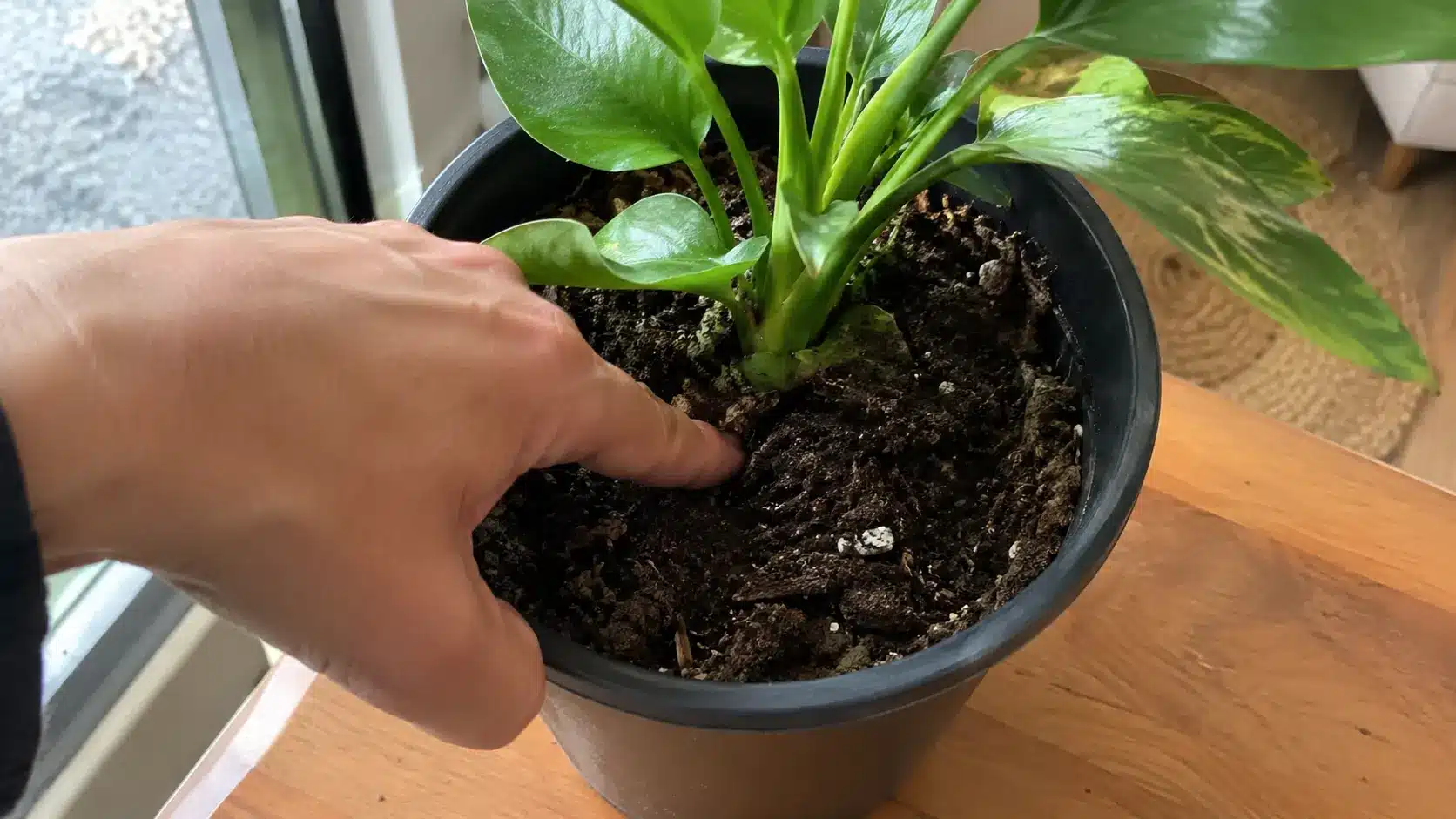
Because these two opposite problems produce look-alike symptoms (yellowing, wilting, leaf drop), a direct side-by-side comparison is the fastest way to tell them apart.
| Sign | Overwatering | Underwatering |
| Leaf texture | Soft, mushy, sometimes translucent | Dry, crispy, brittle |
| Soil moisture | Wet or waterlogged at depth | Bone-dry, pulling away from pot edge |
| Timing of decline | Gradual, often weeks | Can be rapid, especially in small pots or heat |
| Stem firmness | Soft or mushy at the base in severe cases | Firm, but leaves may droop |
| Pot weight | Heavier than expected | Noticeably lighter than when watered |
| Odour | Sour or rotten smell from soil in advanced cases | No unusual odour |
As the University of Maryland Extension notes, root rot can paradoxically cause wilting even when the soil is wet, because damaged roots can no longer move water up to the leaves — which is exactly why the “just water it more” instinct backfires.
Why Australian Conditions Make This Worse
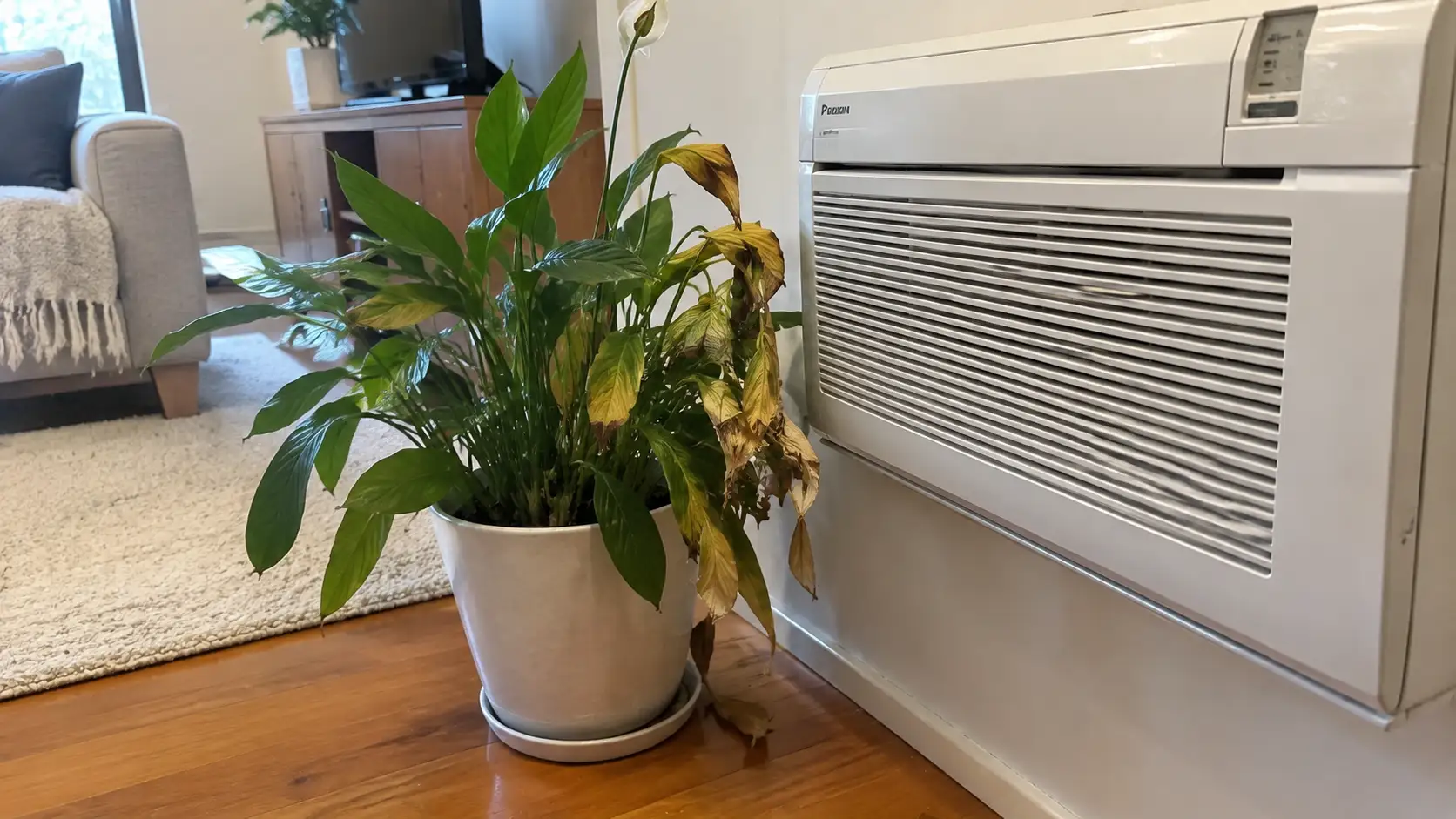
Most indoor plant advice online is written for US or UK homes, and it misses conditions that are genuinely different here.
Reverse-Cycle Heating and Aircon Drying the Air
Reverse-cycle heating in winter and aircon through summer both strip moisture from indoor air, which can compound crispy-tip and underwatering-style symptoms even when soil moisture looks fine. Plants placed directly in the airflow path of a heater or aircon unit are especially prone to this.
Mains, Tank and Bore Water Differences
Water hardness, chlorine, and fluoride levels vary meaningfully between Australian states and between mains, tank, and bore supply. Harder or more heavily treated water is more likely to contribute to the mineral build-up behind brown leaf tips over time.
Seasonal Light Changes Across Australian Summer and Winter
Because Australian seasons run opposite to the US and UK sources most generic advice is written from, “winter dormancy” or “summer growth” guidance calibrated overseas doesn’t map cleanly onto our light and temperature patterns — a plant here may need adjusted watering and light positioning at different times of year than the guide you’re reading suggests.
Why Is This Happening Now? Timing Clues
Just Repotted
Leaf drop or wilting in the days following a repot is usually transplant shock, particularly if roots were disturbed or trimmed. This typically resolves as new roots establish, provided the plant wasn’t already unhealthy going in.
Just Brought Home or Recently Moved House
A change in light levels, humidity, and airflow between a nursery or previous home and your current one is a common, often overlooked trigger for decline that has nothing to do with care mistakes.
Seasonal Change
The start of reverse-cycle heating season, the switch to aircon in summer, or simply reduced daylight hours can each independently trigger symptoms that look identical to a watering problem.
Is It Too Late? A Salvageability Check
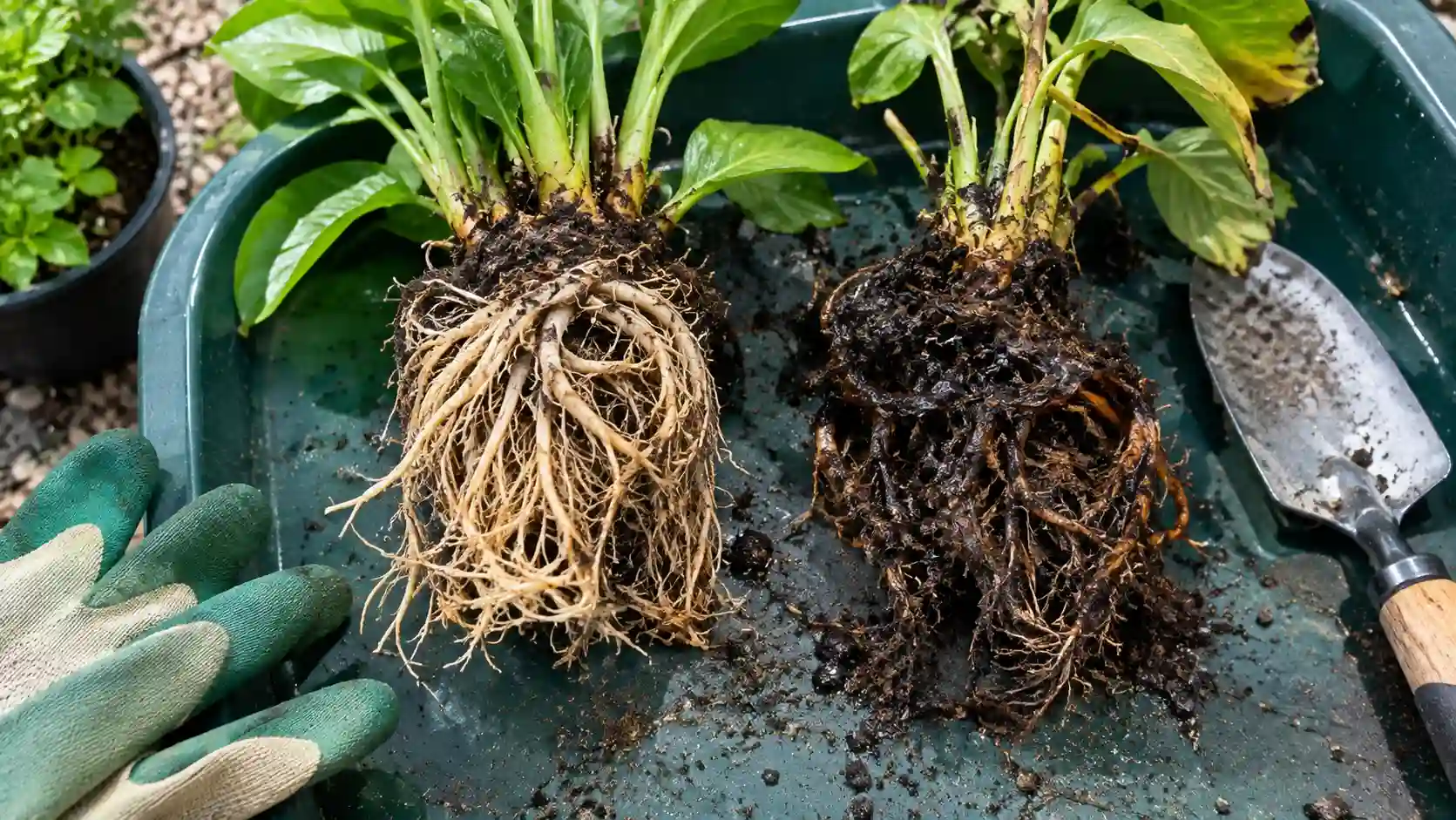
Before investing more time in fixes, it’s worth establishing how far gone the plant actually is.
Root and Stem Checks
Gently remove the plant from its pot and inspect the roots: firm, white or light tan roots indicate a plant that’s still salvageable. Black, brown, mushy, or foul-smelling roots indicate advanced rot — the more of the root mass affected, the lower the chance of full recovery. Check the stem base too; a firm stem is a good sign, while a soft or blackened stem base often means the damage has progressed too far to reverse.
Signs of Recovery vs Signs It’s Gone
New growth, even small new leaves or shoots, appearing after a fix has been applied is the clearest sign of recovery. A stem that stays firm and green (or shows green when lightly scratched) still has life in it. Conversely, a stem that’s uniformly soft, dark, or collapsing, with no green under the surface anywhere, generally will not recover.
How to Fix It: Step-by-Step Recovery
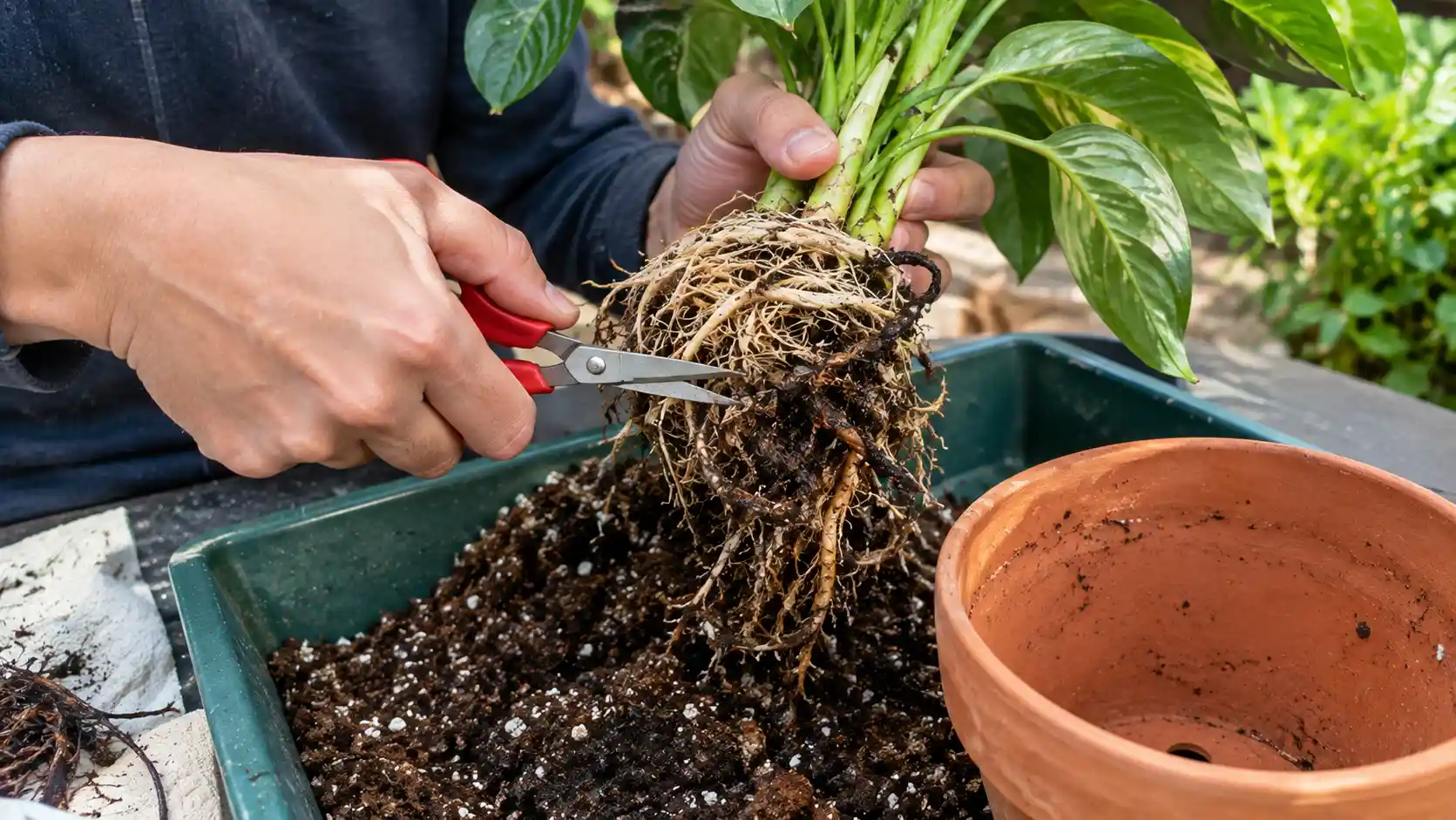
Fixing Overwatering or Root Rot
Remove the plant from its pot, trim away any black, mushy roots with clean scissors, and repot into fresh, well-draining potting mix in a pot with drainage holes. Hold off watering again until the top few centimetres of soil are dry.
Fixing Underwatering
Water thoroughly until it runs from the drainage holes, rather than a light surface splash, and check that the pot isn’t so root-bound that water is running straight through without being absorbed.
Fixing Light Problems
Move gradually toward more appropriate light rather than shifting a low-light plant straight into direct sun, which can scorch leaves that have adapted to lower light levels.
Treating Pests
Isolate the affected plant, wipe down leaves (including undersides) with a damp cloth, and treat with an appropriate insecticidal soap or horticultural oil, repeating as needed since most treatments target active pests rather than eggs.
Flushing Fertiliser Burn
Stop fertilising immediately and flush the soil thoroughly with plain water several times to leach out excess salts, allowing full drainage between each flush.
Repotting Root-Bound Plants Correctly
Gently loosen or score the outer root mass before placing the plant into a pot only one size larger than the current one — sizing up too aggressively can leave excess soil holding moisture the roots aren’t yet using, increasing rot risk.
Species-Specific Sensitivities
General advice can backfire badly for certain plant types, so it’s worth checking whether your plant falls into one of these categories before applying a generic fix.
- Succulents and similar drought-adapted plants need the soil to dry out fully between waterings and are highly prone to root rot if treated like a tropical foliage plant.
- Tropical foliage plants (such as those in the aroid family) generally prefer consistent moisture and higher humidity, and will show crispy-tip and drooping symptoms faster than succulents if allowed to dry out completely.
- Plants sensitive to fertiliser salts can show burn symptoms at application rates that other species tolerate without issue, so “the label says monthly” isn’t a universal rule.
Beginner Mistakes That Make This Worse
- Watering on a fixed schedule (e.g. “every Sunday”) instead of checking actual soil moisture first
- Moving a stressed or recovering plant repeatedly to “find the right spot,” which adds further shock on top of the original problem
- Over-fertilising a struggling plant in an attempt to help it recover, which frequently compounds root damage instead
- Repotting into a much larger pot “to give it room to grow,” which leaves excess soil holding moisture the roots can’t yet use
For readers newer to plant care generally, our beginner gardening guide for Australia covers foundational habits that prevent many of these mistakes from happening in the first place.
How to Prevent It Happening Again
- Check soil moisture with a finger or moisture meter before watering, rather than watering on autopilot
- Adjust watering frequency seasonally — most indoor plants need less water during reverse-cycle heating season and more during hot, dry summer stretches
- Keep plants clear of direct heater vents and aircon airflow
- Monitor humidity in air-conditioned or heated rooms, and consider grouping plants or using a pebble tray if levels run consistently low
- Inspect leaves (including undersides) regularly so pest problems are caught before they establish
For a broader look at how indoor conditions differ from what plants experience outdoors, see our indoor vs outdoor plant care differences guide.
Conclusion
Most indoor plant deaths come down to a small set of causes — overwatering and root rot most of all, alongside underwatering, poor light, pests, and fertiliser burn — and the fastest way to save a struggling plant is matching its exact symptoms to the right cause rather than guessing. In Australian homes specifically, reverse-cycle heating, aircon, and water quality deserve more attention than most plant care advice gives them. Before trying any fix, check the roots and stem to establish whether the plant is genuinely salvageable — that one step saves the most time and the most plants. If you’re building out your indoor plant collection as you get more confident, our guide to Australian indoor houseplants and garden design is a good next stop.
FAQs
How do I tell if my plant is overwatered or underwatered?
Check leaf texture and soil moisture together: soft, mushy yellow leaves with wet soil point to overwatering, while dry, crispy yellow leaves with bone-dry soil point to underwatering.
Can a dying indoor plant be saved?
Often, yes — check the roots and stem base first. Firm, light-coloured roots and a firm stem mean recovery is likely; black, mushy roots and a soft or blackened stem base mean the odds are much lower.
Why is my plant dying even though I water it “correctly”?
“Correct” watering by volume doesn’t account for pot drainage, root health, or how humidity and heating/aircon are affecting the soil — the issue is often frequency or drainage rather than amount.
Does Australian tap water affect indoor plants?
It can contribute to brown leaf tips over time, particularly with harder or more heavily treated water, though it’s rarely the sole cause of serious decline on its own.
Why is my indoor plant suddenly dying after I repotted it?
Sudden leaf drop or wilting after repotting is usually transplant shock from root disturbance, and typically resolves as new roots establish — provided the plant was healthy before the repot.
How long does it take for a plant to recover from root rot?
Recovery timing varies considerably by species and severity, so it’s best judged by new growth appearing rather than a fixed timeframe.