

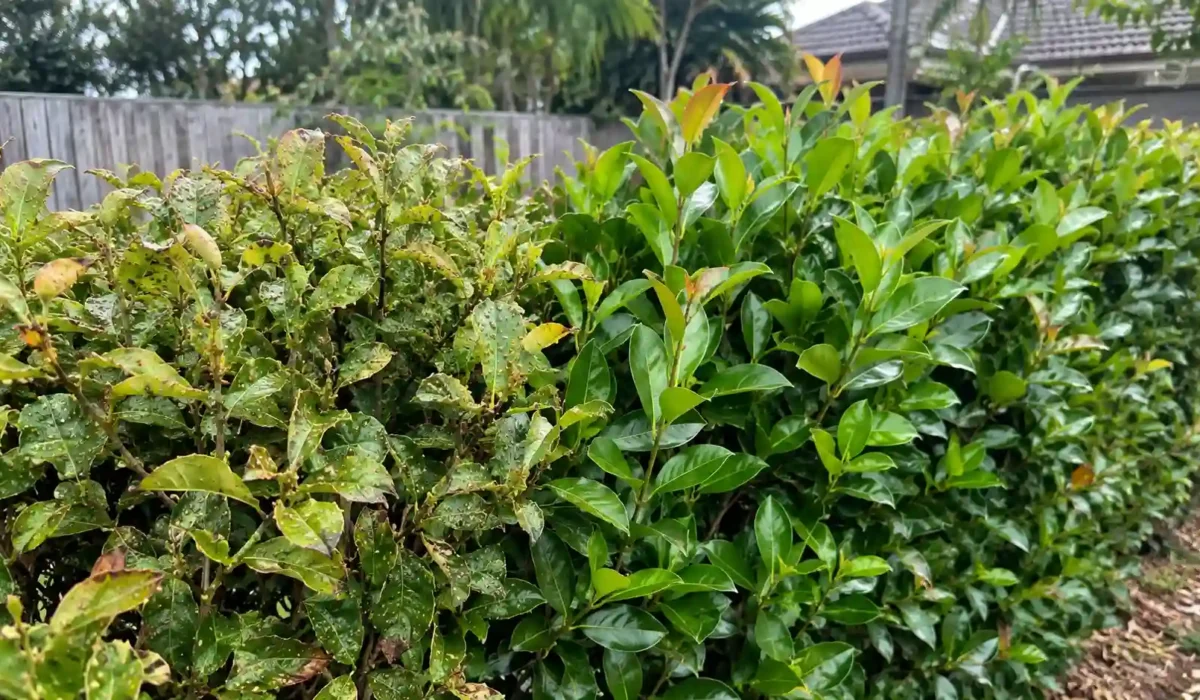
Lilly Pilly Pests & Diseases: Symptoms, Causes & Treatment
If your lilly pilly hedge, screen or specimen tree has suddenly developed pimply leaves, sticky black residue, chewed foliage, rust-coloured spots or dieback, the cause is almost always one of a small handful of common pests and diseases — psyllid, scale, sooty mould, myrtle rust or lilly pilly beetle. Most of these are cosmetic and won’t kill an established plant, but two of them can, so working out which one you’re looking at matters. This guide starts from what you can actually see on the plant, not from the pest’s name, so you can get to the right diagnosis and treatment faster.
Quick Summary
- The most common lilly pilly problems in Australia are psyllid (“pimple”), scale, sooty mould, myrtle rust, and lilly pilly beetle — most are identifiable from the mark left on the leaf, not from spotting the insect itself
- Most issues are cosmetic and won’t kill an established plant; myrtle rust and severe beetle defoliation are the two that genuinely threaten plant survival
- Treatment should escalate — cultural care, then pruning, then organic sprays, then systemic/chemical options — rather than reaching for a spray as the first move
- Psyllid resistance and myrtle rust resistance are two separate traits in lilly pilly cultivars; a variety bred for one doesn’t automatically resist the other
What’s Actually Wrong? Start Here
Before treating anything, match what you’re actually seeing to the table below.
| Visible sign | Likely cause | Severity |
| Pimply bumps or craters on leaves, curling new growth | Psyllid (Trioza eugeniae) | Cosmetic |
| Sticky residue with a black sooty coating | Sooty mould (secondary to sap-suckers) | Cosmetic–moderate |
| Small waxy bumps on stems or leaves | Scale | Cosmetic–moderate |
| Orange, yellow or purple powdery pustules on new leaves | Myrtle rust | Serious |
| Ragged holes, chewed leaf margins, thinning foliage | Lilly pilly beetle (Paropsides calypso) | Moderate–serious |
| Small holes or tunnels in stems, isolated branch dieback | Borers | Serious (localised) |
| Yellowing lower leaves, soggy soil, wilting despite watering | Root rot | Serious |
Psyllid (“Lilly Pilly Pimple”)
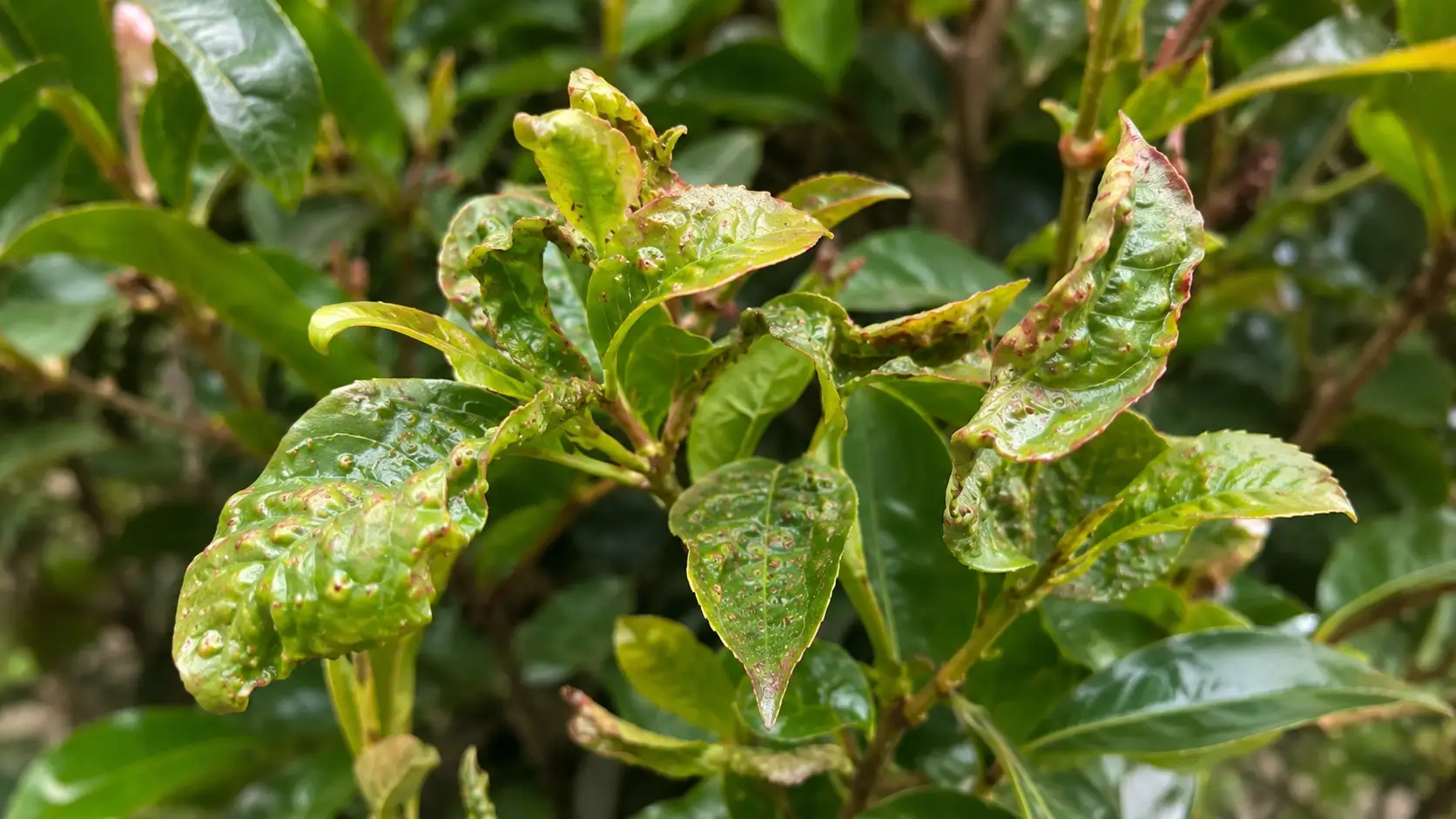
Pimply, craterred new growth on your lilly pilly is almost always the common lilly pilly psyllid, Trioza eugeniae.
Adult psyllids lay their eggs directly into new growth tips. The nymphs that hatch feed on the underside of the leaf, and as they do, a pit forms underneath with a corresponding pimple visible on top — the classic symptom homeowners describe as “pimple” or “leaf gall” damage. Psyllids prefer softer new leaf tissue, which is why species with a softer leaf surface such as Syzygium and Waterhousea are commonly affected, while Acmena types are largely left alone.
Psyllid damage is disfiguring but rarely fatal. It can be managed with an escalating approach:
- Monitor and improve plant health first — psyllid takes hold hardest in stressed, poorly watered or underfed plants
- Prune and bin affected tips rather than composting them
- Encourage natural predators — the parasitic wasp Tamarixia has around a 60% success rate against psyllid, alongside ladybirds, spiders and small birds
- Be cautious with oil and soap sprays — recent field observation suggests they have limited effectiveness against this particular pest, despite being widely recommended
- Reach for a systemic or registered spray only if the infestation is severe and recurring, and only as a later step, not a first response
If you’re planting fresh rather than treating an existing hedge, our guide to the best lilly pilly varieties for hedging breaks down which cultivars carry genuine psyllid resistance.
A biosecurity correction worth knowing
Some Australian gardening sources describe a lilly pilly psyllid as a recently arrived, notifiable pest in Western Australia that gardeners should report to the state’s biosecurity authority. That advice actually concerns the Tomato Potato Psyllid, a different species that affects tomato, potato and other solanaceous crops — it is unrelated to the common lilly pilly psyllid discussed above, which is long-established across eastern Australia and is not a notifiable pest. It’s an easy mix-up given both are called “psyllid,” but it’s worth knowing you’re not dealing with a biosecurity emergency if your lilly pilly has ordinary pimple damage.
Scale
Small, waxy-looking bumps in black, brown or white on stems, twigs and leaves are scale.
Scale insects hide under a protective wax coating while they feed on plant sap, and their appearance is often a sign the lilly pilly is under stress — commonly from insufficient water. Treatment: prune away badly affected growth, treat with eco-oil to break down the waxy coating, and address the underlying watering issue so scale doesn’t return. For broader hedge health between treatments, our hedge pruning guide for Australian conditions covers timing that won’t stress the plant further.
Sooty Mould
A black, sooty coating on leaves is not a disease in its own right — it’s a fungus growing on the honeydew excreted by sap-sucking pests like psyllid, scale and aphids.
Sooty mould can be wiped or hosed off the leaf surface, but it will return unless the sap-sucker producing the honeydew underneath it is brought under control. Treat the psyllid or scale first; the mould resolves as a downstream effect.
Myrtle Rust — The Serious One
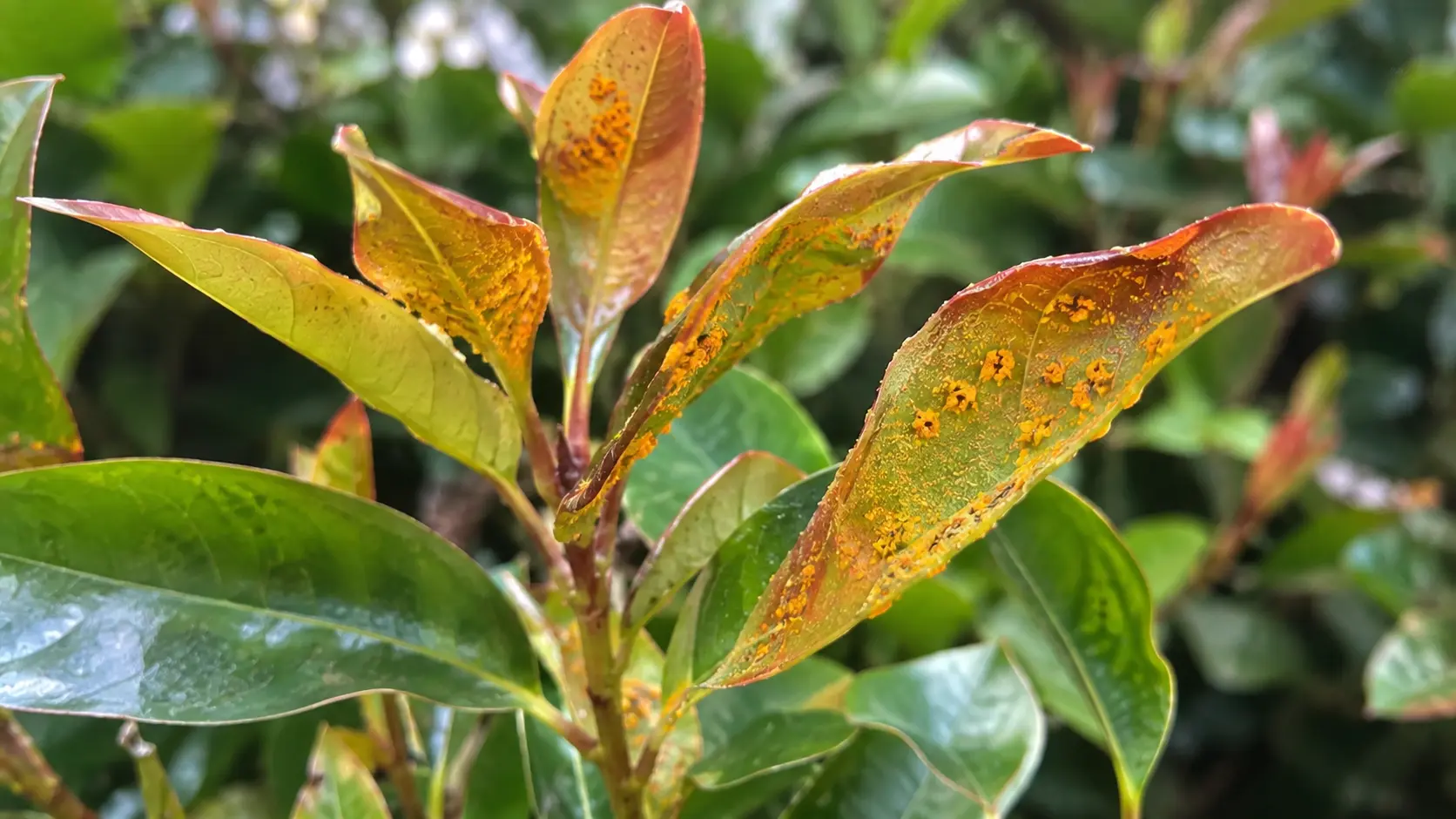
Orange, yellow or purple powdery pustules on young leaves are myrtle rust, and unlike the issues above, this one genuinely threatens the plant’s survival.
Myrtle rust is caused by the fungal pathogen Austropuccinia psidii, spread by windborne spores, and affects plants in the Myrtaceae family — which includes lilly pilly along with eucalypts, callistemons and melaleucas. The NSW Department of Primary Industries notes the disease was first detected in NSW in 2010 and has since spread across the eastern Australian landscape, with early eradication efforts abandoned in favour of ongoing management once it became clear the spores disperse too easily by wind to contain.
At the first sign of myrtle rust, treat the entire hedge with a foliar fungicide and repeat according to label directions; if treatment doesn’t bring it under control, affected plants may need to be removed. According to the Australian Government Department of Climate Change, Energy, the Environment and Water, myrtle rust has not been detected in South Australia or Western Australia, which means early reporting in those states is a biosecurity priority rather than a routine home-garden matter — if you’re in WA or SA and suspect myrtle rust, contact your state biosecurity authority before treating it yourself.
Resistant cultivars reduce the severity of infection but genetic resistance isn’t an absolute guarantee under high disease pressure — resistant plants can still show some symptoms in a bad outbreak. On the research side, University of Queensland researchers have developed an RNA-based spray shown to both prevent infection and, when applied within two weeks of infection, help affected plants recover — an emerging option worth watching rather than a current retail product. For established treatment protocols, Agriculture Victoria’s guidance for nurseries and traders points to APVMA-approved fungicides as the current chemical control option.
Lilly Pilly Beetle
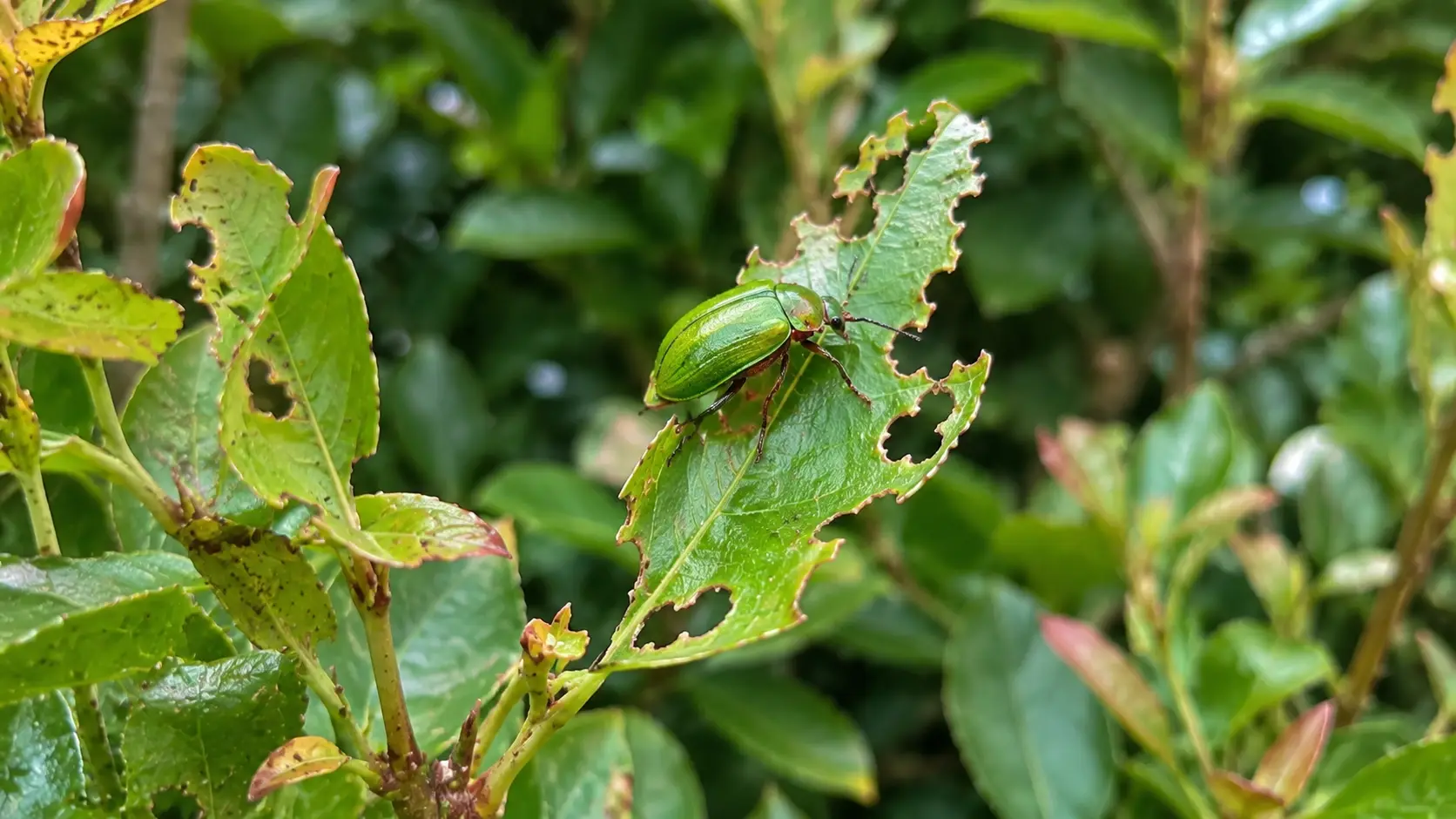
Ragged holes and chewed leaf margins, distinct from psyllid’s pimpling, point to the lilly pilly beetle, Paropsides calypso.
The bright green adult beetle lays eggs on leaf undersides; the pale green larvae that hatch begin feeding immediately, and both larvae and adults eat leaf tissue. Originally confined to southern Queensland and northern NSW, the beetle has spread progressively south in recent years and is now found as far as the NSW Southern Highlands and into Melbourne. An infestation can strip a dense, healthy hedge to a sparse, lacy appearance within weeks.
Treatment options, organic first:
- Hand-pick larvae (slow-moving and easy to catch) and drop them into soapy water
- Let chickens scratch under affected plants to find pupating beetles in the soil
- For chemical control, use a product specifically labelled for this beetle
Important caution: systemic products containing imidacloprid are not registered for lilly pilly beetle control and pose a real risk to bees, particularly since lilly pillies are often in flower when infestations peak — avoid spraying flowering plants with bee-toxic systemics regardless of what you may see recommended in gardening forums.
Borers and Root Rot
Isolated branch dieback points to borers; yellowing lower leaves and wilting despite adequate watering points to root rot.
Borers tunnel into stressed or damaged wood, usually entering through existing wounds or dieback. Root rot follows poor drainage or waterlogged soil rather than a lack of water, which is why the plant can look thirsty while actually sitting too wet. Both are less common than the pests above but more structurally serious, and both usually call for improving the growing conditions (drainage, mulch, avoiding trunk damage from mowers or whipper-snippers) alongside any targeted treatment.
Resistant Varieties: Psyllid Resistance ≠ Myrtle Rust Resistance
A cultivar bred to resist psyllid isn’t necessarily resistant to myrtle rust, and vice versa — they’re separate traits, even though gardening content often names a “resistant” variety without specifying which problem it resists. If you’re chronically fighting one issue on an existing hedge, it’s worth checking which resistance your replacement cultivar actually carries before assuming it solves everything. Our detailed comparison of lilly pilly cultivars for hedging covers genus, psyllid resistance and frost tolerance side by side, and individual cultivar pages — including Backyard Bliss, Straight & Narrow, Acmena smithii Minor and Cherry Surprise — give the specifics for each.
Should You Treat or Replace a Struggling Hedge?
If a hedge has been fighting the same issue for several seasons despite consistent treatment, it’s worth weighing replacement against ongoing management:
- How much of the hedge is actually affected? A few damaged branches is a pruning job; more than half the hedge chronically affected is a bigger decision
- Which problem is it? Cosmetic psyllid or scale rarely justifies replacement on its own; recurring myrtle rust or severe beetle defoliation is a stronger case
- What’s the age and value of the existing hedge? A young, recently planted hedge is cheaper to restart than a mature, well-established screen
- Would a resistant cultivar actually solve it? Check the specific resistance (psyllid vs myrtle rust) against the specific problem before committing
For hedges worth keeping, our hedge and screening plants hub has broader maintenance guidance to support recovery.
Seasonal Pest and Disease Calendar
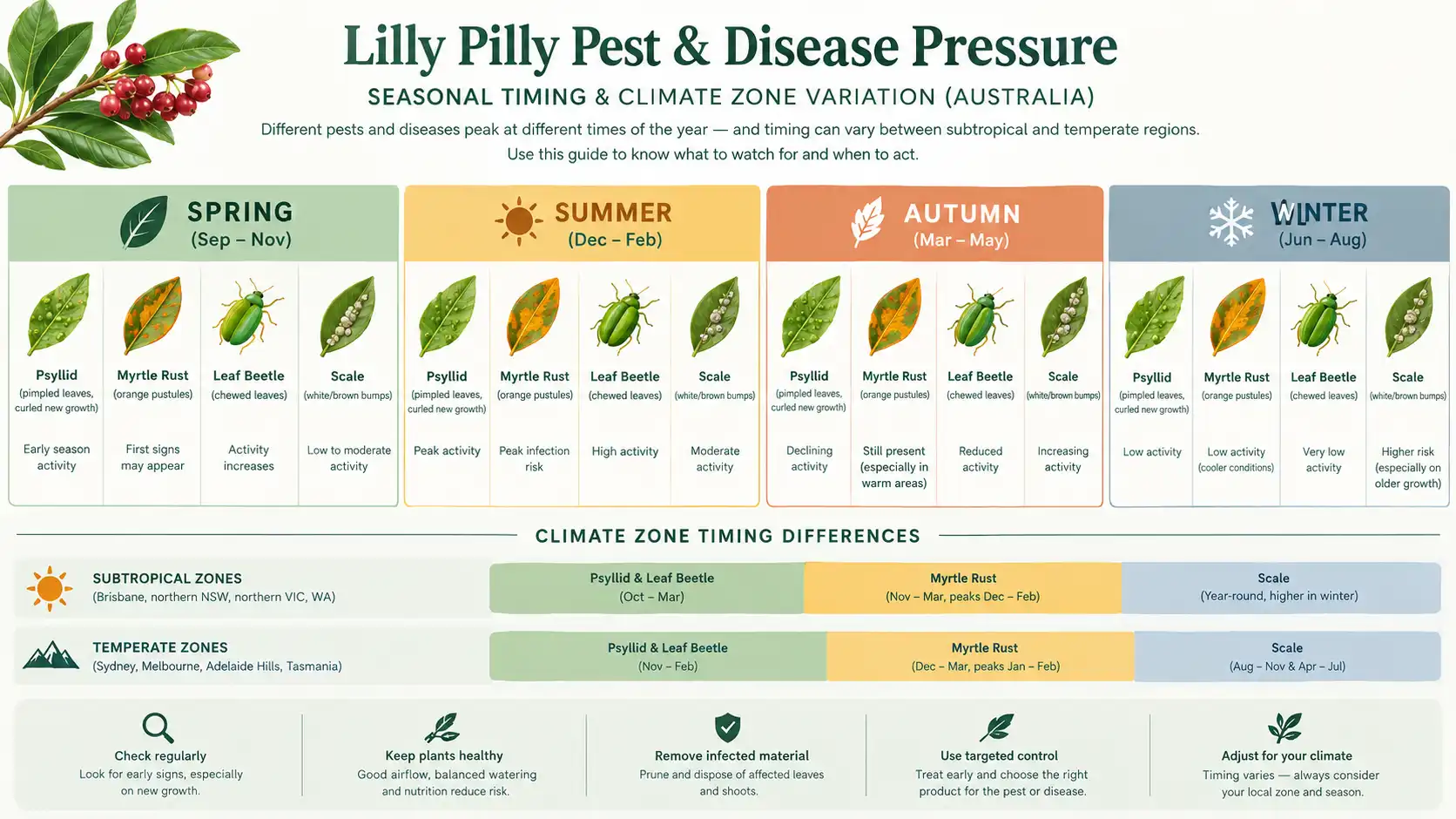
| Season | What to watch for | Climate zone notes |
| Spring flush | Psyllid egg-laying on new growth; beetle activity beginning | Subtropical zones (SE QLD, northern NSW) see earlier onset |
| Wet/humid season | Myrtle rust and sooty mould flare-ups | Coastal NSW, QLD and VIC most affected; SA and WA currently unaffected by myrtle rust |
| Late summer–autumn | Scale often more visible; beetle larvae active | Cooler temperate zones see a shorter active window |
| Winter | Beetle larvae pupating in soil; lower pest pressure generally | Good window for structural pruning via our hedge pruning guide |
Common Mistakes When Treating Lilly Pilly Problems
- Spraying before actually identifying the cause
- Composting infected prunings, which can spread myrtle rust spores rather than contain them
- Using imidacloprid-based systemics on flowering plants, risking bee populations
- Treating sooty mould directly while ignoring the sap-sucking pest causing it
- Assuming any “resistant” cultivar protects against every lilly pilly problem, rather than the specific one it was bred for
Conclusion
Most lilly pilly problems in Australian gardens come down to a short list — psyllid, scale, sooty mould, myrtle rust and lilly pilly beetle — and the fastest way to the right treatment is starting from what you actually see on the leaf, not from guessing the pest’s name. The good news is that most of these are cosmetic and manageable with cultural care, pruning and organic-first treatment. Myrtle rust and severe beetle defoliation are the two to act on quickly, since they can genuinely threaten the plant rather than just its appearance.
FAQs
Is lilly pilly psyllid harmful to the plant long-term?
Generally no — it’s disfiguring but rarely fatal to an established plant, and pruning plus improved plant health usually keeps it in check.
Can I use the same spray for psyllid, scale and aphids?
They’re all sap-sucking insects with broadly similar treatment approaches (pruning, eco-oil, systemic options if severe), though scale specifically needs a product that breaks down its waxy coating.
Why does my lilly pilly have black sooty patches?
That’s sooty mould growing on honeydew from an underlying sap-sucking pest — treat the pest, and the mould resolves.
Is myrtle rust present in my state?
It’s established in NSW, VIC, QLD, ACT and Tasmania; South Australia and Western Australia are currently unaffected, which is why early reporting matters more in those states.
What’s the difference between lilly pilly beetle and psyllid damage?
Psyllid causes pimpling and craters on otherwise intact leaves; beetle damage is ragged holes and chewed margins, often stripping foliage entirely in a bad infestation.
Are psyllid-resistant lilly pillies also myrtle rust-resistant?
Not automatically — they’re separate resistance traits, so check which one a cultivar is actually bred for.
When should I prune vs spray for pest damage?
Prune first for isolated or moderate damage, particularly with psyllid and scale; reach for a spray only if the infestation is severe, spreading, or hasn’t responded to cultural control.