
Magnolia Teddy Bear vs Little Gem: Key Differences Explained
Introduction
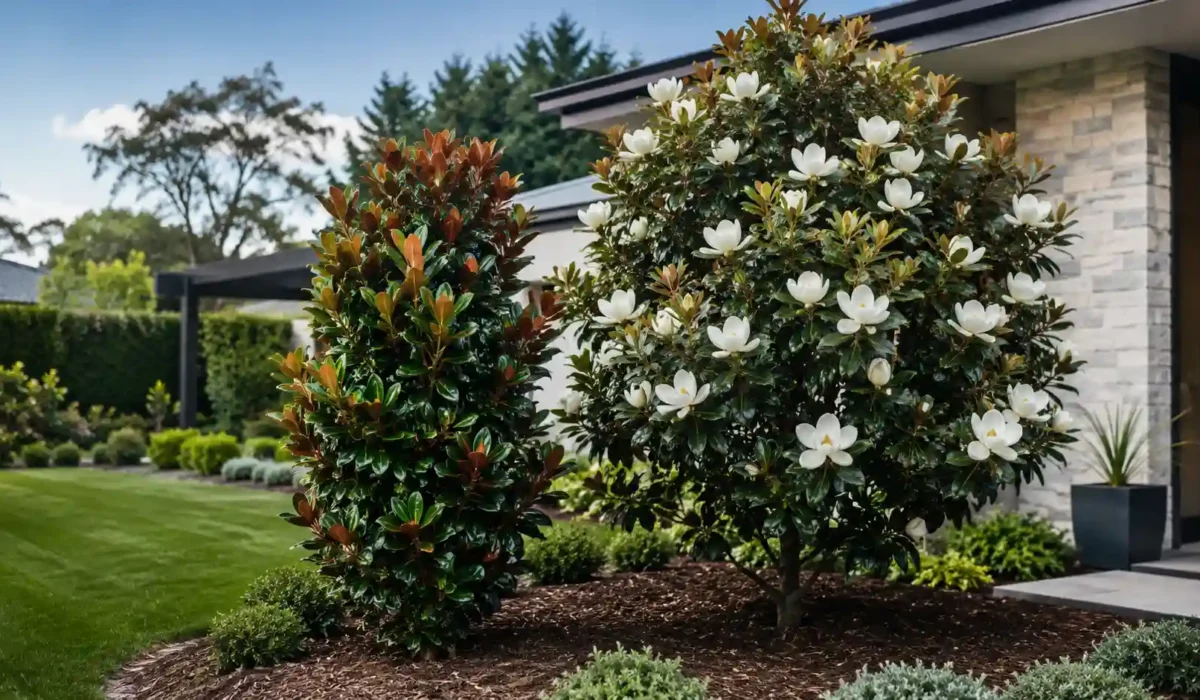
Magnolia Teddy Bear vs Little Gem is one of the most common comparisons for gardeners looking for a compact evergreen magnolia. Both cultivars are smaller forms of Magnolia grandiflora and are widely planted in Australian gardens due to their attractive foliage, fragrant white flowers, and manageable size. While they share many characteristics, important differences exist in mature height, growth rate, flowering performance, and overall garden use. Understanding these differences helps gardeners choose the cultivar that best suits their available space and landscaping goals. Both cultivars are popular choices for Australian gardens, and they fit within the wider range of flowering trees in Australia, from compact ornamental varieties to larger feature trees.
Choosing between similar cultivars can be tricky, so if you’re weighing up other varieties too, our full guide to comparing popular plants covers dozens of side-by-side match-ups to help you decide.
Quick Summary
- Teddy Bear is a compact, upright evergreen magnolia that typically reaches 3–6 m and features striking rusty-brown leaf undersides.
- Little Gem grows slightly larger at 4–8 m, establishes faster, and generally flowers earlier and more frequently.
- Both cultivars are evergreen, low-maintenance, and suitable for many Australian climates.
- Teddy Bear excels in smaller gardens and formal landscapes, while Little Gem is often preferred for screening and hedging.
- The best choice depends on available space, desired growth rate, and whether flowers or foliage are your priority.
What Are Teddy Bear and Little Gem Magnolias?
Origins and Classification
Teddy Bear and Little Gem are compact cultivars of Magnolia grandiflora, commonly known as Southern Magnolia. The species originates from the southeastern United States, where it naturally grows into a large evergreen tree reaching impressive heights.
As residential gardens became smaller, breeders selected compact forms that retained the species’ attractive flowers and evergreen foliage while remaining manageable in suburban landscapes. This resulted in cultivars such as Magnolia grandiflora ‘Teddy Bear’ and Magnolia grandiflora ‘Little Gem’.
Both Teddy Bear and Little Gem are compact cultivars of Magnolia grandiflora, a species of evergreen tree native to the southeastern United States and widely cultivated in ornamental landscapes worldwide.
Both cultivars are especially popular in Australia because they provide the classic Southern Magnolia appearance without requiring the space needed for full-sized trees.
What Makes Them “Dwarf” Magnolias?
The term “dwarf magnolia” refers to cultivars bred to remain significantly smaller than standard Magnolia grandiflora. While a traditional Southern Magnolia may reach 25–30 metres tall, Teddy Bear and Little Gem typically stay under 8 metres.
These selections maintain:
- Large fragrant flowers
- Evergreen foliage
- Attractive growth habit
- Long lifespan
Their reduced mature size makes them practical for modern residential gardens, courtyards, and urban landscapes.
Size Comparison — How Big Do They Actually Grow?
Teddy Bear Magnolia Size and Height
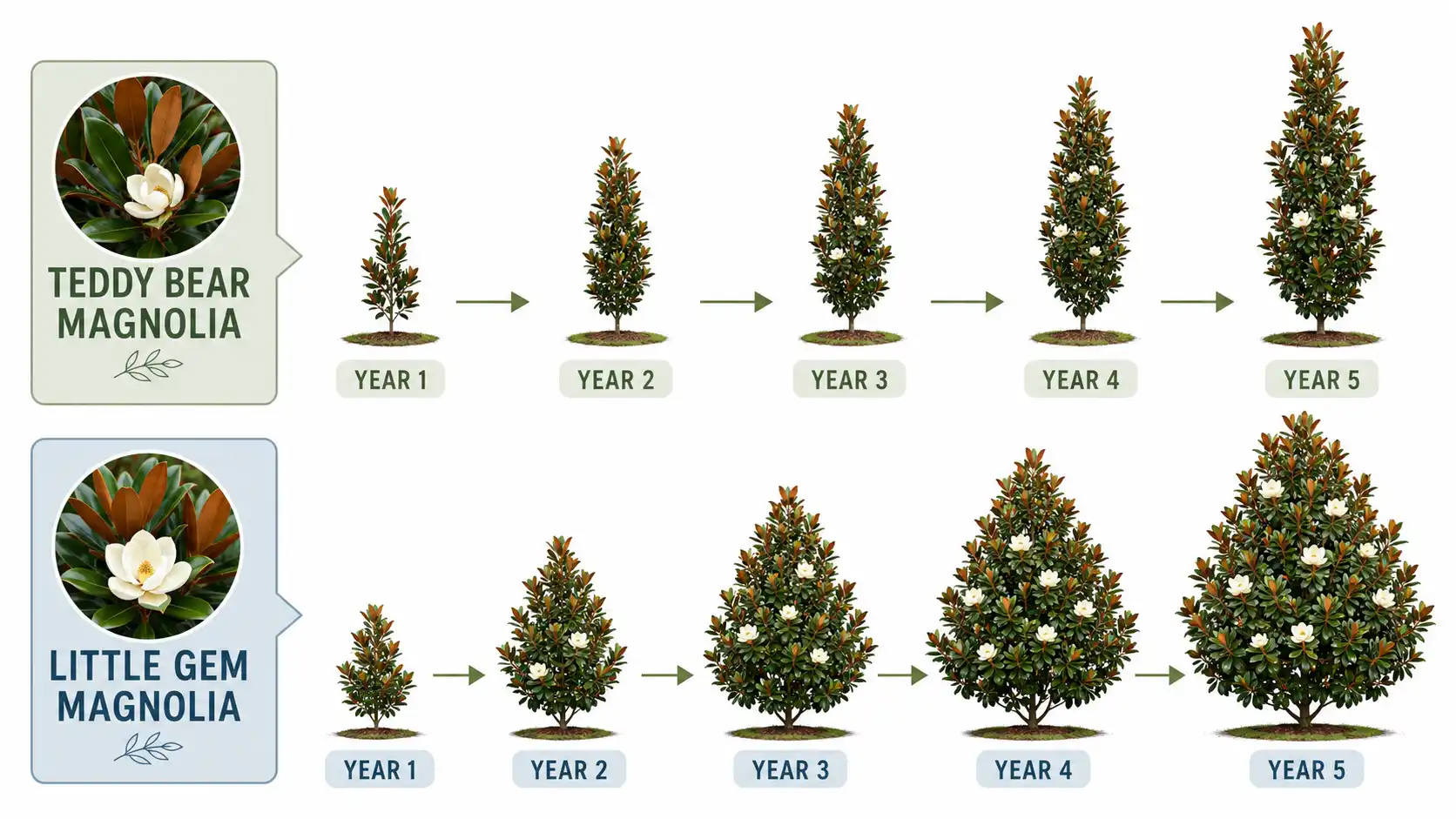
Teddy Bear Magnolia typically reaches a mature height of 3–6 metres with a spread of approximately 1.5–2.5 metres.
Its naturally narrow and columnar growth habit makes it particularly useful in:
- Small gardens
- Courtyards
- Narrow side yards
- Formal landscape designs
- Feature plantings
In our experience growing Teddy Bear magnolias, one of their biggest advantages is predictable growth. They rarely become oversized and generally maintain a neat architectural shape with minimal pruning.
Before planting near buildings, it’s also helpful to understand the Teddy Bear Magnolia Root System and how its roots behave in residential landscapes.
Little Gem Magnolia Size and Height
Little Gem Magnolia generally grows 4–8 metres tall and 2–4 metres wide at maturity.
Compared to Teddy Bear, Little Gem develops a broader pyramidal form. This additional width makes it highly effective for privacy screening and informal hedging.
Many Australian gardeners prefer Little Gem when they want a tree that fills space more quickly while still remaining relatively compact compared to standard Southern Magnolias.
Size at a Glance
| Feature | Teddy Bear | Little Gem |
| Mature height | 3–6 m | 4–8 m |
| Mature width | 1.5–2.5 m | 2–4 m |
| Growth form | Upright, columnar | Broader, pyramidal |
| Growth rate | Slow–moderate | Moderate–fast |
| Flowering age | 2–3 years | 1–2 years |
| Leaf underside | Dense rusty-brown indumentum | Lighter brown indumentum |
Want the raw figures in a sortable format? Our Magnolia Size & Growth Comparison spreadsheet lays out these height, width, and growth-rate numbers side by side for easy reference.
You can use it to jot down your own site measurements alongside the cultivar data while planning your layout.
Growth Rate — Which Grows Faster?
Teddy Bear Growth Rate
Teddy Bear Magnolia grows at a relatively slow to moderate pace, typically adding 20–30 cm of growth annually under ideal conditions.
This slower growth is often viewed as an advantage because:
- Less pruning is required
- Size remains manageable
- Shape stays consistent
- Garden planning is easier
Elemo Baker recommends Teddy Bear for gardeners who prefer long-term structure and low maintenance over rapid establishment.
Little Gem Growth Rate
Little Gem Magnolia grows faster than Teddy Bear, typically producing 30–45 cm of growth per year.
It often reaches flowering size sooner and establishes quickly after planting. This faster development makes it one of the most popular magnolias for:
- Privacy screens
- Evergreen hedges
- Boundary plantings
- Larger residential gardens
Gardeners researching fast-growing screening plants often compare Little Gem with Pittosporum Silver Sheen Growth Rate Guide when planning privacy plantings.
Factors That Affect Growth Speed in Both Cultivars
Several environmental factors influence growth rates:
- Sunlight exposure
- Soil drainage
- Irrigation consistency
- Climate conditions
- Fertilisation practices
Growth is usually strongest during spring and summer. As of 2026, growers continue to recommend deep watering and organic mulch during establishment to maximise healthy growth.
Flowers — Appearance, Timing, and Frequency
Teddy Bear Flowering
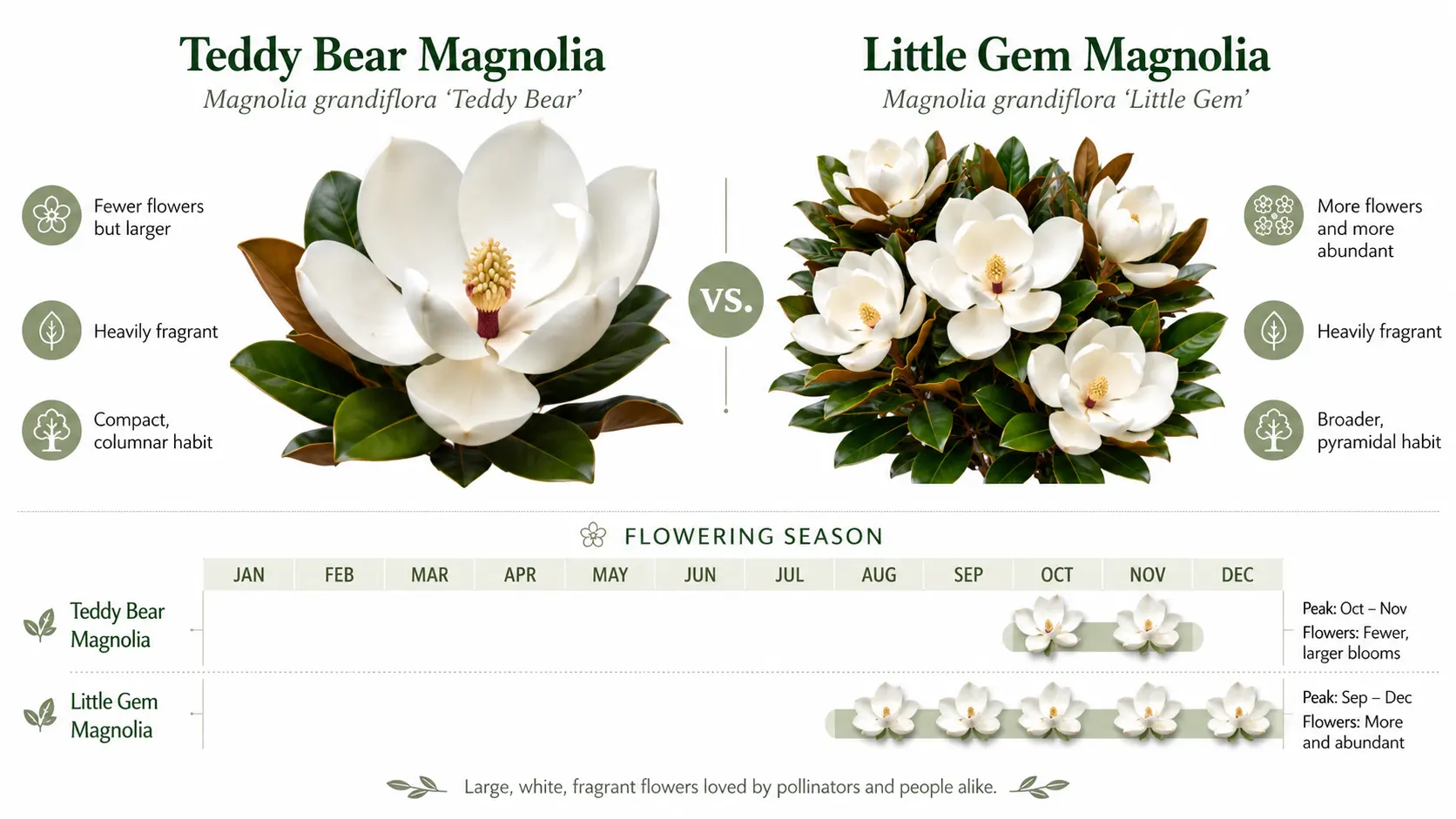
Teddy Bear produces large white flowers measuring approximately 15–20 cm across.
The blooms are:
- Fragrant
- Cup-shaped
- Creamy white
- Attractive to pollinators
Flowering generally begins in late spring and continues through summer. While Teddy Bear may flower slightly less frequently than Little Gem, the blooms are often exceptionally impressive. For gardeners seeking additional flowering landscape trees, our Purple Flower Tree Australia: Native & Popular Species Guide explores several colorful alternatives.
Little Gem Flowering
Little Gem is widely recognised for its prolific flowering habit.
Many plants begin flowering within their first one to two years after planting. In warmer Australian climates, flowering can continue intermittently from spring into autumn.
For gardeners prioritising flower production, Little Gem often holds a slight advantage.
Foliage — Leaves, Texture, and Appearance
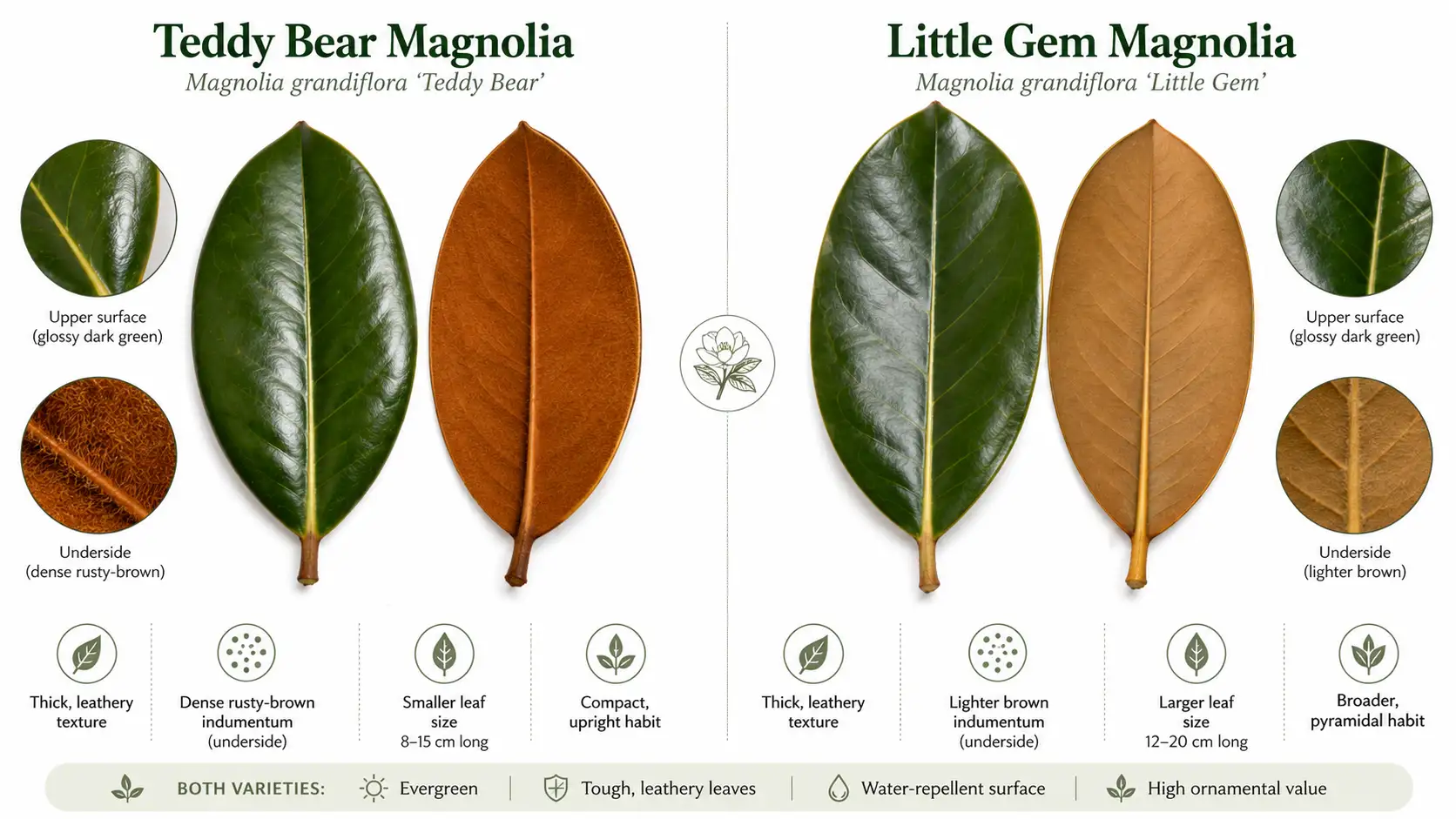
Teddy Bear Leaf Characteristics
The foliage is one of Teddy Bear’s defining features.
Leaves are:
- Glossy dark green above
- Broadly oval
- Thick and leathery
- Rich rusty-brown underneath
The dense cinnamon-coloured underside creates a distinctive appearance when leaves move in the wind. This unique feature inspired the cultivar’s name.
Little Gem Leaf Characteristics
Little Gem leaves are also glossy and evergreen but differ slightly in appearance.
Characteristics include:
- Dark green upper surface
- Lighter brown underside
- Narrower leaf shape
- More traditional magnolia appearance
The foliage creates a refined and elegant landscape effect throughout the year.
Magnolia Teddy Bear vs Little Gem — Pros and Cons
Teddy Bear — Strengths and Limitations
Strengths
- Compact size
- Excellent for small gardens
- Strong architectural shape
- Exceptional foliage appearance
- Suitable for large containers
Limitations
- Slower growth
- Fewer flowers than Little Gem
- Takes longer to establish
Little Gem — Strengths and Limitations
Strengths
- Faster establishment
- Earlier flowering
- More abundant blooms
- Excellent screening tree
- Widely available
Limitations
- Larger mature size
- Requires more space
- Less structured appearance
How to Choose Between Teddy Bear and Little Gem
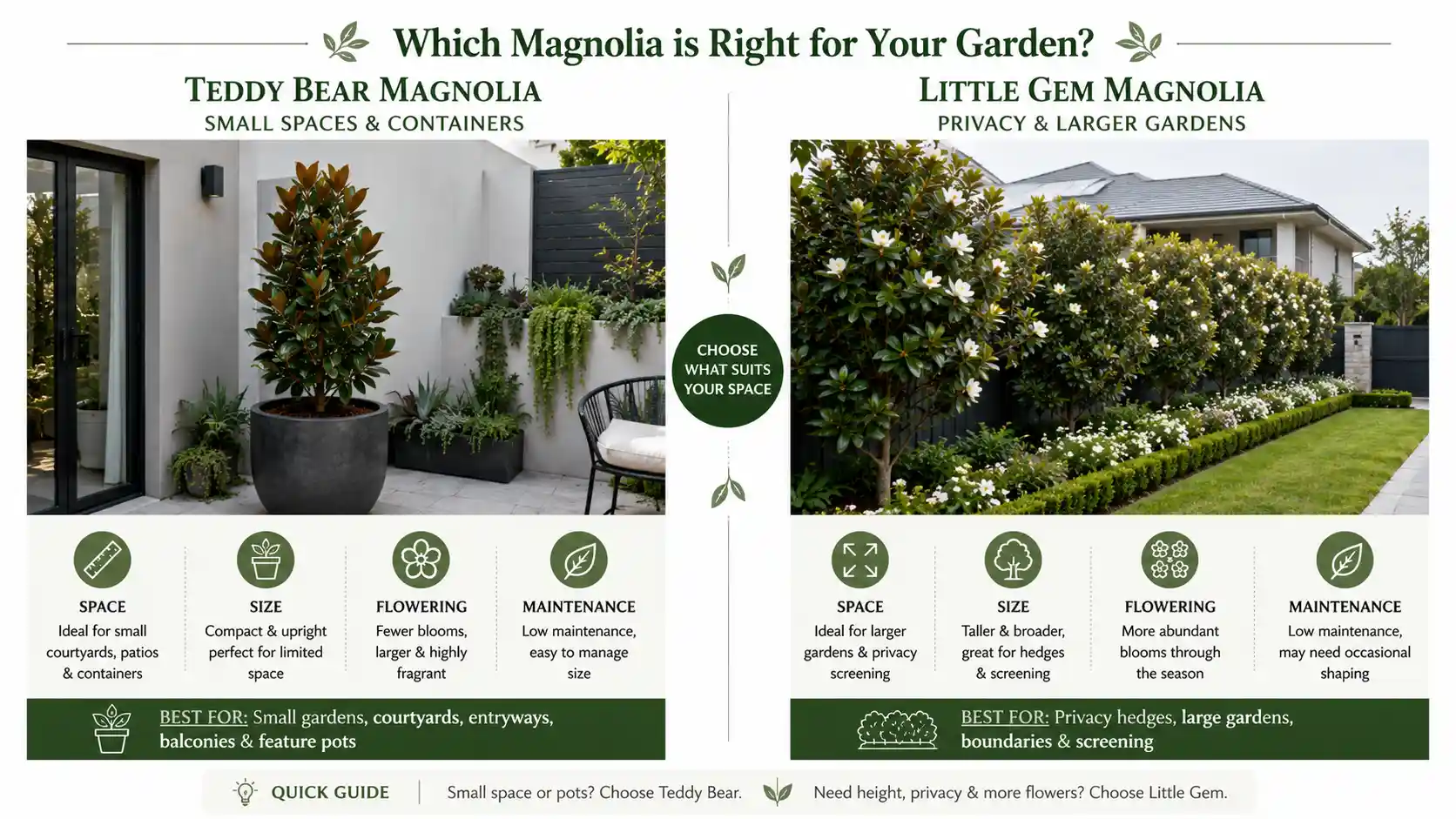
Choose Teddy Bear If…
Choose Teddy Bear if you have:
- A small courtyard
- A narrow garden bed
- Limited horizontal space
- A formal landscape design
- A need for container planting
Its compact growth habit makes it ideal for urban Australian gardens. If your primary goal is creating a dense privacy screen, you may also want to compare Little Gem with Photinia Fraseri Robusta: Growth, Care & Hedge Guide, another popular hedging option.
Choose Little Gem If…
Choose Little Gem if you want:
- Faster privacy screening
- More flowers
- Quicker establishment
- Hedging potential
- A larger feature tree
It performs particularly well in larger suburban and rural gardens. Still torn between the two? Our free interactive Magnolia Cultivar Selector tool lets you filter by garden size, climate zone, and growth priority to get an instant recommendation.
It’s a quick way to cross-check the guidance above against your specific space and conditions before you commit to a cultivar.
For more advice on selecting plants according to garden size, climate and design, see our Australian Plants Guide: Indoor Houseplants & Garden Design.
How Do They Compare to Other Magnolia Cultivars?
Teddy Bear vs Little Gem vs Standard Magnolia Grandiflora
Standard Magnolia grandiflora can reach 25–30 metres in height and is unsuitable for many residential properties.
Teddy Bear and Little Gem provide:
- Similar flowers
- Evergreen foliage
- Reduced maintenance
- Manageable size
This makes them far more practical for modern landscapes.
Magnolia Kay Parris vs Teddy Bear
Kay Parris is another compact Southern Magnolia cultivar.
Compared with Teddy Bear:
- Kay Parris flowers more heavily
- Kay Parris has a more open growth habit
- Teddy Bear has superior foliage texture
- Teddy Bear offers a denser structure
If you enjoy plant comparison guides, you may also find Snow Maiden Oriental Pearl Plant: Growing Guide & Comparison useful when evaluating ornamental landscape plants.
Three-Way Comparison
| Feature | Teddy Bear | Little Gem | Kay Parris |
| Height | 3–6 m | 4–8 m | 4–6 m |
| Flowering age | 2–3 years | 1–2 years | 1–2 years |
| Foliage texture | Very rusty-brown underside | Light brown underside | Lighter underside |
| Growth habit | Narrow columnar | Pyramidal | Open, spreading |
| Best use | Specimen, pots, small gardens | Hedging, screening | Ornamental flowering |
For a deeper look beyond these three cultivars, browse our full Compact Dwarf Magnolia Cultivar Database covering additional dwarf varieties suited to Australian gardens.
It’s organised by mature size, flowering habit, and foliage type, making it easy to see exactly where Teddy Bear and Little Gem sit among their relatives.
Plant Size and Garden Planning
Spacing Guidelines for Teddy Bear and Little Gem
Proper spacing improves airflow and long-term health.
Recommended spacing:
- Little Gem hedge: 1.5–2 m apart
- Teddy Bear specimen planting: allow 2–2.5 m clearance
Adequate spacing reduces future pruning requirements and helps prevent overcrowding.
Indoor vs Outdoor Planting Considerations
Teddy Bear performs better in large containers because of its compact root system and upright growth habit. Little Gem generally performs best when planted directly into the ground where roots have greater room to expand.
For smaller spaces where a magnolia may not be practical, Purple Passion Plant Benefits: Health, Care & Uses highlights an attractive compact alternative.
Important considerations include:
- Soil drainage
- Sunlight exposure
- Wind protection
- Container size
- Irrigation access
While magnolias are primarily outdoor plants, gardeners interested in container gardening may also enjoy Dracaena Plant Indoor Benefits, Care, Meaning & Propagation for indoor growing inspiration.
Growth Rate and Care Guide
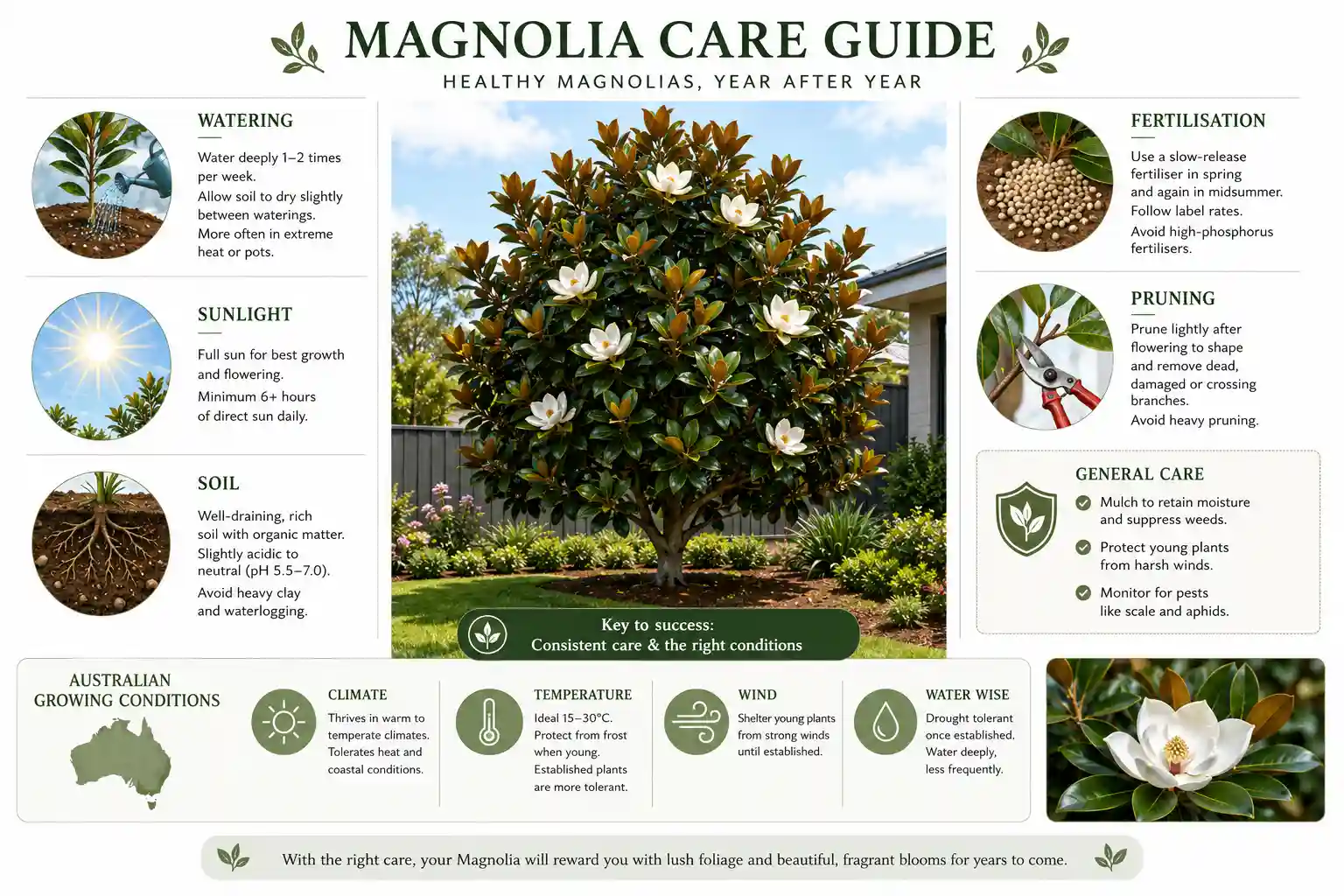
Watering Needs
Both cultivars require consistent watering during their first one to two years.
Once established:
- Moderate drought tolerance develops
- Deep watering is preferred
- Waterlogging should be avoided
Poor drainage remains one of the leading causes of root problems.
Light Requirements
Both magnolias grow best in:
- Full sun
- Light afternoon shade
- Bright open positions
Maximum flowering usually occurs when plants receive at least six hours of sunlight daily.
Soil Preferences and Fertilisation
Ideal growing conditions include:
- Well-drained soil
- Slightly acidic to neutral pH
- Organic matter enrichment
- Slow-release fertiliser in spring
Avoid excessive nitrogen applications, which can reduce flowering performance.
Pruning Considerations
Minimal pruning is usually required.
Best practice includes:
- Light shaping after flowering
- Removal of damaged branches
- Maintenance pruning only when necessary
Avoid heavy pruning because it may remove future flower buds.
Climate Tolerance — Australian Growing Conditions
Both cultivars perform well across many Australian regions.
Suitable conditions include:
- Temperate climates
- Subtropical climates
- Mild frost areas
- Coastal regions with protection
Teddy Bear and Little Gem both tolerate light frosts, although growth is strongest in zones 8–11. Understanding soil health is important for all plants, including those discussed in our Leaf of Life Plant Benefits, Uses, Tea & Care Guide.
Common Problems — Troubleshooting Teddy Bear and Little Gem Magnolias
Yellowing Leaves
Yellow leaves commonly result from:
- Iron chlorosis
- Alkaline soil
- Overwatering
- Poor drainage
Corrective measures include improving soil conditions and applying chelated iron.
Slow Growth or No Flowers
Potential causes include:
- Insufficient sunlight
- Poor nutrition
- Overcrowding
- Deep planting
Remember that Teddy Bear naturally grows more slowly than Little Gem.
Pest and Disease Issues
Common issues include:
- Scale insects
- Sooty mould
- Minor sap-sucking pests
Horticultural oil treatments are often effective. Both cultivars are generally disease-resistant when grown in suitable conditions.
Common Beginner Mistakes When Growing These Magnolias
Common mistakes include:
- Planting too close to structures or pathways
- Overwatering during establishment
- Failing to improve drainage in clay soils
- Selecting Little Gem for spaces that are too narrow
- Pruning immediately before flowering
- Mistaking Teddy Bear’s naturally slow growth for poor health
In our experience, choosing the correct cultivar for the available space is the single most important factor for long-term success. New gardeners often start with easier plants such as those featured in 10 Benefits of Snake Plant for Home and Health before progressing to landscape trees.
Conclusion
When comparing Magnolia Teddy Bear vs Little Gem, neither cultivar is universally better. Teddy Bear stands out for its compact size, strong architectural form, and striking foliage, making it ideal for smaller gardens and formal landscapes. Little Gem offers faster growth, earlier flowering, and superior screening performance, making it a better option for larger spaces and privacy plantings.
Before making a decision, assess your available garden space first. Then consider whether you value foliage structure or rapid flowering and growth. Matching the cultivar to your landscape goals will ensure long-term success and enjoyment.
Frequently Asked Questions
What is the difference between a Teddy Bear magnolia and Little Gem?
Teddy Bear is generally smaller, slower growing, and has a more pronounced rusty-brown leaf underside. Little Gem grows faster, flowers earlier, and develops a broader shape suitable for screening and hedging.
Which is better — a Teddy Bear or a Little Gem magnolia?
Neither is objectively better. Teddy Bear is better for small spaces and formal gardens, while Little Gem is better for faster screening and abundant flowering.
How big do Teddy Bear magnolias grow?
A full-grown Teddy Bear Magnolia typically reaches 3–6 metres tall and 1.5–2.5 metres wide. Growth is relatively slow and predictable compared to Little Gem.
Which magnolia tree is the prettiest?
This depends on personal preference. Teddy Bear is admired for its dramatic foliage and compact structure, while Little Gem is valued for its prolific flowering. Some gardeners prefer flowers, while others prioritise year-round foliage appeal.
Can Teddy Bear and Little Gem magnolias be grown in pots?
Yes. Teddy Bear is generally the better choice for containers due to its compact columnar habit. Use a large, well-draining pot and maintain consistent watering. Little Gem can also be grown in containers but performs best in the ground.
How fast does Little Gem magnolia grow compared to Teddy Bear?
Little Gem typically grows 30–45 cm per year, while Teddy Bear averages 20–30 cm annually. Growth depends on sunlight, soil quality, irrigation, and climate conditions.
Is Teddy Bear magnolia the same as Little Gem?
No. They are separate cultivars of Magnolia grandiflora. They differ in mature size, growth habit, leaf texture, flowering frequency, and ideal landscape use.
3 Comments