
Dwarf Forest Pansy Tree Size, Care & Growth Guide
Introduction
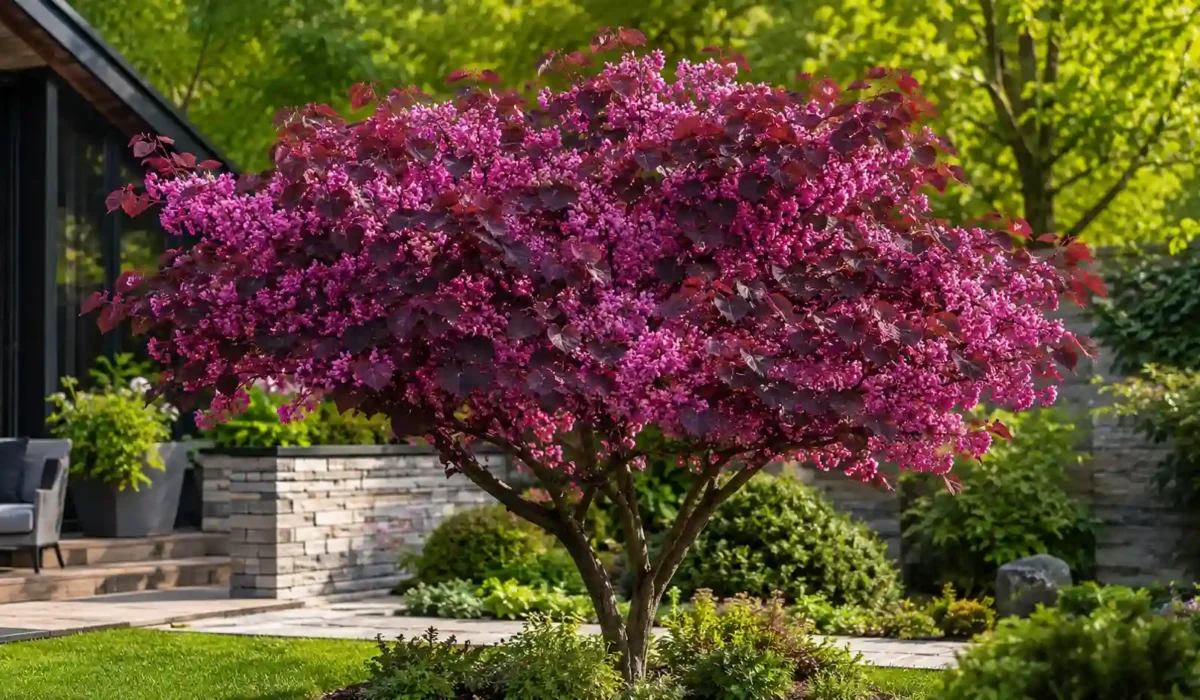
The dwarf forest pansy tree is a compact form of the popular Forest Pansy redbud, valued for its striking purple-maroon foliage, heart-shaped leaves, and vibrant pink spring flowers. Botanically known as Cercis canadensis ‘Forest Pansy’, the standard cultivar is a well-known ornamental tree, while dwarf forms are specifically selected or grafted to remain smaller and more suitable for compact landscapes. Gardeners choose the dwarf forest pansy tree for its dramatic seasonal colour, manageable size, and ornamental appeal. This guide covers everything you need to know about Cercis canadensis Forest Pansy, including size, growth rate, care requirements, common problems, and availability in Australia.
Quick Summary
- The dwarf forest pansy tree is a compact form of Cercis canadensis ‘Forest Pansy’, prized for its deep burgundy heart-shaped leaves and vivid pink spring flowers.
- Dwarf varieties typically reach 2–4 metres in height, making them well-suited to small gardens, courtyards, and container growing.
- They perform best in full sun to part shade, in well-drained, moderately fertile soil.
- Common problems include leaf scorch, poor drainage sensitivity, and challenges in hot or humid Australian climates.
What Is a Dwarf Forest Pansy Tree?
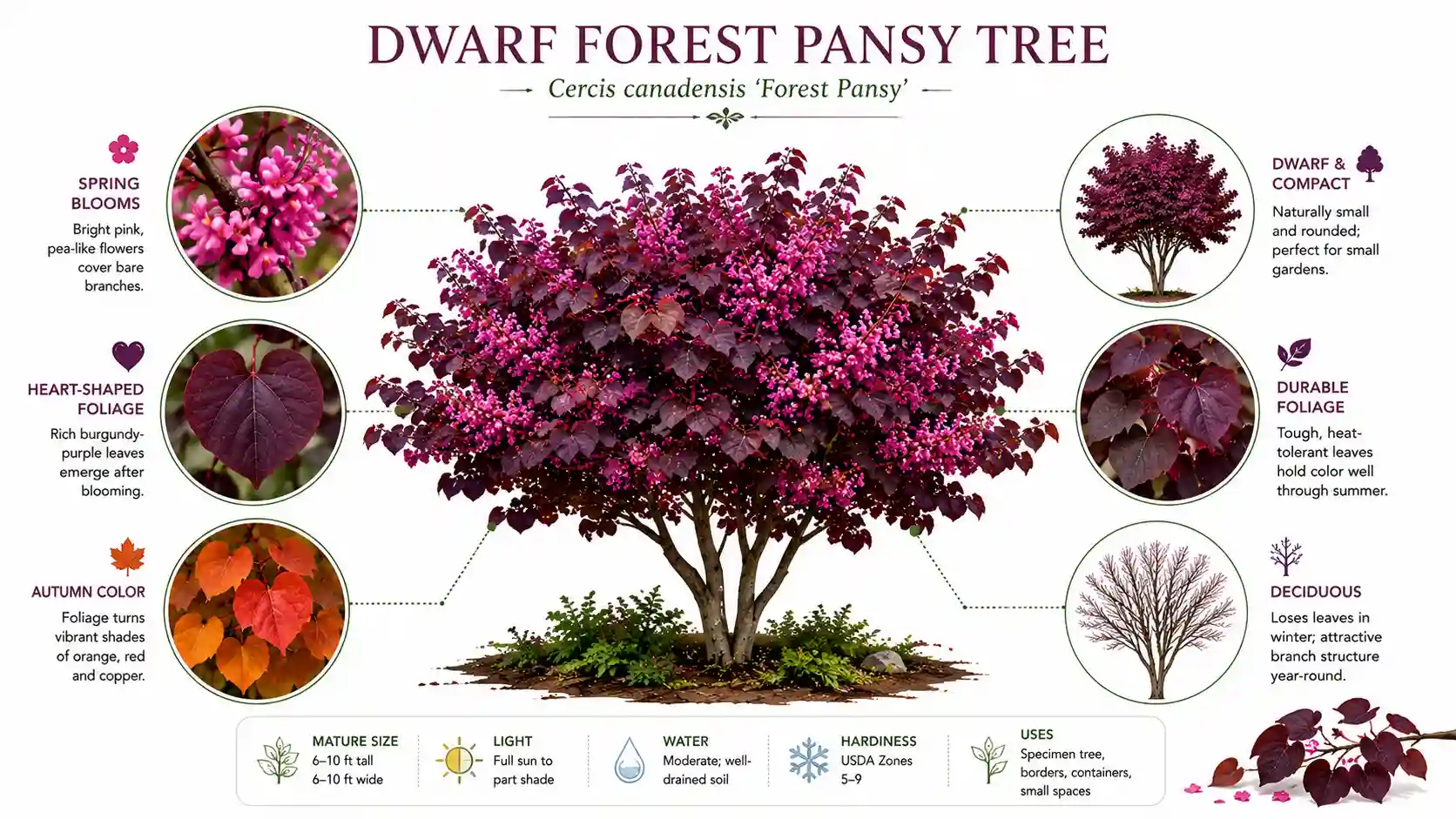
The dwarf forest pansy tree is a compact ornamental form of Cercis canadensis ‘Forest Pansy’, a deciduous tree belonging to the Fabaceae family. Native to eastern North America, the species is closely related to the Eastern Redbud and is widely grown for its colourful foliage and spring flowering display.
The Forest Pansy is a cultivar of Cercis canadensis, a deciduous North American redbud species valued for its ornamental flowers and colourful foliage.
The defining feature of the Forest Pansy is its spectacular seasonal appearance. In early spring, vivid magenta-pink pea-like flowers emerge directly on bare branches before the leaves appear. These blooms are followed by large heart-shaped leaves that emerge deep burgundy or maroon, gradually transitioning to green-purple through summer before developing orange-red autumn colour.
The term “dwarf” generally refers to compact cultivars or grafted forms that remain significantly smaller than the standard tree, making them suitable for small gardens, patios, and courtyard landscapes.
Is the Dwarf Forest Pansy the Same as the Forest Pansy Redbud?
Yes. Forest Pansy Redbud and Forest Pansy Tree refer to the same cultivar, Cercis canadensis ‘Forest Pansy’. In North America, members of the Cercis genus are commonly known as redbuds.
The dwarf forest pansy redbud is either a naturally compact selection or a standard Forest Pansy grafted onto a dwarfing rootstock to limit mature size. The cultivar has received recognition from the Royal Horticultural Society (RHS) for its ornamental value and garden performance.
Dwarf Forest Pansy Tree Size — How Big Does It Grow?
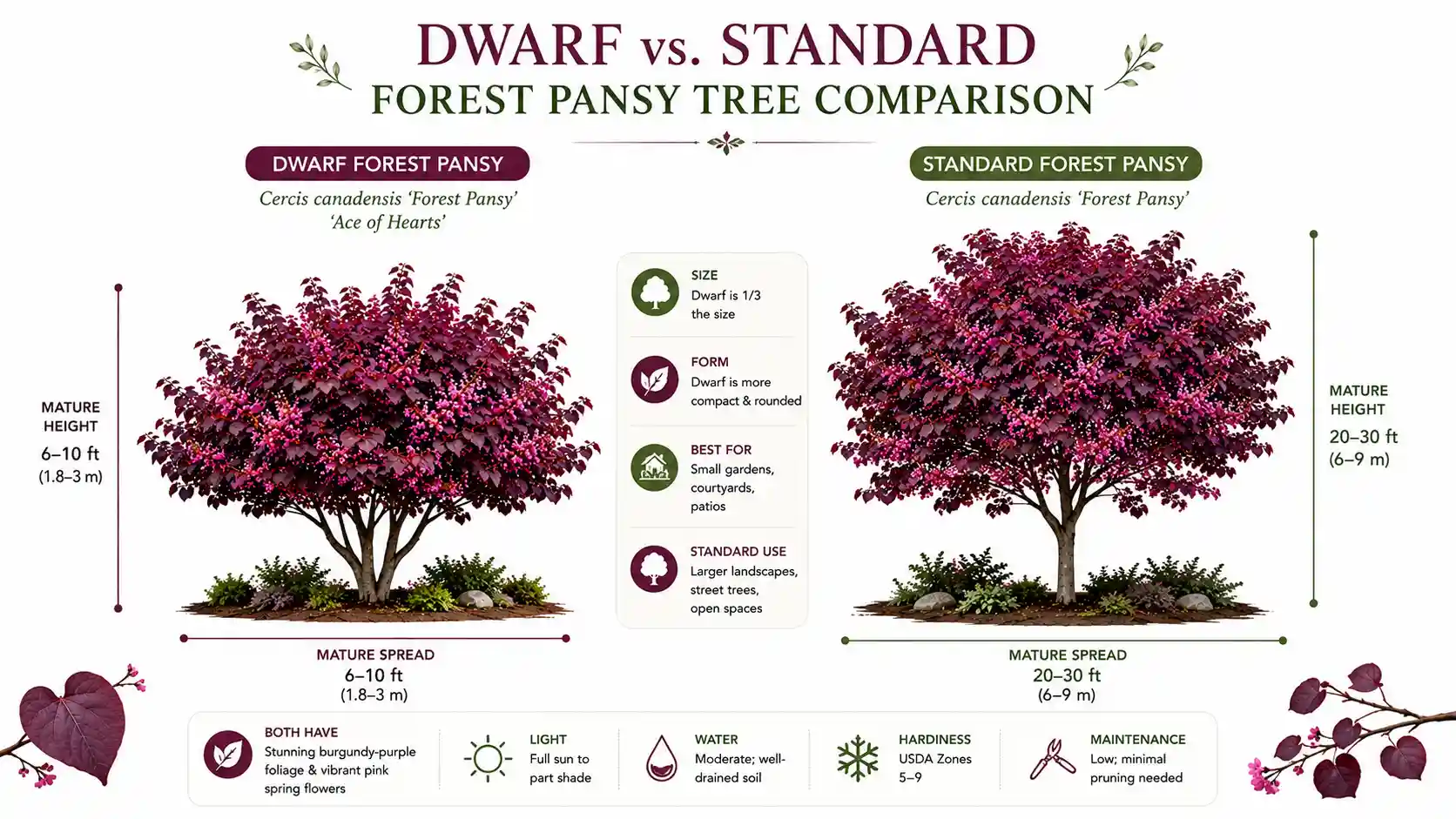
A mature dwarf forest pansy tree typically reaches 2–4 metres in height and 1.5–3 metres in width. This makes it considerably smaller than the standard Forest Pansy, which often reaches 6–9 metres tall and 4–6 metres wide. Gardeners concerned about planting distances may also find our Teddy Bear Magnolia Root System guide useful when comparing the space requirements of ornamental trees.
When gardeners ask, “How tall do Forest Pansy trees grow?” the answer depends on whether they are growing a dwarf or standard form. Standard trees can become substantial landscape specimens, while dwarf varieties remain compact enough for smaller spaces.
Mature size is influenced by:
- Climate conditions
- Soil fertility
- Water availability
- Pruning practices
- Container versus in-ground growing
Trees grown in containers generally remain smaller due to restricted root growth. In cooler climates, growth tends to be slower and overall size may remain more compact.
| Feature | Dwarf Forest Pansy | Standard Forest Pansy |
| Mature Height | 2–4 metres | 6–9 metres |
| Mature Spread | 1.5–3 metres | 4–6 metres |
| Suitable For | Small gardens, containers, courtyards | Large gardens, feature trees |
| Growth Rate | Slow to moderate | Moderate |
| Years to Maturity | 10–15 years | 15–25 years |
Can You Keep a Forest Pansy Tree Small?
Yes, a Forest Pansy tree can be kept relatively small through regular pruning and container growing.
Annual formative pruning after flowering helps maintain a compact shape while preserving future blooms. Container growing naturally restricts root expansion and reduces overall growth.
Pruning should be performed in late spring immediately after flowering. Avoid winter pruning because it may increase dieback risk and remove flower buds that formed the previous season.
Over-pruning should also be avoided because excessive cutting can reduce flowering performance and weaken the tree.
Dwarf Forest Pansy Tree Growth Rate
The dwarf forest pansy tree growth rate is generally classified as slow to moderate. Under favourable conditions, most trees grow approximately 20–40 cm per year.
The most active growth occurs during spring and early summer. Growth often slows significantly during prolonged heat or drought periods.
Factors influencing growth include:
- Soil quality
- Consistent moisture
- Mulching practices
- Local climate
- Sun exposure
In our experience growing ornamental redbuds, trees planted in well-drained soil with regular mulching establish faster and maintain better foliage colour. Compared with upright forms, the weeping forest pansy typically grows even more slowly because its cascading structure directs energy into branch development rather than height growth. If rapid screening is a priority, compare the Forest Pansy’s moderate growth with our Pittosporum Silver Sheen Growth Rate Guide, which covers one of Australia’s most popular hedge plants.
Dwarf Forest Pansy Tree Care Guide
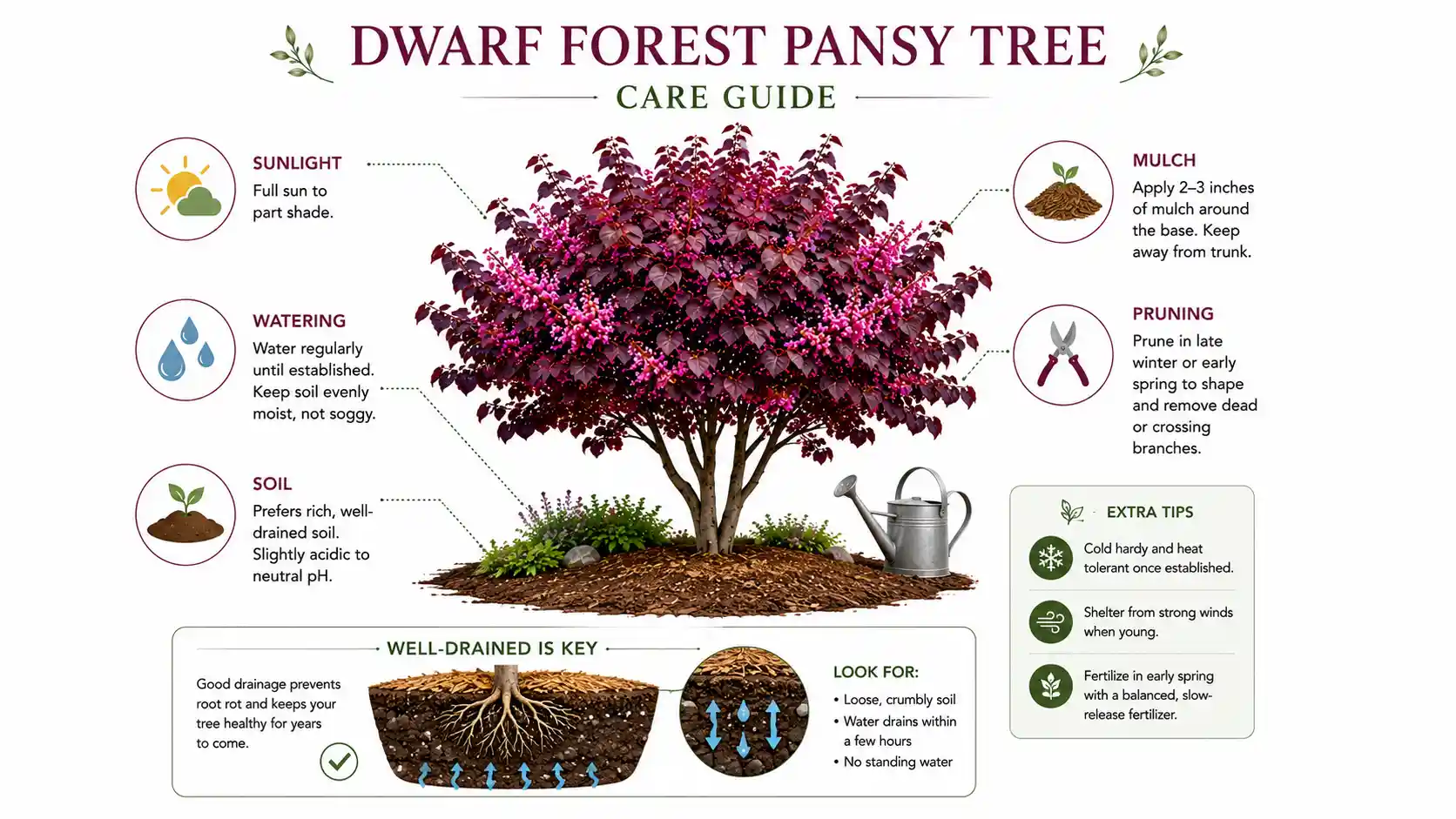
Proper care is essential for maintaining healthy foliage, strong flowering, and long-term tree health.
Sunlight Requirements — Can Forest Pansy Grow in Full Sun?
Yes, Forest Pansy can grow in full sun, but climate plays a major role in determining the ideal location.
In cooler climates, full sun promotes the richest foliage colour and heaviest flowering. In warmer regions, particularly many Australian locations, afternoon shade is strongly recommended.
The best position is:
- Morning sun and afternoon shade
- Light dappled shade beneath taller trees
- Sheltered locations protected from harsh western sun
As of 2026, many Australian growers continue to recommend avoiding intense afternoon exposure to minimise leaf scorch. Readers interested in compact ornamental plants may also enjoy our Snow Maiden Oriental Pearl Plant: Growing Guide & Comparison, which covers another attractive garden specimen.
Watering Needs
Forest Pansy trees prefer moderate but consistent moisture.
Once established, they display moderate drought tolerance, but growth and foliage quality improve when soil moisture remains relatively stable.
Best watering practices include:
- Deep watering rather than frequent shallow watering
- Allowing the upper soil surface to dry slightly between waterings
- Avoiding permanently wet conditions
Mulching around the root zone helps conserve moisture and reduce temperature fluctuations.
Soil Requirements
The species performs best in:
- Well-drained soil
- Moderately fertile soil
- Slightly acidic to neutral pH (6.0–7.5)
Heavy clay and poorly drained soils frequently cause root problems.
For clay-heavy gardens, raised beds and the incorporation of compost and coarse organic matter can significantly improve drainage.
Fertilisation and Mulching
Light feeding in early spring is generally sufficient.
A balanced slow-release fertiliser supports healthy growth without encouraging excessive soft growth.
Avoid fertilisers high in nitrogen because they may increase susceptibility to pests and diseases.
Apply 5–10 cm of organic mulch around the root zone while keeping mulch away from direct contact with the trunk.
Pruning a Dwarf Forest Pansy Tree
Pruning should occur immediately after flowering has finished.
Remove:
- Crossing branches
- Damaged wood
- Weak growth
- Inward-facing branches
Because Forest Pansy blooms on old wood, heavy pruning later in the season removes flower buds for the following year.
Elemo Baker recommends focusing on light structural pruning rather than aggressive size reduction.
Weeping Forest Pansy forms may require occasional staking of the central leader and light tipping to maintain shape.
Dwarf Forest Pansy Tree Problems
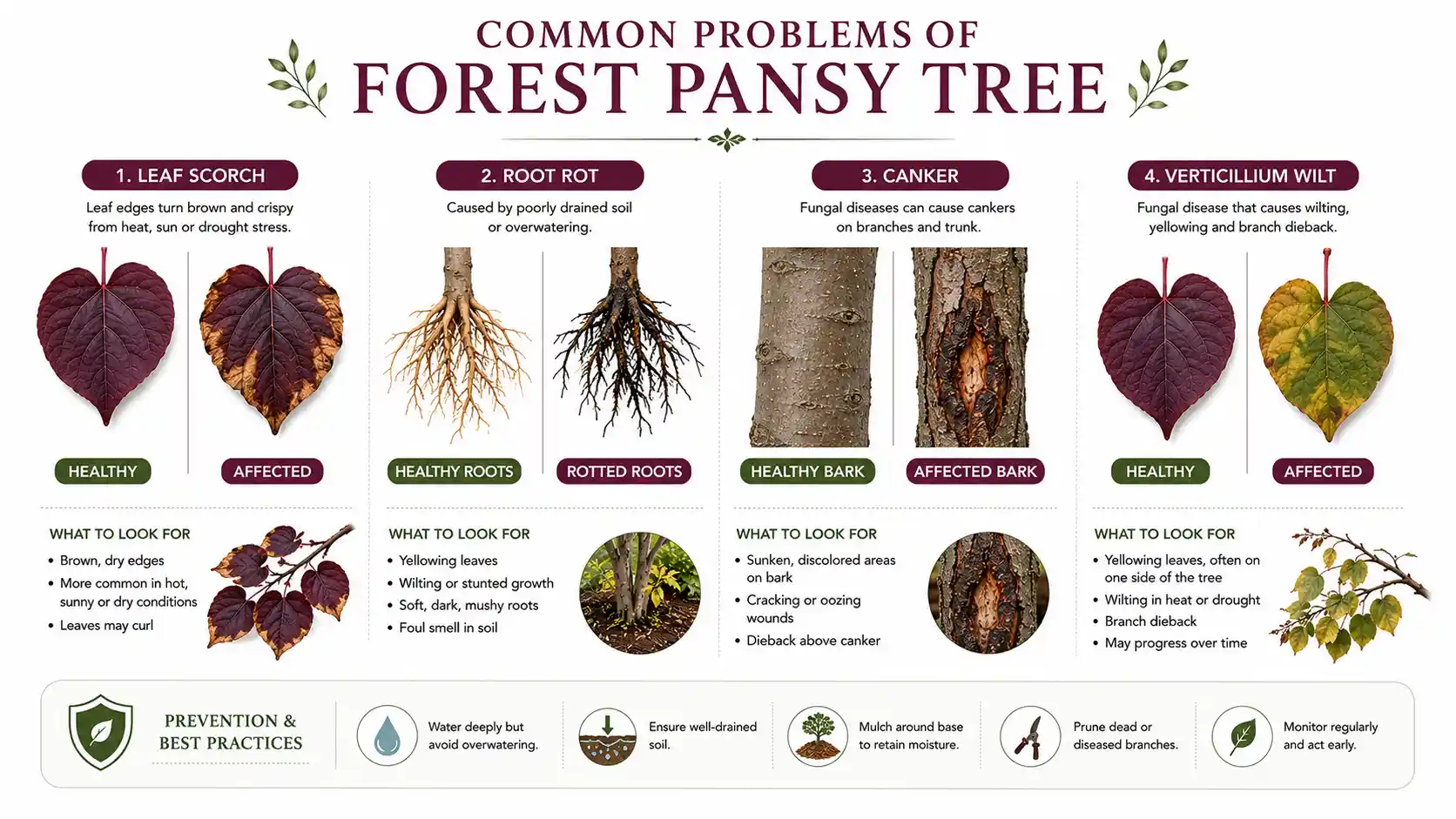
Several common issues affect Forest Pansy trees. Most problems are linked to climate stress, poor drainage, or incorrect siting.
Leaf Scorch
Leaf scorch is the most common problem.
Symptoms include:
- Brown leaf edges
- Crispy foliage
- Premature leaf drop
Causes:
- Intense afternoon sun
- Dry soil
- Hot winds
Solutions:
- Provide afternoon shade
- Increase watering during hot periods
- Apply mulch
Prevention begins with selecting an appropriate planting location.
Root Rot and Waterlogging
Forest Pansy trees are highly sensitive to poor drainage.
Symptoms include:
- Yellowing foliage
- Wilting despite moist soil
- Branch dieback
Solutions:
- Improve drainage
- Reduce irrigation
- Replant into raised beds if necessary
Avoid planting in low-lying areas where water accumulates. Understanding root behaviour is important when selecting planting locations, and our Gum Tree Root System: Root Spread, Problems & Safe Distances guide explains how roots can affect nearby structures and garden layouts. Choosing the right plant for your available space is an important part of garden planning, covered in our Australian Plants Guide: Indoor Houseplants & Garden Design.
Verticillium Wilt
Verticillium wilt is a serious soil-borne fungal disease.
Symptoms include:
- Sudden wilting
- Branch dieback
- Reduced vigour
There is no reliable chemical cure. Management focuses on removing affected branches and improving overall plant health.
Avoid root damage whenever possible because wounds can increase susceptibility.
Canker and Dieback
Canker diseases occur when fungal pathogens enter stressed or wounded tissue.
Symptoms include:
- Dead branches
- Sunken bark lesions
- Progressive dieback
Prune back to healthy wood and disinfect tools between cuts.
Healthy, well-maintained trees are significantly less vulnerable to infection.
Forest Pansy Tree Problems in Australia — Climate Challenges
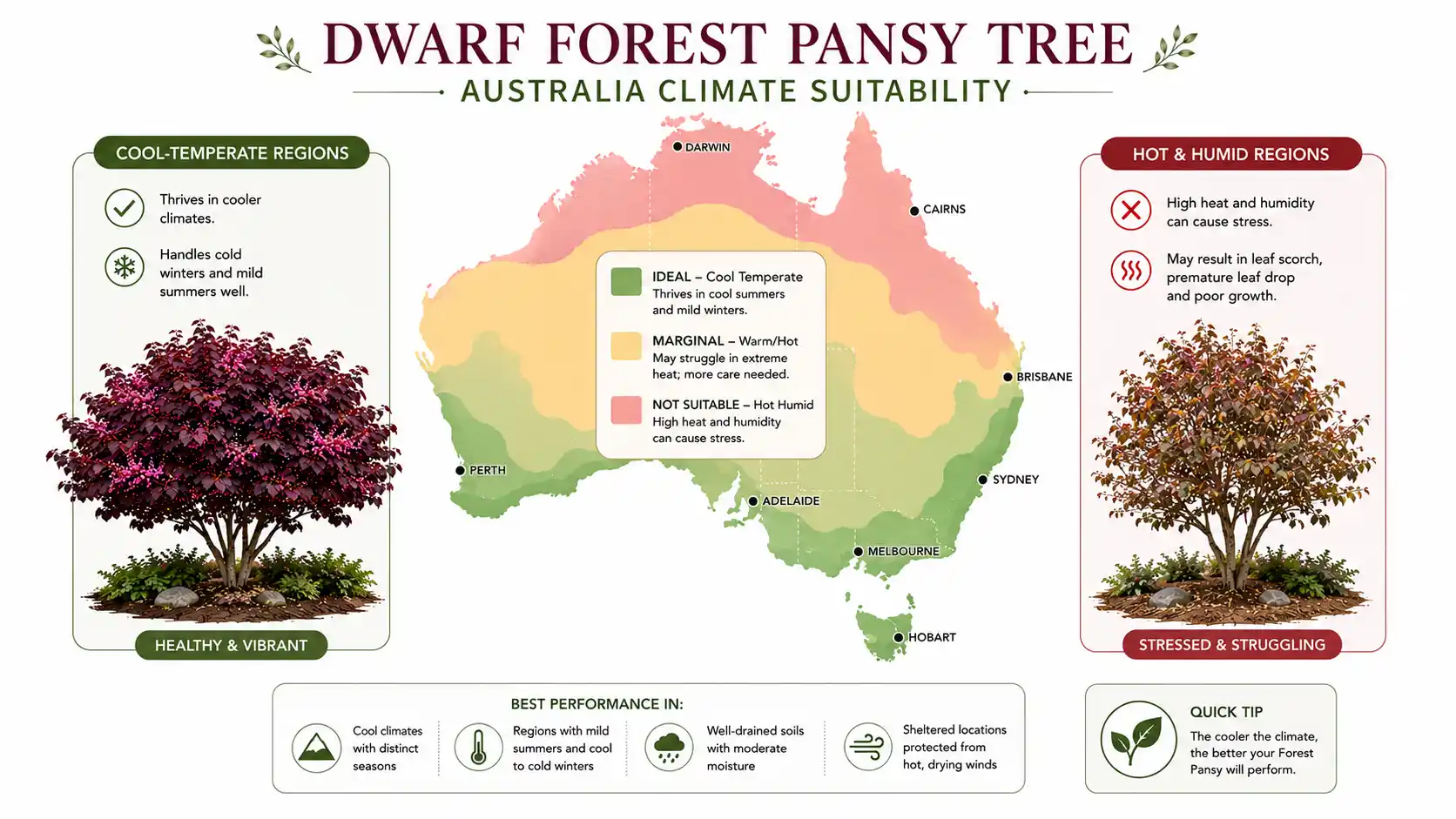
Australian gardeners often face challenges not commonly encountered in the tree’s native North American range.
Hot and Humid Climates (Queensland, Northern NSW)
High humidity combined with summer heat increases disease pressure.
Common challenges include:
- Severe leaf scorch
- Increased canker incidence
- Higher fungal disease risk
Without careful site selection and irrigation management, long-term success can be difficult.
Growing Forest Pansy in Adelaide and South Australia
Adelaide’s Mediterranean climate is moderately suitable for Forest Pansy trees.
Challenges include:
- Hot, dry summers
- Elevated leaf scorch risk
- Increased irrigation requirements
However, winter and autumn conditions are favourable for root establishment.
Performance improves when trees receive:
- Afternoon shade
- Deep watering
- Organic mulch
- Shelter from hot winds
Cool-Climate Australian Regions (Victoria, Tasmania, ACT)
Cool-temperate regions provide the most suitable conditions.
Melbourne, Hobart, and Canberra climates closely resemble the cooler conditions preferred by the species.
Benefits include:
- Better foliage retention
- Reduced scorch
- Improved autumn colour
- Stronger long-term performance
Gardeners looking for additional flowering trees suited to local conditions can also explore our Purple Flower Tree Australia: Native & Popular Species Guide.
Dwarf Forest Pansy Tree vs. Weeping Forest Pansy — Key Differences
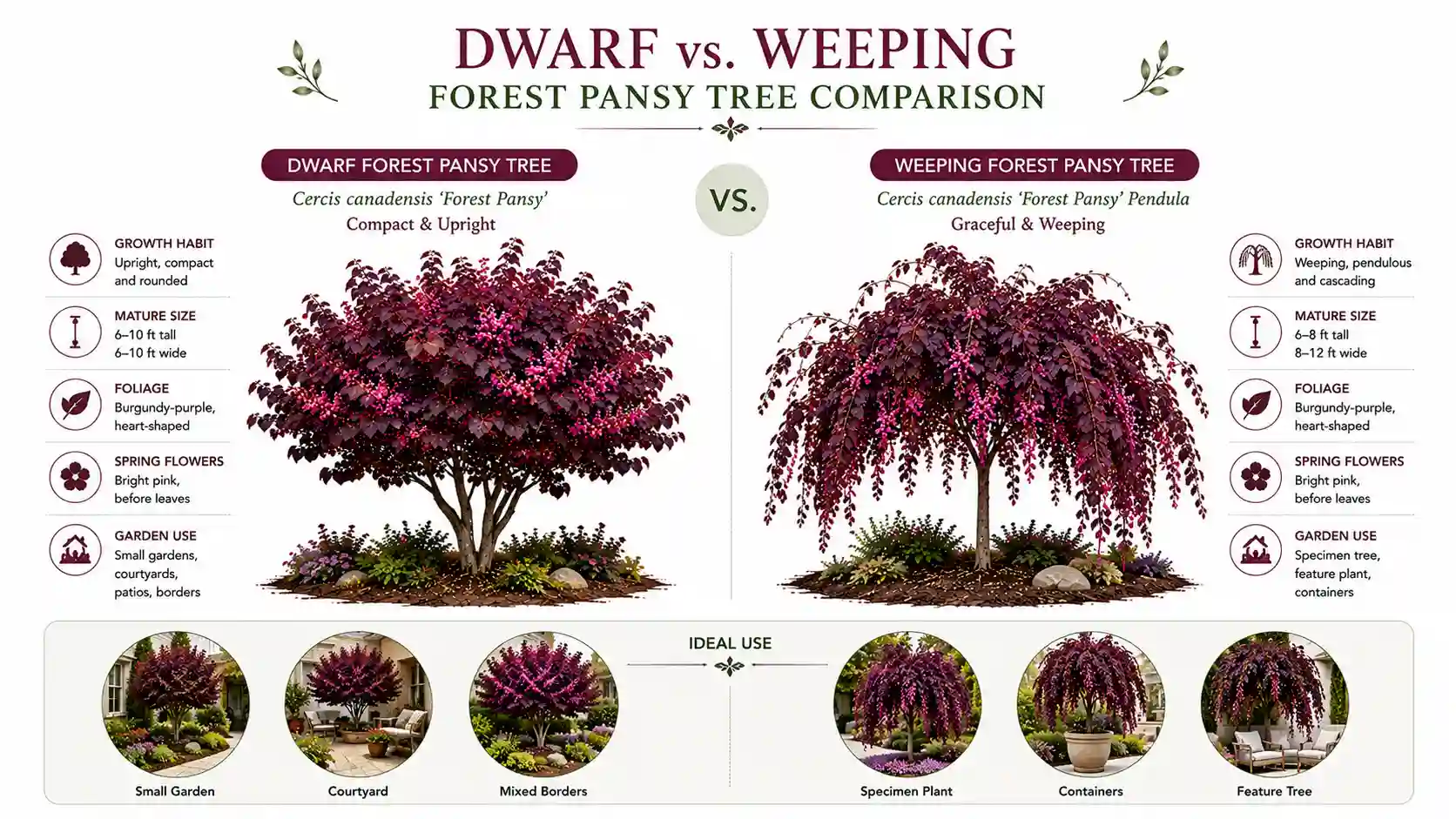
| Feature | Dwarf Forest Pansy | Weeping Forest Pansy |
| Growth Habit | Upright, compact | Pendulous, cascading |
| Mature Height | 2–4 metres | 1.5–3 metres |
| Best Use | Feature tree, courtyard | Specimen, rockery, container |
| Pruning Needs | Moderate | Low — light tipping only |
| Availability | Specialty nurseries | Less common |
| Visual Effect | Dense canopy | Dramatic weeping silhouette |
The dwarf form offers a classic upright shape suitable for small landscapes, while the weeping form provides a dramatic cascading appearance often used as a focal point. If you enjoy comparing ornamental tree varieties before planting, our guide on Magnolia Teddy Bear vs Little Gem: Key Differences Explained highlights another popular landscape tree comparison for Australian gardens.
Dwarf Forest Pansy Tree Pros and Cons
✅ Pros
- Stunning two-season ornamental interest with spring flowers and autumn foliage
- Compact size suits small gardens, courtyards, and containers
- Deciduous habit allows winter sunlight into the garden
- Low maintenance once established in suitable conditions
- Deep burgundy foliage provides strong colour contrast
❌ Cons
- Sensitive to hot, humid, and waterlogged conditions
- Leaf scorch is common in warm Australian climates
- Slow growth requires patience
- Availability can be limited in Australia
- Requires consistent watering during establishment
For gardeners seeking a faster-growing landscape plant, Photinia Fraseri Robusta: Growth, Care & Hedge Guide explores an alternative ornamental species commonly used in Australian gardens.
Where to Buy a Dwarf Forest Pansy Tree in Australia
Many gardeners search for the dwarf forest pansy tree at Bunnings, but availability is inconsistent.
The dwarf Forest Pansy is not typically a standard Bunnings Warehouse stock item. Availability varies by region, season, and supplier relationships.
More reliable sources include:
- Specialist ornamental tree nurseries
- Online plant retailers
- Mail-order growers
- Boutique garden centres
In our experience, specialist nurseries in Victoria and the ACT often provide the best availability because the local climate is well suited to growing quality stock. When searching online, terms such as “dwarf forest pansy tree for sale” and “Forest Pansy redbud Australia” may help locate suppliers.
If you enjoy collecting distinctive ornamental plants, our Money Tree Australia: Care, Meaning & Buying Guide covers another popular decorative species available through specialist nurseries.
Common Beginner Mistakes with the Forest Pansy Tree
Many growing failures can be traced to a handful of avoidable mistakes.
- Planting in tropical or subtropical climates without understanding the species’ limitations
- Overwatering during establishment, leading to root rot
- Pruning in late summer or autumn and removing next year’s flower buds
- Placing the tree in full western sun in warm climates
- Planting directly into heavy clay soil without drainage improvements
- Expecting rapid growth despite the tree’s naturally slow-to-moderate growth rate
Elemo Baker recommends evaluating climate compatibility before purchasing the tree, as climate suitability is often more important than care practices alone.
Conclusion
The dwarf forest pansy tree (Cercis canadensis ‘Forest Pansy’) is a compact ornamental tree that delivers exceptional visual impact through its vivid pink spring flowers and rich burgundy foliage. Its manageable size makes it ideal for smaller gardens, courtyards, and containers, while its seasonal colour provides year-round interest.
Success with the Forest Pansy depends largely on matching the tree to the right climate and planting conditions. Cool-temperate regions generally provide the best performance, while warmer climates require careful site selection, afternoon shade, and consistent moisture management. For year-round foliage interest indoors, see our Dracaena Plant Indoor Benefits, Care, Meaning & Propagation guide for another easy-care ornamental plant.
For Australian gardeners, the most important step is assessing your local climate before planting. Source your tree from a reputable specialist nursery, prioritise well-drained soil, and provide protection from intense afternoon sun to maximise long-term success.
Frequently Asked Questions (FAQ)
How tall does a dwarf forest pansy tree grow?
A dwarf forest pansy tree typically reaches 2–4 metres in height and 1.5–3 metres in width. Standard Cercis canadensis ‘Forest Pansy’ trees can reach 6–9 metres tall.
What are the most common problems with forest pansy trees?
The most common problems are leaf scorch, waterlogging, verticillium wilt, and canker disease. Most issues result from poor drainage, excessive heat, or unsuitable planting locations.
Can you grow a forest pansy tree in Australia?
Yes. Forest Pansy trees can be grown successfully in Australia, especially in cool-temperate regions such as Victoria, Tasmania, and the ACT. Hot and humid climates require additional management and may present challenges.
Can forest pansy grow in full sun?
Forest Pansy grows well in full sun in cooler climates. In warmer Australian regions, afternoon shade is recommended to prevent leaf scorch and foliage stress.
How fast does a dwarf forest pansy tree grow?
The growth rate is slow to moderate, typically around 20–40 cm per year under favourable conditions. Most dwarf forms require 10–15 years to reach mature size.
Can you keep a forest pansy tree small through pruning?
Yes. Annual pruning after spring flowering and container growing can effectively limit size. Avoid pruning later in the season because flower buds form on old wood.
Is the dwarf forest pansy tree available at Bunnings?
The dwarf forest pansy tree is not usually a standard Bunnings product line. Availability varies by region and season, and specialist nurseries are generally the most reliable source.
3 Comments