

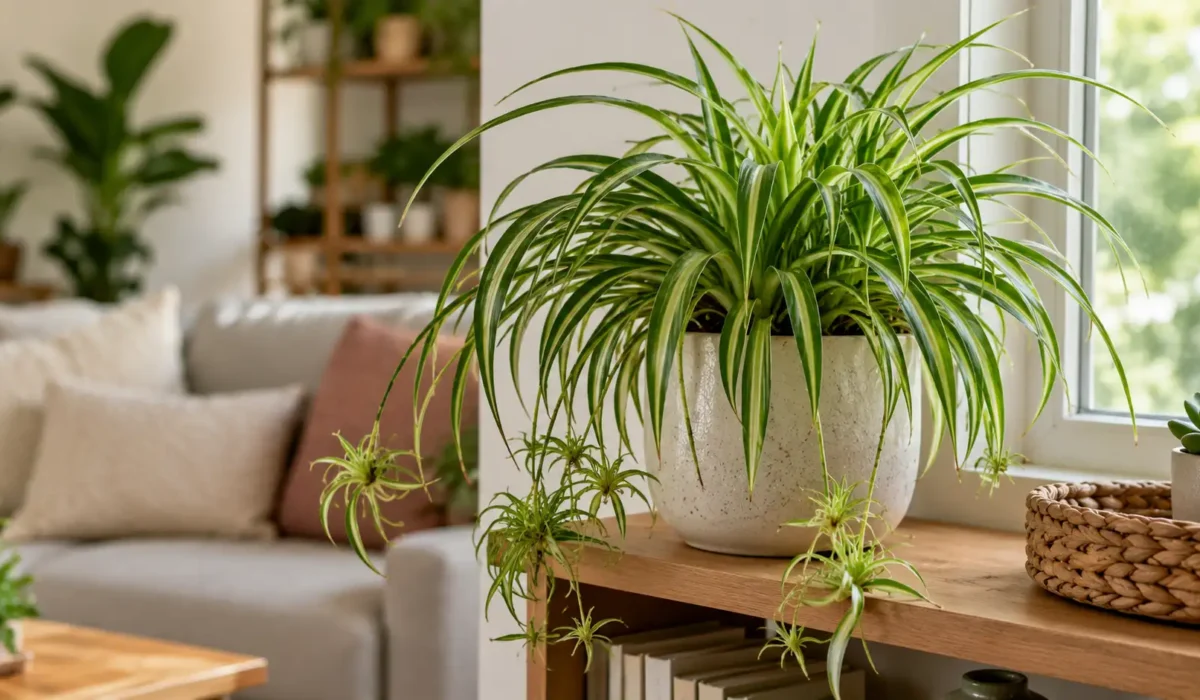
Spider Plant Benefits: Health, Care & Indoor Uses
Introduction
Spider plant benefits make Chlorophytum comosum one of the most popular choices for indoor gardening. Native to South Africa, this hardy, low-maintenance houseplant is valued for its graceful arching leaves, easy care, and reputation for improving indoor environments. While spider plants have been widely discussed for their air-purifying qualities and symbolic meanings, their real strengths lie in their adaptability, pet-friendly nature, and ability to thrive in a wide range of homes. This guide explains what spider plants are good for, where they grow best, their possible disadvantages, and how to care for them using practical, science-based advice suitable for Australian households.
Curious how spider plants stack up against other options? Explore our full guide to plant benefits and natural wellness for a complete look at how houseplants support your health and home.
Quick Summary
- Spider plants help filter certain indoor air pollutants under controlled laboratory conditions and are frequently associated with NASA’s Clean Air Study.
- They are considered low-toxicity houseplants, making them suitable for many homes with pets and children.
- In feng shui traditions, spider plants symbolise protection, prosperity, and positive energy.
- They tolerate low light, occasional missed watering, and are among the easiest indoor plants for beginners to grow.
What Is a Spider Plant? (Quick Overview)
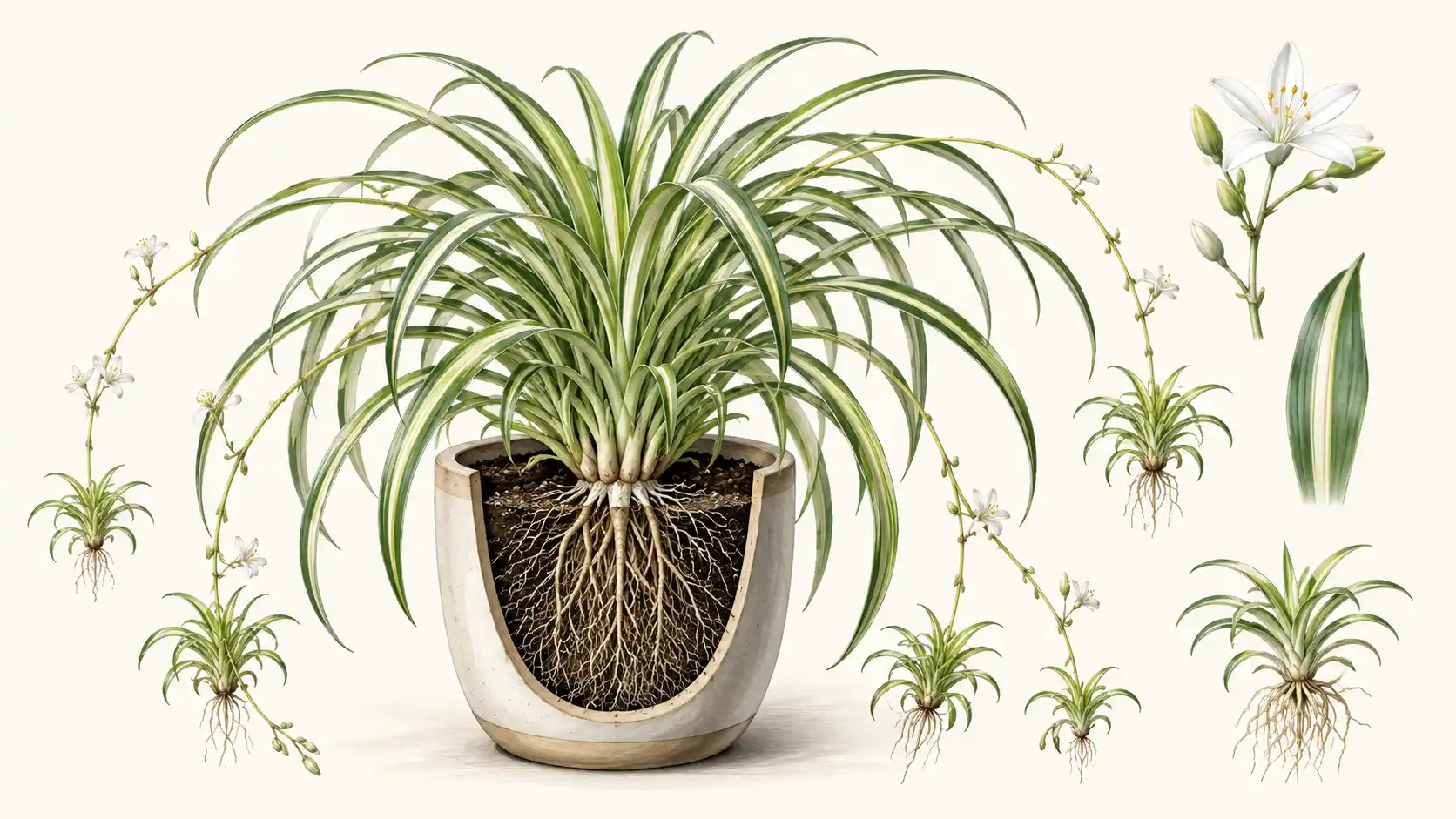
Chlorophytum comosum, commonly known as the spider plant, ribbon plant, or spider ivy, is a perennial evergreen belonging to the Asparagaceae family. It is recognised by its long, narrow, arching leaves that are often green with creamy white stripes. Mature plants produce long stems carrying tiny white flowers followed by baby plantlets known as spiderettes, which dangle beneath the parent plant.
Originally native to the coastal forests of South Africa, spider plants have become one of the world’s most widely grown indoor plants because they adapt well to different growing conditions and require relatively little maintenance. For additional botanical background, Chlorophytum comosum is the scientific name used to classify the spider plant species.
In our experience growing spider plants indoors, they recover remarkably well from occasional neglect, making them an excellent choice for first-time plant owners or busy households.
Common Varieties (Spider Plant Species)
Several attractive cultivars are commonly available, although their care requirements and overall benefits remain largely the same.
- Bonnie Spider Plant – Features tightly curled leaves that create a compact, decorative appearance.
- Variegated Spider Plant – The most familiar type, displaying green leaves edged or striped with creamy white.
- Zebra Grass Spider Plant – Characterised by broader green leaves with yellowish central stripes that gradually lighten as they mature.
While these varieties differ in colour patterns and leaf shape, they all provide similar ornamental value, easy-care characteristics, and indoor growing performance.
Health Benefits of Spider Plants
Spider plants are appreciated for several practical benefits, although many claims found online are often exaggerated. Scientific research supports some positive effects under controlled conditions, but these should not be interpreted as medical treatments or guarantees for every home. Spider plants are part of a wider group of beneficial houseplants, and exploring the benefits of indoor plants can help gardeners understand how different species contribute to healthier and more attractive living spaces.
Air Purification Qualities
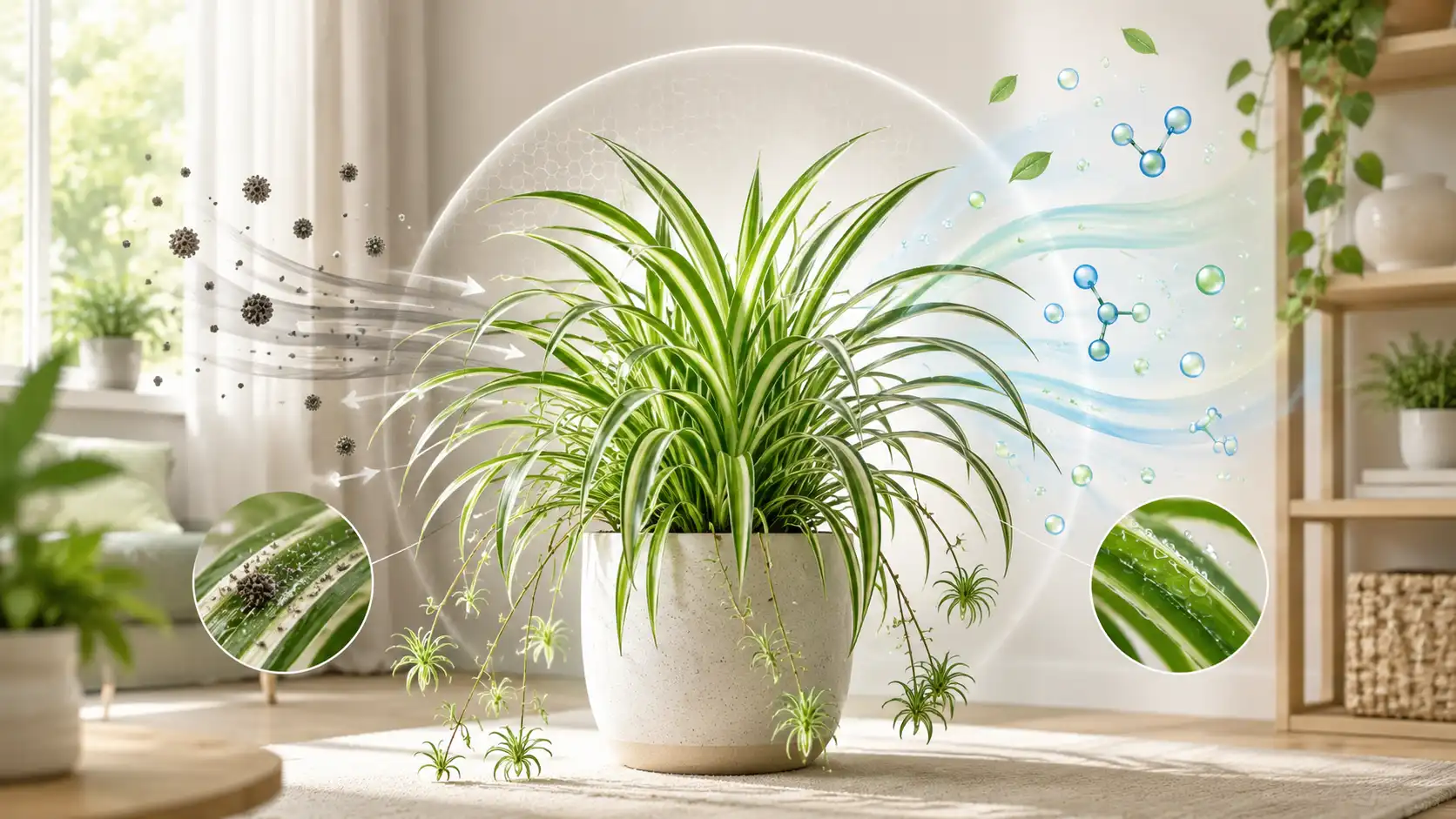
Spider plants became widely recognised after their inclusion in NASA’s Clean Air Study, which investigated how certain houseplants could remove volatile organic compounds (VOCs) from sealed laboratory chambers.
Controlled experiments showed that spider plants can absorb pollutants such as:
- Formaldehyde
- Xylene
- Carbon monoxide (to a lesser extent)
- Certain airborne volatile organic compounds
However, it’s important to understand the context. These studies were conducted in tightly controlled laboratory environments rather than typical homes. Current research suggests that while spider plants can contribute to healthier indoor environments, a few houseplants alone cannot significantly clean the air in an average room.
Some online sources claim spider plants remove 78% of mould, eliminate bacteria, or even remove harmful waste particles from indoor air. These statements usually originate from highly specific laboratory microbial studies and should not be interpreted as guaranteed household outcomes.
Elemo Baker recommends viewing spider plants as one helpful component of a healthy indoor environment alongside proper ventilation, regular cleaning, and good humidity management.
Non-Toxic and Pet-Friendly
One reason spider plants remain so popular is their relatively low toxicity compared with many ornamental houseplants.
They are generally considered safe around:
- Cats
- Dogs
- Children
Cats are often attracted to spider plants because the long arching leaves move easily, encouraging playful chewing. Some researchers also believe the plant contains mild natural compounds that make it especially appealing to felines.
Although chewing large amounts of foliage may occasionally cause mild vomiting or stomach upset, spider plants are not considered highly poisonous.
For households wanting attractive greenery without the risks associated with many decorative plants, spider plants remain among the safest options.
Oxygen Production and Humidity
Like all green plants, spider plants perform photosynthesis during daylight, producing oxygen while absorbing carbon dioxide.
They also contribute small amounts of moisture to indoor air through transpiration, which may slightly improve humidity levels in dry indoor environments.
These benefits are realistic but modest. A single spider plant will not dramatically change oxygen levels or humidity inside a room. Instead, its contribution becomes more meaningful when combined with several healthy houseplants and good home ventilation.
Many Australian growers appreciate spider plants because they tolerate indoor heating and air conditioning better than many tropical houseplants, helping maintain attractive foliage throughout the year.
Spider Plant Benefits at Night
Spider plant benefits at night are frequently discussed online, particularly regarding bedroom placement.
A common misconception is that spider plants release unusually large amounts of oxygen overnight. In reality, spider plants behave much like most other plants. During daylight they photosynthesise actively, while at night they continue normal plant respiration, consuming small amounts of oxygen and releasing limited carbon dioxide.
Some websites incorrectly group spider plants with plants that use Crassulacean Acid Metabolism (CAM), a specialised process used by species such as certain succulents. Spider plants are not true CAM plants and should not be promoted as exceptional night-time oxygen producers.
Despite this, they remain excellent bedroom plants because they offer several practical advantages:
- Low-maintenance care
- Attractive, calming appearance
- Low toxicity
- Ability to tolerate lower indoor light levels
- Minimal mess compared with many flowering plants
For most households, their value in the bedroom comes from their ease of care and visual appeal rather than any unique overnight air-purifying ability.
Are Spider Plants Good for the Bedroom and Bathroom?
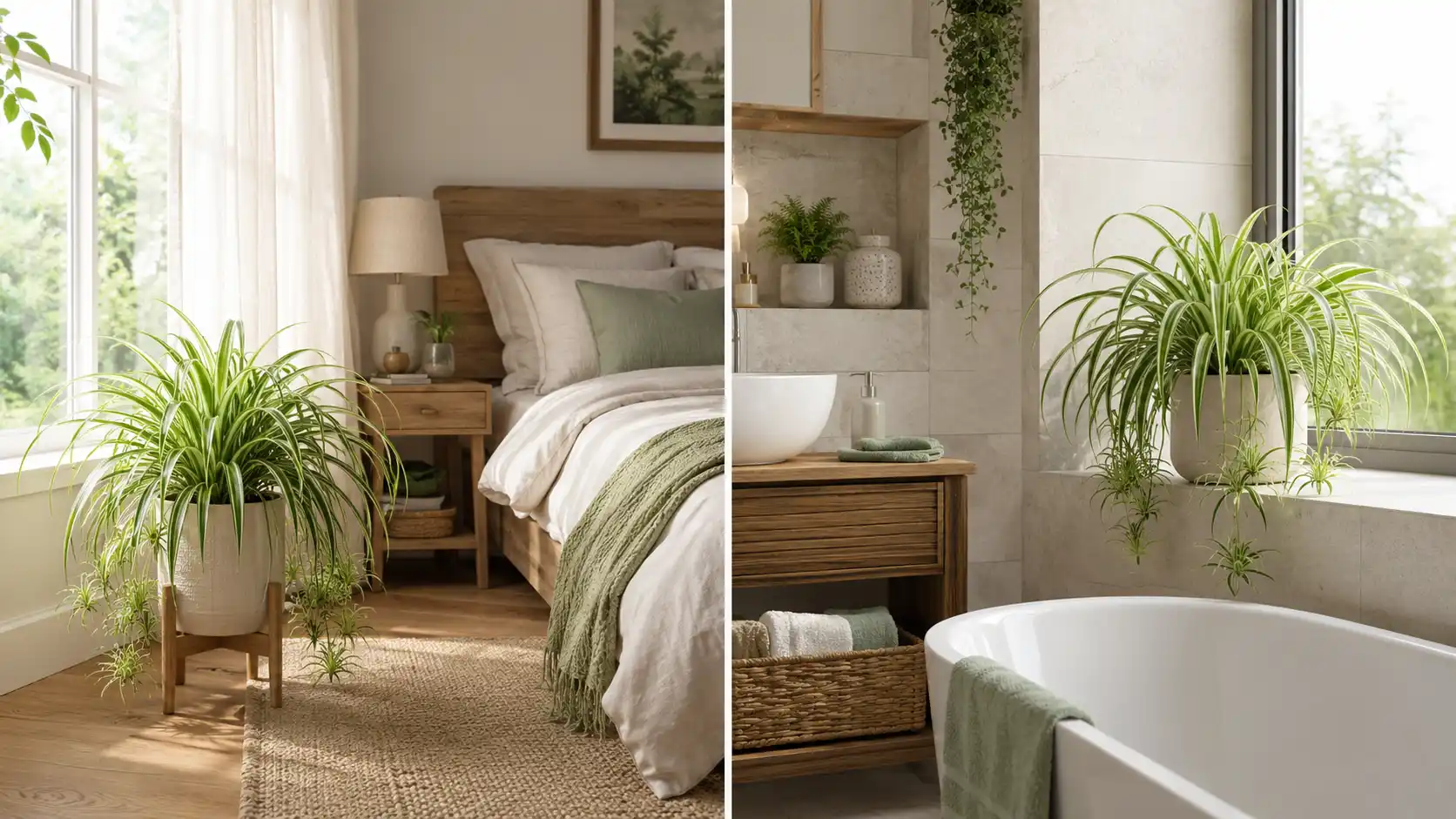
Spider plants perform well in many indoor spaces, provided they receive appropriate light and watering. For gardeners interested in other low-maintenance indoor options, Dracaena Marginata benefits include attractive foliage, adaptability, and suitability for many indoor environments.
In bedrooms, they are popular because they require little maintenance, create a calming natural atmosphere, and present relatively low risks for families with children or pets. Their graceful foliage also complements modern interior designs without demanding constant attention.
Bathrooms can also be excellent locations if sufficient indirect light is available. Spider plants naturally appreciate moderate humidity, which helps reduce brown leaf tips and supports healthy foliage growth.
The best placement for a spider plant includes:
- Bright, indirect sunlight
- Protection from harsh afternoon sun
- Moderate indoor temperatures
- Good airflow
- Placement away from cold draughts, air conditioners, and heater vents
In our experience, spider plants positioned near an east-facing window or a bright room with filtered light consistently produce healthier leaves and more spiderettes than plants kept in dark corners.
Spider Plant Symbolism, Feng Shui & Spiritual Meaning
Spider plants have a long-standing cultural association with positive energy, protection, and prosperity, particularly in feng shui traditions. These meanings are based on cultural beliefs and symbolism rather than scientific evidence, but they contribute to the plant’s popularity as a decorative indoor plant. Similar symbolic and decorative value can also be found in other popular indoor species, such as dracaena plants, which are often grown for their appearance, easy care, and traditional meanings.
In feng shui practice, spider plants are often associated with:
- Protection – Their spreading leaves and many spiderettes are traditionally viewed as representing growth and protective energy.
- Positive energy flow – Their healthy green foliage is believed to encourage balance and harmony within a space.
- Prosperity and growth – New spiderettes are sometimes interpreted as symbols of abundance and family growth.
Many people place spider plants in areas such as:
- Living rooms
- Home entrances
- Workspaces
- Areas where family members gather
The belief that a spider plant attracts money or good luck comes from traditional interpretations rather than proven financial or energetic effects. Like other “lucky plants,” including the money plant and snake plant, its meaning depends on cultural perspectives and personal beliefs.
From a practical gardening viewpoint, the spider plant’s ability to produce many new plants from spiderettes naturally reinforces its symbolic connection with growth and abundance.
Spider Plant Disadvantages and Side Effects
Although spider plants are among the easiest indoor plants to grow, they are not completely problem-free. Understanding their disadvantages helps gardeners decide whether they are suitable for their home.
Common spider plant disadvantages include:
- Rapid production of spiderettes that may become crowded
- Possible mild digestive upset if pets consume large quantities
- Pest problems caused by poor watering practices
- A trailing growth habit that may not suit every interior style
Pet-Related Concerns
Spider plants are generally considered low-toxicity plants, but large amounts of plant material may cause mild symptoms in pets, such as:
- Vomiting
- Mild stomach discomfort
- Temporary digestive upset
This is usually not considered severe poisoning, but preventing excessive chewing is still recommended.
Overcrowding and Growth Issues
Spider plants naturally produce many baby plants, which can become crowded when left attached for too long. Too many spiderettes may reduce airflow and place extra demand on the parent plant.
Regular maintenance can include:
- Removing excess spiderettes
- Repotting crowded plants
- Propagating healthy baby plants separately
Pest Attraction
Spider plants are generally resistant to major problems, but overwatering and poor airflow can encourage pests such as:
- Spider mites
- Mealybugs
- Aphids
Maintaining correct watering habits is usually the best prevention method.
Some people also dislike spider plants because their arching leaves and hanging spiderettes can appear untidy in small rooms. Choosing a suitable pot, stand, or hanging basket can help control their appearance.
Spider Plant vs Snake Plant: Which Is Better?
Spider plants and snake plants are both popular beginner-friendly houseplants, but they have different growth habits and care needs. The better choice depends on available light, watering habits, and preferred appearance.
| Feature | Spider Plant | Snake Plant |
| Scientific name | Chlorophytum comosum | Dracaena trifasciata (formerly Sansevieria trifasciata) |
| Light needs | Bright indirect light; tolerates lower light | Low to bright light; highly adaptable |
| Watering frequency | Moderate; allow soil to partially dry | Infrequent; drought tolerant |
| Air purification reputation | Associated with VOC removal studies | Also commonly associated with indoor air benefits |
| Pet safety | Low toxicity but may cause mild upset if eaten | Considered mildly toxic if consumed |
| Growth habit | Arching leaves with spiderette offshoots | Upright, architectural leaves |
| Feng shui association | Prosperity, protection, growth | Protection, resilience, strength |
Spider plants are ideal for people who enjoy a softer, flowing appearance and want a plant that produces new baby plants easily. Another popular indoor plant with similar air-quality discussions is the snake plant, and comparing snake plant benefits for home and health helps beginners choose the right plant for their space.
Snake plants, sometimes called mother-in-law’s tongue, are better suited for people who prefer a structured plant requiring less frequent watering. Their upright growth makes them especially useful in offices, bedrooms, and smaller spaces.
Both plants are excellent choices for beginners. Elemo Baker recommends choosing based on lifestyle: spider plants suit gardeners who enjoy regular interaction, while snake plants suit those who prefer minimal maintenance.
How to Care for a Spider Plant (Care Guide)
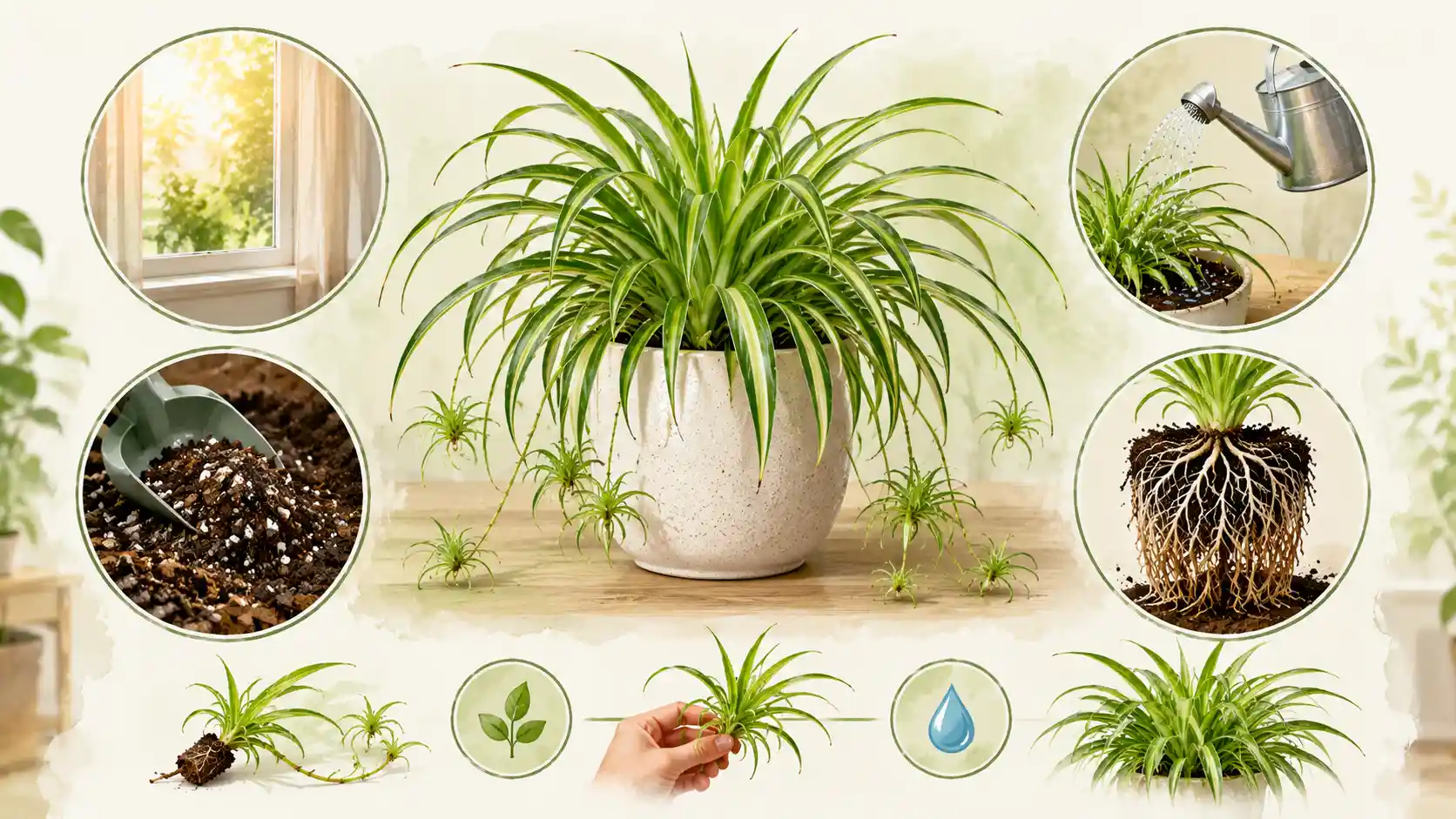
Spider plant care indoors is simple because Chlorophytum comosum is naturally adaptable. Providing the right balance of light, water, and soil helps maintain healthy green foliage and encourages spiderette production.
Light Requirements
Spider plants grow best in bright, indirect light.
Ideal conditions include:
- Near an east or north-facing window
- Filtered sunlight through curtains
- Bright indoor areas away from harsh direct rays
Although spider plants tolerate low light, growth becomes slower and leaf colour may become less vibrant. Strong direct sunlight, especially intense afternoon sun, can scorch leaves and create brown patches.
Watering Needs
Spider plants prefer moderate watering rather than constantly wet soil.
A practical watering routine includes:
- Water when the top few centimetres of soil feel dry
- Allow excess water to drain completely
- Reduce watering during cooler months
One common issue is sensitivity to chemicals found in tap water. Fluoride and chlorine accumulation can contribute to brown leaf tips.
To reduce this problem, gardeners can use:
- Filtered water
- Rainwater
- Tap water that has been left standing before use
Overwatering is one of the most common beginner mistakes because spider plants can appear thirsty even when their roots are already stressed.
Soil and Fertilising
Spider plants grow best in a loose, well-draining potting mix that prevents water from remaining around the roots.
A suitable mix may include:
- Quality indoor potting soil
- Perlite for drainage
- Organic material for nutrients
During active growth periods, a light monthly application of balanced indoor plant fertiliser can support healthy foliage.
Avoid excessive fertilising, as salt buildup can contribute to brown leaf tips and root stress.
Winter Care Adjustments
During winter, spider plants naturally grow more slowly and require less water.
Winter care tips include:
- Reduce watering frequency
- Keep plants away from cold draughts
- Avoid placing them directly beside heaters
- Maintain stable indoor temperatures
In Australian homes, sudden temperature changes from air conditioning or heating systems can cause stress, especially during colder months.
Common Spider Plant Problems and How to Fix Them
Spider plant problems are usually linked to watering mistakes, unsuitable lighting, or environmental stress rather than serious diseases.
Brown Leaf Tips
Cause: Fluoride or chlorine buildup, dry air, or inconsistent watering.
Solution:
- Use filtered or rainwater
- Improve humidity around the plant
- Maintain consistent watering
Brown tips are common and do not always indicate that the entire plant is unhealthy.
Yellowing Leaves
Cause: Most often caused by overwatering or poor drainage.
Solution:
- Allow soil to dry between watering
- Check drainage holes
- Remove damaged leaves
Root Rot
Cause: Roots sitting in waterlogged soil for extended periods.
Solution:
- Repot into fresh, well-draining soil
- Remove damaged roots
- Reduce watering frequency
Pale or Leggy Growth
Cause: Insufficient light.
Solution:
- Move the plant to brighter indirect light
- Avoid dark corners
Pest Issues
Spider mites and mealybugs can occasionally affect spider plants.
Treatment options include:
- Cleaning leaves with water
- Removing affected areas
- Using diluted insecticidal soap when necessary
Regular leaf inspection helps detect problems early.
Beginner Mistakes to Avoid With Spider Plants
Even easy-care plants can struggle when basic needs are overlooked.
Common mistakes include:
- Overwatering: More water does not mean faster growth. Constantly wet soil can damage roots.
- Using untreated tap water: Chemical buildup may cause brown tips over time.
- Placing plants in harsh sunlight: Direct intense rays can burn leaves.
- Ignoring spiderette overcrowding: Too many attached babies may restrict growth and make the plant root-bound.
Providing consistent care is more effective than frequently changing conditions.
Conclusion
Spider plant benefits make Chlorophytum comosum one of the most rewarding indoor plants for beginners and experienced gardeners alike. Its strongest advantages include easy care, attractive foliage, low toxicity, and the ability to contribute modestly to indoor air quality under suitable conditions.
While spider plants are not a replacement for ventilation or professional air-quality solutions, they remain valuable additions to homes because of their practical and aesthetic benefits. Their traditional association with prosperity and protection in feng shui also adds cultural meaning for many plant lovers. Choosing the right indoor plant depends on factors such as light, climate, and lifestyle, and our Australian plants guide provides a broader overview of indoor houseplants and garden design ideas suitable for local homes.
For most Australian homes, a spider plant will thrive when placed in bright indirect light and watered carefully. With the right balance of moisture and light, it can remain healthy, produce new spiderettes, and provide years of natural greenery.
FAQs
What are spider plants good for?
Spider plants are good for adding low-maintenance greenery, improving indoor aesthetics, and contributing modestly to indoor air quality by absorbing certain pollutants under controlled conditions. They are also popular because they are easy to grow and generally low toxicity.
What are the disadvantages of spider plants?
The main disadvantages of spider plants include brown leaf tips caused by water quality issues, rapid spiderette production that requires maintenance, occasional pest problems, and mild digestive upset if pets consume large amounts.
Are spider plants good to have in your bedroom?
Yes, spider plants are suitable for bedrooms because they tolerate indoor conditions, require little maintenance, and are considered low-toxicity plants. Their main bedroom benefits are aesthetic and practical rather than special overnight oxygen production.
Where is the best place to put a spider plant?
The best place for a spider plant is a location with bright indirect light, such as near an east-facing window. Bathrooms and bedrooms can work well if they provide enough natural light and protection from temperature extremes.
Does a spider plant attract money or good luck?
Spider plants are believed to attract prosperity and positive energy in some feng shui traditions, but these meanings are cultural beliefs rather than scientifically proven effects.
What makes a spider plant happy (ideal growing conditions)?
A spider plant grows best with bright indirect light, well-draining soil, moderate watering, stable temperatures, and occasional fertilising during active growth.
Is a spider plant or snake plant better for beginners?
Both are beginner-friendly, but snake plants require less frequent watering, while spider plants grow faster and produce baby plants. The better choice depends on whether a gardener prefers minimal care or more active plant growth.
1 Comment