
Purple Hedge Plants Australia: Best Types & Care Guide
Introduction
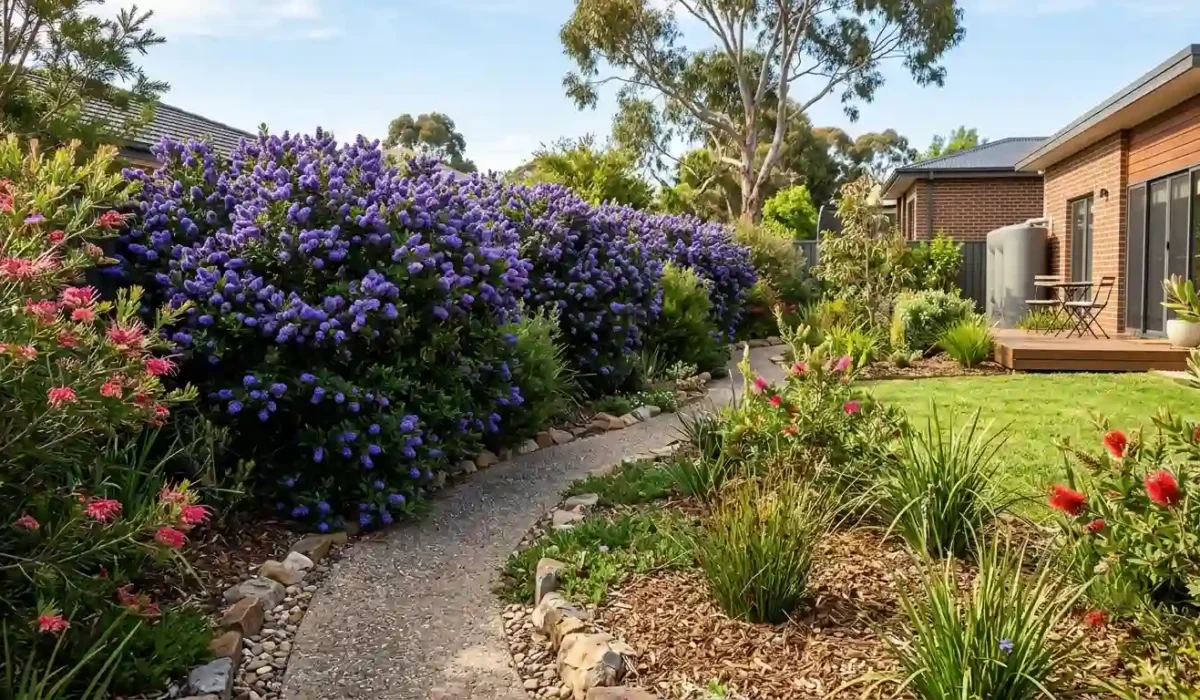
Purple hedge plants Australia refers to shrubs and screening plants grown in rows or clipped forms that provide purple flowers, purple-blue blooms, or purple-toned foliage in Australian gardens. The best choices depend on climate, desired hedge height, maintenance level, and whether you want seasonal flowers or year-round colour. Popular options include the fast-growing Duranta ‘Geisha Girl’, native Hardenbergia violacea, and low-growing Scaevola ‘Purple Fusion’. These purple hedge plants can create colourful borders, privacy screens, and decorative garden structures when planted in suitable conditions with adequate sunlight, well-drained soil, and correct pruning practices.
For gardeners planning a complete Australian plant collection, our Australian Plants Guide: Indoor Houseplants & Garden Design covers suitable indoor and outdoor species, garden styles, and plant selection tips.
By Elemo Baker | Plant Care & Gardening Expert
Quick Summary
- Duranta ‘Geisha Girl’ is one of Australia’s most popular fast-growing purple-flowering hedge shrubs, reaching around 2.5 – 3 metres.
- Native options like Hardenbergia violacea and Scaevola ‘Purple Fusion’ provide purple blooms with lower water requirements.
- Most purple hedge plants perform best in full sun to part shade with well-drained soil.
- Flowering periods vary from spring – summer for Duranta and Hardenbergia to almost year-round flowering for Scaevola ‘Purple Fusion’.
- Choosing the right purple hedge depends on climate, available space, and whether you prefer flowers or purple foliage.
What Are Purple Hedge Plants?
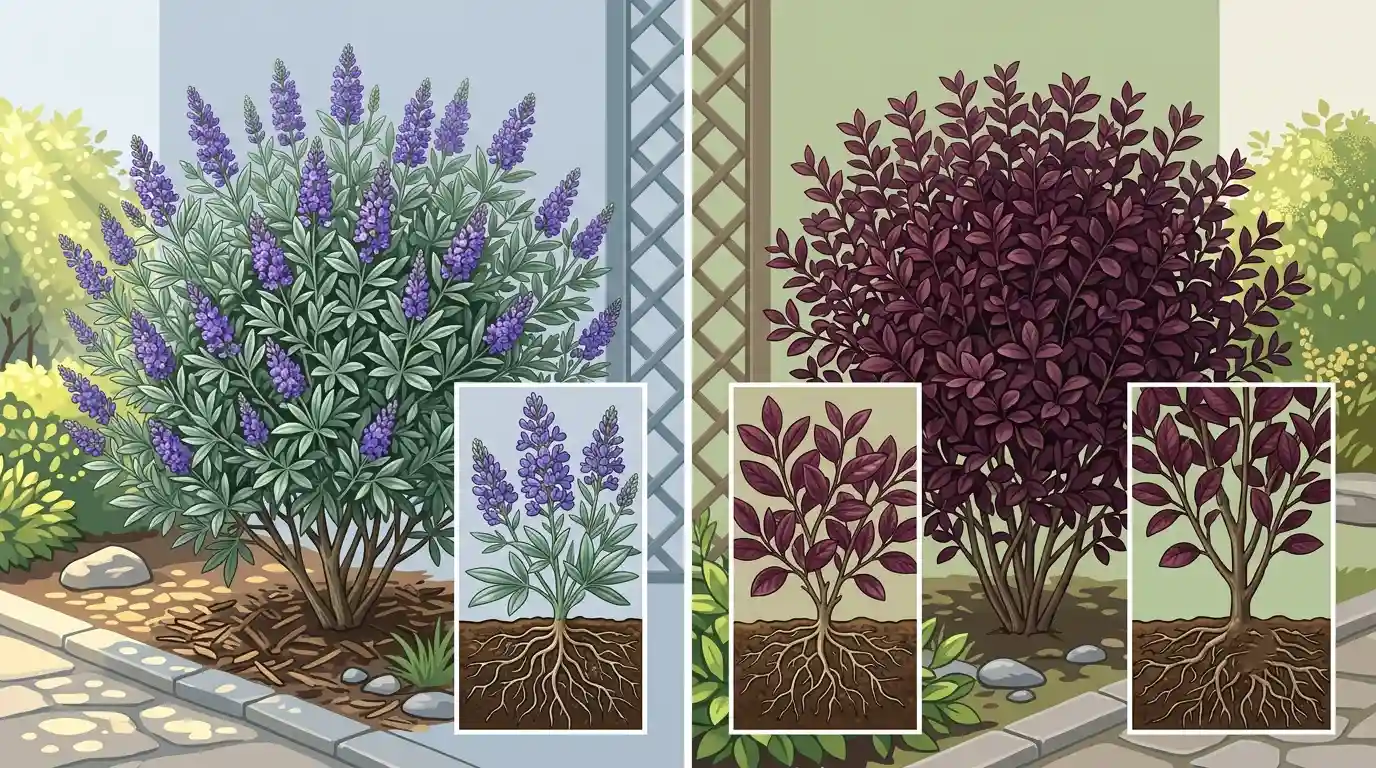
Purple hedge plants are shrubs and screening plants selected for their ability to form a hedge while producing purple flowers, purple-blue blooms, or purple-coloured foliage. In Australian gardens, the term can describe two main categories: flowering hedges that provide seasonal purple blooms and foliage plants that maintain purple or burgundy tones throughout the year.
A purple flower hedge typically relies on flowering periods to create colour, with plants producing purple flowers during specific seasons. These plants are ideal for gardeners who want a vibrant display while maintaining a structured hedge shape.
A purple-leaved hedge uses plants with naturally coloured foliage, offering consistent colour even when flowers are absent. These plants are useful for formal garden designs where year-round visual interest is preferred.
Common characteristics of purple hedge plants include:
- Dense growth suitable for screening or borders.
- Attractive flowers or foliage colour.
- Adaptability to Australian climates.
- Ability to tolerate regular pruning for shape control.
The best hedging plant depends on the purpose of the planting area. Tall purple hedge plants Australia gardeners often choose are suitable for privacy screens, while small purple hedge plants Australia options work better for borders, pathways, and decorative garden beds.
Best Purple Hedge Plants for Australian Gardens
Australia offers a range of purple hedge plants suitable for different climates, garden sizes, and maintenance preferences. Some are exotic flowering shrubs, while others are Australian native plants valued for drought tolerance and resilience.
Duranta ‘Geisha Girl’ (Golden Dewdrop)
Duranta ‘Geisha Girl’ is one of the most popular purple flowering shrubs in Australia because of its fast growth, attractive flowers, and ability to form an effective screening hedge. Botanically classified as Duranta erecta ‘Geisha Girl’, this shrub produces cascading clusters of purple-blue flowers with white edges.
The plant commonly flowers from spring through autumn, creating long-lasting colour during the warmer months. After flowering, small orange-yellow berries may develop, adding additional seasonal interest.
Key features of Duranta ‘Geisha Girl’:
- Height: Approximately 2.5 – 3 metres when mature.
- Growth habit: Bushy, spreading shrub suitable for informal or trimmed hedges.
- Flower colour: Purple-blue flowers with white margins.
- Light requirements: Full sun to part shade.
- Climate suitability: Performs well in most Australian regions but may struggle in areas with severe frost.
Duranta is considered a fast-growing hedge option because it establishes quickly when provided with good soil, regular watering during establishment, and sufficient sunlight.
In practical garden situations, early pruning is important with Duranta because allowing the plant to grow unchecked can result in a taller but less dense hedge. Regular tip pruning encourages branching and creates a fuller screening effect.
However, gardeners should check local planting regulations before using Duranta near natural bushland areas, as some regions may restrict certain exotic plants due to environmental concerns.
Native Purple Options — Hardenbergia violacea & Scaevola ‘Purple Fusion’
Australian native purple hedge plants provide colour while often requiring less water once established. Two notable options are Hardenbergia violacea and Scaevola ‘Purple Fusion’.
Hardenbergia violacea (Happy Wanderer)
Hardenbergia violacea, commonly known as Happy Wanderer, is an Australian native climber and scrambling plant from the pea family (Fabaceae). It produces clusters of purple pea-shaped flowers during late winter and spring.
Hardenbergia violacea is an Australian native species from the pea family (Fabaceae) and is widely recognised for its purple pea-shaped flowers and scrambling growth habit.
Although it is not a traditional tall hedge shrub, Hardenbergia can be trained along fences, trellises, and low screening structures to create a purple flowering barrier.
Key characteristics include:
- Native Australian species.
- Purple flowers during cooler months.
- Good tolerance of dry conditions once established.
- Suitable for native gardens and low screening applications.
- Performs best in full sun to light shade.
Hardenbergia is especially valuable for gardeners seeking native purple flowers Australia offers, as it supports a more water-efficient landscape design.
Scaevola ‘Purple Fusion’
Scaevola ‘Purple Fusion’ is a compact Australian native option known for its almost year-round purple flowers. Unlike taller hedging bushes, it is better suited to low borders, garden edges, retaining walls, and groundcover-style planting.
Its fan-shaped purple flowers appear repeatedly throughout the year, particularly in warm climates.
Key characteristics include:
- Growth style: Low-growing groundcover shrub.
- Flowering: Almost year-round in suitable conditions.
- Water needs: Low once established.
- Sun requirements: Full sun preferred.
- Uses: Borders, low hedges, and decorative planting.
Scaevola is often searched alongside small purple hedge plants Australia because it provides strong colour without requiring frequent maintenance. However, it should not be selected when a tall privacy hedge is required.
Purple-Foliage Options — Loropetalum & Honeywort
Some gardeners searching for purple hedge plants Australia are actually looking for plants with purple leaves rather than purple flowers. Purple foliage plants Australia options provide consistent colour throughout the year.
Loropetalum
Loropetalum, commonly called Chinese fringe flower, is valued for its burgundy-purple foliage and delicate fringe-like flowers. It works well as a decorative hedge or feature shrub.
Characteristics include:
- Purple or burgundy leaves.
- Compact growth habit.
- Pink to purple-toned flowers depending on variety.
- Suitable for borders and ornamental hedges.
Honeywort (Cerinthe major)
Honeywort is not a traditional hedge shrub but is sometimes included among plants with purple leaves because of its blue-purple foliage tones and purple flowers.
It is better suited to mixed garden beds rather than formal screening hedges.
Purple foliage shrubs are useful alternatives for gardeners wanting evergreen purple hedge plants Australia options where foliage colour is more important than flowering displays. They can provide contrast against green plants and create stronger garden structure throughout the year.
Comparison Table – Purple Hedge Plants at a Glance
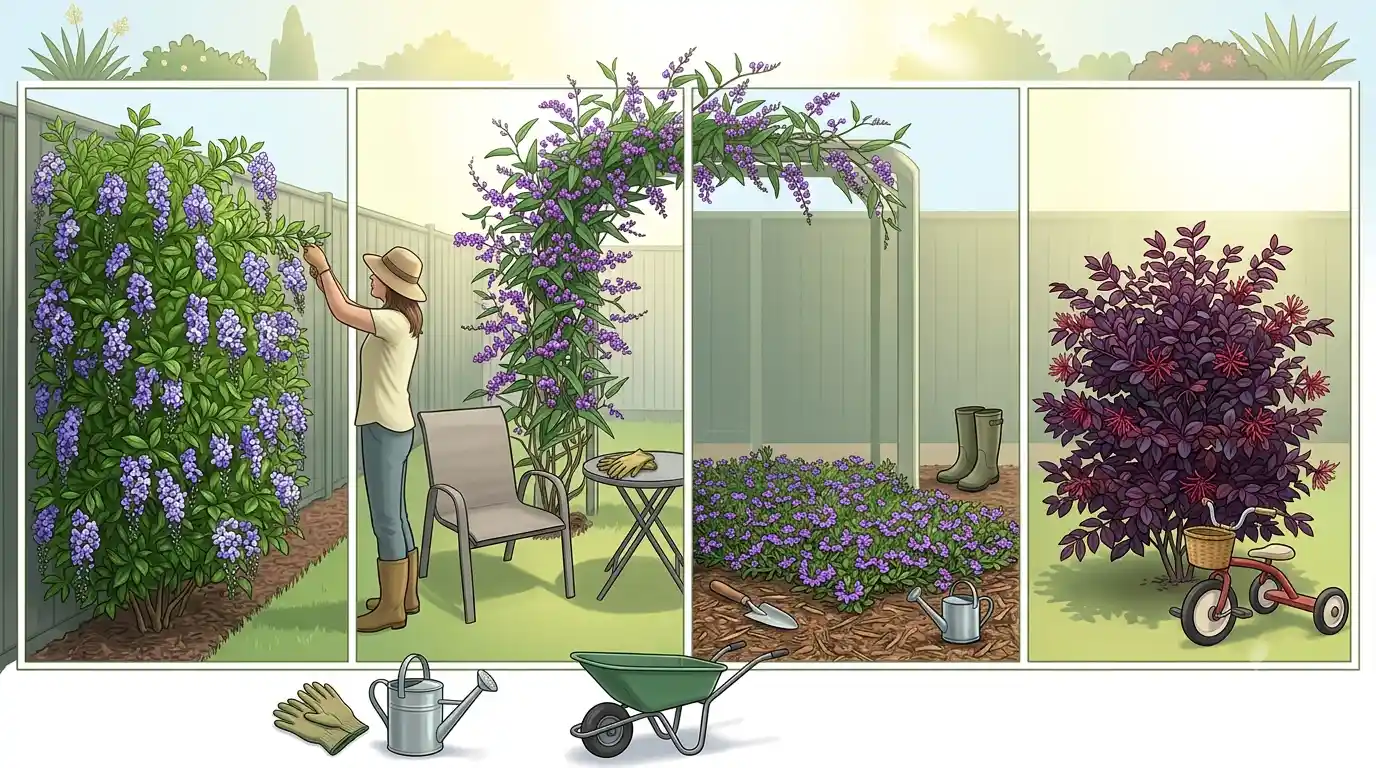
Different purple hedge plants suit different Australian garden conditions. Some provide tall screening, while others are better for low borders or decorative planting. The table below compares popular options based on growth habit, climate tolerance, and maintenance needs.
| Plant Name | Native/Exotic | Height & Width | Sun Needs | Flowering Season | Growth Rate | Frost Tolerance |
| Duranta ‘Geisha Girl’ (Duranta erecta) | Exotic | 2.5–3m tall, 2–3m wide | Full sun to part shade | Spring–autumn | Fast | Low to moderate; sensitive to heavy frost |
| Hardenbergia violacea (Happy Wanderer) | Native | 0.5–2m depending on training and support | Full sun to light shade | Late winter–spring | Fast | Good tolerance once established |
| Scaevola ‘Purple Fusion’ | Native | 20–60cm tall, spreading width | Full sun | Almost year-round | Moderate | Good in suitable climates |
| Loropetalum (Purple-leaf varieties) | Exotic | 1–3m depending on variety | Full sun to part shade | Winter–spring | Moderate | Moderate; varies by variety |
When selecting purple hedge plants, consider the final purpose of the planting area. Duranta is better for taller privacy screening, while Scaevola suits low edging. Native choices such as Hardenbergia can provide colour with fewer water requirements in many Australian landscapes.
Purple Hedges vs Other Coloured Hedge Options
Purple hedges are popular because they introduce unusual colour into garden designs, but they are not the only option for colourful screening. Red and white flowering hedges provide different visual effects and may suit other landscape styles.
Gardeners comparing colourful screening options may also consider Photinia Fraseri Robusta, a popular red-leaf hedging plant known for its vibrant new growth and dense screening habit.
Purple Hedges vs Red Hedges
Purple hedges and red hedges differ mainly in how they create colour. Purple hedge plants are usually selected for their purple flowers, purple-blue blooms, or purple foliage, while red hedges often rely on colourful new growth rather than flowers.
Popular red hedge plants include options such as Photinia ‘Red Robin’ and some lilly pilly varieties, which produce bright red or bronze foliage during new growth periods.
Key differences:
| Feature | Purple Hedges | Red Hedges |
| Main colour source | Purple flowers or foliage | Red new leaves or flowers |
| Seasonal effect | Often strongest during flowering periods | Colour often appears during new growth |
| Popular uses | Decorative borders, flowering screens | Formal privacy hedges |
| Maintenance | Requires pruning to maintain flowering and shape | Regular pruning encourages colourful new growth |
Red hedging plants are often chosen for structured garden designs because they create a bold foliage contrast. In comparison, purple flowering shrubs in Australia generally provide a softer, more seasonal appearance.
Examples of red shrubs Australia gardeners commonly use include Photinia varieties and red-flowering Australian native shrubs. These differ from purple flowering bush options because their main appeal is usually foliage colour rather than purple blooms.
Purple Flowering Hedges vs White Flowering Hedges
Purple flowering hedges and white flowering hedges create different garden styles. Purple flowers provide stronger colour contrast and can act as a feature element, while white flowering hedges often create a cleaner and more minimalist appearance.
White-flowering hedge plants, such as Westringia varieties, are commonly used in Australian coastal and native-style gardens because of their hardy nature and soft appearance.
Comparison:
| Feature | Purple Flowering Hedge | White Flowering Hedge |
| Visual effect | Bold colour contrast | Clean, neutral appearance |
| Common use | Feature planting and colourful screens | Minimalist and coastal gardens |
| Flower visibility | Strong seasonal colour | Softer flowering display |
| Design style | Vibrant and decorative | Calm and natural |
A hedge with purple flowers can become a focal point in a garden, while a hedge with white flowers Australia gardeners choose often works well as a background planting.
Plant Size
The mature size of purple hedge plants varies significantly depending on species, climate, pruning routine, and growing conditions. Choosing a plant that matches the available space is essential for creating a healthy and manageable hedge.
Tall purple hedge plants Australia gardeners commonly use include Duranta ‘Geisha Girl’, which can reach approximately 2.5–3 metres tall and develop a broad spreading shape when left unpruned.
Other featured plants have different size ranges:
- Duranta ‘Geisha Girl’: Around 2.5 – 3m high and 2 – 3m wide.
- Hardenbergia violacea: Usually 0.5 – 2m depending on whether it is grown as a climber, scrambler, or trained screen.
- Scaevola ‘Purple Fusion’: Approximately 20 – 60cm high, making it suitable for low borders rather than privacy hedges.
- Loropetalum: Commonly 1 – 3m depending on the variety.
Most purple hedge plants are outdoor garden species rather than indoor plants. Their size, flowering performance, and density depend on outdoor factors such as sunlight, soil quality, rainfall, and pruning.
For smaller gardens, small purple hedge plants Australia options such as Scaevola or compact Loropetalum varieties are usually more practical. For privacy screening, taller shrubs like Duranta are more suitable.
Pruning also influences final size. Regular trimming encourages dense growth and prevents plants from becoming too tall or sparse at the base.
Growth Rate
The growth rate of purple hedge plants depends on the species, climate, soil conditions, watering routine, and amount of sunlight received. Some varieties are suitable for gardeners wanting quick screening, while others develop more slowly but require less maintenance.
Gardeners wanting faster privacy solutions can also compare purple hedge plants with other options in our guide to Fast Growing Evergreen Trees Australia, which explores trees suitable for quick screening.
Duranta ‘Geisha Girl’ and Hardenbergia violacea are considered fast-growing options when planted in suitable conditions. They typically produce stronger growth during spring and summer when temperatures increase and sunlight levels are higher.
Growth factors include:
- Sun exposure: Full sun generally encourages stronger flowering and denser growth.
- Water availability: Regular watering during establishment improves root development.
- Soil quality: Well-drained soil supports healthier root systems.
- Pruning: Correct pruning encourages branching and thicker hedge formation.
For gardeners searching for fast growing hedge plants Australia, Duranta is often considered one of the quicker options for creating a flowering screen. However, growth speed should not be the only consideration because fast-growing plants may require more frequent maintenance.
Seasonal growth patterns:
- Spring, summer: Active growth period with increased leaf production and flowering.
- Autumn: Growth may continue in warmer regions but gradually slows.
- Winter: Growth generally reduces, particularly in cooler climates.
The fastest growing hedge in Australia depends on local conditions. A plant that grows quickly in a warm coastal region may establish more slowly in a cold inland area.
Care Guide for Purple Hedge Plants
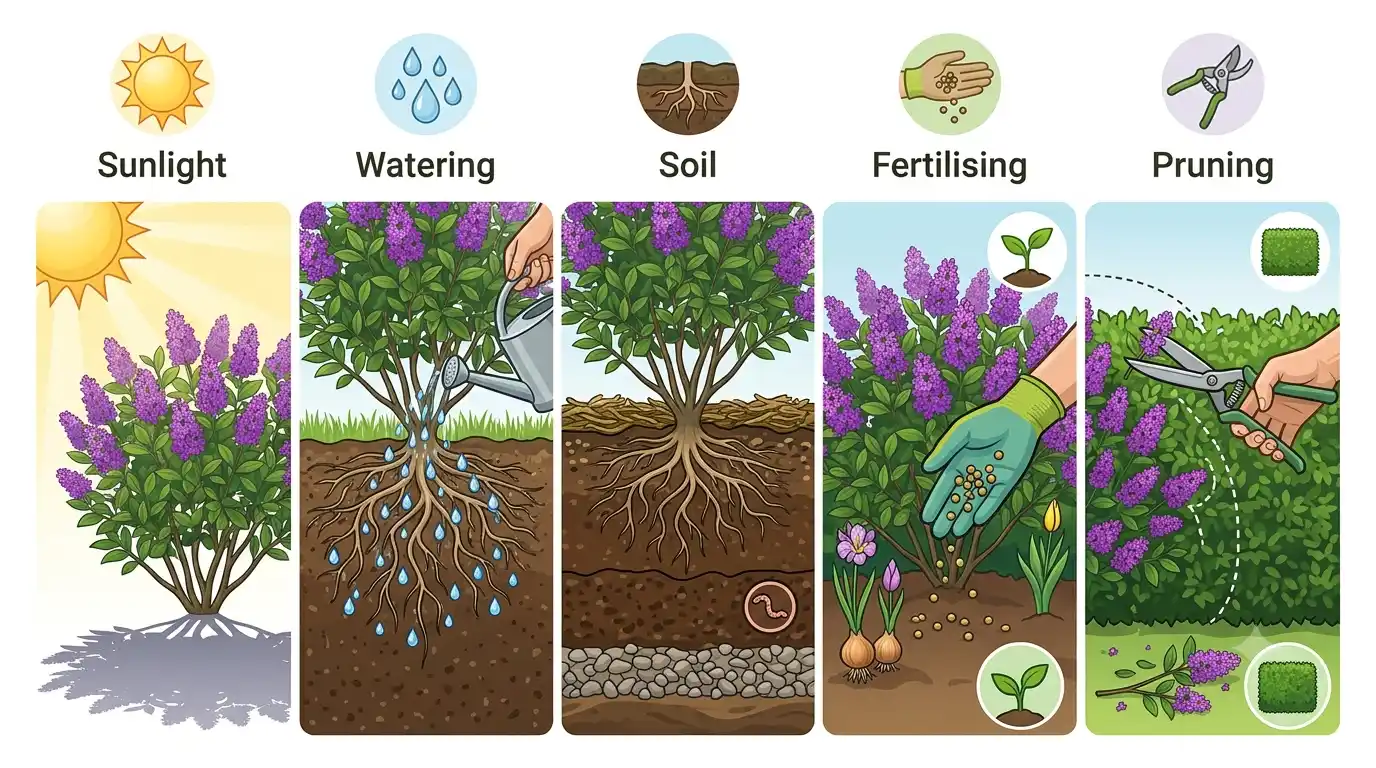
Purple hedge plants generally perform best when planted in conditions that match their natural growing requirements. Correct watering, sunlight, soil preparation, fertilising, and pruning all influence flowering, foliage colour, and hedge density.
Watering
Newly planted purple hedge plants need consistent watering while their root systems become established. Regular deep watering encourages deeper roots and improves drought tolerance.
General watering guidelines:
- Water newly planted shrubs regularly during the first growing season.
- Reduce watering once plants are established and showing strong growth.
- Avoid constant shallow watering, which encourages weaker root development.
Native plants such as Hardenbergia and Scaevola often tolerate dry conditions better once established, while Duranta benefits from additional moisture during hot periods.
Light Requirements
Most purple hedge plants produce their strongest colour when grown in full sun.
Ideal conditions:
- Full sun: Best for maximum flowering and vibrant foliage colour.
- Part shade: Suitable for many varieties but may reduce flowering intensity.
- Heavy shade: Often results in weaker growth and fewer flowers.
For gardeners looking for the best hedge for full sun, Duranta and Hardenbergia are reliable choices when soil and climate conditions are suitable.
Soil Conditions
Purple hedge plants generally prefer well-drained soil because waterlogged roots can lead to stress and disease problems.
Recommended soil conditions:
- Good drainage.
- Moderate organic matter.
- Slightly acidic to neutral soil for many species.
- Mulch layer to maintain moisture and regulate soil temperature.
Improving poor soil before planting helps establish stronger hedges.
Fertilising
Flowering shrubs benefit from feeding during active growth periods. A balanced slow-release fertiliser applied in spring can support healthy foliage and flower production.
Avoid excessive fertiliser use, as too much nitrogen may encourage leaf growth at the expense of flowers.
Pruning
Pruning maintains hedge shape, improves density, and encourages branching.
Best practices:
- Prune after flowering where possible.
- Remove weak or damaged growth.
- Begin tip pruning early to encourage a fuller hedge.
- Avoid heavy pruning during active flowering periods.
Elemo Baker recommends light, regular pruning rather than occasional severe cutting because consistent shaping usually produces healthier, denser hedging plants.
Climate Tolerance
Climate suitability varies between species.
- Duranta ‘Geisha Girl’: Performs well in warm climates but may suffer frost damage in colder regions.
- Hardenbergia violacea: More tolerant of Australian conditions and suitable for many native gardens.
- Scaevola ‘Purple Fusion’: Handles warm, dry environments well once established.
As of July 2026, Australian gardeners continue to prioritise drought-tolerant and climate-suitable plants, particularly in areas experiencing warmer summers and water restrictions.
Common Problems with Purple Hedge Plants
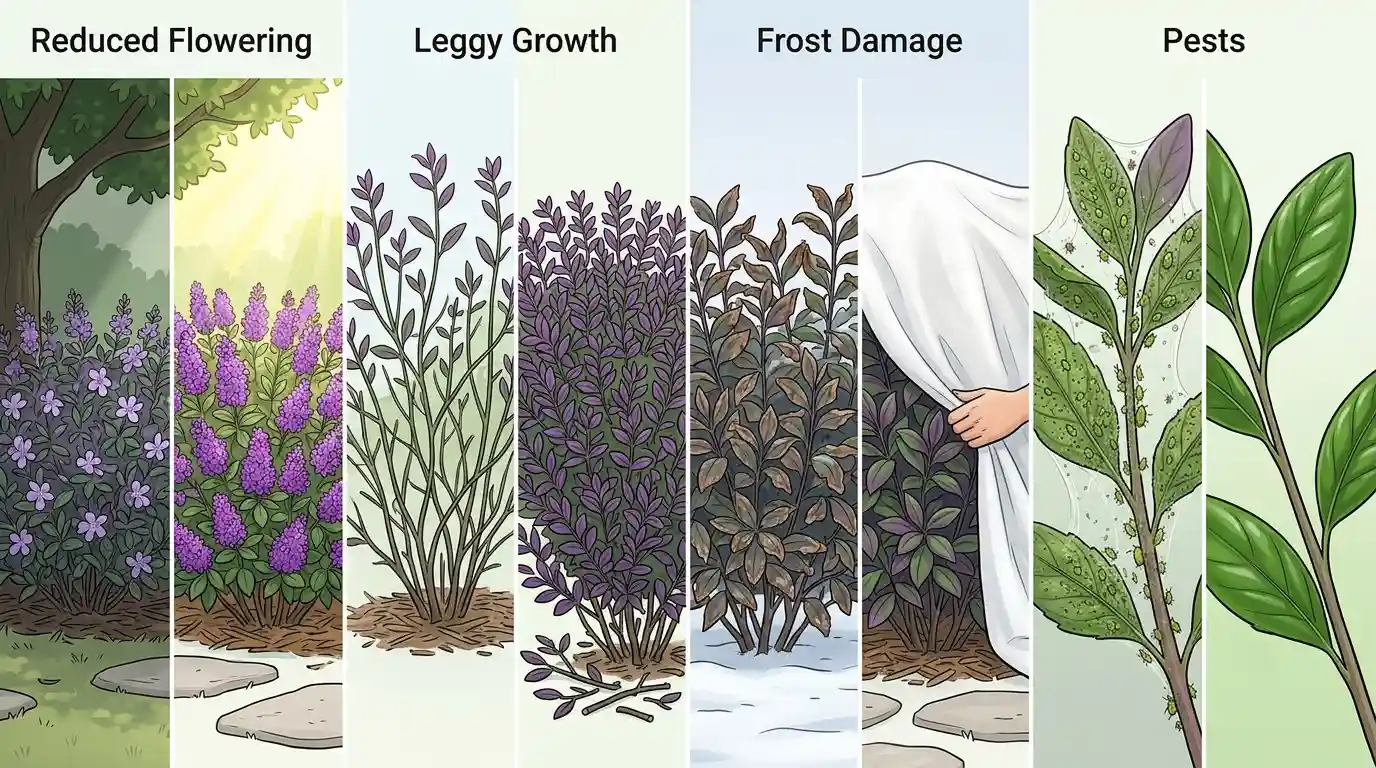
Purple hedge plants are generally reliable when grown in suitable conditions, but problems can occur when light, watering, pruning, or climate requirements are not met. Understanding common issues helps maintain healthy growth, stronger flowering, and dense hedge formation.
Reduced Flowering
Reduced flowering is one of the most common issues with purple flowering shrubs. It is usually caused by insufficient sunlight, incorrect pruning timing, or excessive nitrogen fertilisation.
Common causes include:
- Too much shade: Most purple flowering shrubs need direct sunlight to produce abundant blooms.
- Incorrect pruning: Cutting plants heavily before flowering can remove developing flower buds.
- Too much nitrogen: High-nitrogen fertilisers encourage leafy growth but may reduce flower production.
Solutions:
- Move plants to a sunnier position where possible.
- Prune after the main flowering period rather than before flowering.
- Use a balanced fertiliser designed for flowering plants.
- Ensure the plant receives adequate water during dry periods.
In practical gardening situations, many flowering hedges recover quickly once light conditions and pruning schedules are corrected.
Leggy or Sparse Growth
Leggy growth occurs when a hedge produces long, weak stems with fewer leaves, creating gaps between branches. This problem is usually linked to poor light exposure or a lack of regular shaping.
Common causes include:
- Growing in too much shade.
- Allowing plants to grow without tip pruning.
- Planting hedges too closely together, causing competition for light.
- Removing only outer growth while neglecting inner branching.
Solutions:
- Increase sunlight exposure where possible.
- Use regular light pruning to encourage side shoots.
- Avoid cutting only the outer surface of the hedge.
- Maintain suitable spacing between plants.
Early pruning is especially important for fast-growing hedge plants Australia gardeners use for privacy screening. Without shaping from a young stage, plants can become tall and thin rather than dense and bushy.
Frost Damage
Frost damage can affect some purple hedge plants, particularly frost-sensitive exotic varieties such as Duranta ‘Geisha Girl’.
Symptoms of frost damage include:
- Blackened or wilted leaves.
- Damaged flower buds.
- Temporary leaf loss.
- Slow growth after cold weather.
Prevention methods:
- Plant frost-sensitive species in protected areas.
- Avoid exposed locations where cold air collects.
- Use frost cloth during severe cold events.
- Select hardier native alternatives in frost-prone regions.
Hardenbergia violacea is generally better suited to cooler Australian areas because it naturally adapts to many local conditions.
Pest Issues
Purple hedge plants can occasionally experience pest problems, especially when plants are stressed by poor growing conditions.
Common pests include:
- Aphids.
- Spider mites.
- Scale insects.
Aphids commonly affect soft new growth and flower buds, while spider mites may appear during hot, dry weather.
Solutions:
- Regularly inspect new leaves and stems.
- Remove heavily affected sections if necessary.
- Encourage beneficial insects such as ladybirds.
- Use appropriate horticultural treatments when infestations become severe.
Maintaining healthy soil, correct watering, and good airflow through pruning can reduce the likelihood of serious pest problems.
Beginner Mistakes & Differentiation Angle
Choosing the right purple hedge plant requires more than selecting a shrub based only on flower colour. Many beginner mistakes occur because gardeners focus on appearance without considering growth habits, local conditions, or long-term maintenance.
Choosing Fast-Growing Plants Without Checking Local Restrictions
Fast-growing exotic hedges can quickly create privacy, but some species may not be suitable for every location. Gardeners should check local council guidelines, especially when planting near bushland or environmentally sensitive areas.
Before choosing a fast-growing hedge, consider:
- Whether the plant is suitable for the local climate.
- Potential spread beyond garden boundaries.
- Maintenance requirements.
- Local environmental recommendations.
A fast-growing plant is not always the best choice if it requires excessive pruning or creates future management problems.
Assuming All Purple Flowering Plants Make Good Hedges
Not every plant with purple flowers is suitable as a hedge. Some species are better as groundcovers, climbers, or decorative border plants.
For example:
- Duranta ‘Geisha Girl’: Suitable for medium to tall flowering hedges.
- Hardenbergia violacea: Better for trained screens, fences, or informal low hedges.
- Scaevola ‘Purple Fusion’: Better suited to borders and groundcover planting.
Understanding plant growth habits prevents disappointment and ensures the hedge performs well in its intended location.
Skipping Early Tip-Pruning
One common mistake is allowing young hedge plants to grow vertically without encouraging side branching. This often results in a sparse base and an uneven hedge shape.
Early tip-pruning helps:
- Encourage bushier growth.
- Improve hedge density.
- Create better privacy coverage.
- Maintain a manageable shape.
Regular maintenance from the beginning usually produces healthier and more attractive hedging bushes over time.
Conclusion
Purple hedge plants Australia gardeners choose range from fast-growing exotic flowering shrubs like Duranta ‘Geisha Girl’ to hardy native options such as Hardenbergia violacea and Scaevola ‘Purple Fusion’. The best purple hedge plant depends on the required height, climate conditions, available space, and preferred maintenance level.
Tall varieties can create colourful privacy screens, while compact native plants provide low-maintenance garden borders with seasonal or year-round colour. Most purple hedge plants perform best in full sun, well-drained soil, and with regular pruning to maintain shape and encourage healthy growth.
Selecting the right species ensures a purple hedge can provide long-lasting colour, structure, and value in Australian gardens.
Frequently Asked Questions
What hedge plant has purple flowers?
Duranta ‘Geisha Girl’ is one of the most popular hedge plants with purple flowers in Australia. Other options include native Hardenbergia violacea, which produces purple pea-shaped flowers during late winter and spring.
What is the fastest growing hedge plant in Australia?
Duranta ‘Geisha Girl’ is commonly considered one of the faster-growing purple flowering hedge plants in Australia. Other quick-growing screening options include Photinia varieties, depending on climate and growing conditions.
Growth speed depends on:
- Sun exposure.
- Soil quality.
- Water availability.
- Climate conditions.
- Pruning practices.
What Australian bushes are native to purple flowers?
Australian native plants with purple flowers include Hardenbergia violacea, Scaevola species, and Hovea varieties. These plants are valued for their adaptation to Australian conditions and ability to provide native purple flowers.
Are purple hedge plants low maintenance?
Many purple hedge plants can become low maintenance once established, especially native options such as Hardenbergia and Scaevola. Maintenance requirements depend on the species, climate, and desired hedge shape.
Low-maintenance care usually involves:
- Occasional pruning.
- Mulching.
- Seasonal fertilising.
- Watering during extended dry periods.
What is the best hedge for full sun in Australia?
Duranta ‘Geisha Girl’ and Hardenbergia violacea are suitable choices for full sun locations when soil and climate conditions are appropriate. Full sun generally improves flower production and colour intensity.
Do purple hedge plants flower all year?
Some purple hedge plants flower for extended periods, but flowering varies by species and climate. Scaevola ‘Purple Fusion’ can flower almost year-round in suitable conditions, while Duranta usually flowers from spring through autumn.
Flowering duration depends on:
- Temperature.
- Sunlight.
- Water availability.
- Pruning timing.
- Overall plant health.
2 Comments