

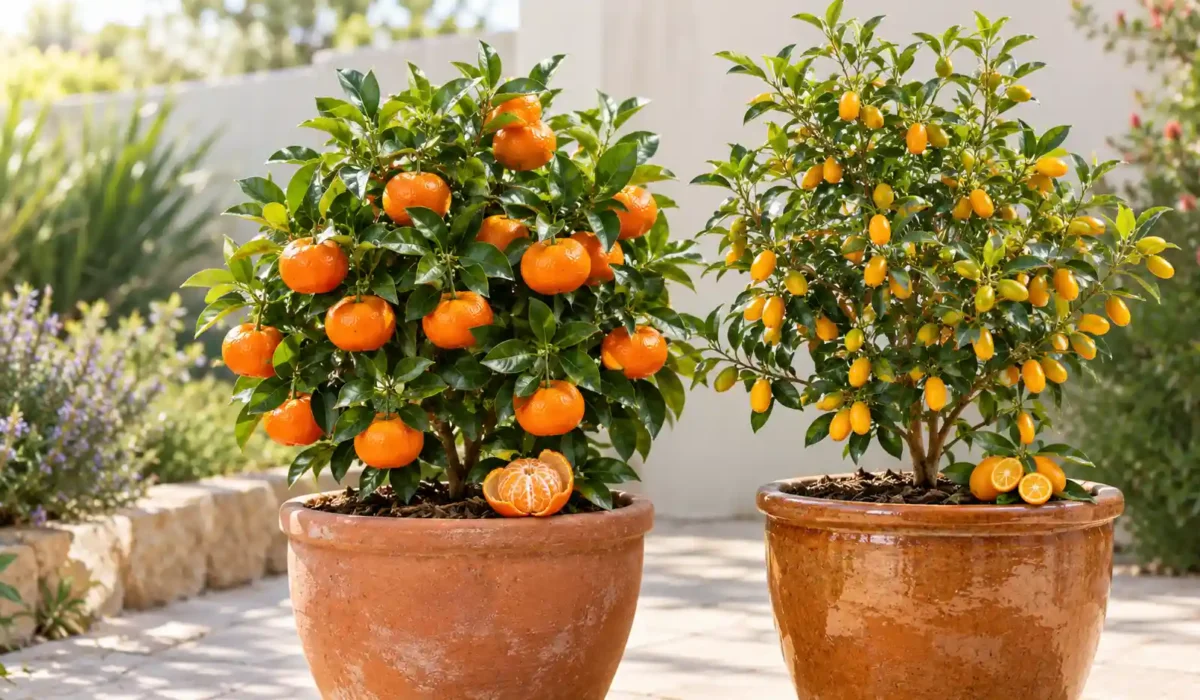
Dwarf Mandarin vs Kumquat: Size, Fruit & Climate (Australia)
Pot or small yard, one compact citrus: dwarf mandarin or kumquat? A dwarf mandarin is a sweet-fruited citrus tree kept manageable through dwarfing rootstock, container growing and pruning. A kumquat, also commonly spelt cumquat in Australia, is a naturally compact citrus with small fruits that are generally eaten whole, including their sweet skin. Both can grow in pots, but they suit different priorities. For Australian gardeners, the best choice depends on winter frost, summer heat, available pot space, preferred fruit and willingness to manage watering, feeding and pests.
Quick Summary
- Choose a dwarf mandarin for familiar, sweet, easy-peel fruit, provided you can accommodate its roots and regular feeding needs.
- Choose a kumquat for compact growth, ornamental fruit and small citrus that can be eaten whole.
- Let climate and available space decide first. Both can be productive in containers, and a sunny courtyard may accommodate one of each.
Dwarf Mandarin vs Kumquat: Quick Decision Guide
| Your situation | Better pick | Why |
| Small balcony or courtyard | Kumquat | Naturally compact and well suited to containers. |
| Regular light frosts | Kumquat | Generally more cold-tolerant than mandarins. |
| Children who prefer easy-peel fruit | Dwarf mandarin | Familiar segments and a loose skin on suitable cultivars. |
| Marmalade and preserves | Kumquat | Small, aromatic fruit with a sweet rind and tart flesh. |
| Less pruning and size control | Kumquat | Often easier to keep compact, although it still needs care. |
| Hot, dry Perth summer | Either, with suitable management | Sun, irrigation, soil pH and rootstock matter more than the label alone. |
The quick verdict is a starting point, not a guarantee. Compare the mature size, fruiting calendar and local pest pressures below before buying.
What “Dwarf” Really Means for a Mandarin
Dwarfing rootstock vs naturally compact variety
A dwarf mandarin is often a normal fruiting variety grafted onto a dwarfing rootstock. The graft union is the visible join near the base of the trunk; the roots belong to the rootstock, while the upper growth produces the named fruit.
A suitable rootstock restricts vigour, but does not make the tree permanently miniature. Pot volume, climate, nutrition and pruning also influence its eventual size. University of Florida IFAS explains how dwarfing rootstocks keep citrus smaller.
Dwarf vs semi-dwarf citrus trees
As a rough planning guide, dwarf citrus often sits around 1–2 metres, semi-dwarf trees may reach roughly 2–3 metres, and an ordinary in-ground mandarin can reach 3–4 metres or more depending on variety and rootstock. These are approximate size bands, not universal classifications.
Do dwarf citrus have invasive roots?
Citrus generally develops a fibrous root system rather than the aggressive structural roots associated with some large trees. Nevertheless, roots need room to expand, and a restricted or root-bound tree can struggle to absorb sufficient water and nutrients. A pot is a practical way to contain the growing space.
Myth-busting: Dwarf does not mean permanently tiny. Ask the nursery for the cultivar, rootstock and expected mature size. A label saying “dwarf” is not enough to establish the final height.
For broader planting and sizing principles, see Leafy Heaven’s growth, root spread and plant sizing guide.
What Is a Kumquat? Types, Spelling and Lookalikes
Kumquat vs cumquat, and the botany
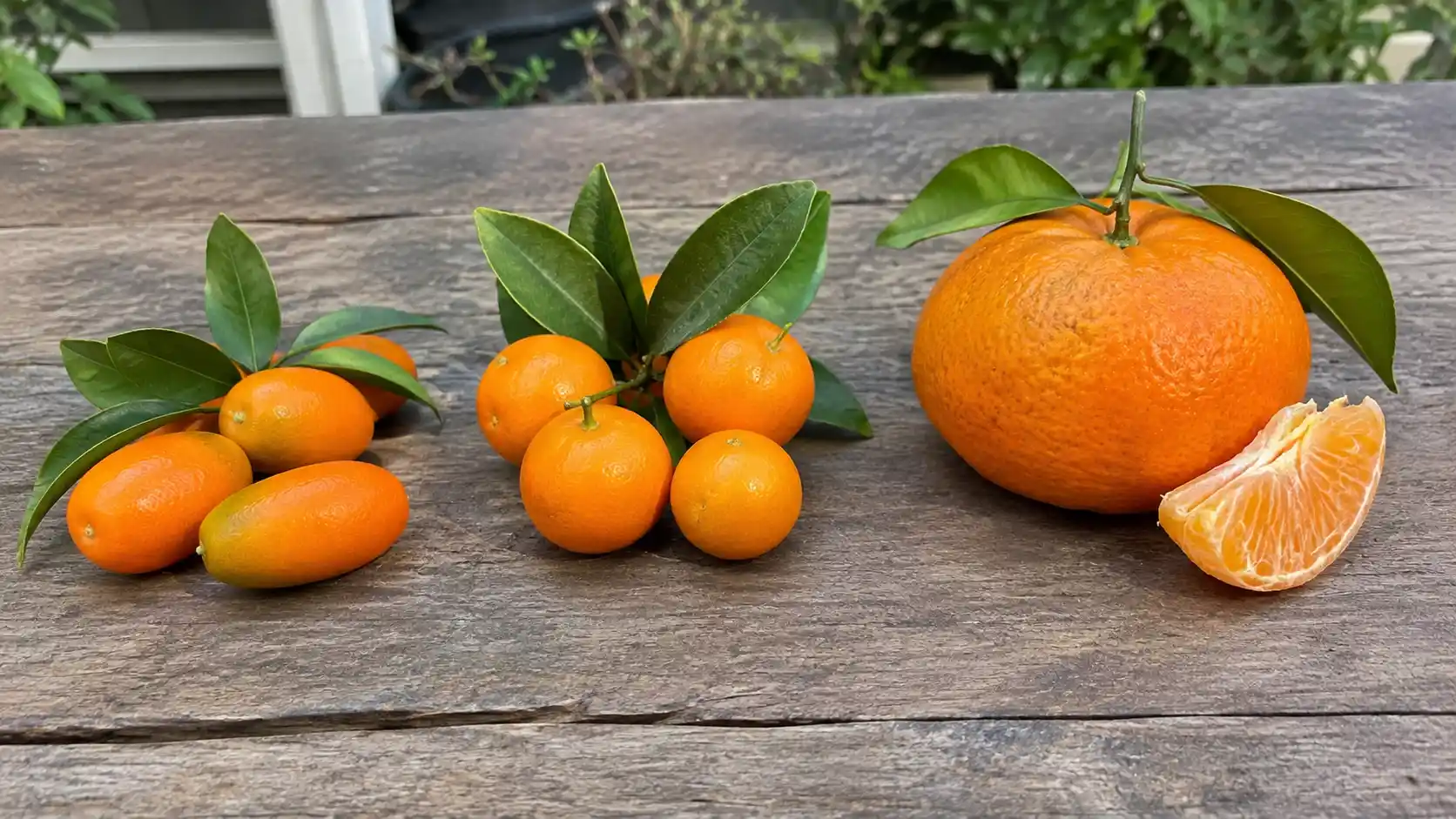
Kumquat and cumquat refer to the same fruit; neither spelling identifies a separate variety. In botanical references, kumquats are commonly listed as Citrus japonica, while older nursery labels may use Fortunella names. British English also commonly uses kumquat.
Two main types: round and oval
| Type | Shape | Typical flavour | Best use |
| Nagami | Oval | Tart flesh, sweet and aromatic skin | Preserves, marmalade and eating whole |
| Meiwa | Round to oval-round | Generally sweeter and less sharply tart | Fresh eating and preserves |
| Marumi | Round | Bright citrus flavour; flavour varies by growing conditions | Fresh eating and cooking |
Nagami is the familiar oval kumquat. Meiwa is often the better choice for fresh eating if you prefer a sweeter overall impression, although individual fruit varies with ripeness.
Fruit mistaken for kumquat
- Calamondin: A small, round, sour citrus often associated with mandarin–kumquat ancestry. It is not simply another name for a kumquat.
- Mandarinquat: A hybrid involving mandarin and kumquat, with characteristics that differ from either parent.
- Limequat: A lime–kumquat hybrid, usually more lime-like in flavour.
- Loquat: Eriobotrya japonica, an unrelated member of the rose family, not a citrus tree.
Remember: calamondin, mandarinquat and limequat are not interchangeable with kumquat. A nursery label and botanical name help prevent a disappointing purchase.
Size, Growth Rate and Time to Fruit Compared
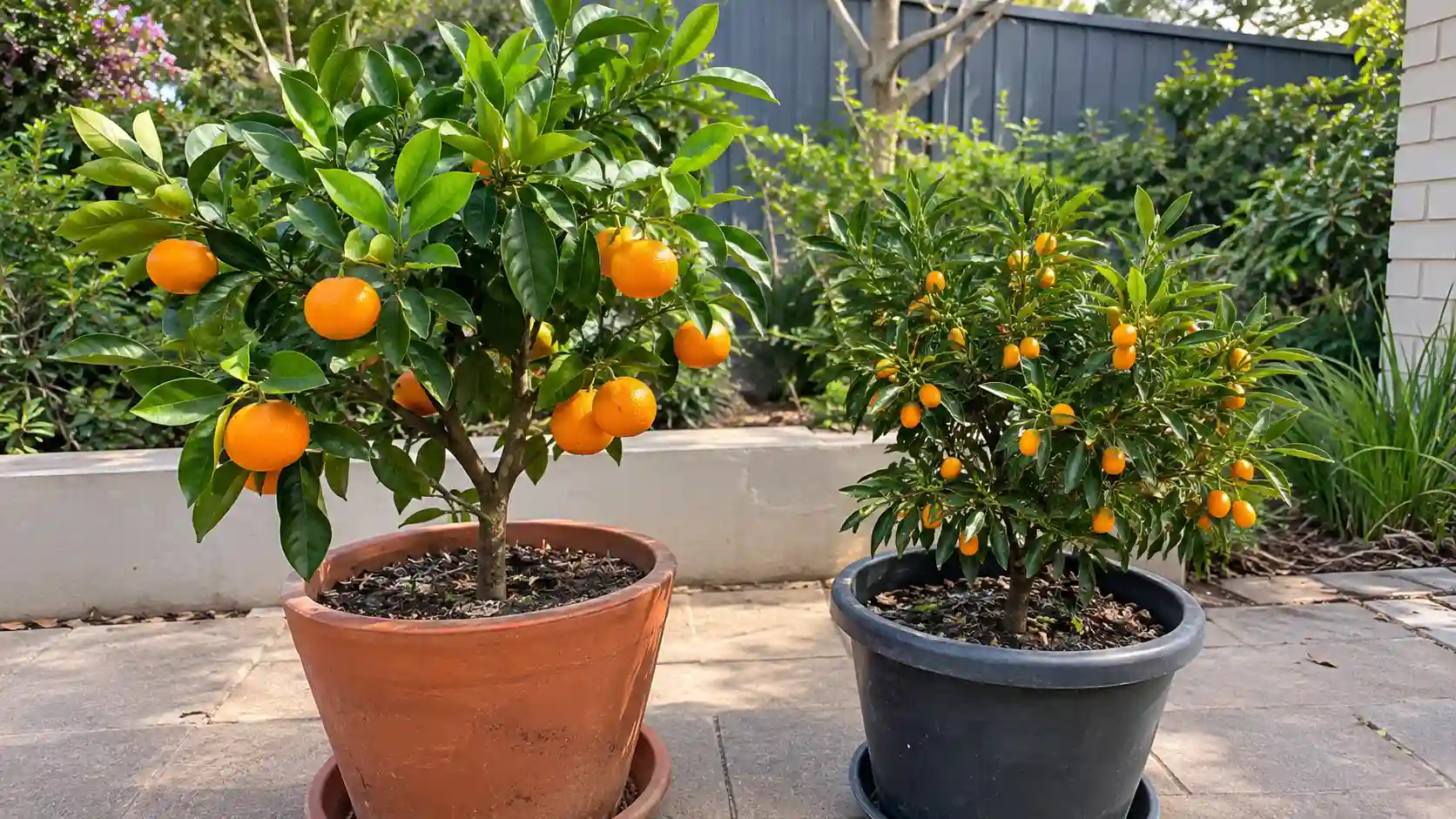
“Dwarf mandarin vs kumquat size” is best answered by looking at the actual cultivar and how it will be grown, rather than relying on the word dwarf.
| Feature | Dwarf mandarin | Kumquat |
| Typical pot-grown height | About 1.5–2.5 m | About 1.2–2 m |
| Possible in-ground size | Around 1.5–3 m on dwarfing stock; larger on stronger stock | Often around 1.5–2 m, depending on cultivar |
| Practical mature pot volume | Plan around 40–60 L or more | Plan around 30–45 L or more |
| Growth rate | Moderate; depends on rootstock and conditions | Often slow to moderate |
| First fruit from a grafted plant | Commonly around 1–3 years | Commonly around 1–3 years |
These figures are planning estimates, not guarantees. The NSW citrus-growing guidance confirms that growth and performance depend on factors such as variety, climate, soil and rootstock.
A young tree sold in a 4–5 L nursery pot will generally need a larger container as its root system develops. Increase the pot size progressively, use free-draining citrus potting mix, and check whether roots are circling or emerging from the drainage holes. Strong seasonal growth flushes are normal.
Which grows faster? There is no universal winner across every cultivar and rootstock. Mandarins can develop into larger, heavier-cropping trees; kumquats generally offer a more naturally compact habit. Seed-grown trees can take considerably longer to fruit than grafted nursery plants, and their eventual fruit quality is less predictable.
Taste, Fruit Use and Kitchen Payoff
| Feature | Mandarin | Kumquat |
| Fruit size | Medium to large, depending on cultivar | Small |
| Peel | Usually loose and easy to remove | Edible skin |
| Flesh | Typically sweet to sweet-tart | Often tart and acidic |
| Seeds | Variety-dependent | Variety-dependent |
| Best uses | Fresh snacks, lunchboxes and segments | Eating whole, marmalade, preserves and garnishes |
The key difference is how you eat the fruit. A mandarin separates into familiar segments; a kumquat combines sweet rind with tart flesh in a single bite. Wash the fruit before eating the skin.
For a seedless mandarin, consider a suitable satsuma such as Miho Wase, but verify the exact cultivar and expected fruiting conditions before purchase. There is no universally established daily limit for kumquats that applies to everyone; normal portions depend on the person, their diet and individual tolerance.
Climate and Fruiting Season in Australia
Climate-zone guide
The NSW Department of Primary Industries and Regional Development’s citrus guide identifies cumquats as particularly cold-hardy citrus and mandarins as relatively cold-hardy. Neither should be treated as immune to severe or prolonged frost.
| Australian climate | Dwarf mandarin | Kumquat |
| Tropical | Suitable varieties can grow well; manage humidity and drainage | Suitable, but monitor wet-season disease and drainage |
| Subtropical | Good choice for many gardens | Good choice for pots and courtyards |
| Temperate | Generally suitable in a sunny, sheltered position | Particularly useful where compactness and cooler tolerance matter |
| Cool or frost-prone | Consider an early satsuma; protect young trees | Generally the stronger option, with protection in severe cold |
| Arid or Mediterranean | Needs reliable irrigation and attention to soil pH | Compact option, but pots need close moisture monitoring |
Perth and Mediterranean climates
Perth’s hot, dry summers, sandy soils and often alkaline growing conditions make irrigation and nutrient management important. Neither tree should be chosen on the assumption that it can tolerate neglected watering in a small pot. Mulch the surface without piling it against the trunk, check drainage, and investigate persistently yellow leaves rather than automatically adding fertiliser.
Leafy Heaven’s Australian soil and fertiliser guide explains why soil type, drainage and nutrient availability need to be considered together.
Pest pressure varies by district. Citrus gall wasp is established in Perth suburbs, so inspect branches regularly and follow local management advice.
Before ordering interstate, check Western Australia’s current plant-import requirements. Permitted species may still be subject to treatment, certification or other conditions.
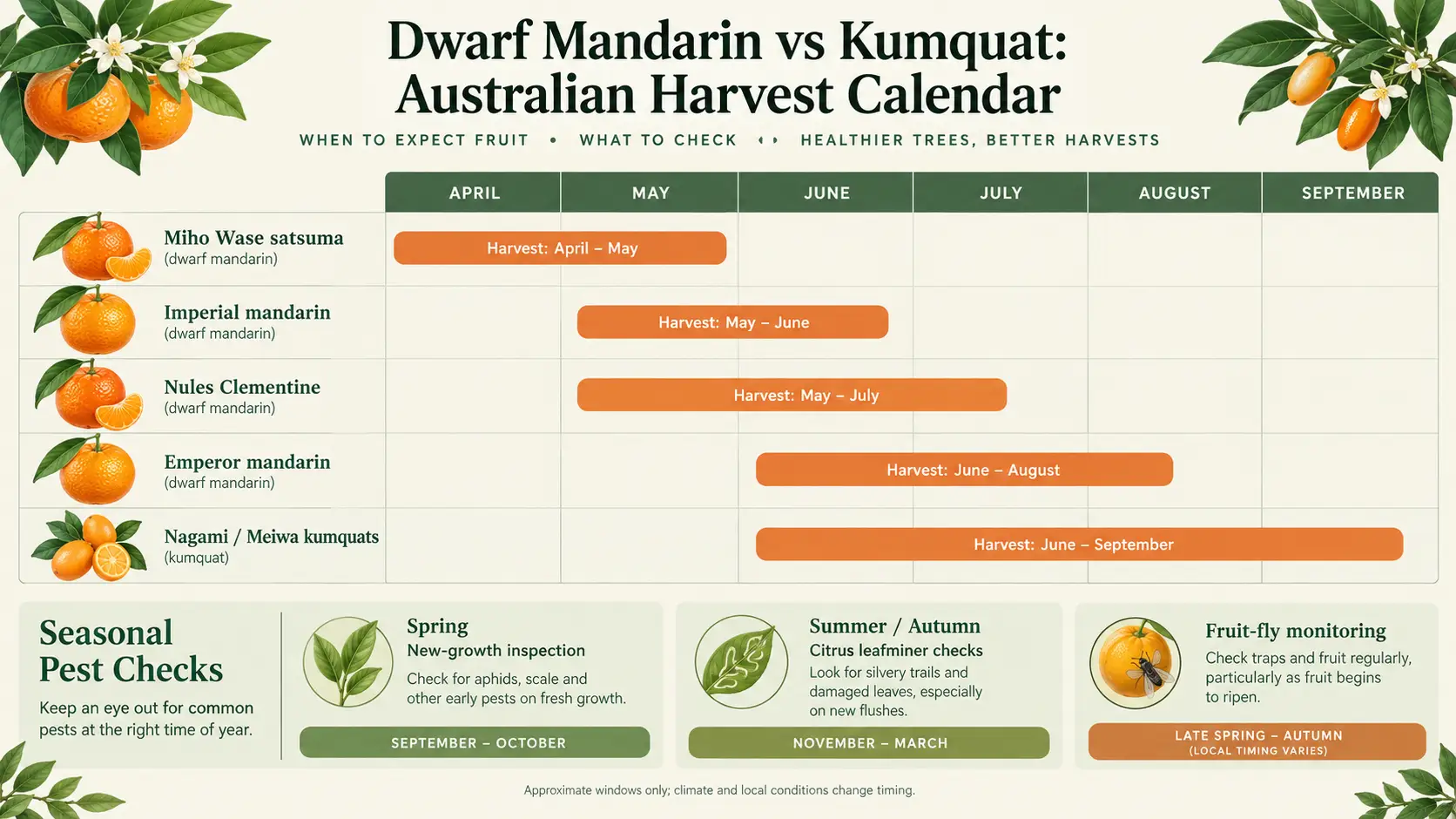
Southern-hemisphere fruiting calendar
These are approximate Australian harvest windows, not fixed dates for every backyard tree.
| Cultivar | Typical harvest window | What to know |
| Miho Wase satsuma | April–May | Early, easy-peel mandarin; timing varies by region |
| Imperial mandarin | May–June | Early variety with sweet, easy-peel fruit |
| Nules Clementine | May–July | Early-to-mid-season, aromatic fruit |
| Emperor mandarin | June–August | Mid-season, loose-skinned fruit |
| Nagami kumquat | June–September | Oval fruit; can remain attractive on the tree after ripening |
| Meiwa kumquat | Winter, often June–September | Rounder, generally sweeter fruit; timing varies |
The mandarin windows are supported by Australian citrus-growing references and local cultivar guides. Regional temperatures affect ripening, so use these as a planning calendar rather than a promise.
Care Differences and Common Problems
Care guide
| Task | Dwarf mandarin | Kumquat |
| Watering | Keep evenly moist, never waterlogged | Similar; small pots dry out quickly |
| Light | Full sun for productive fruiting | Full sun is preferred |
| Soil | Free-draining, slightly acidic to neutral mix | Free-draining citrus mix |
| Feeding | Regular citrus fertiliser during active growth | Regular citrus fertiliser during active growth |
| Pruning | Maintain shape, remove dead and crossing branches | Light shaping is usually sufficient |
| Climate | Protect from harsh frost and heat stress | More cold-tolerant, but still vulnerable to severe frost |
For container plants, a six-to-eight-week feeding interval can be suitable for some conventional fertilisers during active growth, but slow-release products have different schedules. Follow the product label and avoid excessive feeding, especially when soft new growth is vulnerable to pests.
Common problems: cause, fix and prevention
| Problem | Why it happens | What to do |
| Citrus leafminer | Larvae tunnel through young leaves, distorting new growth | Monitor new flushes; remove badly affected leaves on young trees and use suitable controls only as directed. |
| Citrus gall wasp | Larvae develop inside woody branch galls | Inspect stems, and follow local timing and disposal guidance. |
| Fruit fly | Fruit becomes infested where relevant fruit-fly species are present | Check local alerts, remove fallen fruit and use appropriate exclusion or control methods. |
| Scale | Sap-feeding insects weaken growth and may produce sticky honeydew | Inspect stems and leaf undersides; use an appropriate treatment if needed. |
| Yellow leaves | Overwatering, poor drainage, nutrient deficiency or unsuitable soil pH | Check moisture and drainage first; diagnose before adding nutrients. |
| Fruit drop | Some early shedding is natural; stress or poor fruit development can increase it | Maintain steady moisture, avoid excessive fertiliser and investigate repeated heavy drop. |
The NSW government’s citrus leafminer guidance explains why timing control around susceptible new growth matters.
For gall wasp, the Western Australian DPIRD management guide gives local lifecycle and management information.
The most common beginner mistakes are buying a pot that is too small, believing a dwarf label removes all size management, overfeeding, and missing pest activity during new growth. Leafy Heaven’s plant-problem troubleshooting guide offers a wider framework for checking symptoms before treating them.
Choosing Your Cultivar
The cultivar often matters more than the general label. The following Australian nursery examples provide an indicative buying guide, with prices checked on 15 October 2026. Prices, stock, delivery areas and pot sizes can change.
| Cultivar | Size and flavour | Approximate nursery size and price | Best for |
| Nagami kumquat | Compact; oval, tart fruit | 200 mm; about A$40–55 | Marmalade and whole-fruit eating |
| Meiwa kumquat | Compact; rounder, sweeter fruit | 4 L; about A$49–59; larger plants cost more | Fresh eating |
| Imperial mandarin | Dwarf form often about 1–2 m; sweet fruit | 200 mm; about A$40–55 | Early, easy-peel fruit |
| Emperor mandarin | Dwarf form about 1.5–2 m; juicy, loose-skinned fruit | 200 mm; about A$55 | Mid-season harvest |
| Nules Clementine | Size depends on rootstock; aromatic, easy-peel fruit | 200 mm; about A$50 in listed nursery examples | Clementine flavour |
| Miho Wase satsuma | Compact selections available; early, generally seedless fruit | About A$40 in one listed example; pot size and availability vary | Cool-climate gardens and early harvests |
Examples can be checked through Engall’s dwarf mandarin range, Sunshine Coast Nursery’s dwarf Nagami listing, Daleys’ kumquat range and Ross Creek Tropicals’ Miho Wase listing. Regional availability and quarantine restrictions should be checked before ordering.
For broader cultivar descriptions, the Australian mandarin variety guide is a useful additional reference.
Scored Decision Matrix and the “Grow Both” Option
This is an illustrative decision aid, not a measured horticultural trial. Scores run from 1 (less suitable) to 5 (more suitable). Space, climate, taste and maintenance receive most of the weighting; time to fruit and pest management receive less. Pest scores are equal because neither fruit type can be assumed to escape common citrus pests.
| Criterion | Weight | Kumquat | Dwarf mandarin |
| Small-space suitability | 20% | 5 | 3 |
| Climate flexibility | 20% | 5 | 3 |
| Sweet, easy-peel fruit | 20% | 3 | 5 |
| Routine effort | 15% | 4 | 3 |
| Time to first fruit | 10% | 3 | 3 |
| Pest management | 15% | 3 | 3 |
| Weighted result | 100% | 79/100 | 68/100 |
The scores reflect a gardener prioritising compactness and flexibility. A person who values sweet, easy-peel fruit above everything else may reasonably prefer the mandarin.
Choose kumquat if you have limited room, enjoy tart-sweet fruit and want a naturally compact tree.
Choose dwarf mandarin if you mainly want sweet segments for fresh eating and can provide a suitable pot, consistent moisture and regular feeding.
Grow both if your courtyard has enough sunlight for two containers. Position them so their mature canopies have room and air can circulate. You will enjoy two distinctly different harvests without needing a conventional orchard.
Conclusion
In the dwarf mandarin vs kumquat comparison, kumquat is generally the more forgiving choice for a compact garden, especially where cooler tolerance and naturally smaller growth matter. A dwarf mandarin is more rewarding if sweet, easy-peel fruit is the priority and you can provide the necessary pot space and care. Check the cultivar, rootstock and local climate before buying.
FAQs
1. How big do dwarf mandarin trees grow?
Many remain around 1–2.5 metres, although rootstock, pruning, growing conditions and pot size can change their mature height and width.
2. How long does a dwarf mandarin tree take to fruit?
A healthy grafted tree may produce fruit within one to three years after planting. The first crop can be small, and timing varies with establishment and conditions.
3. How many years does a kumquat tree take to bear fruit?
A grafted kumquat may fruit within one to three years in favourable conditions. Seed-grown trees typically take longer and may not reproduce the parent fruit faithfully.
4. Do dwarf citrus trees have invasive roots?
Citrus roots are generally fibrous rather than strongly invasive, but they need room and moisture. Poor drainage and a root-bound pot can restrict growth.
5. What fruit is mistaken for a kumquat?
Calamondin is a frequent source of confusion. Mandarinquats and limequats are hybrids, while loquats are unrelated fruits that do not belong to the citrus family.
6. What is better, kumquat or loquat?
Kumquat suits gardeners wanting a compact citrus with edible skin and tart-sweet fruit. Loquat is a different fruit tree with larger leaves and a different growing habit; choose according to climate, available space and preferred harvest.