

Michelia Figo Port Wine Magnolia: Size & Care Guide
Introduction
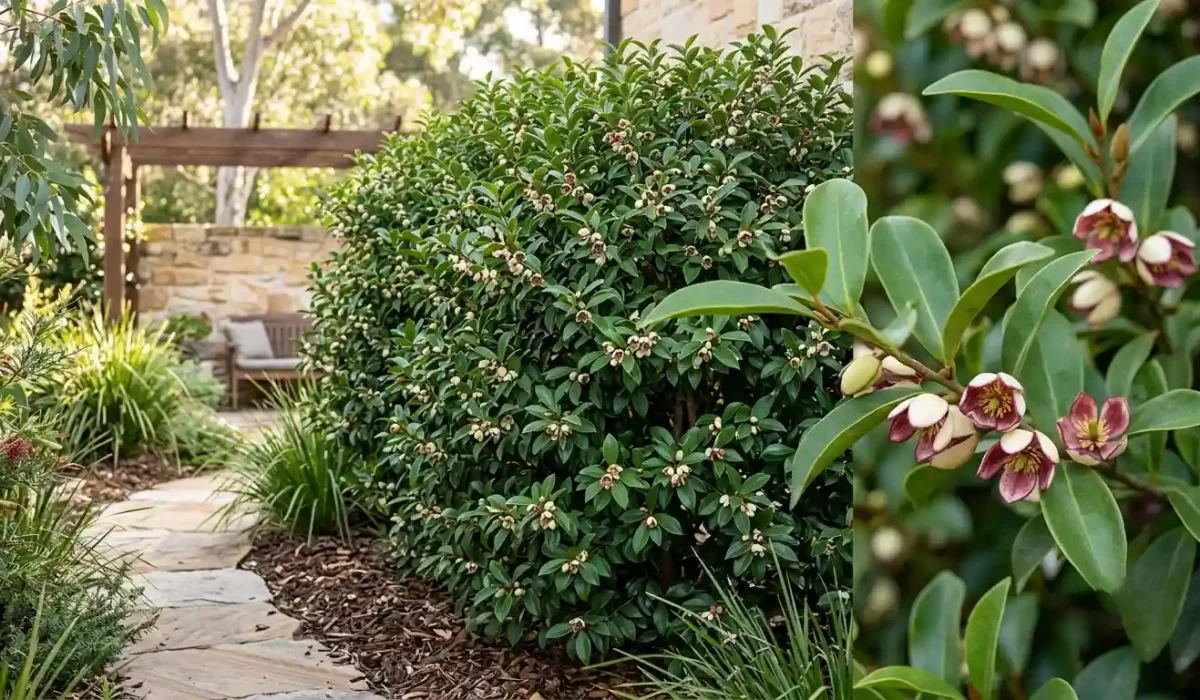
Michelia figo, commonly known as Port Wine Magnolia or Magnolia figo, is an evergreen flowering shrub from the Magnoliaceae family that typically grows 3–4 metres tall and 2–3 metres wide at maturity. The plant is valued for its compact growth habit, glossy green foliage, and highly fragrant cream-and-maroon flowers. Although widely known as Michelia figo, modern botanical classification places it within the Magnolia genus, which is why it is also sold as Magnolia figo. This naming change causes confusion among gardeners, but both names refer to the same popular ornamental plant. Native to China, Michelia figo is commonly grown in Australian gardens as a fragrant hedge, screening plant, or container specimen.
Quick Summary
- Michelia figo (Port Wine Magnolia) usually reaches around 3–4m high and 2–3m wide when fully grown.
- It is a slow-to-moderate grower, commonly taking 5–7 years to approach 3m in favourable conditions.
- Its shallow, compact root system is considered non-invasive and generally suitable near paths and structures.
- It performs well as a fragrant hedge, screen plant, or container shrub in full sun to part shade.
- The evergreen shrub produces distinctive banana-like, bubble-gum, and port-wine scented flowers during late winter and spring.
What Is Michelia Figo (Port Wine Magnolia)?
Michelia figo is an evergreen ornamental shrub in the Magnoliaceae family, recognised for its dense foliage, compact size, and strongly scented flowers. It is commonly called Port Wine Magnolia, Banana Bush, Banana Shrub, or Banana Magnolia because of its sweet fragrance, which many gardeners describe as similar to ripe bananas, bubble gum, or fruity wine.
Michelia figo belongs to the Magnoliaceae family, a botanical group that includes many magnolia species and other flowering plants.
The plant is botanically known by several names due to changes in plant classification:
- Michelia figo: the traditional horticultural name still widely used by gardeners and nurseries.
- Magnolia figo: the accepted modern classification after Michelia species were moved into the Magnolia genus.
- Magnolia × figo / Magnolia fasciata: names sometimes encountered in botanical references and plant listings.
Despite these naming differences, they generally refer to the same plant grown in gardens.
Michelia figo is native to southern China, where it grows naturally in warm woodland environments. It belongs to the same botanical family as other magnolias and shares characteristics such as evergreen foliage, fragrant flowers, and woody stems.
The Michelia figo plant is usually grown as a shrub rather than a tree, although mature specimens can develop a small tree-like form if lower branches are removed. This explains why some gardeners refer to it as a Michelia figo tree, even though its natural growth habit is more shrub-like.
The name Port Wine Magnolia comes from its flowers, which often have creamy petals with deep maroon or reddish-purple colouring on the outside. When the flowers open, they release a strong sweet fragrance that creates the plant’s signature scent.
Port Wine Magnolia Size, How Big Do They Get?
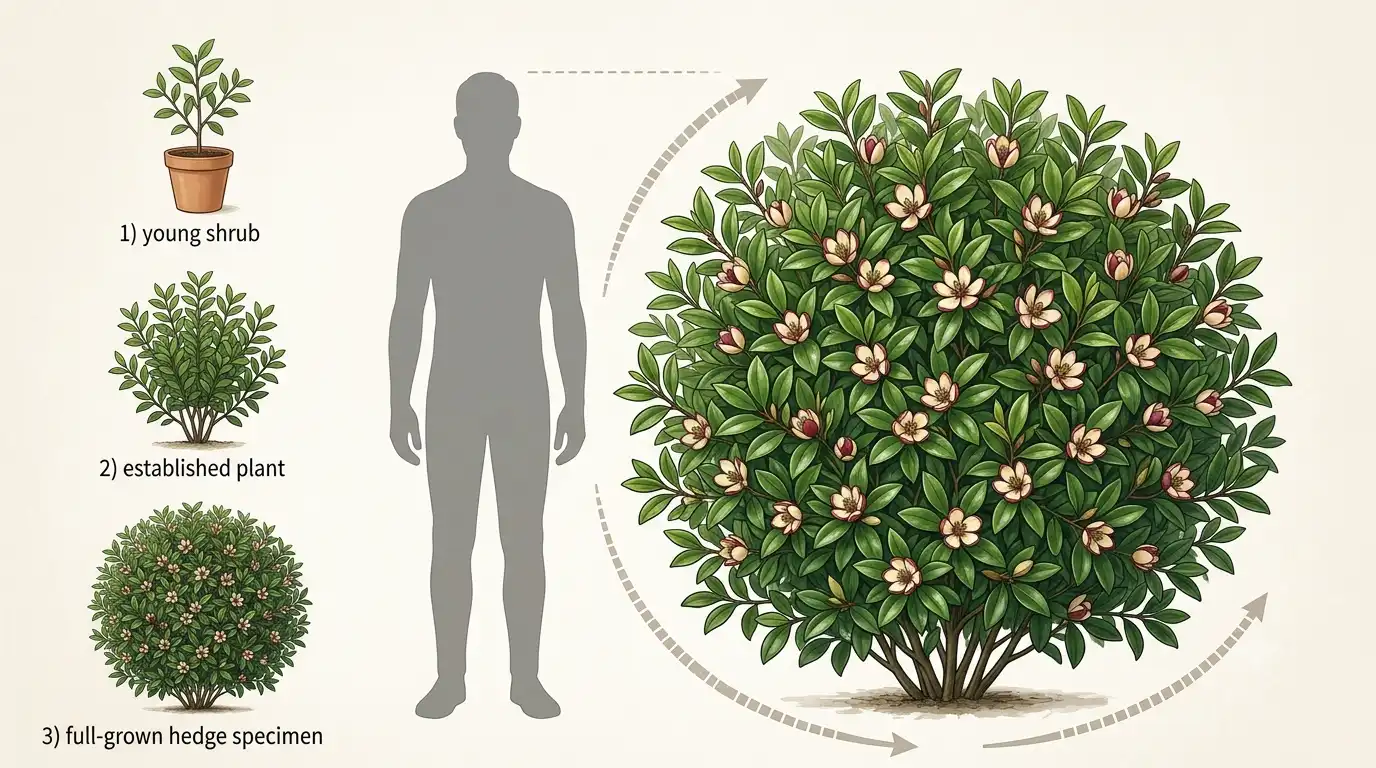
A full grown Port Wine Magnolia typically reaches 3–4 metres in height and 2–3 metres in width when planted in the ground and allowed to grow naturally. The final size depends on climate, soil quality, sunlight, watering, and how regularly the plant is pruned.
The typical Michelia figo Port Wine Magnolia size can vary in different growing situations:
| Growing Situation | Expected Size |
| Full-size garden specimen | 3–4m high × 2–3m wide |
| Regularly pruned hedge | 1.5–3m depending on pruning |
| Container-grown plant | Usually smaller due to restricted roots |
| Small garden specimen | Can be maintained around 1.5–2m |
A full grown Port Wine Magnolia planted in rich soil with good moisture and sunlight will generally become broader and taller than one grown in a pot or heavily shaped as a hedge.
For gardeners wanting a formal screen, pruning can maintain the plant at a preferred height. Unlike fast-growing screening plants that quickly become oversized, Port Wine Magnolia grows steadily and is easier to manage in residential gardens.
Climate also influences size. In warm, humid areas of Australia, growth may be stronger, while cooler climates can produce slower development.
Michelia Figo Growth Rate
Michelia figo is considered a slow-to-moderate growing plant. It does not grow as rapidly as many traditional screening shrubs but establishes steadily and develops a dense, attractive structure over time.
While Michelia figo grows steadily rather than rapidly, gardeners looking for quicker-growing options can explore different selections in a guide to Fast Growing Magnolia Australia.
Under suitable conditions, Port Wine Magnolia growth rate is often enough for the plant to reach approximately 3 metres within 5–7 years.
Growth speed depends on several environmental factors:
- Sun exposure: Plants receiving adequate sunlight generally grow more vigorously.
- Soil quality: Fertile, well-drained soil encourages stronger growth.
- Water availability: Consistent moisture supports healthy leaf and branch development.
- Pruning practices: Regular shaping can encourage bushier growth but may reduce height increase.
The Michelia figo Port Wine Magnolia growth rate is usually fastest during spring and summer when temperatures rise and active growth occurs. Many plants produce noticeable growth flushes after warmer weather begins.
Gardeners often ask, “How fast does Michelia figo grow?” The answer depends on growing conditions, but it is generally considered a reliable medium-term plant rather than a quick-growing screen option.
A common beginner mistake is expecting immediate hedge coverage. In our experience growing fragrant evergreen shrubs, allowing plants time to establish a strong root system before heavy pruning usually produces healthier long-term growth.
Port Wine Magnolia Root System, Is It Invasive?

Port Wine Magnolia has a shallow, compact, and generally non-invasive root system. Unlike some large trees that develop aggressive surface roots, Michelia figo usually produces manageable roots that spread close to the plant rather than causing widespread structural problems.
Understanding root growth is important when selecting magnolias for residential gardens, and comparisons such as Teddy Bear Magnolia Root System provide useful information about how different magnolia varieties develop underground.
The answer to “Are Port Wine Magnolia roots invasive?” is generally no. The plant is considered suitable for many suburban gardens because its roots are not known for aggressively damaging paving, pipes, or foundations.
However, sensible planting distances are still recommended. Even non-invasive plants should not be planted directly against buildings or underground infrastructure because all mature roots require some space.
Key points about the Port Wine Magnolia root system:
- Roots are relatively shallow compared with large tree species.
- Root spread is usually compact and controlled.
- It is commonly suitable near pathways and garden structures.
- Good soil preparation helps encourage balanced root development.
Gardeners often ask, “Can you plant magnolia next to a house?” For smaller magnolia types like Michelia figo, planting near a home is usually acceptable when a reasonable distance is maintained.
The plant is also not considered invasive in Australian gardens when properly cultivated and maintained.
Growing Port Wine Magnolia as a Hedge
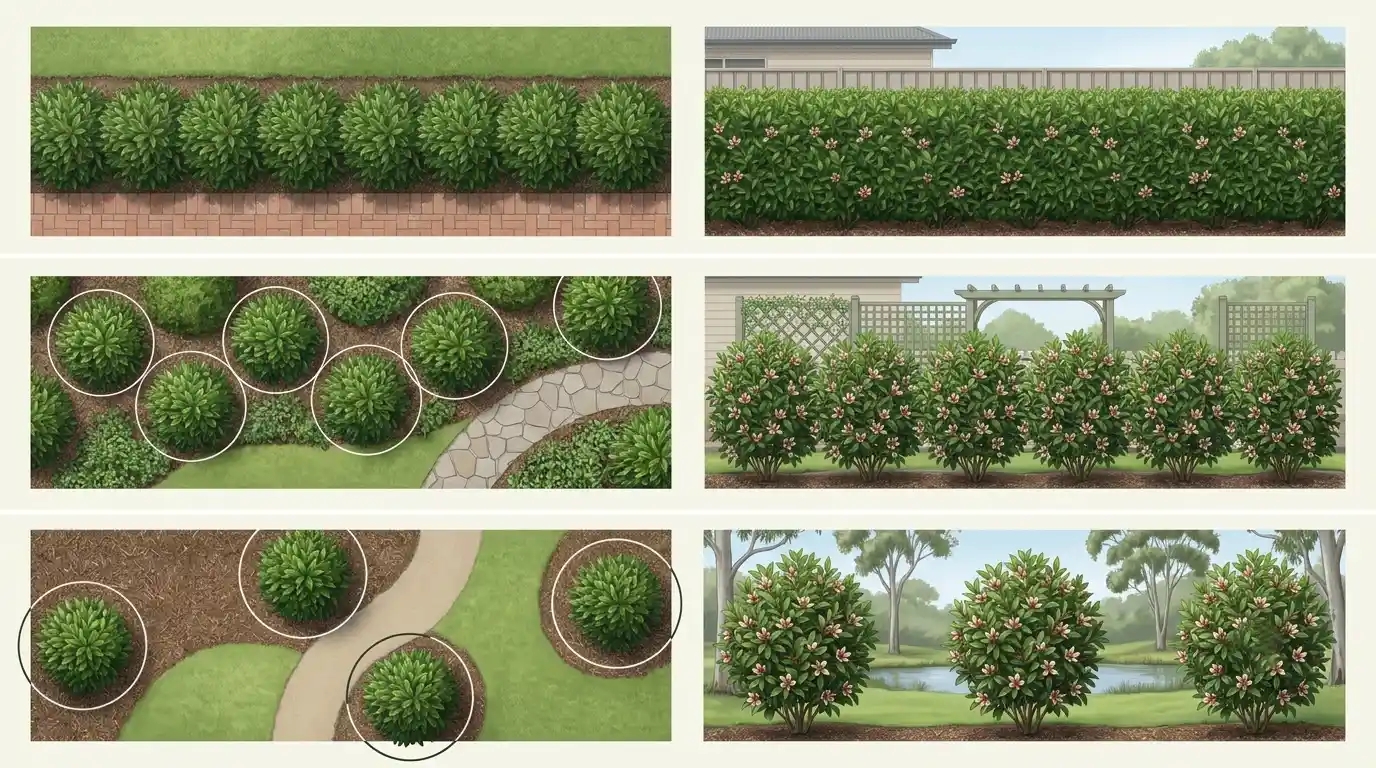
Port Wine Magnolia is a popular choice for hedging because it combines evergreen foliage, compact growth, and fragrant flowers. A Port Wine Magnolia hedge creates a dense green screen while adding seasonal fragrance and ornamental value to Australian gardens.
The plant responds well to pruning and can be shaped into formal hedges, informal screens, or decorative topiary forms. Because flowers develop on older wood, pruning should be timed carefully to avoid removing too many future blooms.
For a healthy Michelia figo hedge, planting spacing depends on the desired result:
| Purpose | Recommended Spacing | Expected Time to Fill In |
| Dense formal hedge | 60cm–1m apart | Around 3–5 years depending on conditions |
| Loose privacy screen | 1–1.5m apart | Around 4–7 years |
| Feature planting | 1.5–2m apart | Allows natural rounded growth |
When deciding how far apart should you plant Port Wine Magnolias, consider the final hedge height and how quickly you want coverage. Closer spacing creates a faster solid screen but increases competition for water and nutrients.
For the best results:
- Plant during mild weather, such as autumn or spring.
- Apply organic mulch around the root zone to maintain soil moisture.
- Water regularly while plants establish.
- Prune lightly after flowering finishes.
A key pruning tip for Port Wine Magnolia topiary is to shape the plant after its main flowering period. Since Michelia figo produces flowers on older branches, heavy winter pruning can reduce spring blooms.
In our experience with evergreen flowering hedges, gentle and consistent shaping produces a denser plant than aggressive cutting back once the shrub becomes overgrown.
Port Wine Magnolia in Pots
Port Wine Magnolia grows well in containers, making it suitable for courtyards, balconies, patios, and small gardens. Growing Port Wine Magnolia in pots naturally restricts its size because the root system has limited space.
A container-grown Michelia figo will usually remain smaller than a garden-planted specimen, although it still requires appropriate care to maintain healthy growth.
For successful Port Wine Magnolia in pots, use:
- A large container with drainage holes.
- A quality potting mix designed for shrubs or acid-loving plants.
- Regular watering, especially during hot weather.
- Occasional fertilising during active growth periods.
A suitable pot should generally be wider and deeper than a small nursery container, allowing roots to expand gradually.
Container care requirements include:
- Watering: Keep soil evenly moist but avoid waterlogging.
- Drainage: Poor drainage can lead to yellow leaves and root stress.
- Repotting: Move into a larger container when roots become crowded.
- Pruning: Trim lightly to maintain a manageable shape.
Because pots limit root development, container-grown plants may grow slower and stay smaller than those planted directly into garden soil.
Sun, Soil and Climate Requirements
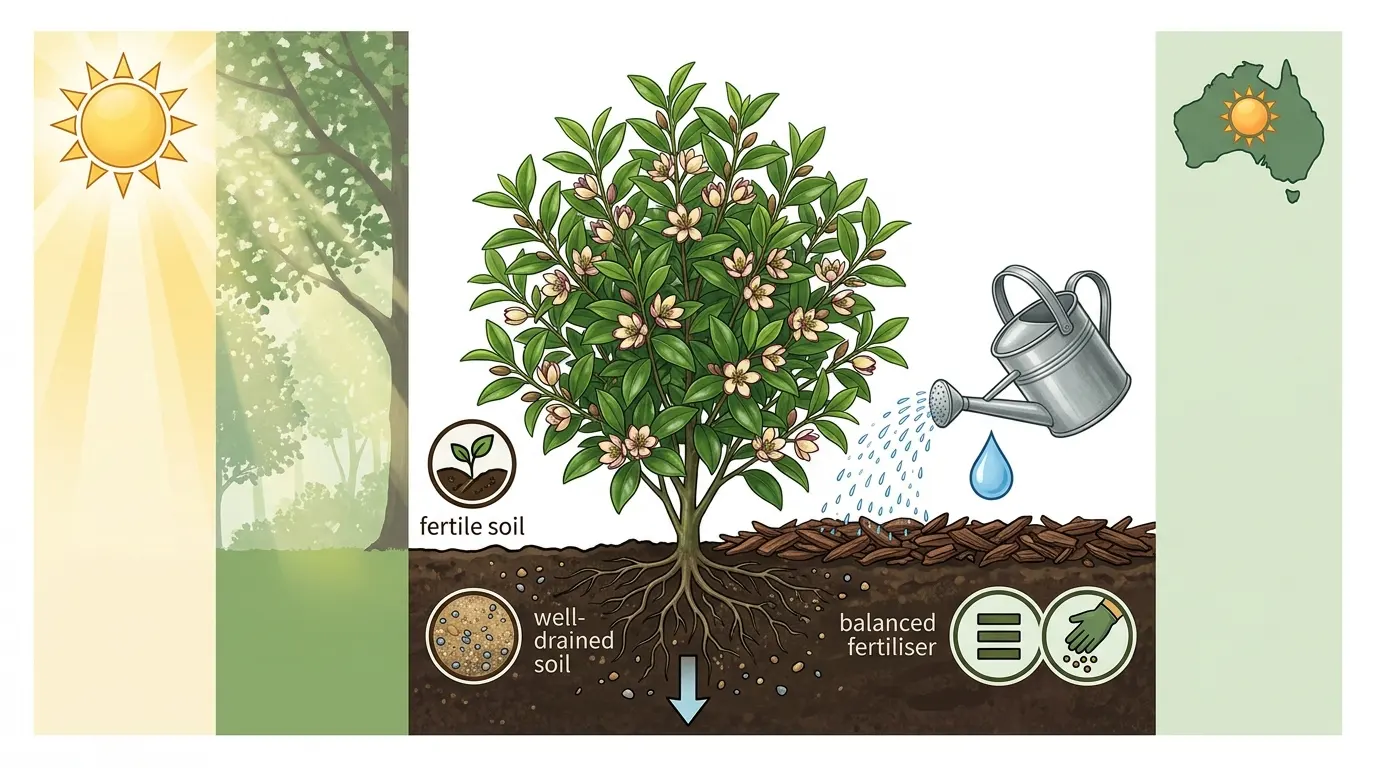
Port Wine Magnolia performs best in full sun to part shade with moist, well-drained soil. It adapts well to many Australian climates, including temperate and subtropical regions, provided it receives suitable growing conditions.
The answer to “Do Port Wine Magnolias like sun or shade?” is that they prefer plenty of sunlight but can tolerate partial shade, especially in warmer areas where afternoon protection can prevent leaf stress.
The ideal growing conditions for Port Wine Magnolia care include:
- Light: Full sun to part shade.
- Soil: Fertile, slightly acidic, well-draining soil.
- Water: Regular moisture, particularly during establishment.
- Fertiliser: Balanced slow-release fertiliser during growing seasons.
- Mulch: Organic mulch helps conserve moisture and regulate soil temperature.
When caring for a Michelia figo, avoid planting it in areas where soil remains permanently wet. Poor drainage is one of the most common causes of declining plant health.
Established plants tolerate moderate dry periods, but consistent watering improves foliage quality and flowering performance.
The shrub has reasonable frost tolerance once established, although young plants may need protection from severe frost. In Australian gardens, it generally performs well across many regions from cooler temperate areas to warmer subtropical zones.
As of current Australian gardening practices, improving soil health with compost and maintaining efficient watering methods remain some of the most effective ways to support evergreen shrubs through changing seasonal conditions.
Do Port Wine Magnolias Lose Their Leaves in Winter?
No, Port Wine Magnolias do not lose all their leaves in winter because they are evergreen shrubs. They retain their glossy green foliage throughout the year rather than becoming deciduous.
The answer to “Do Port Wine Magnolias lose their leaves in winter?” is that minor leaf drop is normal, but complete winter leaf loss usually indicates stress.
Natural reasons for some leaf loss include:
- Older leaves reaching the end of their life cycle.
- Seasonal adjustment during colder months.
- Environmental stress after transplanting.
However, excessive leaf drop may be caused by:
- Overwatering.
- Poor drainage.
- Root damage.
- Nutrient deficiencies.
- Sudden temperature changes.
A healthy Michelia figo should maintain dense foliage throughout the year, making it valuable for evergreen screening and privacy planting.
Port Wine Magnolia Flowers
Port Wine Magnolia flowers are one of the main reasons gardeners grow this shrub. The small, cup-shaped flowers have creamy inner petals with deep maroon, reddish, or port-wine coloured outer markings.
The Port Wine Magnolia flower is especially valued for its fragrance.
The scent is often described as a combination of:
- Banana.
- Bubble gum.
- Sweet fruit.
- Port wine.
The answer to “Is Michelia figo fragrant?” is yes. It is one of the most strongly scented evergreen magnolias commonly grown in gardens.
Flowering usually occurs from late winter through spring, although occasional flowers may appear during summer in favourable conditions.
A young plant may take several years before producing a significant number of blooms. Gardeners often ask “How many years does it take for a magnolia to bloom?” For Michelia figo, flowering commonly improves as the plant becomes established, often within a few years after planting.
Factors affecting flowering include:
- Adequate sunlight.
- Mature plant age.
- Balanced fertilising.
- Correct pruning timing.
- Avoiding excessive nitrogen fertiliser.
Over-fertilising with high nitrogen products can encourage leafy growth while reducing flower production.
Common Port Wine Magnolia Problems (Problem–Solution Coverage)
Port Wine Magnolia is generally low maintenance, but several problems can affect growth and appearance.
Yellowing Leaves
Yellow leaves are one of the most common Port Wine Magnolia problems. The main causes include overwatering, poor drainage, and nutrient deficiencies.
Possible solutions:
- Check that soil drains freely.
- Reduce watering if the soil stays wet.
- Add compost to improve soil structure.
- Apply suitable fertiliser if nutrient deficiency is suspected.
The common mistake many beginners make is watering on a fixed schedule without checking soil moisture first. Plant needs change depending on rainfall, season, and soil type.
Slow or Stunted Growth
Slow growth may occur when plants lack suitable growing conditions.
Common causes include:
- Too much shade.
- Poor-quality soil.
- Root-bound containers.
- Lack of consistent moisture.
To improve growth:
- Move container plants into larger pots.
- Improve soil with organic matter.
- Ensure adequate sunlight.
- Maintain regular watering during dry periods.
Flower Buds Failing to Open
When flower buds fail to develop properly, stress is often the cause.
Possible reasons include:
- Sudden temperature changes.
- Water stress.
- Nutrient imbalance.
- Insufficient potassium.
Using a fertiliser containing potassium during the flowering period may support better blooms.
General Care Mistakes
Common mistakes with Michelia figo include:
- Planting in constantly wet soil.
- Pruning heavily before flowering.
- Expecting rapid hedge growth.
- Growing in deep shade.
Providing correct placement and moderate care usually prevents most problems.
Port Wine Magnolia vs Fairy Magnolia (Comparison Block)
Port Wine Magnolia and Fairy Magnolia are both popular evergreen magnolias used in Australian gardens, but they differ in flower size, fragrance, growth habit, and ideal planting purpose. Michelia figo is a traditional species valued mainly for its intense fragrance, while Fairy Magnolia hybrids are modern selections developed for improved flowering performance and compact garden use.
Gardeners interested in other compact magnolia varieties can also compare Magnolia Teddy Bear vs Little Gem to understand differences in size, growth habit, flowers, and landscape suitability.
The main difference is that Port Wine Magnolia produces smaller but highly fragrant flowers, whereas Fairy Magnolia varieties usually produce larger, showier blooms with a more compact growth habit.
| Feature | Michelia Figo (Port Wine Magnolia) | Fairy Magnolia Hybrids |
| Botanical group | Magnolia figo (formerly Michelia figo) | Modern Magnolia hybrid selections |
| Flower size | Small, cup-shaped flowers | Larger star or cup-shaped flowers |
| Fragrance | Very strong banana, bubble-gum, and sweet wine fragrance | Usually lighter fragrance, depending on variety |
| Growth habit | Rounded evergreen shrub, can become larger | Generally compact and bushier |
| Mature size | Around 3–4m tall and 2–3m wide | Often smaller and easier for compact gardens |
| Main use | Fragrant hedge, screen, feature shrub | Small gardens, borders, ornamental planting |
| Flower colours | Cream flowers with maroon or port-wine markings | White, cream, pink, blush, and other tones |
Popular Fairy Magnolia selections include:
- Fairy Magnolia Cream: known for creamy-white flowers and compact growth.
- Fairy Magnolia Blush: valued for soft pink flowers.
- Fairy White Magnolia or Magnolia Fairy White: produces white flowers with a neat growth habit.
When comparing Port Wine Magnolia varieties with Fairy Magnolia, the choice depends on the garden goal. Gardeners wanting fragrance often prefer Michelia figo, while those wanting a smaller flowering feature plant may choose Fairy Magnolia hybrids.
The term red wine magnolia is sometimes used informally for Port Wine Magnolia because of the flower colouring, but it generally refers to the same traditional plant rather than a separate species.
Best Small-Garden and Dwarf Options
There is no true dwarf form of traditional Port Wine Magnolia (Magnolia figo) that naturally stays miniature. The plant is naturally a medium-sized evergreen shrub, but its growth can be controlled through pruning and container growing.
The answer to “Is there a dwarf Port Wine Magnolia?” is generally no.
Instead, gardeners with limited space can maintain a smaller plant by:
- Growing it in a large container.
- Pruning lightly after flowering.
- Maintaining it as a compact hedge.
- Selecting naturally smaller magnolia varieties.
For small gardens, Fairy Magnolia hybrids are often considered because many varieties have a more compact habit than a full-grown Michelia figo.
When choosing the best magnolia tree for a small garden, consider:
- Available planting space.
- Mature height and width.
- Root behaviour.
- Flower preference.
- Maintenance requirements.
Michelia figo can still work well in small gardens when managed correctly because it responds positively to regular shaping and does not have an aggressive root system.
Buying Port Wine Magnolia in Australia
Port Wine Magnolia is widely grown across Australia and is commonly available through garden centres, specialist nurseries, and large retail plant suppliers. Availability can vary depending on region, climate, and seasonal stock levels.
Gardeners searching for Port Wine Magnolia Perth, Port Wine Magnolia Melbourne, or Michelia figo Port Wine Magnolia for sale may find differences in availability because plant selections often depend on local growing conditions.
When choosing a plant, look for:
- Healthy green foliage without widespread yellowing.
- A well-developed root system.
- A balanced shape with multiple branches.
- A plant size suitable for the intended location.
Common search terms such as Port Wine Magnolia Bunnings, Bunnings Magnolia, or Magnolia Bunnings often refer to checking availability at major garden retailers. However, specialist nurseries may also provide different sizes and healthier established specimens.
For Australian gardens, selecting a plant suited to the local climate is more important than choosing the largest available specimen. Smaller plants often establish successfully because they adapt gradually to their new environment.
Conclusion
Michelia figo, also known as Port Wine Magnolia or Magnolia figo, is a reliable evergreen shrub valued for its compact growth, fragrant flowers, and usefulness as a hedge, screen, or feature plant. A full-grown Port Wine Magnolia typically reaches around 3–4 metres tall and 2–3 metres wide, with a slow-to-moderate growth rate that allows gardeners to maintain its shape easily.
Its shallow, non-invasive root system makes it suitable for many residential gardens when planted with sensible spacing. With full sun to part shade, moist well-drained soil, and appropriate pruning after flowering, Michelia figo provides year-round foliage and seasonal fragrance.
For gardeners wanting a low-maintenance evergreen plant with strong fragrance and dependable structure, Port Wine Magnolia remains one of the most practical magnolia choices for Australian landscapes.
Michelia figo is one of many evergreen shrubs that perform well in Australian landscapes, and choosing the right species is easier when comparing different options in a guide to Best Trees and Shrubs for Australian Gardens.
FAQs
How big do Port Wine Magnolias get?
Port Wine Magnolias usually grow to around 3–4 metres tall and 2–3 metres wide when planted in the ground and allowed to mature naturally. Regular pruning can maintain them at a smaller size for hedges or compact gardens.
Are Port Wine Magnolia roots invasive?
No, Port Wine Magnolia roots are generally not considered invasive. The plant develops a shallow, compact root system that is usually manageable near paths and structures when sensible planting distances are maintained.
Do Port Wine Magnolias like sun or shade?
Port Wine Magnolias grow best in full sun to part shade. They generally produce stronger growth and more flowers with several hours of sunlight each day, although some afternoon protection can help in hot climates.
How fast does Michelia figo grow?
Michelia figo is a slow-to-moderate grower and commonly takes around 5–7 years to reach approximately 3 metres in good conditions. Growth speed depends on sunlight, soil quality, watering, and climate.
Is Michelia figo fragrant?
Yes, Michelia figo is highly fragrant. Its flowers produce a sweet scent often compared with bananas, bubble gum, and port wine, which is why it is commonly called Port Wine Magnolia.
How far apart should you plant Port Wine Magnolias for a hedge?
For a dense hedge, plant Port Wine Magnolias around 60cm–1m apart. For a looser screen or feature planting, spacing of 1.5–2m allows plants to develop their natural rounded shape.
Is there a dwarf Port Wine Magnolia for small gardens?
No true dwarf Port Wine Magnolia exists, but the plant can be kept compact through pruning or container growing. Smaller magnolia hybrids, such as Fairy Magnolia varieties, may be better suited for very limited spaces.