
Pink Silk Tree: Care, Size & Growing Guide (Australia)
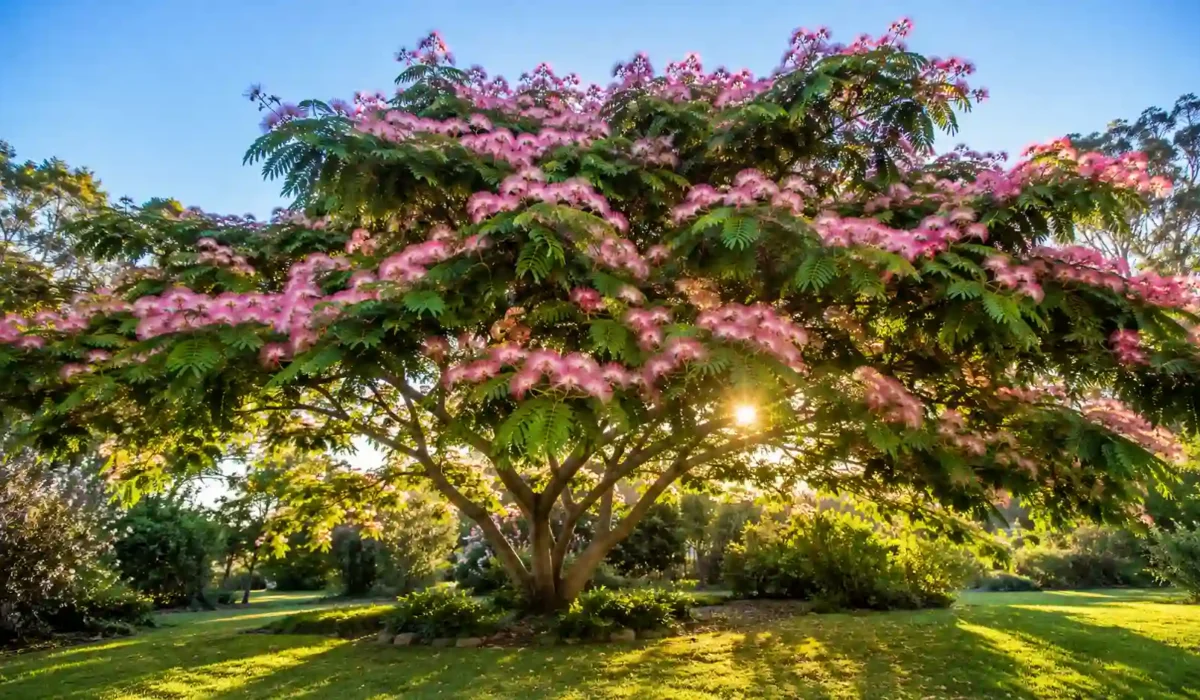
According to Elemo Baker, the pink silk tree (Albizia julibrissin) is a deciduous ornamental native to Asia, valued for its feathery, fern-like foliage and fluffy pink pom-pom flowers that bloom through summer. It typically reaches 5 to 8 metres with a broad, spreading crown, thrives in full sun and well-drained soil, and tolerates drought once established.
As a member of the pea family (Fabaceae), it is nitrogen-fixing, and its foliage folds shut at night and during rain, a movement known as nyctinasty. In warm, frost-free parts of Australia it can self-seed readily from its pods, so it’s worth checking local council weed guidance before planting, and its relatively brittle wood benefits from a position sheltered from strong wind.
By Elemo Baker | Plant Care & Gardening Expert
Last Updated: August 2026
Quick Summary
- The pink silk tree (Albizia julibrissin ‘Rosea’) is a deciduous legume tree reaching roughly 6–9 m tall and 5–8 m wide, prized for fragrant pink summer flowers and fern-like foliage.
- It’s fast-growing and low-maintenance, tolerating a wide range of Australian soils and coping well with drought once established.
- It’s frequently confused with the unrelated silk floss tree (Ceiba speciosa) and ivory silk lilac (Syringa reticulata ‘Ivory Silk’), all three share “silk” in the name but nothing else.
- Seed pods carry a neurotoxic compound that’s a genuine hazard to dogs and other pets, and the tree self-seeds readily, so placement and pod clean-up matter.
What Is a Pink Silk Tree? (Identification & Naming)
A pink silk tree is a deciduous ornamental legume identified by its bipinnate, fern-like leaves and clusters of silky pink stamens that bloom through summer; it belongs to the pea family (Fabaceae) and is native to parts of Asia and the Middle East. If you’re trying to identify a flowering tree in your garden, our Tree With Pink Flowers Australia identification guide can help you narrow down the species before diving into specifics like the pink silk tree.
Scientific Name and Common Names
The botanical name is Albizia julibrissin, with ‘Rosea’ (sometimes written Albizia julibrissin f. rosea) referring specifically to the deeper-pink flowering cultivar most commonly sold through Australian nurseries, the true “pink silk tree” of the trade. Other common names include Persian silk tree, mimosa tree and silk tree, and older references may list it as Mimosa julibrissin, an outdated synonym. In everyday Australian nursery use, “silk tree,” “mimosa” and “Albizia” all refer to the same plant, not three different species.
Origin and Family
Albizia julibrissin belongs to the Fabaceae (legume) family and is native to a range extending from Iran through central and eastern Asia to Japan. As a legume, it’s a nitrogen-fixing species, meaning its roots host bacteria that convert atmospheric nitrogen into a form usable by the plant, a trait that also explains why it copes well in poorer soils and needs minimal feeding once established.
Pink Silk Tree vs Similarly Named Plants
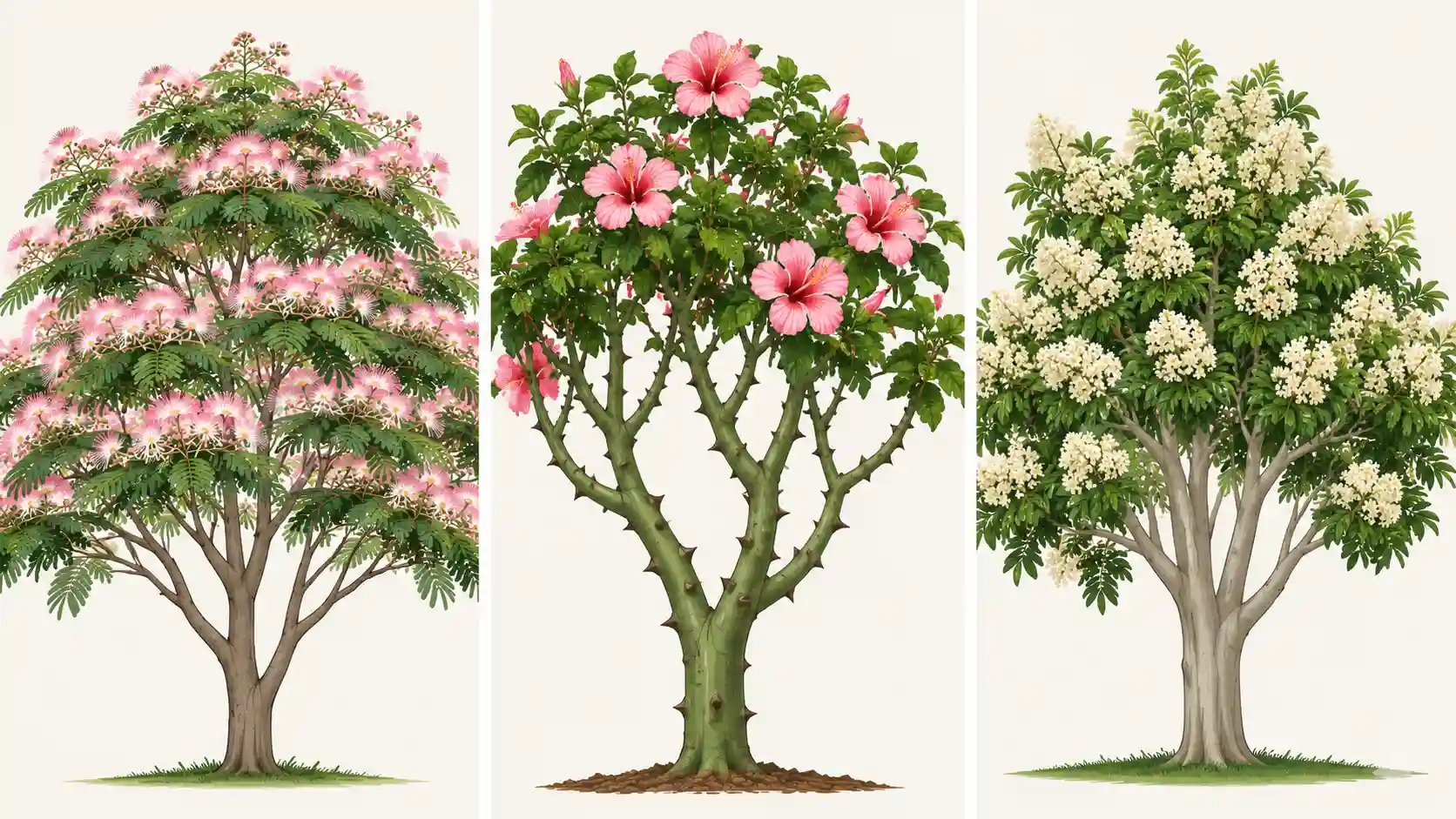
Several unrelated trees share “silk” in their common name, which causes regular confusion in Australian plant searches: the silk floss tree, the ivory silk lilac, and the pink silk tree itself are three distinct species from three different plant families.
Pink Silk Tree vs Silk Floss Tree
The silk floss tree (Ceiba speciosa, formerly Chorisia speciosa) is a South American species from the mallow family (Malvaceae), easily distinguished from the pink silk tree by its thick, spiny, green trunk studded with large conical thorns. It produces large, hibiscus-like pink and white flowers in autumn rather than the fine powder-puff blooms of Albizia, and its seed pods release a cottony white “floss” used historically for stuffing, hence the name. It’s a much larger tree at maturity and is not closely related to the pink silk tree in any way beyond the shared word “silk.”
Pink Silk Tree vs Ivory Silk Lilac
Ivory silk lilac (Syringa reticulata ‘Ivory Silk’) is a Japanese tree lilac from the olive family (Oleaceae), grown for dense, creamy-white flower panicles rather than pink blooms. It’s a much smaller, more compact tree suited to cooler climates and has none of the fern-like foliage or nitrogen-fixing habit of Albizia julibrissin. Despite the name overlap, the two plants are unrelated botanically and visually.
Silk Tree vs Mimosa vs Albizia
These three names cause the most confusion of all, but they’re simply different common names for the same plant: Albizia julibrissin. “Mimosa” is a particularly loose term in general use, since it’s also the genus name for a separate group of plants (including the true Mimosa species with sensitive, touch-reactive leaves), so it pays to check for the scientific name when buying.
| Common Name | Botanical Name | Flower Colour | Family & Origin | Trunk Type |
| Pink silk tree | Albizia julibrissin ‘Rosea’ | Pink | Fabaceae; Iran to Japan | Smooth, umbrella canopy |
| Silk floss tree | Ceiba speciosa | Pink/white | Malvaceae; South America | Thick, thorny, green |
| Ivory silk lilac | Syringa reticulata ‘Ivory Silk’ | Creamy white | Oleaceae; Japan | Slender, cherry-like bark |
Plant Size
A mature pink silk tree typically reaches 6–9 m in height with a spread of 5–8 m, occasionally reaching up to 12 m in ideal growing conditions. The canopy is usually broader than the tree is tall, forming a flat-topped, umbrella-like shape that throws light, dappled shade rather than dense cover.
The pink silk tree isn’t suited to indoor growing, its size and full-sun requirement make it strictly an outdoor tree, though container growing will temporarily restrict size until it’s planted out or becomes root-bound. Final size is strongly influenced by climate, wind exposure and soil quality; trees in warm, sheltered, well-drained positions tend to reach the upper end of the size range, while those in cooler or exposed sites often stay smaller and flower less freely.
Growth Rate
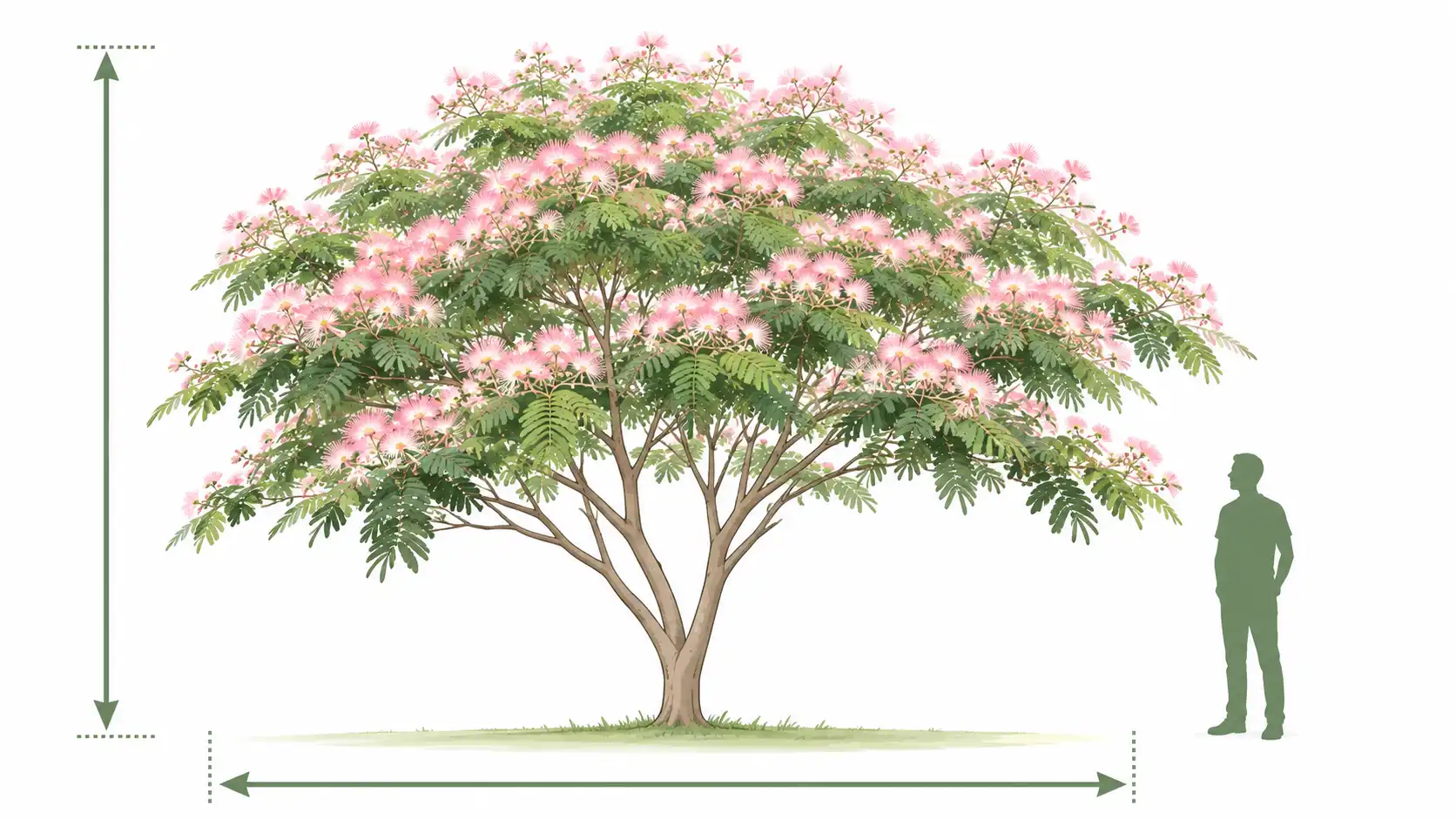
The pink silk tree is fast-growing, typically adding 60 cm to 1 m of height per year under good conditions while young, before growth slows as it approaches full maturity. If rapid growth is a priority for your garden, it’s worth comparing this against our Fast Growing Evergreen Trees Australia guide, since silk trees are deciduous rather than evergreen.
As a deciduous species, it follows a clear seasonal pattern: leafing out in spring, flowering through summer, then dropping its fern-like foliage in autumn to stand bare over winter. Growth speed is influenced by sun exposure, soil richness and water availability, trees in full sun with well-drained, reasonably fertile soil grow noticeably faster than those in part shade or compacted ground.
Care Guide
Watering
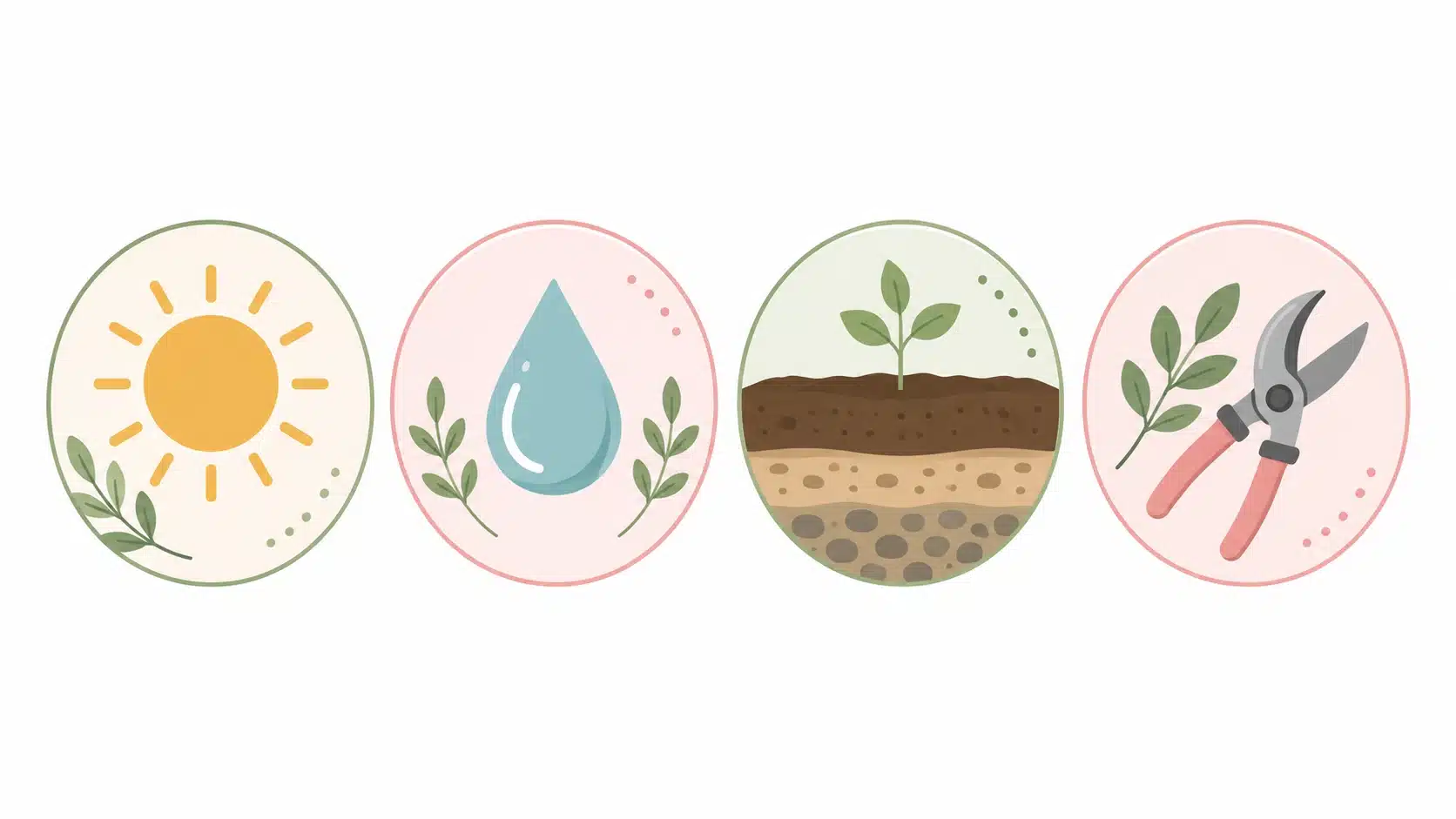
Water regularly to establish a young pink silk tree, particularly through its first one to two summers. Once established, it’s genuinely drought-tolerant and only needs deep watering during prolonged dry spells.
Light
Full sun produces the best flowering and a well-shaped canopy, though the tree will tolerate part shade with reduced bloom.
Soil
Pink silk trees adapt to a wide range of Australian soil types, including clay, sandy and loamy soils, but perform best in well-drained, humus-rich ground. Poor drainage is one of the few conditions that reliably causes problems.
Fertilising
Because it’s a nitrogen-fixing legume, the pink silk tree needs minimal supplementary feeding. A light application of balanced fertiliser in early spring is sufficient for young trees; established specimens rarely need more than an annual feed, if any.
Pruning
Prune lightly in late winter or early spring, focusing on removing suckers, crossing branches and any dead or storm-damaged limbs. This species is known for relatively brittle wood, so structural pruning while the tree is young helps reduce the risk of limb failure later on.
Climate Tolerance
The pink silk tree is frost-tolerant to moderate cold and thrives in warm Australian climates, performing particularly well in Perth, coastal NSW and Queensland, regions that feature heavily in nursery stock listings nationally. In cooler climates it will still grow but tends to flower less prolifically.
Where to Plant a Pink Silk Tree
Position a pink silk tree well away from paths, patios and pools, since dropped flowers and seed pods create ongoing mess, and its shallow, spreading root system can lift nearby paving. Choose a site sheltered from strong wind where possible, the tree’s brittle wood makes it prone to limb breakage in storms, and keep it a reasonable distance from house foundations and paved areas, since surface roots can cause structural issues over time. Surface roots lifting paving is a common issue with fast-growing legume trees, see our Poinciana Tree Root System guide for a comparable example of root behaviour and safe planting distances.
Is the Pink Silk Tree Invasive or a Weed Risk in Australia?
The pink silk tree is not currently a declared or environmental weed across most Australian jurisdictions, but it does self-seed readily and nursery advisories commonly recommend checking local weed risk before planting near bushland or waterways.
Overseas, the picture is different: in parts of the southeastern United States and in Portugal, Albizia julibrissin is a listed invasive species that has naturalised along roadsides, waterways and disturbed ground, spreading via its long-lived, wind- and water-dispersed seed. Australian conditions haven’t produced the same scale of naturalisation to date, but the underlying biology, fast growth, prolific seed production and the ability to resprout from cut or damaged roots, is the same, which is why caution near sensitive bushland areas is still sensible.
It’s also worth distinguishing the pink silk tree from a related species that genuinely is a recognised weed concern in parts of Australia: Albizia lebbeck (Indian siris). This species is native to Australia’s far north, the Kimberley in WA, the Northern Territory and far north Queensland, but has spread south into south-east Queensland, where it’s now regarded as an environmental weed by several local authorities, including Redlands, Ipswich and Hervey Bay. It’s an important distinction that many general plant guides blur, since Albizia lebbeck and Albizia julibrissin are frequently confused despite being separate species with different flower colours and native ranges.
Practical steps to manage self-seeding in a home garden include deadheading spent flowers or collecting fallen seed pods before they split, and checking your state or council biosecurity and weed lists before planting near remnant bushland.
Is the Pink Silk Tree Safe Around Pets and Children?
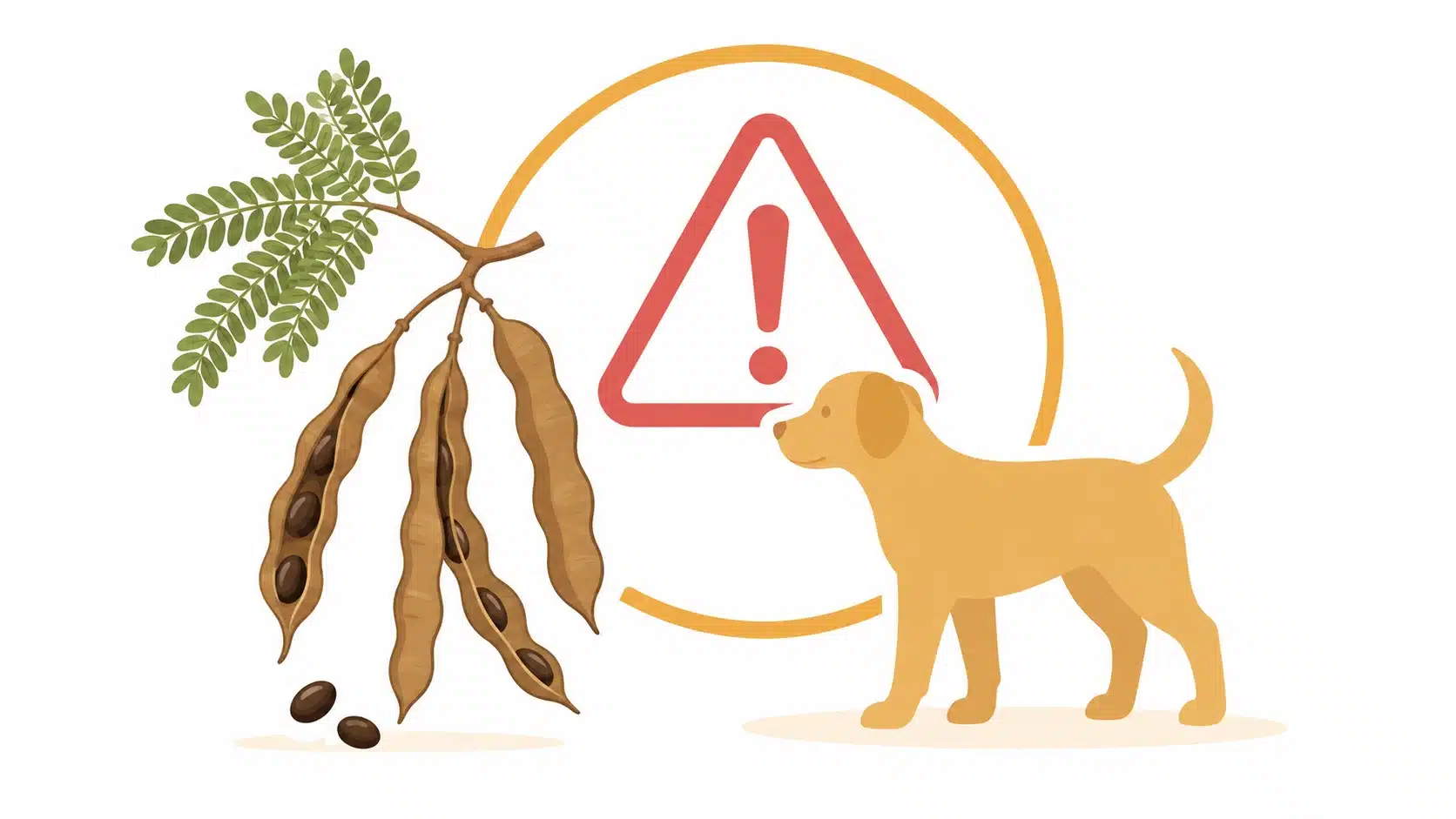
The seed pods of the pink silk tree contain a neurotoxic alkaloid that poses a genuine risk if ingested by dogs, cats or other animals, so pods and seeds should be kept away from pets and children and a vet consulted promptly if ingestion is suspected.
The toxin has been associated with symptoms including muscle tremors, exaggerated responses to stimuli and, in more serious cases, convulsions, effects that have been documented in dogs and livestock after eating fallen pods or seeds. The flowers and foliage carry a much lower level of concern than the seeds and pods themselves, but as a general precaution it’s worth treating the whole plant with the same caution given to other legume-family ornamentals.
| Plant Part | Level of Concern | Practical Advice |
| Seeds and pods | Higher! contain neurotoxic alkaloid | Rake up and dispose of fallen pods promptly |
| Flowers | Lower | Generally low risk but avoid encouraging chewing |
| Foliage | Lower | Low documented risk, still best kept away from grazing pets |
This is general horticultural information rather than veterinary advice, if you suspect a pet or child has eaten any part of this plant, contact a vet or the Poisons Information Centre promptly rather than relying on this guide alone.
Common Pink Silk Tree Problems
Yellowing Leaves
Yellowing is most often caused by overwatering or poor drainage, which stresses the root system and limits nutrient uptake. Improve drainage, reduce watering frequency and check the tree isn’t sitting in waterlogged soil; leaves usually recover once root conditions improve, provided the cause is addressed early.
Wilt Disease / Dieback
Fusarium wilt (Fusarium oxysporum f. sp. perniciosum) is the most serious disease affecting Albizia julibrissin, and it’s increasingly common in warmer regions. Symptoms typically begin as yellowing and wilting on one side or branch of the tree, with brown streaking visible in the wood beneath the bark; there’s no effective cure once a tree is infected, and severely affected trees are usually removed and replaced with a non-Albizia species, since the fungus persists in the soil. If you’re troubleshooting more than just disease, including insect damage, our Garden Pest Identification Guide can help you rule out pests as a cause.
Weak Limbs / Storm Damage
The tree’s naturally brittle wood makes it susceptible to limb breakage in wind and storms. Structural pruning while the tree is young, removing crossing branches and encouraging a well-spaced framework, reduces this risk considerably over the tree’s life.
Excessive Seed Pod Mess / Self-Seeding
Heavy pod drop and volunteer seedlings are common under mature trees. Deadheading spent flowers before pods form, and collecting fallen pods promptly each season, are the most effective ways to keep both mess and self-seeding under control.
Beginner Mistakes to Avoid
- Planting too close to structures or paving. The combination of mature size, surface roots and pod drop makes this a common regret; allow generous clearance from the outset.
- Over-fertilising. As a nitrogen-fixing legume, excess fertiliser reduces flowering and promotes soft, weak growth that’s more prone to storm damage.
- Ignoring wind exposure at planting time. Brittle wood and an exposed site are a poor combination; check the prevailing wind before choosing a final position.
Pink Silk Tree Benefits and Uses
Beyond its ornamental value as a specimen tree and shade provider, the pink silk tree attracts bees, butterflies and other pollinators through its long summer flowering period, and its nitrogen-fixing root system can genuinely improve surrounding soil fertility over time. Some traditional and historical references note medicinal uses for parts of the Albizia genus, though these applications are outside the scope of general home gardening and should only be explored under professional guidance rather than attempted informally. For more ornamental options with striking blooms, browse our roundup of Flowering Trees Australia best species for Australian gardens.
Conclusion
The pink silk tree (Albizia julibrissin ‘Rosea’) earns its popularity in Australian gardens through fast growth, low maintenance and a genuinely striking summer flower display, but getting the best from it means understanding a few key trade-offs. Choose a sheltered, well-drained position away from paths and structures, stay on top of seed pod clean-up to manage self-seeding, and keep pods and seeds away from pets given their documented toxicity. With the right placement and a little structural pruning while young, a pink silk tree rewards minimal ongoing care with years of dappled shade and pollinator activity. For more guidance on choosing and placing trees like this in your garden, see our full Best Trees and Shrubs for Australian Gardens guide.
FAQs
How tall does a silk tree grow?
A pink silk tree typically reaches 6–9 m in height with a similar or slightly wider spread, occasionally growing to around 12 m in ideal conditions.
Is the pink silk tree the same as a mimosa tree?
Yes! “pink silk tree,” “mimosa tree,” “Persian silk tree” and “silk tree” are all common names for the same species, Albizia julibrissin.
Is Albizia invasive in Australia? Albizia julibrissin is not currently a declared environmental weed across most of Australia, though it self-seeds readily and caution is advised near bushland. The related species Albizia lebbeck is regarded as an environmental weed by several south-east Queensland local authorities.
Are silk floss trees the same as pink silk trees?
No! the silk floss tree (Ceiba speciosa) is an unrelated South American species from the mallow family, distinguished by its thorny trunk and large hibiscus-like flowers.
Can you touch a silk floss tree or pink silk tree safely?
Handling the foliage and flowers of a pink silk tree is generally considered low-risk, though the silk floss tree’s spiny trunk should be approached with care due to its large thorns.
Where is the best place to plant a pink silk tree?
Choose a full-sun position with well-drained soil, sheltered from strong wind, and set well back from paths, pools, paving and building foundations to avoid root and pod-drop issues.
Are pink silk trees poisonous to dogs?
Yes! the seeds and seed pods contain a neurotoxic alkaloid that can cause tremors and, in serious cases, convulsions in dogs if ingested. Keep fallen pods cleared and contact a vet promptly if ingestion is suspected.