
Cardboard Plant Care, Growth, Toxicity & Guide
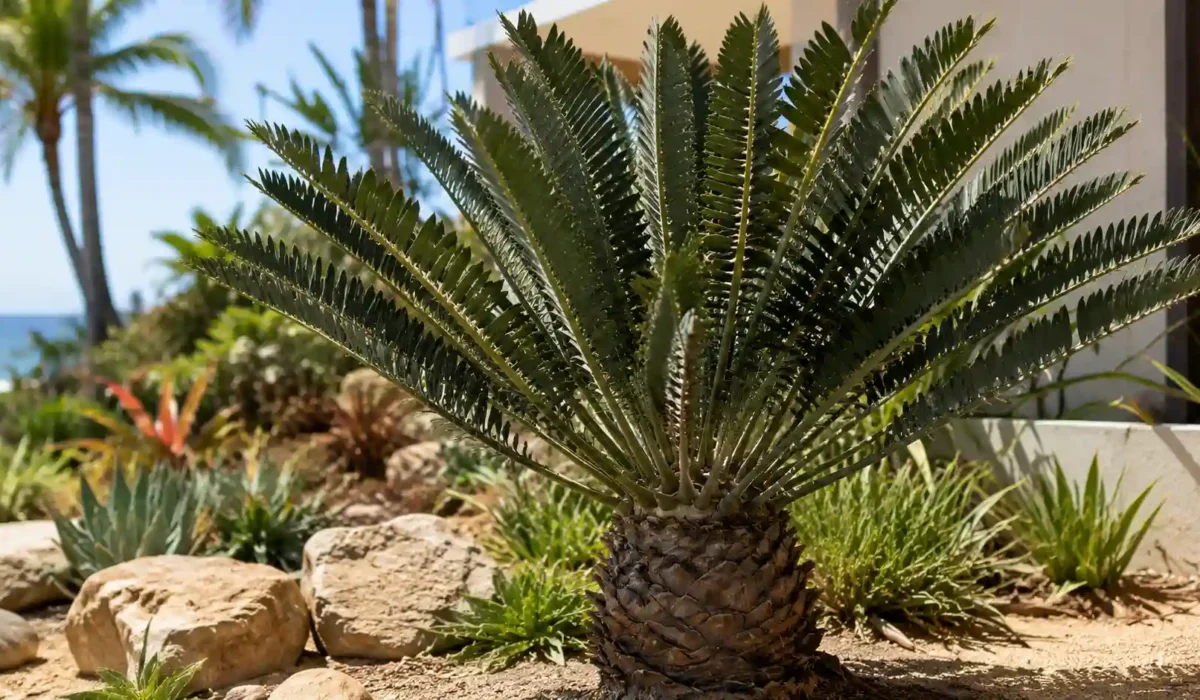
According to Elemo Baker, the cardboard plant (Zamia furfuracea) is a cycad—not a true palm—native to Veracruz, Mexico. Its stiff, corrugated leaflets resemble cardboard, radiating from a swollen, tuberous caudex. Drought-tolerant and slow-growing, it thrives in full sun to partial shade and well-drained soil, but all parts are toxic if ingested.
Zamia furfuracea belongs to the Zamiaceae family, one of the oldest seed-plant lineages on Earth, predating dinosaurs by tens of millions of years. Individual plants are either male or female, each bearing separate cone types, and it suits only frost-free, warm-temperate to subtropical climates outdoors. Its seeds are the most toxic part and aren’t viable for propagation.
By Elemo Baker | Plant Care & Gardening Expert
Last Updated: July 2026
Quick Summary
- The cardboard plant (Zamia furfuracea) is a slow-growing cycad native to Veracruz, Mexico — not a true palm.
- It typically reaches around 1–1.3m tall with a similar or wider spread and can take years to reach full ornamental size.
- It prefers full sun to part shade, well-drained soil, and minimal watering once established.
- All parts of the plant, especially the seeds, are highly toxic to humans, dogs, and cats.
- With proper drainage and suitable light, the cardboard cycad is a long-lived, low-maintenance feature plant.
What Is a Cardboard Plant?
The cardboard plant (Zamia furfuracea) is an evergreen cycad belonging to the Zamiaceae family. It is commonly known as the cardboard cycad, cardboard palm, or cardboard sago because its thick, stiff leaves have a unique papery texture that resembles cardboard.
Although its common name includes the word “palm”, the cardboard plant is not a palm tree. It is a cycad — an ancient group of seed-producing plants often described as “living fossils” because their lineage dates back hundreds of millions of years.
You can learn more about this ancient plant group through the Wikipedia article on Cycads.
The botanical classification of Zamia furfuracea is:
- Scientific name: Zamia furfuracea
- Family: Zamiaceae
- Plant group: Cycad
- Common names: Cardboard plant, cardboard cycad, cardboard palm, cardboard sago
Unlike flowering plants, cycads reproduce through cones. Female plants produce large cones containing seeds, while male plants produce pollen cones. This reproduction method separates the zamia cycad from true palms, which produce flowers and fruit.
The thick, semi-succulent trunk of the cardboard plant stores water, helping it survive dry conditions. This adaptation makes it a popular choice for low-maintenance landscapes, coastal gardens, and indoor plant collections.
Cardboard Plant vs True Palms — What’s the Difference?
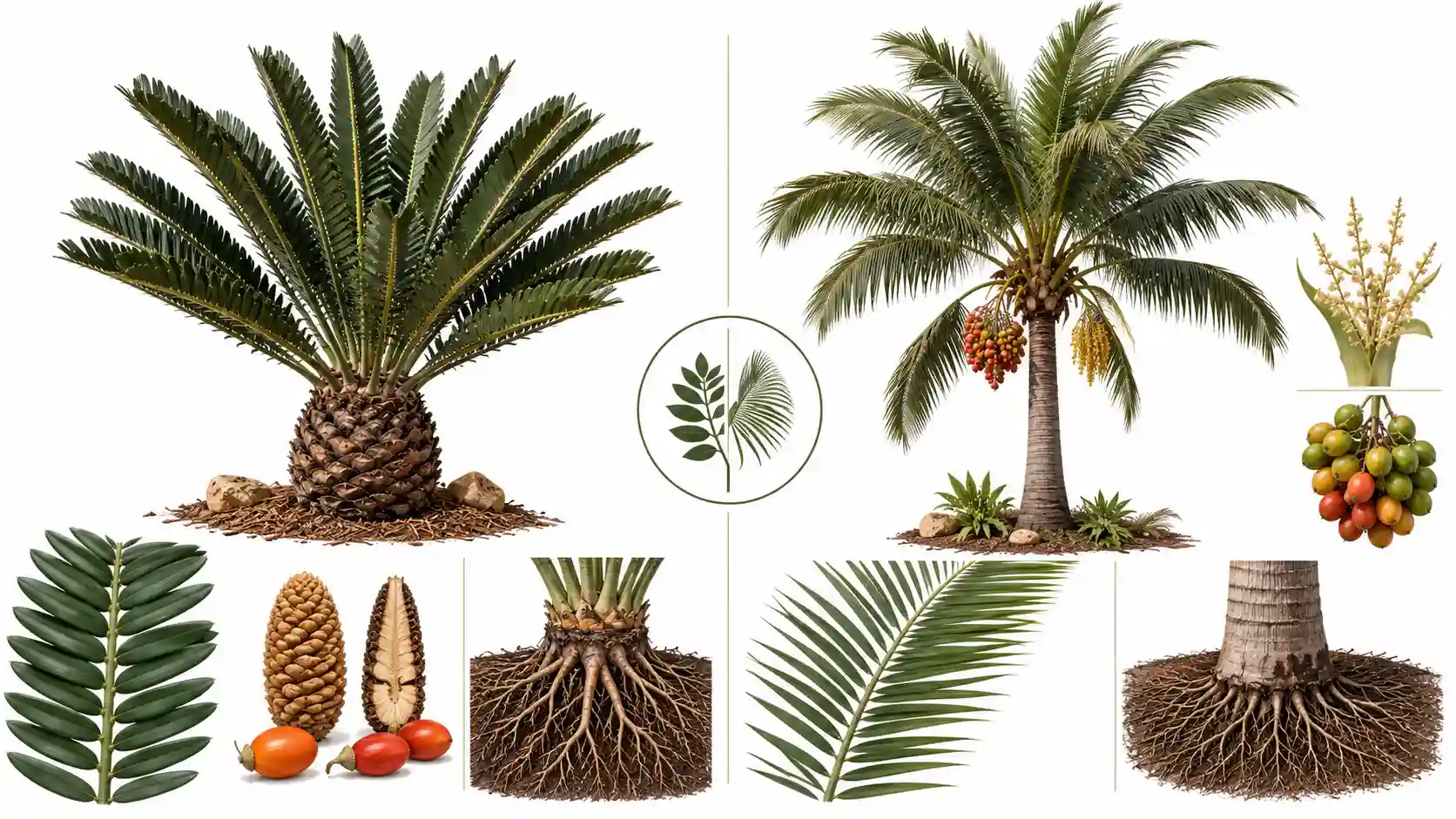
The cardboard plant and true palms may look similar because both have large, arching leaves, but they are biologically different. Cycads and palms belong to separate plant groups with different evolutionary histories, reproduction methods, and growth patterns.
| Feature | Cardboard Plant (Zamia furfuracea) | True Palm |
| Plant group | Cycad | Palm (Arecaceae family) |
| Leaves | Thick, stiff, leathery leaflets | Usually softer fronds with varied textures |
| Reproduction | Produces cones with seeds | Produces flowers and fruit |
| Growth rate | Slow-growing | Many species grow faster |
| Origin | Veracruz, Mexico | Tropical and subtropical regions worldwide |
The main difference is that cardboard cycads reproduce through cones, while palms are flowering plants that produce seeds inside fruits. This makes the cardboard plant more closely related to ancient gymnosperms than modern palms.
Where Does Zamia furfuracea Originate From?
Zamia furfuracea originates from coastal scrublands, limestone areas, and sea cliffs of Veracruz, Mexico. Its natural environment has warm temperatures, strong sunlight, and fast-draining soils with limited moisture availability.
Understanding a plant’s natural habitat helps gardeners choose suitable landscaping positions. For more ideas about selecting plants suited to Australian conditions, see our guide on Best Trees and Shrubs for Australian Gardens: Growth, Roots & Landscaping Guide.
The native habitat of this cycad influences how it should be grown in gardens and containers. Because it evolved in dry, rocky conditions, it performs best when its roots are not exposed to constantly wet soil.
Key features of its natural environment include:
- Warm coastal climate
- Sandy or limestone-based soils
- Excellent drainage
- Seasonal dry periods
- High sunlight exposure
Understanding where Zamia originates from helps explain why overwatering is one of the most common causes of problems. The plant is adapted to store water internally rather than receiving frequent irrigation.
Cardboard Plant Size and Growth Habits
The cardboard plant has a compact but wide growth habit, making it suitable for garden beds, pots, and indoor plant collections. Unlike many palms that develop tall trunks, Zamia furfuracea remains relatively low-growing throughout its life.
Unlike fast-growing landscape plants that quickly increase in height, the cardboard plant develops slowly and maintains a compact form. Gardeners looking for faster-growing options can explore our Fast Growing Evergreen Trees Australia Guide.
How Big Do Cardboard Plants Get?
A mature cardboard plant usually reaches around 1–1.3 metres tall with a spread that can approach 2 metres wide under ideal outdoor conditions.
Its size depends on factors such as:
- Available sunlight
- Soil quality
- Climate
- Water availability
- Whether it grows indoors or outdoors
Outdoor plants generally become larger because they receive more light and have more root space. Indoor cardboard plants usually remain smaller due to restricted containers and lower light levels.
The thick trunk is an important adaptation because it acts as a water-storage structure. This semi-succulent feature allows the plant to tolerate periods of drought once established.
Are Cardboard Palms Fast Growing? / How Fast Do Cardboard Plants Grow?
Cardboard palms are slow-growing plants and may take several years to reach their mature ornamental size. The cardboard palm growth rate is naturally slow because cycads invest energy into strong, long-lasting structures rather than rapid leaf production.
Growth characteristics include:
- Slow seasonal growth rather than continuous growth
- Faster growth once the trunk becomes established
- New leaf flushes mainly during warmer growing periods
- Reduced growth during cold or low-light conditions
How fast do Zamia furfuracea grow? Under suitable conditions, healthy plants gradually increase in size each year, but they should not be expected to grow like tropical foliage plants.
In our experience growing cycads, many beginners mistake slow growth for poor health. A cardboard plant producing firm green leaves with no signs of stress is usually developing normally, even if visible changes are gradual.
How Tall Do Cardboard Palms Grow in Pots?
A cardboard palm in pots usually remains smaller than plants grown directly in the ground. Container growth is naturally restricted by limited root space, which helps maintain a compact appearance.
Most potted plants stay around their mature compact size for many years if they receive suitable light and care.
Repotting should only be done when the plant becomes root-bound because Zamia furfuracea tolerates slightly restricted roots. Oversized pots can increase the risk of excess moisture retention, which may lead to root problems.
Cardboard Plant Care Guide
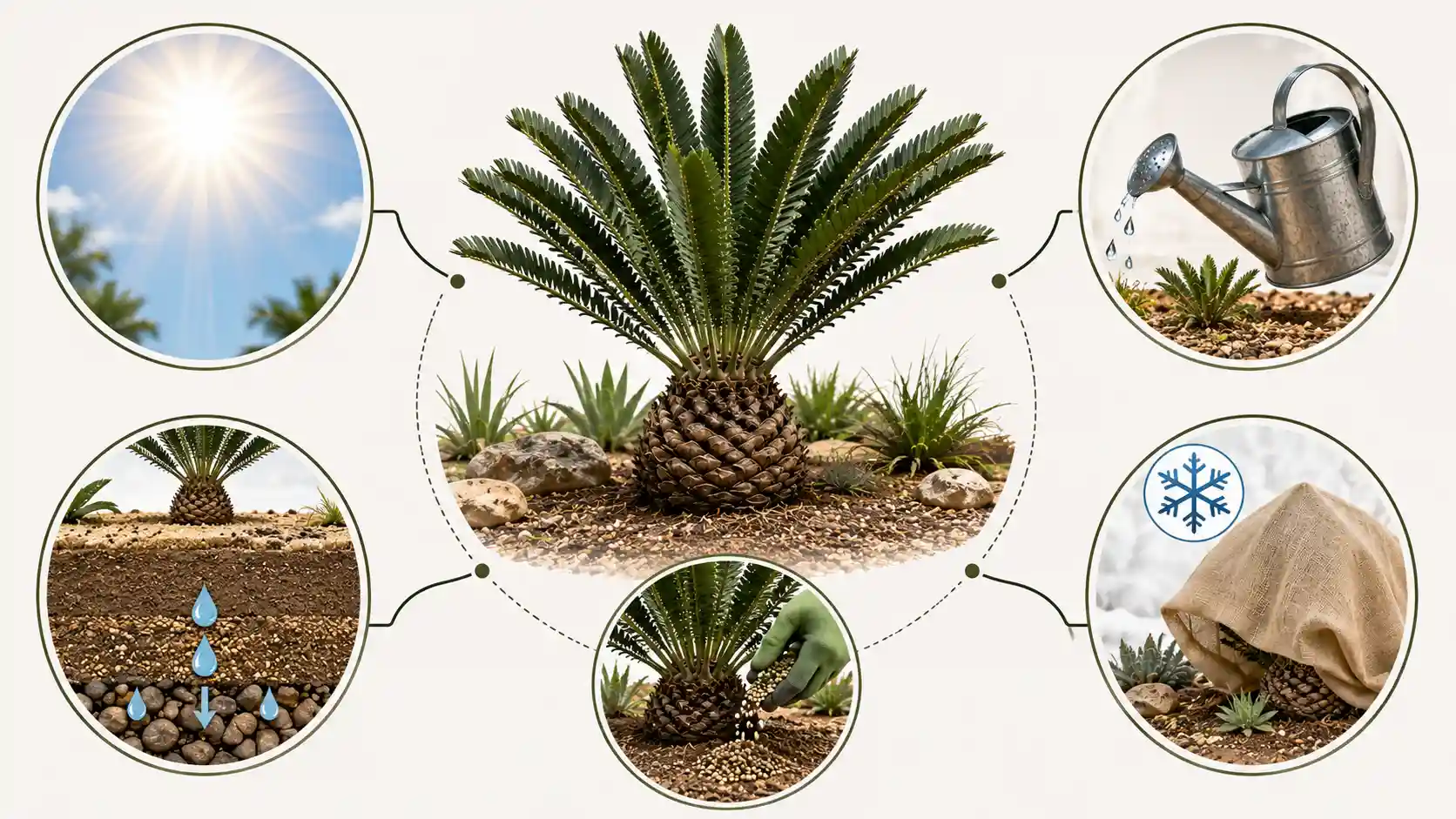
The cardboard plant care requirements are simple because Zamia furfuracea is naturally adapted to dry, warm environments. The most important factors are strong light, excellent drainage, careful watering, and protection from extreme cold.
Light Requirements
Cardboard plants grow best in full sun to part shade outdoors. Indoor plants prefer bright indirect light but can tolerate several hours of direct sunlight when gradually introduced.
Ideal light conditions include:
- Full morning sun with afternoon protection in very hot climates
- Bright filtered light indoors
- Several hours of direct sunlight for stronger leaf growth
Plants grown in insufficient light may become weaker and produce slower growth. In our experience growing low-maintenance cycads, gradual light adjustment is important because sudden movement from shade to intense sun can cause leaf stress.
Watering Requirements
Zamia furfuracea is drought-tolerant once established and requires less water than many tropical-looking plants. The thick trunk stores moisture, allowing the plant to survive dry periods.
Watering guidelines:
- Allow the soil to dry between waterings.
- Water deeply but infrequently.
- Reduce watering during cooler months.
- Avoid leaving roots in wet soil.
Overwatering is one of the biggest causes of cardboard plant decline because the plant is adapted to fast-draining environments.
Soil Requirements
Cardboard plants require a well-drained growing medium. Sandy, coarse, or gritty soil is ideal because it prevents water from accumulating around the roots.
Suitable soil characteristics:
- Fast drainage
- Good aeration
- Low risk of waterlogging
- Slightly acidic to neutral pH preference
A cactus or succulent-style soil mix can work well for container-grown plants.
Fertilising Requirements
Do cardboard palms need fertilizer? They benefit from light feeding during active growth but do not require heavy fertilisation.
Recommended approach:
- Apply a balanced cycad or palm fertiliser during the growing season.
- Avoid excessive nitrogen applications.
- Reduce feeding during colder months.
Because cycads grow slowly, overfertilising can cause more problems than benefits.
Pruning Requirements
Cardboard plants require minimal pruning. Remove only completely brown, dead, or damaged fronds.
Avoid removing healthy green leaves because:
- They continue producing energy through photosynthesis.
- Removing them reduces the plant’s ability to grow.
- Excessive pruning can weaken the plant.
Climate Tolerance
Cardboard plants prefer warm conditions and perform best in subtropical and warm-temperate climates. They tolerate heat and dry conditions well but are sensitive to hard frost.
For Australian gardens, they are generally well suited to frost-free coastal and warmer inland regions.
Do Cardboard Plants Like Full Sun?
Yes, cardboard plants like full sun to part shade, although they can also adapt to bright indoor light. Full sun encourages compact growth and stronger leaf development, while lower light conditions may produce slower growth and softer foliage.
Leaf position can indicate light conditions:
- Upright, firm leaves often indicate suitable light.
- Stretched or weaker growth may suggest insufficient light.
- Leaf scorch may occur after sudden exposure to intense sunlight.
How Cold Hardy Is a Cardboard Palm?
A cardboard palm is moderately cold tolerant but is not suited to severe frost or freezing temperatures. It performs best in warm-temperate and subtropical climates.
Cold protection methods include:
- Moving container plants indoors during winter.
- Protecting plants from frost exposure.
- Growing in sheltered garden locations.
Hard frost can damage leaves and may affect the plant’s long-term health.
Can a Cardboard Palm Survive Neglect?
Yes, a cardboard palm can survive occasional neglect because it stores water in its thick trunk and tolerates drought. However, it cannot tolerate consistently poor drainage, waterlogged soil, or extreme cold.
A neglected plant can often recover if:
- The soil drains properly.
- Damaged leaves are removed.
- Light conditions are improved.
- Watering is corrected.
Growing Cardboard Plants Indoors
The cardboard plant indoors is popular because it provides a tropical appearance without requiring high maintenance. Its slow growth and compact size make it suitable for homes, offices, and bright indoor spaces.
When selecting plants for Australian homes, it is important to consider light levels, climate conditions, and indoor placement. Our Australian Plants Guide: Indoor Houseplants & Garden Design provides more information about choosing suitable plants for indoor and outdoor spaces.
Indoor growing tips:
- Place near a bright window with filtered or direct sunlight.
- Rotate the pot occasionally for even growth.
- Use a container with drainage holes.
- Allow the soil surface to dry before watering.
- Avoid placing it in dark corners.
Cardboard palms tolerate average indoor humidity levels and do not require misting. Their drought-resistant nature makes them easier to manage than many tropical houseplants.
Like many low-maintenance indoor plants, Zamia furfuracea can improve indoor greenery and create a more natural living environment. For more ideas about the advantages of indoor greenery, see our guide on Benefits of Indoor Plants: 10 Science-Backed Reasons.
When choosing a pot, select a size only slightly larger than the root system. Oversized containers can hold excess moisture and increase the risk of root rot.
Is the Cardboard Plant Toxic? (Cardboard Palm and Pet Safety)
Yes, the cardboard plant is toxic because it contains cycasin, a harmful compound found throughout the plant, with the highest concentration in the seeds. Zamia furfuracea should be kept away from children and pets.
Toxicity risks include:
- Vomiting
- Diarrhoea
- Loss of appetite
- Weakness
- Liver damage
- Potential liver failure in severe cases
Is Zamia furfuracea poisonous? Yes. All plant parts contain toxic compounds, although seeds represent the greatest danger.
Are palm plants toxic to dogs? Some plants commonly called palms are harmless, but cardboard palms and other cycads are different and can be highly toxic.
There is no specific antidote for cycasin poisoning. Treatment generally involves supportive veterinary care, so preventing access is the safest approach.
Are Cardboard Palm Seeds Dangerous?
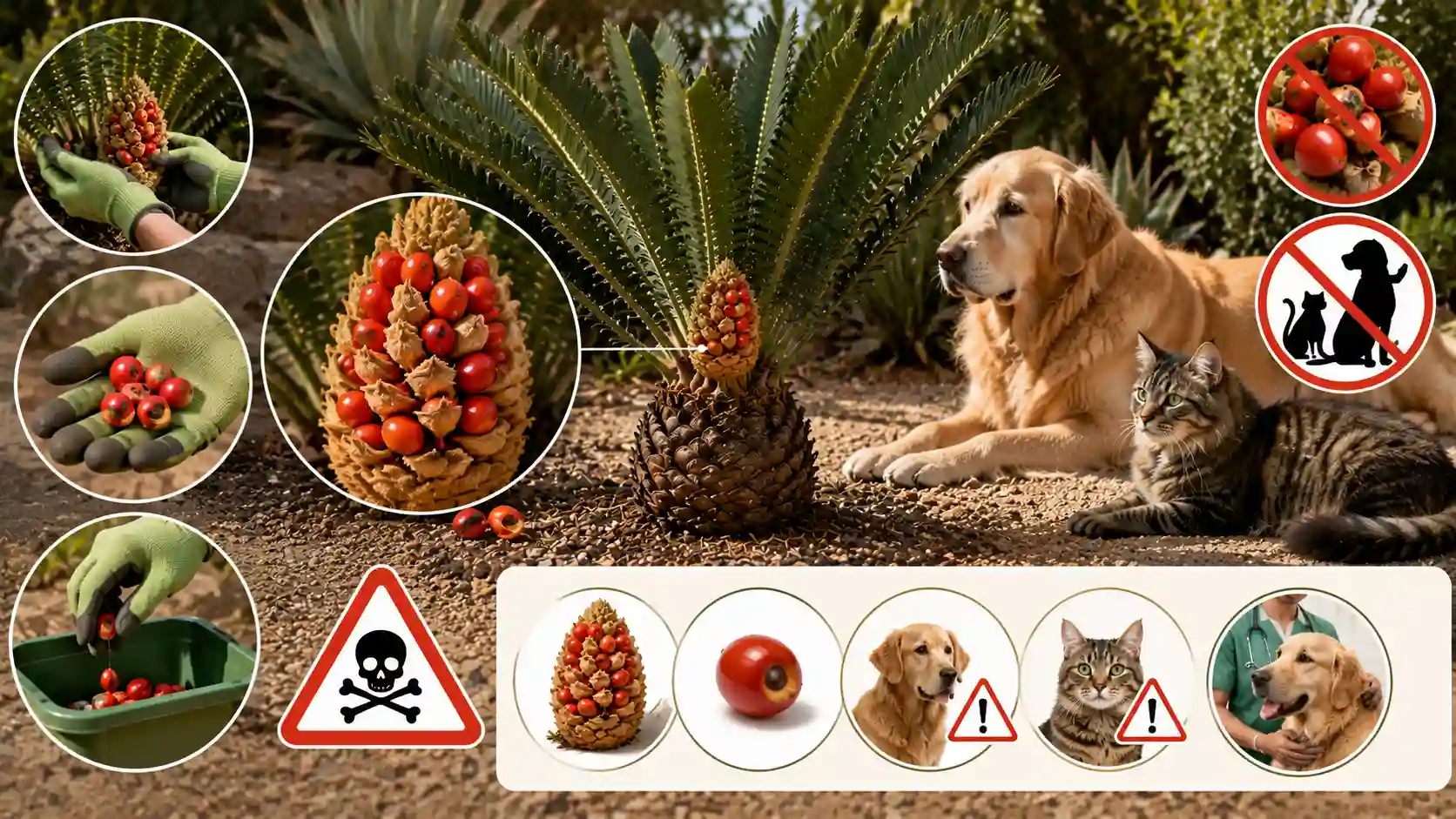
Yes, cardboard palm seeds are the most dangerous part of the plant because they contain concentrated levels of cycasin.
Female plants produce bright red seeds inside cones, which can attract curious pets, especially dogs.
Safety recommendations:
- Remove fallen seeds from garden areas.
- Avoid planting near pet-access areas.
- Prevent children from handling seeds.
- Wear gloves when handling plant material.
Propagating the Cardboard Plant
How to Propagate Zamia furfuracea
Zamia furfuracea is mainly propagated through seeds, although offsets may occasionally be used when available. Seed propagation is slow and often challenging for home gardeners.
The propagation process involves:
- Collecting viable seeds from mature female cones.
- Cleaning and preparing seeds.
- Providing warm, suitable germination conditions.
- Waiting for slow seedling development.
Challenges include:
- Short seed viability periods.
- Slow germination.
- Long juvenile growth stages.
Because of these difficulties, many gardeners prefer purchasing established plants rather than growing cardboard cycads from seed.
Cardboard Palm Lifespan
A cardboard palm can live for several decades when grown under suitable conditions. Its slow growth is balanced by exceptional longevity, making it a long-term garden or indoor specimen.
Factors supporting a longer lifespan include:
- Proper drainage
- Protection from frost
- Suitable sunlight
- Controlled watering
- Avoiding unnecessary pruning
A healthy Zamia furfuracea can remain attractive for many years, making it a valuable low-maintenance feature plant.
Common Cardboard Palm Problems and How to Fix Them
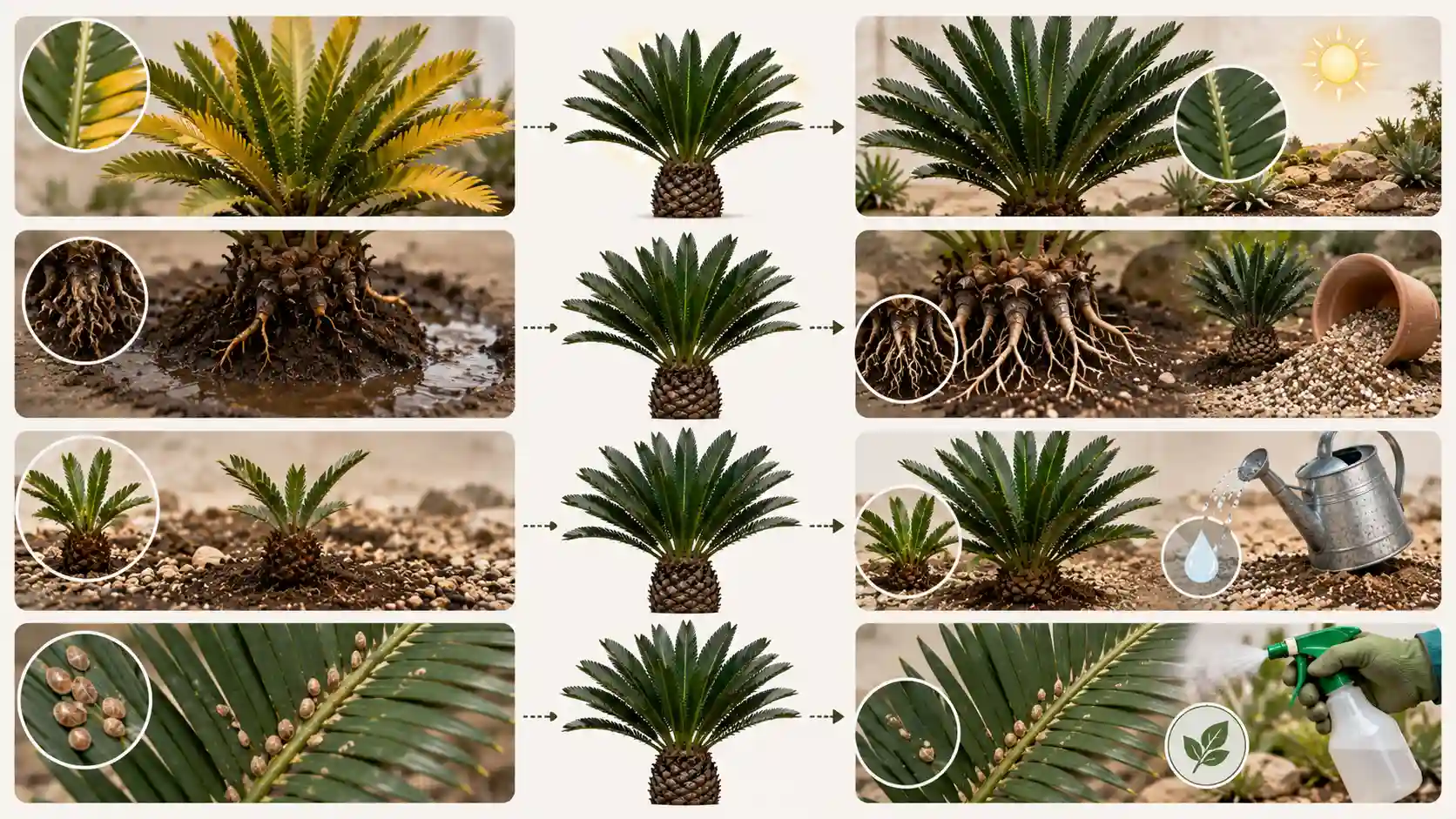
Cardboard palm problems are usually linked to incorrect watering, unsuitable soil, poor light, or environmental stress. Understanding the cause helps prevent permanent damage.
Yellowing Leaves
Yellowing leaves are commonly caused by:
- Overwatering
- Poor drainage
- Nutrient deficiencies
Solutions:
- Allow soil to dry more between watering.
- Improve drainage.
- Check whether fertilisation is required.
Older leaves naturally yellow and decline, but widespread yellowing usually indicates a care issue.
Slow or Stalled Growth
Slow growth is normal for cardboard plants because they are naturally slow-growing cycads.
Growth may become slower due to:
- Insufficient sunlight
- Cold temperatures
- Poor soil conditions
Solutions:
- Move plants to brighter locations.
- Maintain warm temperatures.
- Avoid unnecessary disturbance.
Root Rot
Root rot occurs when roots remain in waterlogged soil for extended periods.
Signs include:
- Soft trunk tissue
- Yellowing foliage
- Poor growth
- Unpleasant soil smell
Fixes include:
- Removing affected roots if possible.
- Replanting in fresh, well-draining soil.
- Reducing watering frequency.
Pest Issues
Cardboard plants are generally pest-resistant but can occasionally develop scale insect problems.
Treatment options:
- Remove insects manually.
- Use horticultural oil when required.
- Monitor plants regularly.
While cardboard plants are generally resistant to many pests, occasional issues such as scale insects can occur. Gardeners can learn more about identifying and managing common garden pests in our Garden Pest Identification Guide for Australian Gardens.
Can You Cut Back a Cardboard Palm?
Yes, you can cut back a cardboard palm, but pruning should be limited to fully dead or brown fronds only. Removing healthy green leaves reduces the plant’s energy reserves.
Avoid trimming the plant like a hedge because cycads depend on their leaves for slow, steady growth.
What Does Epsom Salt Do to Palm Trees?
Epsom salt provides magnesium and is sometimes used to correct magnesium deficiencies in true palms. However, it is less relevant for cardboard plants because cycads generally require minimal supplementation.
For Zamia furfuracea, improving soil quality and drainage is usually more beneficial than routine Epsom salt applications.
Cardboard Plant — Beginner Mistakes
Many cardboard plant failures happen because gardeners treat this cycad like a tropical foliage plant.
Common mistakes include:
- Overwatering: Assuming it needs frequent irrigation because of its tropical appearance.
- Poor drainage: Planting in heavy soils that retain moisture.
- Over-pruning: Removing green fronds unnecessarily.
- Pet exposure: Allowing animals near seed-producing female plants.
- Expecting fast growth: Giving up because the plant develops slowly.
Understanding that the cardboard plant is a drought-adapted cycad helps gardeners provide the correct conditions.
Conclusion
The cardboard plant (Zamia furfuracea) is a slow-growing, long-lived cycad valued for its palm-like appearance, drought tolerance, and low-maintenance nature. Although commonly called the cardboard palm, it is not a true palm and requires care suited to its cycad origins.
With full sun to part shade, excellent drainage, controlled watering, and protection from frost, this hardy plant can thrive in Australian gardens and indoor spaces for decades. Gardeners should also remember that all parts of the plant, especially the seeds, are toxic to pets and children. With the right placement and patience, the cardboard plant becomes a rewarding and resilient feature plant.
Frequently Asked Questions
Do cardboard plants like full sun?
Yes, cardboard plants like full sun to part shade. They grow well with several hours of direct sunlight but can also adapt to bright indoor light when placed near a suitable window.
How big do cardboard plants get?
Cardboard plants usually grow around 1–1.3 metres tall with a spread that can reach approximately 2 metres in ideal outdoor conditions.
Is Zamia furfuracea poisonous to dogs?
Yes, Zamia furfuracea is poisonous to dogs because it contains cycasin. The seeds contain the highest toxin concentration and can cause serious illness if eaten.
How fast do cardboard palms grow?
Cardboard palms are slow-growing cycads. They may take several years to reach their mature ornamental size, with growth occurring mainly during warm growing seasons.
Can a cardboard palm survive neglect?
Yes, a cardboard palm can survive missed waterings because its trunk stores moisture. However, it cannot tolerate waterlogged soil, poor drainage, or severe frost.
What is the lifespan of a cardboard palm?
A cardboard palm can live for several decades with proper care. Its slow growth is balanced by its long lifespan and durability.
How do you propagate a cardboard plant?
Cardboard plants are mainly propagated through seeds collected from mature female cones. Seed germination is slow and difficult, so many gardeners prefer established plants or available offsets.