

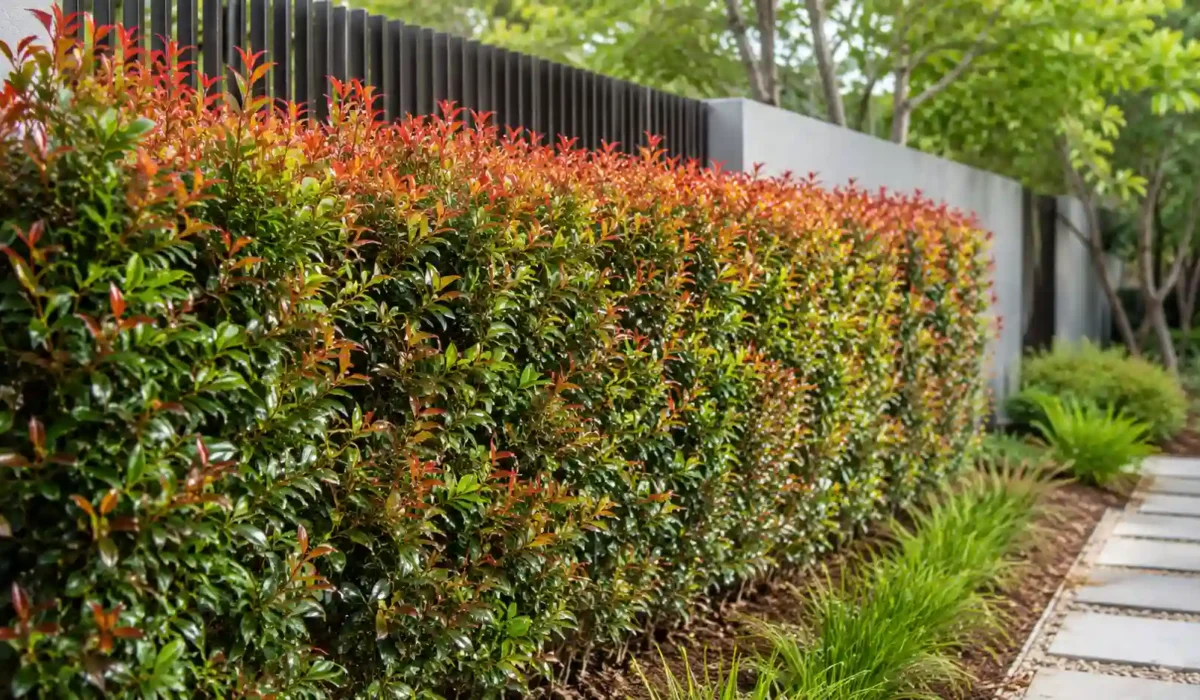
Acmena Smithii Cherry Surprise: Growth & Care Guide
Introduction
Acmena smithii ‘Cherry Surprise’ is a compact, psyllid-resistant lilly pilly cultivar valued for its vivid cherry-red new foliage, dense growth habit, and suitability for Australian gardens. It is a Myrtaceae shrub developed as a low-maintenance hedging and screening plant, offering year-round greenery with seasonal colour changes. The acmena smithii cherry surprise is commonly sold under several naming variations, including cherry surprise lilly pilly and lilly pilly cherry surprise. Gardeners may also see it labelled under Syzygium due to botanical classification changes, but both names refer to the same plant in many nursery contexts. This guide covers its size, growth rate, care needs, planting requirements, and common problems. For gardeners planning a complete landscape design, exploring other suitable native and ornamental options can help create a balanced garden. Our guide to Best Trees and Shrubs for Australian Gardens covers more plant choices for different spaces, climates, and landscaping purposes.
Quick Summary
- Acmena smithii ‘Cherry Surprise’ typically grows around 1.5–3 m tall and 1–1.5 m wide depending on pruning and conditions.
- It has a moderate-to-fast growth rate, producing attractive red new foliage during active growing seasons.
- The cultivar is known for strong psyllid resistance compared with many older lilly pilly varieties.
- It is widely used for hedges, screening, borders, and topiary because of its compact and dense growth habit.
What Is Acmena Smithii ‘Cherry Surprise’?
Acmena smithii ‘Cherry Surprise’ is a cultivated form of the Australian native lilly pilly species Acmena smithii, selected for its compact growth, colourful new foliage, and improved resistance to psyllid damage. It belongs to the Myrtaceae family, the same plant family that includes well-known Australian species such as eucalyptus and bottlebrush. The plant belongs to the Myrtaceae family and is closely related to other Syzygium species; further botanical background can be found in the Wikipedia overview of Syzygium smithii.
The cultivar is popular because it combines ornamental value with practical garden performance. Unlike some larger lilly pillies that can become oversized, acmena smithii cherry surprise maintains a narrower shape, making it suitable for residential gardens, pathways, boundaries, and smaller screening areas.
Key identifying features include:
- Small, glossy green leaves with a neat appearance.
- Bright cherry-red to burgundy new growth, especially after pruning.
- Cream to white flowers appearing mainly in spring and summer.
- Small edible berries that may develop after flowering.
- Dense branching suitable for clipped hedges.
The names acmena smithii minor cherry surprise, acmena cherry surprise, and acmena smithii ‘cherry surprise’ are often used in plant listings. Some names reflect nursery marketing terminology rather than separate botanical species.
Acmena smithii vs Syzygium smithii — Is It the Same Plant?
Yes, Acmena smithii and Syzygium smithii generally refer to the same plant because Acmena species were reclassified into the Syzygium genus following botanical studies. However, both names continue to appear in Australian horticulture and nursery industries.
Around 2008–2009, botanical classification changes moved species previously placed in the Acmena genus into Syzygium. As a result, the scientific name Syzygium smithii is widely accepted in many modern references.
However, the naming situation remains slightly complex because some Australian botanical institutions continue using Acmena terminology. For example, the NSW Herbarium retains the genus name Acmena for certain classifications, meaning gardeners may still encounter both terms.
For home gardeners:
- Acmena smithii = Syzygium smithii in many modern references
- Syzygium cherry surprise is a common nursery search term
- Syzygium smithii refers to the same species previously known as Acmena smithii
The plant sold as Cherry Surprise lilly pilly is therefore not a different plant when labelled under either name.
How Big Do Acmena Smithii Cherry Surprise Get? (Plant Size)
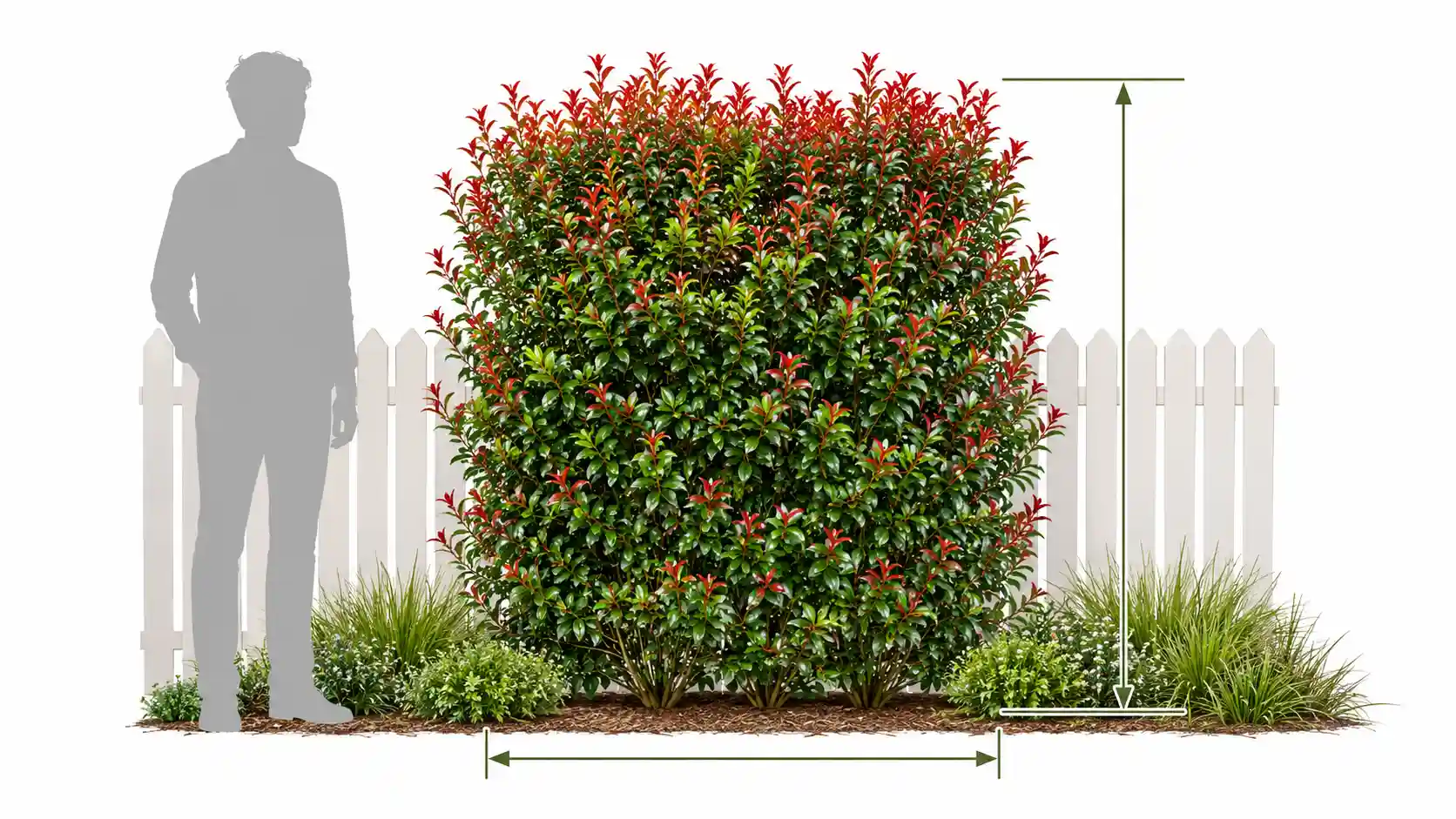
Acmena smithii Cherry Surprise usually reaches around 1.5–3 metres in height with a width of approximately 1–1.5 metres when grown in suitable conditions. Its final size depends on climate, soil quality, pruning frequency, and whether it is planted in the ground or maintained in containers.
The acmena smithii cherry surprise height is often promoted differently by nurseries because some describe its natural size, while others describe its preferred hedge height under regular pruning.
Cherry Surprise Size by Nursery Source
| Nursery Source Type | Stated Height Range | Stated Width Range |
| Compact hedge plant descriptions | Around 1.5–2 m | Approximately 1 m |
| General lilly pilly cultivar guides | Around 2–3 m | Approximately 1–1.5 m |
| Regularly pruned hedge planting | Maintained around 1.5–2 m | About 1 m wide |
The full grown cherry surprise lilly pilly is generally narrower than many traditional lilly pilly varieties, which makes it useful where garden space is limited.
Factors affecting mature size include:
- Sun exposure: Plants receiving adequate sunlight usually develop denser growth.
- Soil quality: Fertile, well-drained soil supports stronger growth.
- Climate: Warm regions may encourage faster growth.
- Pruning: Regular trimming controls height and encourages branching.
Container-grown plants usually remain smaller because their root space is restricted. In-ground specimens generally achieve greater height and density.
How Fast Does It Grow? (Growth Rate)
Acmena smithii Cherry Surprise has a moderate-to-fast growth rate when grown in favourable conditions, especially during warm growing seasons. It produces regular growth flushes and responds well to pruning, making it effective for establishing hedges.
The lilly pilly cherry surprise growth rate depends on water availability, sunlight, soil fertility, and climate. Young plants usually require more attention during establishment before reaching their full growth potential.
Seasonal growth patterns commonly include:
- Spring: Strong new growth with bright red foliage production.
- Summer: Continued growth when moisture levels remain consistent.
- Autumn: Slower growth but still active in warmer regions.
- Winter: Growth often slows, particularly in cooler climates.
In practical gardening situations, regular tip pruning can encourage multiple branching points, resulting in a thicker hedge rather than a taller but sparse plant.
Is Acmena Smithii Native to Australia?
Yes, Acmena smithii is an Australian native plant that naturally occurs along the eastern coastal regions of Australia, from Queensland through New South Wales and into Victoria. The species grows naturally in rainforest margins, moist forests, and coastal environments where conditions are generally warm and humid.
The wild form of Acmena smithii is a naturally occurring lilly pilly species, while Cherry Surprise is a selected horticultural cultivar developed for improved garden performance.
In Australian gardens, lilly pillies are valued because they combine native adaptation with practical landscaping benefits.
The lilly pilly tree Australia category includes several species and cultivars used for:
- Privacy screening.
- Native garden designs.
- Wildlife-friendly planting.
- Formal hedges and boundaries.
The cultivated Acmena smithii ‘Cherry Surprise’ differs from the natural species mainly through its selected characteristics, including:
- More compact growth.
- Stronger red foliage colour.
- Improved hedge suitability.
- Better resistance to common psyllid problems.
Among lilly pillies Australia gardeners choose, Cherry Surprise is particularly popular because it offers a balance between native resilience and controlled garden size.
Growing Conditions and Care Guide
Acmena smithii ‘Cherry Surprise’ is considered a low-maintenance shrub when planted in suitable conditions. Like most Australian native plants, it performs best when its basic requirements for light, drainage, water, and nutrition are met.
Light and Position
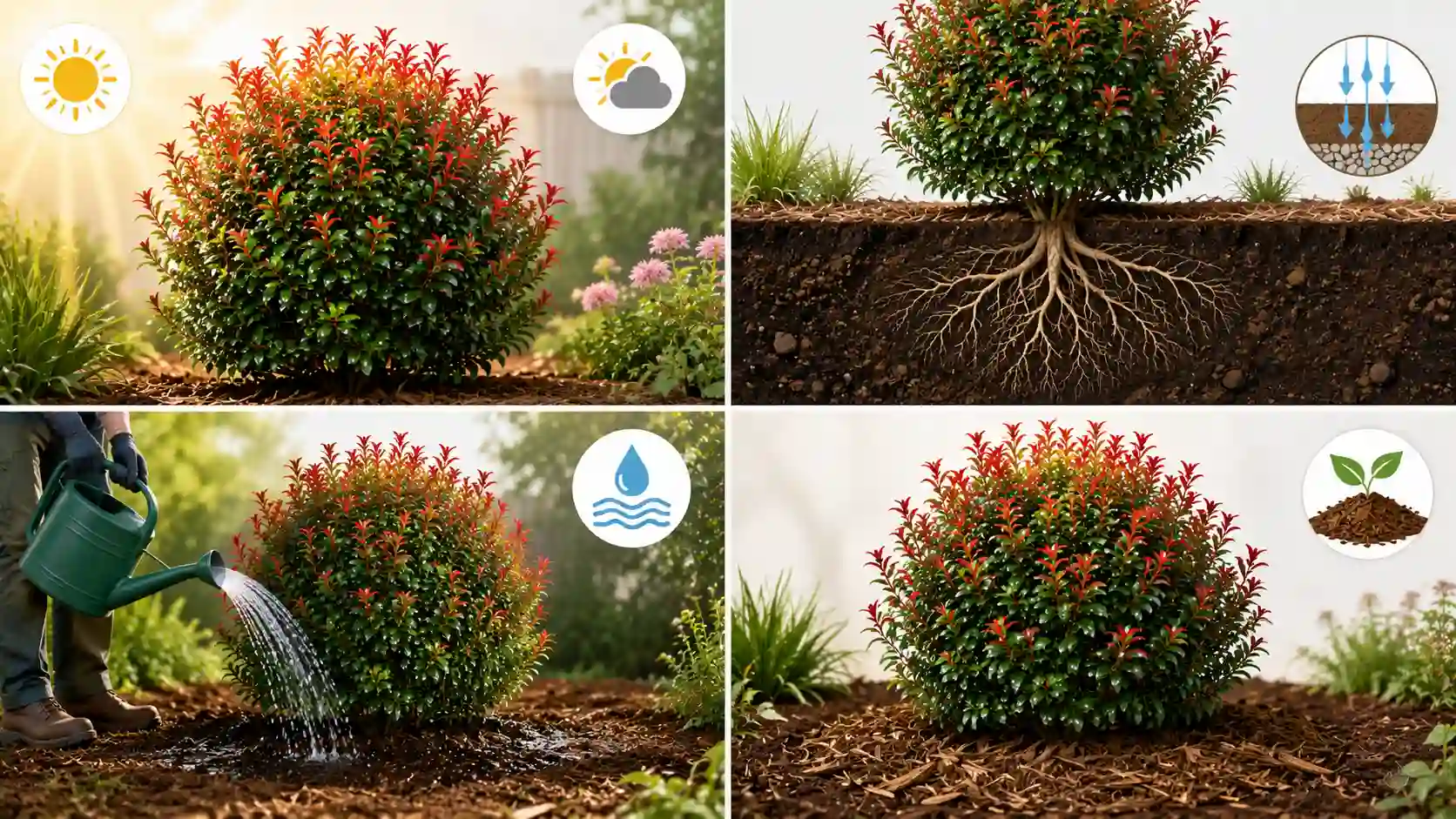
Acmena smithii Cherry Surprise grows best in full sun to part shade, with brighter positions generally producing denser growth and stronger red foliage. It can tolerate some shade, but reduced light may result in slower growth and less vibrant new leaves.
A position receiving several hours of direct sunlight each day is usually ideal for hedge planting.
Light conditions affect the plant in the following ways:
- Full sun: Encourages compact growth, stronger colour, and dense screening.
- Part shade: Suitable in warmer climates but may reduce growth speed.
- Heavy shade: Can create a thinner structure with fewer new growth flushes.
Some sources describe Acmena smithii as shade tolerant. This is accurate to a degree because the species can survive in lower light conditions, but gardeners wanting a thick privacy hedge should avoid deep shade.
For the question “will Acmena smithii grow in shade?”, the answer is yes, but it performs best with adequate sunlight.
Soil Requirements
Acmena smithii prefers well-drained soil that retains some moisture while allowing excess water to escape. It adapts to a range of soil types, including sandy soils, loams, and improved clay-loam soils.
The most important soil requirement is avoiding prolonged waterlogging because constantly saturated roots can reduce plant health.
Suitable soil conditions include:
- Fertile loamy soil.
- Organic matter-enriched garden soil.
- Free-draining clay-loam after improvement.
- Slightly acidic to neutral soil conditions.
For the question “what kind of soil does Acmena smithii like?”, the ideal answer is well-drained, moisture-retentive soil enriched with organic matter.
Gardeners planting in heavy clay should improve drainage by incorporating organic compost and avoiding areas where water collects after rain.
Watering
Newly planted lilly pillies require regular watering until their root systems become established, while mature plants are generally drought tolerant once established.
The answer to “how often to water lilly pilly?” depends on climate, soil, and rainfall. A practical approach is:
- Water deeply 1–2 times per week during the establishment period.
- Increase watering during hot, dry weather.
- Reduce watering during periods of regular rainfall.
- Allow the soil surface to dry slightly between watering.
Consistent moisture is especially important during the first year because young plants are developing their permanent root systems.
Once established, Cherry Surprise can tolerate moderate dry periods, although prolonged drought may reduce growth and foliage quality.
Fertilising and Pruning
Regular light feeding and pruning help Acmena smithii Cherry Surprise maintain dense growth, strong foliage colour, and a healthy hedge shape.
A balanced slow-release fertiliser can be applied during active growing periods, commonly:
- Spring, to support new growth.
- Autumn, to strengthen the plant before cooler conditions.
Pruning is one of the most important maintenance practices because Cherry Surprise responds well to trimming.
Recommended pruning practices include:
- Lightly prune after flowering.
- Trim growing tips to encourage branching.
- Remove damaged or overcrowded branches.
- Maintain hedge width by regular shaping.
In practical garden maintenance, tip pruning is often more effective than waiting for a hedge to become overgrown and performing heavy cuts.
Frost and Climate Tolerance
Acmena smithii Cherry Surprise tolerates light frost once established and is suitable for many Australian climates, including subtropical, warm temperate, and cooler temperate regions.
Young plants are more sensitive to extreme cold because their root systems are not fully developed.
Climate suitability includes:
- Warm coastal gardens.
- Temperate regions.
- Protected cooler areas.
In areas with severe frost, planting in a sheltered position can reduce cold damage.
Planting and Spacing Guide
Correct spacing is important because it affects hedge density, airflow, maintenance requirements, and long-term plant health.
How Far Apart Should You Plant Acmena?
Acmena smithii Cherry Surprise is commonly planted around 0.5–1 metre apart when creating a dense hedge, depending on how quickly full coverage is required.
The recommended acmena smithii cherry surprise spacing depends on the purpose of planting:
- Closer spacing (around 0.5–0.7 m): Creates faster screening but increases competition between plants.
- Wider spacing (around 0.8–1 m): Allows stronger individual growth but takes longer to form a solid hedge.
The best lilly pilly cherry surprise spacing balances quick coverage with enough room for healthy root development.
Factors to consider include:
- Available garden width.
- Desired hedge height.
- Soil fertility.
- Maintenance schedule.
Planting too closely may create a dense hedge quickly, but overcrowding can increase competition for water and nutrients.
How Far From the Fence Should You Plant Lilly Pilly?
Lilly pillies should generally be planted far enough from fences to allow mature growth without constant crowding, with spacing based on the plant’s expected width and maintenance style. If you are designing a boundary garden, explore more options in our guide to Low-Maintenance Plants for Fence Line in Australia for suitable plants that work well in narrow spaces.
For Cherry Surprise, a clearance of approximately 50 cm or more from a fence is often practical because of its compact growth habit.
Planting distance helps:
- Maintain airflow around foliage.
- Allow pruning access.
- Reduce pressure against fences.
- Support healthier root development.
The question “how far from the fence should you plant lilly pilly?” depends on the mature width of the cultivar. Larger lilly pillies need significantly more space, while Cherry Surprise is considered more fence-friendly because it has a narrower mature footprint.
Root System — Do Lilly Pilly Trees Have Big Root Systems?
Lilly pilly trees generally have fibrous, spreading root systems rather than aggressive deep roots, making many compact varieties suitable for residential gardens when planted with appropriate spacing.
The root system of Acmena smithii Cherry Surprise is considered relatively manageable because it is a compact cultivar selected for smaller garden spaces. Like other lilly pillies, it develops a network of fine feeder roots that help the plant absorb moisture and nutrients efficiently.
For the question “do lilly pilly trees have big root systems?”, the answer is that most lilly pillies do not develop the same invasive root behaviour associated with some large tree species. However, all plants require enough space for healthy root growth.
The what is the root system of the lilly pilly Cherry Surprise question can be answered by considering its characteristics:
- Fibrous and branching root structure.
- Adapted to Australian soils and rainfall patterns.
- Generally less concerning near structures compared with large spreading trees.
- Root spread increases as the plant matures.
Cherry Surprise is often considered a lower-risk option near fences, pathways, and smaller gardens because its mature size is controlled. However, planting too close to buildings, drains, or paved areas should still be avoided.
The term lilly pilly resilience root system is sometimes used when comparing lilly pillies generally. This refers to their ability to recover from pruning, drought periods, and environmental stress rather than suggesting that every cultivar has identical root behaviour.
Cherry Surprise vs Other Lilly Pilly Varieties (Comparison Block)
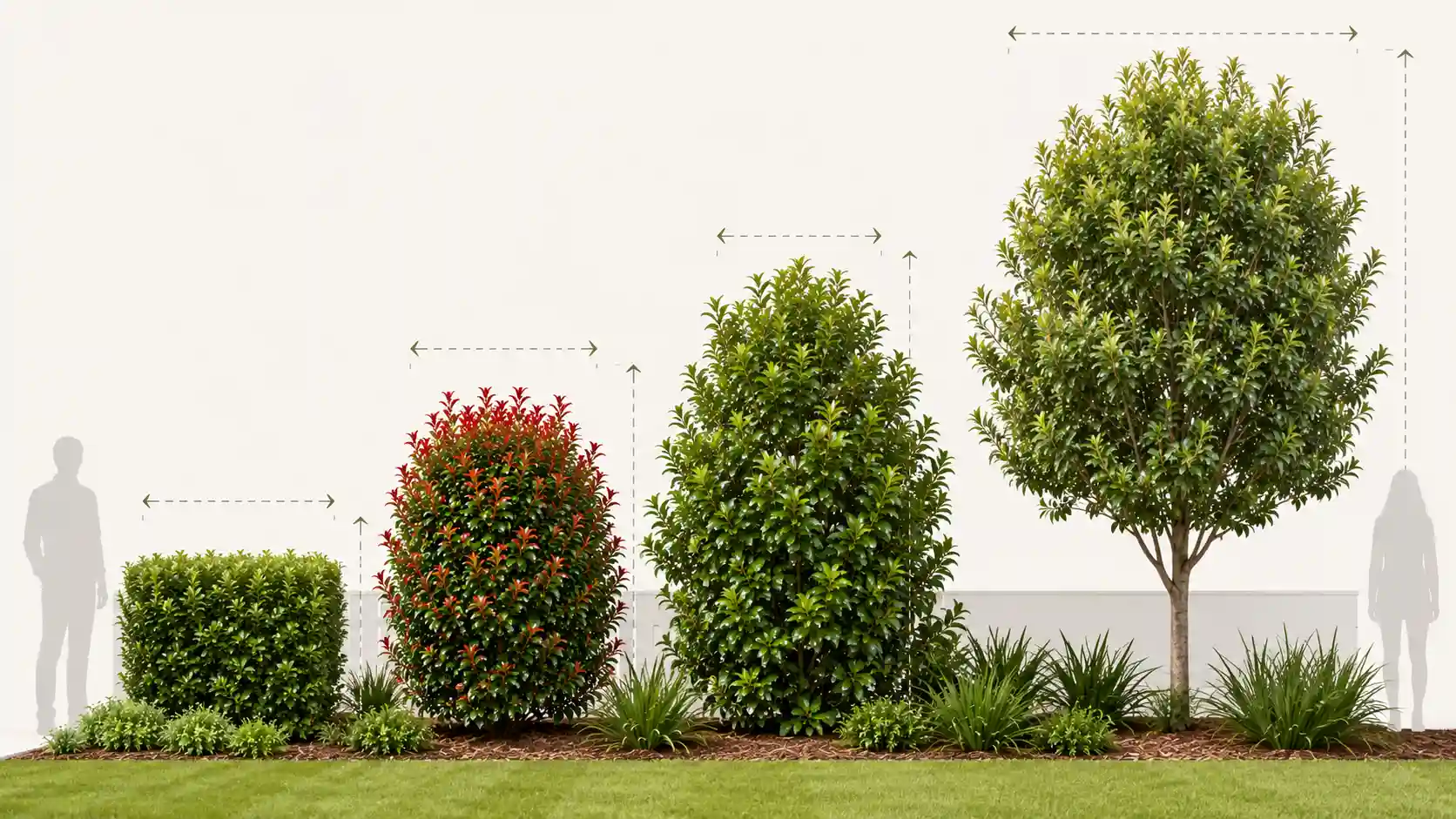
Cherry Surprise is one of the best lilly pilly options for compact hedging because it combines colourful foliage, moderate growth, and strong psyllid resistance. However, different varieties suit different garden purposes. Another popular compact lilly pilly option is Acmena smithii Minor, which is valued for its small leaves, dense hedge growth, and similar low-maintenance characteristics.
The answer to “what is the best lilly pilly for hedging?” depends on the available space, desired height, maintenance level, and screening requirements.
Lilly Pilly Variety Comparison
| Variety | Approximate Height | Width | Growth Rate | Psyllid Resistance | Best Use Case |
| Cherry Surprise | 1.5–3 m | 1–1.5 m | Moderate–fast | High resistance | Compact hedges, screening, topiary |
| Acmena smithii Minor | 2–3 m | Around 1–1.5 m | Moderate | High resistance | Small leaf lilly pilly hedge |
| Backyard Bliss | 3–5 m | Around 1–2 m | Moderate–fast | Good resistance | Taller privacy screens |
| Resilience | 2–4 m | Around 1–2 m | Moderate | Very good resistance | Low-maintenance boundaries |
| Big Red | 3–6 m | Wider growth habit | Fast | Good resistance | Large screening areas |
Cherry Surprise vs Acmena smithii Minor
Acmena smithii Minor is another compact lilly pilly cultivar known for small leaves and dense hedge growth. It is often chosen where a traditional small-leaf hedge appearance is preferred.
Cherry Surprise differs by offering:
- More noticeable red new foliage.
- Similar compact growth.
- Strong ornamental value.
For gardeners searching for a mini lilly pilly, Cherry Surprise and Acmena smithii Minor are both suitable choices.
Which Lilly Pilly Has the Best Fruit?
Many lilly pillies produce edible berries, but fruit production depends on climate, pollination, age, and growing conditions. Cherry Surprise can produce small berries, although it is mainly selected as an ornamental hedge plant rather than a fruit-producing cultivar.
What Is the Tallest Lilly Pilly Variety?
The tallest lilly pilly varieties are generally larger screening cultivars that can exceed 5 metres when left unpruned. They are better suited to large properties rather than compact suburban gardens.
For smaller spaces, a controlled cultivar like Cherry Surprise is usually easier to maintain.
Using Cherry Surprise as a Hedge or Fire Screen
Cherry Surprise lilly pilly is widely used as a hedge because its dense evergreen foliage, compact size, and psyllid resistance make it reliable for privacy screening. Gardeners looking for alternative evergreen screening plants may also consider options such as Ficus Hillii ‘Flash’, which is another popular hedge plant used in Australian landscapes.
The cherry surprise lilly pilly hedge is popular in Australian landscaping because it provides:
- Year-round green foliage.
- Seasonal red foliage colour.
- Dense branching for privacy.
- Good response to pruning.
The terms acmena firescreen, fire screen lilly pilly, and lilly pilly firescreen should be interpreted carefully. While dense evergreen plants may help reduce wind movement and slow the movement of flames compared with sparse vegetation, Cherry Surprise is not a certified fire-retardant plant. For larger screening projects, gardeners may also explore other options from our guide to Fast Growing Evergreen Trees Australia, which covers plants suitable for privacy and year-round greenery.
A planted lilly pilly screen can contribute to garden structure, but homeowners in bushfire-prone areas should always follow local fire safety recommendations.
How to Thicken Up a Lilly Pilly Hedge
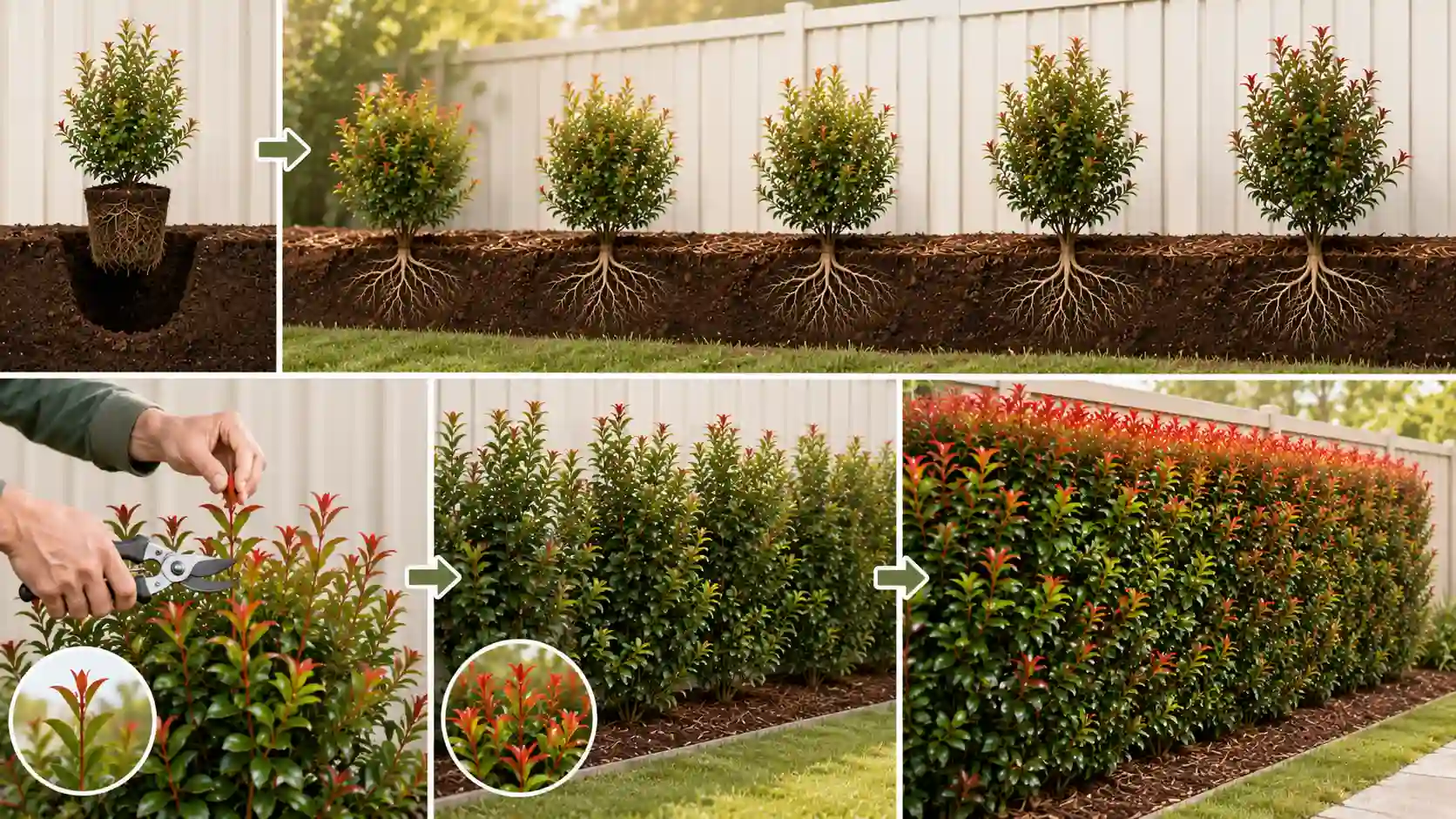
The best way to thicken up a lilly pilly hedge is regular tip pruning, correct feeding, and maintaining suitable growing conditions.
A hedge often becomes fuller when gardeners encourage side branching rather than allowing only vertical growth.
Practical methods include:
- Trim new shoots regularly during active growth.
- Remove only small amounts during each pruning session.
- Apply suitable slow-release fertiliser during growing seasons.
- Check spacing if plants are struggling to fill gaps.
- Improve sunlight exposure where possible.
In our experience growing hedge plants, many sparse lilly pilly hedges are not caused by the plant variety but by insufficient pruning during early establishment.
Common Problems With Cherry Surprise Lilly Pilly (Problem–Solution Coverage)
Yellowing Leaves
Yellow leaves on Cherry Surprise lilly pilly are commonly caused by watering problems, nutrient deficiencies, or poor drainage.
Common causes include:
- Overwatering that reduces oxygen around roots.
- Nitrogen deficiency causing pale foliage.
- Poor soil drainage.
- Natural older leaf replacement.
Solutions include:
- Check soil moisture before watering.
- Improve drainage in heavy soils.
- Apply a suitable native plant fertiliser if nutrients are lacking.
- Remove damaged leaves and monitor new growth.
Psyllid and Pest Issues
Cherry Surprise has improved resistance to psyllids compared with many older lilly pilly varieties, but no plant is completely immune to pests.
Psyllids may cause:
- Distorted new leaves.
- Pimple-like leaf damage.
- Reduced appearance of fresh growth.
The cultivar’s resistance means problems are usually less severe, but gardeners should still monitor new foliage regularly.
Preventative practices include:
- Maintaining healthy growth.
- Avoiding excessive nitrogen fertiliser.
- Pruning damaged shoots.
- Encouraging strong plant structure.
Slow Growth or Sparse Base
Slow growth or a thin lower hedge section is usually caused by limited sunlight, root competition, poor nutrition, or insufficient pruning.
Common causes include:
- Planting in heavy shade.
- Competition from nearby plants.
- Under-fertilising.
- Incorrect spacing.
- Lack of formative pruning.
To improve growth:
- Increase light exposure where possible.
- Apply appropriate fertiliser.
- Prune strategically to encourage branching.
- Maintain consistent watering during dry periods.
Regarding what are the disadvantages of Lilly Pilly, common concerns include maintenance requirements, leaf litter, and sensitivity to poor drainage. However, acmena smithii cherry surprise invasive concerns are generally unfounded because this compact cultivar is not considered an environmental weed in typical Australian garden use. Understanding common issues across Australian native plants can help improve garden success, including problems covered in our Woolly Bush Problems guide.
Beginner Mistakes to Avoid
Many Cherry Surprise lilly pilly problems occur because of incorrect planting or early care mistakes rather than because of the plant itself. Understanding common errors helps gardeners establish healthier, denser hedges with fewer maintenance issues.
Overplanting Too Closely
Planting lilly pillies too close together may create faster screening initially, but excessive competition can reduce long-term performance.
Common issues caused by overcrowding include:
- Reduced airflow around foliage.
- Competition for water and nutrients.
- Uneven growth between plants.
- Increased maintenance requirements.
For a cherry surprise lilly pilly hedge, spacing should balance quick coverage with enough room for healthy root and branch development.
Underwatering During Establishment
A common beginner mistake is assuming native plants require little water immediately after planting. While established Cherry Surprise plants tolerate dry conditions, young plants need consistent moisture while roots develop.
During the establishment period:
- Water deeply rather than lightly sprinkling.
- Monitor soil moisture during hot weather.
- Apply mulch around the root zone to reduce evaporation.
- Avoid allowing new plants to experience repeated drought stress.
Planting in Poorly Drained Soil
Although Cherry Surprise adapts to different soil types, constantly wet soil can weaken roots and reduce growth.
Signs of drainage problems include:
- Yellowing leaves.
- Slow growth.
- Root stress.
- Poor foliage density.
Improving soil structure before planting is often easier than correcting drainage problems later.
Skipping the First Formative Prune
Many gardeners wait too long before pruning because they want the plant to grow taller. However, early pruning encourages branching from the base and creates a fuller hedge.
A formative prune helps:
- Develop a stronger structure.
- Encourage side shoots.
- Prevent a narrow, sparse shape.
- Create better privacy coverage.
Conclusion
Acmena smithii ‘Cherry Surprise’ is a compact, hardy, and low-maintenance lilly pilly cultivar well suited to Australian gardens requiring reliable hedging, screening, and ornamental foliage. Its standout feature is the vibrant cherry-red new growth combined with dense evergreen foliage and improved psyllid resistance compared with many traditional lilly pillies.
The typical acmena smithii cherry surprise height ranges from around 1.5–3 metres, making it suitable for residential boundaries, smaller gardens, and formal hedges. With well-drained soil, regular watering during establishment, appropriate pruning, and sufficient sunlight, the cherry surprise lilly pilly can develop into a healthy and attractive screen plant.
For gardeners wanting a compact native hedge with good resilience and manageable growth, lilly pilly cherry surprise remains one of the most practical choices for Australian landscapes.
FAQs
How big do Acmena smithii Cherry Surprise get?
Acmena smithii Cherry Surprise typically grows around 1.5–3 metres tall and approximately 1–1.5 metres wide when grown in suitable conditions. Regular pruning can maintain it at a smaller hedge size, while unrestricted plants may reach the upper end of the range.
Its final size depends on:
- Climate.
- Soil quality.
- Sun exposure.
- Water availability.
- Pruning frequency.
What is the difference between Acmena smithii and Syzygium?
Acmena smithii and Syzygium smithii refer to the same plant because many Acmena species were reclassified under the Syzygium genus after botanical studies.
Gardeners may see both names because:
- Modern botanical references often use Syzygium smithii.
- Some Australian horticultural sources continue using Acmena terminology.
- Nursery labels commonly include both names.
The Cherry Surprise cultivar is the same plant regardless of whether it is listed as Acmena or Syzygium.
How fast does Acmena smithii grow?
Acmena smithii Cherry Surprise has a moderate-to-fast growth rate when planted in good conditions. Growth is strongest during spring and summer when temperatures, sunlight, and moisture levels support active development.
Growth speed improves with:
- Adequate sunlight.
- Regular watering during establishment.
- Fertile, well-drained soil.
- Regular pruning to encourage branching.
Growth slows naturally during cooler winter periods, especially in temperate climates.
Will Acmena smithii grow in shade?
Yes, Acmena smithii can grow in part shade, but it performs best in full sun to achieve dense growth and stronger red foliage.
In shaded areas, gardeners may notice:
- Slower growth.
- Less vibrant new leaves.
- A thinner hedge structure.
For privacy screening, a brighter position is generally recommended.
Do lilly pilly trees have big root systems?
Most lilly pilly trees develop fibrous, spreading root systems rather than highly invasive roots, making compact varieties like Cherry Surprise suitable for many residential gardens.
However, plants should still be positioned with enough space from:
- Buildings.
- Drainage systems.
- Paved areas.
- Retaining structures.
Root spread generally increases as the plant grows larger.
Is Acmena smithii native to Australia?
Yes, Acmena smithii is an Australian native plant naturally occurring along the eastern coastline from Queensland through New South Wales into Victoria.
The Cherry Surprise cultivar is a selected garden form of this native species, developed for compact growth, attractive foliage, and hedge performance.
How far apart should I plant acmena?
Acmena smithii Cherry Surprise is commonly planted around 0.5–1 metre apart for hedging, depending on how quickly coverage is required and the available growing space.
Closer spacing creates faster screening but increases competition between plants, while wider spacing allows stronger individual growth but takes longer to form a dense hedge.
For most residential hedge applications, spacing around 0.6–0.8 metres is often a practical balance between speed and plant health.
1 Comment