Pink Lily of the Valley Flower: Meaning, Care & Facts
Introduction
The pink lily of the valley flower is a rare and enchanting variation of the classic lily of the valley, scientifically known as Convallaria majalis. While most people associate this woodland perennial with delicate white bell-shaped blooms, naturally pink varieties do exist. The best-known pink form is the cultivar Convallaria majalis ‘Rosea’, prized for its soft blush-colored flowers and elegant appearance. Like the traditional white variety, it is valued for its fragrance, symbolism, and spring blooms. Its rarity, combined with its distinctive color, makes it especially appealing to gardeners, collectors, and flower enthusiasts seeking something unique.
Quick Summary
- Pink lily of the valley is a real but rare flowering plant, most commonly found in the Convallaria majalis ‘Rosea’ cultivar.
- The pink variety carries rich symbolic meaning including romance, renewal, and good luck.
- It is toxic if ingested and requires careful handling around children and pets.
- Pink lily of the valley thrives in cool, shaded environments and blooms in spring.
- The plant is highly valued for its rarity, fragrance, and delicate bell-shaped flowers.
Are There Real Pink Lily of the Valley Flowers?
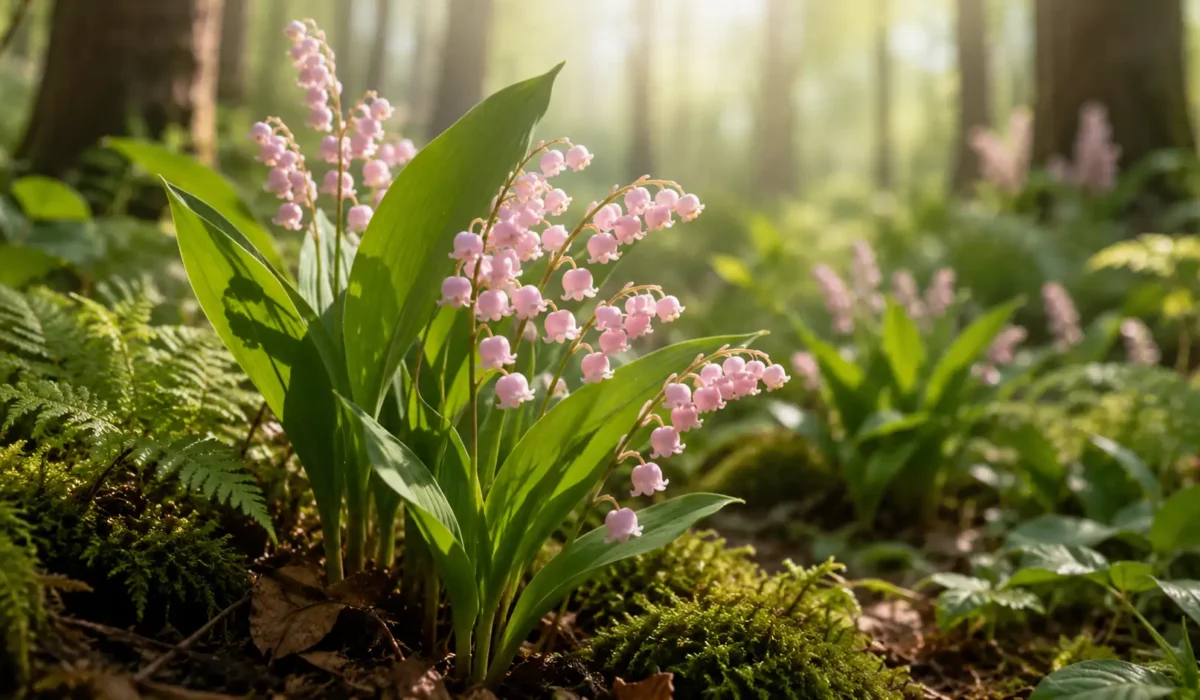
Yes. Pink lily of the valley flowers are botanically real and occur naturally in specific cultivars of Convallaria majalis. They are not dyed flowers or artificial creations. The most recognized pink variety is the cultivar known as ‘Rosea’.
The ‘Rosea’ Cultivar — The True Pink Variety
Convallaria majalis ‘Rosea’ is the primary pink-flowering cultivar of lily of the valley. It produces the same graceful drooping bells as the standard white variety but in shades of soft blush pink.
This cultivar shares the same growth habits, fragrance, and care requirements as traditional lily of the valley plants. The difference lies mainly in flower color. Pink lily of the valley plants are considered uncommon, making them highly desirable among collectors and shade-garden enthusiasts.
The pink cultivar belongs to the species Convallaria majalis, a woodland perennial native to Europe and parts of Asia.
In our experience growing woodland perennials, ‘Rosea’ often develops its best flower color when grown in cool, partially shaded locations with consistently moist soil.
Pink Flowers That Look Like Lily of the Valley
Several plants produce pink bell-shaped flowers that resemble lily of the valley:
- Pieris japonica (Japanese Andromeda)
- Deutzia species
- Andromeda polifolia
- Certain heath and heather species
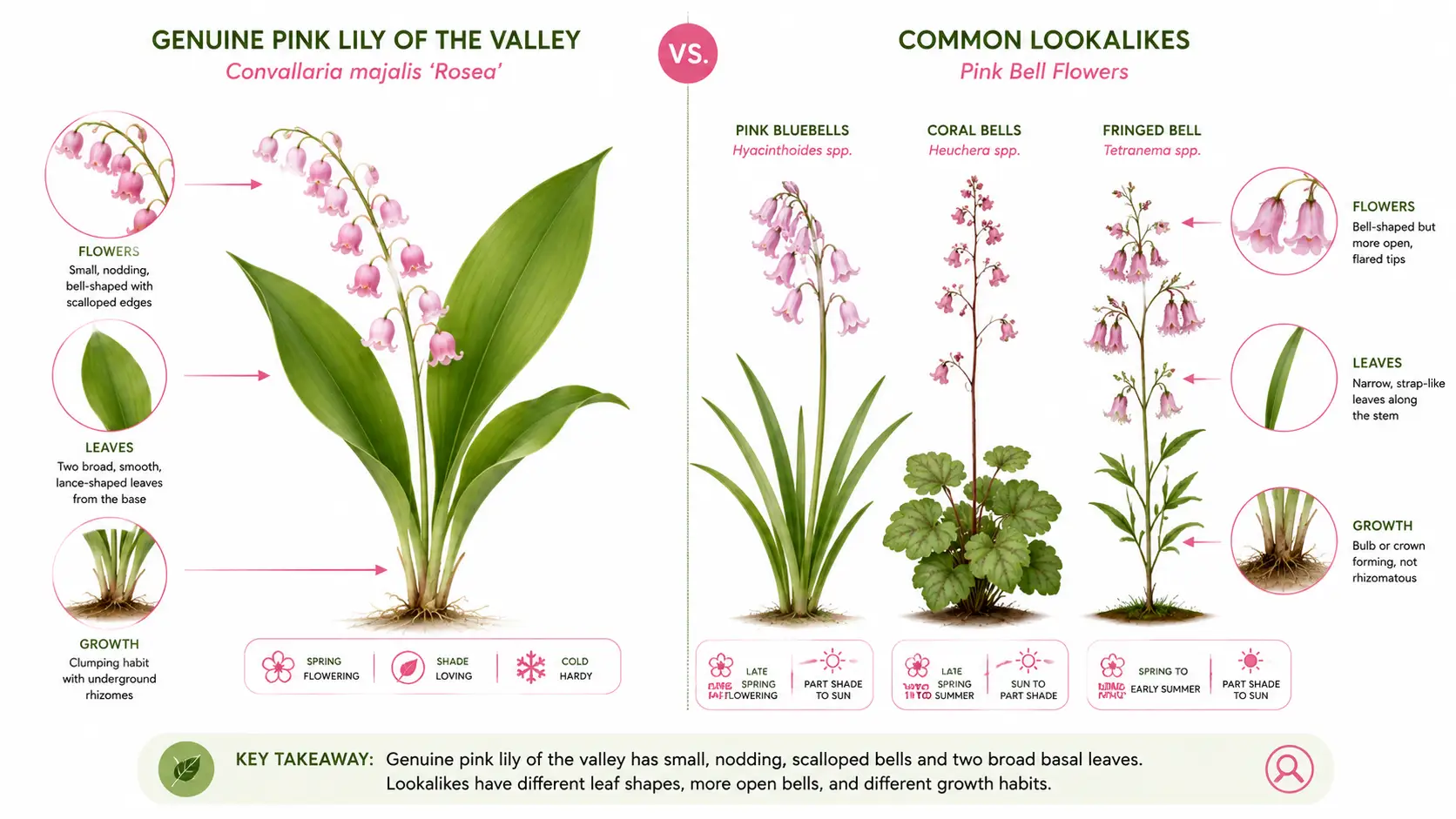
Although these plants may look similar from a distance, true pink lily of the valley belongs to the species Convallaria majalis and features characteristic paired leaves and fragrant bell-shaped blooms.
Pink Lily of the Valley Flower Meaning and Symbolism
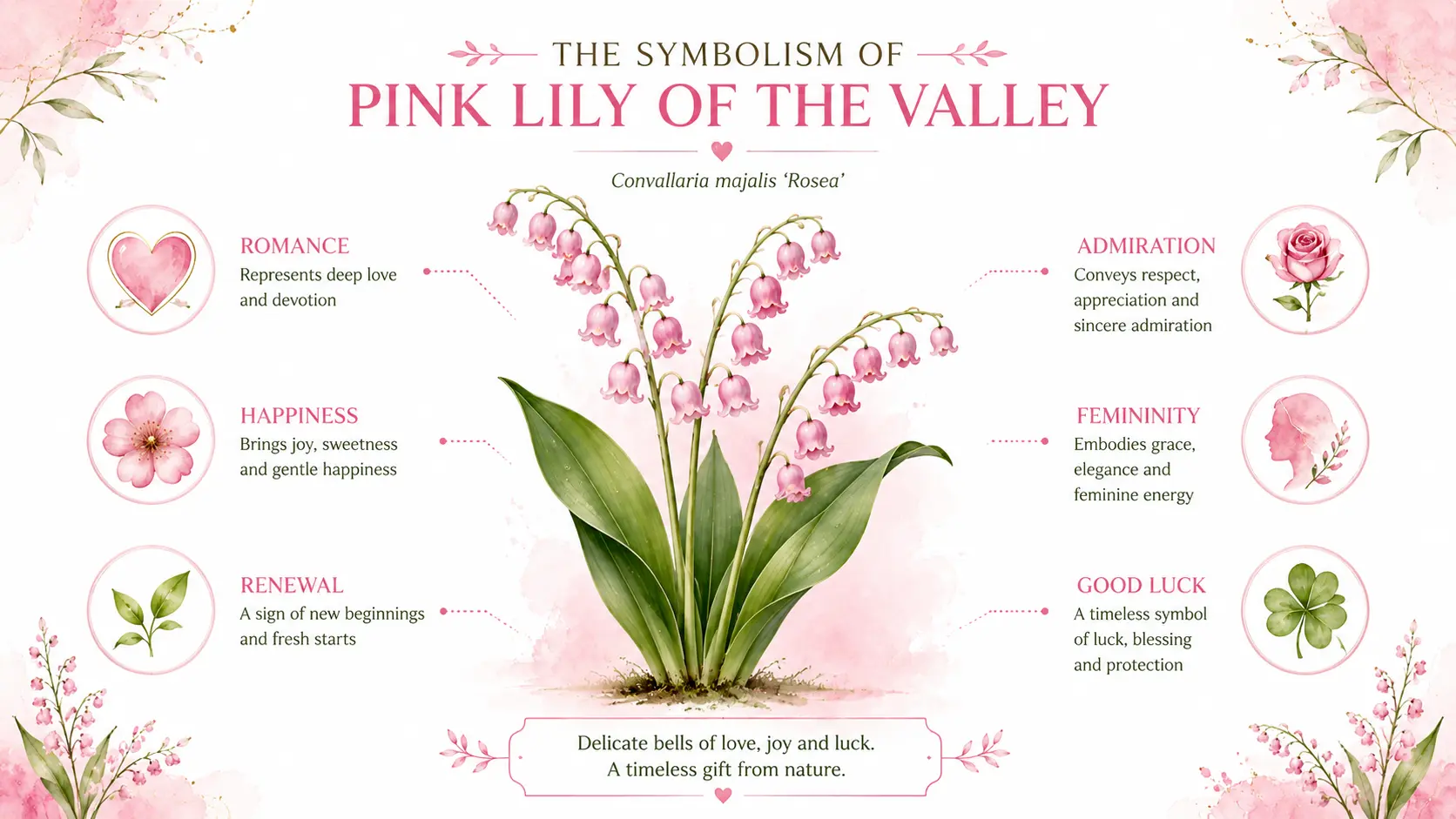
Pink lily of the valley symbolizes romance, gentle affection, admiration, emotional warmth, renewal, and good fortune.
Traditional Symbolism of Lily of the Valley
Historically, lily of the valley has represented:
- Purity
- Humility
- Happiness
- Good luck
- The return of spring
- Renewal
In European traditions, the flower is often associated with the return of happiness and fresh beginnings. It has long been exchanged as a symbol of hope and positivity.
What the Pink Color Adds to the Symbolism
The pink coloration introduces additional meanings that differ slightly from the classic white variety.
Pink lily of the valley flower meaning often includes:
- Romance
- Admiration
- Femininity
- Compassion
- Emotional warmth
- Gentle love
Because of these associations, pink lilies of the valley are frequently chosen for romantic bouquets and meaningful gifts. Like pink lily of the valley, lavender is often valued for its positive symbolism and calming presence, as discussed in our article on Benefits of Lavender Plant at Home.
Pink Lily of the Valley in Wedding and Bridal Traditions
Lily of the valley has a long history in wedding floral arrangements. The pink variety enhances these traditions by adding symbolism related to affection and devotion.
A bouquet featuring pink lily of the valley flowers may represent:
- Lasting love
- Marital happiness
- Good fortune
- New beginnings
Its delicate appearance and positive symbolism make it especially appealing for bridal bouquets and wedding décor.
Lily of the Valley Colors — What Shades Exist?
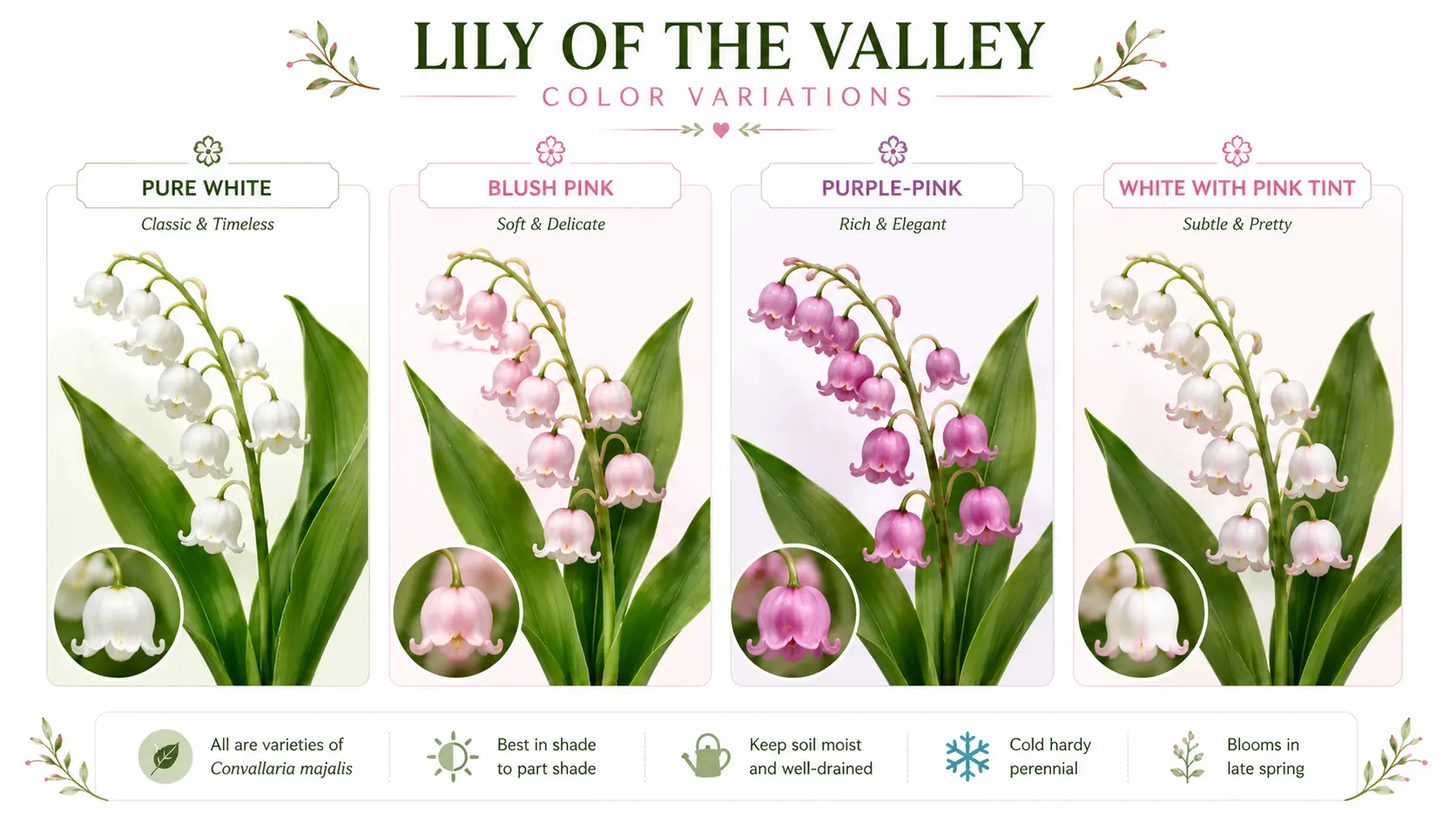
Lily of the valley occurs in a limited but interesting range of colors.
| Color Variety | Cultivar Name | Rarity | Notes |
| White | Standard (Convallaria majalis) | Common | Classic variety |
| Pink | ‘Rosea’ | Rare | Soft blush-pink bells |
| Purple-Pink | Select cultivars | Very Rare | Deeper tone, limited availability |
| White with Pink Tinge | Mixed/Hybrid Forms | Uncommon | Pastel appearance |
True black and red lily of the valley varieties do not exist botanically. Some specialty cultivars may exhibit deeper pink or purple-pink tones, but they remain variations of the species rather than distinct colors. Gardeners who enjoy colorful flowering plants may also want to explore our Purple Flower Tree Australia: Native & Popular Species Guide for additional landscape inspiration.
Are Pink Lily of the Valley Flowers Rare?
Yes. Pink lily of the valley flowers are considered rare compared to standard white forms.
Why the Pink Variety Is Harder to Find
Several factors contribute to its rarity:
- Limited commercial production
- Slower propagation rates
- Seasonal availability
- Lower overall market demand
- Fewer specialist growers
As a result, pink lily of the valley plants are usually available only through specialty nurseries and collectors. Collectors who appreciate uncommon ornamental plants may also enjoy learning about the Snow Maiden Oriental Pearl Plant: Growing Guide & Comparison.
How to Identify a Genuine Pink Lily of the Valley
Characteristics of authentic pink lily of the valley include:
- Soft blush-pink flowers
- Drooping bell-shaped blooms
- Paired broad green leaves
- Sweet fragrance
- Growth from underground rhizomes
Genuine specimens should display natural pink coloration rather than artificially dyed petals.
Is Pink Lily of the Valley Poisonous?
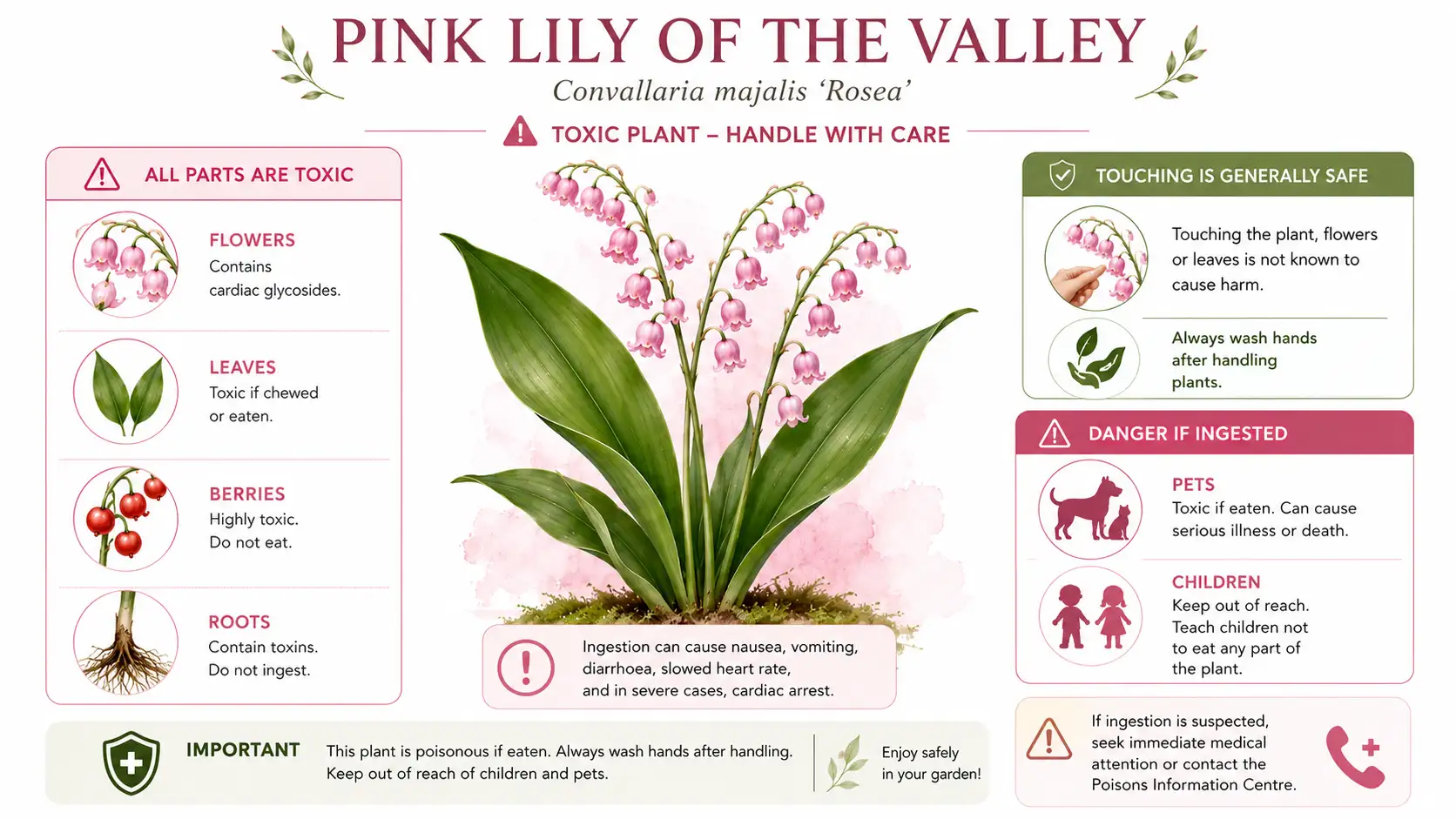
Yes. Pink lily of the valley is highly poisonous if ingested.
Toxic Compounds in Lily of the Valley
All parts of the plant contain cardiac glycosides, particularly convallatoxin.
Toxic components are found in:
- Flowers
- Leaves
- Roots
- Rhizomes
- Berries
- Vase water containing cut stems
Ingestion can affect both humans and animals and may cause serious health complications.
What Happens If You Touch Lily of the Valley?
Touching lily of the valley is generally low risk for most people.
However, some individuals may experience:
- Mild skin irritation
- Temporary redness
- Minor allergic reactions
The greatest danger comes from ingestion rather than skin contact.
Safe Handling Practices
- Wear gloves when pruning or handling.
- Keep away from children and pets.
- Wash hands after contact.
- Do not place in water vessels accessible to animals.
- Avoid consuming any part of the plant.
Lily of the Valley Facts You Should Know
- Botanical name: Convallaria majalis
- Native to cool temperate regions of Europe and Asia
- National flower of Finland
- Used historically in perfumery and medicine with caution
- Blooms for approximately 2–3 weeks in spring
- All parts of the plant are toxic
- Symbolizes the return of happiness in French tradition
- The pink variety (‘Rosea’) is a natural cultivar rather than a hybrid
Growing Pink Lily of the Valley — A Complete Care Guide
Plant Size and Appearance
Pink lily of the valley typically reaches a mature height of 15–30 cm (6–12 inches).
For a layered garden design, pink lily of the valley can be paired beneath ornamental trees such as those featured in our Dwarf Forest Pansy Tree Size, Care & Growth Guide.
The plant produces:
- Upright green foliage
- Delicate bell-shaped flowers
- Underground rhizomes
- Dense spreading colonies over time
Despite its beauty, it remains a compact woodland perennial rather than a large shrub or bush. For gardeners interested in unique ornamental plants with colorful foliage and flowers, see our guide to Purple Passion Plant Benefits, Health, Care & Uses.
Growth Rate
Pink lily of the valley is considered a slow-to-moderate grower.
Once established, rhizomes gradually spread underground and can create attractive ground-cover displays. Elemo Baker recommends allowing at least two growing seasons before expecting substantial colony formation. Growth habits vary significantly among ornamental plants, as demonstrated in our Pittosporum Silver Sheen Growth Rate Guide, which covers a much faster-growing landscape species.
Light and Soil Requirements
Optimal growing conditions include:
- Partial shade to full shade
- Moist, well-draining soil
- Humus-rich growing medium
- Slightly acidic to neutral pH
Avoid:
- Full afternoon sun
- Waterlogged locations
- Extremely dry sandy soils
If you’re planning a shade garden alongside larger landscape plants, our Photinia Fraseri Robusta: Growth, Care & Hedge Guide provides useful information for garden design and structure.
Watering and Fertilization
Water consistently during active growth and flowering.
Care recommendations include:
- Maintain evenly moist soil
- Reduce watering during dormancy
- Apply balanced slow-release fertilizer in early spring
- Avoid excessive nitrogen applications
As of 2026, growers continue to recommend organic compost additions to improve soil moisture retention and overall plant health.
Indoor vs Outdoor Growing
| Feature | Indoor Growing | Outdoor Growing |
| Light | Bright indirect light | Partial to full shade |
| Humidity | Moderate to high | Naturally regulated |
| Pot Size | Containers required | Garden beds |
| Blooming | Often forced | Seasonal flowering |
| Maintenance | Higher | Lower |
Indoor pink lily of the valley flowers require careful humidity management and a cooling period to encourage blooming. If you enjoy growing ornamental plants indoors, you may also be interested in our guide to Dracaena Plant Indoor Benefits, Care, Meaning & Propagation, which covers another popular indoor foliage plant.
When Does Lily of the Valley Flower in Australia?
In Australia, lily of the valley generally flowers from April through July.
Key considerations include:
- Requires winter chilling (vernalization)
- Best suited to Victoria, Tasmania, and the ACT
- Performs well in cooler southern regions
- More challenging in tropical and subtropical climates
Gardeners in Queensland and the Northern Territory may struggle to provide sufficient cold conditions for reliable flowering. Gardeners looking to expand their indoor plant collection can also explore our Money Tree Australia: Care, Meaning & Buying Guide for additional container-growing tips.
Where to Buy Pink Lily of the Valley in Australia
Is Pink Lily of the Valley Available at Bunnings?
Bunnings occasionally stocks standard white lily of the valley during seasonal plant sales.
However, pink lily of the valley availability is limited and varies by location. Calling ahead before visiting is generally recommended.
Other Places to Buy Pink Lily of the Valley Plants and Bulbs
Potential sources include:
- Specialist online nurseries
- Bulb suppliers
- Garden expos
- Farmers markets
- Specialty florists
- Seed suppliers
Pink lily of the valley flower seeds and bulbs may be offered seasonally through specialty gardening retailers.
Common Problems with Pink Lily of the Valley
Why Is My Lily of the Valley Not Flowering?
Common causes include:
- Insufficient cold exposure
- Excessive sunlight
- Overcrowded rhizomes
- Shallow planting depth
Solutions involve improving shade, ensuring winter chilling, and dividing mature clumps when necessary.
Leaves Turning Yellow
Possible causes include:
- Overwatering
- Nutrient deficiencies
- Natural seasonal dormancy
Accurate diagnosis is important because yellowing leaves may be normal after flowering.
Pests and Disease Issues
Common issues include:
- Root rot
- Slugs
- Snails
- Botrytis (gray mold)
Prevention methods:
- Improve drainage
- Avoid overhead watering
- Remove infected foliage
- Monitor plants regularly
Beginner Mistakes to Avoid
- Planting in full sun
- Overwatering during dormancy
- Expecting rapid spread in the first year
- Discarding dormant rhizomes because they appear inactive
Pink Lily of the Valley vs White Lily of the Valley — Key Differences
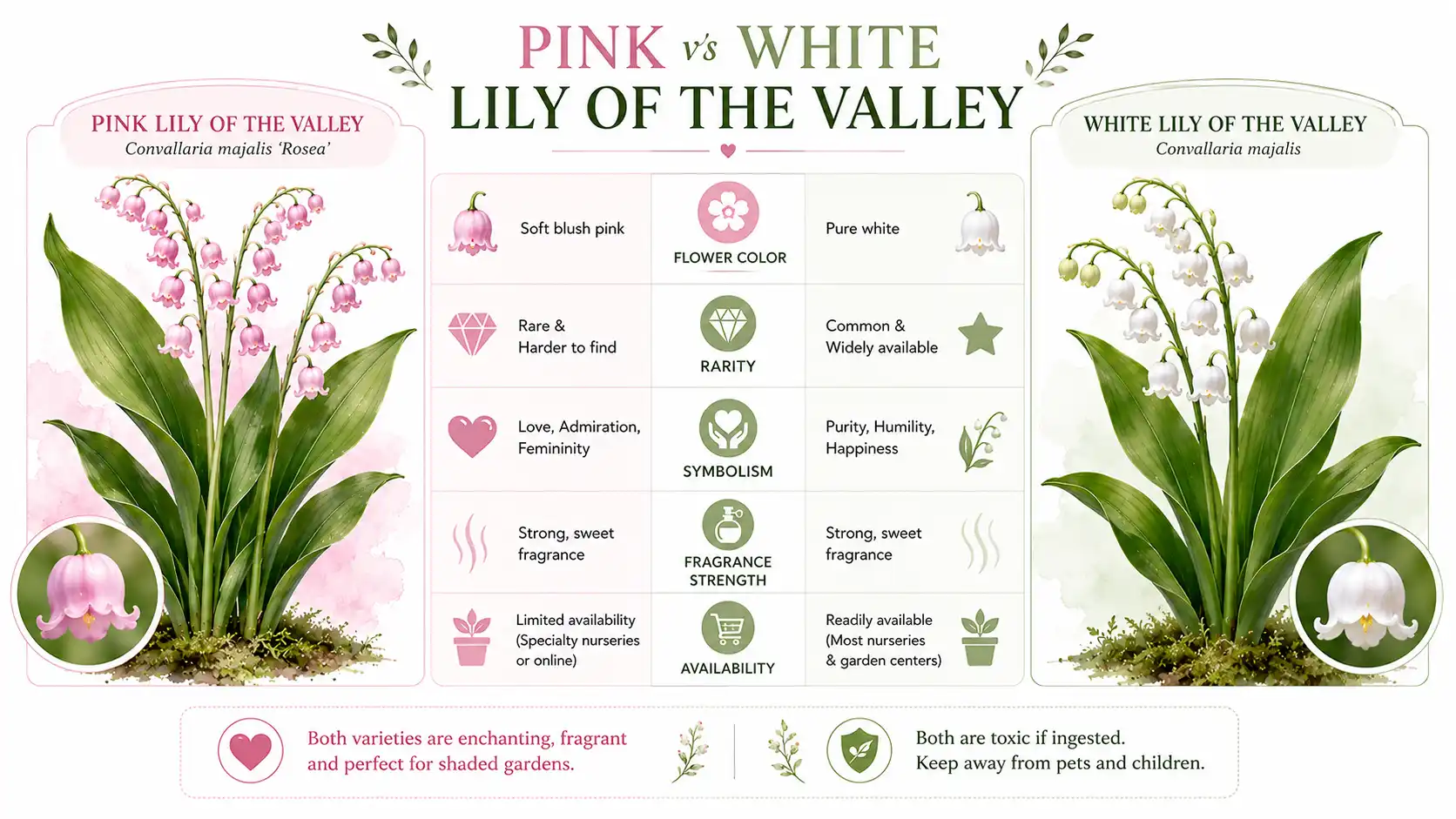
| Feature | Pink (‘Rosea’) | White (Standard) |
| Color | Soft blush to rose-pink | Pure white |
| Availability | Rare | Widely available |
| Fragrance | Slightly milder | Stronger classic scent |
| Symbolism | Romance, admiration | Purity, happiness |
| Price | Higher | Standard |
| Growing Needs | Identical | Identical |
Pink Lily of the Valley in Disney Dreamlight Valley
In Disney Dreamlight Valley, pink lily of the valley appears as a collectible flower item used for crafting, gifting, and decorative purposes.
Players may encounter the flower while exploring specific biomes and completing quests. It serves gameplay functions rather than botanical ones.
Unlike the real-world pink lily of the valley flower, the in-game version does not require cultivation, watering, or seasonal care. The connection is primarily visual and thematic.
Pink Lily of the Valley Flower Tattoo Symbolism
A pink lily of the valley flower tattoo commonly symbolizes:
- Renewal
- Love
- Protection
- Femininity
- Personal growth
- Hope
Popular tattoo styles include:
- Minimalist line art
- Watercolor designs
- Botanical illustrations
- Fine-line floral tattoos
Because the flower combines beauty with deep symbolism, it remains a popular choice among individuals seeking meaningful floral tattoo designs.
Conclusion
The pink lily of the valley flower is a genuine and rare cultivar of Convallaria majalis, most commonly known as ‘Rosea’. Its delicate blush-colored blooms, rich symbolism, and woodland charm make it one of the most distinctive flowering perennials available to gardeners. Beyond its beauty, it represents romance, renewal, happiness, and admiration. While it requires careful handling due to its toxicity, proper cultivation rewards growers with elegant spring displays. Its rarity remains a significant part of its appeal, making pink lily of the valley a prized addition to specialty gardens and floral collections.
Frequently Asked Questions (FAQs)
1: Are there real pink lily of the valley flowers?
Yes. The pink lily of the valley is a genuine cultivar known as Convallaria majalis ‘Rosea.’ It produces soft blush-pink bell-shaped flowers and is rarer than the standard white variety.
2: What does the pink lily of the valley symbolize?
Pink lily of the valley symbolizes romance, gentle affection, admiration, and renewal. Combined with the traditional meaning of happiness and good luck, the pink variety is especially associated with love and femininity.
3: Are pink lily of the valley flowers rare?
Yes. Pink lily of the valley is considered rare compared to the common white variety. It is less widely cultivated and harder to source commercially, making it a sought-after choice for collectors and specialty gardens.
4: Is pink lily of the valley poisonous?
Yes. Like all lily of the valley varieties, the pink form is highly toxic. All parts — flowers, leaves, berries, and roots — contain cardiac glycosides that are dangerous if ingested by humans or animals.
5: What if I touch lily of the valley?
Touching lily of the valley generally causes minimal harm for most people, though mild skin irritation is possible. The real danger comes from ingestion. Always wash hands after handling and keep the plant away from children and pets.
6: When does lily of the valley flower in Australia?
In Australia, lily of the valley typically flowers between April and July — the cooler autumn-to-winter months — due to the Southern Hemisphere’s reversed seasons. It grows best in southern states with colder winters.
7: Can lily of the valley flowers be pink?
Yes. While white is the most common color, pink lily of the valley flowers are botanically real. The ‘Rosea’ cultivar is the most recognized pink variety and is available from specialist bulb and plant nurseries.