

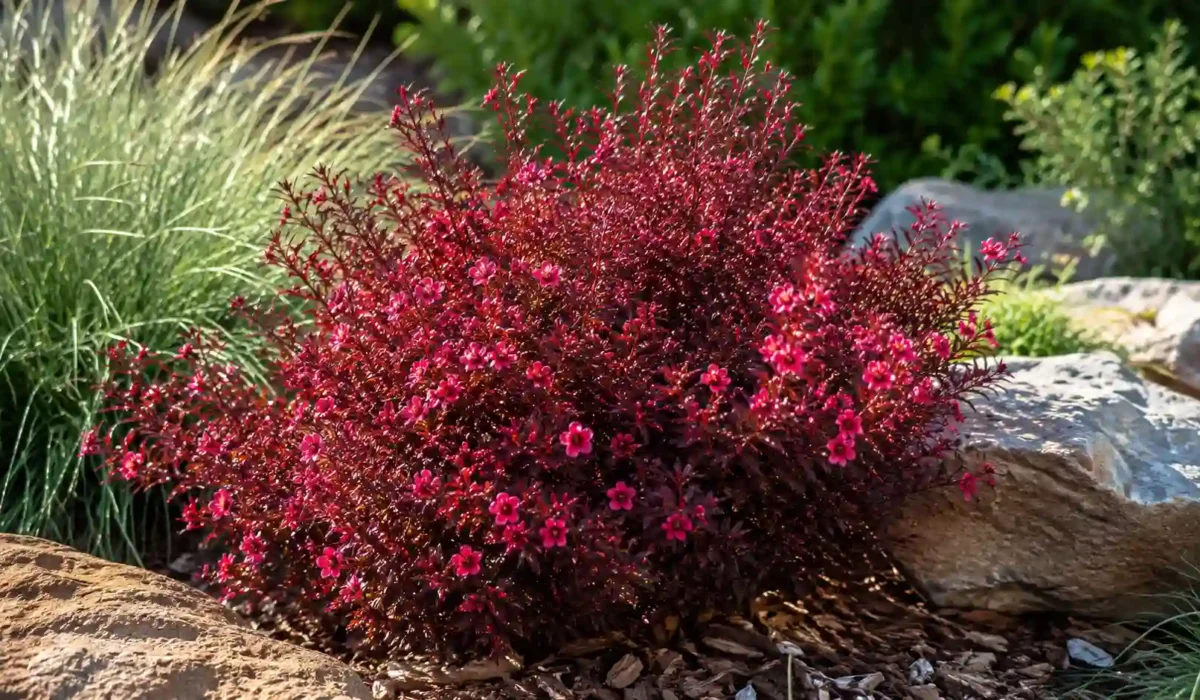
Leptospermum Dwarf Red Tea Tree: Care, Size & Growth
Introduction
Leptospermum dwarf red tea tree is a compact ornamental cultivar of Leptospermum scoparium, also known as manuka or New Zealand tea tree, valued for its burgundy foliage, colourful red to pink flowers, and manageable size. Unlike full-sized tea trees, this dwarf selection is well suited to smaller Australian gardens, borders, containers, and low-maintenance landscapes. Its evergreen foliage provides year-round colour while its seasonal blooms attract bees and other beneficial pollinators. This guide explains its botanical background, size, growth habits, care requirements, pruning, common problems, and how it compares with other popular cultivars. If you’re looking for more compact landscape shrubs, our Photinia Fraseri Robusta: Growth, Care & Hedge Guide explains another popular evergreen option for Australian gardens.
By Elemo Baker | Plant Care & Gardening Expert
Last Updated: June 2026
Quick Summary
- Leptospermum dwarf red tea tree is a compact cultivar of Leptospermum scoparium with burgundy foliage and red to pink flowers.
- Most plants reach around 0.8–1.5 metres tall and wide, depending on growing conditions.
- It grows best in full sun, free-draining soil, and moderate watering.
- Its smaller size makes it more suitable for pots and compact gardens than standard tea tree varieties.
What Is the Leptospermum Dwarf Red Tea Tree?
Leptospermum dwarf red tea tree is a dwarf ornamental selection of Leptospermum scoparium, an evergreen shrub belonging to the Myrtaceae family. Native to Australia and New Zealand, the species is widely recognised for its attractive flowers, aromatic foliage, and adaptability.
For readers interested in the botanical background of the species, the Leptospermum scoparium Wikipedia article provides additional information about its taxonomy, natural distribution, and relationship to manuka.
Several names are commonly associated with this compact cultivar group, including:
- Rubrum Nana
- Nanum Rubrum
- Nana Rubrum
- Leptospermum rubrum nana
- Leptospermum nanum rubrum
Although nursery naming may differ, these names generally refer to closely related dwarf red-leaved selections rather than entirely different plants.
The species Leptospermum scoparium is also known as the manuka plant in New Zealand and forms the botanical source of famous manuka honey. Dwarf ornamental cultivars are primarily grown for landscaping rather than honey production.
In our experience growing dwarf leptospermums, gardeners appreciate their compact habit because they provide year-round colour without overwhelming small garden spaces.
Is Tea Tree the Same as Manuka?
Yes. Leptospermum scoparium is commonly called manuka in New Zealand and tea tree in many parts of Australia.
Both names describe the same species. The difference comes from regional common names rather than botanical differences.
Many ornamental cultivars—including dwarf red tea tree—belong to this same species.
Leptospermum vs Melaleuca — What’s the Difference?
Although both genera are often called tea trees, Leptospermum and Melaleuca are different groups within the Myrtaceae family.
| Feature | Leptospermum | Melaleuca |
| Leaves | Small, stiff, pointed | Usually softer and broader |
| Flowers | Five distinct petals | Brush-like flower spikes |
| Bark | Often rough or flaky | Frequently papery bark |
| Common use | Ornamentals and manuka | Native screening and habitat plants |
Understanding the distinction helps gardeners choose the correct plant for their landscape goals.
Leptospermum Dwarf Red Tea Tree Size and Height
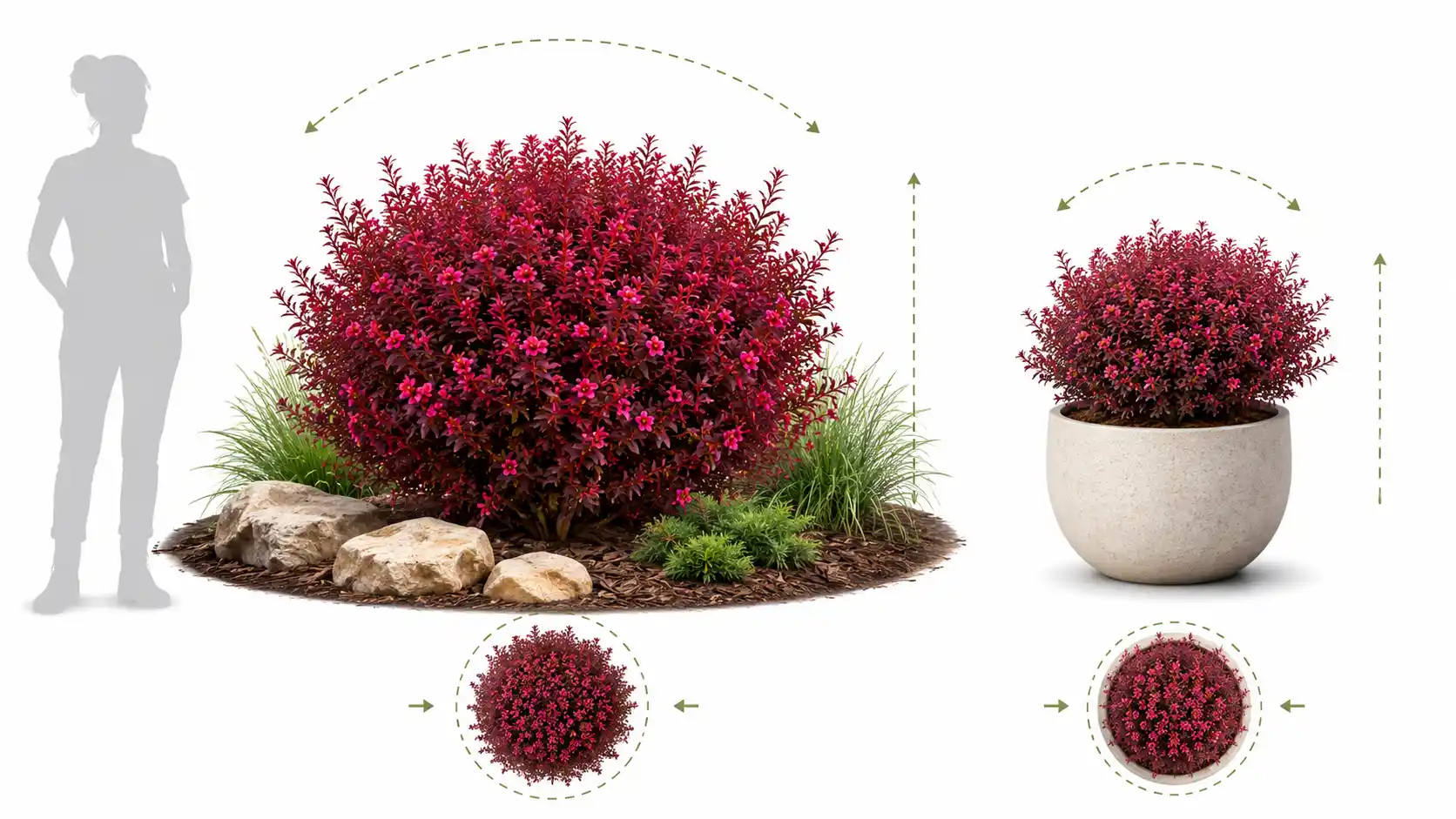
Most leptospermum dwarf red tea tree cultivars mature between 0.8 and 1.5 metres in height with a similar spread.
The plant naturally develops a dense, rounded or gently cascading habit, making it suitable for:
- Garden borders
- Rockeries
- Native gardens
- Feature pots
- Low informal hedges
Plants grown in containers usually remain smaller than those planted directly into the ground. Gardeners comparing compact ornamental trees may also find our Dwarf Forest Pansy Tree Size, Care & Growth Guide helpful when planning small landscapes.
Several factors influence mature size:
- Available root space
- Sunlight exposure
- Soil fertility
- Annual pruning
- Local climate
Elemo Baker recommends selecting a planting location that allows adequate airflow while leaving enough room for the shrub to develop naturally.
Growth Rate
Leptospermum dwarf red tea tree is generally considered a moderate-growing shrub. If you’re comparing growth speeds between Australian landscape plants, see our Pittosporum Silver Sheen Growth Rate Guide.
Most new growth appears during spring and early summer when temperatures are warm and soil moisture is consistent.
Growth is influenced by:
- Full sunlight
- Well-drained soil
- Moderate watering
- Mild climates
- Regular pruning after flowering
Growth slows considerably during winter, particularly in cooler Australian regions.
As of the 2026 growing season, many Australian growers continue recommending deep but infrequent watering rather than frequent shallow watering to encourage stronger root development.
Flowers and Foliage Characteristics
One of the main attractions of this shrub is the contrast between its colourful foliage and vibrant flowers. For more flowering Australian trees, explore our Tree With Pink Flowers Australia: Identification Guide.
The foliage is:
- Evergreen
- Burgundy to reddish-purple
- Small and aromatic
- Dense throughout the year
Flowering generally occurs during spring through early summer, although timing varies by climate.
Flowers may be:
- Deep red
- Crimson
- Dark pink
- Bright pink
The blooms attract:
- Native bees
- Honey bees
- Pollinating insects
Instead of edible fruit, the plant produces small woody seed capsules after flowering. These capsules remain on branches for extended periods but are not consumed like fruit.
Is It Safe Around Pets?
Leptospermum species are not generally regarded as highly toxic to dogs or cats. However, pets should not routinely chew ornamental plants because digestive upset may occur if large amounts are consumed.
Leptospermum Dwarf Red Tea Tree Cultivar Comparison
| Cultivar | Foliage | Flower Colour | Growth Habit | Mature Size |
| Burgundy Queen | Deep burgundy | Crimson | Upright | 2–3 m |
| Pink Cascade | Green to bronze | Pink | Cascading | 1–2 m |
| Burgundy | Burgundy | Red | Upright | 2–4 m |
| Morrisonii Burgundy | Burgundy | Pink-red | Compact | 1.5–2 m |
| Little Bun | Green | White | Rounded dwarf | 0.5–1 m |
| Dwarf Red Tea Tree | Burgundy | Red to pink | Compact mound | 0.8–1.5 m |
How to Care for a Leptospermum Dwarf Red Tea Tree
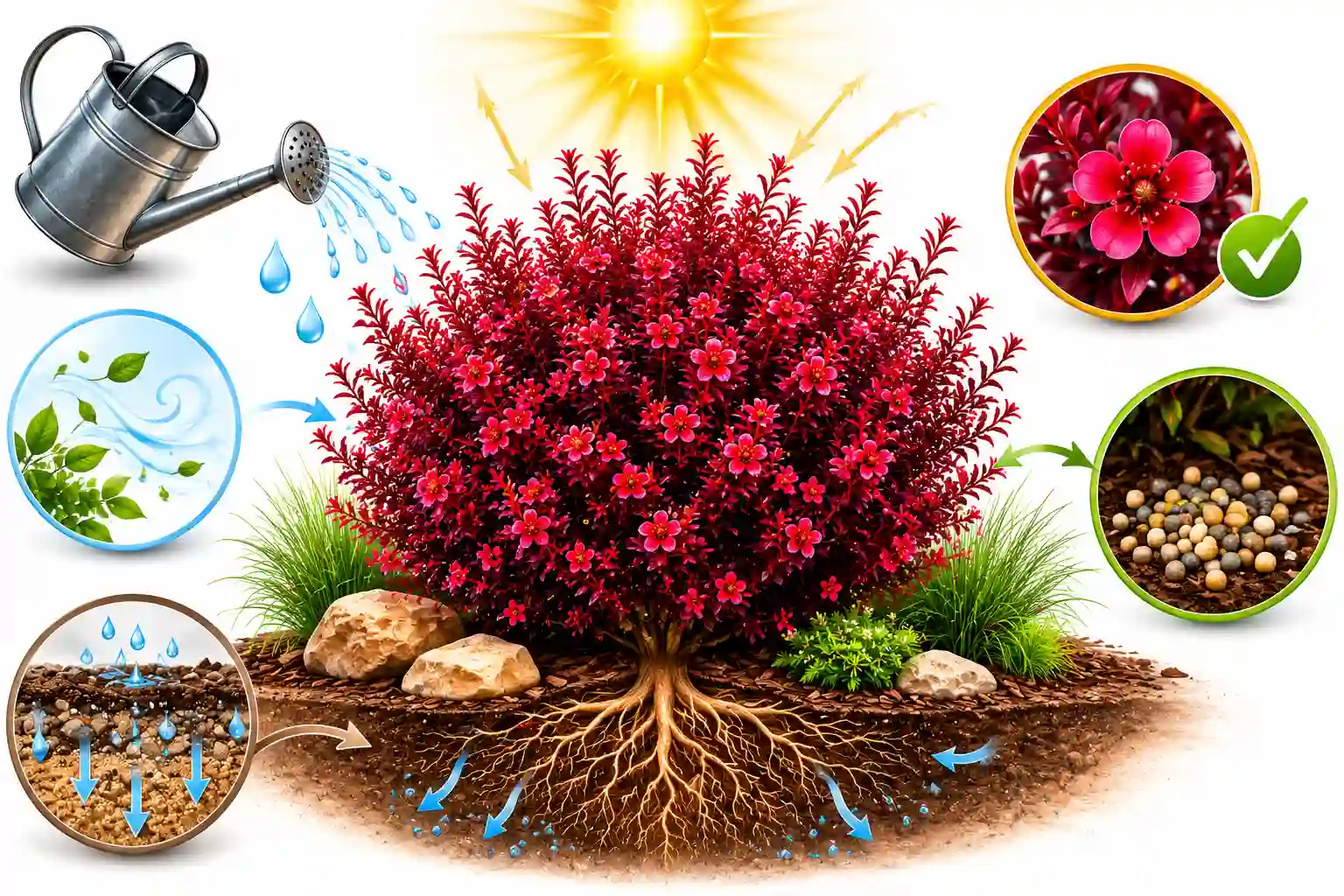
Proper care helps maintain healthy foliage, strong flowering, and compact growth.
Watering Needs
Water newly planted shrubs regularly until established.
Once mature:
- Water deeply during extended dry periods.
- Avoid constantly wet soil.
- Allow the soil surface to dry slightly between watering.
Overwatering remains one of the most common causes of poor plant health.
Light Requirements
This shrub performs best in full sun.
Aim for at least six hours of direct sunlight each day.
Although it tolerates light shade, reduced sunlight often leads to:
- Fewer flowers
- Greener foliage
- Less compact growth
Soil Preferences
The ideal soil is:
- Free draining
- Slightly acidic to neutral
- Sandy or loamy
- Rich in organic matter
Heavy clay soils should be improved before planting to reduce waterlogging.
Fertilising
Apply a slow-release fertiliser formulated for native Australian plants during spring.
Avoid excessive phosphorus because many Australian native plants are sensitive to high phosphorus levels.
In our experience, modest fertiliser applications encourage healthier flowering than excessive feeding.
Climate Tolerance
Leptospermum dwarf red tea tree performs well across many temperate Australian regions.
It tolerates:
- Coastal exposure
- Light frost once established
- Wind
- Short dry spells
Extended waterlogging remains far more damaging than occasional drought.
How to Prune Leptospermum Dwarf Red Tea Tree
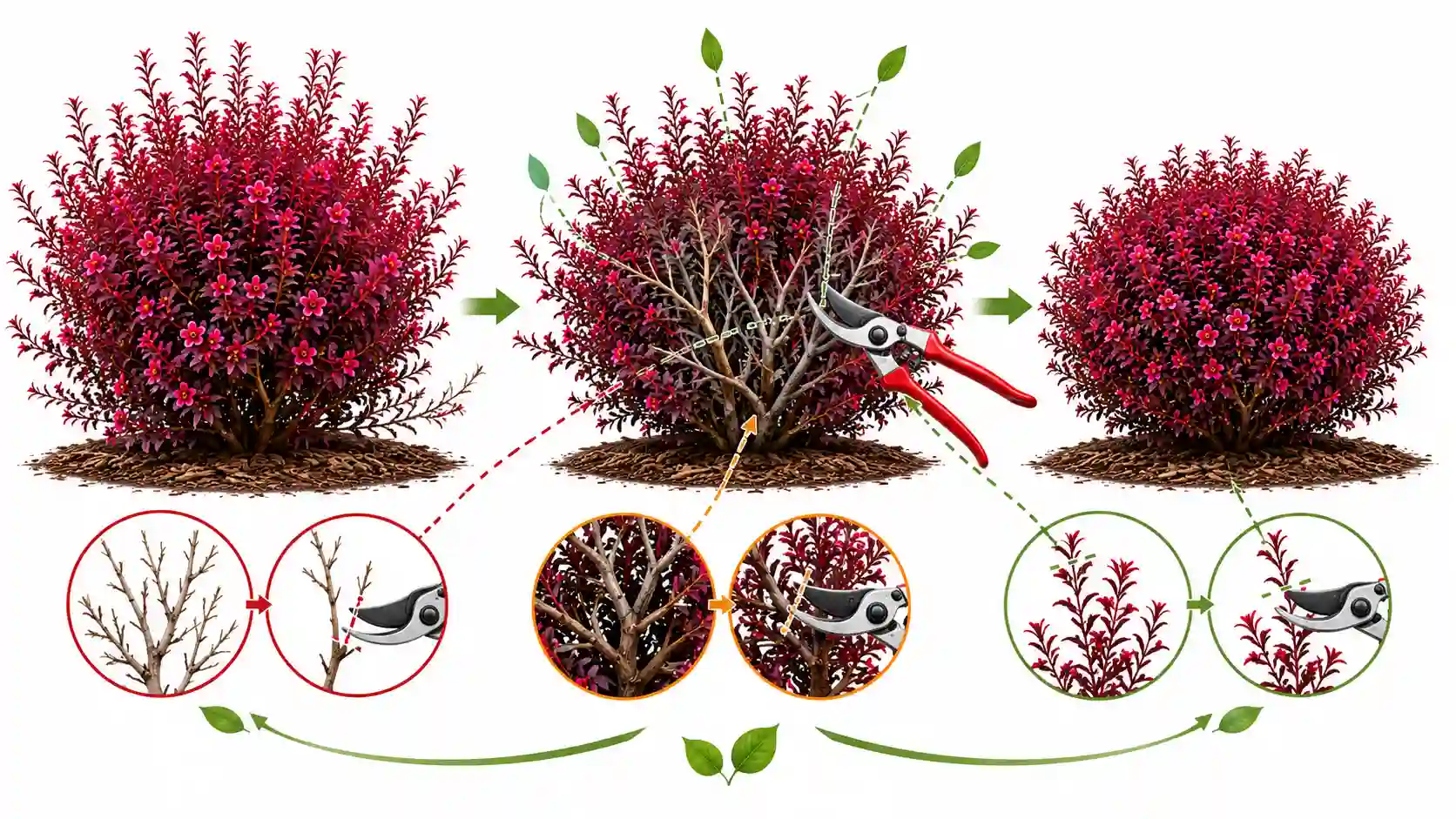
The best time to prune is immediately after flowering finishes.
Regular light pruning helps:
- Maintain shape
- Encourage branching
- Improve airflow
- Promote next season’s flowering
Pruning tips include:
- Remove dead or damaged branches.
- Avoid cutting into old bare wood where possible.
- Use clean, sharp secateurs.
- Remove no more than one-third of the plant during a single pruning session.
Annual maintenance is generally sufficient for most home gardens.
Common Problems and How to Fix Them
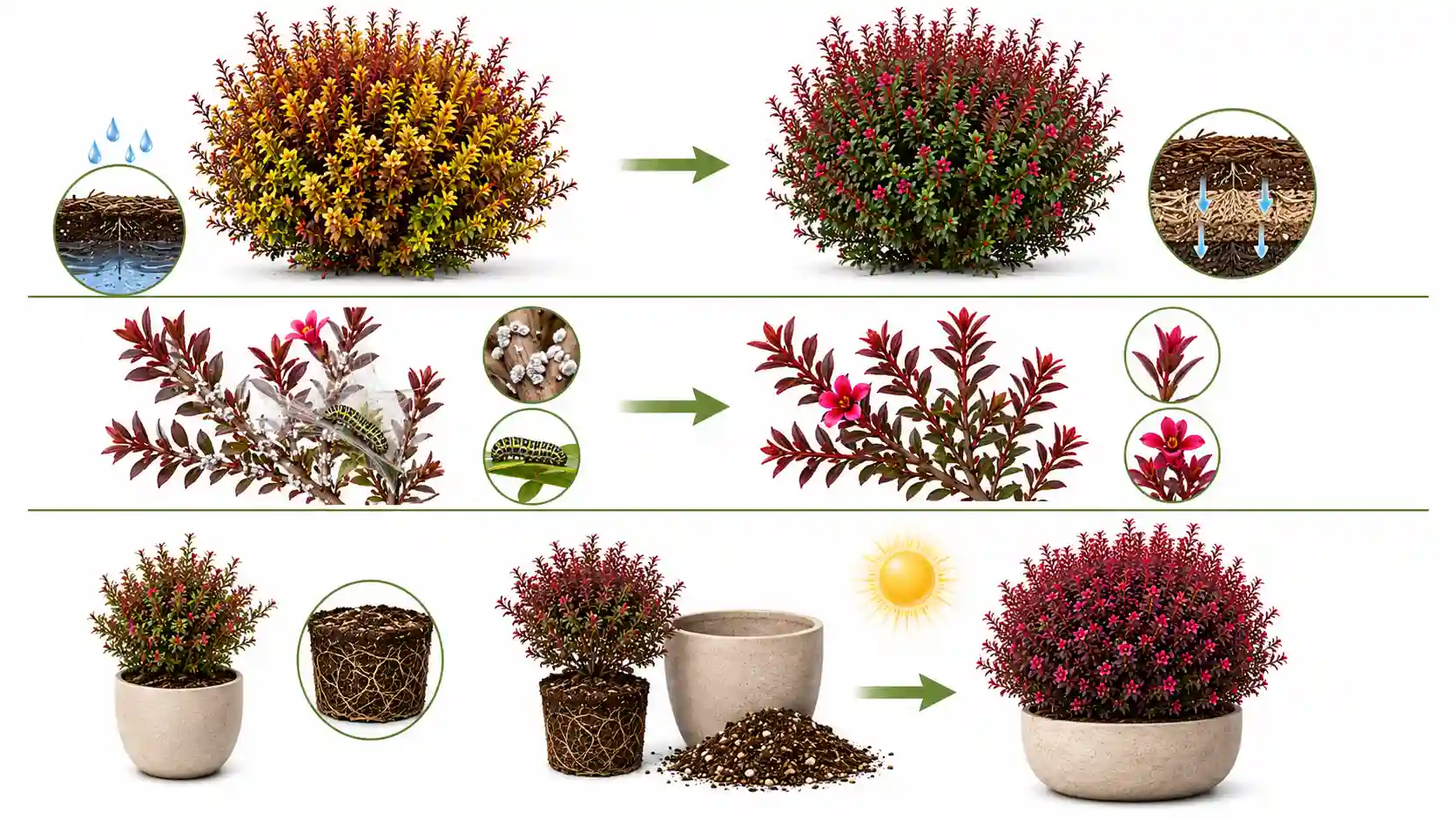
Yellowing Leaves
Possible causes
- Overwatering
- Poor drainage
- Nutrient deficiencies
Solution
Improve drainage, reduce watering frequency, and apply an appropriate native plant fertiliser if required.
Prevention
Plant in free-draining soil and avoid keeping roots constantly wet.
Pest Infestations
Common pests include:
- Scale insects
- Webbing caterpillars
Solution
Remove affected growth and use appropriate horticultural treatments when infestations become significant.
Prevention
Inspect foliage regularly and encourage beneficial insects.
Many plant health issues are caused by insects, so our Garden Pest Identification Guide for Australian Gardens can help identify common garden pests.
Slow or Stunted Growth
Common causes include:
- Insufficient sunlight
- Root-bound containers
- Poor soil quality
Solution
Move container plants into larger pots when needed, improve soil conditions, and provide full sun whenever possible.
Common Beginner Mistakes
New gardeners often encounter avoidable problems.
Common mistakes include:
- Watering too frequently
- Planting in poorly drained clay soil
- Growing in excessive shade
- Applying too much fertiliser
- Pruning at the wrong time of year
Avoiding these issues usually results in healthier plants with improved flowering and stronger foliage colour.
Where to Buy a Leptospermum Dwarf Red Tea Tree in Australia
Leptospermum dwarf red tea tree is commonly available through Australian:
- Native plant nurseries
- Independent garden centres
- Specialist landscape suppliers
- Online nursery retailers
Availability varies seasonally and between states.
When purchasing, look for healthy plants with:
- Dense foliage
- Strong branching
- No signs of pests
- Healthy root systems
Buying from reputable Australian nurseries also increases the likelihood of obtaining correctly labelled cultivars.
Conclusion
Leptospermum dwarf red tea tree is an attractive compact cultivar of Leptospermum scoparium that combines colourful burgundy foliage, vibrant flowers, and easy maintenance in a manageable shrub. Its moderate growth, evergreen habit, and suitability for pots and small gardens make it an excellent choice for Australian landscapes. With full sun, well-drained soil, sensible watering, and light annual pruning, this dwarf tea tree can provide reliable colour and seasonal flowers for many years. Gardeners planning a mixed Australian planting scheme can find more species-selection ideas in our Australian Plants Guide: Indoor Houseplants & Garden Design.
FAQs
How big does a leptospermum dwarf red tea tree grow?
Most cultivars mature between 0.8 and 1.5 metres in both height and width, although climate, pruning, and planting location can influence final size.
Is leptospermum dwarf red tea tree the same as manuka?
Yes. It is a dwarf cultivar of Leptospermum scoparium, the same species commonly known as manuka in New Zealand and tea tree in Australia.
How do you prune a dwarf red tea tree?
Prune immediately after flowering by lightly trimming new growth, removing damaged branches, and maintaining the plant’s natural shape without cutting heavily into old wood.
What is the difference between Pink Cascade and Burgundy Queen leptospermum?
Pink Cascade has a cascading growth habit with pink flowers, while Burgundy Queen is a larger upright cultivar featuring rich burgundy foliage and crimson blooms.
Why are the leaves on my tea tree turning yellow?
Yellow leaves are most often caused by overwatering, poor drainage, or nutrient deficiencies. Improving drainage and adjusting watering usually resolves the issue.
Is leptospermum dwarf red tea tree suitable for pots?
Yes. Its naturally compact growth makes it an excellent container plant, provided it is grown in a well-drained potting mix with regular sunlight and appropriate watering.
1 Comment