

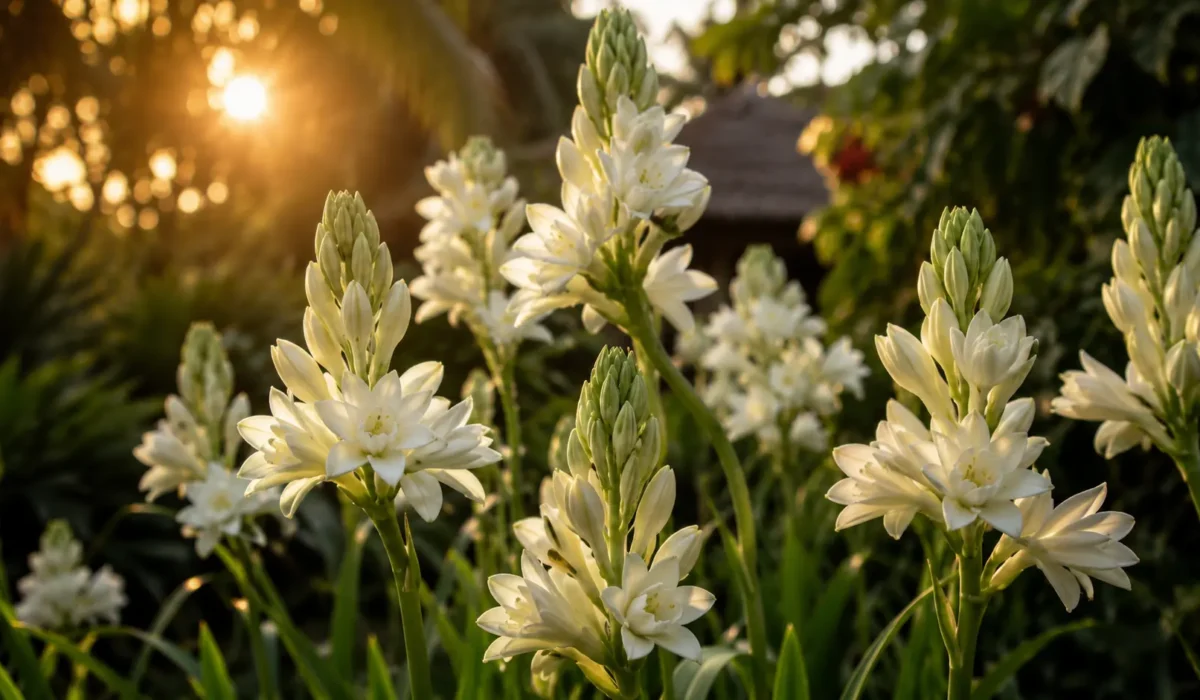
Nardo Flower (Tuberose): Meaning, Care & Uses
Introduction
Nardo flower in English refers to tuberose, scientifically known as Polianthes tuberosa (syn. Agave amica), a highly fragrant flowering plant grown for its waxy white blooms and essential oil production. In Spanish, Filipino, and several Latin American regions, “nardo” or “nardos” is the common name for this ornamental plant. This article explains what “nardos flowers in English” means, clarifies naming confusion, and explores its origin, appearance, uses, and cultivation.
Nardo (tuberose) is valued worldwide for its intense fragrance, long-lasting cut flowers, and cultural symbolism. You will learn how it grows, why it is prized in perfumery, and how to cultivate it successfully in Australian climates. If you enjoy fragrance-rich and mood-enhancing plants like tuberose, you may also like exploring the Benefits of Indoor Plants: 10 Science-Backed Reasons for broader wellness and air-quality improvements.
Quick Summary
- “Nardo” is the common vernacular name for tuberose (Polianthes tuberosa).
- Tuberose grows from tubers and produces tall, highly fragrant white flower spikes.
- It is widely used in perfumes, weddings, and ornamental fragrant gardens.
- In Australia, it thrives in warm, frost-free conditions with full sun and free-draining soil.
Nardo Flower Meaning — What Does “Nardo” Translate To in English?
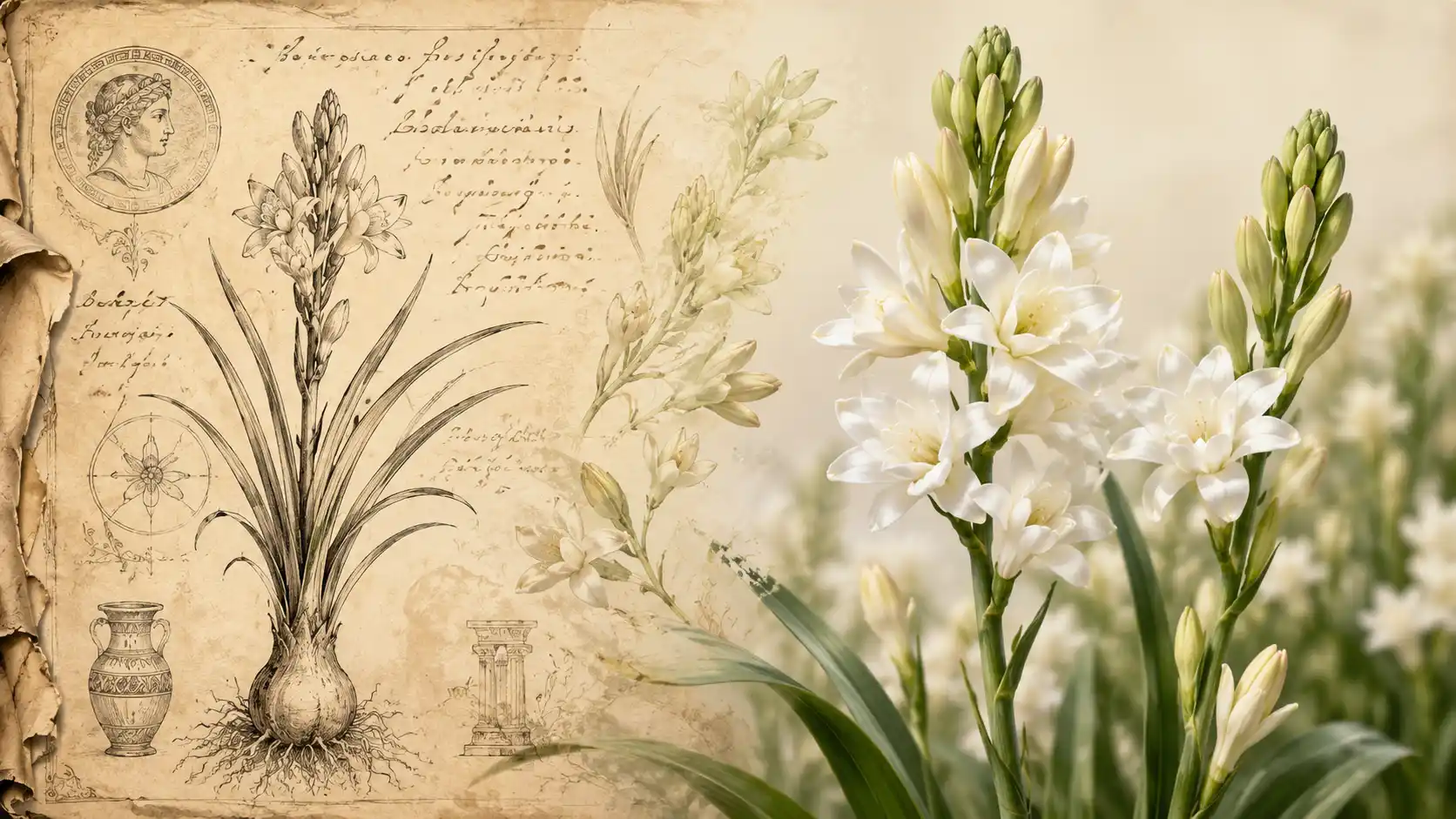
“Nardo” translates to tuberose in English and is not a separate botanical species but a common name used in several languages. In gardening and floristry, “nardo flower in English” directly refers to the ornamental plant Polianthes tuberosa, known for its strong fragrance and white clustered blooms.
The term “nardos en inglés” or “nardo in English” is often searched by people trying to identify this flower across languages. Regardless of spelling variations such as “nardos flowers” or “nardo planta,” they all point to tuberose.
Where the Name “Nardo” Comes From
The word “nardo” originates from the Latin nardus, which came from the Greek nárdos. Historically, this referred to aromatic plants such as spikenard. Over time, the term became loosely associated with strongly scented ornamental flowers, including tuberose, due to fragrance similarity.
Other Common Names for Tuberose Around the World
Tuberose is known globally by several names:
- Azucena (Spanish) — often used in ornamental contexts
- Rajanigandha / Nishigandha (India & Indonesia) — meaning “night fragrant”
- Tuberose (English) — the standard horticultural name
Despite its name, tuberose is not related to true roses.
What Is Tuberose? Plant Overview
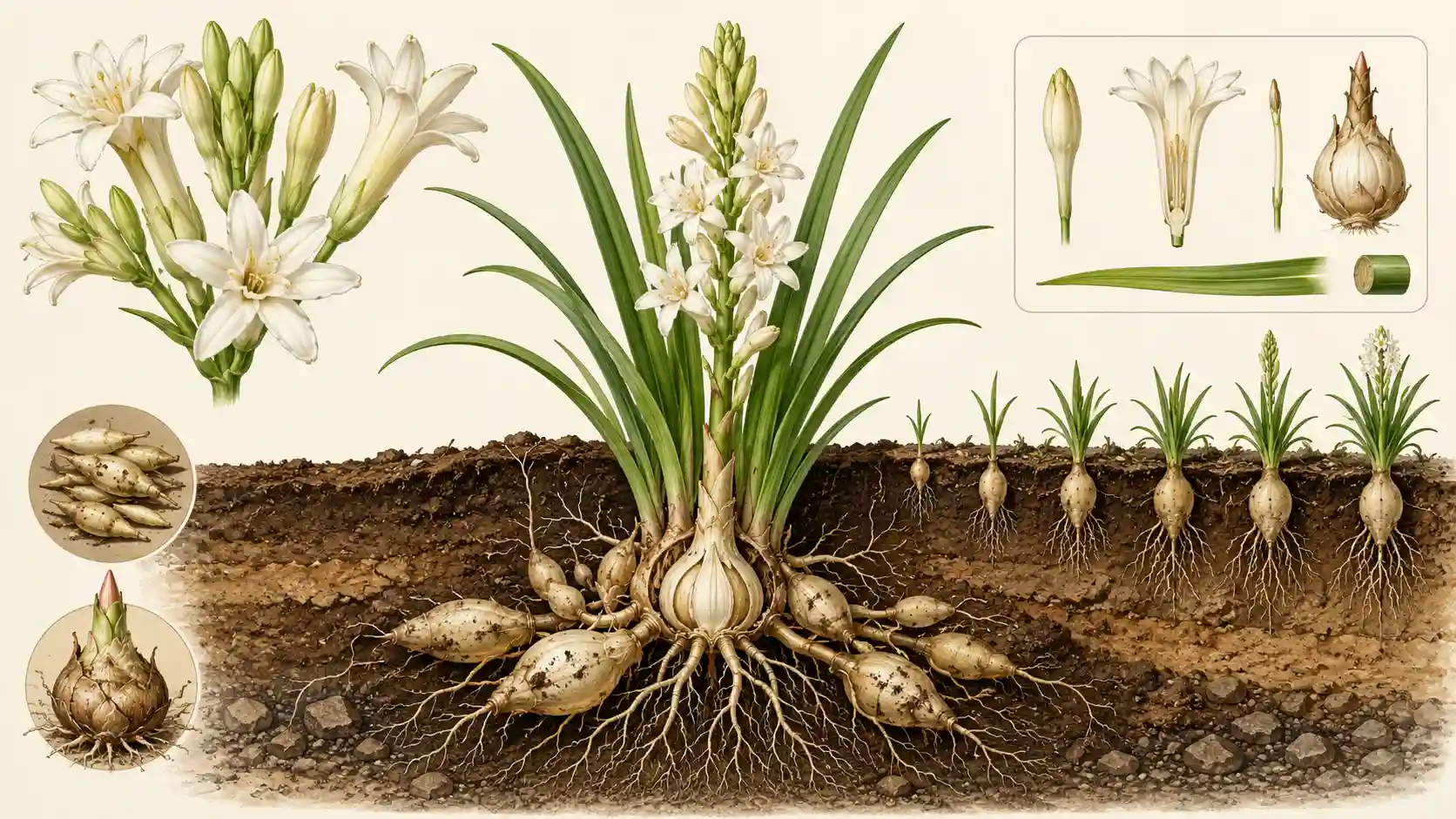
Tuberose is a perennial flowering plant from the Asparagaceae family, native to Mexico, grown for its fragrant night-blooming flowers. It develops from underground tubers and produces upright, grass-like leaves with a central flowering spike. Tuberose is scientifically known as Polianthes tuberosa and is widely documented in botanical references such as Wikipedia.
Botanically, it belongs to:
- Family: Asparagaceae
- Subfamily: Agavoideae
- Genus: Agave amica (formerly Polianthes tuberosa)
Tuberose is widely cultivated for cut flowers and perfume extraction due to its powerful floral scent.
Tuberose vs Similar Fragrant White Flowers
| Flower | Family | Bloom Habit | Scent Profile |
| Tuberose | Asparagaceae | Tall spike, long bloom | Rich, creamy, intense |
| Jasmine | Oleaceae | Clusters, repeat blooms | Light, sweet, airy |
| Hyacinth | Asparagaceae | Dense spring spikes | Strong, short-lived |
Tuberose is often confused with jasmine, but they are not the same plant and differ in structure and blooming cycle. If you are interested in other ornamental flowering plants for landscaping, the Fast Growing Magnolia Australia: Best Varieties & Care Guide offers useful alternatives for garden design.
Nardo Plant Size and Growth Habit
Nardo (tuberose) grows as a clump-forming perennial reaching about 60–100 cm in flower height under ideal conditions. It spreads slowly through underground tubers and produces upright leaves with seasonal flowering spikes.
Growth is moderate, with most activity occurring in warm months. In Australia, flowering typically occurs from late summer into autumn.
Elemo Baker notes from practical cultivation experience that tuberose performs best when left undisturbed for at least one season, allowing tuber clumps to mature before division.
Tuberose Flower Colours and Varieties
Tuberose flowers are most commonly white, with both single and double-flowered varieties available. The classic form produces elegant waxy white blooms, while the double-flowered cultivar ‘The Pearl’ is widely grown for its fuller appearance and stronger fragrance.
Occasionally, pale pink or cream-tinted forms are reported, though these are less common and often climate-influenced rather than genetically distinct.
How to Grow Nardo (Tuberose) at Home
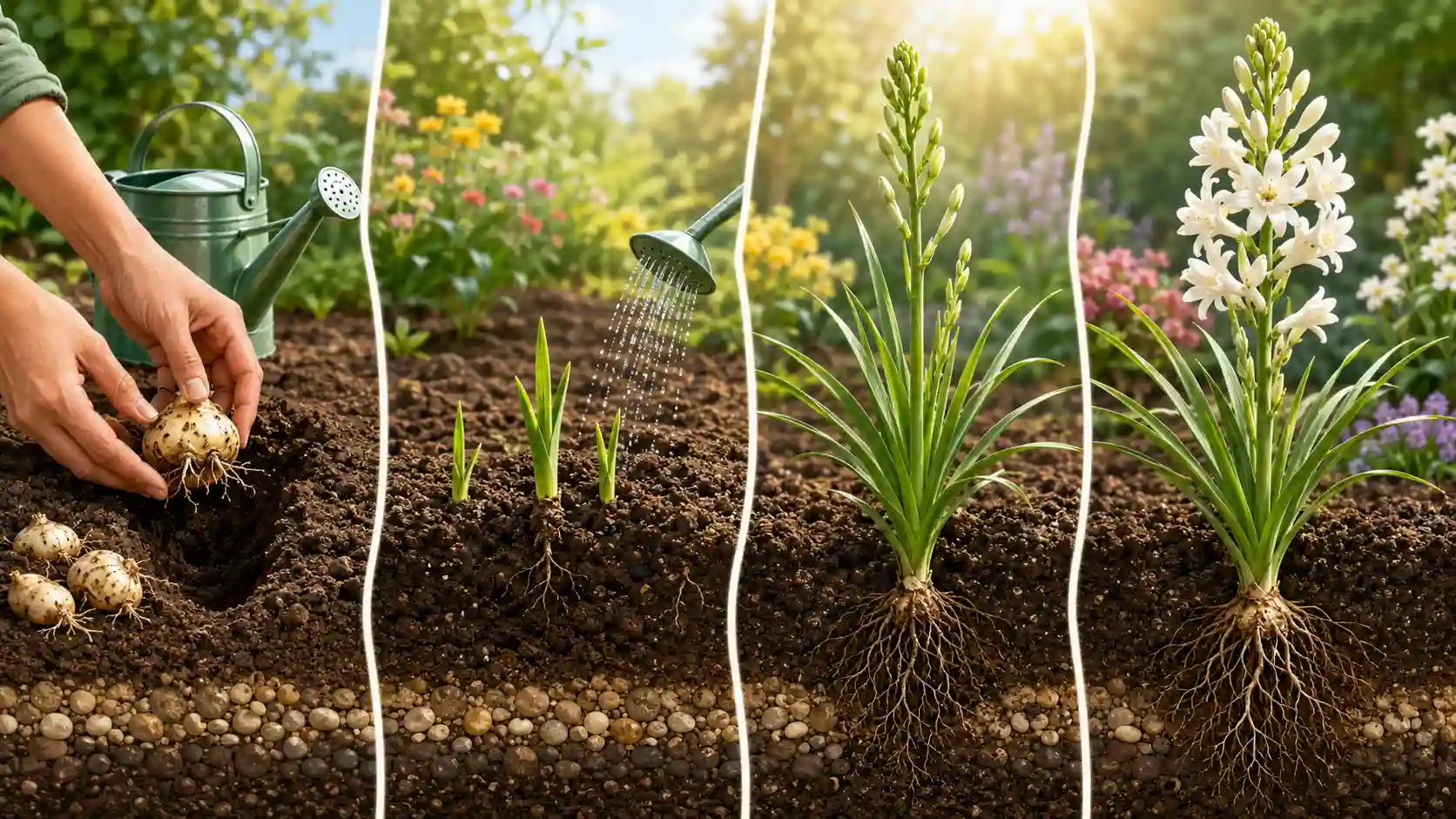
Tuberose grows best in full sun, warm temperatures, and well-draining soil, making it ideal for Australian gardens in frost-free regions.
Key care requirements:
- Watering: Moderate moisture during active growth; avoid waterlogging
- Light: Full sun for strong flowering
- Soil: Sandy or loamy, well-drained soil
- Fertiliser: Light feeding during planting and bud formation
- Pruning: Remove spent flower spikes after blooming
- Climate: Frost-tender; requires protection in cooler areas
In our experience growing tuberose in warm coastal Australian gardens, consistent sunlight exposure significantly increases flower spike production.
Planting and Storing Tuberose Bulbs
Tuberose is planted from bulbs (tubers), not seeds. Plant bulbs 5–8 cm deep in spring when soil warms.
- Space bulbs 15–20 cm apart
- Plant in full sun location
- In colder regions, lift bulbs after foliage dies back
- Store in dry, cool conditions over winter
Elemo Baker recommends lifting bulbs in frost-prone zones to prevent rot and ensure regrowth in the next season.
Common Tuberose Problems and How to Fix Them
Tuberose problems are usually related to watering, drainage, or insufficient sunlight.
- Poor flowering: Caused by shade or overcrowding; fix by dividing bulbs and relocating to full sun
- Yellowing leaves: Often due to overwatering; improve drainage
- Bulb rot: Caused by wet soil in cool conditions; ensure free-draining soil and proper seasonal planting
Tuberose Meaning and Symbolism
Tuberose symbolises purity, sensuality, and deep emotional expression in the language of flowers. Historically, it was associated with luxury and romance due to its intense fragrance and rarity in European gardens.
Victorian floral traditions often used tuberose to represent forbidden love or heightened emotion, making it a popular choice for ceremonial arrangements.
Tuberose in Perfumery

Tuberose is one of the most valuable floral notes in perfumery due to its rich, creamy, and long-lasting scent profile. It has been used in fragrance production since the 17th century. Like tuberose, the Lavender Plant at Home Benefits article explains how aromatic plants are widely used for relaxation, essential oils, and home fragrance improvement.
Its essential oil is extracted from night-harvested flowers when scent intensity peaks.
It is widely used in:
- High-end perfumes
- Aromatherapy blends
- Floral fragrance oils (including “nardo perfume oil”)
Tuberose Vase Life and Cut Flower Care
Tuberose has a vase life of around 7–10 days when properly cared for, making it popular in weddings and floral arrangements.
To extend freshness:
- Change water regularly
- Trim stems at an angle
- Keep in cool indoor conditions
Its strong fragrance and elegant spikes make it highly desirable for bridal bouquets.
What Is the Most Fragrant Tuberose?
Double-flowered tuberose varieties are generally considered the most fragrant due to their increased petal density and oil production. While fragrance intensity can vary, tuberose is consistently ranked among the world’s most aromatic flowers.
Growing Tuberose in Australian Gardens
In Australia, tuberose thrives in warm coastal and inland regions with frost-free conditions and full sun exposure. For region-specific cultivation tips, see the Pink Tuberose Growing Guide Australia, which covers seasonal planting and flowering performance in Australian climates.
It performs best in:
- USDA-equivalent warm zones (subtropical to warm temperate areas)
- Well-drained garden beds or large containers
Seasonal note: As of recent Australian gardening practice (2026), growers emphasise earlier spring planting to align flowering with late summer heat, improving bloom quality.
Conclusion
“Nardo” is simply another name for tuberose, a highly fragrant ornamental plant valued worldwide for its beauty and scent. Understanding its identity, care requirements, and cultural significance helps gardeners successfully grow it, especially in Australian climates where warmth and drainage are key.
With proper sunlight, soil, and seasonal care, tuberose becomes a reliable and rewarding addition to any fragrant garden. For a broader overview of plant selection and garden design, explore the Australian Plants Guide: Indoor Houseplants & Garden Design, which covers both indoor and outdoor species suited to Australian conditions.
FAQs
- What is a nardo flower called in English?
It is called tuberose (Polianthes tuberosa) in English. - What is another name for tuberose?
It is also known as rajanigandha or azucena in different regions. - Is tuberose the same as jasmine?
No, they are different plants with distinct structures and fragrance profiles. - How long do tuberose flowers last in a vase?
They typically last 7–10 days with proper care. - Can you grow tuberose indoors in Australia?
Yes, if placed in bright light and warm conditions. - Why isn’t my tuberose flowering?
Common causes include insufficient sunlight, overcrowding, or poor drainage.