

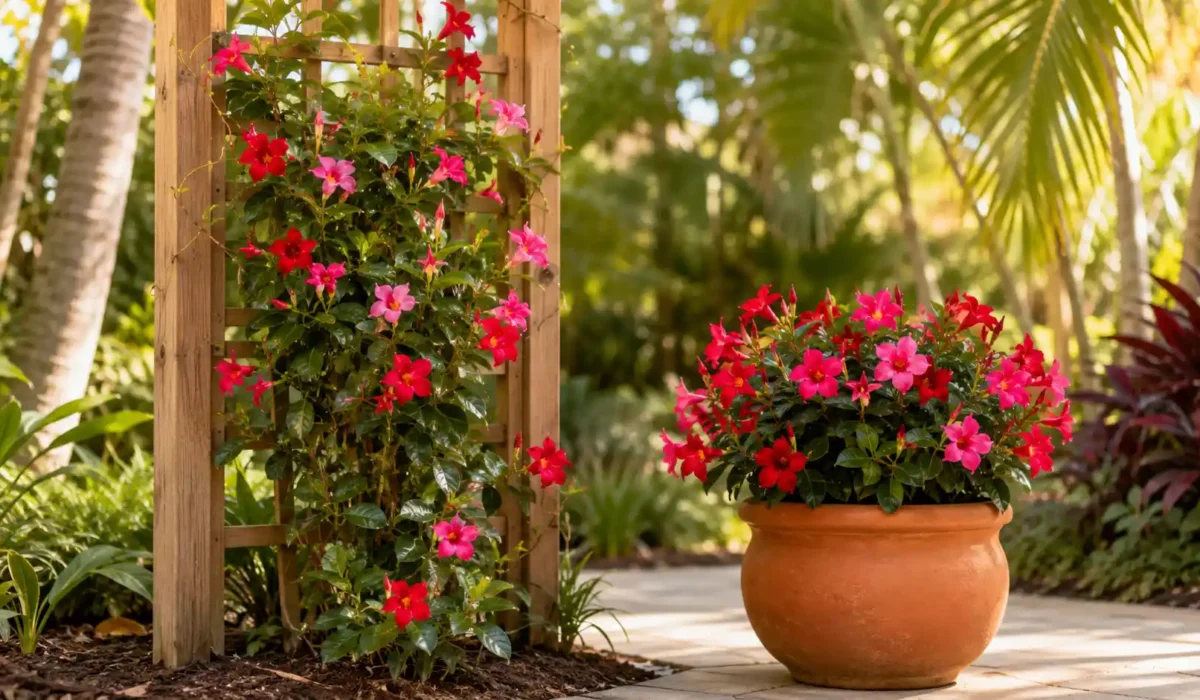
Mandevilla vs Dipladenia: Key Differences & Care Guide
Introduction
Mandevilla and dipladenia are closely related tropical flowering plants from the Apocynaceae family, and the term “dipladenia” is often used for compact, bushy forms of Mandevilla rather than a completely separate plant genus. Many gardeners search for dipladenia mandevilla, mandevilla and dipladenia, or ask “is dipladenia the same as mandevilla?” because nurseries frequently label these plants differently. Both produce colourful trumpet-shaped flowers and require similar growing conditions, including full sun, warm temperatures, and well-drained soil. The main difference is their growth habit: mandevilla is usually a vigorous climbing vine, while dipladenia commonly refers to shorter, bushier cultivars suited to containers and smaller gardens.
Quick Summary
- Dipladenia and mandevilla belong to the same botanical group, with dipladenia commonly referring to compact Mandevilla varieties.
- Mandevilla grows as a climbing vine, while dipladenia has a bushy, mounding growth habit.
- Both plants need full sun, warm conditions, and well-draining soil for healthy growth and flowering.
- Mandevilla is better for trellises and vertical gardens, while dipladenia suits pots, borders, and hanging baskets.
- In Australia, both are perennial in frost-free climates but may need winter protection in cooler regions.
Mandevilla vs Dipladenia — Are They the Same Plant?
Mandevilla and dipladenia are botanically related plants, but they are not always exactly the same type of growth form. The confusion exists because modern horticulture often uses “dipladenia” as a common name for compact, bush-shaped Mandevilla cultivars, especially those developed from Mandevilla sanderi.
Historically, dipladenia plants were classified separately under the genus Dipladenia, but botanical studies later grouped these plants into the broader Mandevilla genus. Today, most plants sold as dipladenia are actually selected Mandevilla varieties bred for compact growth, abundant flowering, and container performance.
Mandevilla belongs to the flowering plant family Apocynaceae and includes several tropical climbing species commonly grown as ornamental plants. Learn more about its botanical classification on Wikipedia’s Mandevilla overview.
Both plants share many characteristics:
- Family: Apocynaceae
- Genus: Mandevilla
- Flower type: Trumpet-shaped tropical blooms
- Growing preference: Warm climates and bright sunlight
- Care requirements: Very similar watering, soil, and feeding needs
The practical difference for gardeners is not usually botanical classification but how the plant grows and where it performs best.
Why the Names Are Used Interchangeably
The names mandevilla and dipladenia are often used interchangeably because plant breeders and nurseries use them to describe different forms of the same popular flowering group.
Commercial series such as Rio, Sun Parasol, and Madinia have increased the confusion because some are marketed as dipladenia while others are sold under the Mandevilla name.
For example:
- Rio Dipladenia is generally a compact, bushy flowering plant.
- Sun Parasol Mandevilla varieties are often selected for stronger climbing growth.
- Madinia Dipladenia cultivars are commonly grown as patio and container plants.
The label may vary between regions, but the plant’s growth habit is usually the easiest way to identify the difference.
Growth Habit — Bush vs Vine
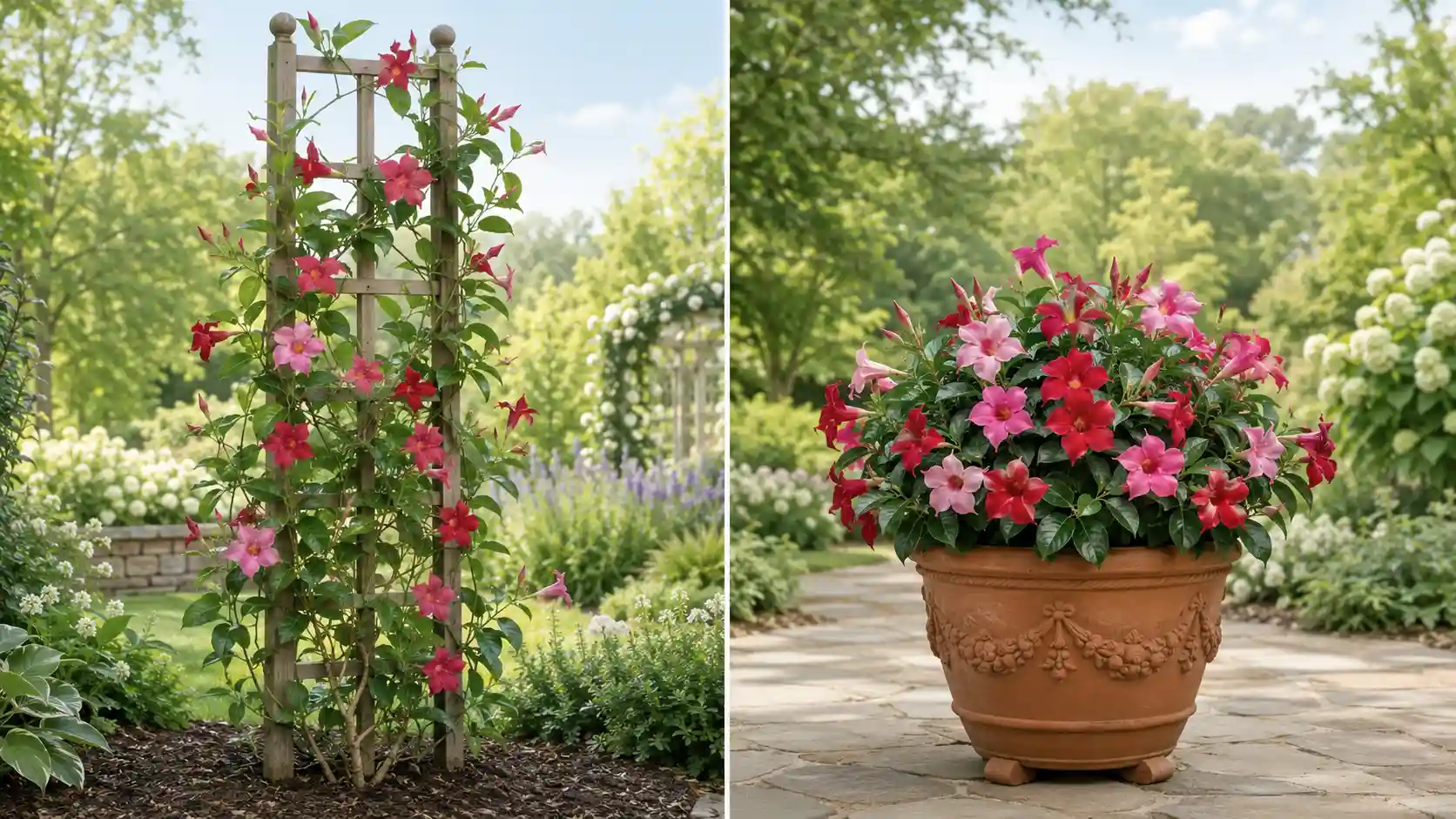
The main difference between mandevilla and dipladenia is their growth habit: mandevilla is typically a climbing vine, while dipladenia is usually a compact bush or mounding plant.
Traditional mandevilla varieties naturally produce long, flexible stems that climb when supported. They are ideal for garden structures where their vines can spread vertically.
Dipladenia types are bred for shorter growth, making them easier to manage in smaller spaces. They usually form a rounded bush rather than producing long climbing stems.
This difference affects where each plant works best:
| Feature | Mandevilla | Dipladenia |
| Growth type | Climbing vine | Compact bush/mounding |
| Height | Up to 3–6 m with support | 30–60 cm typical |
| Support needed | Trellis, arbour, stake | None or minimal |
| Best use | Fences, arches, vertical gardens | Pots, hanging baskets, borders |
A common question is “is dipladenia a climbing plant?” The answer is generally no. While some dipladenia varieties may produce slightly trailing growth, they are not as naturally vigorous or climbing-focused as traditional mandevilla vines.
In practical gardening, Elemo Baker recommends choosing mandevilla when you want a flowering screen or vertical feature, while dipladenia is often the better option for balconies, patios, and decorative containers.
Leaf and Flower Differences
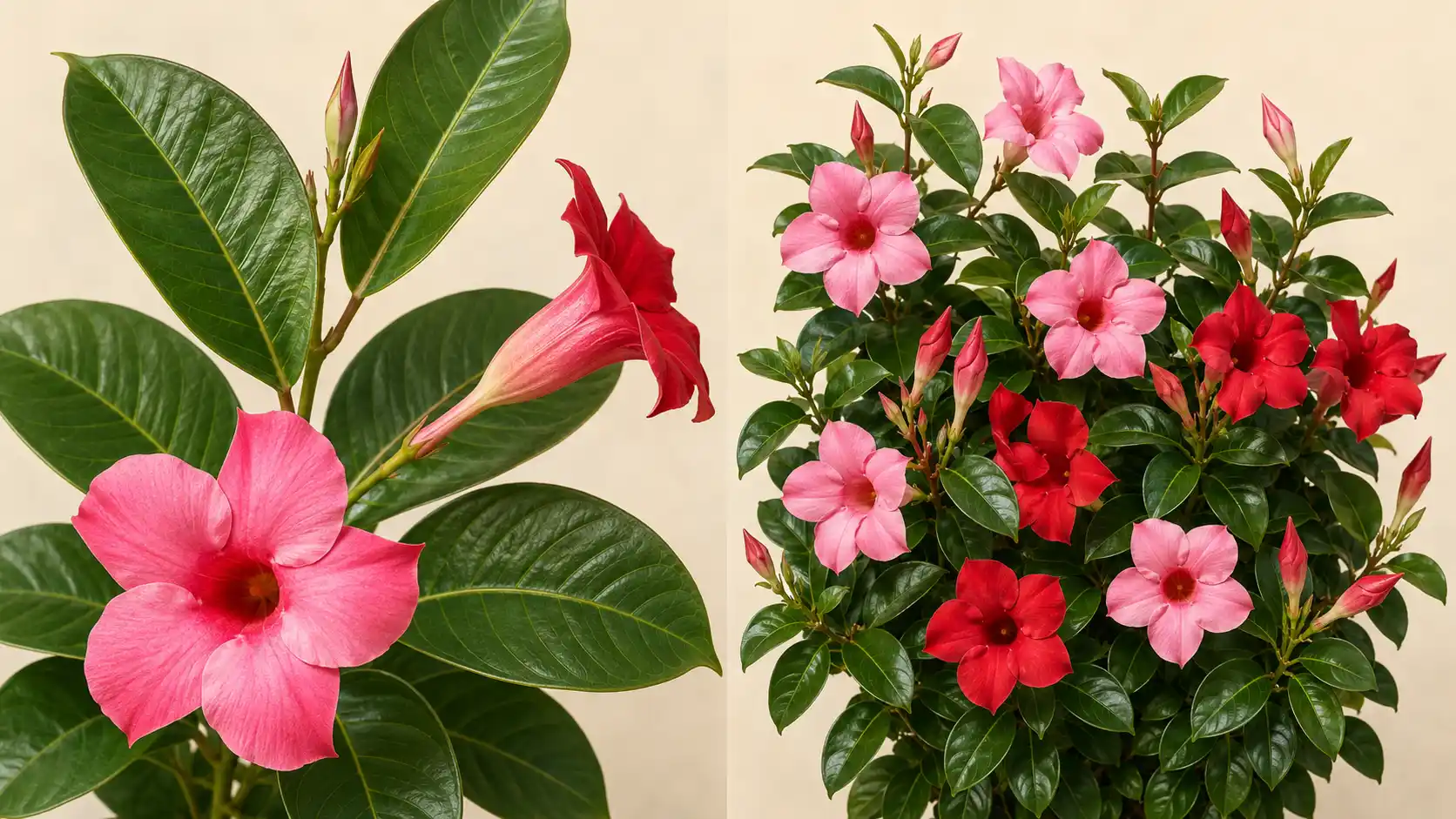
Mandevilla and dipladenia have similar flowers, but dipladenia types usually have smaller leaves, more compact growth, and slightly smaller but more abundant blooms.
Both plants produce attractive trumpet-shaped flowers, which are one of their most recognisable features. However, careful observation can reveal differences in leaf texture and flowering style.
Leaf and Flower Comparison
- Leaf texture: Vining mandevilla types generally have larger, thicker, and glossier leaves.
- Flower size: Dipladenia varieties often produce slightly smaller flowers but can flower more continuously.
- Colour range: Both plants are available in red, pink, white, and yellow flowering varieties.
Popular examples include:
- Dipladenia red varieties with bright crimson blooms.
- Diamantina flower cultivars known for strong colour selection and compact growth.
- Large-flowered mandevilla hybrids used for tropical garden displays.
When comparing dipladenia vs mandevilla pictures, growth shape is often a more reliable identification feature than flower colour because both groups can produce very similar blooms.
Growing Conditions and Sun Requirements
Dipladenia and mandevilla both grow best in full sun, requiring at least six hours of direct sunlight daily for strong flowering and healthy growth. Choosing plants that match your climate, available sunlight, and garden layout is an important part of successful Australian garden design, as explained in our Australian Plants Guide: Indoor Houseplants & Garden Design.
These tropical plants perform best in warm Australian climates where they receive plenty of light and protection from cold temperatures.
Ideal growing conditions include:
- Light: Full sun to partial afternoon shade in very hot areas.
- Soil: Well-draining soil that prevents waterlogging.
- Temperature: Warm conditions above 15°C support active growth.
- Drainage: Essential because excessive moisture can cause root problems.
Many gardeners ask, “can dipladenia be in full sun?” or “do dipladenia like full sun?” The answer is yes. Dipladenia generally performs well in full sun, especially when watered correctly and planted in free-draining soil.
For container growing, use a quality potting mix designed for flowering plants. A dipladenia bush in a flower bed should be planted in soil improved with organic matter but should never sit in constantly wet ground.
Which Grows Faster — Mandevilla or Dipladenia?
Mandevilla usually grows faster than dipladenia because its natural climbing habit allows it to produce longer stems and spread more aggressively during the growing season.
Vining mandevilla varieties are designed to climb and expand vertically, especially when provided with a trellis, warm temperatures, and regular feeding. In ideal conditions, they can add significant growth during spring and summer.
Dipladenia varieties grow at a slower, more controlled rate because they are selected for compact, bushy forms. Their energy is directed towards maintaining a rounded shape and producing abundant flowers rather than extending long climbing stems.
Growth speed is influenced by:
- Amount of sunlight received
- Temperature and climate
- Soil quality and drainage
- Watering consistency
- Fertiliser availability
- Pruning practices
In Australian gardens, mandevilla generally has a longer active growth period in warm coastal regions, while both plants slow significantly during cooler months.
Mandevilla and Dipladenia Care Guide
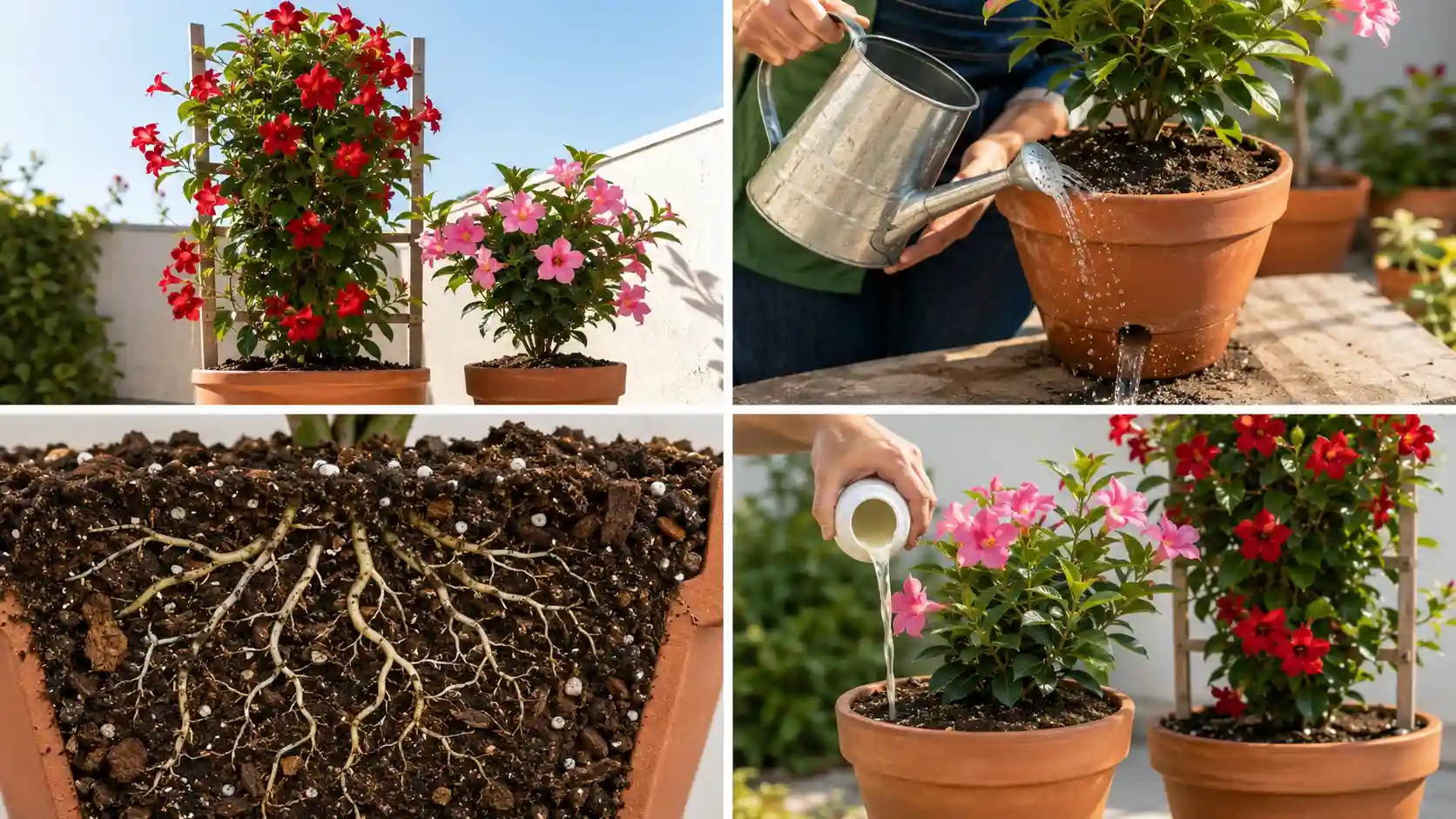
Mandevilla and dipladenia have almost identical care requirements because they belong to the same plant group and share similar tropical growing preferences.
Both plants reward consistent care with repeated flowering from spring through autumn. Their main requirements are adequate sunlight, balanced moisture, good drainage, and regular nutrients during active growth. Like other popular container plants such as Dracaena Marginata, mandevilla and dipladenia can thrive in pots when provided with suitable light, drainage, and regular care.
Watering
Dipladenia and mandevilla should be watered deeply but allowed to dry slightly between watering sessions to prevent root problems.
The most common mistake with these plants is overwatering. Although they enjoy moisture during active growth, their roots require oxygen and cannot tolerate constantly saturated soil.
Practical watering guidance:
- Water when the top few centimetres of soil feel dry.
- Increase watering during hot summer periods.
- Reduce watering during winter dormancy.
- Ensure pots have drainage holes.
For container-grown dipladenia, check moisture more frequently because pots dry out faster than garden soil.
Elemo Baker’s growing experience shows that consistent watering combined with excellent drainage produces healthier foliage and more reliable flowering than frequent shallow watering.
Light Requirements
Mandevilla and dipladenia perform best with at least six hours of direct sunlight daily.
Strong sunlight encourages:
- More flowers
- Compact growth
- Stronger stems
- Better leaf colour
In extremely hot Australian climates, some afternoon shade can prevent leaf stress, especially for plants grown in containers.
Soil Preferences
The best soil for dipladenia and mandevilla is a loose, well-draining mix that allows excess water to escape quickly.
Ideal soil characteristics include:
- Slightly acidic to neutral pH
- Good drainage
- Organic matter for nutrients
- Air space around roots
For pots, a premium flowering plant potting mix combined with extra drainage material such as perlite or coarse sand can improve root health.
Heavy clay soils should be improved before planting because poor drainage increases the risk of root damage.
Fertilising
The best fertiliser for dipladenia and mandevilla is a balanced liquid fertiliser applied regularly during active growth.
These flowering plants benefit from nutrients that support both foliage and blooms.
Recommended feeding approach:
- Apply a balanced liquid feed every 2–4 weeks during spring and summer.
- Reduce feeding during cooler months.
- Avoid excessive nitrogen, which can encourage leaves instead of flowers.
Many gardeners ask, “Can I use Miracle-Gro on my mandevilla?” A suitable Miracle-Gro flowering plant fertiliser can be used if applied according to label instructions. The key is maintaining balance rather than overfeeding.
Pruning and Deadheading
Pruning mandevilla and removing old flowers helps maintain shape, encourage branching, and support continuous flowering.
Deadheading involves removing faded flowers before seed formation, allowing the plant to focus energy on producing new blooms.
Pruning tips:
- Trim damaged or weak growth regularly.
- Cut back long stems to encourage bushier growth.
- Remove dead leaves and flowers.
- Prune heavily before new spring growth if needed.
A common question is “Should I cut back my mandevilla in the fall?” In warm Australian climates, light pruning can be done after flowering slows. In cooler regions, stronger pruning before winter storage may be useful.
Container vs Ground Planting
Mandevilla and dipladenia can both grow successfully in pots or in the ground, but dipladenia is especially suited to containers because of its compact growth.
Container growing benefits include:
- Easier winter protection
- Better control of soil quality
- Suitable for balconies and patios
For growing dipladenia in pots:
- Choose a container with drainage holes.
- Repot when roots become crowded.
- Use fresh potting mix when upgrading pot size.
A dipladenia hanging basket creates a trailing floral display, while climbing mandevilla can be trained onto a dipladenia trellis or garden support structure.
When deciding “is it better to plant mandevilla in pots or ground?”, consider your climate. Ground planting suits frost-free areas, while pots provide flexibility in cooler regions.
Winter Care for Mandevilla and Dipladenia
Winter care for mandevilla and dipladenia depends on climate, with frost protection being essential because both plants are sensitive to cold temperatures. Gardeners in cooler regions often move tropical plants indoors during winter, following similar principles used for maintaining healthy indoor plants and improving indoor greenery.
In tropical and subtropical Australia, plants may continue growing through winter. However, gardeners in cooler areas need to protect them from frost and prolonged cold.
Winter care steps include:
- Move potted plants indoors or into a sheltered area before frost.
- Reduce watering as growth slows.
- Avoid heavy fertilising during dormancy.
- Remove damaged leaves after cold periods.
- Keep plants in bright light where possible.
For gardeners asking “what should I do with my mandevilla in winter?”, the best approach is to reduce stress rather than encourage growth. These plants naturally slow down in cooler conditions.
Do you cut back dipladenia for winter? Light pruning is acceptable, but avoid severe cutting when the plant is already stressed by cold.
Plant Size
Mandevilla and dipladenia differ significantly in mature size because mandevilla develops long climbing stems while dipladenia remains compact and bush-shaped.
Mature Size Comparison
| Plant Type | Typical Height | Typical Width |
| Climbing mandevilla | 3–6 m with support | 1–3 m depending on training |
| Compact dipladenia | 30–60 cm | 30–90 cm |
Outdoor size is usually larger than indoor-grown plants because garden plants receive more sunlight and root space.
Indoor dipladenia, including varieties such as Rio Dipladenia, generally remains smaller due to limited light and container restrictions.
Factors affecting size include:
- Sun exposure
- Pot size
- Pruning frequency
- Fertiliser levels
- Climate conditions
The average size of a dipladenia plant is usually under one metre, making it suitable for small gardens, patios, and balconies.
Common Problems With Mandevilla and Dipladenia (Problem-Solution Coverage)
Common mandevilla and dipladenia problems usually occur because of incorrect watering, insufficient sunlight, poor nutrition, or pest activity. Understanding the cause of each issue helps gardeners restore healthy growth and flowering.
Yellowing Leaves
Yellow leaves on mandevilla or dipladenia are commonly caused by overwatering, poor drainage, or nutrient deficiencies.
Possible causes include:
- Soil remaining wet for too long
- Root stress caused by poor drainage
- Lack of essential nutrients such as nitrogen or iron
- Natural ageing of older leaves
Solutions:
- Allow soil to dry slightly between watering.
- Improve drainage in heavy soils or containers.
- Apply a balanced fertiliser during the growing season.
- Check roots if yellowing continues despite correct watering.
Overwatering is one of the most frequent mistakes with these tropical plants. Healthy roots need both moisture and oxygen to function properly.
Poor Flowering
Poor flowering is usually caused by insufficient sunlight, excessive nitrogen fertiliser, or incorrect pruning timing.
Mandevilla and dipladenia require strong light to produce abundant blooms.
Common reasons for fewer flowers:
- Less than six hours of sunlight daily
- Too much nitrogen encouraging leaf growth
- Pruning at the wrong time
- Lack of feeding during active growth
Solutions:
- Move plants to a brighter location.
- Use a flowering fertiliser with balanced nutrients.
- Avoid removing too much new growth before flowering periods.
Leggy Growth
Leggy mandevilla or dipladenia growth usually indicates insufficient light or a lack of regular pruning.
Plants grown in low-light conditions often stretch towards available sunlight, creating long stems with fewer leaves and flowers.
To correct leggy growth:
- Increase sunlight exposure.
- Trim long, weak stems.
- Encourage branching through regular pruning.
- Rotate container plants for even growth.
Pests
Mandevilla and dipladenia can occasionally attract pests such as aphids, mealybugs, and spider mites.
Prevention methods include:
- Inspecting leaves regularly.
- Cleaning dusty foliage.
- Removing affected leaves early.
- Using horticultural oils such as neem oil when appropriate.
A healthy plant grown in suitable conditions is generally less vulnerable to pest problems. For accurate identification of aphids, mealybugs, and other common garden insects, refer to our Garden Pest Identification Guide for Australian Gardens.
What Not to Plant With Mandevilla
Mandevilla should not be planted with companions that require very different growing conditions, especially plants that prefer shade, dry soil, or heavy watering.
Because mandevilla prefers:
- Full sun
- Regular moisture
- Well-drained soil
- Warm conditions
it may struggle when planted beside species with opposite needs.
Avoid planting mandevilla with:
- Shade-loving plants requiring low light
- Drought-tolerant plants needing dry soil
- Water-hungry plants that keep soil constantly wet
Another consideration is that mandevilla produces a milky sap that may irritate skin. Avoid placing it directly beside edible crops where accidental contact could occur, and wear gloves when pruning.
Lifespan — How Long Do These Plants Last?
Mandevilla and dipladenia are long-lived perennial plants in frost-free climates but often behave like annuals in colder regions where winter temperatures damage them.
In tropical and subtropical parts of Australia, these plants can survive for many years with proper care.
Lifespan Factors
Their lifespan depends on:
- Climate conditions
- Frost exposure
- Winter protection
- Soil drainage
- General plant health
A common question is “is mandevilla a perennial?” The answer is yes. Mandevilla is naturally a perennial tropical vine, but cold climates can shorten its lifespan.
Similarly, “is dipladenia a perennial or an annual?” Dipladenia is also a perennial when grown in suitable warm conditions. In cooler areas, gardeners often grow it as an annual or overwinter it indoors.
With protection, container-grown plants can continue flowering for several seasons.
Popular Varieties
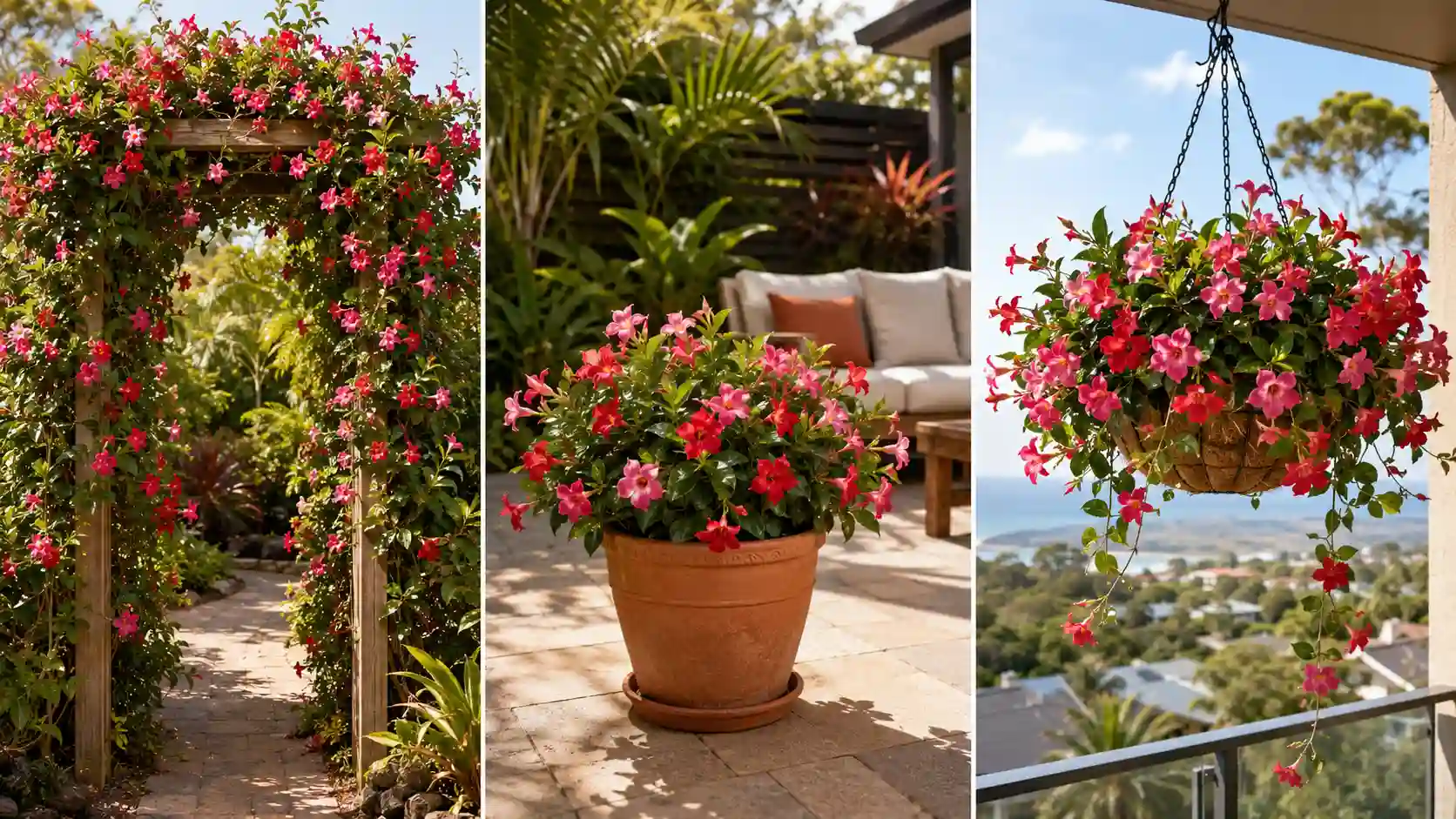
Popular mandevilla and dipladenia varieties differ mainly in growth habit, flower colour, and suitability for containers or climbing structures.
Modern breeding has produced many compact and vigorous cultivars for different garden uses. Mandevilla and dipladenia are excellent choices for gardeners looking for reliable flowering plants, alongside other options featured in our All Year Round Flowering Plants Australia Guide.
Rio Dipladenia
Rio Dipladenia varieties are known for compact growth, colourful flowers, and excellent container performance.
Features include:
- Bushy growth habit
- Strong flowering ability
- Suitable for balconies and patios
- Available in colours such as red, pink, and white
Sun Parasol Mandevilla
Sun Parasol is a popular mandevilla series recognised for larger flowers and stronger climbing growth.
It is commonly used for:
- Trellises
- Garden walls
- Arbours
- Vertical displays
Madinia Dipladenia
Madinia Dipladenia cultivars are compact flowering plants designed for smaller spaces.
They are suitable for:
- Pots
- Borders
- Decorative containers
- Courtyard gardens
Understanding cultivar differences helps gardeners choose the right plant rather than relying only on the mandevilla or dipladenia label.
Conclusion
Mandevilla and dipladenia are closely related tropical flowering plants with almost identical care requirements, but their main practical difference is growth habit. Mandevilla is generally a climbing vine suited to trellises and vertical gardens, while dipladenia is a compact bushy form ideal for pots, hanging baskets, and smaller spaces.
For Australian gardeners, the best choice depends on available space, climate, and garden design goals. Both plants thrive in full sun, well-drained soil, and warm conditions. Protect them from frost in cooler regions, provide regular feeding during active growth, and choose a variety that matches the intended use.
FAQs
Is dipladenia the same as mandevilla?
Dipladenia is closely related to mandevilla and is often used as a common name for compact, bushy Mandevilla cultivars. They belong to the same plant group and require very similar care, but their growth habits are different.
Which grows faster, mandevilla or dipladenia?
Mandevilla usually grows faster because it develops vigorous climbing stems that can extend several metres when supported. Dipladenia grows more slowly and maintains a compact bush shape.
Can dipladenia be in full sun?
Yes, dipladenia can grow in full sun and generally performs best with at least six hours of direct sunlight daily. Adequate sunlight encourages stronger growth and more flowers.
Should I cut back my mandevilla in the fall?
Light pruning can be done in autumn to maintain shape and remove damaged growth. In cooler climates, stronger pruning may be useful before moving the plant indoors for winter protection.
What is the lifespan of a mandevilla plant?
A mandevilla plant can live for many years in frost-free climates because it is a tropical perennial. In colder regions, it may die back or be grown as an annual unless protected during winter.
Is mandevilla better in pots or in the ground?
Mandevilla can grow well in both pots and the ground. Ground planting is ideal in warm climates with suitable soil, while pots are better for gardeners who need easier winter protection or have limited space.