

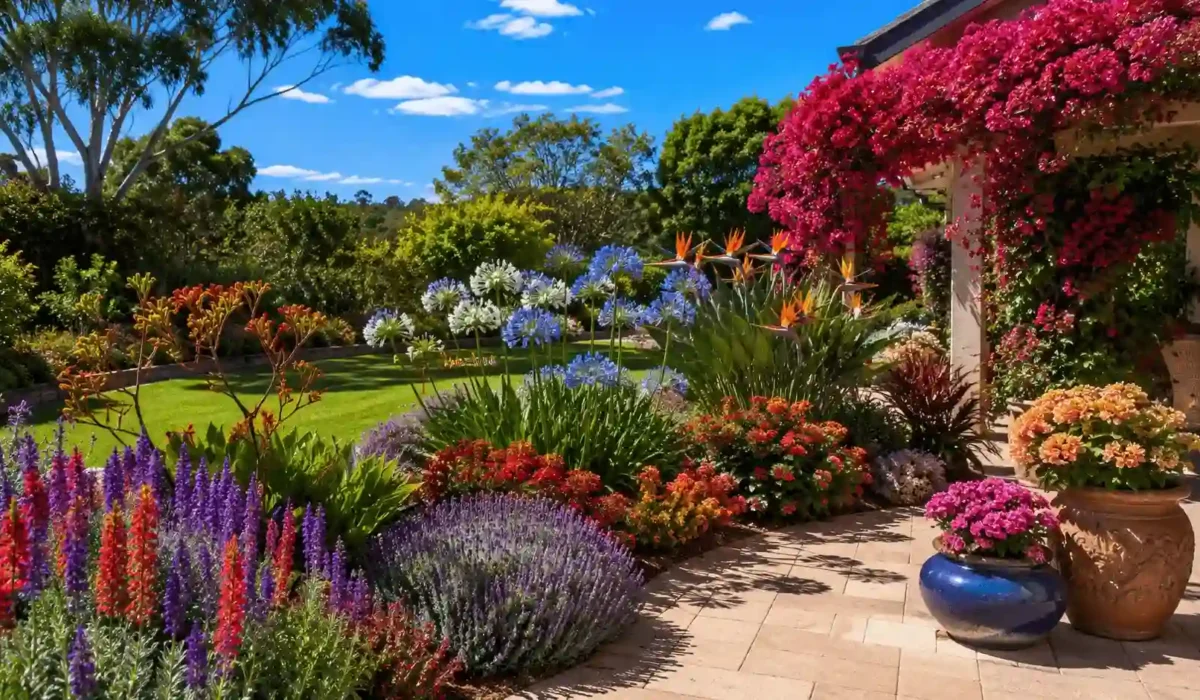
All Year Round Flowering Plants Australia Guide
Introduction
All year round flowering plants Australia gardeners rely on can provide continuous colour across a wide range of climates when chosen carefully. From tropical Queensland to temperate Victoria and dry inland regions, the right combination of flowering plants makes it possible to enjoy blooms in every season. While no single plant flowers continuously in every Australian climate, combining perennials, annuals, and evergreen flowering plants creates an attractive garden with year-round interest. This guide covers reliable flowering plants for garden beds and pots, explains how Australian climate zones influence flowering, and helps both beginner and experienced gardeners choose varieties suited to their local conditions.
By Elemo Baker | Plant Care & Gardening Expert
Our experience growing flowering plants across different Australian conditions has shown that selecting plants suited to the local climate is far more important than simply choosing the longest bloom period.
Quick Summary
- Australia’s diverse climates support many flowering plants capable of providing colour throughout the year.
- Perennial flowering plants form the foundation of long-lasting, low-maintenance gardens with repeat blooming.
- Many all year round flowering plants perform exceptionally well in pots, making them ideal for balconies, patios, and courtyards.
- Combining annuals, perennials, and evergreen shrubs creates a garden that always has something flowering.
- Choosing plants suited to your local climate zone significantly improves flowering performance and reduces maintenance.
What Does “Blooming All Year Round” Actually Mean in Australian Gardens?
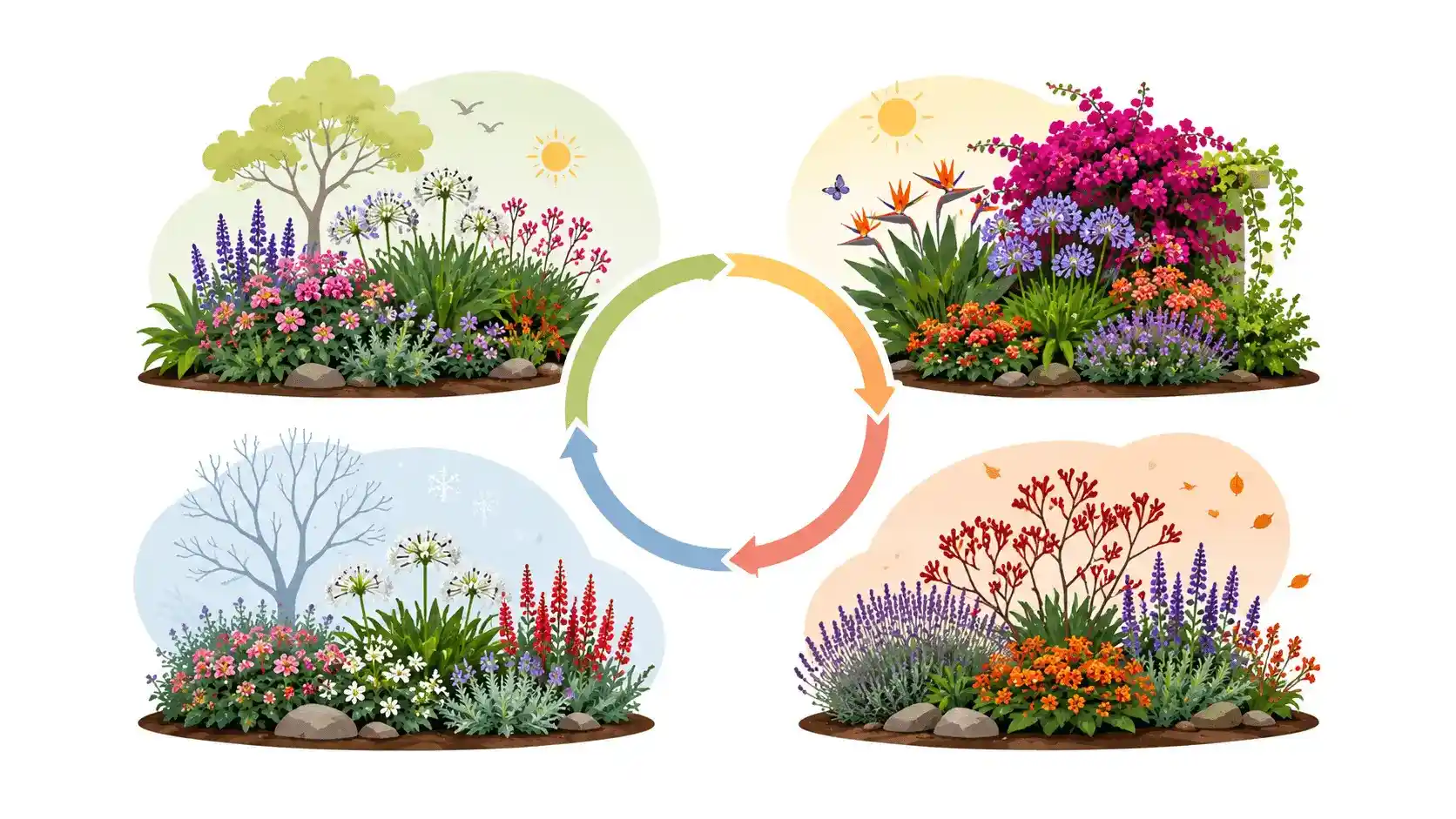
In Australian gardens, blooming all year round generally means maintaining continuous flowers within the garden rather than expecting every individual plant to bloom every day of the year. Most flowering plants have natural peak flowering seasons, but careful plant selection allows different species to bloom as others finish.
The key to continuous colour is understanding flowering cycles and designing the garden accordingly. Rather than relying on one spectacular plant, experienced gardeners combine several reliable species with overlapping bloom periods.
This strategy is commonly known as succession planting, where plants with different flowering times ensure fresh blooms are always available.
Australia’s climate diversity also affects what “all year round” means in practice.
- Tropical climates often support flowering through every month.
- Subtropical regions enjoy long flowering seasons with brief pauses.
- Temperate climates experience stronger seasonal changes, making plant selection more important.
- Mediterranean regions favour drought-tolerant flowering plants.
- Arid regions depend on hardy species adapted to heat and limited rainfall.
In our experience, layering flowering shrubs, perennial borders, annual bedding plants, and container specimens creates the most reliable display throughout the year.
Best Flowers That Bloom All Year in Australia
Many flowering plants available in Australian nurseries offer exceptionally long flowering periods when provided with suitable growing conditions. The most dependable choices combine repeat blooming, climate adaptability, and relatively low maintenance.
The following plants are widely recognised for their performance across Australian gardens.
Top Perennial Flowers for Year-Round Blooming
Perennials are among the most dependable flowering plants because they return each growing season without requiring annual replanting. Many also become more vigorous as they mature. If you’re unfamiliar with the term, a perennial plant is one that lives for multiple growing seasons and returns year after year, making it an excellent choice for long-term garden colour.
Some of Australia’s most reliable perennial flowering plants include:
| Plant | Bloom Period | Best Climate | Pots | Garden Beds |
| Salvia | Most of the year | Most climates | ✔ | ✔ |
| Bougainvillea | Nearly year-round in warm regions | Tropical, subtropical, Mediterranean | ✔ (dwarf forms) | ✔ |
| Bird of Paradise (Strelitzia reginae) | Long flowering season | Warm temperate to tropical | ✔ | ✔ |
| Agapanthus | Extended flowering | Temperate to Mediterranean | ✔ | ✔ |
| Kangaroo Paw (Anigozanthos) | Repeated flowering | Most Australian climates | ✔ | ✔ |
| Canna Lily | Spring to autumn with repeat blooms | Warm climates | ✔ | ✔ |
| Plumbago | Long flowering season | Warm climates | ✔ | ✔ |
| Echinacea | Extended summer flowering | Temperate regions | ✔ | ✔ |
These perennials are valued because they typically offer:
- High heat tolerance
- Strong drought resistance once established
- Reliable repeat flowering
- Adaptability to Australian soils
- Long garden lifespan
Elemo Baker recommends removing spent flower stems regularly, as deadheading encourages many perennial species to continue producing flowers throughout the growing season.
Evergreen Flowering Plants That Bloom All Year
Evergreen flowering plants retain their foliage throughout the year while also producing flowers over extended periods. Even during temporary breaks in flowering, they continue providing attractive greenery and garden structure.
Popular evergreen flowering plants include:
| Plant | Best Climate | Features |
| Ixora | Tropical and subtropical | Dense flowering clusters |
| Gardenia | Warm temperate and subtropical | Highly fragrant blooms |
| Tibouchina | Warm temperate | Large purple flowers |
| Mandevilla | Tropical and subtropical | Long-lasting trumpet-shaped flowers |
Evergreen flowering shrubs are particularly valuable because they:
- Maintain year-round foliage.
- Require less seasonal replacement.
- Provide structure in mixed gardens.
- Continue looking attractive even between flowering flushes.
They are especially popular throughout Queensland, northern New South Wales, and coastal Western Australia where mild winters allow prolonged flowering.
Annual Flowers That Provide Near-Continuous Colour
Annual flowers complete their life cycle within a single season, but they remain an essential part of a year-round flowering garden because they quickly fill seasonal gaps left by perennial plants.
Reliable annual choices include:
- Petunia
- Impatiens
- Alyssum
- Celosia
- Zinnia
Although annuals require replanting, many readily self-seed in favourable Australian conditions, particularly in warmer climates, allowing them to reappear with minimal intervention.
Annuals offer several advantages:
- Fast establishment
- Intense flower production
- Bright seasonal displays
- Excellent performance in containers
- Flexible colour combinations
Combining annual bedding plants with established perennial borders is one of the simplest ways to maintain uninterrupted flowering throughout the year.
Flowers That Bloom All Year in Australia — Organised by Climate Zone
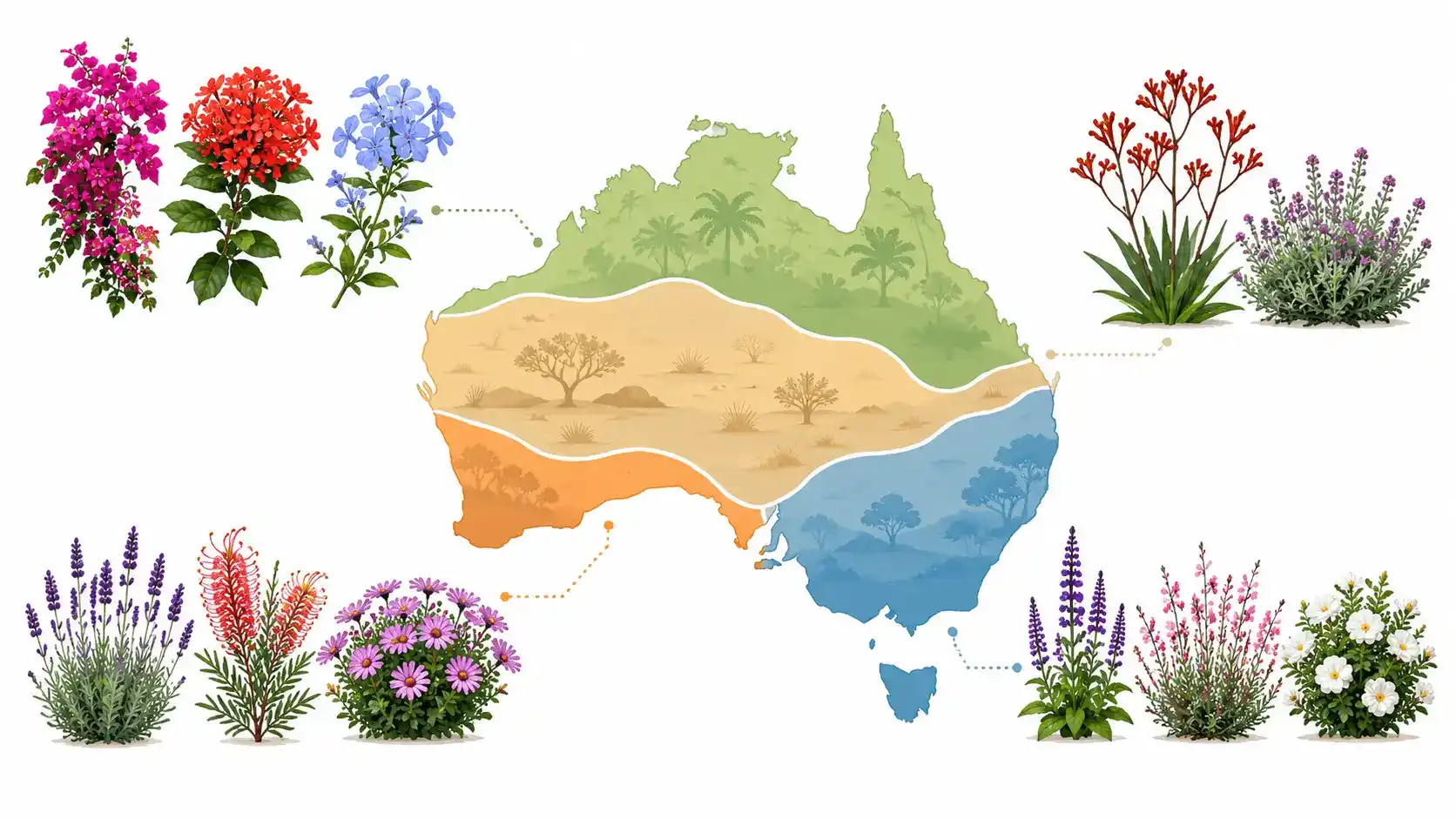
Australia’s climate varies dramatically across the continent, making regional plant selection essential. A flower that blooms almost continuously in tropical Queensland may struggle in southern Victoria, while cool-climate favourites often perform poorly in humid northern regions. For larger landscapes, flowering trees can complement perennial borders—see our Purple Flower Tree Australia: Native & Popular Species Guide for suitable options.
Choosing plants according to your climate zone improves flowering reliability, reduces maintenance, and increases plant longevity.
Tropical and Subtropical Regions (Queensland, Northern Territory, Northern Western Australia)
Suitable plants include:
- Bougainvillea
- Ixora
- Mandevilla
- Hibiscus
- Gardenia
These plants thrive in warm temperatures and benefit from regular watering during prolonged dry periods.
Temperate Regions (Victoria, Tasmania, Southern New South Wales)
Reliable performers include:
- Salvia
- Agapanthus
- Lavender
- Dietes
- Hellebore
These species tolerate cooler winters while providing long flowering seasons.
Mediterranean Regions (South Australia and South-West Western Australia)
Recommended choices include:
- Kangaroo Paw
- Plumbago
- Westringia
- Grevillea
- Lavender
These plants are well adapted to dry summers and mild winters.
Arid and Semi-Arid Regions
Gardeners in inland Australia should prioritise drought-tolerant flowering plants such as:
- Kangaroo Paw
- Grevillea
- Plumbago
- Bougainvillea
- Native daisies
These species remain productive despite prolonged heat and limited rainfall when established properly.
All Year Round Flowering Plants for Melbourne and Temperate Climates
Melbourne’s four distinct seasons make continuous flowering more challenging than in Australia’s tropical regions. However, carefully selected perennials and evergreen shrubs can provide colour during every season.
Excellent choices include:
- Salvia
- Agapanthus
- Dietes (Fortnight Lily)
- Hellebore
- Lavender
Layering plants with different flowering periods extends seasonal colour considerably. Garden beds can be supplemented with movable pots, allowing gardeners to reposition flowering plants for maximum sunlight during winter. Lavender is not only valued for its long flowering season but also for its practical uses—learn more in our Benefits of Lavender Plant at Home guide.
As of 2026, many Victorian growers continue favouring drought-tolerant Mediterranean species because they cope well with increasingly variable rainfall patterns while maintaining extended flowering periods.
Hardy Flowering Plants for Hot and Dry Australian Climates
Hardy flowering plants are species capable of tolerating prolonged heat, drought, and challenging soil conditions while continuing to produce attractive blooms.
Highly recommended varieties include:
- Kangaroo Paw
- Westringia
- Grevillea
- Plumbago
- Bougainvillea
These plants typically feature:
- Deep root systems
- Excellent heat tolerance
- Low water requirements after establishment
- Strong resistance to harsh sunlight
- Long flowering seasons
In our experience, applying a generous layer of organic mulch during early summer dramatically improves soil moisture retention and encourages more consistent flowering throughout Australia’s hottest months. For gardeners wanting colourful hedging alongside flowering plants, Photinia Fraseri Robusta: Growth, Care & Hedge Guide provides another excellent landscaping choice.
Tall Flowers That Bloom All Year in Australia
Tall flowering plants add height, structure, and visual impact to Australian gardens while helping create a layered landscape that offers colour throughout the year. They are ideal for screening fences, defining property boundaries, creating back-of-border plantings, or serving as statement features in larger gardens. If you also need privacy and vertical structure, our Fast Growing Evergreen Trees Australia Guide highlights excellent companion planting options.
Some of the best tall flowering plants include:
| Plant | Mature Height | Best Climate | Growth Habit |
| Bird of Paradise (Strelitzia reginae) | 1.5–2 m | Tropical, subtropical, temperate | Upright clumping |
| Canna Lily | 1–2 m | Warm climates | Clump-forming |
| Salvia leucantha | 1–1.5 m | Temperate, Mediterranean | Bushy perennial |
| Tibouchina | 3–5 m | Warm temperate | Small flowering tree |
| Tall Grevillea varieties | 2–5 m | Most Australian climates | Shrub or small tree |
Tall perennials help anchor garden designs because they:
- Create a natural backdrop for smaller flowering plants.
- Provide screening without sacrificing colour.
- Attract birds and pollinators.
- Add year-round visual interest through both foliage and flowers.
When planting tall species, allow adequate spacing to encourage airflow and reduce the risk of fungal diseases, particularly in humid regions.
Flowers That Bloom All Year in Pots — Australian Conditions
Many flowering plants thrive in containers, making them suitable for balconies, patios, courtyards, and compact urban gardens. Container gardening also allows gardeners to move plants according to seasonal sunlight and weather conditions. If you enjoy container gardening beyond flowering plants, our Money Tree Australia: Care, Meaning & Buying Guide covers another popular pot-grown plant for Australian homes.
Plants well suited to pots generally have:
- Compact root systems
- Good tolerance of restricted soil volume
- Long flowering periods
- Strong heat tolerance
- Moderate watering requirements
Excellent container-friendly flowering plants include:
- Salvia
- Petunia
- Impatiens
- Dwarf Bougainvillea
- Ixora
- Miniature Roses
For successful container gardening in Australia:
- Use a premium-quality potting mix formulated for flowering plants.
- Choose containers with adequate drainage holes.
- Water deeply rather than frequently.
- Apply slow-release fertiliser during the growing season.
- Refresh the potting mix every one to two years.
Our experience has shown that light-coloured pots remain cooler during Australia’s hot summers, helping protect roots from excessive heat stress and reducing water loss. You can also combine flowering plants with foliage varieties such as those featured in our Dracaena Plant Indoor Benefits, Care, Meaning & Propagation guide for year-round visual interest.
Australian Native Flowers That Bloom All Year Round
Australian native flowering plants have become increasingly popular because they are naturally adapted to local climates, require less maintenance once established, and support native wildlife.
Some of the best native flowering plants include:
- Kangaroo Paw (Anigozanthos)
- Grevillea
- Hardenbergia
- Scaevola
- Lomandra
- Native Violet (Viola hederacea)
These native plants offer several ecological benefits:
- Attract native bees and beneficial insects.
- Provide nectar for honeyeaters and other birds.
- Support biodiversity.
- Adapt well to poor soils.
- Require less supplemental watering than many exotic plants.
Many Australian natives flower repeatedly throughout the year when grown under suitable conditions, particularly in regions with mild winters. If you’re looking to expand your native garden, explore our guide to Australian Native Purple Flowers: Types, Care & Guide for more flowering species suited to Australian landscapes.
As of 2026, Australian gardeners continue to prioritise native species for sustainable landscaping due to their resilience to drought and changing weather patterns.
Low-Maintenance All Year Round Flowering Plants for Australian Gardens
Low-maintenance flowering plants require relatively little attention once established while continuing to provide reliable blooms throughout the year.
In practical gardening terms, low-maintenance plants typically have:
- High drought tolerance
- Minimal pruning requirements
- Good pest resistance
- Adaptability to local soils
- Consistent flowering habits
Recommended low-maintenance plants include:
- Agapanthus
- Dietes (Fortnight Lily)
- Westringia
- Plumbago
- Salvia
- Native Grevillea
Although these plants are considered easy to grow, they still require proper establishment during their first growing season. Regular watering, mulching, and occasional feeding help develop healthy root systems that support long-term performance.
Elemo Baker recommends focusing on soil preparation before planting rather than relying on frequent fertiliser applications later. Healthy soil generally produces stronger, more resilient flowering plants.
Comparison Table: Low-Maintenance All Year Round Flowering Plants
| Plant Name | Climate Suitability | Bloom Season | Pot-Friendly | Drought Tolerant |
| Agapanthus | Temperate, Mediterranean | Long season | ✔ | ✔ |
| Dietes | Most climates | Nearly year-round | ✔ | ✔ |
| Westringia | Mediterranean, arid | Extended flowering | ✔ | ✔ |
| Plumbago | Warm climates | Most of the year | ✔ | Moderate |
| Salvia | Most Australian climates | Repeat flowering | ✔ | ✔ |
| Grevillea | Most climates | Extended flowering | Some varieties | ✔ |
| Kangaroo Paw | Most climates | Long flowering | ✔ | ✔ |
| Bougainvillea | Warm climates | Nearly year-round | Dwarf forms | ✔ |
Perennial Flowers Australia: Understanding the Difference Between Perennials, Annuals, and Evergreens
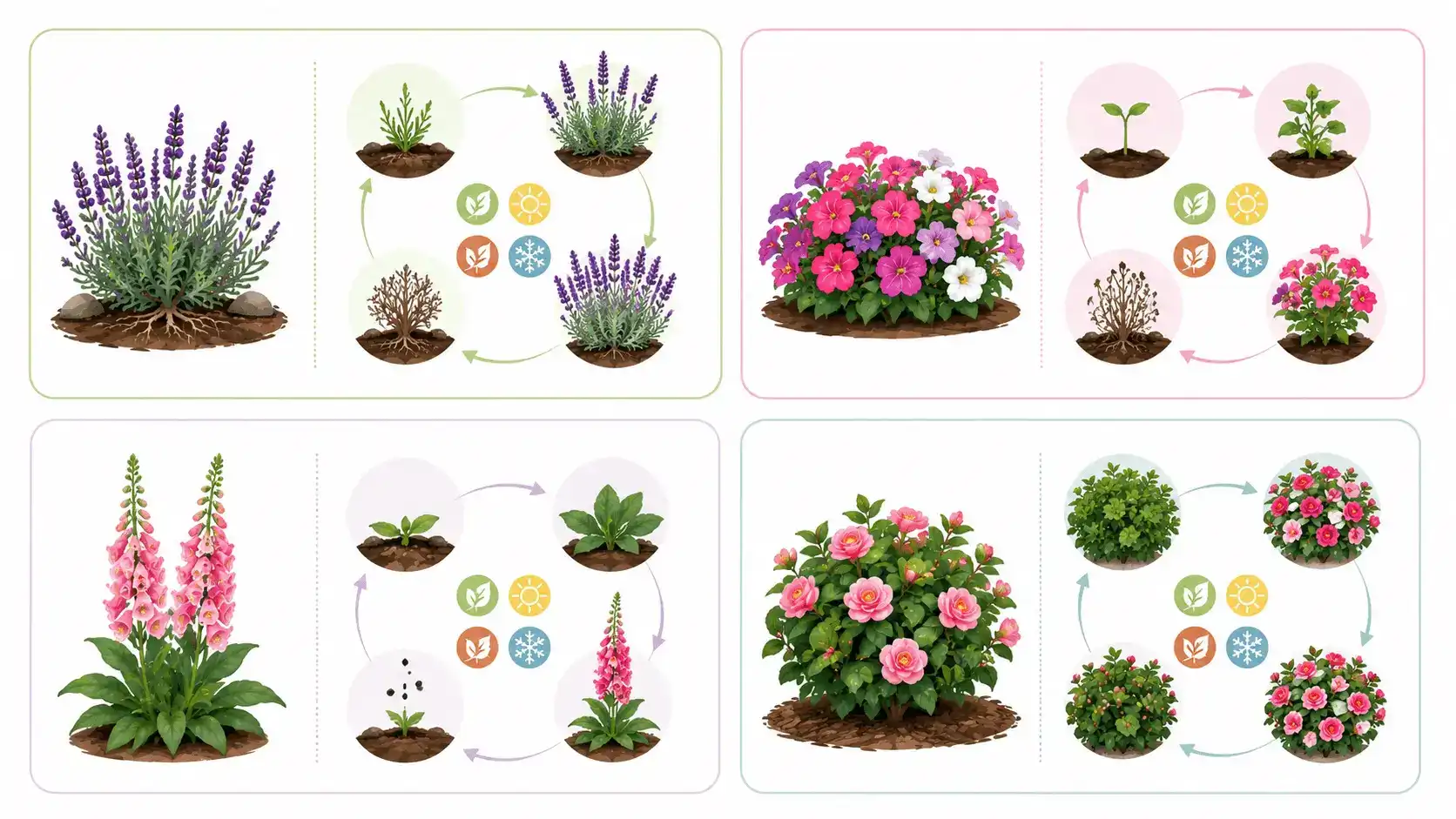
Understanding plant classifications makes it easier to design a garden that maintains colour throughout the year. Each plant type contributes differently to long-term flowering performance.
A perennial lives for more than two years and usually returns each growing season. These plants form the structural foundation of most Australian gardens.
Examples include:
- Salvia
- Agapanthus
- Kangaroo Paw
- Plumbago
An annual completes its entire life cycle within one growing season. Although short-lived, annuals provide abundant flowers and quickly fill seasonal gaps.
Examples include:
- Petunia
- Alyssum
- Celosia
- Zinnia
A biennial requires two growing seasons to complete its life cycle. During the first year it produces foliage, while flowering generally occurs during the second year.
Examples include:
- Foxglove
- Sweet William
An evergreen retains its foliage throughout the year rather than shedding all leaves seasonally. Evergreen plants may be perennial shrubs, trees, or groundcovers.
Examples include:
- Gardenia
- Ixora
- Tibouchina
- Mandevilla
The most successful Australian gardens combine all four categories to provide continuous flowering, year-round greenery, and seasonal variety.
Comparison: Perennials vs Annuals for Year-Round Flowering in Australia
| Feature | Perennials | Annuals |
| Lifespan | 3+ years | 1 season |
| Replanting required | No (most) | Yes (each season) |
| Upfront cost | Higher | Lower |
| Bloom reliability | Moderate–high | Very high when in season |
| Best use | Garden structure | Gap filling |
Cut Flowers That Bloom All Year in Australia
Many flowering plants suitable for gardens also produce excellent cut flowers for indoor arrangements. The best cut flower varieties combine long stems, repeat flowering, and extended vase life.
Popular cut flowers include:
- Salvia
- Zinnia
- Celosia
- Lisianthus
- Chrysanthemum
- Gerbera
- Agapanthus
These plants are favoured because they:
- Produce sturdy flower stems.
- Continue flowering after harvesting.
- Offer attractive colours and forms.
- Perform well in Australian growing conditions.
Many commercial flower growers throughout Australia also cultivate Gerberas, Chrysanthemums, and Lisianthus due to their reliable production and strong market demand.
Setting Up a Cut Flower Garden in Australia
A productive cut flower garden begins with selecting a sunny location that receives at least six hours of direct sunlight each day.
Preparation steps include:
- Improve soil with compost and organic matter.
- Ensure excellent drainage.
- Space plants according to mature size.
- Install efficient irrigation.
- Mulch to retain moisture.
- Practise succession planting throughout the growing season.
Gardeners in Queensland may plant nearly year-round, while those in Melbourne and southern regions should align planting with seasonal temperatures. Perth gardeners often benefit from autumn planting to establish roots before summer heat arrives.
Succession planting remains one of the most effective techniques for maintaining a continuous supply of fresh flowers for cutting throughout the year.
Common Problems With All Year Round Flowering Plants in Australia
Even reliable flowering plants can experience growth problems when environmental conditions become unsuitable. Identifying the cause early usually prevents long-term damage.
Why Is My Flowering Plant Not Blooming?
The most common reasons flowering plants fail to bloom include:
- Insufficient sunlight
- Excess nitrogen fertiliser
- Root-bound containers
- Incorrect pruning
- Unsuitable climate conditions
Solutions include:
- Move plants to a sunnier location.
- Use fertilisers higher in phosphorus and potassium.
- Repot overcrowded container plants.
- Prune only after flowering where appropriate.
- Select varieties suited to your climate zone.
In our experience, excessive nitrogen is one of the most overlooked causes of lush foliage with very few flowers.
Yellowing Leaves on Flowering Plants — Causes and Solutions
Yellow leaves can result from several different issues.
Common causes include:
- Overwatering
- Underwatering
- Iron deficiency
- Magnesium deficiency
- Pest damage
To correct the problem:
- Check soil moisture before watering.
- Improve drainage where necessary.
- Apply appropriate trace elements if deficiencies are confirmed.
- Inspect foliage regularly for insects.
- Remove damaged leaves promptly.
Many Australian soils naturally contain limited available iron, particularly alkaline soils, making nutrient deficiencies relatively common in susceptible species.
Pests and Diseases Affecting Flowering Plants in Australia
Several pests regularly affect flowering plants throughout Australia.
Common pests include:
- Aphids
- Scale insects
- Whitefly
- Caterpillars
Common diseases include:
- Powdery mildew
- Root rot
Prevention strategies include:
- Maintain good airflow.
- Avoid overwatering.
- Remove infected plant material.
- Encourage beneficial insects.
- Monitor plants regularly for early signs of infestation.
Organic treatments such as horticultural oils, insecticidal soaps, and neem-based products are often effective when applied promptly before infestations become severe. If you’re growing Australian natives, our Woolly Bush Problems: Causes, Solutions and Care Guide explains how to diagnose and prevent common plant issues.
Beginner Mistakes When Choosing All Year Round Flowering Plants
Many flowering plants fail to perform well not because they are difficult to grow, but because they are planted in unsuitable conditions or selected without considering Australia’s diverse climate zones. Avoiding a few common mistakes can significantly improve flowering performance and reduce maintenance.
Choosing Plants Unsuitable for Your Climate
One of the most common mistakes is selecting plants based solely on appearance rather than climate suitability.
For example:
- Tropical plants may struggle in frost-prone regions.
- Cool-climate species often perform poorly in humid northern Australia.
- Drought-sensitive plants may require excessive watering in arid regions.
Solution: Always choose flowering plants recommended for your local climate zone.
Planting at the Wrong Time of Year
Planting during extreme heat or severe cold can slow establishment and reduce flowering.
Generally:
- Spring (September–November) is ideal for most perennials.
- Autumn (March–May) is suitable in many warmer regions.
- Avoid planting during prolonged heatwaves unless irrigation is available.
Neglecting Soil Preparation
Healthy flowering plants begin with healthy soil.
Common problems include:
- Compacted soil
- Poor drainage
- Low organic matter
- Nutrient deficiencies
Solution: Improve soil with compost and ensure good drainage before planting.
Overwatering Newly Established Plants
Many gardeners assume more water means faster growth, but excessive watering often causes root diseases and weak root development.
Instead:
- Water deeply.
- Allow the soil surface to dry slightly between watering.
- Adjust watering according to rainfall and season.
Choosing Plants Only for Their Appearance
Selecting plants that flower at the same time can leave the garden without colour for several months.
A better approach is to combine:
- Long-flowering perennials
- Evergreen shrubs
- Seasonal annuals
- Native flowering plants
This layered planting strategy provides continuous visual interest throughout the year.
Seasonal Care Guide for All Year Round Flowering Plants in Australia
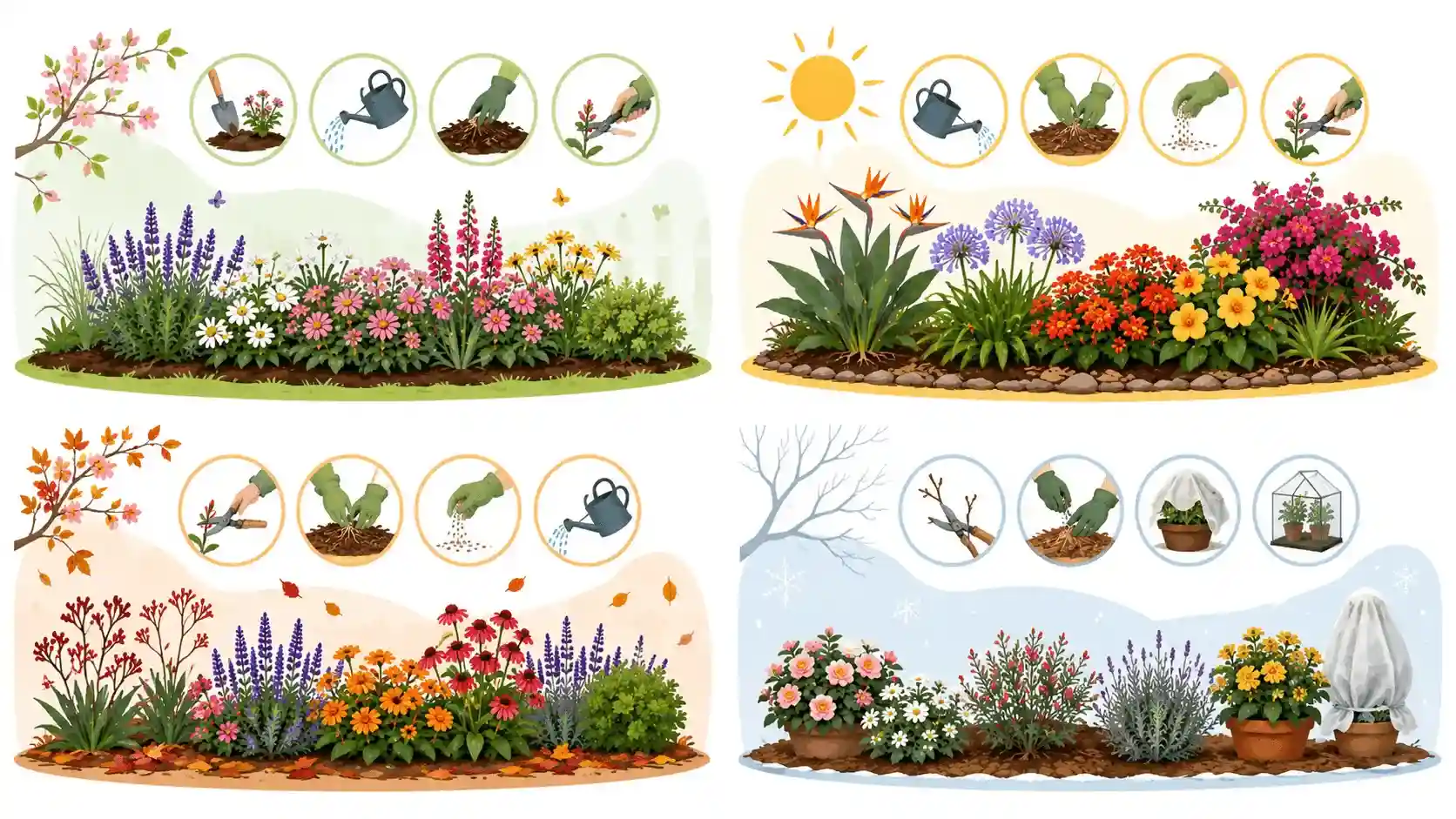
Australian seasons differ from those in the Northern Hemisphere, so seasonal maintenance should follow local growing conditions. Regular care throughout the year encourages healthier plants, longer flowering periods, and improved resilience.
Spring (September–November)
Spring is the primary growing season for most flowering plants.
Recommended tasks include:
- Plant new perennials.
- Apply balanced fertiliser.
- Deadhead spent flowers.
- Divide overcrowded clumps.
- Refresh mulch.
Watch for:
- Aphid outbreaks
- Rapid weed growth
- Early pest activity
Summer (December–February)
Summer heat increases evaporation and places additional stress on flowering plants.
Recommended care includes:
- Water deeply during prolonged dry periods.
- Mulch to conserve soil moisture.
- Protect container plants from extreme afternoon heat.
- Remove faded blooms regularly.
Watch for:
- Heat stress
- Drying potting mix
- Sun scorch
- Increased watering requirements
Our experience has shown that watering early in the morning reduces evaporation while allowing foliage to dry quickly, helping minimise fungal problems.
Autumn (March–May)
Autumn provides ideal conditions for root growth before winter.
Recommended tasks:
- Apply potassium-rich fertiliser.
- Divide mature perennial clumps.
- Continue deadheading where appropriate.
- Plant new shrubs and perennials.
Watch for:
- Poor drainage
- Root rot in waterlogged soils
- Declining daylight
Winter (June–August)
Although flowering slows in many regions, winter remains an important maintenance season.
Recommended tasks:
- Prune spent stems.
- Remove damaged foliage.
- Protect frost-sensitive species.
- Check drainage after winter rainfall.
Watch for:
- Frost damage
- Waterlogged soils
- Reduced growth
- Cold injury in tropical plants
As of winter 2026, Australian horticultural recommendations continue to emphasise mulching and frost protection for sensitive flowering plants grown in southern states.
Care Requirements Summary Table
| Season | Key Tasks | Watch Out For |
| Spring (Sep–Nov) | Plant new perennials, fertilise, deadhead | Aphid outbreaks |
| Summer (Dec–Feb) | Water deeply, mulch, provide shade for pots | Heat stress, drying soils |
| Autumn (Mar–May) | Feed with potassium-rich fertiliser, divide clumps | Root rot in wet soils |
| Winter (Jun–Aug) | Prune spent stems, protect frost-sensitive plants | Frost damage in VIC/TAS |
Conclusion
Growing all year round flowering plants Australia gardeners can rely on begins with choosing species suited to local climate conditions rather than expecting a single plant to flower continuously. By combining perennial flowers, evergreen shrubs, annual bedding plants, and Australian natives, it is possible to create a garden that provides colour during every season.
Perennial flowering plants remain the most dependable foundation because they return year after year, while annuals fill seasonal gaps and evergreen plants maintain attractive structure even between flowering cycles. Container-friendly varieties also make year-round gardening possible for balconies, courtyards, and smaller outdoor spaces. If you’re planning a low-maintenance collection of indoor and outdoor plants, you may also enjoy our guide on the 10 Benefits of Snake Plant for Home and Health.
Whether you garden in tropical Queensland, temperate Victoria, Mediterranean South Australia, or Australia’s arid interior, selecting plants matched to your region will produce healthier growth, longer flowering periods, and lower maintenance. With thoughtful planning and seasonal care, you can build a garden that rewards minimal effort with continuous colour throughout the year.
Frequently Asked Questions
Q1. What flowers bloom all year round in Australia?
Some of the most reliable flowers that bloom throughout much of the year in Australia include Salvia, Bougainvillea, Kangaroo Paw, Agapanthus, Ixora, and Plumbago. The best performers vary depending on climate zone, with tropical regions generally supporting longer flowering periods than cooler southern areas.
Q2. What are the best low-maintenance all year round flowering plants for Australian gardens?
Agapanthus, Dietes (Fortnight Lily), Westringia, native Grevillea, Plumbago, and Salvia are among the best low-maintenance flowering plants. Once established, these plants require relatively little watering, minimal pruning, and generally resist common pests and drought conditions.
Q3. Can flowers bloom all year round in Melbourne?
Yes, although Melbourne’s four-season climate makes continuous flowering more challenging than tropical regions. A combination of cold-tolerant perennials such as Salvia and Hellebore, evergreen shrubs, and seasonal annuals can provide flowers throughout the year when carefully planned.
Q4. What are the best flowers for a cut flower garden in Australia?
Excellent cut flowers include Zinnia, Celosia, Gerbera, Lisianthus, Chrysanthemum, Salvia, and Agapanthus. Planting in succession throughout the growing season helps maintain a continuous supply of fresh flowers for indoor arrangements.
Q5. Are perennial flowers better than annuals for year-round colour in Australia?
Perennials provide the long-term structure of a flowering garden because they return every year, while annuals deliver abundant seasonal colour. The most successful Australian gardens combine both, using annuals to fill flowering gaps between perennial bloom cycles.
Q6. What flowers that bloom all year round grow well in pots in Australia?
Compact flowering plants such as dwarf Bougainvillea, Salvia, Petunia, Ixora, Impatiens, and Miniature Roses perform well in containers. Using high-quality potting mix, ensuring excellent drainage, and watering appropriately are essential for long-term success.
Q7. What are the best Australian native flowers that bloom all year?
Kangaroo Paw (Anigozanthos), Grevillea, Hardenbergia, Native Violet (Viola hederacea), Scaevola, and Lomandra are among Australia’s best native flowering plants. They attract native birds and pollinators, tolerate local growing conditions well, and are excellent choices for low-water, low-maintenance gardens.
4 Comments