
Purple Venus Fly Trap: Care, Facts & Growing Guide
Introduction
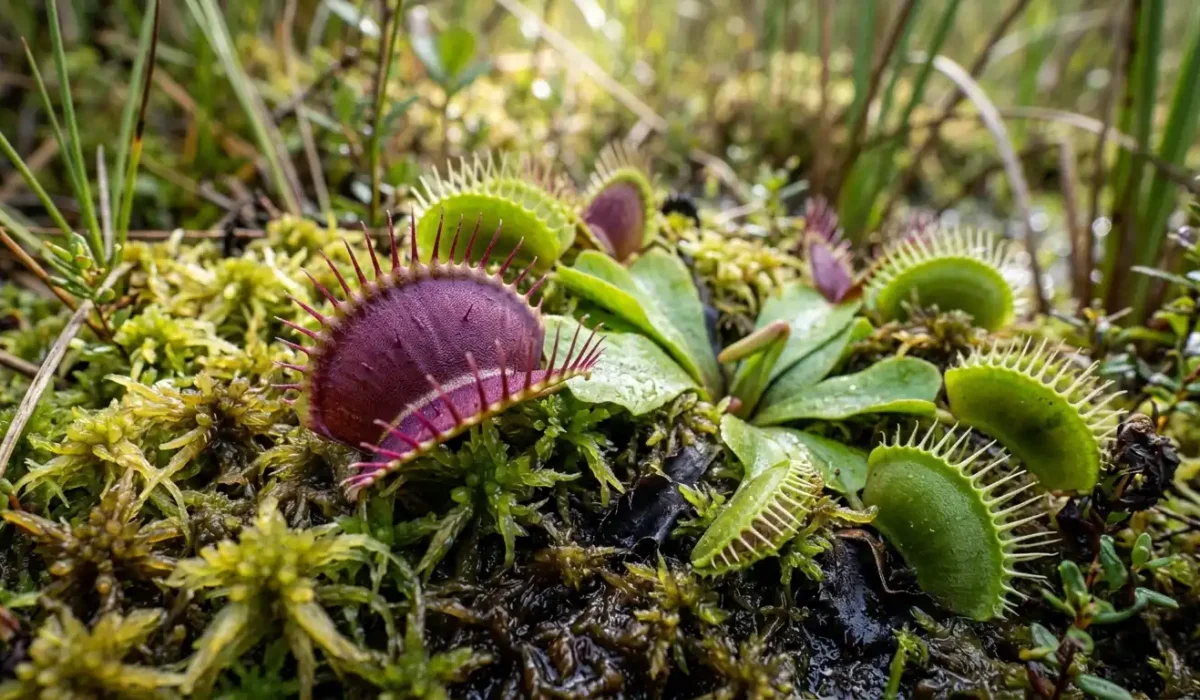
A purple Venus fly trap is a genuine colour variation of the Venus flytrap (Dionaea muscipula) that develops deep red, burgundy, or purple tones in its traps due to anthocyanin pigments. It is not a separate species, but a naturally pigmented cultivar or individual plant with stronger colour expression. Venus flytraps belong to the carnivorous plant family and use modified leaves to capture insects. Purple colouring is influenced by genetics, strong light exposure, and growing conditions. Popular forms such as venus purple selections are valued by collectors because of their unusual appearance while maintaining the same care requirements as standard Venus flytraps. The purple Venus fly trap belongs to the species Dionaea muscipula, commonly known as the Venus flytrap, a carnivorous plant native to a small region of the Carolinas.
By Elemo Baker | Plant Care & Gardening Expert
Last Updated: July 2026
Quick Summary
- Purple Venus fly traps are real colour variations of Dionaea muscipula, not a separate species.
- Purple and red colours come from anthocyanin pigments influenced by genetics and strong light.
- Healthy plants usually have green leaves with reddish-purple trap interiors.
- Proper care requires bright light, pure water, nutrient-poor soil, and winter dormancy.
- Wild Venus flytraps are protected, so plants should always be purchased from reputable growers.
Are Purple Venus Fly Traps Real?
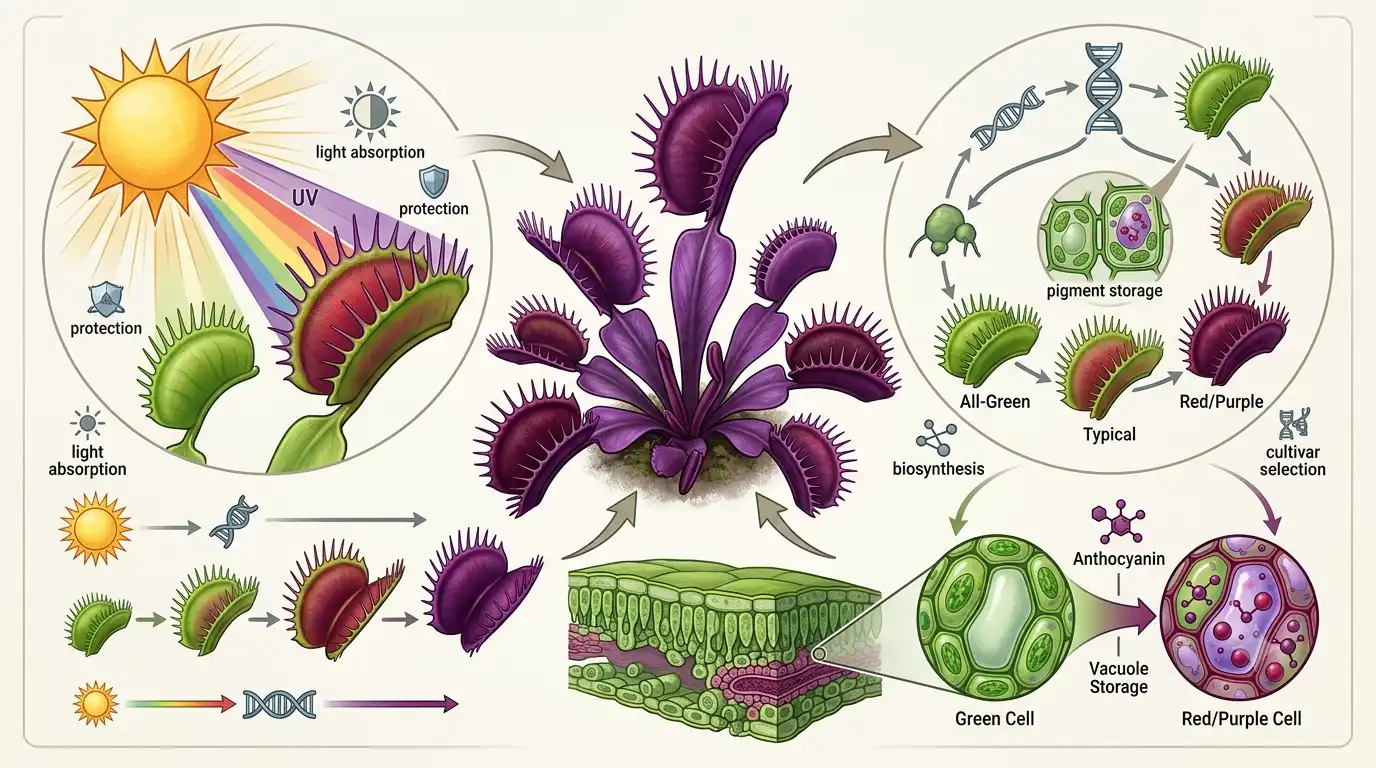
Yes, purple Venus flytraps are real. Their colour comes from anthocyanins, natural plant pigments that create red, purple, and burgundy shades in leaves and traps. The intensity of the colour depends on the plant’s genetics, exposure to sunlight, and overall growing environment.
Unusual plant colours often create curiosity among gardeners and collectors. Similar questions about rare or unusual-looking plants are explored in our guide on Are Black Lotus Flowers Real? Facts, Myths & Meaning.
A purple Venus flytrap is still classified as Dionaea muscipula, the only species of Venus flytrap. The term “purple” describes its appearance rather than a different botanical classification.
In strong light, many Venus flytraps develop deeper colours because anthocyanins help protect plant tissues from excess sunlight. Plants grown in weaker indoor lighting often remain greener and may lose their red or purple tones.
What Are the Purple Venus Fly Traps?
Purple Venus flytraps are usually selected cultivars or naturally darker specimens of Dionaea muscipula. Some recognised purple or deep-red forms include:
- Dionaea muscipula ‘Dente’ – Known for short, tooth-like trap edges and strong colour development.
- Dionaea muscipula ‘B52’ – A large cultivar that can develop deep red trap interiors under high light.
- Deeply pigmented Dionaea selections – Plants chosen for stronger red-purple colouring.
These differ from giant cultivars such as ‘King Henry’, which usually produce large traps with bright scarlet-red colouring rather than true purple tones.
Why Is My Venus Fly Trap Purple?
A Venus flytrap becomes purple mainly because of anthocyanin production.
The strongest influences are:
- Bright sunlight: More direct light often increases red and purple pigmentation.
- Genetics: Some plants naturally produce more anthocyanins than others.
- Healthy growth conditions: Proper care allows stronger colour expression.
Purple colouring is usually a positive sign when combined with healthy green leaves and firm traps. However, sudden colour changes should be checked alongside watering, lighting, and seasonal growth patterns.
What Colour Is a Healthy Venus Fly Trap?
A healthy Venus flytrap usually has bright green leaves with red, pink, burgundy, or purple colouring inside the traps. The exact colour varies between cultivars and growing conditions.
Healthy signs include:
- Firm green leaves
- Strong trap movement
- Red or purple trap interiors
- New growth emerging from the centre
Older traps naturally turn black and die as part of the plant’s normal growth cycle. However, widespread yellowing, weak growth, or pale green leaves may indicate insufficient light or incorrect care.
Purple Venus Fly Trap Care
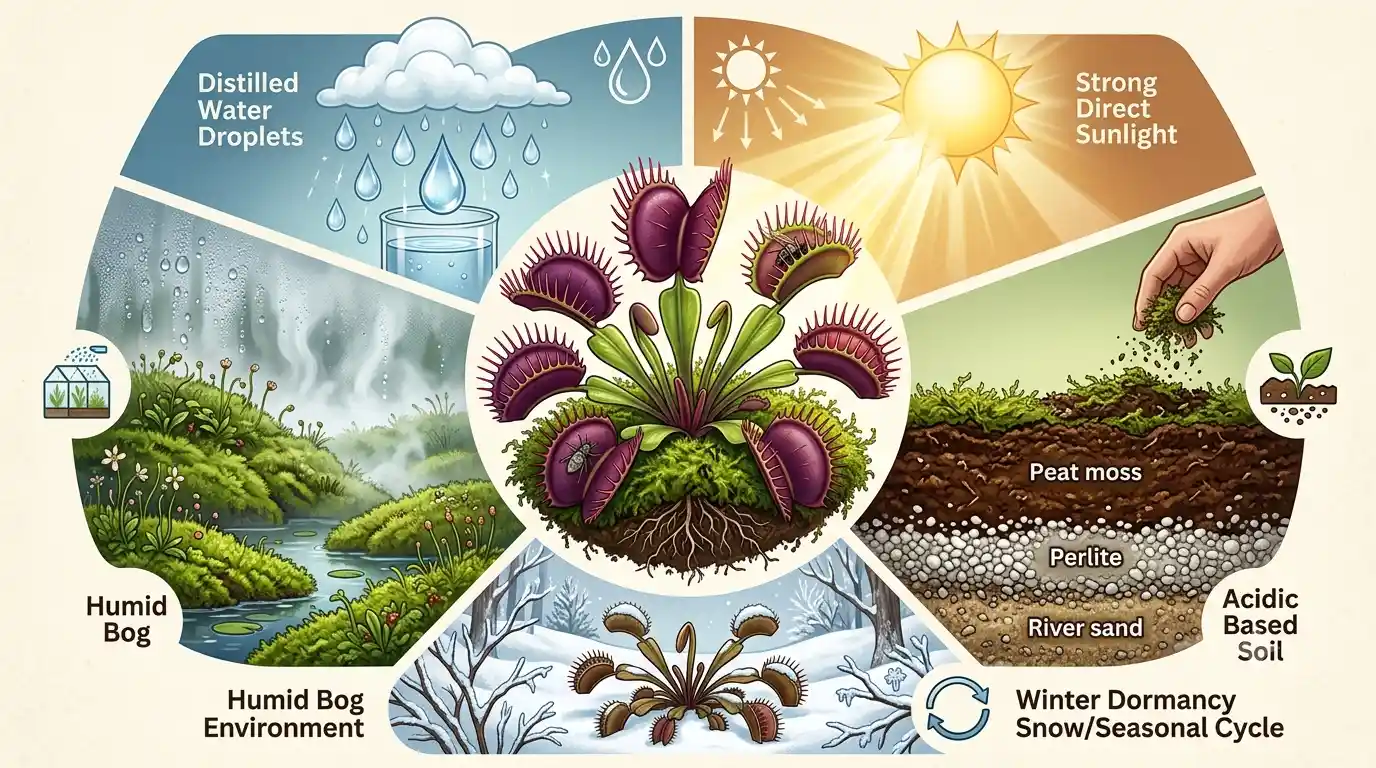
Purple Venus fly trap care is similar to caring for any Dionaea muscipula. These carnivorous plants evolved in nutrient-poor bog environments, so they require specific conditions.
| Care Factor | Requirement |
| Light | 6+ hours of direct sunlight daily |
| Water | Distilled water, rainwater, or reverse osmosis water |
| Soil | Nutrient-poor peat-based carnivorous plant mix |
| Humidity | Moderate to high humidity preferred |
| Dormancy | Winter rest period required |
Light Requirements
Strong light is essential for maintaining purple colouring. Outdoor sunlight usually produces the deepest red and purple tones because Venus flytraps naturally grow in bright, open habitats.
For indoor plants, a sunny windowsill may work, but many plants require a strong grow light to maintain colour and healthy growth.
Watering and Soil
Venus flytraps should only receive mineral-free water because their roots are sensitive to dissolved salts and nutrients.
Avoid:
- Tap water with minerals
- Standard potting soil
- Regular fertilisers
Miracle-Gro and similar fertilisers can damage Venus flytraps because their roots are adapted to poor soils. If feeding is needed, occasional dilute foliar feeding with suitable carnivorous plant products is safer than fertilising the soil.
Indoor vs Outdoor Growing
Venus flytraps can be grown indoors, but outdoor growing usually provides better conditions. Indoor plants often struggle with insufficient light and poor airflow. While Venus flytraps can be grown indoors, they require much stronger light and specialised care than many common houseplants. For readers interested in the advantages of indoor greenery, explore the Benefits of Indoor Plants: 10 Science-Backed Reasons to understand how different indoor plants can support healthier living spaces.
Outdoor bog gardens or containers provide:
- Stronger sunlight
- Natural seasonal changes
- Better colour development
Elemo Baker recommends gradually increasing outdoor sunlight exposure because sudden changes can stress indoor-grown plants.
Plant Size
A mature standard Venus flytrap usually reaches around 10–20 cm in diameter, with traps commonly measuring 2–5 cm depending on the cultivar.
Plant size is influenced by:
- Amount of sunlight
- Feeding opportunities
- Dormancy quality
- Genetics
Giant cultivars may produce larger traps, while standard purple forms usually remain compact. Outdoor plants often become larger than indoor plants because they receive stronger light and seasonal growth cycles.
Growth Rate
Venus flytraps are generally slow-to-moderate growers. They actively grow during spring and summer before entering dormancy during colder months.
Growth speed depends on:
- Light intensity
- Water quality
- Soil conditions
- Winter dormancy
During winter dormancy, growth naturally slows or stops. This is not a problem and is essential for long-term plant health.
What Makes Venus Fly Traps Happy?
Venus flytraps thrive when they receive conditions similar to their natural bog habitat.
Ideal conditions include:
- Bright direct sunlight
- Pure water
- Acidic, nutrient-poor soil
- Winter dormancy
- Occasional insects for nutrients
The biggest mistake beginners make is treating Venus flytraps like ordinary houseplants. They do not need rich soil or frequent feeding. Choosing plants that match your environment is essential for long-term success. Our Australian Plants Guide: Indoor Houseplants & Garden Design explains how different plant types can be selected and arranged for indoor spaces and Australian gardens.
Venus Fly Trap Facts
Venus flytraps are among the most famous carnivorous plants because of their ability to rapidly close their traps when insects trigger sensitive hairs. Although Venus flytraps naturally capture small insects, they should not be treated as a complete pest-control solution. For identifying common garden insects and plant pests, see our Garden Pest Identification Guide for Australian Gardens.
Why Should You Never Touch a Venus Fly Trap?
You should avoid repeatedly touching Venus flytrap traps because each trap has a limited number of closures. Unnecessary triggering uses energy that the plant could otherwise use for growth and photosynthesis.
How Many Times Can a Venus Fly Trap Close Before It Dies?
A single Venus flytrap trap can usually close around 3–7 times before it becomes less effective and eventually dies naturally. The entire plant continues producing new traps, so one dying trap does not mean the plant is unhealthy.
What Is the Creepy Venus Fly Trap?
The “creepy” reputation of Venus flytraps comes from their insect-eating behaviour and fast-moving traps. Their unusual appearance has made them popular in movies, games, and popular culture, although their real biology is much less dramatic.
Average Lifespan
A Venus flytrap can live for 20 years or more when provided with proper sunlight, water, soil, and dormancy conditions.
Are Venus Fly Traps Protected by Law?
Venus flytraps are native only to a small region of North and South Carolina in the United States. Wild populations are protected because illegal collection has threatened natural habitats.
Growing cultivated Venus flytraps at home is legal when purchased from legitimate growers. Digging up wild plants is illegal and can result in serious penalties, including felony charges in North Carolina.
Comparison: Purple vs Standard Green Venus Fly Traps
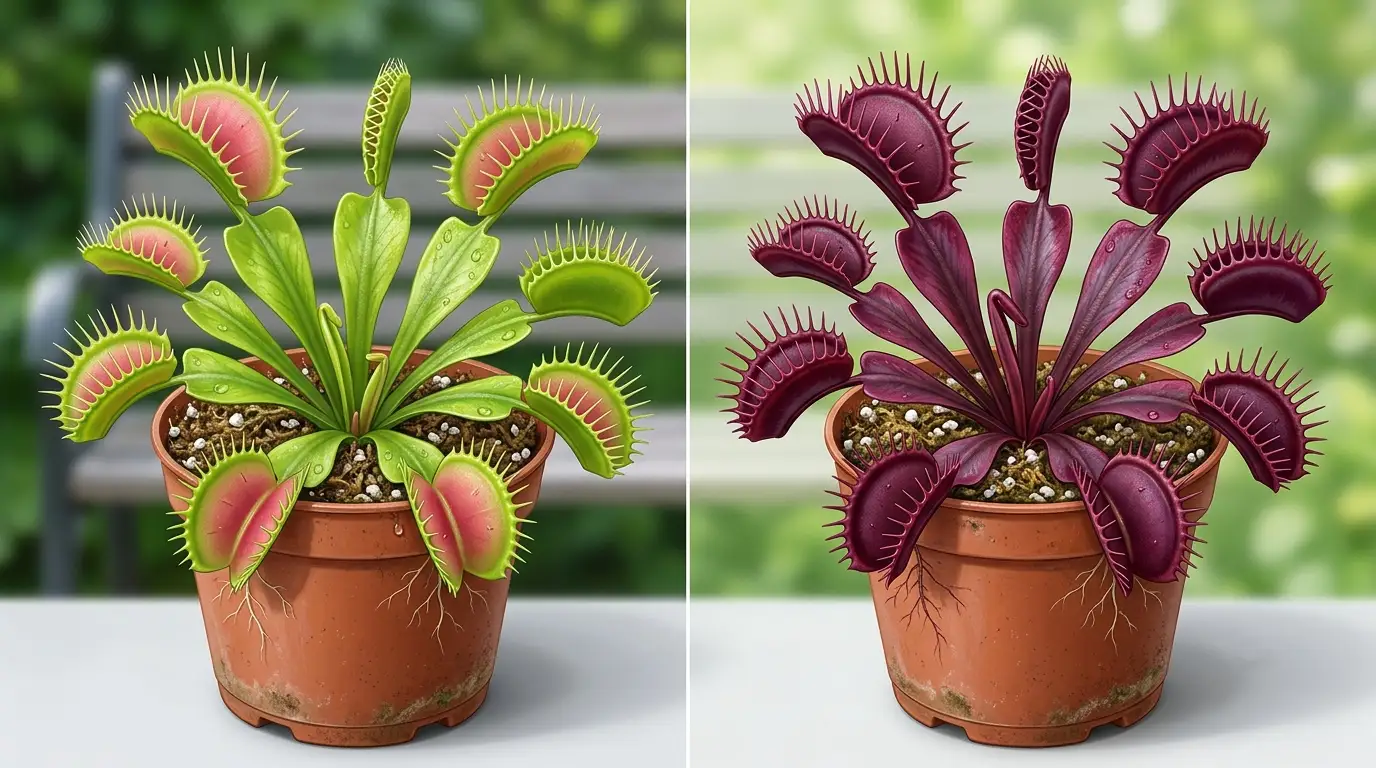
| Trait | Standard Green Venus Fly Trap | Purple/Red-Toned Venus Fly Trap |
| Trap Colour | Green with red interior | Red, burgundy, or purple tones |
| Pigment Cause | Lower anthocyanin expression | Higher anthocyanin production |
| Light Needs | Bright light required | Strong light enhances colour |
| Availability | Common | Less common and collector-focused |
Both forms require the same care and belong to the same species. Like purple Venus flytraps, some ornamental plants are valued for unique colour patterns and genetic variations. Another example of a visually distinctive plant is the Monstera Albo Variegata Care Guide Australia, which explains how variegated plants require specialised growing conditions.
Common Purple Venus Fly Trap Problems
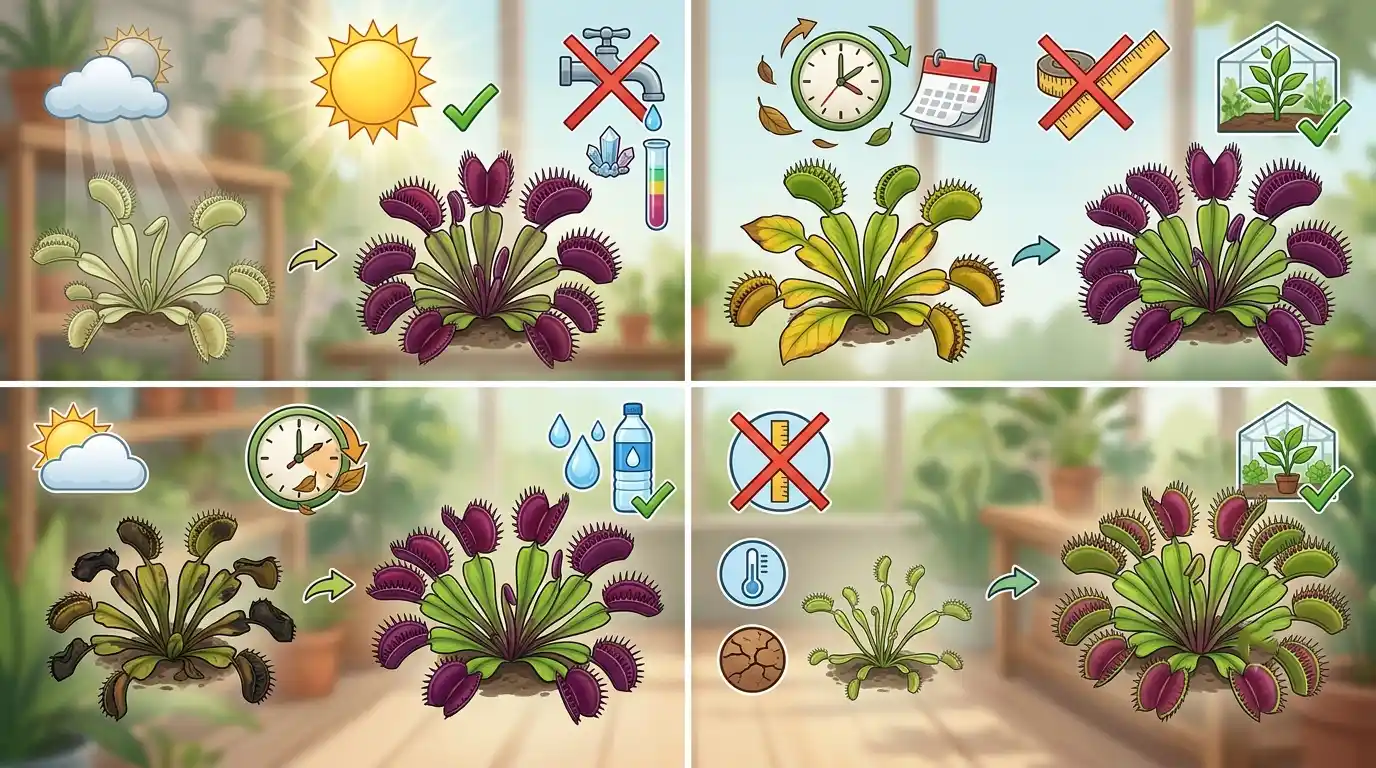
Fading or Reverting to Green
Purple colour may fade when plants receive insufficient light.
Fix:
- Increase light gradually
- Provide stronger direct sunlight or suitable grow lights
- Avoid sudden environmental changes
Yellowing or Browning Traps
Yellow or brown traps may result from:
- Natural ageing
- Poor-quality water
- Incorrect soil
- Dormancy changes
Use pure water and remove dead traps when necessary.
Slow or Stalled Growth
Slow growth can happen because of:
- Poor lighting
- Incorrect soil
- Skipping dormancy
Improving growing conditions usually restores healthy growth.
Beginner Mistakes to Avoid
Common Venus flytrap care mistakes include:
- Using tap water
- Feeding human food such as meat
- Triggering traps for entertainment
- Using fertiliser
- Growing in ordinary potting soil
- Skipping winter dormancy
Conclusion
Purple Venus fly traps are genuine colour variations of Dionaea muscipula created by anthocyanin pigments, genetics, and strong light exposure. They are not a separate species but unique forms of one of the world’s most recognisable carnivorous plants. With proper care, including bright light, pure water, nutrient-poor soil, and winter dormancy, purple Venus flytraps can become long-lived indoor plants or outdoor bog garden specimens. Always purchase cultivated plants from reputable growers because wild Venus flytraps are legally protected.
FAQs
Are purple Venus flytraps real?
Yes, purple Venus flytraps are real. They are naturally pigmented forms of Dionaea muscipula that develop red or purple colouring due to anthocyanin pigments.
Why is my Venus flytrap turning purple or red?
A Venus flytrap usually turns purple or red because of strong light exposure, genetics, and increased anthocyanin production. Healthy plants often develop deeper colours in bright sunlight.
What color is a healthy Venus flytrap?
A healthy Venus flytrap typically has green leaves with red, pink, burgundy, or purple trap interiors. Blackening of older traps is usually a normal part of growth.
Can I use Miracle-Gro or regular fertiliser on my Venus flytrap?
No. Miracle-Gro and regular fertilisers can damage Venus flytraps because their roots are adapted to nutrient-poor soils. Use only suitable carnivorous plant growing methods.
How many times can a Venus flytrap trap close before it dies?
A Venus flytrap trap can usually close around 3–7 times before becoming less effective and naturally dying.
Is it illegal to dig up a wild Venus flytrap?
Yes. Wild Venus flytraps are protected in their native range, and removing them from natural habitats is illegal.
Can a purple Venus flytrap be grown indoors as a houseplant?
Yes, purple Venus flytraps can be grown indoors, but they need strong light, pure water, suitable soil, and a proper winter dormancy period.