

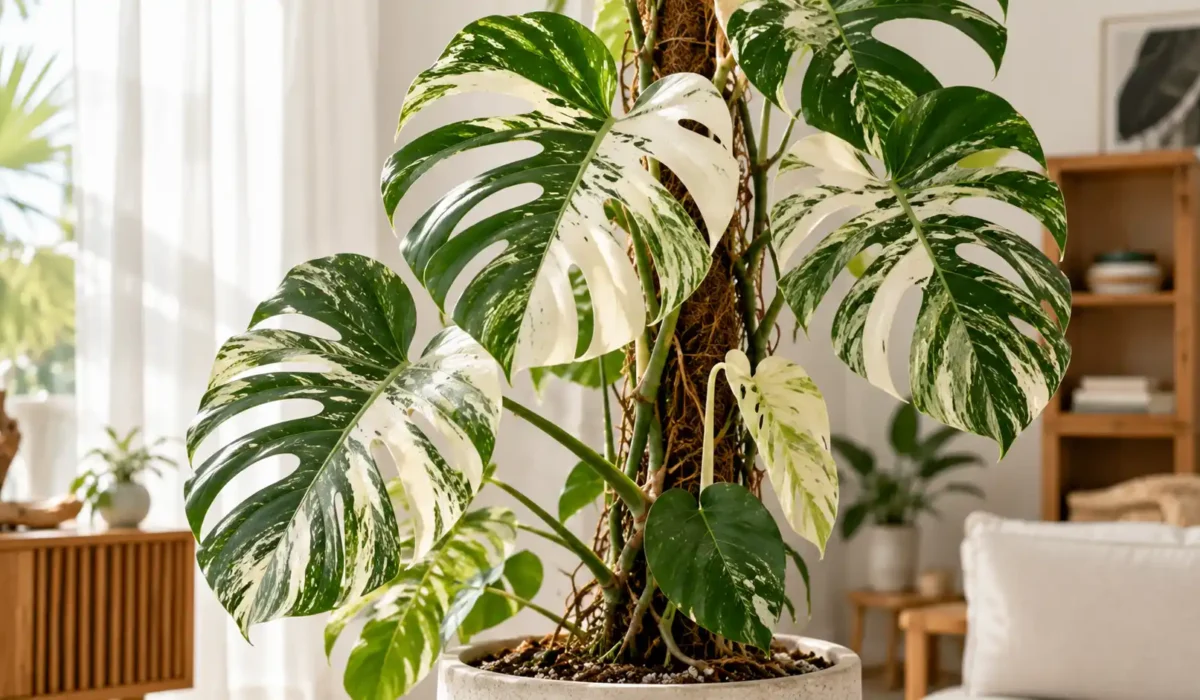
Monstera Albo Variegata Care Guide Australia
Introduction
Monstera albo variegata is one of the most sought after rare houseplants among Australian collectors because of its striking white variegated foliage and unique genetic characteristics. It is a naturally occurring variegated form of Monstera deliciosa or Monstera borsigiana that develops white or cream patches due to a spontaneous genetic mutation affecting chlorophyll production. Unlike many commercially produced variegated plants, each monstera albo variegata has a unique leaf pattern, making every specimen one of a kind. Understanding its biology, care requirements, and propagation methods is essential for maintaining healthy growth and preserving its valuable variegation.
By Elemo Baker | Plant Care & Gardening Expert
Last Updated: June 2026
Quick Summary
- Monstera albo variegata is a rare tropical plant with naturally occurring white variegation caused by a spontaneous genetic mutation rather than selective breeding.
- Two commonly recognised forms are Monstera deliciosa albo variegata and Monstera borsigiana albo variegata, with borsigiana generally growing faster and remaining more compact.
- In Australia, monstera albo variegata is usually purchased through specialist nurseries and reputable online sellers rather than mainstream retailers like Bunnings.
- White variegation is genetically unstable and can revert to green growth, making careful propagation and node selection especially important.
What Is Monstera Albo Variegata?
Monstera albo variegata is a naturally variegated form of Monstera that displays dramatic white or cream sections across its leaves. The plant is highly valued because each leaf develops a unique pattern, ranging from small splashes to dramatic half moon variegation. Unlike artificially created cultivars, an albo monstera owes its appearance to a naturally occurring genetic mutation, making every plant genetically unique. Monstera albo variegata is a naturally variegated form of Monstera deliciosa, with its distinctive white foliage resulting from a spontaneous genetic mutation affecting chlorophyll production.
Australian collectors often use several names interchangeably, including albino monstera, monstera variegata, and variegated albo monstera. Although these names generally refer to the same type of plant, true albos are distinguished by their unstable white variegation rather than a permanently stable pattern.
The Origin of White Variegation in Monstera
White variegation develops because of a chimeric genetic mutation that affects chlorophyll production within certain layers of plant tissue. Since chlorophyll gives leaves their green colour and enables photosynthesis, areas lacking chlorophyll appear white or creamy instead.
Because only some cells carry the mutation, each new leaf develops a different pattern of white and green. This explains why one leaf may have scattered splashes while another may produce dramatic half moon variegation.
It is important to understand that this natural mutation differs significantly from the tissue cultured genetics found in Thai Constellation plants. Albo monstera plants are not laboratory produced, and their variegation can change over time.
In our experience growing variegated Monstera indoors, plants receiving bright indirect light generally maintain healthier white sectors while producing stronger overall growth than specimens kept in darker rooms.
Monstera Deliciosa Albo Variegata vs Monstera Borsigiana Albo Variegata
Australian buyers commonly encounter both Monstera deliciosa albo variegata and Monstera borsigiana albo variegata. While they appear similar, they differ in several important ways.
Monstera deliciosa albo typically develops thicker stems, larger leaves, shorter internodes, and slower overall growth. Mature leaves can become exceptionally large under ideal conditions and eventually produce deep fenestrations.
Monstera borsigiana albo variegata generally produces longer internodes, climbs more rapidly, and reaches maturity sooner. Because it grows faster and propagates more readily, most Australian sellers offer borsigiana rather than true deliciosa forms.
There is ongoing botanical debate regarding whether Monstera borsigiana represents a separate species or simply a naturally occurring growth form of Monstera deliciosa. Many horticultural experts continue to classify borsigiana as part of the broader Monstera deliciosa complex rather than recognising it as a completely separate species.
Elemo Baker recommends looking beyond seller labels and focusing instead on stem structure, internode spacing, and mature leaf characteristics before purchasing, as names are sometimes used inconsistently in the collector market.
| Feature | Monstera Deliciosa Albo | Monstera Borsigiana Albo |
| Mature leaf size | Very large | Medium to large |
| Growth rate | Slow | Moderate to fast |
| Typical Australian price | Higher | Usually lower |
| Propagation ease | Moderate | Easier |
| Fenestration timeline | Slower | Earlier development |
Monstera Albo Variegata vs Thai Constellation: Key Differences
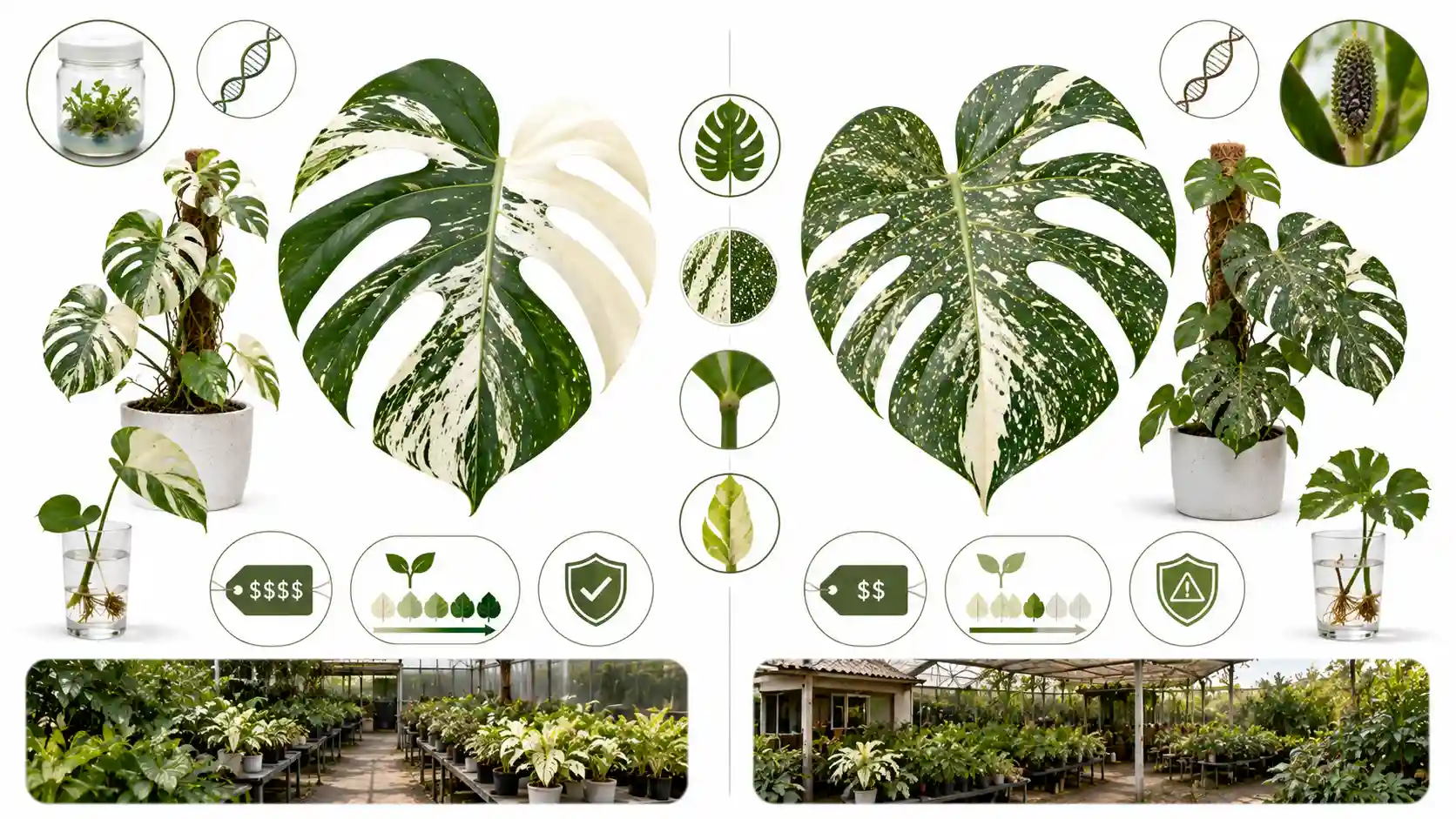
One of the most common questions Australian plant enthusiasts ask is whether they should buy a monstera albo variegata or a Thai Constellation. While both feature attractive variegated foliage, they differ substantially in genetics, appearance, care, and long term reliability.
The biggest difference is variegation stability. Monstera albo variegata develops white markings through a naturally occurring chimeric mutation, which means the pattern can change over time and may eventually revert to completely green growth. Thai Constellation, by comparison, is created through tissue culture, giving it stable cream coloured variegation that remains consistent throughout the plant’s life.
Leaf appearance also differs considerably. Monstera albo variegata typically produces bold white sectors, dramatic marbling, or striking half moon leaves that vary from one leaf to the next. Thai Constellation plants display smaller cream coloured speckles spread evenly across darker green foliage, creating the appearance of stars scattered across the night sky.
Availability also varies within Australia. Thai Constellation has become increasingly accessible through commercial propagation, making it more affordable for beginners. Monstera albo variegata remains comparatively scarce because every new plant must be propagated manually from carefully selected nodes, limiting supply.
Care requirements are similar for both varieties, but albo plants generally require closer monitoring because their white leaf sections contain no chlorophyll and are more vulnerable to sunburn, browning, and slower growth.
| Feature | Monstera Albo Variegata | Thai Constellation |
| Variegation type | Natural chimeric mutation | Tissue cultured |
| Stability | Can revert | Highly stable |
| Leaf pattern | Bold white sectors and marbling | Cream speckles |
| Typical AU price | Higher | Lower |
| Availability in Australia | Limited | Increasingly common |
| Propagation | Node cuttings | Tissue culture and cuttings |
| Growth speed | Slower | Moderate |
As of the 2026 growing season, Australian collectors continue to favour monstera albo variegata for its dramatic one of a kind foliage, while Thai Constellation remains the preferred option for gardeners seeking predictable variegation and easier long term maintenance.
Monstera Albo Variegata Size and Growth Rate
Monstera albo variegata grows more slowly than an all green Monstera because its white leaf tissue contains little or no chlorophyll. Since chlorophyll is responsible for photosynthesis, the plant has less energy available for producing new leaves and stems. With proper care, however, it can still become an impressive climbing houseplant in Australian homes.
How Large Does Monstera Albo Variegata Grow?
Indoors, monstera albo variegata typically reaches 1.5 to 3 metres in height when supported by a moss pole or sturdy climbing structure. Mature leaves commonly measure 30 to 60 centimetres across, although exceptional specimens grown under ideal conditions can develop even larger foliage.
In frost free outdoor areas of tropical and subtropical Australia, established plants may exceed 4 to 6 metres as they climb trees or support structures. Outdoor plants also tend to produce larger leaves with deeper fenestrations because they receive stronger natural light and greater humidity.
Several factors influence mature size, including:
- Available light
- Humidity levels
- Root space
- Support for climbing
- Overall plant health
- Seasonal growing conditions
Plants allowed to climb vertically generally develop significantly larger leaves than those left trailing from hanging baskets or shelves.
In our experience growing variegated Monstera indoors, providing a moss pole early encourages stronger aerial root development and noticeably larger mature foliage within the first few growing seasons.
Growth Rate Factors
Monstera albo variegata is considered a slow to moderate grower. During Australia’s warmer months, healthy plants may produce one new leaf every four to six weeks under favourable conditions. Growth slows considerably during cooler months when temperatures decline and daylight hours shorten.
Several environmental factors influence growth speed.
Reduced chlorophyll
White variegated sections cannot photosynthesise efficiently, meaning the plant has less energy available for producing new leaves. Specimens with extensive white variegation often grow slower than those with a more balanced mix of green and white.
Seasonal growth
In tropical and subtropical regions of Australia, active growth generally occurs throughout spring, summer, and early autumn. In cooler southern states, growth may nearly stop during winter before resuming as temperatures increase.
Light intensity
Bright indirect light promotes both healthy growth and balanced variegation. Plants grown in dim locations often produce smaller leaves, wider internode spacing, and slower development. Excessively dark conditions may also encourage reversion to greener foliage as the plant attempts to increase chlorophyll production.
Container size
Choosing an appropriately sized pot supports healthy root development. A pot that is excessively large retains moisture longer, increasing the risk of root rot, while an overly small container can restrict growth by becoming root bound.
Monstera Albo Variegata Care Guide
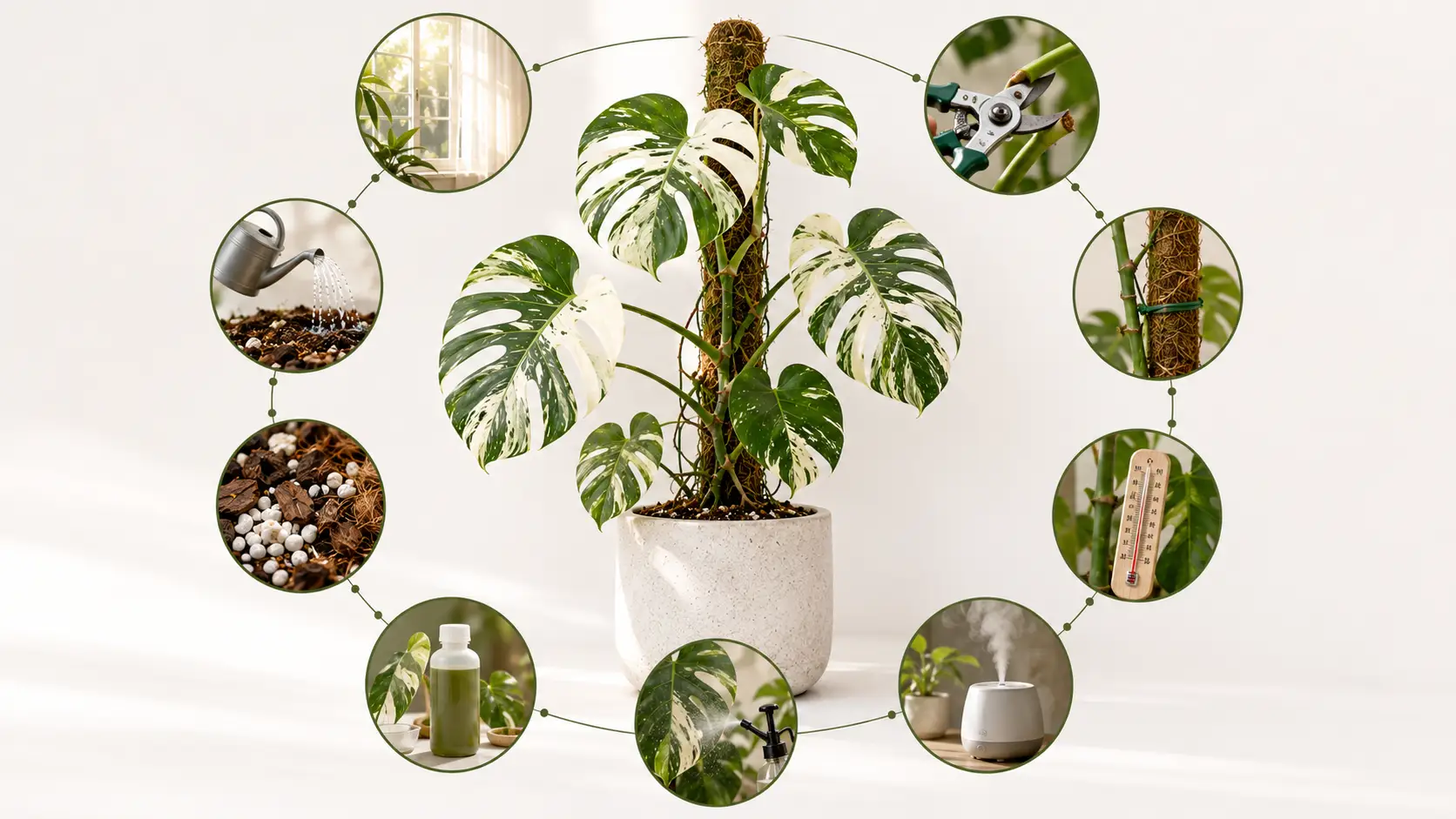
Providing consistent care is the key to maintaining healthy white variegation. Because the plant grows more slowly than green Monstera varieties, sudden changes in watering, lighting, or fertilisation often have a greater impact on its overall health. If you enjoy growing rare indoor foliage plants, you may also find our Money Tree Australia: Care, Meaning & Buying Guide helpful for learning about another popular tropical houseplant with similar indoor care requirements.
Light Requirements
Monstera albo variegata thrives in bright indirect light. This level of light provides enough energy for the green portions of each leaf to support overall growth while reducing the risk of scorching the delicate white sections. Many indoor tropical plants, including Monstera and Dracaena, thrive in bright indirect light. See our Dracaena Plant Indoor Benefits, Care, Meaning & Propagation guide for additional indoor growing tips.
Morning sunlight may be tolerated for short periods, but strong afternoon sun can quickly burn white tissue, leaving permanent brown patches.
Ideal locations include:
- East facing windows
- Bright north facing rooms
- Filtered light through sheer curtains
- Well lit indoor spaces with consistent natural light
Plants receiving insufficient light frequently grow more slowly and may gradually lose balanced variegation.
Elemo Baker recommends rotating the plant every few weeks so all sides receive even light exposure, helping maintain symmetrical growth.
Watering Needs
Because variegated plants grow more slowly, they also use water at a slower rate than standard green Monstera.
Allow the top 3 to 5 centimetres of potting mix to dry before watering thoroughly. Rather than following a fixed schedule, monitor soil moisture throughout the year.
Signs of overwatering include:
- Yellow leaves
- Soft stems
- Mushy roots
- Persistent wet soil
- Foul smelling potting mix
Signs of underwatering include:
- Curling leaves
- Crispy edges
- Dry aerial roots
- Slowed growth
During Australia’s warmer months, watering is generally more frequent than during winter when growth naturally slows.
Soil and Potting Mix
A loose, chunky potting mix provides excellent drainage while allowing oxygen to reach the roots.
Suitable Australian ingredients include:
- Premium indoor plant mix
- Orchid bark
- Perlite
- Coco coir
- Horticultural charcoal
- Pumice where available
A well aerated mix reduces the likelihood of root rot while supporting vigorous root development.
Repot only when necessary, usually every one to two years, or when roots begin circling the bottom of the container.
Fertilisation
Monstera albo variegata benefits from regular but gentle feeding during the active growing season.
Apply a balanced liquid fertiliser at approximately half the recommended strength every four to six weeks throughout spring and summer.
Avoid excessive fertiliser applications because rapid forced growth may stress variegated plants and increase the risk of root damage or leaf burn.
Reduce or stop feeding during winter when active growth slows.
Humidity and Temperature
Monstera albo variegata performs best in temperatures between 18°C and 28°C.
Humidity levels of 60 to 80 percent encourage healthy foliage and reduce browning along white leaf margins.
For Australian homes experiencing dry indoor air during winter, humidity can be improved by:
- Using a room humidifier
- Grouping tropical plants together
- Placing water trays nearby without allowing pots to sit in water
- Improving overall room humidity rather than misting leaves excessively
Avoid placing plants near heaters, fireplaces, or air conditioning vents where rapid temperature fluctuations can stress foliage. For more guidance on incorporating statement foliage into Australian homes, see our Australian Plants Guide: Indoor Houseplants & Garden Design.
Pruning Considerations
Routine pruning helps maintain shape while encouraging healthier new growth.
Remove:
- Dead leaves
- Damaged stems
- Diseased foliage
- Weak or overcrowded growth
One of the most important reasons for pruning is managing reversion.
Occasionally, a stem begins producing completely green leaves because the mutated cells responsible for white variegation are no longer active. If detected early, pruning back to the last healthy variegated node often encourages future growth to retain attractive white markings.
Always use clean, sterilised pruning tools to minimise the risk of spreading disease.
Monstera Albo Variegata Propagation
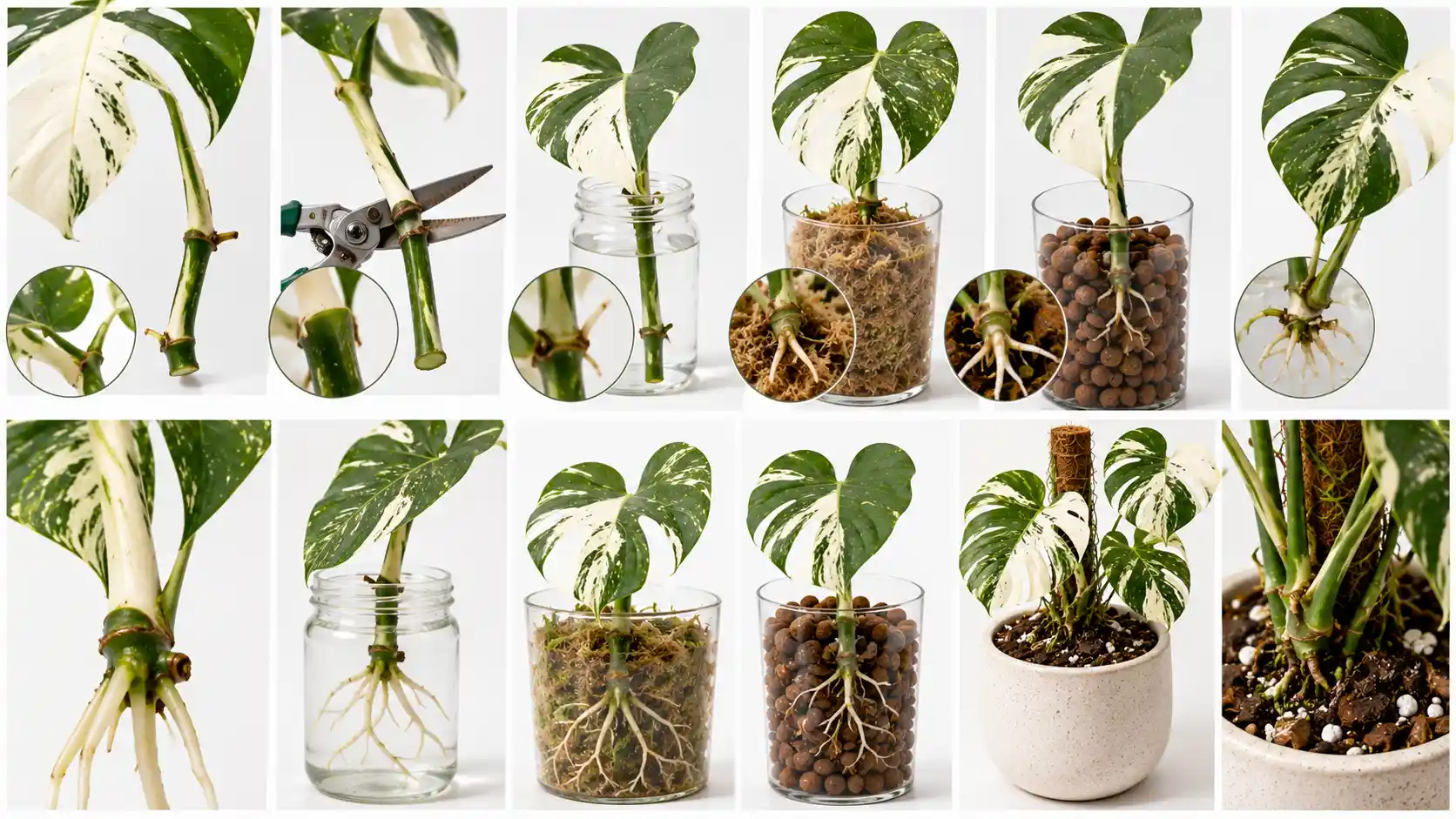
Propagation is the only reliable way to produce new monstera albo variegata plants. Unlike Thai Constellation, which is widely tissue cultured, every new albo originates from a carefully selected stem cutting containing suitable variegated tissue.
How to Propagate Monstera Albo Variegata
Successful propagation depends on selecting a healthy cutting with both active growth potential and desirable variegation.
Follow these steps:
- Choose a healthy stem containing at least one visible node.
- Ensure the adjacent leaf displays balanced green and white variegation.
- Include one healthy aerial root whenever possible.
- Cut below the node using sterilised pruning shears.
- Place the cutting into your chosen rooting medium.
- Keep the cutting warm with bright indirect light.
- Wait for a strong root system before transferring into a chunky potting mix.
Three popular rooting methods are commonly used in Australia.
| Rooting Method | Advantages | Considerations |
| Water | Easy to monitor root development | Requires regular water changes |
| Sphagnum moss | Excellent moisture balance | Needs careful monitoring to prevent drying |
| LECA | Excellent aeration and reusable medium | Requires familiarity with semi hydroponic growing |
Under favourable conditions, roots typically begin developing within three to eight weeks, although cooler temperatures may extend this timeline.
Once roots reach approximately 5 to 10 centimetres in length and show healthy branching, the cutting can usually be transferred into a well draining soil mix.
Why Variegation Selection Matters in Propagation
The success of monstera albo variegata propagation depends not only on rooting but also on preserving the plant’s unique genetics.
Because albo variegation is chimeric, only tissues containing both green and mutated white producing cells can continue generating variegated growth.
Cuttings taken from completely green reverted stems almost always produce entirely green plants. Likewise, cuttings containing excessive white tissue may struggle because they lack sufficient chlorophyll to sustain vigorous growth.
For this reason, experienced growers carefully examine the node before making any propagation cuts. A node showing balanced green and white tissue offers the highest likelihood of producing healthy, attractively variegated new growth.
This selective propagation process is one of the primary reasons monstera albo variegata remains considerably rarer and more valuable than tissue cultured Thai Constellation plants.
Common Problems With Monstera Albo Variegata
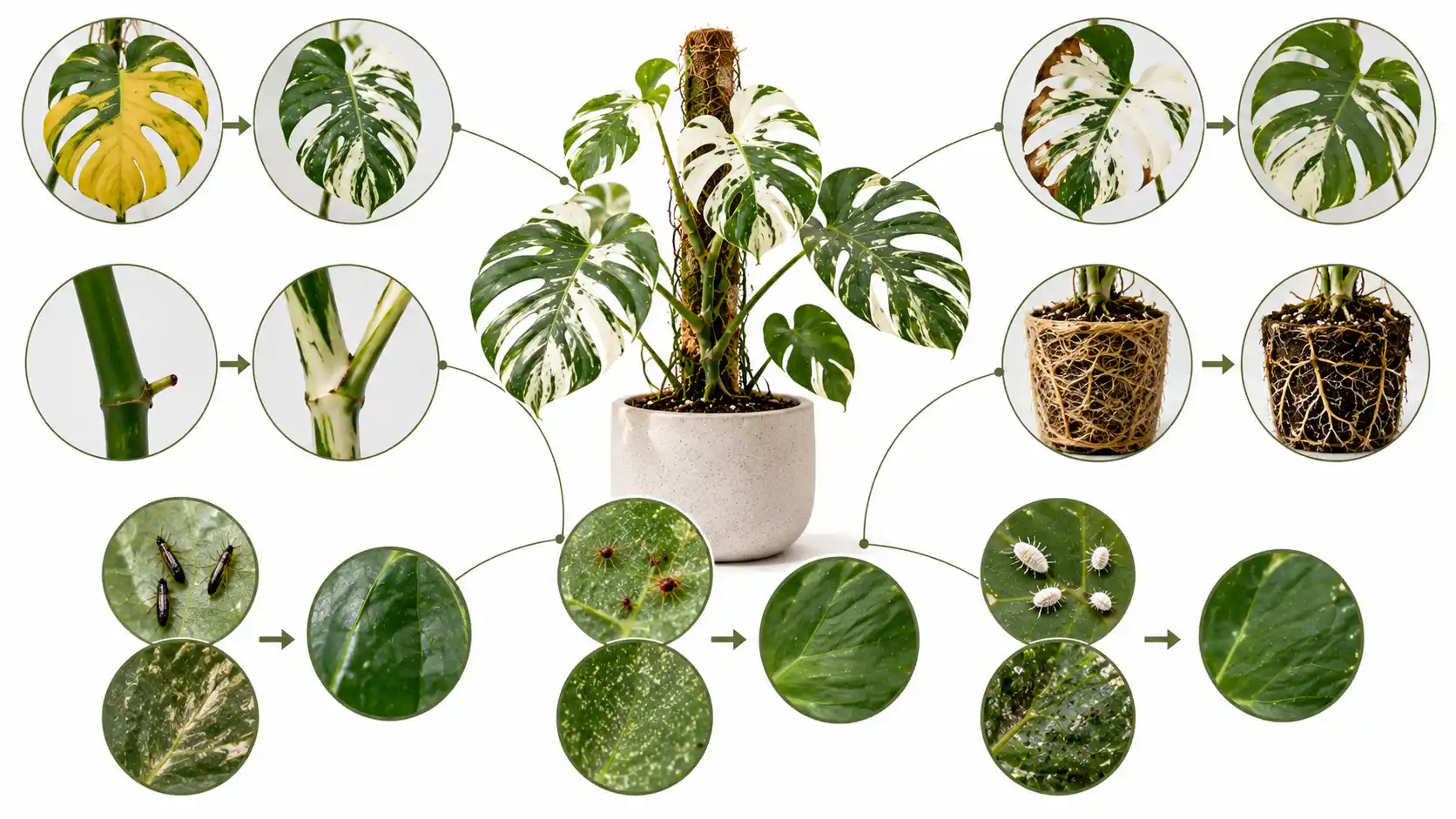
Even with excellent care, monstera albo variegata can develop problems related to its slower growth and reduced chlorophyll. Identifying issues early helps prevent long term damage and keeps the plant producing healthy, beautifully variegated foliage.
Yellow Leaves
Yellow leaves are one of the most common symptoms seen in monstera albo variegata. While an occasional older leaf naturally ages and dies, multiple yellowing leaves usually indicate an underlying care issue.
Common causes include:
- Overwatering
- Root rot
- Poor drainage
- Nutrient deficiency
- Insufficient light
- Sudden environmental changes
To resolve yellowing leaves:
- Check soil moisture before watering.
- Inspect roots for signs of rot.
- Improve drainage if soil remains wet for extended periods.
- Move the plant to brighter indirect light.
- Feed lightly during the active growing season if nutrient deficiency is suspected.
Avoid removing slightly yellow leaves until you have identified the cause, as they can provide valuable clues about the plant’s health.
Brown or Crispy White Sections
The white portions of monstera albo variegata leaves contain little or no chlorophyll, making them much more delicate than green tissue.
Brown edges or crispy patches commonly result from:
- Direct afternoon sunlight
- Low humidity
- Underwatering
- Heat stress
- Physical damage
To reduce browning:
- Provide bright filtered light instead of harsh direct sun.
- Maintain indoor humidity around 60 to 80 percent.
- Water consistently without allowing prolonged drought.
- Keep the plant away from heaters and hot windows.
Small brown areas cannot recover, but improving growing conditions helps protect future leaves.
Variegation Reverting to Green
Reversion occurs when new growth gradually loses its white colouring and begins producing entirely green leaves.
This happens because the green tissue has a natural growth advantage. Since green leaves produce more energy through photosynthesis, they can eventually dominate if the mutated tissue is no longer present within the growing point.
Early signs include:
- Reduced white marbling
- Smaller white patches
- Consecutive greener leaves
- Entirely green shoots developing from one stem
The most effective solution is to prune the stem back to the last healthy variegated node before green growth becomes dominant.
Elemo Baker recommends inspecting every new leaf as it unfurls. Catching reversion early provides the greatest chance of maintaining attractive long term variegation.
Slow or Stalled Growth
Because monstera albo variegata naturally grows more slowly than green Monstera, periods of slower development are not always cause for concern.
Growth may stall because of:
- Winter dormancy
- Low light
- Root bound containers
- Poor root health
- Pest infestations
- Low temperatures
Troubleshooting steps include:
- Increase bright indirect light.
- Check root health during repotting.
- Maintain suitable indoor temperatures.
- Support climbing stems with a moss pole.
- Resume fertilising when active growth returns in spring.
Patience is often essential. Healthy plants may pause growth temporarily before producing several new leaves during favourable conditions.
Pest Infestations
Although generally resilient, monstera albo variegata can attract common indoor pests. If you are unsure which insect is affecting your plant, our Garden Pest Identification Guide for Australian Gardens can help you identify common pests and choose appropriate treatment methods.
Australian growers most frequently encounter:
- Thrips
- Spider mites
- Mealybugs
Signs include:
- Silver streaks on leaves
- Tiny webbing
- Cotton like white clusters
- Distorted new growth
- Sticky residue
Treat infestations promptly using horticultural soap, neem oil, or insecticides labelled for indoor ornamental plants in Australia. Regular inspection of new growth helps detect pests before populations become established.
Buying Monstera Albo Variegata in Australia
Purchasing a healthy monstera albo variegata requires careful research because plant quality, variegation, and pricing vary significantly between sellers.
Where to Buy Monstera Albo Variegata in Australia
Monstera albo variegata is considered a collector plant rather than a mainstream indoor plant.
Reliable sources include:
- Specialist indoor plant nurseries
- Reputable online plant retailers
- Established collectors
- Facebook plant trading groups
- Gumtree listings from experienced growers
- Local rare plant expos and collector events
Many Australian buyers search for terms such as monstera albo variegata Australia, monstera albo Australia, and monstera albo variegata for sale when looking for reputable sellers.
Unlike common Monstera deliciosa, monstera albo variegata is not stocked by Bunnings. Mainstream retailers focus on mass produced plants with consistent commercial supply, whereas each albo must be individually propagated by hand. For this reason, searches such as monstera albo Bunnings, Bunnings monstera, variegated monstera Bunnings, monstera plants Bunnings, and monstera albo Bunnings generally do not lead to genuine availability.
What to Look for When Buying
A healthy monstera albo variegata should show strong growth, balanced variegation, and evidence of good root development.
Look for these positive signs:
- Healthy green and white variegation
- Firm stems
- Active growth point
- Healthy aerial roots
- Pest free foliage
- Strong root system
- Multiple leaves where possible
Be cautious if you notice:
- Completely green new growth
- Blackened stems
- Soft or mushy roots
- Severe leaf damage
- Signs of pests
- Poor quality photographs
- Sellers unwilling to show the node
When reviewing listings for monstera albo variegata for sale, albo monstera for sale, monstera albo for sale Australia, monstera albo for sale Melbourne, variegated monstera albo for sale, monstera borsigiana for sale, white variegated monstera for sale, or variegated monstera borsigiana for sale Australia, always request clear photographs of both the node and root system before purchasing.
Monstera Albo Variegata Price in Australia
The price of monstera albo variegata depends on several important factors.
These include:
- Overall plant size
- Number of leaves
- Root development
- Quality of variegation
- Half moon or marbled patterns
- Seller reputation
- Market demand
Generally:
| Plant Type | Typical Australian Price Range |
| Single node unrooted cutting | Lower price range |
| Rooted cutting | Moderate price range |
| Multi leaf established plant | Premium price range |
| Highly variegated mature specimen | Highest price range |
Over recent years, prices have gradually become more accessible as propagation has increased. However, exceptional specimens displaying stable, attractive white variegation continue to command premium prices because they remain relatively uncommon.
Monstera Albo Variegata vs Other Rare Variegated Monsteras
Australian collectors often compare several rare variegated Monstera varieties before deciding which plant best suits their collection. Collectors interested in unusual tropical foliage may also enjoy our Anthurium pallidiflorum vs vittarifolium Guide, which compares two highly sought after rainforest plants grown by indoor plant enthusiasts.
Monstera Aurea Variegata
Monstera aurea variegata produces yellow or golden variegation instead of the bright white colouring seen in monstera albo variegata.
Although both are naturally variegated plants, their appearance differs considerably.
Key differences include:
- Aurea develops yellow and lime coloured sectors.
- Albo produces bright white or cream variegation.
- Aurea often changes colour as leaves mature.
- Both remain highly desirable collector plants.
Like albo, monstera aurea cannot be mass produced through stable tissue culture, contributing to its rarity.
Collectors searching for monstera aurea, aurea monstera, aurea monstera, or monstera aurea for sale should expect availability to remain limited through specialist Australian sellers.
Albo vs Thai Constellation Buyer Decision Guide
Both plants are beautiful, but they suit different types of growers.
Choose Monstera Albo Variegata if you:
- Appreciate unique one of a kind foliage.
- Enjoy propagation.
- Have experience with rare houseplants.
- Do not mind slower growth.
Choose Thai Constellation if you:
- Prefer predictable variegation.
- Want easier maintenance.
- Are purchasing your first variegated Monstera.
- Have a more limited budget.
| Feature | Monstera Albo Variegata | Thai Constellation | Monstera Aurea |
| Variegation colour | White | Cream | Yellow to gold |
| Stability | Variable | Stable | Variable |
| Typical AU price | High | Moderate | High |
| Beginner friendly | Moderate | Excellent | Moderate |
| Propagation reliability | Depends on node selection | Highly reliable | Depends on node selection |
Although searches for monstera Thai Constellation for sale, Thai Constellation Bunnings, Bunnings Thai Constellation, Thai Constellation monstera Bunnings, and Thai monstera Bunnings continue to grow, availability varies depending on supplier and season.
Beginner Mistakes With Monstera Albo Variegata
Many challenges experienced by first time growers can be avoided with a better understanding of the plant’s unique genetics.
Common mistakes include:
- Purchasing a cutting without visible variegation near the node, greatly reducing the chance of future variegated growth.
- Keeping the plant in very low light to protect white leaves, which actually slows growth and may encourage reversion.
- Overwatering because the plant is tropical, even though slower growing variegated plants require less frequent watering than many expect.
- Mistaking natural reversion for disease instead of recognising it as a genetic process that can often be managed through careful pruning.
- Propagating completely green reverted stems while expecting new plants to regain white variegation.
- Paying premium prices for specimens that are already showing strong signs of permanent reversion.
Conclusion
Monstera albo variegata remains one of the most rewarding collector houseplants available in Australia thanks to its dramatic white foliage and naturally occurring genetic variegation. Although it requires more attention than standard green Monstera, success is achievable with bright indirect light, careful watering, well draining soil, and thoughtful propagation practices. Selecting healthy nodes, monitoring for reversion, and purchasing from reputable Australian sellers all contribute to long term success. For collectors willing to understand its unique biological characteristics, monstera albo variegata offers exceptional beauty that few indoor plants can match. If you are expanding your plant collection beyond indoor species, explore our Low Maintenance Plants for Fence Line in Australia guide for easy to grow landscape plants that suit Australian conditions.
Frequently Asked Questions
1. What is the difference between monstera albo variegata and monstera borsigiana albo variegata?
Monstera borsigiana albo variegata is generally more compact and faster growing than monstera deliciosa albo variegata. It usually develops longer internodes, reaches maturity sooner, and is more commonly available through Australian sellers.
2. Why is monstera albo variegata so expensive in Australia?
Every monstera albo variegata must be propagated manually from carefully selected node cuttings because it cannot be mass produced through tissue culture like Thai Constellation. Slow growth, limited supply, and strong collector demand contribute to its higher price.
3. Can monstera albo variegata lose its variegation?
Yes. The white variegation is genetically unstable and can revert to completely green growth. Early pruning back to a healthy variegated node often helps encourage future variegated growth.
4. Is monstera albo variegata available at Bunnings in Australia?
No. Monstera albo variegata is considered a rare collector plant and is not typically stocked by mainstream retailers such as Bunnings. It is usually available through specialist nurseries and reputable online sellers.
5. How do I propagate monstera albo variegata successfully?
Take a cutting with at least one healthy node and, ideally, one aerial root. Select a node associated with balanced green and white variegation, root it in water, sphagnum moss, or LECA, then transfer it into a chunky, well draining potting mix once a strong root system has developed.
6. What is the difference between monstera albo variegata and Thai Constellation?
Thai Constellation has stable cream speckled variegation created through tissue culture, while monstera albo variegata develops naturally occurring white variegation that can revert over time. Thai Constellation is generally easier for beginners, whereas albo is prized for its unique foliage patterns.
7. How much does monstera albo variegata cost in Australia?
Prices vary depending on plant size, root development, leaf count, and variegation quality. Single node cuttings are the most affordable option, while mature, highly variegated specimens with multiple healthy leaves command premium prices.