

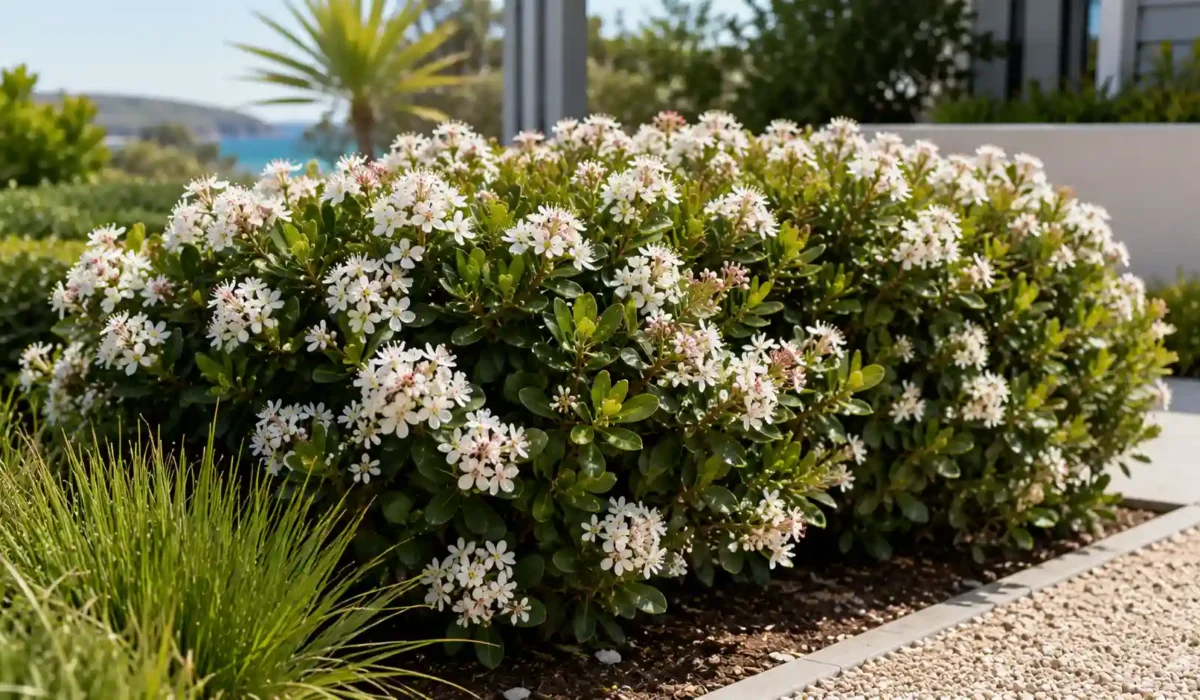
Rhaphiolepis Oriental Pearl Care, Size & Growth Guide
Introduction
Rhaphiolepis Oriental Pearl, also known as Oriental Pearl Indian Hawthorn, is a compact evergreen shrub valued for its glossy green foliage, white flowers with pink stamens and reliable performance in Australian gardens. Rhaphiolepis indica ‘Oriental Pearl’ typically grows around 0.8–1m tall and wide, making it an excellent choice for low hedges, borders, pots and coastal landscapes. This hardy shrub is slow to moderate growing, tolerates heat, frost and salt spray, and requires minimal maintenance once established. Its dense growth habit and seasonal flowering make it a popular option for gardeners seeking an attractive, low-care evergreen plant suitable for a wide range of climates.
By Elemo Baker | Plant Care & Gardening Expert
Last Updated: July 2026
Quick Summary
- Rhaphiolepis Oriental Pearl is a compact evergreen shrub reaching approximately 0.8–1m in height and width.
- It is a slow-to-moderate grower, usually adding around 15–30cm of growth per year under suitable conditions.
- The plant tolerates Australian heat, light frost, drought periods and coastal salt spray.
- It suits low hedges, garden borders, containers and coastal gardens.
- Established plants need only occasional watering, annual pruning and well-drained soil.
What Is Rhaphiolepis Oriental Pearl?
Rhaphiolepis Oriental Pearl is a compact cultivar of Rhaphiolepis indica, commonly known as Indian Hawthorn. It belongs to the Rosaceae (rose) family and originates from regions of eastern Asia, including China, Japan and Korea. The cultivar Rhaphiolepis indica ‘Oriental Pearl’ was selected for its compact growth, attractive flowering display and suitability for smaller garden spaces.
The plant produces clusters of white flowers with noticeable pink stamens, usually appearing in spring and sometimes continuing into warmer months depending on climate conditions. Its evergreen leaves remain attractive throughout the year, providing structure even outside the flowering season.
Rhaphiolepis belongs to the rose family (Rosaceae) and is commonly grouped with evergreen flowering shrubs known as Indian Hawthorns. More botanical background about this plant group can be found on Wikipedia’s Rhaphiolepis page.
The names raphaelepsis, rhaphiolepsis and raphiolepis are common spelling variations used by gardeners when searching for this plant. The correct botanical spelling is Rhaphiolepis.
Common Names and Naming Confusion
Rhaphiolepis Oriental Pearl is often referred to by several names, including:
- Oriental Pearl plant
- Oriental Pearl Indian Hawthorn
- Indian Hawthorn
- Rhaphiolepis
These names generally refer to the same plant when discussing the cultivar Rhaphiolepis indica ‘Oriental Pearl’. Indian Hawthorn is the broader common name for several Rhaphiolepis species and cultivars, while Oriental Pearl specifically identifies this compact flowering selection.
Rhaphiolepis Oriental Pearl Size and Growth Rate
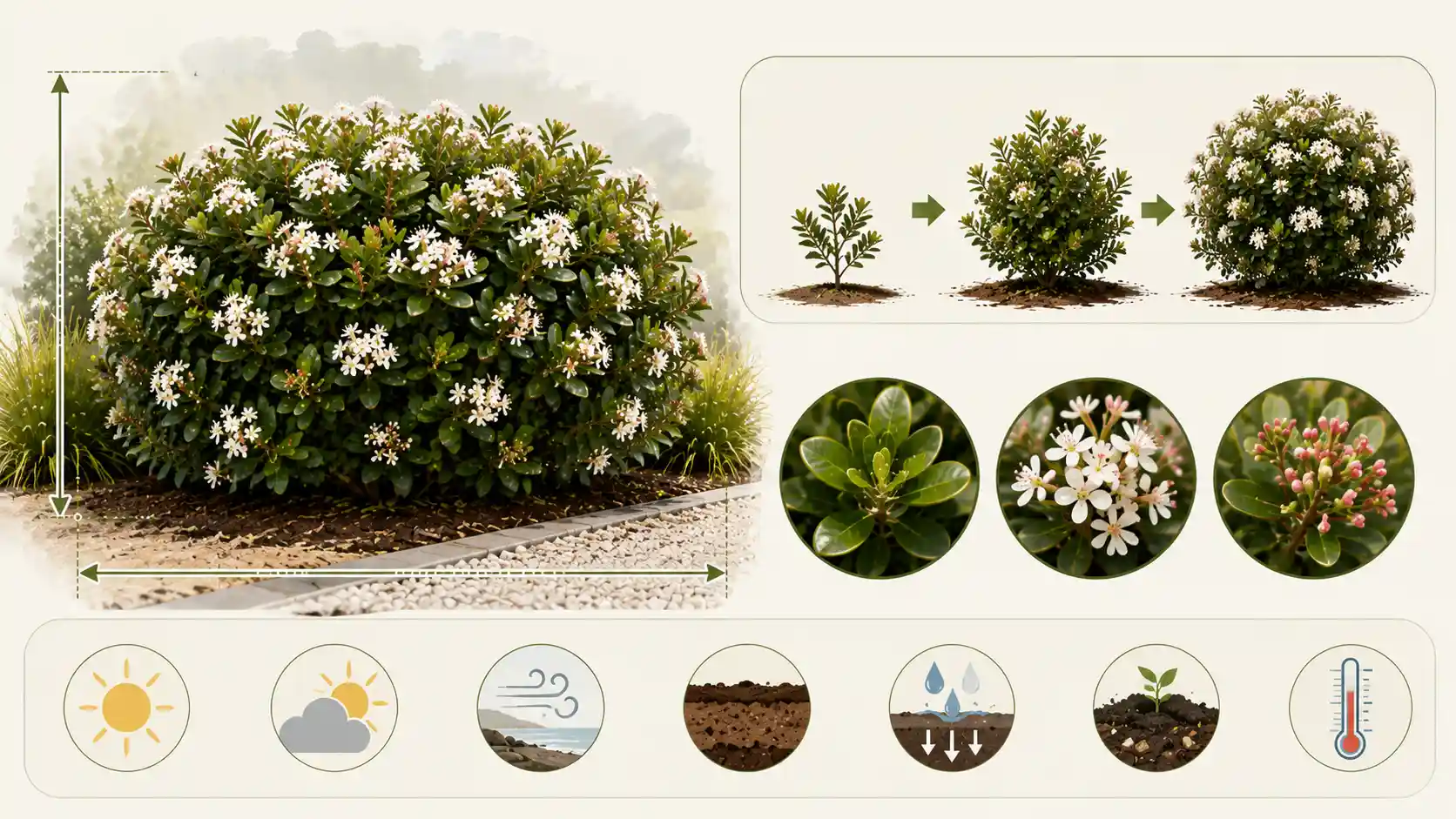
Rhaphiolepis Oriental Pearl is a small evergreen shrub with a naturally rounded growth habit. A mature plant usually reaches approximately 0.8–1m tall and around 1m wide when grown in suitable garden conditions.
Gardeners looking for alternative evergreen screening plants can also explore Photinia Fraseri Robusta: Growth, Care & Hedge Guide, which covers another popular Australian hedging option with different growth characteristics.
Its compact size makes it different from larger Indian Hawthorn varieties that may grow significantly taller. In gardens, Oriental Pearl is commonly used where a neat, low-growing hedge or border plant is required.
Another compact Australian hedging option worth comparing is Acmena Smithii Minor: Size, Growth Rate, Care & Hedge Guide, which covers the growth habits and maintenance needs of a popular screening shrub.
The final size depends on several environmental factors:
- Sun exposure: Plants receiving adequate sunlight generally develop denser growth.
- Soil quality: Well-drained, fertile soil supports healthier growth.
- Climate: Warm climates may encourage longer growing periods.
- Water availability: Regular moisture during establishment improves early development.
When grown in pots, Oriental Pearl usually remains smaller due to restricted root space. Container-grown plants can maintain a compact shape with regular pruning and appropriate pot size.
How Fast Does Oriental Pearl Grow?
Oriental Pearl grows at a slow to moderate rate, typically producing around 15–30cm of new growth per year depending on climate, soil and care.
The strongest growth periods usually occur during spring and autumn when temperatures are mild and soil moisture is balanced. Growth may slow during extreme summer heat, cold winter periods or drought conditions.
In our experience growing compact hedging shrubs, Oriental Pearl establishes faster when planted in well-prepared soil with consistent watering during the first year. Once mature, it becomes much more drought tolerant and requires less attention.
Is Oriental Pearl Invasive?
Oriental Pearl is not considered an invasive shrub in typical Australian garden settings. It develops a contained root system that is generally shallow to moderate rather than aggressive.
Indian Hawthorn does not usually produce the type of spreading roots associated with invasive landscape plants. However, planting near structures should still follow normal gardening practices by allowing enough space for mature growth.
Its manageable root behaviour makes it suitable for:
- Small gardens
- Low hedges
- Foundation planting
- Large containers
Rhaphiolepis Oriental Pearl Care Guide
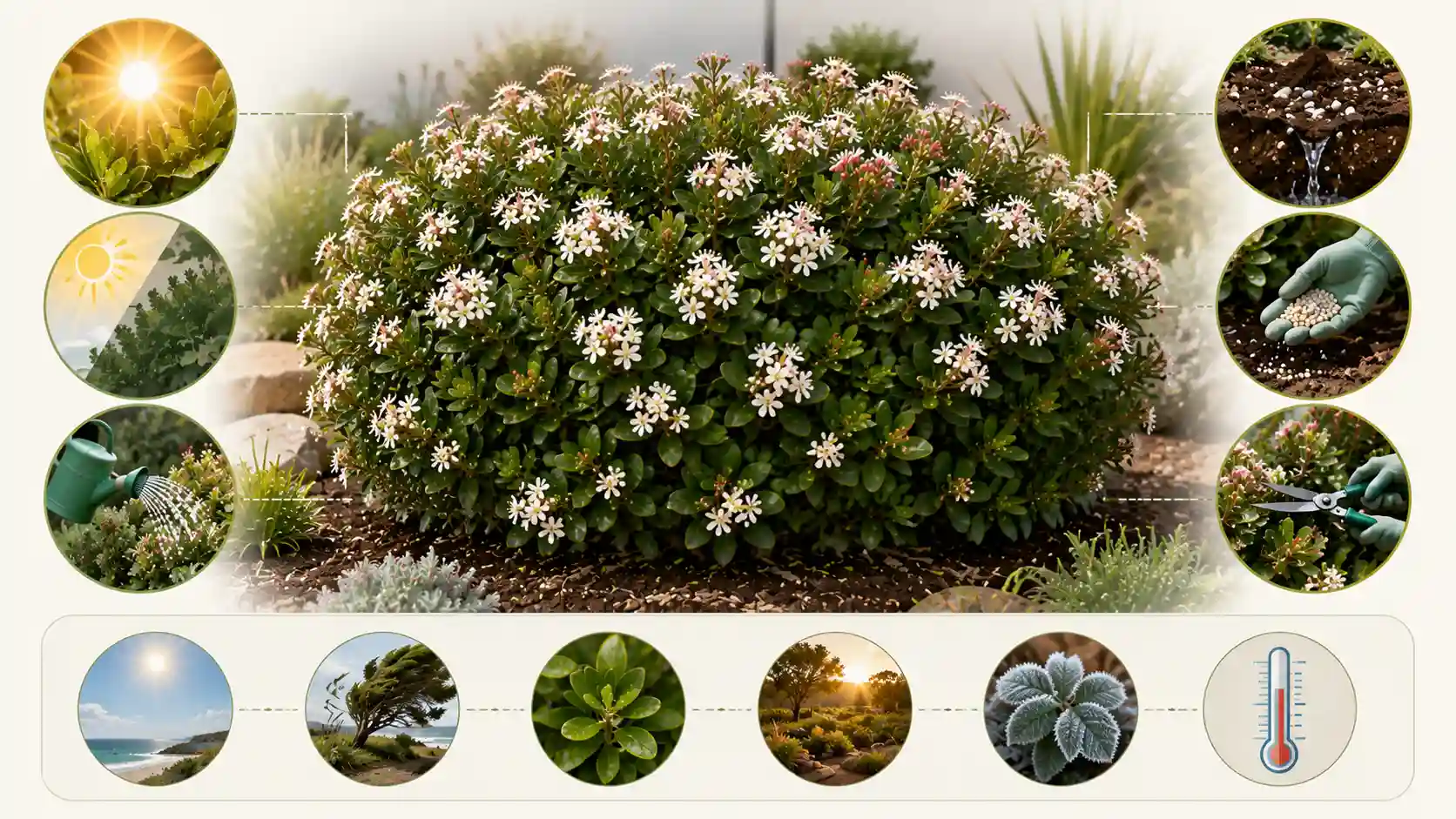
Rhaphiolepis Oriental Pearl care is relatively simple because the plant adapts well to different Australian growing conditions. Providing good drainage, sufficient sunlight and occasional maintenance will help maintain healthy foliage and flowering.
Watering Requirements
Young Oriental Pearl plants need regular watering while establishing their root system. Water deeply when the soil begins to dry, especially during the first growing season.
Once established, the shrub becomes drought tolerant and can handle short dry periods. Overwatering is a common mistake because constantly wet soil can lead to root stress and poor growth.
A practical watering approach is:
- Water deeply rather than lightly sprinkling.
- Allow soil to partially dry between watering.
- Reduce watering during cooler months if rainfall is sufficient.
Light Requirements
Oriental Pearl grows best in full sun to part shade. At least several hours of direct sunlight each day encourages better flowering and compact growth.
In areas with intense summer heat, some afternoon shade can protect foliage from excessive stress while still allowing good growth.
Soil Requirements
The ideal soil for Rhaphiolepis Oriental Pearl is:
- Well-drained sandy soil
- Fertile loam soil
- Slightly acidic to neutral soil conditions
Poor drainage, especially heavy clay soils that remain wet, can affect root health. Improving clay soil with organic matter and drainage materials can help create better growing conditions.
Fertilising Needs
Apply a balanced slow-release fertiliser in early spring to support healthy foliage and flowering. Avoid excessive fertilising, as too much nitrogen can encourage leafy growth while reducing flowering.
Organic compost can also improve soil structure and provide gradual nutrient release.
Pruning Requirements
Oriental Pearl responds well to light pruning and maintains a neat shape when trimmed regularly. Annual pruning after flowering helps maintain density and removes spent flowers.
Pruning also:
- Encourages bushier growth
- Controls hedge size
- Improves airflow through the plant
- Reduces unwanted berry formation
Climate Tolerance
Oriental Pearl is well suited to many Australian climates.
It tolerates:
- Heat
- Light frost
- Periods of drought once established
- Coastal salt spray
This makes it suitable for gardens across many regions, including coastal areas where some shrubs struggle.
How to Prune Rhaphiolepis Oriental Pearl
The best way to prune Rhaphiolepis Oriental Pearl is to lightly shape the shrub after flowering, removing spent flowers and trimming uneven growth to maintain a dense, compact form. Regular pruning encourages branching and keeps the plant suitable for low hedges and borders.
For general maintenance:
- Prune once yearly after the main flowering period.
- Remove dead, damaged or crossing branches.
- Trim lightly rather than cutting deeply into old wood.
- For formal hedges, prune 1–3 times per year to maintain shape.
Avoid heavy pruning during extreme heat or frost periods, as the plant recovers more slowly under environmental stress. Elemo Baker recommends light, consistent pruning rather than occasional severe cuts because compact shrubs generally maintain better density with regular shaping.
Planting Oriental Pearl in the Garden or Pots
Oriental Pearl can be planted successfully in garden beds, borders and containers. The best place to plant Indian Hawthorn is a position with good sunlight, free-draining soil and enough space for natural spreading.
For hedge planting, space plants around 40–60cm apart depending on the desired density. Closer spacing creates a faster-forming screen, while wider spacing allows each shrub to develop a fuller individual shape.
When planting:
- Choose a sunny or partly shaded position.
- Improve heavy clay soil before planting.
- Add compost to encourage healthy establishment.
- Water regularly during the first year.
Rhaphiolepis Oriental Pearl also grows well in pots. Container-grown plants are useful for patios, balconies and smaller gardens. Use a quality potting mix with good drainage and select a container large enough to support long-term root development.
Is Rhaphiolepis Oriental Pearl Toxic to Pets?
Rhaphiolepis Oriental Pearl is generally considered a low-risk ornamental plant, but pet owners should always confirm plant safety with a veterinarian or recognised animal poison authority if concerns arise.
Some plants can affect pets differently depending on the species, the amount consumed and the individual animal. If a pet regularly chews garden plants, monitoring access and seeking professional advice is recommended.
For households with cats or dogs, good garden practice includes:
- Preventing excessive chewing of ornamental plants.
- Removing fallen plant material where necessary.
- Contacting a veterinarian if unusual symptoms appear after plant ingestion.
Oriental Pearl vs Snow Maiden: What’s the Difference?
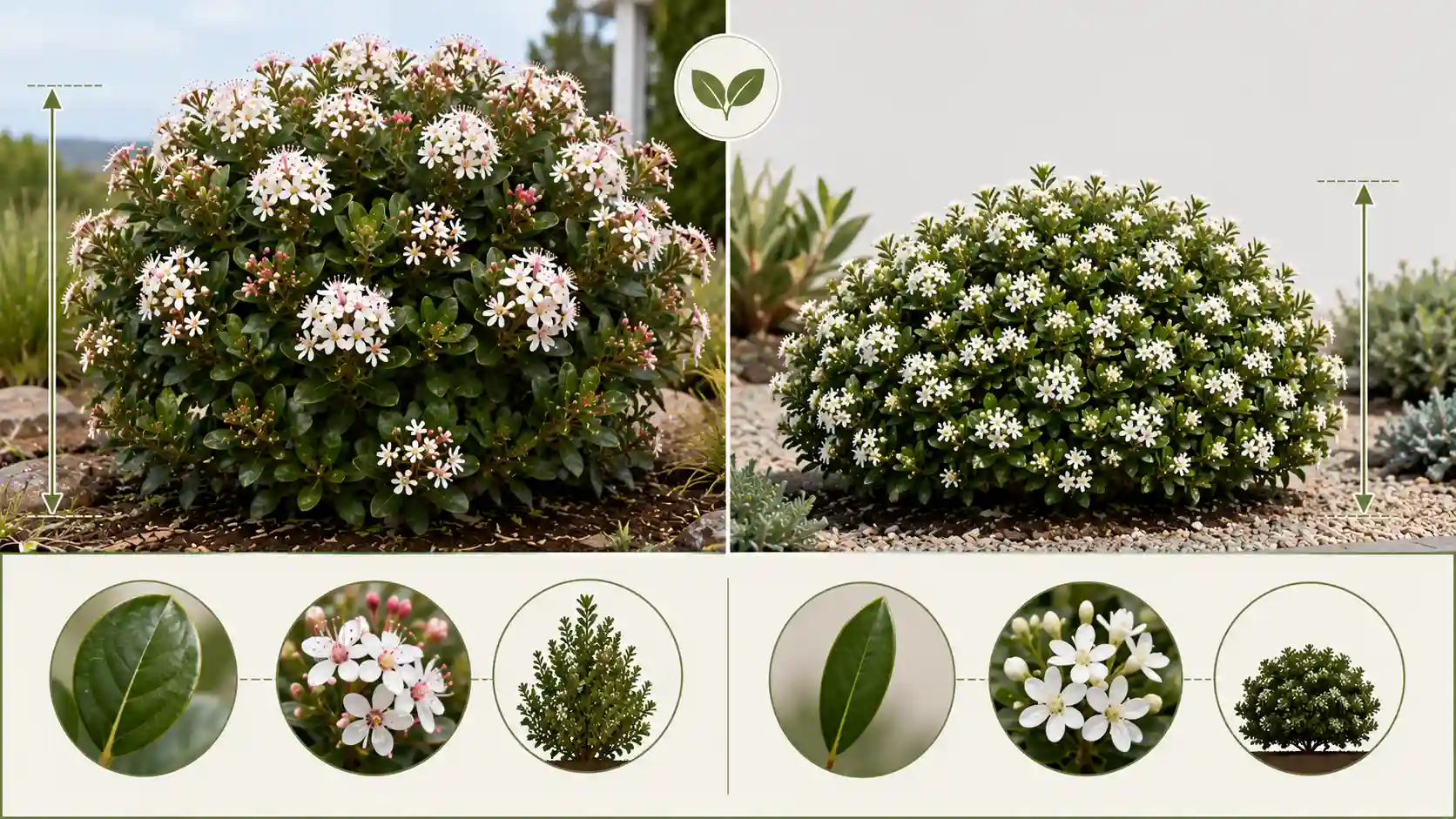
Oriental Pearl and Snow Maiden are both compact Rhaphiolepis cultivars commonly used for low hedges and garden borders. They have similar care requirements but differ in size, flower appearance and growth habit. If you are comparing compact Rhaphiolepis cultivars for smaller garden spaces, our guide on Snow Maiden Oriental Pearl Plant: Growing Guide & Comparison explains its size, flowering habits and care requirements in more detail.
| Feature | Oriental Pearl | Snow Maiden |
| Mature height | Approximately 0.8–1m | Approximately 0.7m (dwarf) |
| Flower colour | White flowers with pink stamens | Pure white flowers without pink stamens |
| Leaf size | Broader and rounder leaves | Smaller and finer leaves |
| Growth habit | Slightly taller and bushier | More compact and rounded |
Which One Should You Choose?
The choice between Oriental Pearl and Snow Maiden depends on the purpose of planting.
Choose Oriental Pearl if you want:
- A slightly taller low hedge.
- More noticeable flower contrast from pink stamens.
- A fuller shrub appearance.
Choose Snow Maiden if you need:
- A smaller dwarf plant.
- A tighter space solution.
- A very compact border or container shrub.
Both varieties perform well in Australian gardens, so the final choice depends mainly on available space and the preferred flower style.
Benefits of Growing Oriental Pearl
Rhaphiolepis Oriental Pearl is popular because it combines attractive appearance with reliable low-maintenance performance. Its compact size and tolerance make it suitable for many different garden designs.
Gardeners interested in adding more flowering plants can also explore Australian Native Purple Flowers: Types, Care & Guide for ideas on seasonal colour and pollinator-friendly planting.
Key benefits include:
- Low maintenance growth: Requires minimal care once established.
- Evergreen foliage: Provides year-round structure and greenery.
- Compact size: Fits smaller gardens, borders and pots.
- Flowering appeal: White flowers with pink stamens add seasonal interest.
- Pollinator support: Flowers can attract beneficial garden insects.
- Drought tolerance: Handles dry periods after establishment.
- Coastal suitability: Tolerates salt spray better than many ornamental shrubs.
- Hedge versatility: Creates neat low screens and edging plants.
For Australian gardeners, its combination of toughness and appearance makes it a practical choice where a reliable evergreen shrub is needed. For more ideas on creating practical garden boundaries, see our guide to Low-Maintenance Plants for Fence Line in Australia, which includes hardy options suitable for screening and privacy planting.
Common Problems With Oriental Pearl (and How to Fix Them)
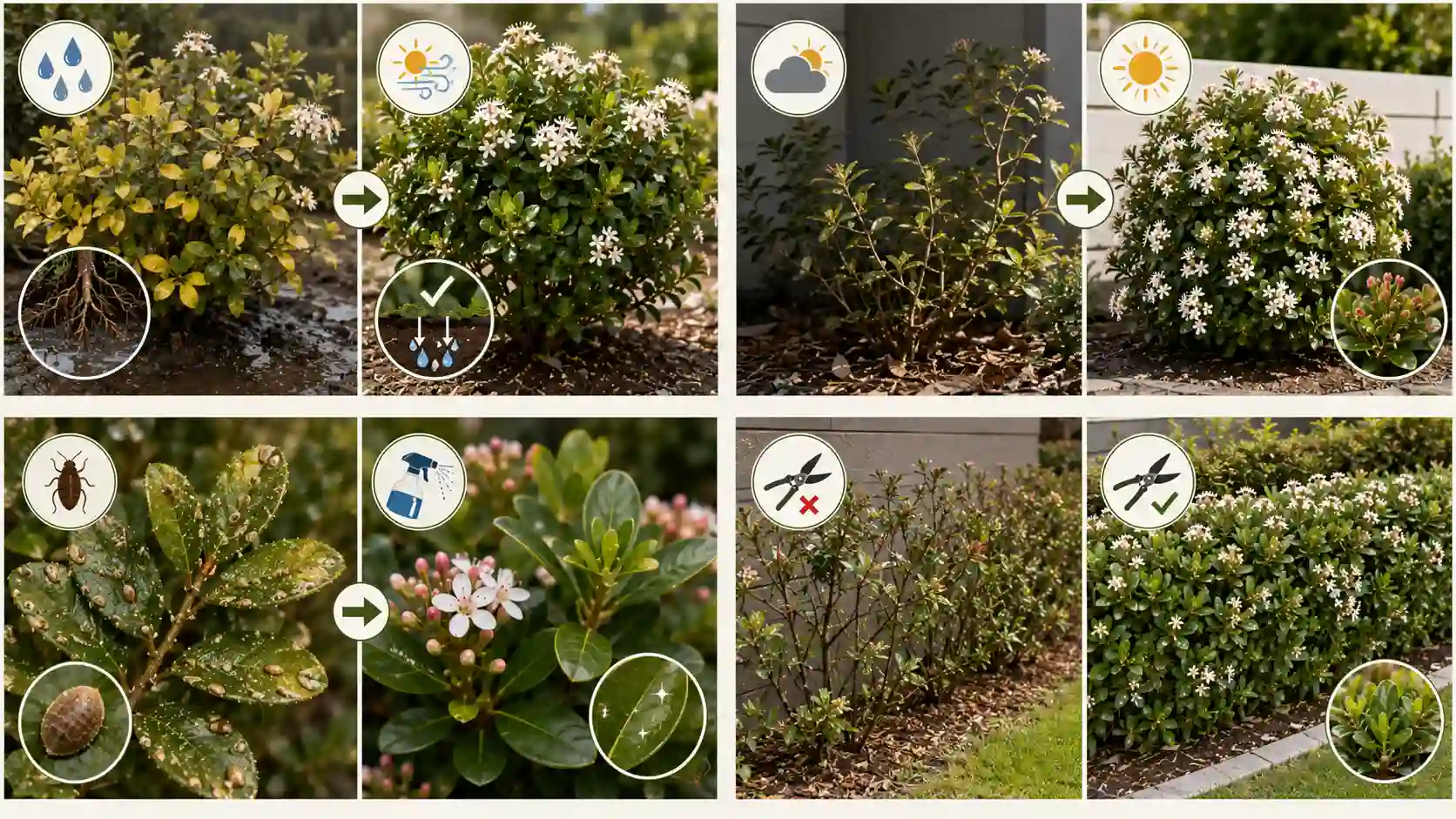
Although Oriental Pearl is hardy, poor growing conditions or incorrect care can lead to several common issues.
Yellowing Leaves
Yellow leaves are often caused by overwatering or poor soil drainage. Constantly wet roots can reduce oxygen availability and affect nutrient uptake.
Solutions include:
- Improving drainage around the root zone.
- Reducing watering frequency.
- Checking whether heavy clay soil needs improvement.
Slow or Stunted Growth
Slow growth may occur when the plant receives insufficient sunlight or grows in nutrient-poor soil.
To improve growth:
- Move the plant to a brighter position if possible.
- Apply a balanced fertiliser in spring.
- Check soil quality and drainage.
Pest Issues
Oriental Pearl may occasionally experience pests such as scale insects or aphids. These pests are more likely when plants are stressed or airflow is poor.
Management methods include:
- Treating affected areas with horticultural oil.
- Removing heavily affected growth.
- Maintaining good airflow through regular pruning.
Leggy or Sparse Hedge
A sparse hedge usually develops when pruning is neglected or plants do not receive enough light.
A regular pruning routine helps encourage branching and maintain density. For hedge planting, trimming 1–3 times annually can create a fuller appearance.
Beginner Mistakes to Avoid
New gardeners often make avoidable mistakes when growing Rhaphiolepis Oriental Pearl. Understanding these issues helps establish healthier plants.
Common mistakes include:
- Overwatering established plants: Mature shrubs need less water than newly planted specimens.
- Planting too closely: Crowded plants compete for light, nutrients and airflow.
- Ignoring drainage: Poor drainage is one of the main causes of root stress.
- Skipping first-year watering: Even drought-tolerant plants require consistent moisture while establishing roots.
Providing the right planting position and early care usually prevents most long-term problems.
Rhaphiolepis Varieties Beyond Oriental Pearl
Rhaphiolepis includes several attractive cultivars with different growth habits and flower colours. Exploring other varieties helps gardeners choose the best option for their space.
Common varieties include:
- Snow Maiden: A dwarf cultivar with compact growth and pure white flowers.
- Springtime: Known for pink flowers and a slightly larger growth habit.
- Cosmic Pink: Produces attractive pink blooms and suits ornamental planting areas.
Other Rhaphiolepis cultivars may vary in mature size, flowering colour and growth density, but most share similar preferences for sunlight, drainage and moderate maintenance.
Conclusion
Rhaphiolepis Oriental Pearl is a hardy, compact evergreen shrub well suited to Australian gardens, especially for low hedges, borders, pots and coastal landscapes. With its glossy foliage, white flowers with pink stamens and manageable growth size, it provides year-round structure with minimal maintenance.
The key to successful Rhaphiolepis Oriental Pearl care is planting it in well-drained soil, providing adequate sunlight, watering consistently during establishment and pruning lightly to maintain shape. Once established, this reliable shrub tolerates heat, drought and coastal conditions, making it a practical choice for both beginner and experienced gardeners.
Frequently Asked Questions
What is the difference between Snow Maiden and Oriental Pearl?
Snow Maiden is a smaller dwarf Rhaphiolepis cultivar with pure white flowers, while Oriental Pearl grows slightly taller and produces white flowers with pink stamens. Both are compact, low-maintenance shrubs.
Is Indian Hawthorn the same as Oriental Pearl?
Yes, Oriental Pearl is a cultivar of Indian Hawthorn. The broader common name refers to Rhaphiolepis plants, while Oriental Pearl identifies the specific Rhaphiolepis indica ‘Oriental Pearl’ variety.
How fast does Oriental Pearl grow?
Oriental Pearl is a slow-to-moderate grower and usually grows around 15–30cm per year depending on sunlight, soil quality, climate and care.
Is Oriental Pearl shrub invasive?
No, Oriental Pearl is not considered invasive. It has a contained root system and is generally suitable for residential gardens when planted with appropriate spacing.
Can Rhaphiolepis grow in pots?
Yes, Rhaphiolepis Oriental Pearl grows well in pots. Use a container with drainage holes, quality potting mix and provide sufficient sunlight for healthy growth.
Is Rhaphiolepis toxic to pets?
Rhaphiolepis is generally considered a low-risk ornamental plant, but pet owners should confirm safety with a veterinarian or animal poison authority if ingestion occurs.