

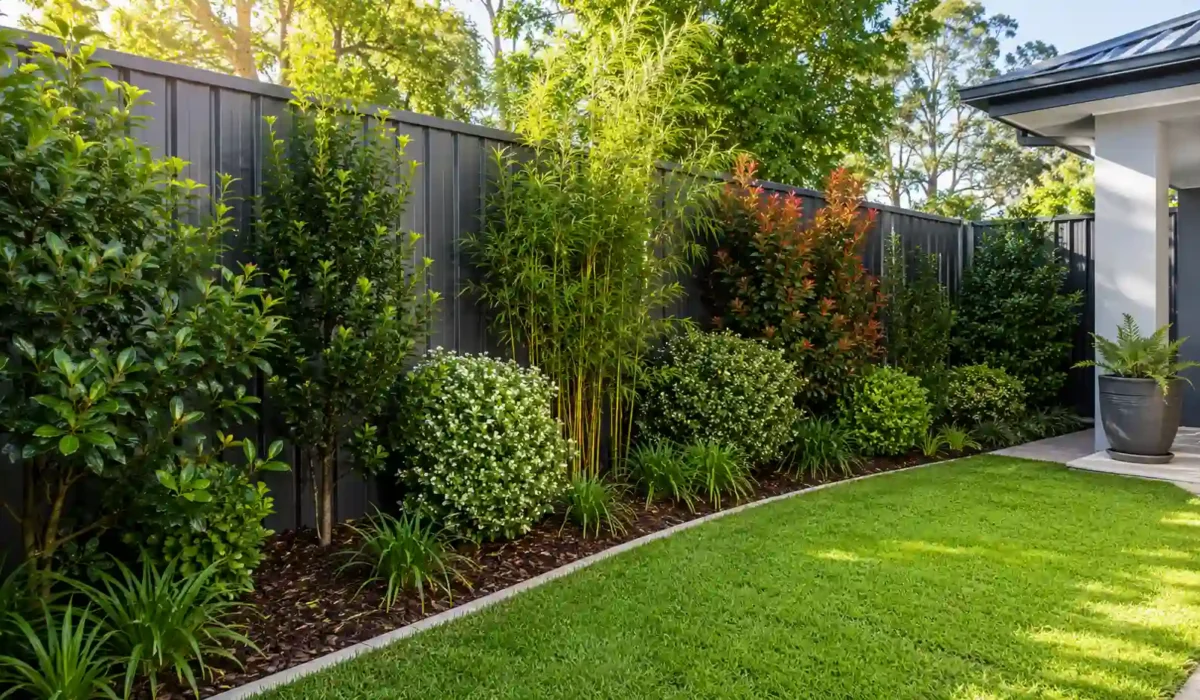
Low-Maintenance Plants for Fence Line in Australia
Introduction
Low-maintenance plants for fence line planting provide privacy, soften hard boundaries, and improve the appearance of outdoor spaces without demanding constant care. The best fence-line plants combine compact root systems, upright growth, reliable screening, and the ability to thrive in Australia’s varied climates. Whether you need a dense hedge, a narrow screening plant, or a small privacy tree, choosing the right species helps reduce pruning, watering, and long-term maintenance. This guide explains how to select fence-friendly plants, compares the best options for different conditions, and highlights practical considerations for Australian gardens. If you’re planning a larger landscape project, our Fast Growing Evergreen Trees Australia Guide explores additional evergreen species that create year-round privacy beyond traditional hedging plants.
By Elemo Baker | Plant Care & Gardening Expert
Last Updated: June 2026
Quick Summary
- Low-maintenance fence-line plants typically have non-invasive roots, upright growth, and good drought tolerance once established.
- Fast-growing options such as lilly pilly, clumping bamboo, viburnum, and photinia create privacy more quickly than many traditional shrubs.
- Full-sun and shade-tolerant plants perform differently, so matching the species to your fence orientation improves long-term success.
- Garden centres and retailers such as Bunnings and independent nurseries offer a range of hedge and screening plants, but always choose healthy plants suited to your local climate.
What Makes a Plant Suitable for a Fence Line?
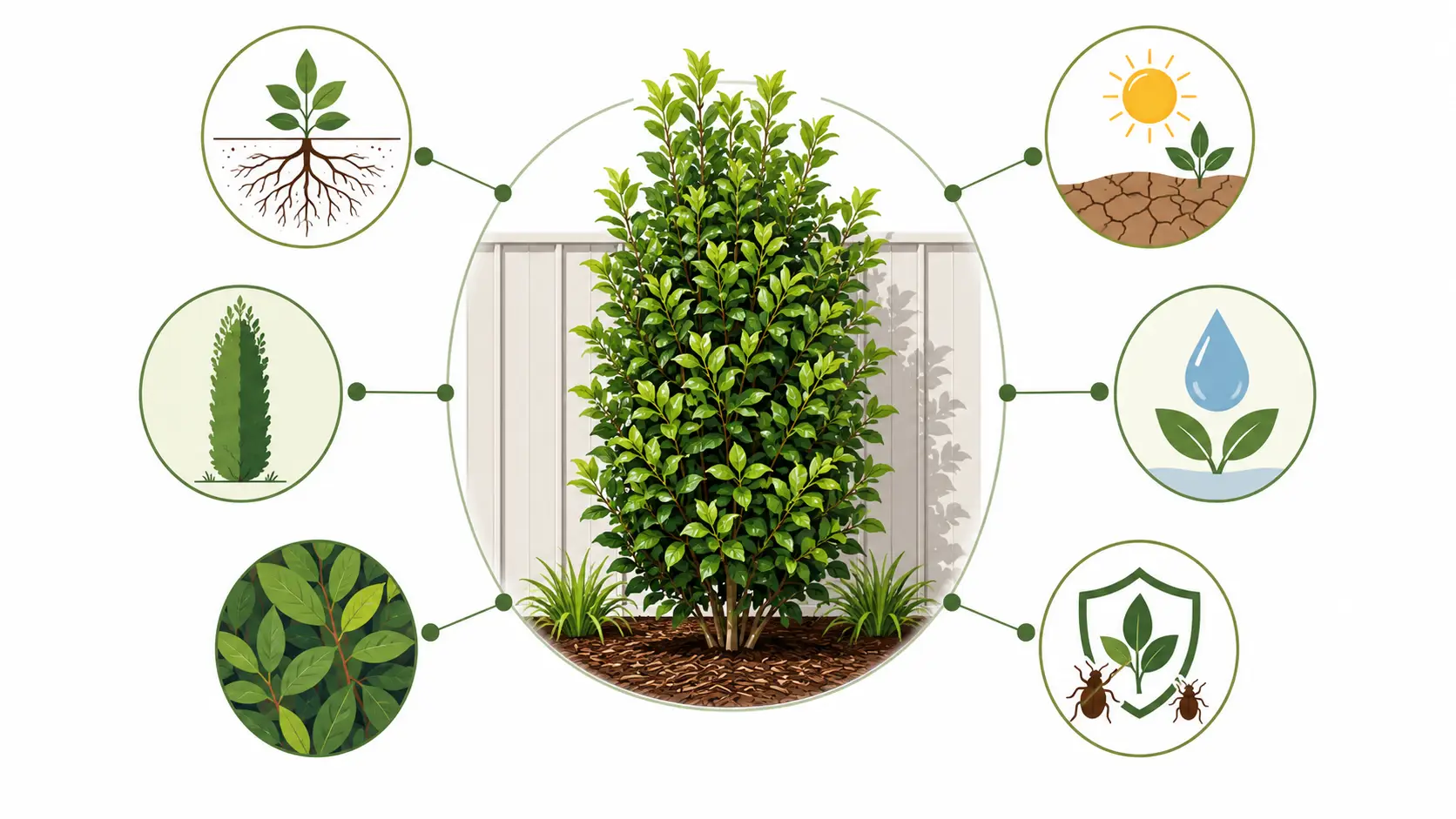
A plant is suitable for a fence line when it provides effective screening without creating ongoing maintenance or structural problems. The best fence line plants have predictable growth habits, manageable root systems, and adapt well to the restricted space commonly found along residential boundaries.
Understanding how a plant develops its root system can help prevent future problems with fences, paving, and nearby structures.
Good fence-line plants should offer a balance between privacy, appearance, and practicality. Rather than selecting the fastest-growing species available, it is usually better to choose plants that mature into the available space without excessive pruning.
Key characteristics include:
- Non-invasive root systems that minimise the risk of damaging fences, paving, or nearby structures.
- Upright or narrow growth that fits confined planting strips.
- Dense foliage for year-round screening.
- Tolerance of Australia’s heat, wind, and seasonal dry periods.
- Moderate water and fertiliser requirements after establishment.
- Resistance to common pests and diseases.
Many of Australia’s best fence plants also remain attractive throughout the year, reducing the need for frequent trimming while maintaining privacy.
From our experience growing boundary plantings, selecting the right plant at the beginning almost always results in less maintenance than trying to control an unsuitable species later. A plant that naturally fits the space requires significantly less pruning than one constantly forced into shape.
Species commonly recommended for Australian fence lines include:
- Lilly pilly (Syzygium species)
- Sweet viburnum (Viburnum odoratissimum)
- Photinia (Photinia × fraseri)
- Clumping bamboo (Bambusa species)
- Orange jasmine (Murraya paniculata)
These plants are widely recognised by horticulturists because they combine reliable screening with manageable maintenance.
Narrow Spaces vs Open Garden Beds
Fence-line planting often occurs in narrow strips between the fence and pathways, driveways, or neighbouring properties. These confined spaces place different demands on plants compared with open garden beds.
Standard hedging shrubs that perform well in large gardens may become overcrowded when planted in narrow areas. Their mature width can exceed available space, leading to constant pruning and reduced airflow.
Narrow screening plants are specifically valued because they prioritise vertical growth over excessive lateral spread. This growth habit allows homeowners to maximise privacy while preserving usable garden space.
Benefits of tall narrow screening plants include:
- Better use of restricted planting areas.
- Reduced competition with nearby plants.
- Easier maintenance and trimming.
- Improved air circulation around foliage.
- Lower risk of branches pressing against fences.
For Australian gardens, several naturally upright species are especially suitable for narrow boundaries, including slender lilly pilly cultivars, clumping bamboo varieties, and compact photinia selections.
Elemo Baker recommends measuring both the available planting width and the plant’s mature spread before purchasing. Many planting problems occur because gardeners focus only on the plant’s height and overlook its eventual width.
Best Low-Maintenance Screening Plants for Fence Lines
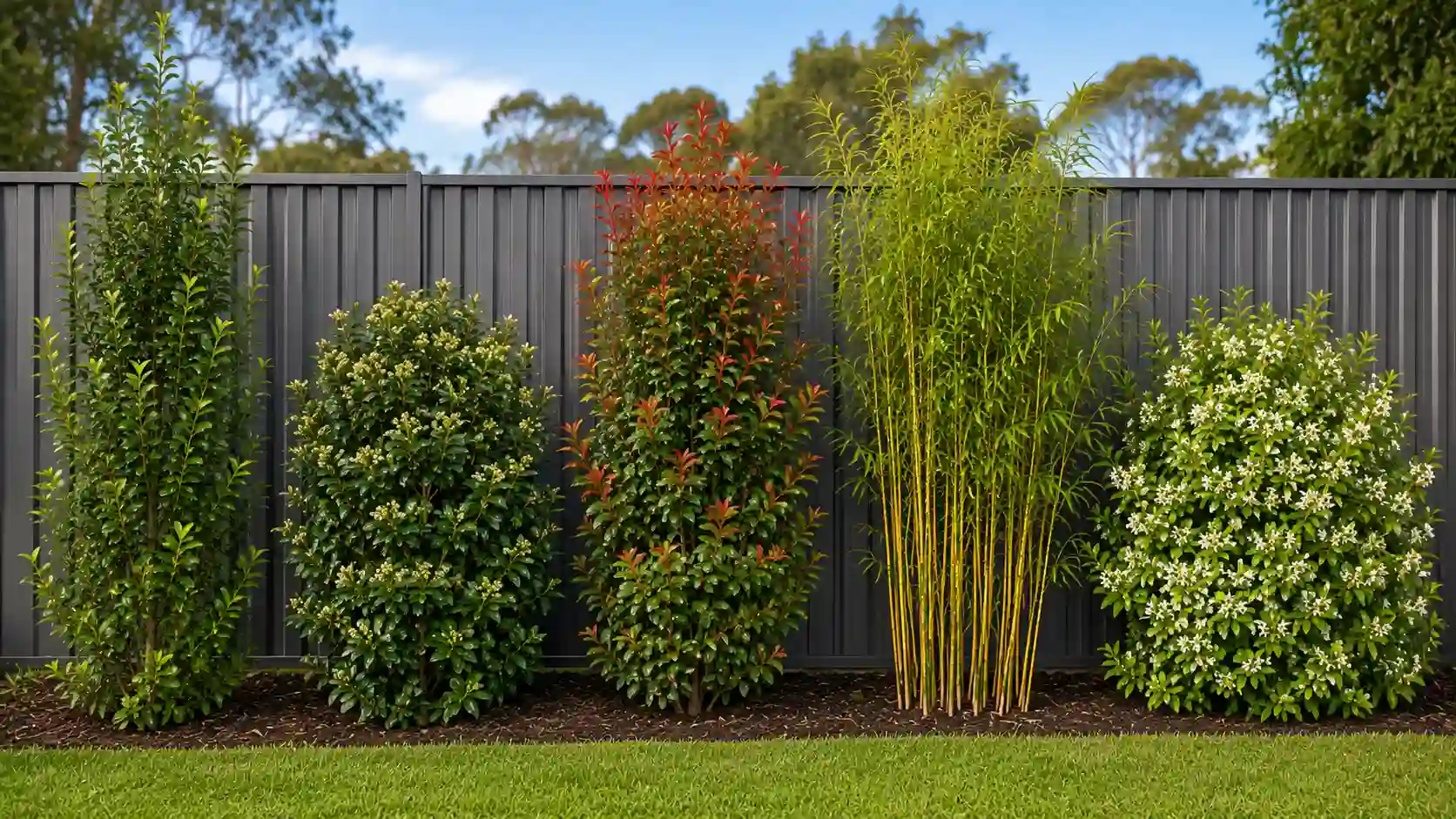
Several screening plants consistently perform well in Australian landscapes because they establish quickly, tolerate different climates, and require relatively little maintenance once mature. The best choice depends on available space, sunlight, soil conditions, and the level of privacy required. For gardeners considering another popular hedge, see our Photinia Fraseri Robusta: Growth, Care & Hedge Guide for detailed growing advice and maintenance tips.
The following species are among the most reliable options for residential fence lines.
| Plant | Mature Height | Sun Requirement | Growth Speed |
| Lilly Pilly (Syzygium spp.) | 3–8 m | Full sun to part shade | Fast |
| Sweet Viburnum (Viburnum odoratissimum) | 3–5 m | Full sun to part shade | Fast |
| Photinia (Photinia × fraseri) | 3–5 m | Full sun | Moderate to fast |
| Clumping Bamboo (Bambusa spp.) | 4–8 m | Full sun to part shade | Fast |
| Orange Jasmine (Murraya paniculata) | 2–4 m | Full sun to part shade | Moderate |
Lilly Pilly
Lilly pilly is one of Australia’s most popular screening plants thanks to its dense evergreen foliage, colourful new growth, and excellent response to pruning. Numerous cultivars are available, allowing gardeners to select plants suited to narrow boundaries or taller privacy screens.
Most varieties establish quickly with regular watering during their first growing season before becoming relatively drought tolerant.
Sweet Viburnum
Sweet viburnum forms a dense hedge with glossy green foliage and fragrant flowers. It adapts well to different soil types and performs reliably in many temperate and subtropical regions.
Its naturally vigorous growth makes it suitable for homeowners seeking rapid privacy without choosing invasive species.
Photinia
Photinia is valued for its striking red young leaves that mature to glossy green. Besides creating privacy, it adds ornamental colour throughout the growing season.
Moderate pruning encourages fresh red growth while maintaining a compact shape.
Clumping Bamboo
Unlike running bamboo, clumping bamboo expands gradually from the original clump, making it a much safer choice near residential fences. It provides one of the fastest natural privacy screens available while maintaining an elegant appearance.
Selecting true clumping species is essential to avoid unwanted spreading.
Orange Jasmine
Orange jasmine combines dense foliage with fragrant white flowers, making it suitable for both privacy and ornamental landscaping. It tolerates regular trimming and develops into a compact hedge with relatively low maintenance requirements.
As of the 2026 growing season, Australian growers continue to recommend selecting locally adapted cultivars suited to regional climates rather than relying solely on general plant labels. Choosing climate-appropriate varieties usually improves long-term performance and reduces maintenance.
Best Trees for Fence Lines in Australia
Small to medium-sized trees can provide additional height where shrubs alone do not offer enough privacy. The best trees for fence lines combine upright growth with relatively non-aggressive root systems.
Suitable options include:
- Crepe Myrtle (Lagerstroemia indica)
- Water Gum (Tristaniopsis laurina)
- Magnolia ‘Little Gem’
- Japanese Maple (Acer palmatum) for cooler climates
- Crepe Myrtle hybrids for compact urban gardens
These trees generally create an attractive balance between shade, screening, and ornamental value without overwhelming suburban gardens.
When selecting a fence-line tree, consider:
- Mature height and canopy spread.
- Root behaviour near fences and buildings.
- Local climate suitability.
- Distance from neighbouring properties.
- Maintenance requirements.
In our experience, many homeowners choose trees based solely on their current nursery size. However, planning for the tree’s mature dimensions prevents future crowding and significantly reduces pruning requirements.
Where maximum privacy is needed, combining small trees with lower evergreen shrubs often creates a more effective layered screen than relying on a single plant type. This approach also improves biodiversity and provides year-round visual interest while maintaining manageable maintenance levels. If you’re planning to grow Crepe Myrtle near fences or paving, read How Deep Are Crepe Myrtle Roots? Root Depth Guide before planting.
Fast-Growing Screening Options
Fast-growing screening plants are ideal when you need privacy in the shortest practical timeframe. While some species can grow more than one metre per year under favourable conditions, growth depends on climate, soil quality, irrigation, and ongoing care. Choosing a fast-growing plant should not come at the expense of long-term maintenance or suitability for your space.
Most screening plants grow fastest during spring and summer when temperatures are warm and moisture is readily available. Growth naturally slows during cooler months or extended dry periods.
Some of the best fast-growing screening plants for Australian fence lines include:
| Plant | Average Growth Rate | Best Growing Conditions | Maintenance Level |
| Clumping Bamboo (Bambusa spp.) | 1–2 m per year | Full sun to part shade | Low |
| Lilly Pilly (Syzygium spp.) | 0.5–1 m per year | Full sun to part shade | Low |
| Sweet Viburnum (Viburnum odoratissimum) | 0.6–1 m per year | Full sun | Low |
| Photinia (Photinia × fraseri) | 0.5–0.8 m per year | Full sun | Moderate |
| Leighton Green Cypress (Cupressocyparis leylandii cultivars) | Up to 1 m per year | Full sun | Moderate |
Although rapid growth is attractive, it often requires slightly more pruning during the establishment phase. Once plants reach their desired height, maintenance generally becomes less frequent.
To encourage healthy early growth:
- Prepare the soil with organic matter before planting.
- Water deeply during the first 12 months.
- Apply a balanced slow-release fertiliser in spring.
- Mulch around the base to retain soil moisture.
- Avoid excessive nitrogen fertilisers, which may encourage weak, soft growth.
Elemo Baker recommends prioritising plant health over speed. A moderately fast-growing plant that remains dense and healthy usually provides better long-term screening than an extremely vigorous species that quickly becomes difficult to manage.
Low-Maintenance Plants for Full Sun Fence Lines
Fence lines that receive full sun often experience higher temperatures because fences absorb and radiate heat throughout the day. Plants in these locations must tolerate strong sunlight, reflected heat, and occasional dry conditions.
Fortunately, many Australian-friendly screening plants perform exceptionally well in full-sun positions once established.
Recommended full-sun fence-line plants include:
- Lilly Pilly (Syzygium spp.)
- Photinia (Photinia × fraseri)
- Westringia (Westringia fruticosa)
- Sweet Viburnum (Viburnum odoratissimum)
- Callistemon (Callistemon spp.)
- Clumping Bamboo (Bambusa spp.)
These species generally require less irrigation after establishment and maintain dense foliage even during warm Australian summers.
To improve success in full-sun locations:
- Water deeply rather than lightly and frequently.
- Apply 50–75 mm of organic mulch around the root zone.
- Leave a small gap between mulch and the trunk.
- Check irrigation more frequently during prolonged heatwaves.
- Prune lightly after active growth to maintain density.
In our experience growing screening plants along Colorbond and timber fences, adequate mulching often has a greater impact on plant health than additional fertiliser. Mulch helps regulate soil temperature and significantly reduces moisture loss during hot weather.
As of the 2026 growing season, many Australian horticulturists also recommend installing drip irrigation for newly planted fence lines, especially in regions experiencing hotter and drier summers.
Shade-Tolerant Alternatives
Not every fence line receives full sun. South-facing boundaries, mature trees, neighbouring buildings, and retaining walls can all create shaded conditions that limit the performance of sun-loving plants.
Fortunately, several attractive screening species tolerate partial or even substantial shade.
Reliable shade-tolerant fence-line plants include:
- Japanese Box (Buxus microphylla japonica)
- Orange Jasmine (Murraya paniculata)
- Camellia (Camellia sasanqua)
- Native Daphne (Pittosporum tenuifolium)
- Fatsia (Fatsia japonica)
These plants generally develop denser foliage when they receive filtered light rather than deep, permanent shade.
For shaded fence lines:
- Improve drainage before planting.
- Avoid overwatering, as shaded soil remains moist for longer.
- Remove fallen leaves to improve airflow.
- Space plants correctly to reduce fungal disease.
- Select evergreen species for year-round screening where possible.
Matching the plant to available light is one of the simplest ways to reduce maintenance. A shade-tolerant species growing in the right conditions usually requires less watering, fewer disease treatments, and less corrective pruning than a full-sun plant struggling to survive.
Hedge vs Screening Tree vs Climbing Plant Comparison
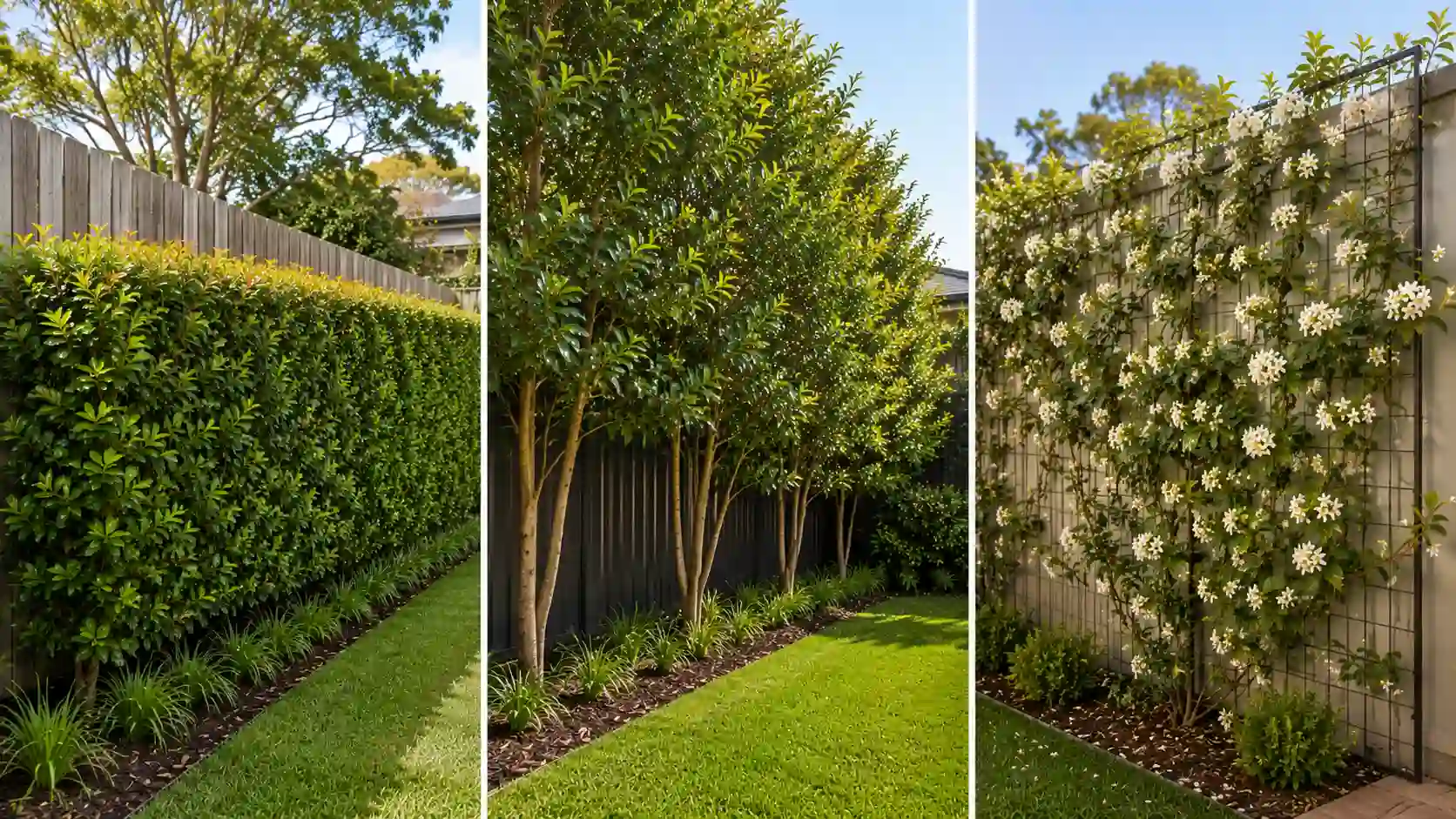
The best option depends on the amount of available space, desired privacy, maintenance preferences, and the type of fence being screened.
| Feature | Hedge | Screening Tree | Climbing Plant |
| Privacy Speed | Moderate | Moderate to Fast | Fast after establishment |
| Mature Height | 2–5 m | 4–10 m | Depends on support |
| Maintenance Level | Moderate | Low to Moderate | Moderate |
| Root Risk | Usually Low | Varies by species | Generally Low |
| Width Required | Medium | Medium to Wide | Very Narrow |
| Suitable for Narrow Spaces | Good | Sometimes | Excellent |
| Suitable Fence Types | Timber, Colorbond, masonry | Large boundaries | Timber, wire, trellis, masonry |
| Best Use | Dense year-round privacy | Height and landscape structure | Softening fences and vertical coverage |
Hedges are ideal when a formal, dense privacy screen is required. They respond well to regular trimming and create consistent coverage from ground level.
Screening trees provide greater height while requiring less frequent pruning. They are often the preferred choice for larger properties or where overlooking from neighbouring homes is a concern.
Climbing plants work well where planting space is limited. They rely on fences, trellises, or support wires and can soften otherwise plain boundary structures. However, vigorous climbers may require regular pruning to prevent excessive growth.
Choosing between these options depends on your garden’s available width, desired maintenance level, and long-term landscaping goals.
Best Hedging Plants for Privacy
Privacy hedges remain one of the most effective ways to screen neighbouring properties, reduce visual intrusion, and create clearly defined outdoor spaces. The best hedging plants combine dense evergreen foliage, manageable growth, and good adaptability to Australian conditions. If you’re considering Pittosporum for boundary screening, our Pittosporum Silver Sheen Growth Rate Guide explains how quickly it establishes and reaches mature size.
Popular low-maintenance hedging plants include:
- Lilly Pilly (Syzygium spp.)
- Sweet Viburnum (Viburnum odoratissimum)
- Orange Jasmine (Murraya paniculata)
- Japanese Box (Buxus microphylla japonica)
- Photinia (Photinia × fraseri)
- Pittosporum (Pittosporum tenuifolium)
These plants are widely used because they recover well after trimming and naturally develop dense foliage suitable for privacy.
When selecting a hedge, consider:
- Desired mature height.
- Available planting width.
- Local climate.
- Soil drainage.
- Maintenance expectations.
- Whether year-round screening is required.
Proper spacing is equally important. Planting too closely may produce a dense hedge initially, but overcrowding often leads to poor airflow, disease, and uneven growth as plants mature.
Elemo Baker recommends following the spacing guidelines provided for each cultivar rather than planting for immediate fullness. Giving plants adequate room encourages healthier root systems and reduces future maintenance while still producing an attractive, continuous privacy screen.
Evergreen Options for Year-Round Privacy
Evergreen plants are the preferred choice for fence-line screening because they retain their foliage throughout the year. Unlike deciduous species, they continue to provide privacy during winter while also helping reduce wind exposure and soften the appearance of boundary fences. If you’re comparing evergreen feature trees, our Magnolia Teddy Bear vs Little Gem: Key Differences Explained helps you choose the best option for Australian gardens.
Some of the best evergreen plants for Australian fence lines include:
- Lilly Pilly (Syzygium spp.)
- Sweet Viburnum (Viburnum odoratissimum)
- Orange Jasmine (Murraya paniculata)
- Clumping Bamboo (Bambusa spp.)
- Pittosporum (Pittosporum tenuifolium)
- Magnolia ‘Little Gem’
Evergreen species offer several long-term advantages:
- Consistent year-round privacy.
- Lower seasonal maintenance.
- Improved noise reduction.
- Better wind protection.
- Attractive garden structure throughout the year.
Most evergreen screening plants benefit from light pruning once or twice annually rather than heavy, infrequent trimming. This encourages dense branching and helps maintain a neat appearance.
In our experience, lightly shaping evergreen hedges after their main flush of spring growth produces a fuller screen than waiting until branches become overgrown. Regular maintenance also reduces the amount of pruning required each year.
Where to Buy Fence Line and Hedging Plants
Fence-line plants are widely available from independent nurseries, specialist hedge growers, and large garden retailers throughout Australia. While retailers such as Bunnings stock a broad range of hedge plants, screening trees, and advanced specimens, selecting healthy plants is more important than choosing a particular supplier.
When purchasing hedge or screening plants, inspect them carefully before buying.
Look for:
- Healthy green foliage with no yellowing.
- Strong, upright stems.
- Well-developed root systems that are not root-bound.
- No obvious signs of insect damage or disease.
- Even growth with good branching.
You will commonly find plants sold in several container sizes.
| Pot Size | Best For | Typical Benefit |
| 140 mm | Budget planting | Lowest cost but slower screening |
| 200–250 mm | Most home gardens | Good balance of price and establishment |
| 300 mm+ | Faster privacy | Larger plants establish a mature look sooner |
| Advanced specimens | Instant impact | Immediate screening with higher purchase cost |
Advanced plants provide quicker results, but younger plants often establish more successfully because their root systems adapt to the surrounding soil more rapidly.
Before purchasing, also consider:
- Your local climate zone.
- Frost tolerance where applicable.
- Mature plant dimensions.
- Recommended planting distance.
- Water requirements during establishment.
Elemo Baker recommends purchasing plants during the cooler months of autumn or early spring whenever possible. These seasons usually provide milder temperatures, allowing roots to establish before periods of extreme summer heat.
Common Mistakes When Planting Along a Fence Line
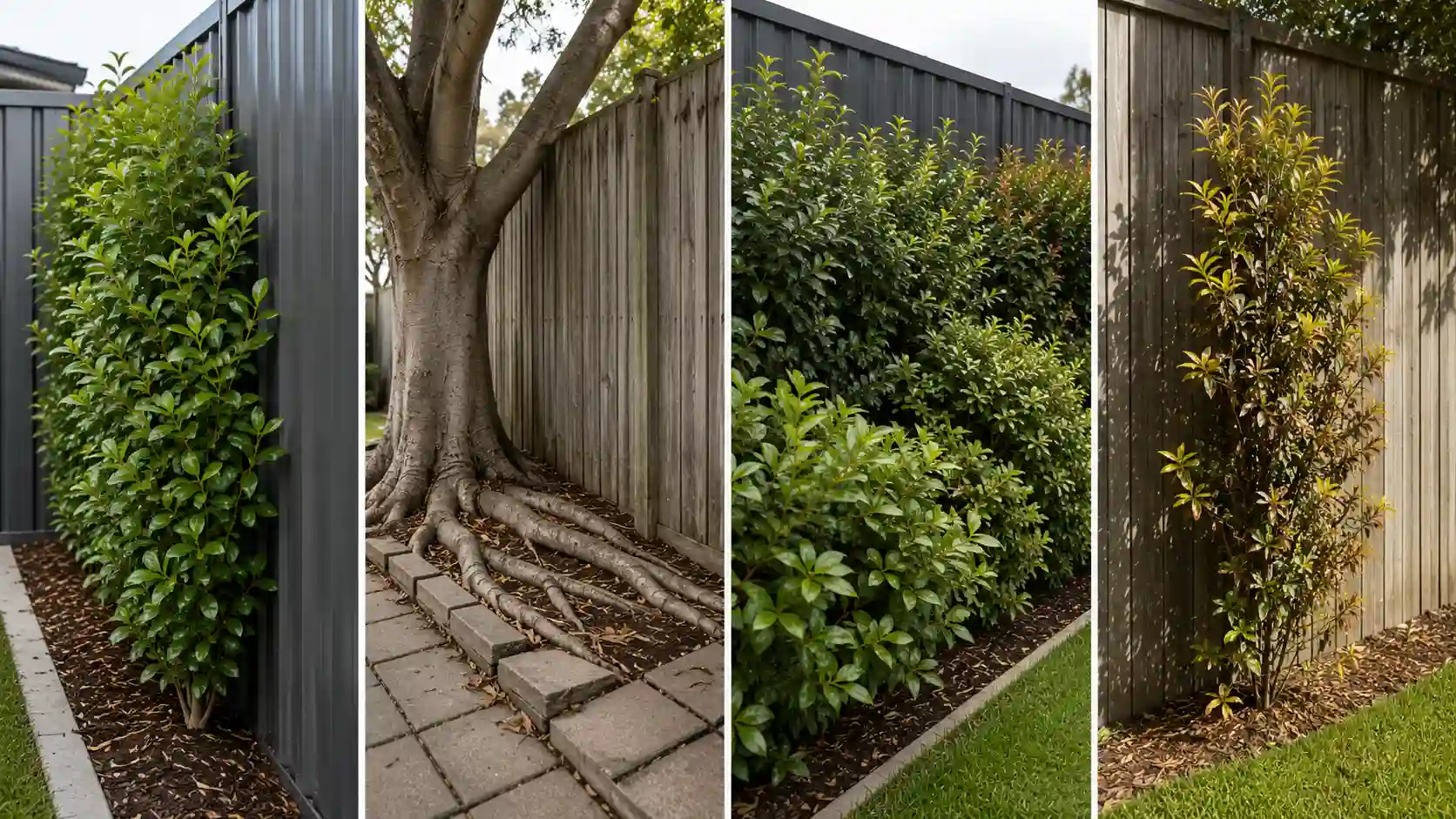
Many fence-line planting problems can be avoided with proper planning. Most long-term issues result from selecting unsuitable species or planting without considering mature size and growing conditions.
Planting Too Close to the Fence
Why it happens: Homeowners often place plants immediately against the fence to maximise available space.
How to fix it: If newly planted, relocate the plant while it is still small. For established plants, prune carefully and monitor root development.
How to prevent it: Leave enough space between the trunk and the fence to allow airflow, maintenance access, and natural branch development. Always follow the spacing recommendations for the chosen species.
Choosing Plants with Invasive Root Systems
Why it happens: Fast-growing trees are sometimes selected without considering their mature root behaviour.
How to fix it: Remove invasive species before roots begin affecting fences, paving, or underground services.
How to prevent it: Choose plants known for relatively non-invasive root systems, particularly clumping species and compact screening shrubs.
Understanding root behaviour is essential before planting larger species. Our Gum Tree Root System: Root Spread, Problems & Safe Distances explains how roots can affect nearby structures.
Ignoring Mature Width
Why it happens: Gardeners focus on the plant’s size at purchase rather than its mature dimensions.
How to fix it: Selectively prune overcrowded plants where possible or replace unsuitable species.
How to prevent it: Check both mature height and mature width before planting. Leave sufficient spacing between individual plants to encourage healthy growth.
Poor Drainage Along Fence Lines
Why it happens: Fence lines often collect runoff or contain compacted construction soil.
How to fix it: Improve drainage by incorporating organic matter, installing drainage where necessary, or planting on slightly raised beds.
How to prevent it: Test drainage before planting. If water remains after heavy rain for extended periods, improve the soil first.
Pest problems can also affect stressed boundary plantings, so our Garden Pest Identification Guide for Australian Gardens can help identify common garden pests early.
Choosing the Wrong Plant for the Available Sunlight
Why it happens: Plants are selected based on appearance instead of site conditions.
How to fix it: Relocate young plants where possible or replace them with species suited to the available light.
How to prevent it: Observe how much direct sunlight the fence line receives throughout the day before choosing plants.
From our experience, poor plant selection causes far more maintenance problems than poor pruning. Matching the species to the site from the beginning is usually the most effective way to create an attractive, low-maintenance boundary.
What Makes This Different from a Standard Hedge Guide
A standard hedge guide usually focuses on creating formal hedges, but fence-line planting involves additional considerations that directly affect long-term success.
Fence lines often have:
- Narrow planting strips.
- Limited root space.
- Existing fences that require protection.
- Underground utilities.
- Close proximity to neighbouring properties.
These factors influence both plant selection and ongoing maintenance.
Boundary planting should also take local regulations into account. Depending on your council, strata by-laws, or neighbourhood agreements, there may be recommendations or restrictions regarding vegetation height, setback distances, or overhanging branches.
Unlike general hedge planting, fence-line landscaping also requires attention to:
- Preventing root damage to fences and retaining walls.
- Allowing access for fence maintenance.
- Maintaining good airflow between plants and fencing.
- Avoiding excessive shading of neighbouring properties.
- Selecting species suited to confined planting areas.
Considering these fence-specific factors helps create a landscape that remains attractive, functional, and easier to maintain for many years.
Conclusion
Low-maintenance plants for fence line planting provide an effective way to improve privacy, define property boundaries, and enhance the overall appearance of Australian gardens with minimal ongoing care. The most successful fence-line plants combine non-invasive roots, manageable growth habits, dense foliage, and adaptability to local climate conditions.
Species such as lilly pilly, sweet viburnum, clumping bamboo, photinia, and orange jasmine continue to be among the best choices for Australian homeowners because they offer reliable screening while remaining relatively easy to maintain. Full-sun and shade-tolerant locations require different plant selections, making it important to match each species to its growing conditions rather than choosing solely based on appearance. If you’re looking for more outdoor landscaping inspiration, explore our Tree With Pink Flowers Australia: Identification Guide for beautiful flowering trees suitable for Australian gardens.
With careful planning, appropriate spacing, and realistic expectations for mature size, you can establish a healthy, attractive fence-line planting that provides year-round privacy and requires significantly less maintenance over time.
Frequently Asked Questions
What is the fastest-growing low-maintenance plant for a fence line?
Clumping bamboo is generally one of the fastest-growing low-maintenance options for Australian fence lines. Many species can grow one to two metres annually under suitable conditions while maintaining non-invasive clumping roots. Lilly pilly and sweet viburnum are also fast-growing and widely used for privacy screening.
What plants won’t damage a fence with their roots?
Plants with relatively compact, non-invasive root systems are the safest choice. Lilly pilly, orange jasmine, Japanese box, photinia, and clumping bamboo are commonly recommended because they are less likely to cause structural problems than large trees with aggressive roots. Proper planting distance remains important regardless of species.
How far from a fence should you plant a hedge or screening tree?
The ideal planting distance depends on the mature size of the species. Small hedging plants are often planted around 50–100 cm from the fence, while larger shrubs and screening trees generally require greater clearance. Always consider mature width, maintenance access, and airflow rather than planting as close as possible to the boundary.
What are the best low-maintenance plants for a full-sun fence line in Australia?
Excellent choices include lilly pilly, sweet viburnum, photinia, westringia, callistemon, and clumping bamboo. These plants tolerate full sun well once established and generally require relatively little maintenance when grown in suitable soil with adequate mulch and irrigation during establishment.
Can you grow privacy screening plants in narrow spaces?
Yes. Many screening plants are specifically suited to narrow planting strips. Upright lilly pilly cultivars, clumping bamboo, compact pittosporum, and selected photinia varieties provide effective privacy without occupying excessive garden space. Choosing naturally narrow-growing species reduces the need for constant pruning.
What’s the difference between a hedge and a screening tree?
A hedge consists of multiple shrubs planted closely together and maintained through regular pruning to create a dense, uniform screen. A screening tree is generally taller, develops a trunk with an elevated canopy, and requires less frequent trimming. Hedges provide dense coverage from ground level, while screening trees are better suited to adding height and blocking views from neighbouring upper-storey windows.
6 Comments