
New Zealand Christmas Bush: Size, Care & Growth Guide
Introduction
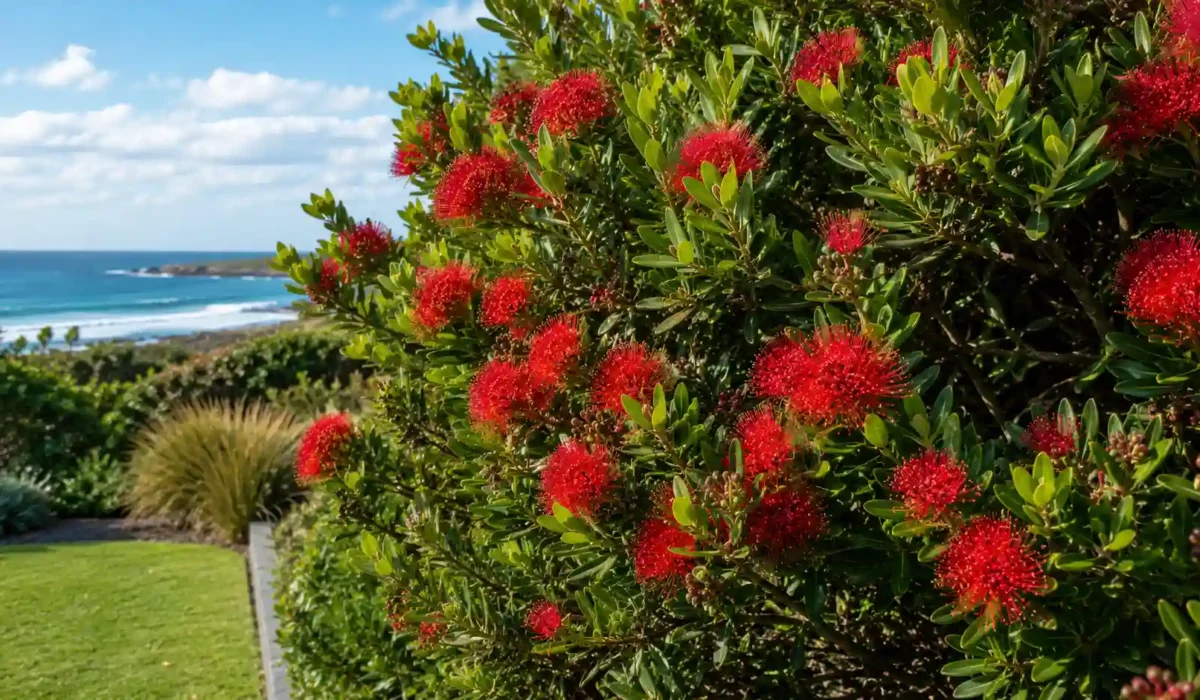
The New Zealand Christmas Bush (Metrosideros thomasii) is a hardy evergreen shrub or small tree recognised for its bright crimson-orange pincushion flowers that appear around the Southern Hemisphere Christmas season. Also called nz christmas bush, new zealand xmas bush, or christmas bush New Zealand, this native plant belongs to the Myrtaceae family and is valued in Australia for coastal gardens, screening, and hedging. Unlike the much larger pohutukawa (Metrosideros excelsa), the New Zealand Christmas Bush has a more compact growth habit, making it suitable for residential landscapes. It typically grows 3–6 metres tall, tolerates wind and salt, and performs well in frost-free Australian climates with good drainage.
By Elemo Baker | Plant Care & Gardening Expert
Last Updated: July 2026
Quick Summary
- Metrosideros thomasii is an evergreen New Zealand native shrub or small tree growing around 3–6m tall and 3–5m wide.
- It produces vibrant crimson-red pincushion flowers during spring and summer, often around the Christmas period.
- The plant is moderately fast growing, drought tolerant once established, and highly suited to coastal Australian gardens.
- New Zealand Christmas Bush is commonly used for hedges, privacy screens, wind protection, and native-style landscaping.
- Successful growth depends on full sun, well-drained soil, and pruning after flowering.
What Is the New Zealand Christmas Bush?
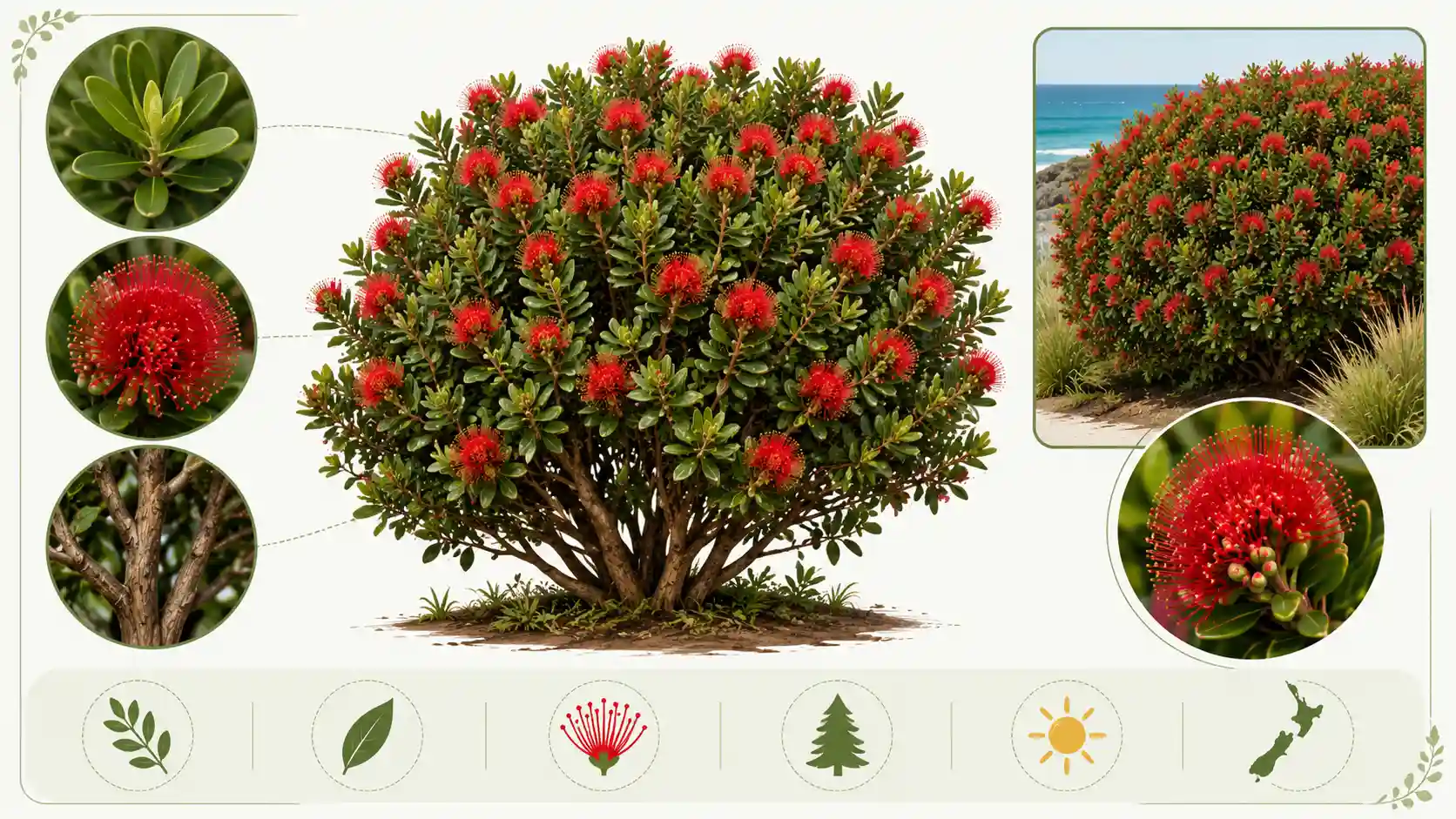
The New Zealand Christmas Bush (Metrosideros thomasii) is an evergreen flowering shrub or small tree from New Zealand belonging to the Myrtaceae family, the same botanical family that includes lilly pillies, bottlebrushes (Callistemon species), and eucalypts. It is grown mainly for its dense green foliage and clusters of bright red to crimson flowers that create strong seasonal colour.
Unlike some larger members of the Metrosideros genus, Metrosideros thomasii has a more manageable size and naturally forms a bushy, branching structure. This makes it particularly useful in Australian gardens where gardeners want a flowering native-style plant without the enormous size of a mature pohutukawa tree.
The species adapts well to many Australian conditions, especially coastal areas where it can handle salt spray, strong winds, and dry periods once established. It also performs well in warm inland areas that provide good drainage and protection from severe frost.
The plant is sometimes referred to as new zealand christmas tree, although this name is more commonly associated with pohutukawa (Metrosideros excelsa). Both plants share similar flowering characteristics but differ significantly in mature size and growth habit.
Why Is It Called “Christmas Bush”?
The New Zealand Christmas Bush receives its common name because its vivid red and crimson flowers appear during late spring and summer, often reaching peak flowering around December in the Southern Hemisphere.
If you enjoy seasonal colour from flowering plants, explore more Australian flowering species in our guide to the best flowering trees for Australian gardens.
The flowering period coincides with the Christmas season in New Zealand and Australia, creating a natural association with festive celebrations. The flowers are made up of many fine stamens grouped together, giving them a fluffy, brush-like or pincushion appearance.
Because of this seasonal flowering display, it is also known as a nz christmas flower and has become a popular choice for gardens wanting colour during warmer months.
New Zealand Christmas Bush vs Pohutukawa (Metrosideros excelsa)
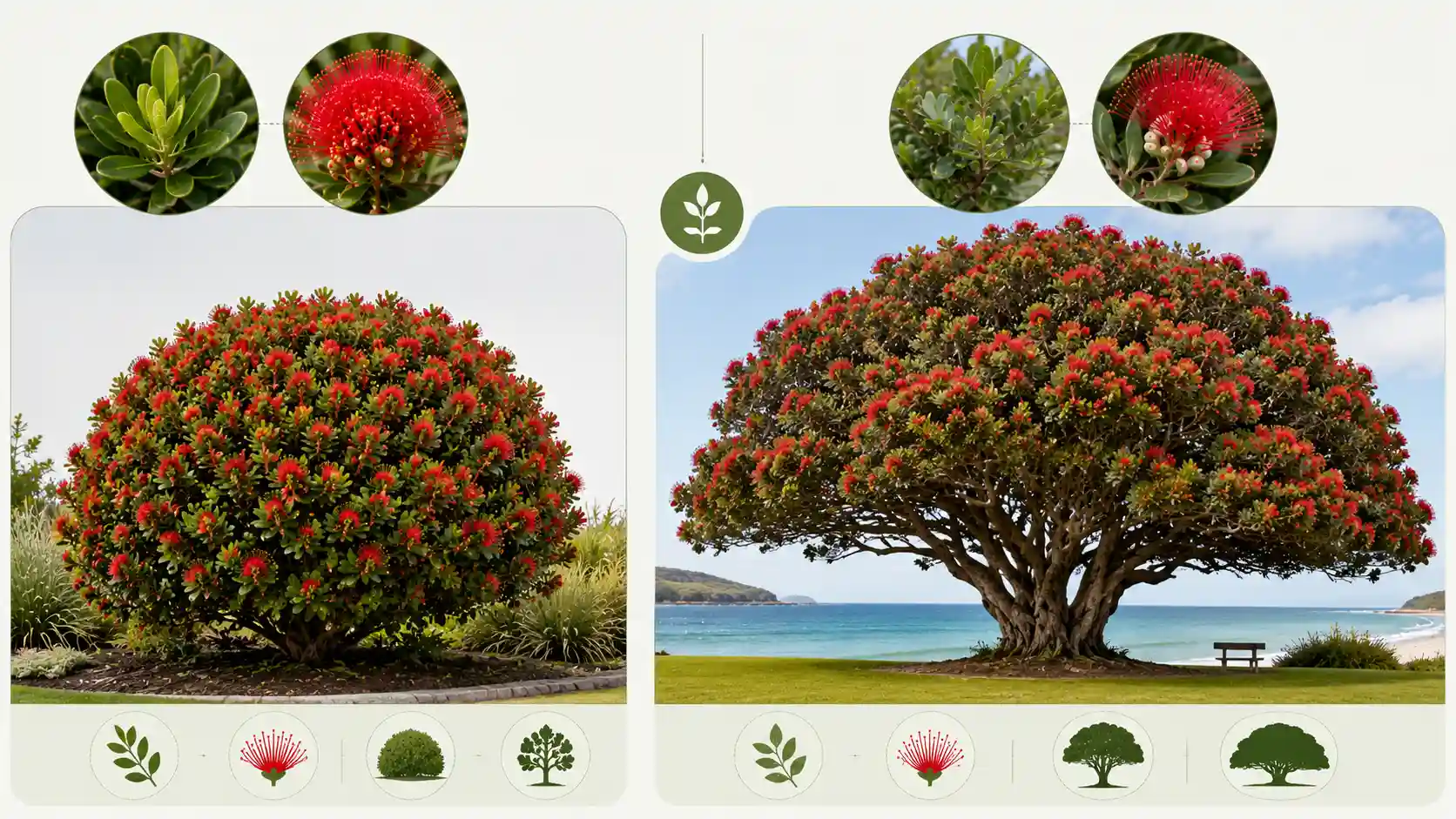
The New Zealand Christmas Bush and pohutukawa are closely related but have very different landscape uses. Both belong to the Metrosideros genus and produce similar red flowers, but their size, growth patterns, and applications vary considerably.
Both New Zealand Christmas Bush and pohutukawa belong to the Metrosideros genus, a group of flowering plants native mainly to the Pacific region. Learn more about the genus and its botanical classification on Wikipedia.
| Feature | New Zealand Christmas Bush (Metrosideros thomasii) | Pohutukawa (Metrosideros excelsa) |
| Mature size | Around 3–6m tall | Can exceed 20m in ideal conditions |
| Growth habit | Compact shrub or small tree | Large spreading tree |
| Main use | Hedges, screens, gardens | Coastal shade tree and landmark planting |
| Flower colour | Crimson-red to orange-red | Bright red, occasionally orange or yellow forms |
| Root system | Vigorous but smaller | Extensive mature tree root system |
| Lifespan | Long-lived shrub/small tree | Can live for several centuries |
Pohutukawa is considered one of New Zealand’s most iconic trees and can survive for hundreds of years in suitable environments. Its large size means it requires significantly more space than Metrosideros thomasii.
The question “what is the most loved Christmas tree in New Zealand?” is often answered with pohutukawa because of its cultural importance and spectacular coastal displays. However, for smaller Australian gardens, the New Zealand Christmas Bush is generally a more practical option.
New Zealand Christmas Bush Size and Growth
New Zealand Christmas Bush develops into a dense evergreen plant with a naturally rounded form. Its final size depends on the variety, climate, soil quality, available moisture, and whether it is regularly pruned.
In Australian gardens, it is commonly maintained as a hedge or screening plant, where pruning can keep it much smaller than its natural mature size.
How Big Does an NZ Christmas Bush Grow?
A typical NZ Christmas Bush size is approximately:
| Growing Situation | Height | Width |
| Free-growing plant | 3–6m | 3–5m |
| Regularly pruned hedge | 1.5–3m | Depends on pruning |
| Compact cultivars | Around 1–2m | Smaller spreading habit |
When grown as a standalone specimen, the plant develops an open but tidy branching structure. In hedges, regular trimming encourages denser foliage and improved screening.
Environmental conditions strongly influence growth. Plants receiving full sun, adequate water during establishment, and suitable soil generally achieve faster and healthier growth compared with plants grown in shade or poorly drained areas.
Is Christmas Bush Fast Growing?
New Zealand Christmas Bush is considered a moderate to fast-growing plant when grown in favourable conditions. Growth is strongest during warmer months when temperatures and sunlight encourage active foliage development.
Growth speed depends on:
- Amount of sunlight received
- Soil drainage and fertility
- Regular watering during early establishment
- Local climate conditions
- Pruning practices
In our experience growing evergreen flowering shrubs, young Metrosideros plants often establish faster when planted in warm seasons with consistent moisture during the first year. Once established, their growth becomes more reliable and they require less maintenance.
The growth rate of Metrosideros excelsa is different because pohutukawa is a much larger tree species with a slower long-term development pattern compared with smaller hedge-forming Metrosideros varieties.
New Zealand Christmas Bush Varieties
New Zealand Christmas Bush varieties are mainly selected for differences in size, foliage appearance, and suitability for different garden situations. The standard Metrosideros thomasii form remains popular, while compact and variegated selections are often chosen for smaller gardens, containers, and decorative planting.
Different cultivars can vary in growth habit, flower intensity, and mature size, so selecting the right variety helps match the plant to available garden space.
Dwarf New Zealand Christmas Bush
A dwarf New Zealand Christmas Bush is a more compact form suited to smaller gardens, courtyards, containers, and low hedges. These smaller selections maintain the same evergreen foliage and seasonal red flowering characteristics but stay significantly shorter than standard plants.
Compact varieties are useful where gardeners want the appearance of a Christmas bush without the space requirements of a larger shrub.
Benefits of dwarf forms include:
- Suitable for small gardens and balconies
- Easier maintenance and pruning
- Good option for decorative pots
- Useful for low borders and informal hedges
The mature size depends on the specific cultivar, but dwarf forms generally remain around 1–2 metres tall compared with the standard Metrosideros thomasii, which can reach several metres.
Variegated New Zealand Christmas Bush
Variegated New Zealand Christmas Bush varieties are grown for their attractive foliage, which features contrasting green and yellow or cream markings. These forms provide year-round visual interest even outside the flowering season.
Variegated cultivars usually grow slightly slower than fully green forms because leaves containing less chlorophyll may produce energy less efficiently. They generally benefit from brighter light conditions to maintain strong foliage colour.
They are commonly planted as:
- Feature shrubs
- Container plants
- Decorative garden accents
- Mixed native garden plantings
Other Popular Cultivars
Other named Metrosideros cultivars are available through specialist native plant nurseries, with selections chosen for compact growth, improved flowering, or hedge performance.
Some forms are particularly suitable for screening because they develop dense foliage when regularly pruned. Gardeners should check the expected mature size of each cultivar before planting, especially in smaller residential spaces.
Where to Plant New Zealand Christmas Bush
The success of a New Zealand Christmas Bush depends heavily on selecting the correct planting position. This species naturally grows well in exposed coastal environments, making it valuable for Australian gardens affected by wind, salt spray, and dry conditions.
When planning a boundary garden, combining hardy shrubs like New Zealand Christmas Bush with other low-maintenance fence-line plants can create a resilient and attractive landscape.
Best Position and Conditions
The best position for a New Zealand Christmas Bush is a location with full sun, as strong sunlight encourages better flowering, denser growth, and healthier foliage.
Ideal growing conditions include:
- Full sun for maximum flowering
- Part shade tolerance, although flowering may reduce
- Well-drained soil
- Protection from severe frost when young
- Good air circulation around the plant
The plant is highly suitable for coastal gardens because it tolerates salt-laden winds better than many ornamental shrubs. It can also handle periods of drought once its root system becomes established.
Young plants are more sensitive to cold conditions, so frost-prone areas may require temporary protection until the plant becomes established.
Elemo Baker recommends planting young Metrosideros plants during milder weather and maintaining consistent watering during the first growing season to encourage strong root development.
Are New Zealand Christmas Tree Roots Invasive?
New Zealand Christmas Bush roots are not usually considered aggressively invasive, but they can become vigorous as the plant matures. Like many woody shrubs and trees, its roots expand outward in search of moisture and nutrients.
For best results, avoid planting directly beside:
- Building foundations
- Drainage pipes
- Paved areas
- Underground utilities
A general planting distance from structures allows roots to develop naturally without causing future maintenance problems.
The root system is usually manageable in residential gardens when the plant is positioned correctly and maintained through appropriate pruning.
How to Grow and Care for New Zealand Christmas Bush
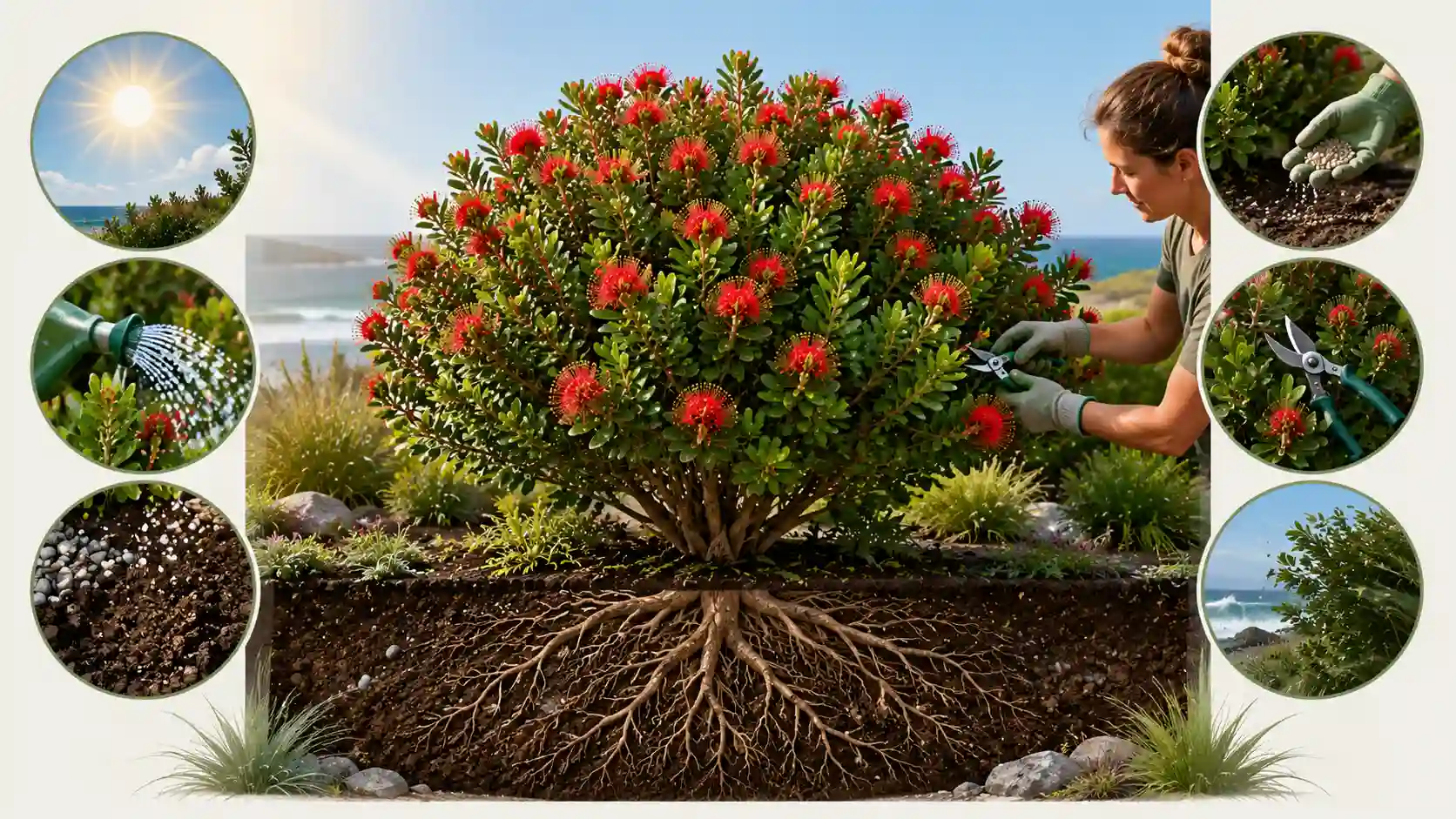
New Zealand Christmas Bush is considered a relatively low-maintenance plant once established. It performs best when provided with suitable sunlight, drainage, and occasional maintenance.
Watering Requirements
Young plants require regular watering while establishing their root systems. During the first year after planting, consistent moisture helps encourage stronger growth.
Established plants are drought tolerant, but occasional deep watering during prolonged hot and dry periods can improve flowering and overall health.
A practical watering approach includes:
- Water deeply rather than shallowly
- Allow soil to dry slightly between watering
- Increase watering during extreme summer heat
- Reduce watering in naturally wet periods
Light Requirements
Full sun produces the strongest flowering display. Plants grown in partial shade may survive but often develop fewer flowers and slower growth.
Soil Requirements
New Zealand Christmas Bush prefers well-drained soil and adapts to different soil types, including sandy and clay soils, provided excess water does not remain around the roots.
Ideal soil conditions include:
- Good drainage
- Neutral to slightly acidic pH
- Organic matter to improve structure
Poor drainage is one of the most common causes of plant decline.
Fertilising Needs
A slow-release native plant fertiliser applied in early spring can support healthy growth and flowering. Avoid excessive fertiliser application, particularly products high in phosphorus, as native plants generally perform better with specialised native fertilisers.
Pruning Practices
Pruning helps maintain shape, improve density, and encourage a tidy hedge form. The best time to prune is after flowering has finished.
Light pruning encourages:
- Bushier growth
- Better hedge structure
- Controlled plant size
- Removal of damaged branches
Heavy pruning should be avoided immediately before flowering because it may remove developing flower buds.
Climate Tolerance
New Zealand Christmas Bush is valued for its tolerance of:
- Coastal winds
- Salt exposure
- Dry conditions after establishment
However, young plants are more vulnerable to frost and should be protected in colder climates until mature.
Can You Prune a Christmas Bush?
Yes, you can prune a Christmas Bush. Pruning is recommended after flowering has finished because this allows the plant to recover and develop new growth before the next flowering season.
Pruning is useful for:
- Maintaining a compact shape
- Creating a dense hedge
- Controlling height and width
- Removing weak or damaged branches
Avoid excessive pruning during the flowering period because it can reduce the number of blooms produced.
Is a Christmas Bush Hard to Grow?
A Christmas Bush is generally not difficult to grow when planted in the right conditions. It is considered beginner-friendly because it tolerates drought, wind, and coastal exposure once established.
The main challenges are:
- Poor drainage causing root problems
- Too much shade reducing flowering
- Frost damage in young plants
- Incorrect pruning timing
With adequate sunlight and suitable soil, Metrosideros thomasii can become a reliable long-term garden plant.
New Zealand Christmas Bush as a Hedge
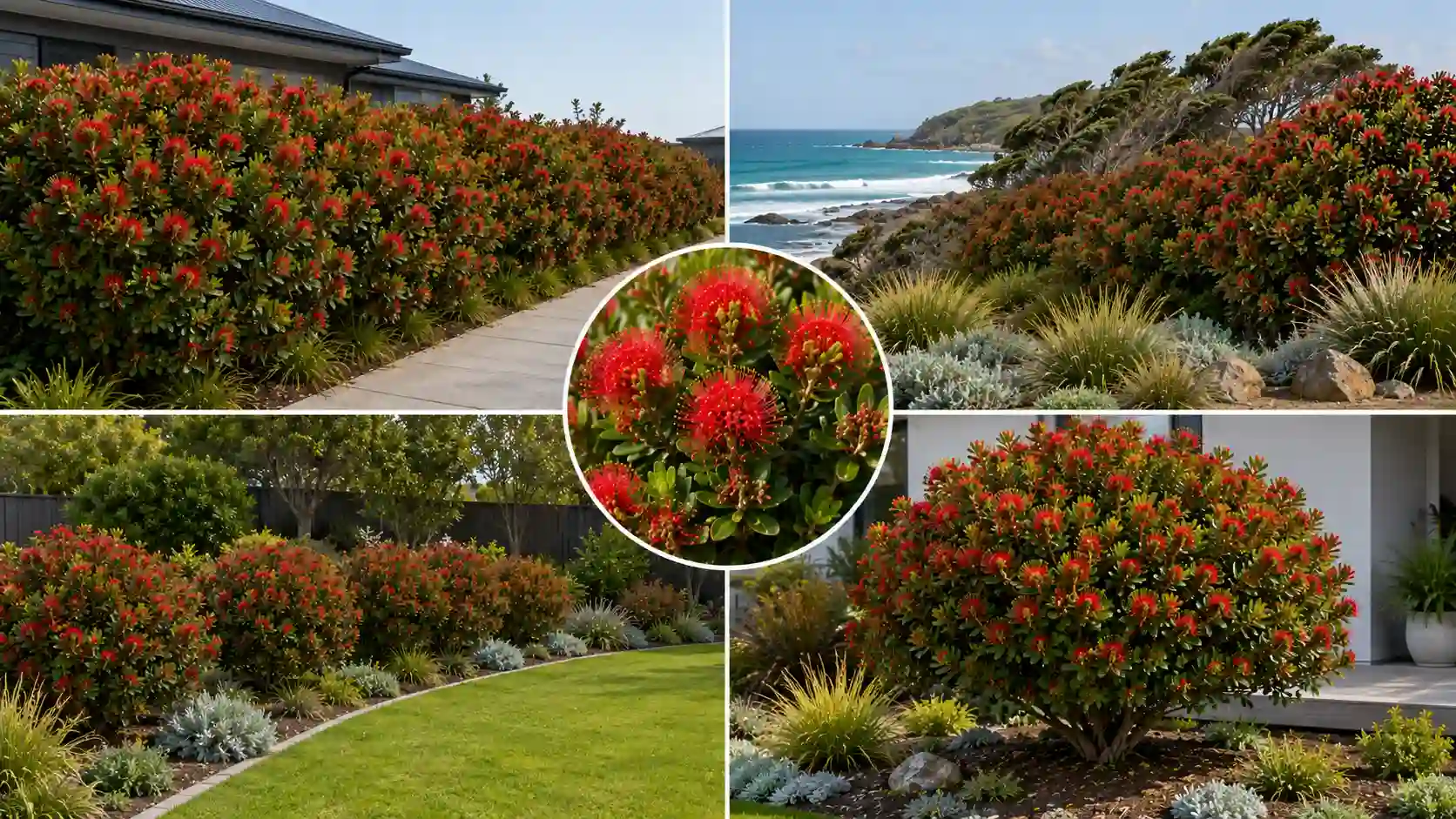
New Zealand Christmas Bush is an excellent hedge and screening plant because of its dense evergreen foliage and ability to respond well to pruning. For gardeners comparing evergreen screening options, Pittosporum Silver Sheen is another popular choice known for its fast growth, narrow leaves, and suitability as a hedge plant.
A new zealand christmas bush hedge can provide:
- Privacy screening
- Wind protection
- Coastal garden structure
- Seasonal flowering colour
For hedge planting, spacing depends on the desired density and final height. Closer spacing creates faster coverage but requires more plants and regular maintenance. Gardeners wanting a denser formal privacy screen may also consider other hedge plants such as Ficus Hillii ‘Flash’, which is widely used for structured boundaries and screening.
A well-maintained Metrosideros hedge benefits from trimming after flowering to encourage compact branching and maintain a neat appearance.
Common Problems With New Zealand Christmas Bush
New Zealand Christmas Bush is generally hardy, but unsuitable growing conditions can lead to health problems. Most issues are related to soil conditions, incorrect watering, insufficient sunlight, or poor pruning practices.
Similar evergreen native-style shrubs can also experience issues related to watering, soil conditions, and environmental stress, such as those discussed in our Woolly Bush problems guide.
Yellowing Leaves
Yellow leaves on a New Zealand Christmas Bush are commonly caused by poor drainage, nutrient imbalance, or stress from unsuitable growing conditions.
Possible causes include:
- Waterlogged soil reducing oxygen around roots
- Lack of essential nutrients
- Excessive shade
- Root stress after planting
To improve plant health:
- Check whether water drains away quickly after rainfall
- Improve soil structure with organic matter if required
- Apply a suitable slow-release native fertiliser during the active growing season
- Ensure the plant receives enough sunlight
Yellowing leaves should not always be treated with fertiliser immediately, as over-fertilising can worsen plant stress.
Root Rot
Root rot occurs when roots remain in constantly wet soil, preventing them from receiving enough oxygen. This problem is more common in heavy clay soils or areas with poor drainage.
Signs of root rot may include:
- Yellowing foliage
- Wilting despite moist soil
- Slow growth
- Branch decline
Prevention is the best approach:
- Plant in well-drained soil
- Avoid overwatering established plants
- Improve drainage before planting
- Do not place the plant in low-lying areas where water collects
Pests
New Zealand Christmas Bush can occasionally be affected by common garden pests, including:
- Scale insects
- Mealybugs
- Aphids
These pests feed on plant sap and may cause distorted growth, sticky residue on leaves, or reduced plant vigour.
General management includes:
- Regularly inspecting leaves and stems
- Removing heavily affected parts where practical
- Encouraging beneficial insects
- Using appropriate horticultural treatments when necessary
Early identification usually makes pest management easier.
Slow Growth or Poor Flowering
Slow growth or limited flowering is often linked to environmental conditions rather than plant weakness.
Common causes include:
- Insufficient sunlight
- Excessive pruning before flowering
- Poor soil drainage
- Lack of water during establishment
For better flowering:
- Provide full sun
- Avoid heavy pruning before the flowering season
- Maintain healthy soil conditions
- Allow the plant time to establish
In our experience with flowering evergreen shrubs, patience during the first few years is important because many plants increase flowering once their root systems become fully developed.
Propagating New Zealand Christmas Bush
New Zealand Christmas Bush can be propagated through cuttings or air-layering. These methods are preferred because they produce plants that maintain the characteristics of the parent plant.
How to Propagate a New Zealand Christmas Bush?
The most common propagation method is using semi-ripe cuttings, usually taken during the warmer growing period when stems are mature but still actively developing.
General propagation steps include:
- Select healthy semi-ripe stems from a strong parent plant.
- Remove lower leaves and prepare the cutting.
- Place the cutting into a suitable propagation medium.
- Maintain warmth, moisture, and humidity while roots develop.
Bottom heat can improve success rates by encouraging root formation.
Air-layering is another option, particularly for gardeners wanting to create a larger new plant from an established branch.
Growing from seed is possible but is less commonly used because seed-grown plants take longer to mature and may require several years before producing flowers.
New Zealand Christmas Bush as a Cut Flower
The colourful flowers of New Zealand Christmas Bush make it suitable as a seasonal cut flower. The bright crimson flower clusters can add strong colour to indoor arrangements during late spring and summer.
Flowering stems should be selected when blooms are healthy and beginning to open. Proper preparation helps improve their vase performance.
How Long Does a Christmas Bush Last Once Cut?
A Christmas Bush generally lasts several days to over a week as a cut flower when properly conditioned and maintained. Vase life depends on stem quality, room temperature, water cleanliness, and how fresh the flowers are when harvested.
Tips for extending freshness include:
- Cut stems early in the day when hydrated
- Remove leaves that sit below water level
- Place stems immediately into clean water
- Change vase water regularly
- Keep arrangements away from direct heat and strong sunlight
Freshly cut flowering branches usually perform best when handled carefully and kept in cool indoor conditions.
Buying New Zealand Christmas Bush in Australia
New Zealand Christmas Bush is widely available across Australia through native plant nurseries, coastal garden suppliers, and larger garden retailers. Availability may vary depending on region, climate suitability, and seasonal demand.
Gardeners searching for new zealand christmas bush Bunnings, Bunnings Christmas bush, or new zealand christmas bush for sale may find plants during suitable planting seasons, although stock levels can change between locations.
Choosing a Healthy Plant
When selecting a New Zealand Christmas Bush, look for:
- Healthy green foliage
- Strong branching structure
- No visible pest damage
- A well-developed root system
- Growth that matches the available garden space
Common nursery sizes include small tubestock plants and larger established specimens. Smaller plants often establish well when planted correctly because they adapt quickly to their new environment.
The plant is especially popular in regions such as coastal New South Wales, Queensland, and other frost-free areas where conditions closely match its natural preferences.
For gardeners in areas such as Brisbane, the species can perform well when provided with suitable drainage, adequate sunlight, and protection from extreme cold events.
Conclusion
The New Zealand Christmas Bush (Metrosideros thomasii) is a hardy evergreen shrub valued for its vibrant crimson flowers, dense foliage, and ability to handle challenging garden conditions. Its moderate-to-fast growth rate, coastal tolerance, and response to pruning make it a practical choice for Australian hedges, screening plants, and native-style gardens.
Providing the right position, well-drained soil, regular watering during establishment, and post-flowering pruning are the key steps for maintaining a healthy plant. Unlike the much larger pohutukawa, the New Zealand Christmas Bush offers a more manageable size while still delivering the iconic Christmas-season flower display.
The New Zealand Christmas Bush is one of many attractive choices for Australian landscapes, especially when selecting hardy flowering shrubs and trees suited to local conditions. Explore more options in our guide to Best Trees and Shrubs for Australian Gardens.
With correct care, new zealand christmas bush can become a long-lasting, low-maintenance feature plant that provides year-round greenery and seasonal colour.
FAQs
How big does a NZ Christmas bush grow?
A NZ Christmas Bush (Metrosideros thomasii) typically grows around 3–6 metres tall and 3–5 metres wide when allowed to develop naturally. Regular pruning can keep it smaller for hedges and compact garden spaces.
Is Christmas bush fast growing?
Yes, Christmas Bush is considered moderately to fast growing when planted in full sun with suitable soil, adequate water during establishment, and favourable climate conditions. Growth is usually strongest during warmer months.
Where is the best place to plant a Christmas bush?
The best place to plant a Christmas Bush is a sunny location with well-drained soil. It performs especially well in coastal gardens because it tolerates salt, wind, and dry conditions once established.
Can you prune a Christmas bush?
Yes, Christmas Bush can be pruned. The best time to prune is after flowering finishes, which helps maintain shape, encourage dense growth, and prepare the plant for future flowering.
Are New Zealand Christmas tree roots invasive?
New Zealand Christmas Bush roots are not usually considered highly invasive, but mature plants can develop vigorous roots. Planting away from foundations, pipes, and paved areas helps prevent future problems.
How long do pohutukawa trees live?
Pohutukawa (Metrosideros excelsa) trees can live for several centuries under suitable conditions. They are among New Zealand’s most culturally significant native trees and are known for their large size and longevity.
How to propagate a New Zealand Christmas bush?
A New Zealand Christmas Bush is commonly propagated using semi-ripe cuttings taken during the growing season. Air-layering can also be used, while seed propagation usually takes longer before flowering occurs.