
Liquid Amber Tree Australia: Size, Roots & Care Guide
Introduction
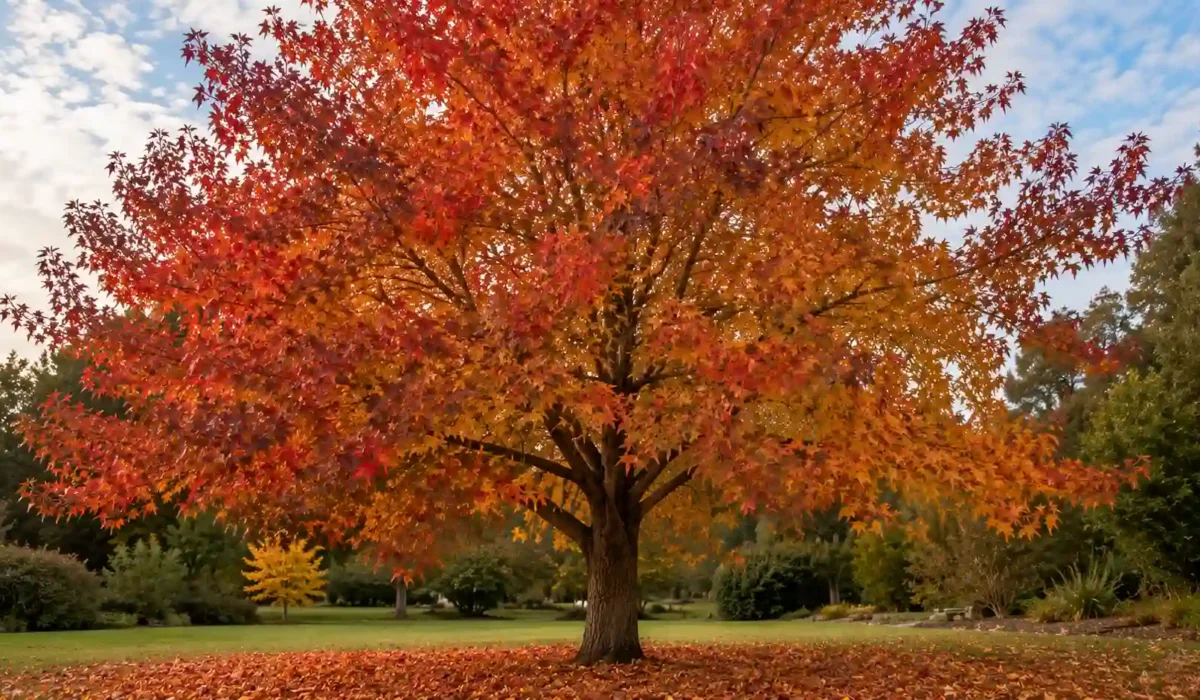
The liquid amber tree Australia refers to Liquidambar styraciflua, a large deciduous ornamental tree widely grown in temperate regions for its spectacular star-shaped autumn foliage. Also known as Liquidambar, sweet gum, or American sweet gum, this North American tree is popular in Australian gardens, parks, and streetscapes because of its vibrant seasonal colour. However, its mature size and spreading root system mean it requires careful placement before planting. Understanding liquid amber tree height, growth rate, roots, and maintenance needs helps Australian gardeners decide whether this striking shade tree suits their landscape. Liquid amber is one example of a feature tree used in Australian landscapes. For more ideas on selecting suitable species, explore our guide to Best Trees and Shrubs for Australian Gardens.
By Elemo Baker | Plant Care & Gardening Expert
Last Updated: July 2026
Quick Summary
- Liquid amber (Liquidambar styraciflua) is a deciduous ornamental tree native to North America, not Australia.
- In Australian conditions, mature trees commonly reach around 12–20 metres tall with a broad canopy.
- Liquid amber trees develop wide-spreading roots, so they should not be planted close to buildings, pipes, or paving.
- Their main feature is brilliant autumn foliage with shades of red, orange, purple, and yellow.
What Is a Liquid Amber Tree?
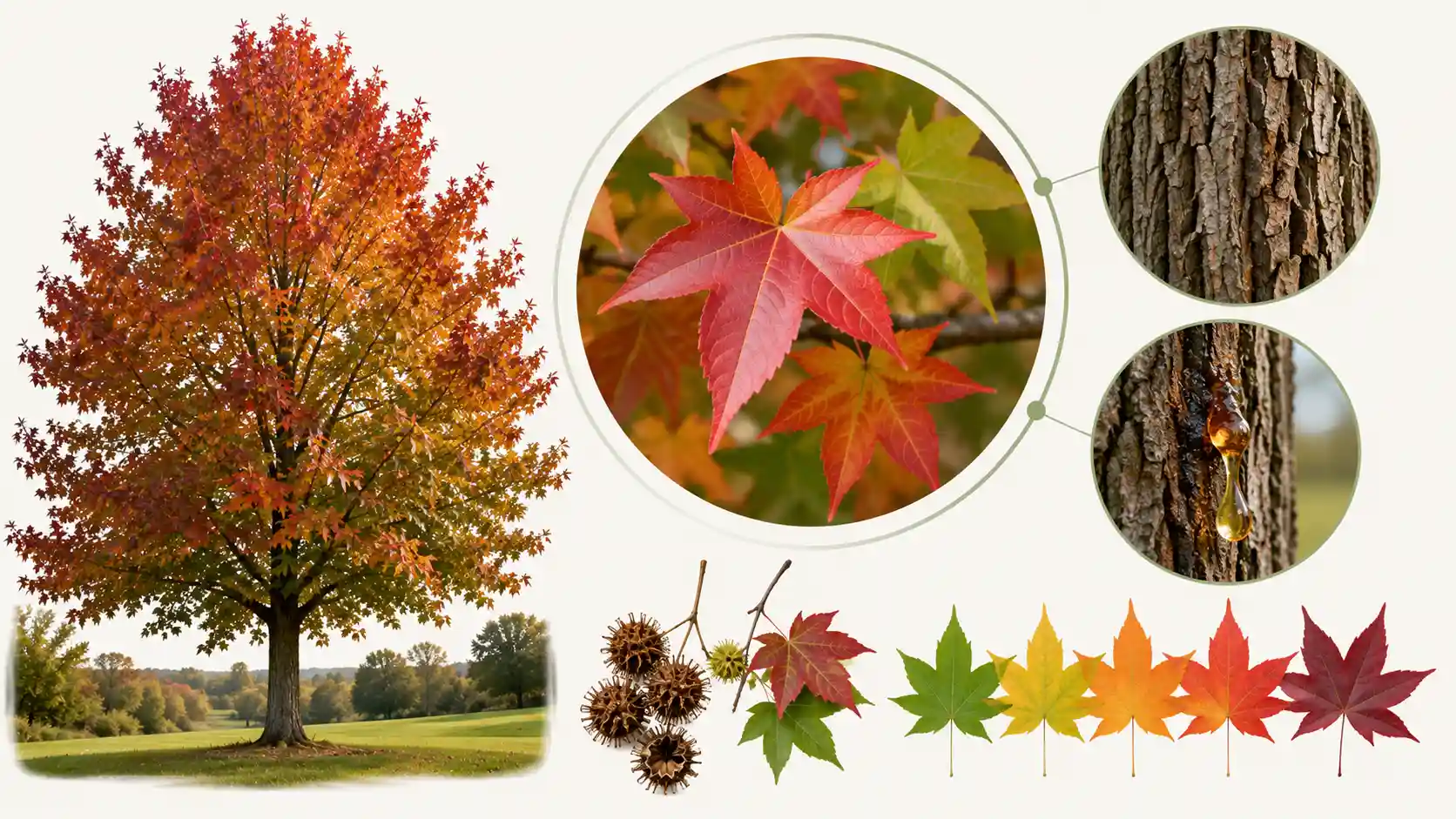
A liquid amber tree is a large deciduous tree scientifically known as Liquidambar styraciflua. It belongs to the family Altingiaceae and is valued worldwide as an ornamental landscape tree because of its distinctive five-pointed, star-shaped leaves and intense autumn colours. Liquid amber (Liquidambar styraciflua) is a deciduous tree species belonging to the family Altingiaceae and is widely recognised for its ornamental autumn foliage. More botanical information about the species can be found on the Liquidambar styraciflua Wikipedia page.
The species is native to eastern North America, including areas of the United States and Mexico, where it naturally grows in forests, wetlands, and river valleys. Although it is not an Australian native tree, it has become widely planted in suitable Australian climates.
The name “liquid amber” comes from the tree’s fragrant resinous sap, which can flow from wounds in the bark. Historically, this aromatic resin was collected and used for various traditional purposes, contributing to the common name.
Other names commonly used for this species include:
- Liquidambar
- Sweet gum
- American sweet gum
- Liquidamber (a common spelling variation)
Liquid amber trees are especially recognised for their seasonal transformation. During warmer months, the foliage is green, but in autumn the leaves change colour dramatically, producing shades ranging from golden yellow to deep crimson and purple.
From a gardening perspective, liquid amber is considered a feature tree rather than a small backyard plant. Its large canopy, strong seasonal display, and long lifespan make it suitable for spacious gardens, parks, and large suburban landscapes.
Liquid Amber vs Sweet Gum vs Liquidambar — Are They the Same Tree?
Yes, liquid amber, sweet gum, and liquidambar are different common names for the same tree species: Liquidambar styraciflua.
The confusion occurs because the tree has multiple names used in different regions:
| Name | Meaning |
| Liquid Amber | Refers to the fragrant resin produced by the tree |
| Liquidambar | Botanical genus name commonly used by gardeners |
| Sweet Gum | Traditional common name, especially in North America |
| American Sweet Gum | Identifies its North American origin |
The term “liquidamber” is also frequently searched and used informally, but the accepted botanical spelling is Liquidambar.
Is the Liquid Amber Tree Native to Australia?
No, liquid amber trees are not native to Australia. They are an introduced ornamental species originally from eastern North America.
Liquidambar styraciflua has been widely planted throughout Australia, particularly in temperate regions where seasonal changes allow the tree to develop strong autumn colour. It is commonly seen in gardens, streets, parks, and large public landscapes.
Australian regions where liquid amber performs well generally include areas with:
- Cool winters
- Warm summers
- Reliable rainfall or irrigation
- Temperate climates
The tree became popular in Australia because it provides a strong autumn display that is uncommon among many native Australian plants. Its colourful foliage has made it a favourite choice for avenues and feature planting.
However, because it is a large introduced tree, gardeners need to consider its mature dimensions and root behaviour before planting. In smaller urban gardens, its eventual size can create maintenance challenges if the planting location is unsuitable.
Liquid Amber Tree Size in Australia
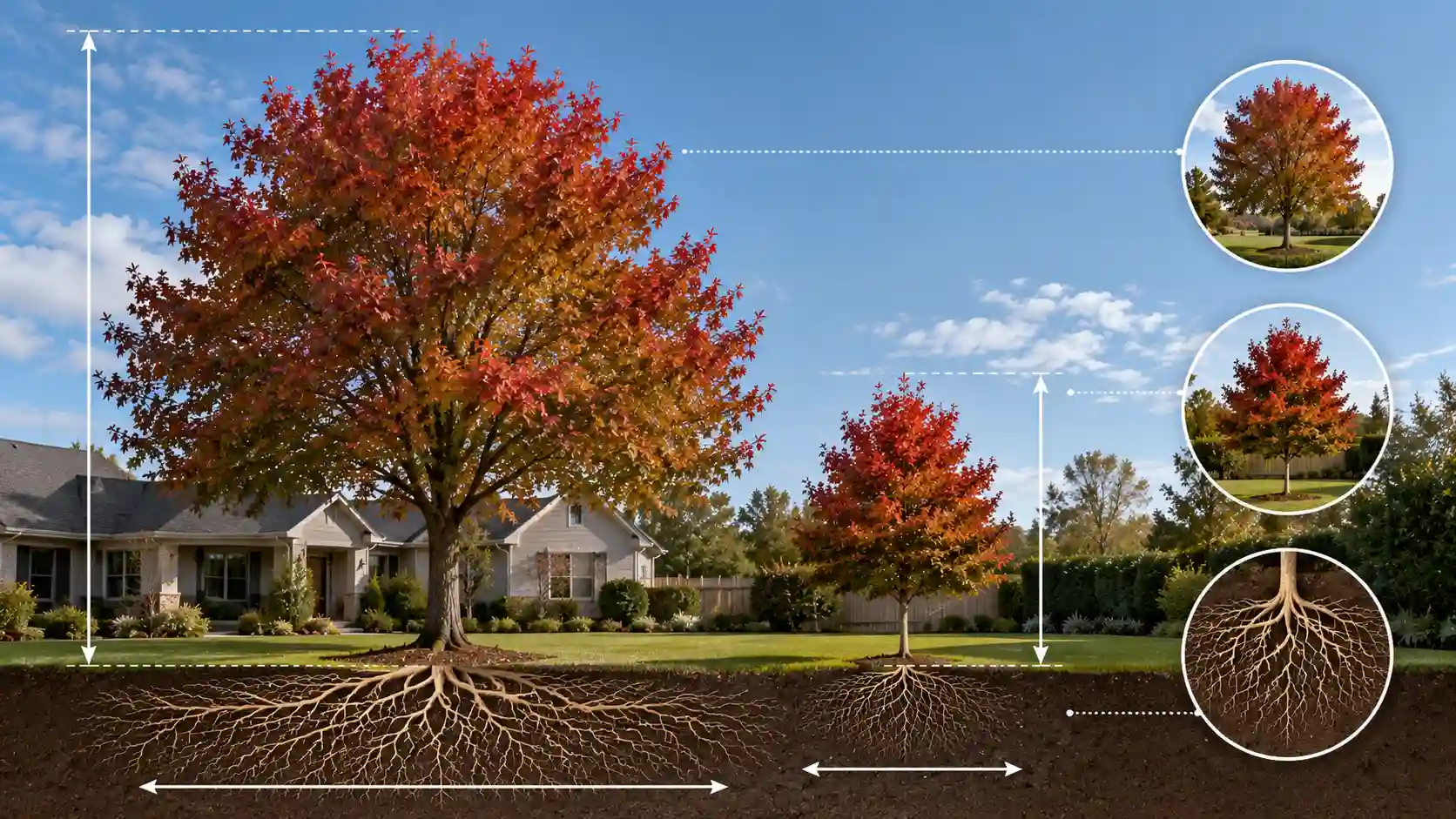
A mature liquid amber tree in Australia typically grows between 12 and 20 metres tall, with a canopy spread of approximately 8 to 12 metres when planted in suitable conditions. Tree selection should always consider expected height and available space. For another Australian landscaping example, see our guide on Tuckeroo Tree Growth Rate: Size, Height & Care Guide.
Its final size depends on several environmental factors, including:
- Soil depth and quality
- Available moisture
- Sun exposure
- Climate conditions
- Space available for root development
In deep, fertile soil with consistent moisture, liquid amber can become a very large shade tree. In poorer soils or dry locations, growth may be slower and overall size may be reduced.
Liquid amber is not suitable as a permanent indoor plant or container-grown tree because of its large root system and mature size. However, smaller forms can occasionally be trained as bonsai specimens due to their attractive leaf shape and seasonal colour changes. When choosing trees for Australian gardens, it is important to compare mature size, growth habits, and maintenance needs. Our guide to Fast Growing Evergreen Trees Australia Guide explains alternative tree choices for different landscape purposes.
For most Australian gardens, this species is best considered an outdoor feature tree requiring generous space.
Dwarf and Compact Liquid Amber Varieties
Smaller liquid amber cultivars are available for gardens where a full-sized tree is unsuitable. These compact forms provide the same attractive foliage while remaining more manageable.
One well-known dwarf selection is Liquidambar styraciflua ‘Gumball’, which develops a naturally rounded shape and stays considerably smaller than standard forms.
In our experience growing ornamental trees, selecting the correct cultivar before planting is one of the most important decisions. A dwarf variety may suit a suburban garden better than planting a standard liquid amber and attempting to control its size later through pruning.
| Feature | Standard Liquidambar | Dwarf Cultivar (‘Gumball’) |
| Mature height | Around 12–20m | Around 3–5m |
| Canopy width | Around 8–12m | Around 3–5m |
| Best use | Large gardens, parks, avenues | Small gardens and feature planting |
| Maintenance | Higher due to size | Easier to manage |
How Fast Does a Liquid Amber Tree Grow?
A liquid amber tree has a moderate-to-fast growth rate once established, especially when grown in full sun with adequate water and fertile soil.
Young trees generally focus on developing roots and structure before producing rapid height growth. Under favourable Australian conditions, established trees may add noticeable growth each year, particularly during the active growing season.
Growth patterns typically follow seasonal changes:
- Spring: New leaves emerge and rapid growth begins.
- Summer: Strong canopy development occurs when moisture is available.
- Autumn: Growth slows as foliage changes colour.
- Winter: The tree becomes dormant after losing its leaves.
Factors that influence liquid amber growth include:
- Deep, well-drained soil
- Regular moisture during establishment
- Full sunlight
- Suitable climate conditions
- Protection from severe environmental stress
Elemo Baker recommends allowing sufficient space from the beginning because young liquid amber trees can appear small at purchase but develop into large landscape trees within years.
Liquid Amber Tree Root System — Are the Roots Invasive?
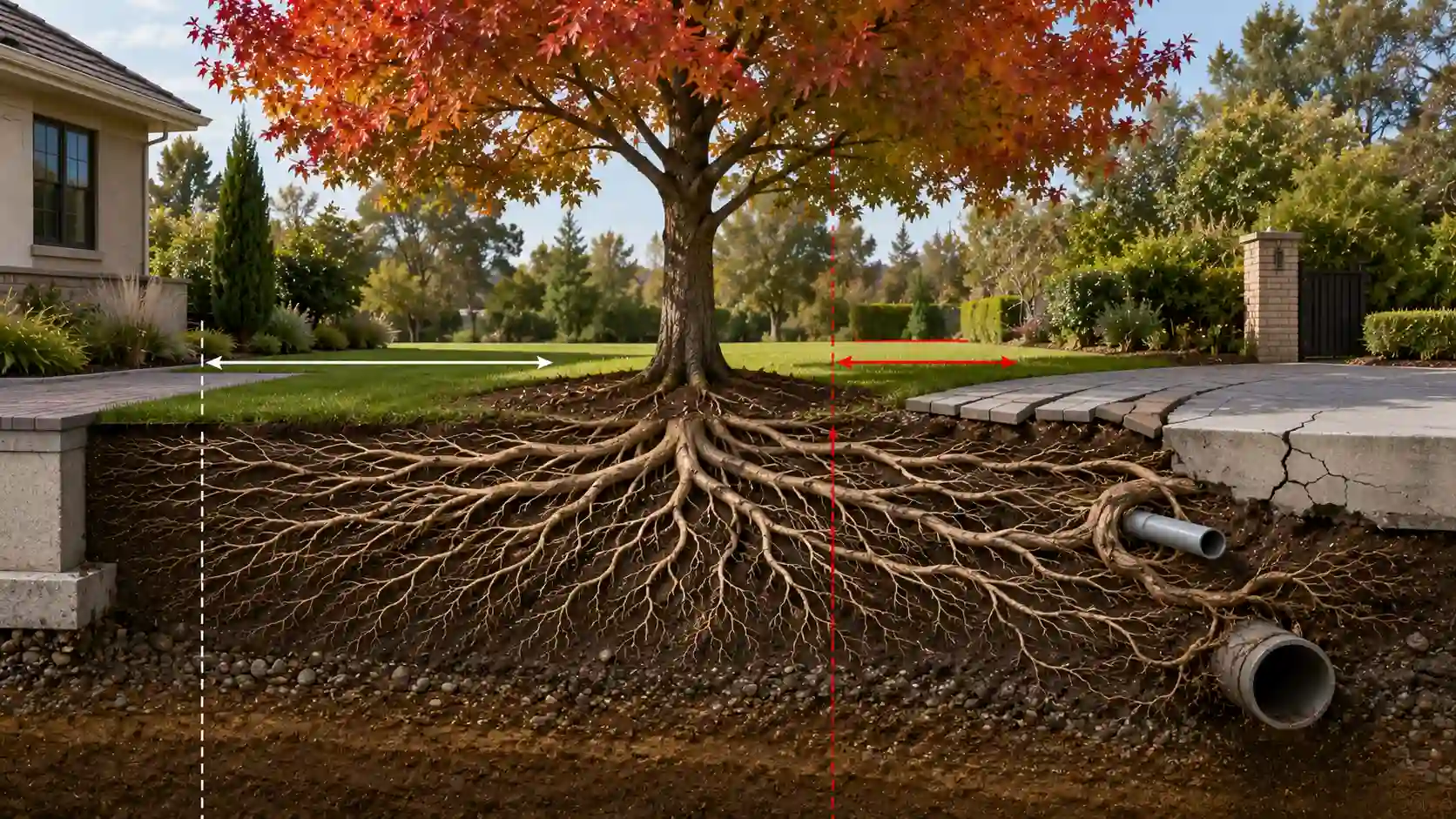
Yes, liquid amber tree roots can become problematic when planted in unsuitable locations. The species develops a broad, spreading root system that often grows close to the soil surface while searching for available moisture. Like other large landscape trees, liquid amber requires careful planting distance to avoid future infrastructure issues. Gardeners comparing large-rooted species may also find our guide on Gum Tree Root System: Root Spread, Problems & Safe Distances useful for understanding how tree roots affect Australian gardens.
Liquid amber roots are not classified as invasive in the same way as some aggressive weed species, but their strong growth habit can cause structural problems when planted too close to built structures. Like many large trees, the roots naturally expand outward to support the mature canopy and access water.
Potential issues caused by liquid amber roots include:
- Lifting paving, paths, and driveways
- Disturbing garden edging and retaining structures
- Entering existing cracks around pipes or drains
- Competing with nearby plants for moisture
- Creating uneven ground surfaces
The risk is highest in small suburban blocks where the tree has limited space for natural root expansion.
To reduce future problems, liquid amber trees should be planted with adequate distance from:
- House foundations
- Sewer lines and drainage systems
- Concrete paths and driveways
- Retaining walls
- Underground utilities
A large tree such as liquid amber is generally better suited to open lawns, large gardens, rural properties, or parks rather than confined spaces.
Which Trees Should Not Be Planted Close to a House?
Large trees with extensive root systems should generally not be planted close to homes because their roots and mature canopy can create long-term maintenance issues. Understanding root behaviour is essential before planting any large ornamental tree. You can also compare root characteristics with our guide on How Deep Are Crepe Myrtle Roots? Root Depth Guide.
Trees commonly avoided near buildings include:
- Large liquidambar trees
- Eucalyptus species with extensive root systems
- Some figs (Ficus species)
- Large willow species
- Other fast-growing moisture-seeking trees
The ideal planting position depends on the tree’s expected mature size, soil conditions, and nearby structures. A common mistake is planting a young tree based only on its current size rather than its future growth.
Common Liquid Amber Tree Problems (Australia)
Liquid amber trees are generally hardy, but Australian gardeners may experience several common issues related to their size, seasonal behaviour, and planting location.
Root Damage to Paving, Pipes and Foundations
Root damage occurs because liquid amber develops a wide-reaching root system that naturally grows toward available water sources. In compacted urban soils, roots may move closer to the surface where they can interfere with hard landscaping.
Common signs of root-related problems include:
- Raised paving or cracked concrete
- Uneven garden surfaces
- Roots visible above soil level
- Pressure around drainage areas
Solutions include:
- Installing professional root barriers during planting
- Managing surrounding irrigation patterns
- Consulting an arborist for serious structural concerns
- Removing or relocating unsuitable trees when necessary
Prevention is the most effective approach. Planting liquid amber in a spacious area away from structures greatly reduces future issues.
In practical garden situations, correct placement at planting time is usually far easier and cheaper than attempting to manage a mature tree causing damage.
Messy Spiky Seed Pods (“Gumballs”)
Liquid amber trees produce round, spiky seed pods commonly called “gumballs”. These are the tree’s natural fruiting structures and usually appear after flowering.
Heavy seed pod drop often occurs during:
- Autumn
- Winter
- Early spring in some climates
The pods can become a maintenance concern when trees are planted near:
- Swimming pools
- Outdoor entertaining areas
- Footpaths
- Driveways
- Lawns frequently used by children or pets
Management options include:
- Regular raking or collection
- Planting away from high-traffic areas
- Choosing compact cultivars where appropriate
Some smaller cultivars may produce fewer pods, making them more suitable for residential gardens where maintenance is a concern.
Leaf Drop and Autumn Mess
Leaf drop is a normal characteristic of liquid amber trees and is not usually a sign of disease.
As a deciduous species, liquid amber naturally loses its leaves during the cooler months after displaying autumn colours. This seasonal leaf fall is part of the tree’s natural growth cycle.
Gardeners should expect:
- Large amounts of fallen leaves
- Temporary seasonal clean-up
- Increased maintenance during autumn
The fallen leaves can also be useful as organic material when composted properly.
Are Liquid Amber Trees Messy?
Yes, liquid amber trees can be considered messy because they produce seasonal leaf drop and spiky seed pods, especially when planted near frequently used areas.
The main sources of mess are:
- Autumn leaf fall
- Spiky seed pods
- Small branch litter during windy conditions
However, this maintenance is predictable and seasonal rather than a sign of poor tree health. When planted in an appropriate location, many gardeners consider the autumn colour worthwhile.
Liquid Amber Tree Care Guide
Liquid amber trees are relatively adaptable once established, but correct care during the early years helps develop a strong, healthy landscape tree.
Watering Requirements
Young liquid amber trees need regular watering while establishing their root system.
Recommended practices include:
- Deep watering rather than frequent shallow watering
- Maintaining consistent moisture during hot periods
- Reducing watering once the tree becomes established
Mature trees tolerate some dry periods but perform best when they receive adequate moisture, especially during extended Australian summers.
Light Requirements
Liquid amber trees require full sun for healthy growth and the best autumn colour development.
At least six hours of direct sunlight daily generally supports:
- Strong canopy growth
- Better leaf colour
- Improved overall tree structure
Trees grown in heavy shade may become less vigorous and produce weaker autumn displays.
Soil Conditions
Liquid amber prefers:
- Slightly acidic soil
- Moist but well-drained conditions
- Deep soil with good root development space
In alkaline soils, the tree may experience chlorosis, a condition where leaves become pale due to reduced nutrient availability, particularly iron deficiency.
Improving soil conditions with appropriate organic matter and monitoring soil pH can support healthier growth.
Fertilising Needs
Liquid amber generally does not require heavy fertilising.
A light application of balanced fertiliser during active growth periods can support healthy development.
Suitable timing may include:
- Spring feeding before strong growth begins
- Light autumn applications where appropriate
Excess fertiliser can encourage weak growth and should be avoided.
Pruning Practices
Liquid amber trees benefit from thoughtful pruning, especially when young.
Recommended pruning practices include:
- Removing damaged or crossing branches
- Developing a strong branch structure early
- Pruning during the dormant winter period
Heavy lopping is not recommended because large wounds can increase the risk of decay and structural weakness.
For mature trees near buildings or powerlines, professional arborist advice is often the safest approach.
Climate Tolerance
Liquidambar styraciflua is well suited to many temperate Australian regions.
It performs best in areas with:
- Cool winters
- Warm summers
- Seasonal temperature changes
The species is frost hardy and can tolerate cold conditions. In warmer areas, performance may vary depending on rainfall, irrigation, and winter temperature patterns.
As of 2026, Australian gardeners continue to favour liquid amber mainly in temperate climates where reliable autumn colour can develop.
Benefits of Growing a Liquid Amber Tree
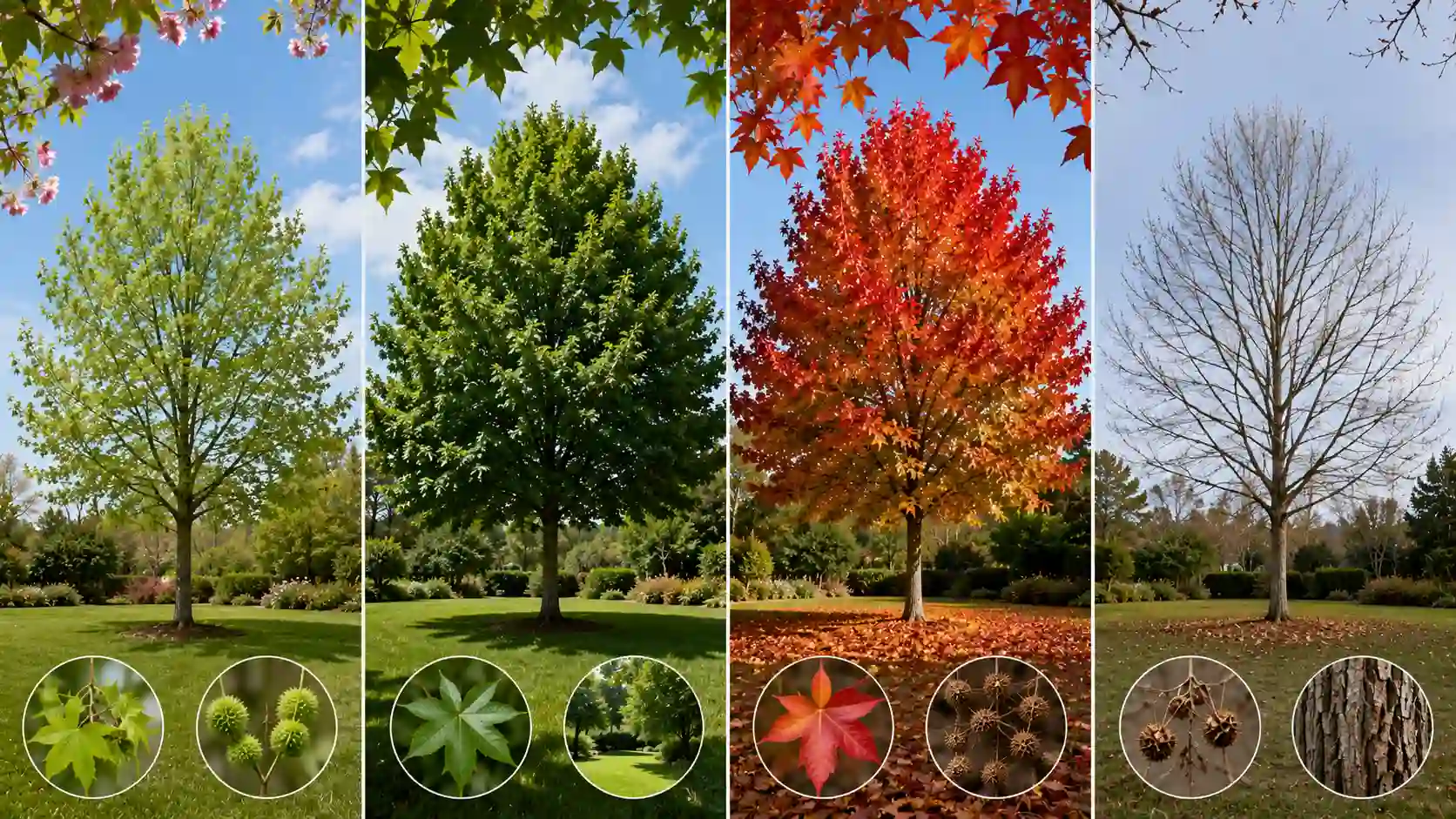
A liquid amber tree is valued as a feature tree because it combines strong visual appeal with practical landscape benefits. Although its size and root system require careful planning, it can be an excellent choice for large gardens and open spaces. Gardeners looking for other visually striking landscape options can also explore our guide to Flowering Trees Australia: Best Species Guide for additional feature tree ideas.
Key benefits include:
- Exceptional autumn colour: Liquid amber produces some of the most dramatic seasonal foliage displays, with leaves changing to red, orange, yellow, and purple shades.
- Shade value: A mature tree develops a broad canopy that can provide useful summer shade.
- Wildlife and insect value: The tree supports various insects and provides habitat opportunities for small garden wildlife.
- Hardiness: Once established, liquid amber tolerates a range of conditions and can survive periods of moderate dryness.
- Long-term landscape value: In suitable locations, it becomes a distinctive feature tree that can enhance large gardens for many years.
In our experience with ornamental landscape trees, the best results come when gardeners select trees based on their mature size rather than their appearance when young. Liquid amber rewards careful placement with reliable seasonal beauty.
Liquid Amber Tree Pros and Cons (Comparison Block)
Understanding the advantages and disadvantages helps determine whether a liquid amber tree suits a particular garden.
| Pros | Cons |
| Outstanding red, orange, and purple autumn foliage | Large mature size requires significant space |
| Provides shade in summer | Roots may damage paving and structures if poorly placed |
| Hardy once established | Produces spiky seed pods (“gumballs”) |
| Long-lived feature tree | Seasonal leaf drop requires clean-up |
| Attractive corky bark develops with age | Not suitable for small courtyards or narrow gardens |
| Performs well in temperate climates | Heavy pruning can create structural problems |
A liquid amber is generally considered a good tree when planted in the correct environment. The main problems occur when a large-growing species is placed in a restricted urban space.
Liquid Amber vs Plane Tree — What’s the Difference?
Liquid amber and plane trees are often compared because both are large deciduous landscape trees that produce attractive autumn changes. However, they belong to different plant groups and have several noticeable differences.
| Feature | Liquid Amber | Plane Tree |
| Botanical name | Liquidambar styraciflua | Platanus species |
| Leaf shape | Star-shaped leaves with deep lobes | Broad leaves with maple-like lobes |
| Autumn colour | Bright red, orange, yellow, purple | Usually yellow to brown tones |
| Fruit | Round spiky seed pods | Round hanging seed structures |
| Growth habit | Upright with spreading canopy | Large spreading shade tree |
| Common use | Feature tree, gardens, streetscapes | Streets, parks, avenues |
The main visual difference is the leaf shape. Liquid amber leaves are distinctly star-shaped, while plane tree leaves are broader and more similar to maple leaves.
Root behaviour can vary depending on species and growing conditions, but both are large trees requiring careful placement away from structures.
Liquid amber is often selected where dramatic autumn colour is the priority, while plane trees are commonly chosen for large-scale shade planting.
Is a Liquid Amber Tree a Maple Tree?
No, a liquid amber tree is not a maple tree. Although liquid amber leaves can look similar to maple leaves because both have lobed shapes and strong autumn colour, they belong to different plant families.
Liquid amber belongs to the family Altingiaceae, while true maple trees belong to the genus Acer.
The confusion occurs because both trees share:
- Palm-shaped or lobed leaves
- Deciduous growth habits
- Attractive autumn foliage
However, botanical differences separate them:
- Liquid amber produces spiky round seed pods.
- Maples produce paired winged seeds called samaras.
- Liquid amber leaves usually have a more star-like shape.
Liquid Amber Tree Lifespan
A liquid amber tree is a long-lived species that can survive for many decades when planted in suitable conditions.
Its lifespan depends on factors such as:
- Soil quality
- Available moisture
- Root space
- Climate suitability
- Pruning practices
- Protection from structural damage
Poor planting decisions can shorten a tree’s life. For example, repeated heavy lopping, restricted root space, or physical damage may increase stress and decay risk.
A well-positioned liquid amber in a spacious landscape can become a mature heritage-style tree with significant ornamental value.
Can You Prune a Liquid Amber Tree?
Yes, liquid amber trees can be pruned, but pruning should be limited to structural improvement and maintenance rather than controlling overall size.
Recommended pruning practices include:
- Removing dead, damaged, or crossing branches
- Correcting poor branch structure when the tree is young
- Maintaining safe clearance from buildings or pathways
The best pruning period is generally during the dormant winter season when the tree has lost its leaves.
Heavy pruning or “topping” is discouraged because removing large sections of the canopy can:
- Create large wounds
- Encourage decay
- Produce weak regrowth
- Reduce the natural shape of the tree
For mature trees near homes, roads, or power infrastructure, a qualified arborist should assess the safest approach.
Where to Buy a Liquid Amber Tree in Australia
Liquid amber trees are widely available through Australian nurseries, garden centres, and plant retailers.
When selecting a tree, consider:
- The cultivar and expected mature size
- Tree health and root condition
- Whether the plant suits the available garden space
- Local climate suitability
Younger trees are usually easier to establish because they adapt to their planting environment. However, choosing the correct variety is more important than simply selecting the largest available specimen.
Gardeners should check whether they need a standard liquid amber or a smaller cultivar better suited to residential gardens.
Beginner Mistakes to Avoid With Liquid Amber Trees
Many liquid amber problems occur because of incorrect planting decisions rather than poor tree health.
Common beginner mistakes include:
Planting Too Close to Structures
A young tree may appear harmless, but its mature roots and canopy can become difficult to manage near buildings, paths, and pipes.
Underestimating Mature Size
Liquid amber trees grow into large landscape trees. Always plan for the final height and width rather than the current nursery size.
Planting in Small Courtyards
Small spaces usually cannot provide enough room for the tree’s root system and canopy development.
Ignoring Soil pH Requirements
Highly alkaline soils can contribute to nutrient availability problems such as leaf chlorosis.
Heavy Pruning or Lopping
Trying to keep a large tree artificially small through severe pruning can weaken structure and increase decay risk.
Conclusion
The liquid amber tree Australia is a striking deciduous ornamental tree valued for its brilliant autumn foliage, shade potential, and long-term landscape appeal. Liquidambar styraciflua is not native to Australia but has become widely planted in temperate regions due to its seasonal beauty and adaptability.
However, this large-growing tree requires thoughtful planning. Its mature size, spreading root system, seasonal leaf drop, and seed pods mean it is best suited to spacious gardens rather than small urban blocks. Planting away from structures, pipes, and paving allows gardeners to enjoy its colour and character while avoiding future problems.
The key takeaway is simple: choose the right location first. A well-positioned liquid amber can become a spectacular feature tree for generations.
Frequently Asked Questions
What is the lifespan of a liquid amber tree?
A liquid amber tree can live for many decades when grown in suitable conditions. Its lifespan depends on soil quality, available root space, climate, and proper pruning practices. Trees with restricted roots or repeated heavy pruning may experience reduced longevity.
Are liquid ambers native to Australia?
No, liquid ambers are not native to Australia. They originate from eastern North America and have been introduced as ornamental trees. They are now commonly planted in suitable temperate Australian regions.
Are liquid amber trees invasive?
Liquid amber trees are not considered invasive weeds in Australia, but their spreading root systems can become problematic when planted too close to buildings, paving, or underground services.
Do liquid amber trees have deep roots?
Liquid amber trees generally develop a wide-spreading root system rather than a deeply dominant root system. Many roots grow relatively close to the soil surface while expanding outward to access moisture.
Are liquid amber seed pods a nuisance?
Yes, liquid amber seed pods can be considered a nuisance because the spiky round pods fall seasonally and require clean-up. Their impact depends largely on where the tree is planted.
Is a liquid amber the same as a maple tree?
No, liquid amber is not a maple tree. It only resembles maple because of its lobed leaves and autumn colour. Liquid amber belongs to the Altingiaceae family, while maples belong to the Acer genus.
How tall do liquid amber trees grow in Australia?
Liquid amber trees commonly grow around 12–20 metres tall in Australian conditions, although size varies depending on climate, soil, water availability, and cultivar selection.