

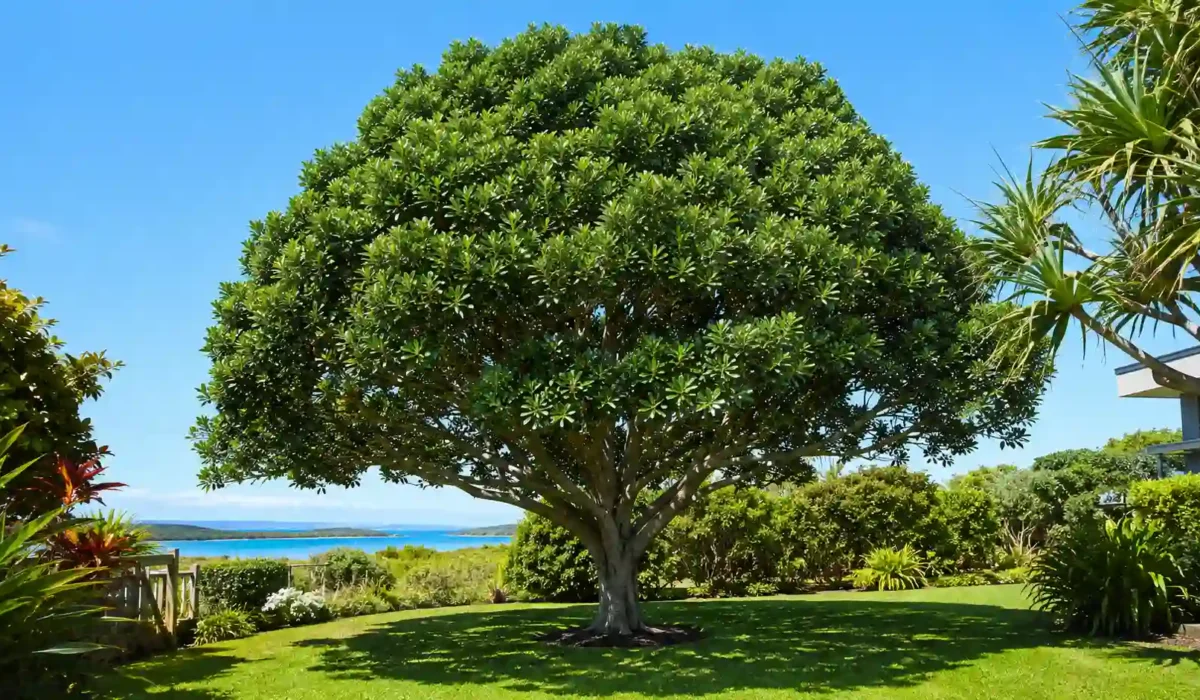
Tuckeroo Tree Growth Rate: Size, Height & Care Guide
Introduction
The tuckeroo tree growth rate is one of the main reasons this Australian native is widely planted in gardens, streetscapes, parks, and coastal landscapes. Known botanically as Cupaniopsis anacardioides, the tuckeroo is valued for its attractive evergreen canopy, adaptability, and relatively quick establishment. Native to the eastern Australian coastline, it performs well in a range of conditions, including coastal environments exposed to wind and salt. Understanding how quickly a tuckeroo grows, how large it becomes, and the care it needs can help gardeners decide whether it is the right tree for their landscape.
Quick Summary
- Tuckeroo is generally considered a moderate-to-fast growing Australian native tree.
- Mature trees typically reach 8–15 metres tall and 6–10 metres wide.
- A healthy tree can develop useful shade within approximately 5–8 years.
- Tuckeroo is valued for being low-maintenance, drought-tolerant once established, and highly salt tolerant.
What Is a Tuckeroo Tree?
The tuckeroo (Cupaniopsis anacardioides) is a native Australian evergreen tree belonging to the Sapindaceae family. Commonly known as tuckeroo, beach tamarind, or carrotwood, it naturally occurs along the eastern coast of Australia from northern Queensland to New South Wales. For detailed botanical classification and distribution information, see the Wikipedia entry on Cupaniopsis anacardioides.
The species is popular as both a backyard and street tree because of its dense canopy, glossy green foliage, and adaptability to urban conditions. Tuckeroo trees tolerate coastal winds, salt spray, periods of drought, and a variety of soil types, making them suitable for many Australian landscapes.
As a native species, Cupaniopsis anacardioides also provides habitat and food resources for wildlife. Its manageable growth habit and attractive appearance have made it a common choice for residential gardens, council plantings, and public parks. For gardeners interested in other Australian landscape trees, our Tree With Pink Flowers Australia: Identification Guide showcases several attractive flowering species. You may also like our Purple Flower Tree Australia: Native & Popular Species Guide if you are exploring native and ornamental trees for Australian gardens.
Tuckeroo Tree Growth Rate
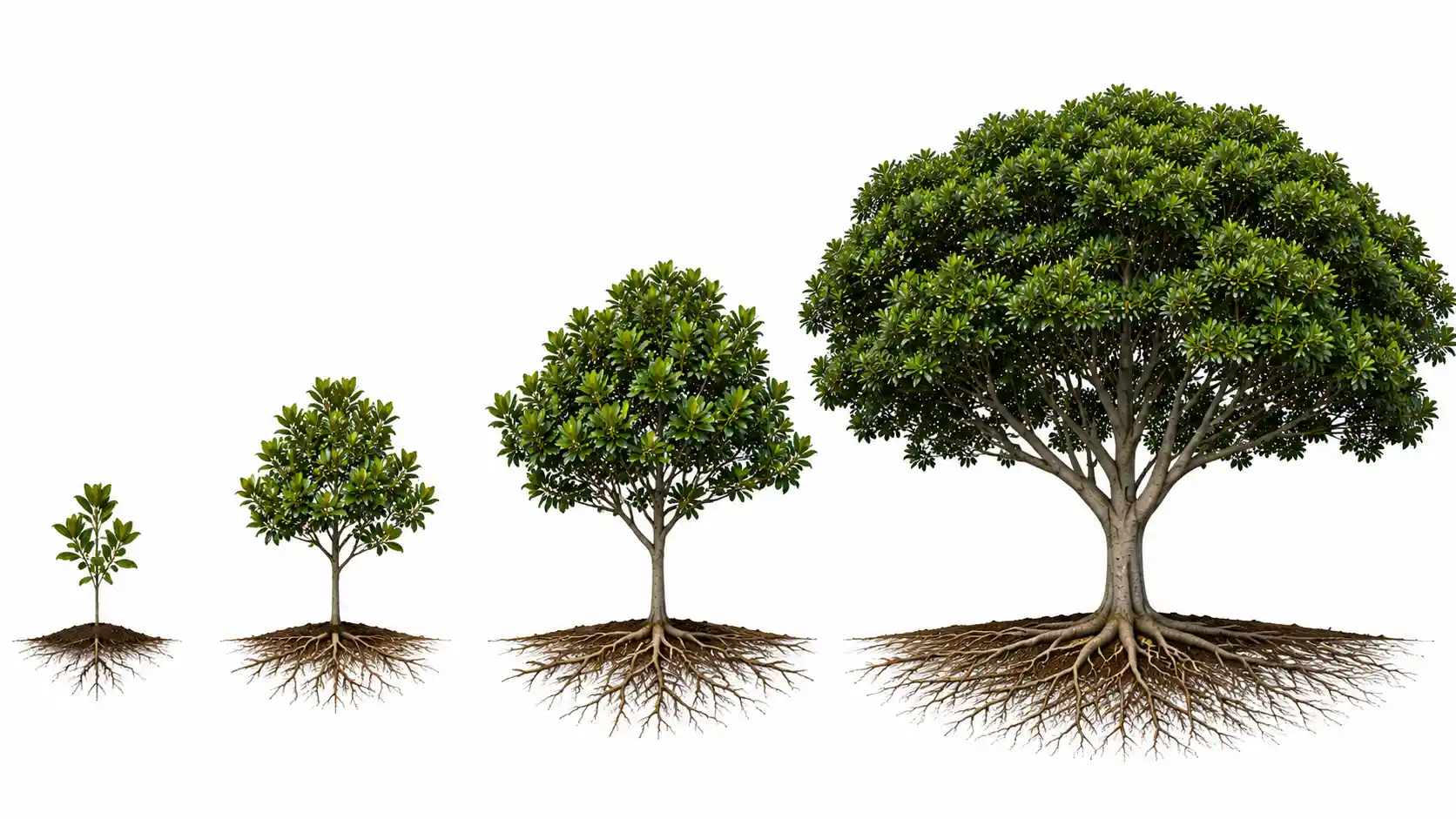
The tuckeroo tree growth rate is generally classified as moderate to fast, particularly when planted in favourable conditions. Young trees often establish quickly and can produce noticeable annual growth when provided with adequate sunlight, water, and soil drainage.
Under ideal conditions, a tuckeroo may grow approximately 50–100 centimetres per year during its most active growth phase. Growth rates vary depending on climate, soil quality, rainfall, and maintenance practices. Gardeners comparing fast-growing Australian screening trees may also find our Pittosporum Silver Sheen Growth Rate Guide useful when evaluating growth speed and landscape suitability.
Is the Tuckeroo Tree Fast Growing?
Yes, the tuckeroo tree is considered relatively fast growing compared with many native shade trees. However, growth speed depends heavily on environmental conditions.
Factors that support faster growth include:
- Full sun exposure
- Well-drained soil
- Regular watering during establishment
- Warm temperatures
- Adequate root space
In cooler climates or poor soils, growth may slow considerably. In our experience growing native landscape trees, tuckeroo establishes more rapidly than many gardeners expect once its root system becomes established. For another popular landscape tree used in privacy planting, see our Photinia Fraseri Robusta: Growth, Care & Hedge Guide.
How Long Does a Tuckeroo Take to Reach Mature Size?
Most tuckeroo trees take approximately 10–20 years to reach their mature dimensions, although useful shade can develop much earlier.
| Growth Stage | Approximate Age | Approximate Height |
| Young Sapling | 1–3 years | 1–3 metres |
| Developing Tree | 4–8 years | 3–8 metres |
| Semi-Mature Tree | 8–12 years | 8–12 metres |
| Mature Tree | 10–20+ years | 8–15 metres |
Many homeowners find the tree provides meaningful shade within 5–8 years after planting.
Tuckeroo Tree Height and Size
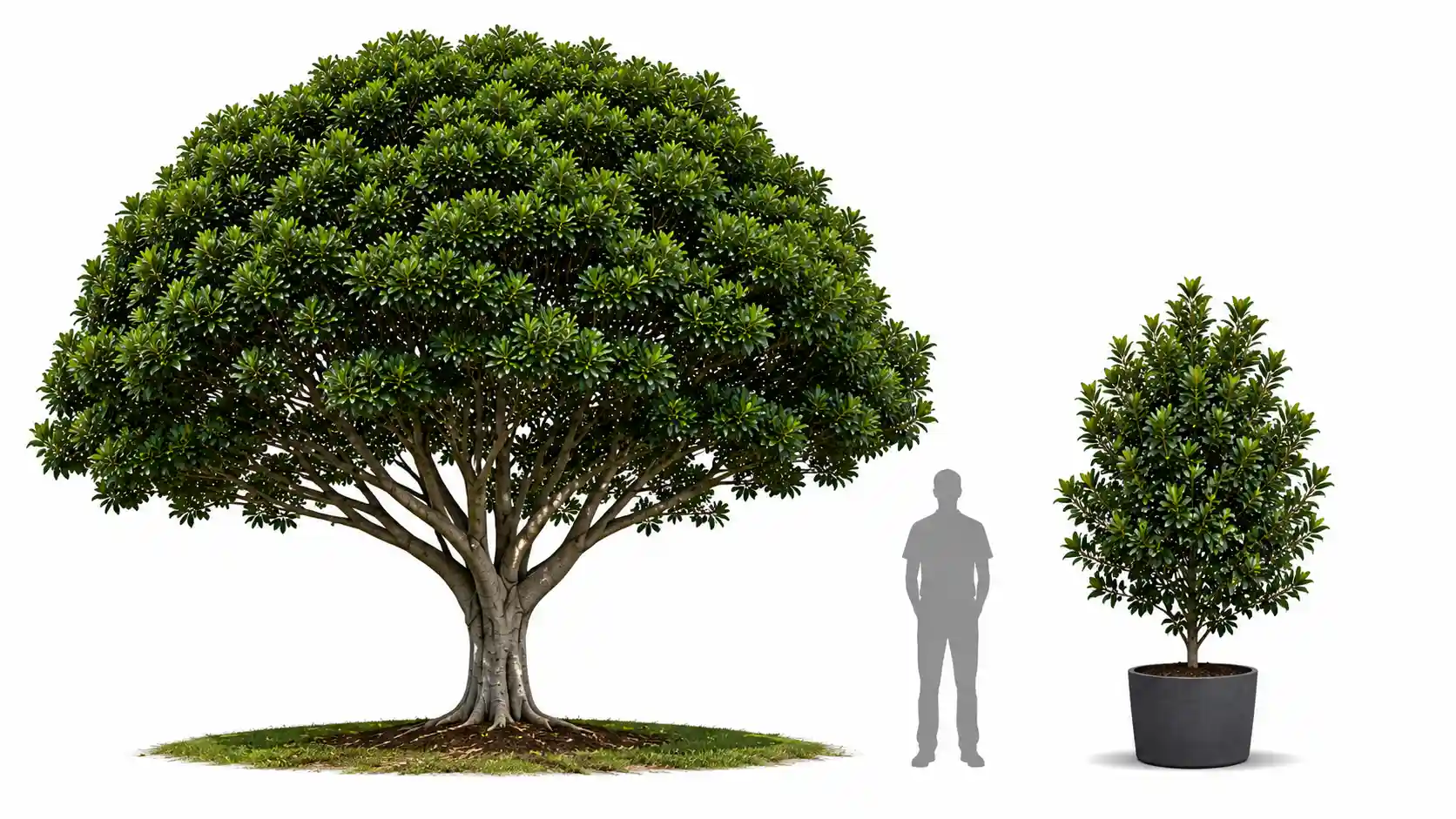
A mature tuckeroo tree typically reaches between 8 and 15 metres in height, with a canopy spread of approximately 6 to 10 metres. In particularly favourable environments, some specimens may grow larger. Readers researching compact ornamental trees may also be interested in our Dwarf Forest Pansy Tree Size, Care & Growth Guide.
When planted in the ground, trees achieve their greatest size because roots have unrestricted access to moisture and nutrients. Container-grown tuckeroos usually remain significantly smaller due to root confinement.
Factors influencing final size include:
- Soil depth
- Available water
- Sunlight exposure
- Coastal wind exposure
- Salt levels
- Pruning practices
Elemo Baker recommends considering mature canopy width before planting, particularly in suburban gardens where space may be limited.
Tuckeroo Tree Growing Conditions and Care Guide
Tuckeroo trees are relatively easy to grow and require minimal maintenance once established. For more ideas on choosing Australian plants suited to different landscapes, explore our Australian Plants Guide: Indoor Houseplants & Garden Design.
Light Requirements
Tuckeroo performs best in full sun but tolerates partial shade. Full sun generally promotes denser foliage and faster growth.
Soil Requirements
The species adapts to a range of soil types, including sandy, loamy, and moderately clay-based soils. Good drainage is important to prevent root stress.
Watering Needs
Young trees require regular watering during establishment. Once established, tuckeroo develops good drought tolerance.
A practical watering schedule is:
- Newly planted: 1–2 deep waterings per week
- First year: Weekly during dry periods
- Established trees: Supplementary watering during prolonged drought
Fertilising
A balanced native fertiliser applied during spring can support healthy growth. Over-fertilising is rarely necessary.
Pruning
Pruning is usually limited to:
- Removing dead branches
- Improving structure
- Managing canopy size
- Maintaining clearance around buildings or pathways
Climate and Frost Tolerance
Tuckeroo grows best in warm temperate and subtropical regions. Mature trees tolerate light frosts, although young plants may require protection. As of 2026, Australian growers continue to recommend tuckeroo as one of the more reliable native choices for coastal and urban landscapes. If you enjoy low-maintenance plants, our Money Tree Australia: Care, Meaning & Buying Guide covers another species valued for its adaptability.
Can You Keep a Tuckeroo Tree Small?
Yes, a tuckeroo tree can be kept smaller through regular pruning and careful canopy management.
The most effective methods include:
- Formative pruning during early growth
- Periodic canopy thinning
- Height reduction by qualified arborists when necessary
- Growing in large containers
While pruning can control size, it cannot permanently prevent growth. Consistent maintenance is required if a smaller form is desired. Container-grown tuckeroos generally remain much smaller than trees planted directly into the ground. Those looking for naturally smaller tree options can compare popular magnolia varieties in Magnolia Teddy Bear vs Little Gem: Key Differences Explained.
Tuckeroo Tree Root System — Are the Roots Invasive?
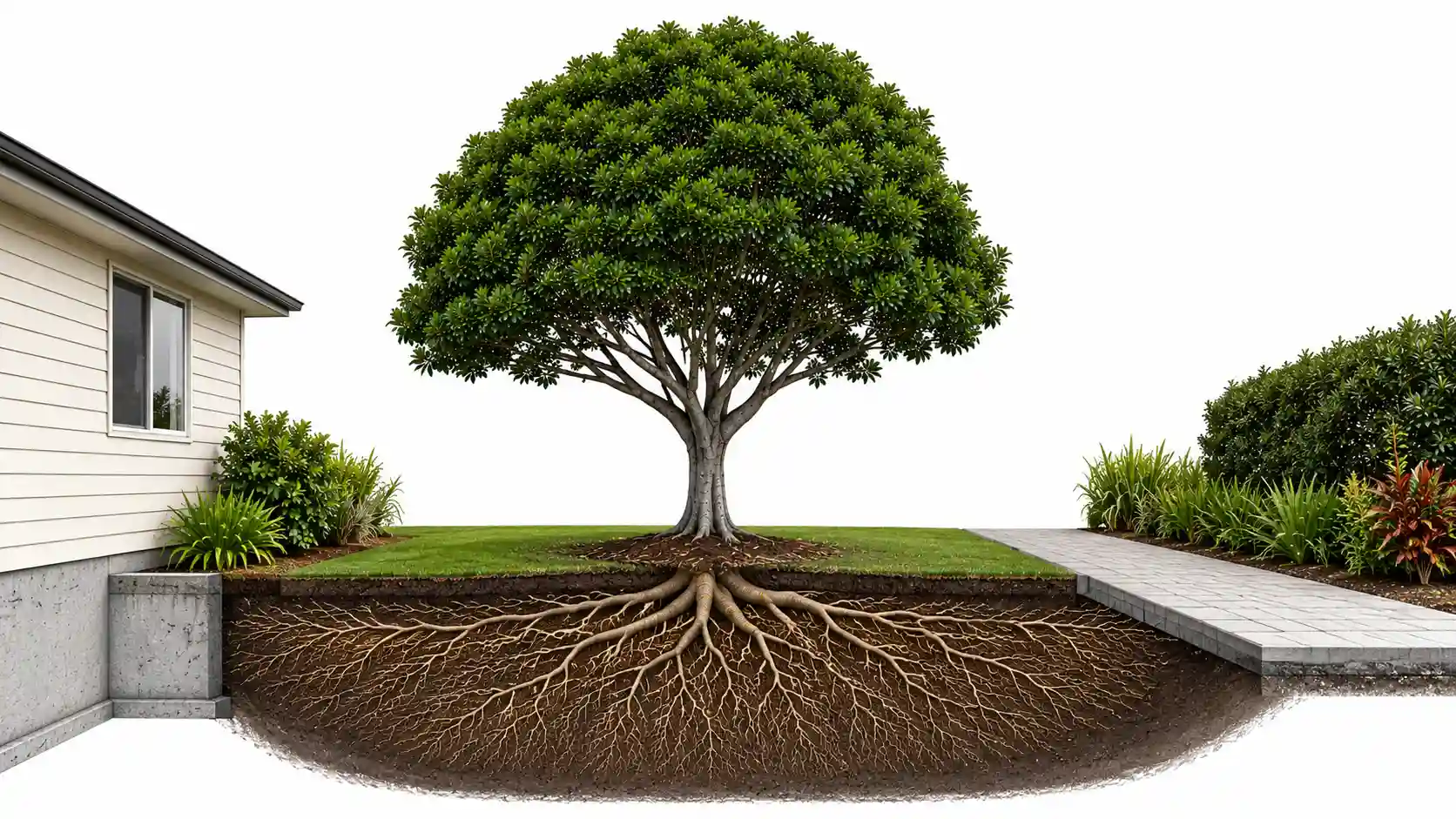
Tuckeroo roots are generally not considered highly invasive compared with many large shade tree species. The root system is typically broad and spreading rather than aggressively destructive. However, like any tree, roots naturally seek moisture and may affect nearby infrastructure if planted too close. Homeowners concerned about root behaviour can also compare native species in our Gum Tree Root System: Root Spread, Problems & Safe Distances guide.
Recommended planting distances include:
- At least 3–5 metres from house foundations
- Away from sewer lines where possible
- Adequate distance from paving and retaining walls
Proper site selection greatly reduces future root-related concerns. If you are deciding between ornamental trees, our Teddy Bear Magnolia Root System guide explains how magnolia roots compare with other landscape trees.
Tuckeroo Flowers and Fruit
Tuckeroo Flowers
Tuckeroo flowers are small, creamy-white to greenish-white blooms that typically appear during spring and early summer.
While individually inconspicuous, flowering can be quite attractive when large numbers of blooms appear throughout the canopy.
Benefits include:
- Pollinator support
- Nectar resources for insects
- Seasonal ornamental interest
Is Tuckeroo Fruit Edible?
Tuckeroo fruit contains a bright orange aril surrounding the seed. Historically, Indigenous Australians consumed the edible aril after appropriate preparation.
However, the seed itself should not be eaten.
Because confusion can occur regarding preparation and safe consumption, most gardeners grow tuckeroo primarily as an ornamental tree rather than a food source.
Are Tuckeroo Trees Messy?
Tuckeroo trees are moderately messy but generally not considered excessively troublesome.
Potential sources of litter include:
- Seasonal leaf drop
- Flower drop
- Fruit and seed fall
Most leaf shedding occurs gradually because the species is evergreen. Fruit litter may be more noticeable beneath mature trees during fruiting periods.
For many homeowners, the benefits of shade, appearance, and low maintenance outweigh occasional cleanup requirements.
Common Tuckeroo Tree Problems (Pests, Diseases and Leaf Issues)
Although generally hardy, tuckeroo trees can occasionally experience health issues.
Why Tuckeroo Leaves Turn Yellow or Drop
Yellowing leaves or leaf drop may result from:
- Overwatering
- Poor drainage
- Nutrient deficiencies
- Drought stress
- Transplant shock
In our experience growing native landscape trees, overwatering is one of the most common mistakes made with newly planted tuckeroos.
Improving drainage and adjusting watering practices often resolves the issue.
Common Pests and Diseases
Potential problems include:
- Scale insects
- Psyllids
- Aphids
- Sooty mould associated with sap-feeding insects
Most issues are manageable through:
- Regular monitoring
- Encouraging beneficial insects
- Maintaining overall tree health
- Pruning affected growth when necessary
Serious disease problems are relatively uncommon in healthy tuckeroo trees.
Tuckeroo Tree Pros and Cons
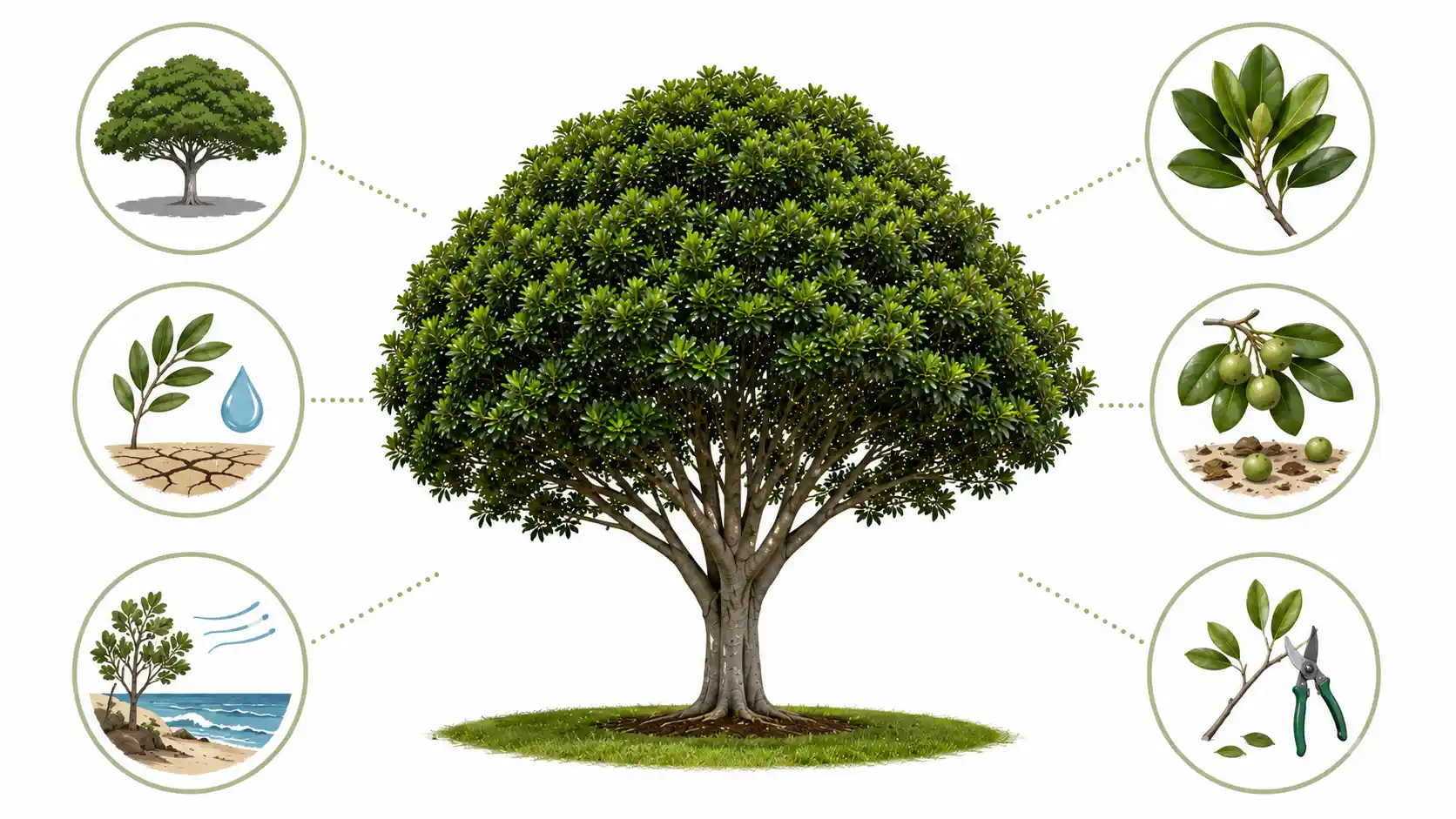
The tuckeroo offers several advantages but also has a few limitations.
| Pros | Cons |
| Fast establishment | Seasonal fruit litter |
| Attractive evergreen canopy | Can outgrow small spaces |
| Native Australian species | Requires pruning if size control is desired |
| Salt tolerant | Roots need adequate planting distance |
| Drought tolerant once established | Some leaf and flower drop |
| Low maintenance | Fruit can create minor cleanup requirements |
This balance makes tuckeroo a strong choice for many Australian gardens, particularly in coastal areas.
Tuckeroo Tree Lifespan
The typical lifespan of a tuckeroo tree ranges from approximately 50 to 100 years or more under favourable conditions.
Factors influencing longevity include:
- Site selection
- Soil quality
- Water availability
- Pest management
- Climate suitability
Healthy trees growing in appropriate environments can remain attractive and functional for many decades.
Beginner Mistakes When Growing a Tuckeroo Tree
Several common mistakes can affect long-term performance.
Planting Too Close to Structures
Failing to consider mature size can create future maintenance issues.
Overwatering Established Trees
Once established, tuckeroo tolerates dry periods and usually requires less water than many gardeners assume.
Ignoring Early Pruning
Early formative pruning helps develop a strong structure and reduces future maintenance.
Choosing the Wrong Location
Although adaptable, tuckeroo performs best in climates similar to its natural coastal range.
Elemo Baker recommends planning for mature height and canopy spread before planting to avoid costly corrections later.
Conclusion
The tuckeroo tree growth rate is generally considered moderate to fast, making this native species an excellent option for homeowners seeking shade, resilience, and low maintenance. With mature heights of 8–15 metres, good drought tolerance, and strong coastal performance, tuckeroo suits many Australian landscapes. When planted in the right location and given appropriate care, it can provide decades of attractive growth and reliable shade.
FAQ
Is the Tuckeroo tree fast growing?
Yes. Tuckeroo is generally regarded as a moderate-to-fast growing native tree and can grow around 50–100 centimetres per year under favourable conditions.
Are Tuckeroo trees messy?
Tuckeroo trees are moderately messy due to occasional leaf, flower, and fruit drop, but they are not usually considered high-maintenance trees.
What is the lifespan of a Tuckeroo tree?
A healthy tuckeroo tree can live approximately 50–100 years or longer when grown in suitable conditions.
Can you keep a Tuckeroo tree small?
Yes. Regular pruning, canopy management, and container growing can help maintain a smaller size.
Is tuckeroo fruit edible?
The orange aril surrounding the seed has traditionally been consumed after preparation, but the seed itself should not be eaten.
Do tuckeroo trees have invasive roots?
Tuckeroo roots are generally not considered invasive, although appropriate planting distance from buildings and infrastructure is still recommended.
6 Comments