

Mondo Grass Garden: Care Guide for Australian Gardens
Introduction
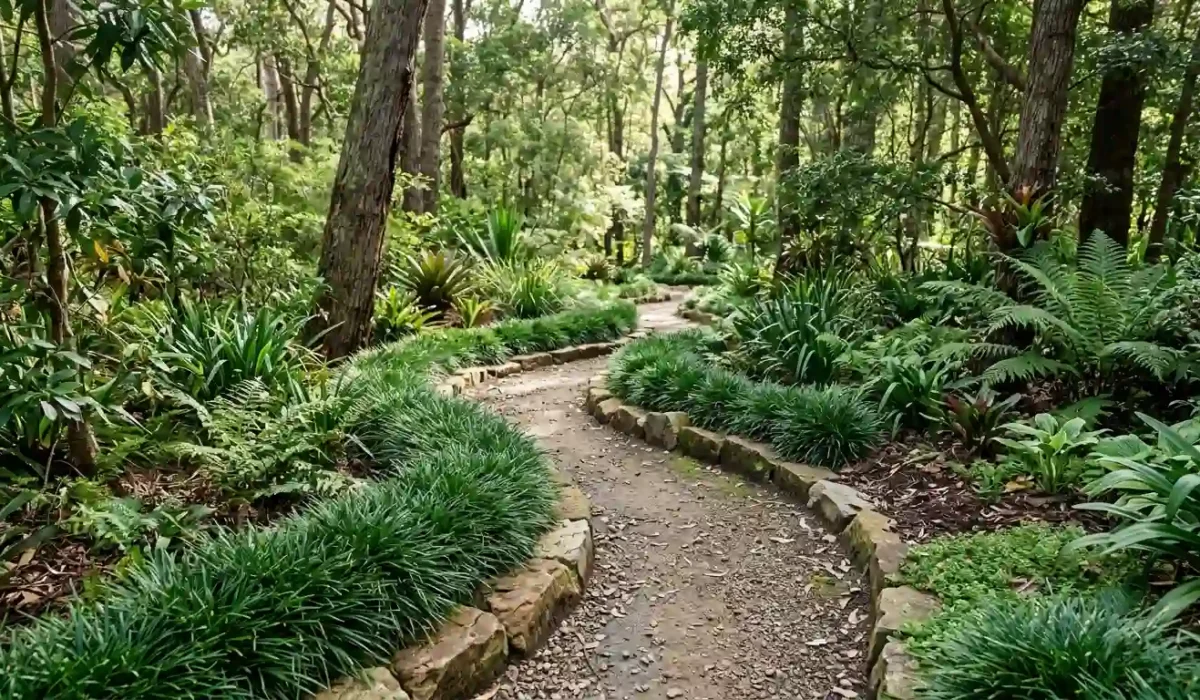
Mondo grass garden designs use Ophiopogon japonicus, an evergreen ornamental plant widely grown in Australian landscapes for shade gardens, borders, edging and groundcover planting. Mondo grass is not a true grass; it belongs to the Asparagaceae family and forms neat clumps of narrow, grass-like leaves. It performs especially well in low-light areas where many lawn grasses struggle. A well-established mondo grass garden requires minimal maintenance, tolerates dry conditions once mature, and provides year-round green foliage. This guide explains where to plant mondo grass, how to care for it, common growing problems, suitable varieties and the best companion plants for attractive garden designs.
By Elemo Baker | Plant Care & Gardening Expert
Last Updated: July 2026
Quick Summary
- Mondo grass (Ophiopogon japonicus) is an evergreen, grass-like plant that thrives in part shade to full shade.
- It is low-maintenance, drought-tolerant once established and suitable for Australian gardens.
- Popular varieties include dwarf mondo grass, black mondo grass and tall mondo grass (Ophiopogon jaburan).
- Mondo grass spreads slowly through underground rhizomes, creating dense clumps rather than aggressive growth.
- It is generally considered non-toxic to pets, although excessive consumption may cause mild digestive upset.
What Is Mondo Grass? (Ophiopogon japonicus Explained)
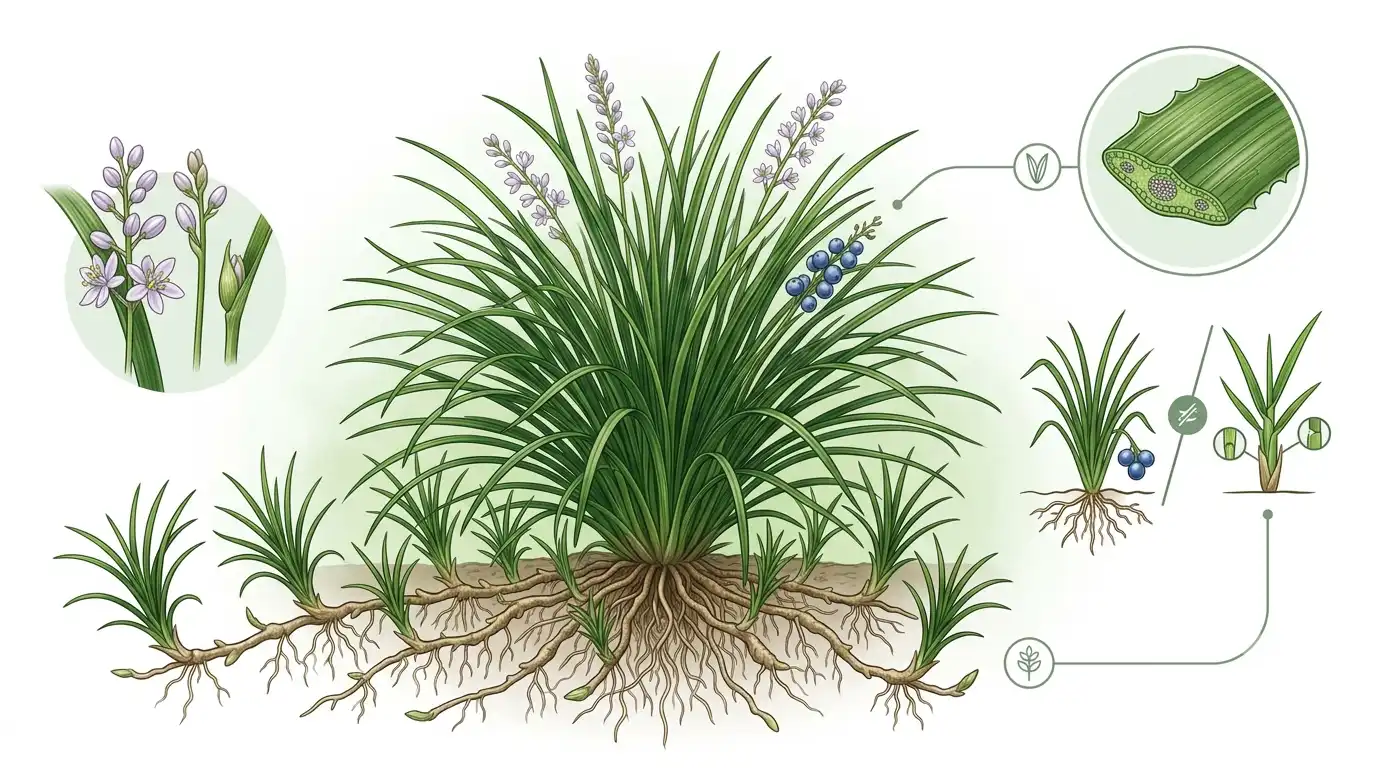
Mondo grass is an evergreen ornamental plant from Asia that is valued for its fine, arching leaves and ability to grow in shaded garden areas. Its botanical name is Ophiopogon japonicus, and it is commonly known as mondograss, mondo plant or monkey grass in some regions.
Mondo grass belongs to the genus Ophiopogon, a group of evergreen ornamental plants commonly used in landscaping. More botanical information about Ophiopogon japonicus can be found on Wikipedia.
Despite its common name, mondo grass is not a true grass. True grasses belong to the Poaceae family, while mondo grass belongs to the Asparagaceae family, which also includes plants such as asparagus and some ornamental species.
The plant naturally originates from regions of East Asia, including Japan, China and Korea. It grows as a clumping perennial with underground stems called rhizomes, which allow it to slowly spread and form dense groundcover.
Is Mondo Grass Evergreen?
Yes, mondo grass is evergreen in suitable climates. Its narrow green leaves remain throughout the year, making it useful for creating consistent garden structure even during cooler months.
In Australian gardens, mondo grass is commonly planted because it:
- Handles shaded conditions better than many lawn alternatives.
- Requires less mowing and trimming than traditional turf.
- Provides clean edging along pathways and garden beds.
- Helps cover bare soil beneath trees and shrubs.
A mondo grass garden can work in both modern and natural landscape styles because of its simple texture and reliable foliage.
Where Is the Best Place to Plant Mondo Grass?
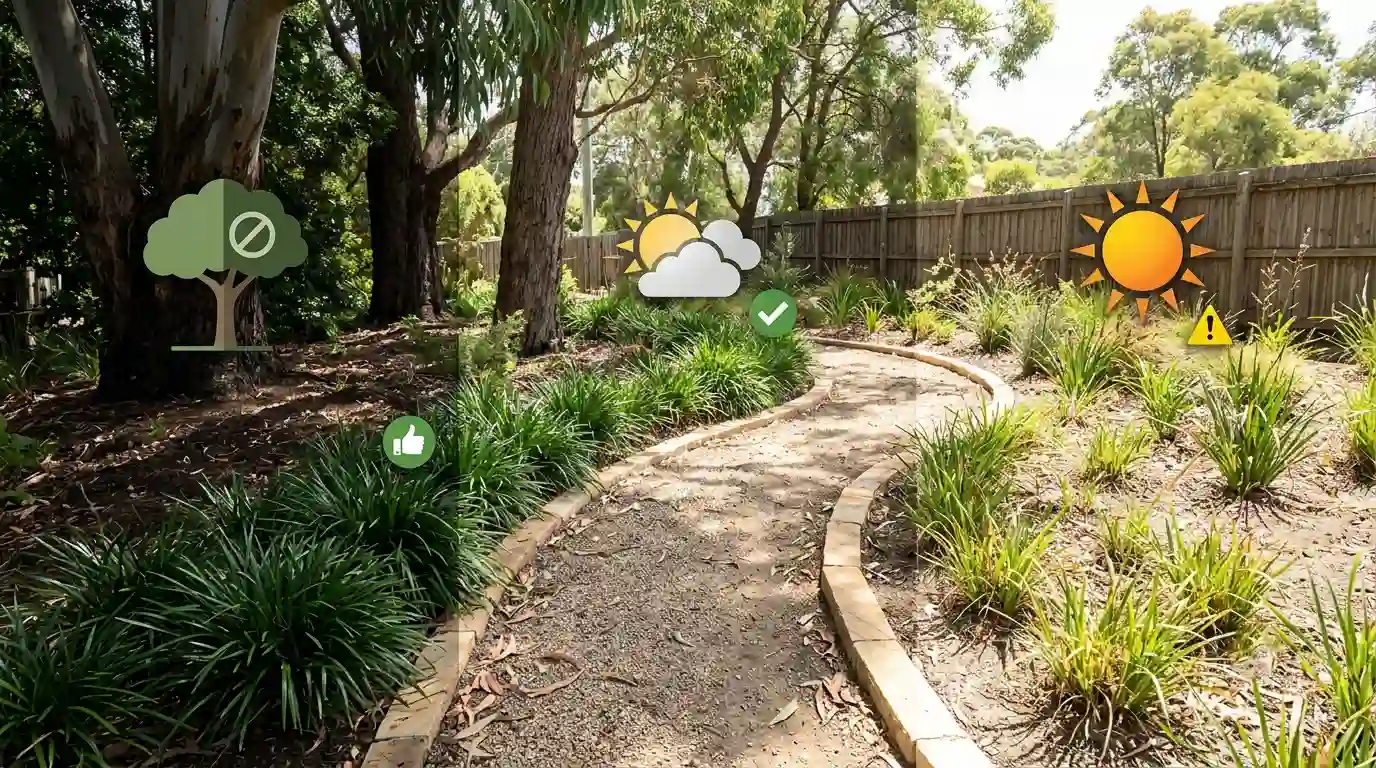
The best place to plant mondo grass is an area with part shade to full shade, moist but well-drained soil, and protection from extreme heat or frost. It is particularly effective in Australian gardens where shaded areas make growing traditional lawn difficult.
Mondo grass performs best when planted in locations such as:
- Under established trees.
- Along shaded pathways.
- Around garden borders.
- Between stepping stones.
- In protected courtyard gardens.
Although mondo grass is highly shade tolerant, it can adapt to brighter conditions when temperatures are moderate and soil moisture is maintained.
Australian climate conditions vary significantly, so placement is important. In cooler southern regions, mondo grass can often tolerate more sunlight. In hot and dry areas such as Perth, afternoon shade and consistent watering during establishment help prevent stress.
Well-draining soil is essential because constantly wet conditions can increase the risk of root problems.
Mondo Grass in Shade
Mondo grass is one of the best shade tolerant grass alternatives for Australian gardens. It grows strongly in filtered light, morning sun or areas receiving limited direct sunlight.
In shaded locations, mondo grass usually develops:
- Darker green foliage.
- Fuller clumps.
- More consistent growth.
- Less moisture stress during summer.
For deep shade, standard mondo grass and dwarf mondo grass are often preferred because they naturally tolerate reduced light levels.
Elemo Baker recommends avoiding planting mondo grass in areas with complete darkness and no indirect light, as extremely low light can result in slower growth and thinner foliage.
Is Mondo Grass OK in Full Sun?
Mondo grass can tolerate some full sun, but performance depends on climate, soil moisture and variety. In cooler Australian regions, it may grow successfully in sunny positions if the soil does not dry out completely.
In hot climates, full-day sun can cause:
- Brown leaf tips.
- Reduced growth.
- Leaf scorching.
- Increased watering requirements.
For areas with intense summer heat, such as exposed Perth gardens, mondo grass generally performs better with morning sun and afternoon shade.
When planting mondo grass in full sun:
- Improve soil with organic matter before planting.
- Apply mulch to retain moisture.
- Monitor watering during hot periods.
- Choose sun-tolerant varieties where possible.
Mondo Grass Varieties and Types
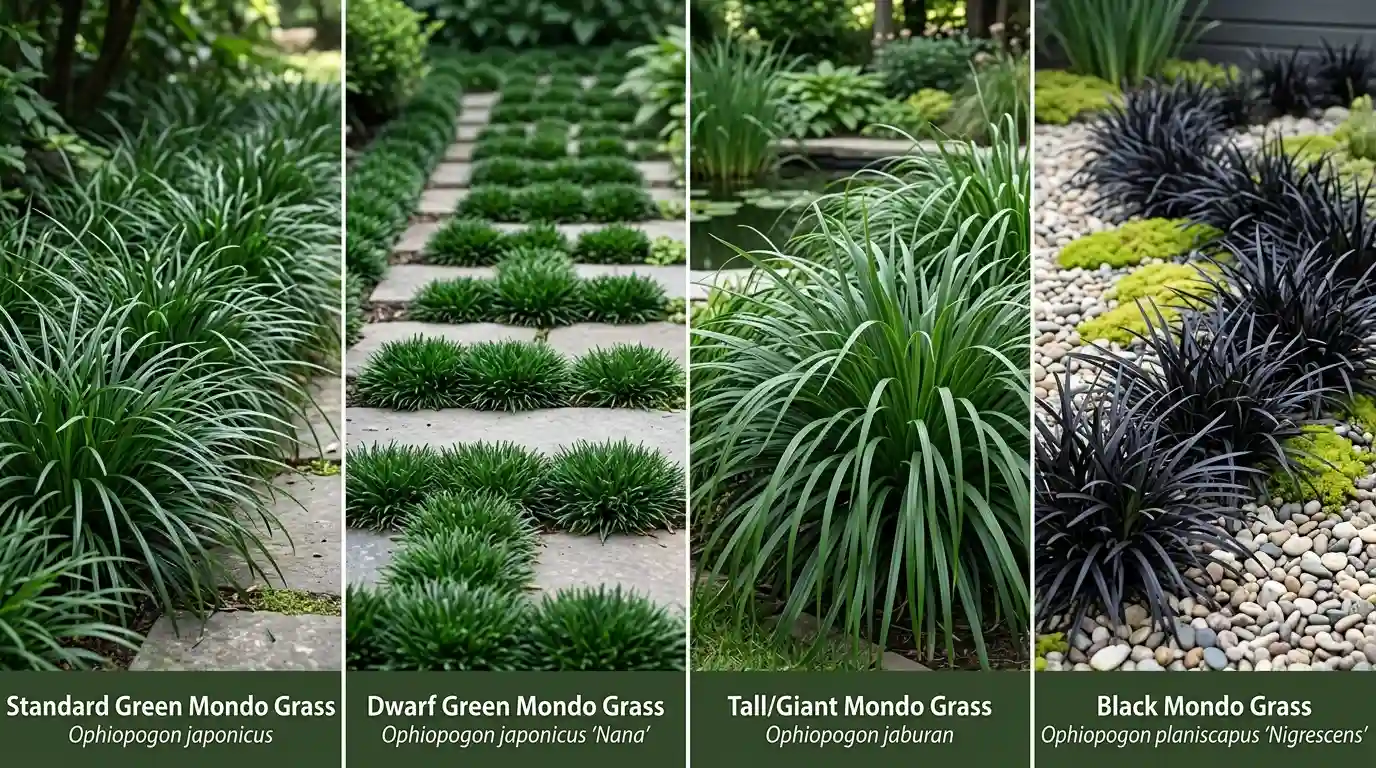
Mondo grass comes in several varieties that differ in height, leaf colour, growth habit and garden use. Choosing the right type depends on whether the goal is low edging, dense groundcover, pathway planting or a taller foliage feature.
The most common mondo grass types grown in Australian gardens include standard mondo grass (Ophiopogon japonicus), dwarf mondo grass, tall mondo grass (Ophiopogon jaburan) and coloured forms such as black mondo grass.
Standard Mondo Grass (Ophiopogon japonicus)
Standard mondo grass (Ophiopogon japonicus) is the traditional form and one of the most widely planted varieties. It produces narrow, dark green leaves that grow in compact clumps and gradually spread through underground rhizomes.
It is commonly used for:
- Garden borders.
- Shaded pathways.
- Underplanting beneath trees.
- Low-maintenance landscape areas.
- Groundcover planting.
Standard mondo grass usually reaches around 20–40 cm in height, depending on growing conditions. It prefers moist, well-drained soil and performs best in part shade.
Dwarf Mondo Grass — What’s the Difference?
Dwarf mondo grass is a smaller-growing form selected for compact planting areas. It is often used where a very low-maintenance groundcover or lawn substitute is required.
The main differences between standard and dwarf mondo grass include:
| Feature | Standard Mondo Grass | Dwarf Mondo Grass |
| Height | Around 20–40 cm | Around 5–15 cm |
| Growth habit | Larger clumps | Dense miniature clumps |
| Best use | Borders and garden beds | Pathways, pavers and lawn alternatives |
| Growth speed | Moderate | Slow |
| Maintenance | Low | Very low |
Dwarf mondo grass, sometimes sold as Ophiopogon japonicus ‘Nana’, is particularly popular for Japanese-style gardens, small courtyards and areas between stepping stones.
Because of its slower growth rate, dwarf mondo grass usually takes longer to create complete coverage compared with standard varieties.
Tall/Giant Mondo Grass (Ophiopogon jaburan)
Tall mondo grass, also known as giant mondo grass, belongs to the related species Ophiopogon jaburan. It produces longer and wider leaves than standard mondo grass, creating a stronger vertical appearance.
It can grow approximately 40–60 cm tall and is suitable for:
- Larger garden borders.
- Tropical-style gardens.
- Mass planting.
- Areas requiring taller evergreen foliage.
Giant mondo grass is useful when standard mondo grass looks too small for the planting area. Its broader leaves provide more visual impact while maintaining the low-maintenance qualities of the genus.
Black Mondo Grass and Other Colour Varieties
Black mondo grass is a popular ornamental variety grown for its unusual dark purple-black foliage. Despite its name, it is not a separate species but a cultivated form selected for leaf colour.
Black mondo grass is often used as a contrast plant alongside:
- Silver foliage plants.
- White flowering plants.
- Light green shrubs.
- Pale stone pathways.
Other recognised varieties include:
- White mondo grass — produces lighter foliage tones.
- Crystal Falls mondo grass — a variegated form with attractive leaf patterns.
- Miniature mondo grass — compact forms for detailed planting.
- Green mondo grass — traditional green foliage varieties.
| Variety | Height | Spread | Best Use | Sun Tolerance |
| Standard mondo grass (Ophiopogon japonicus) | 20–40 cm | 20–40 cm | Borders, edging, groundcover | Part shade to some sun |
| Dwarf mondo grass | 5–15 cm | 15–30 cm | Pavers, miniature gardens, lawn substitute | Shade to part shade |
| Tall mondo grass (Ophiopogon jaburan) | 40–60 cm | 40–60 cm | Larger borders and feature planting | Part shade to moderate sun |
| Black mondo grass | 15–30 cm | 20–40 cm | Contrast planting and decorative beds | Part shade preferred |
| White/variegated forms | 15–30 cm | 20–40 cm | Accent planting | Filtered light preferred |
Mondo Grass Size, Height and Growth Habit
Mondo grass is a compact perennial that grows by forming clumps rather than producing long, spreading runners like many lawn grasses. Its final size depends on the variety, climate, soil quality and available moisture.
In outdoor gardens, mature mondo grass generally forms rounded patches that slowly expand over several years.
It is commonly spaced according to the desired planting effect:
- Closer spacing creates faster ground coverage.
- Wider spacing reduces planting costs but requires more time to fill gaps.
Mondo grass does not usually require frequent cutting because it naturally maintains a tidy shape.
How Tall Does Mondo Grass Grow?
The height of mondo grass depends on the selected variety.
Typical mature heights include:
- Standard mondo grass: 20–40 cm.
- Dwarf mondo grass: 5–15 cm.
- Tall mondo grass: 40–60 cm.
Environmental conditions can influence growth. Plants grown in deep shade may become slightly taller and thinner as they reach for light, while plants grown in suitable light usually remain compact.
When asking how big does mondo grass get, gardeners should consider both height and spread because mature clump width can be equally important when planning borders or pathways.
How Far Apart to Plant Mondo Grass
The ideal spacing for mondo grass depends on the variety and the speed of coverage required.
Recommended spacing:
- Dwarf mondo grass: 10–20 cm apart for dense coverage.
- Standard mondo grass: 20–30 cm apart for borders and mass planting.
- Tall mondo grass: 30–45 cm apart for larger landscape areas.
For a mondo grass garden, closer spacing creates a finished appearance sooner, while wider spacing allows each plant more room to develop.
Growth Rate and Spread
Mondo grass is considered a slow to moderate-growing plant. Unlike aggressive lawn species, it spreads gradually through underground rhizomes, creating controlled clumps over time.
Growth speed depends on:
- Amount of sunlight received.
- Soil quality.
- Water availability.
- Climate conditions.
- Variety selected.
Dwarf mondo grass is especially slow-growing, while standard and tall varieties establish more quickly.
Does Mondo Grass Spread? How Fast?
Yes, mondo grass spreads, but it spreads slowly compared with invasive groundcovers. It expands through underground rhizomes that produce new shoots around the parent plant.
A newly planted area may take several growing seasons to become fully established.
Factors that influence how fast mondo grass spreads include:
- Warm growing temperatures.
- Regular moisture during establishment.
- Fertile, well-drained soil.
- Adequate spacing between plants.
In most gardens, mondo grass spread is manageable and easy to control. Old clumps can be divided when they become crowded, allowing gardeners to maintain healthy growth.
Mondo grass is generally not considered invasive in Australian home gardens when planted in suitable locations and maintained correctly.
How to Plant Mondo Grass
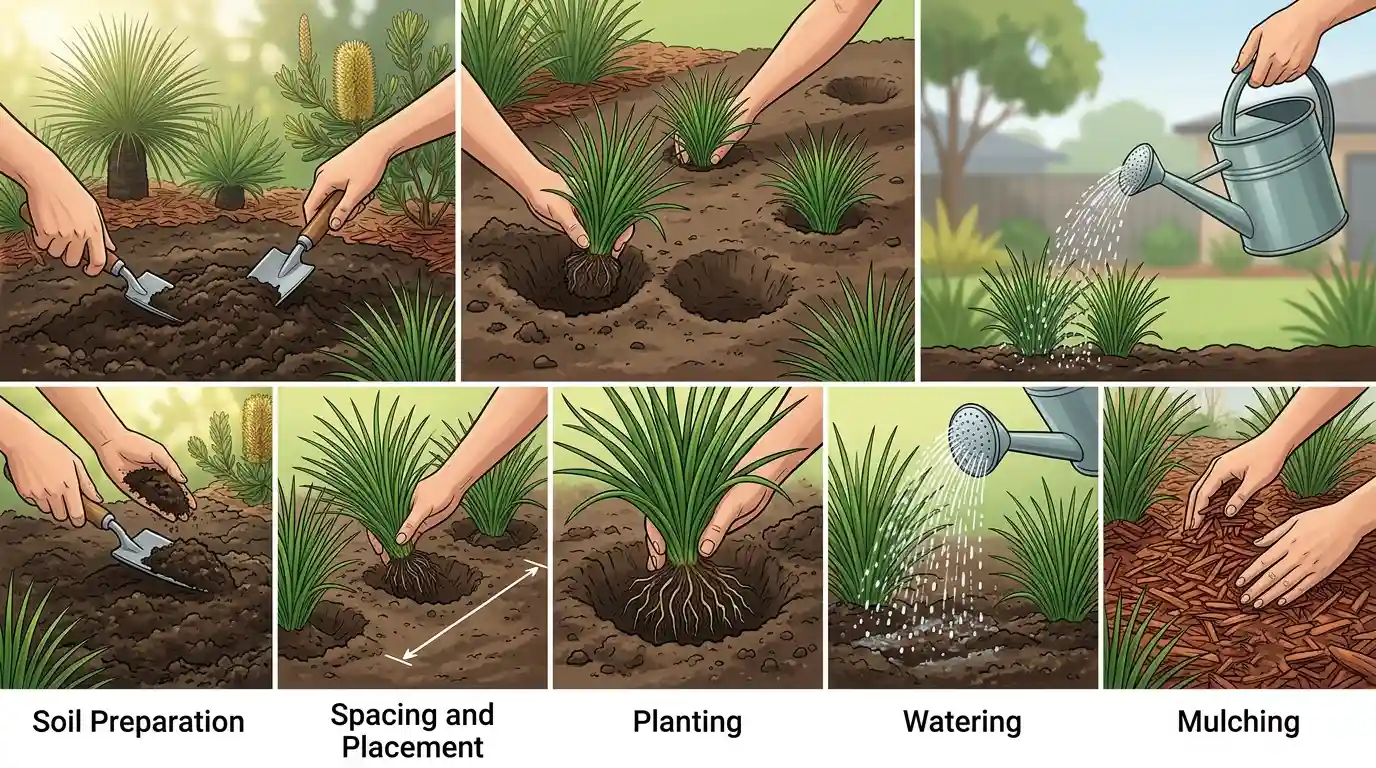
Planting mondo grass correctly helps establish a dense, healthy garden cover. The best time for planting mondo grass is during the cooler growing periods of autumn or spring when temperatures are mild and soil moisture is easier to maintain.
Before planting, prepare the area carefully because good soil conditions support stronger root development and faster establishment.
Step-by-Step Guide for Planting Mondo Grass
Follow these steps when learning how to plant mondo grass:
- Prepare the soil
- Remove weeds, old roots and debris from the planting area.
- Loosen compacted soil to improve drainage.
- Add compost or organic matter if the soil is poor.
- Choose the correct spacing
- Space plants according to the variety and desired coverage speed.
- Smaller varieties require closer spacing, while larger varieties need more room.
- Plant at the correct depth
- Place the root ball level with the surrounding soil surface.
- Avoid burying the crown of the plant, as excessive moisture around the centre can encourage rot.
- Water immediately after planting
- Give newly planted mondo grass a deep watering to settle the roots.
- Maintain regular moisture during the establishment period.
- Apply mulch
- Add a layer of organic mulch around plants.
- Keep mulch slightly away from the plant crown to improve airflow.
During the first few months, young plants need more attention than established clumps. In our experience growing ornamental groundcovers, consistent moisture during establishment is one of the biggest factors affecting long-term success.
Mondo Grass Garden Design Ideas and Uses
Mondo grass is valued in landscape design because of its fine texture, evergreen foliage and ability to grow where many plants struggle. It works well in Australian gardens as a border plant, pathway feature, groundcover and container plant.
Its arching leaves create contrast against plants with larger leaves, making it useful in both modern and traditional garden styles.
Mondo Grass Border and Edging
Mondo grass is one of the most popular choices for garden borders and edging because it creates a neat, consistent line without requiring regular trimming.
Benefits of using mondo grass edging include:
- Defines garden beds clearly.
- Softens hard landscape materials.
- Reduces the need for lawn maintenance.
- Creates year-round structure.
Dwarf mondo grass is especially suitable for narrow borders because it remains compact and does not overwhelm nearby plants.
Mondo Grass Between Pavers and Stepping Stones
Mondo grass between pavers creates a natural transition between hard surfaces and planted areas. Its low-growing foliage can soften pathways while maintaining a tidy appearance.
When laying stepping stones directly on soil, gardeners can plant dwarf mondo grass in the gaps to create a green pathway effect.
For successful planting between stones:
- Choose dwarf varieties.
- Ensure gaps contain quality soil.
- Avoid areas where water remains permanently trapped.
- Allow enough space for gradual spreading.
This design approach works particularly well in Japanese-inspired gardens, courtyard landscapes and shaded pathways.
Mondo Grass as Groundcover or Lawn Alternative
Mondo grass groundcover is a practical option for areas where traditional lawn performs poorly, especially shady spaces.
A dwarf mondo grass lawn can provide:
- A soft green appearance.
- Minimal mowing requirements.
- Improved coverage under trees.
- Reduced maintenance compared with turf.
However, mondo grass is not designed for heavy foot traffic. It works best as a decorative lawn alternative rather than a recreational lawn.
Ground cover mondo grass is commonly used beneath:
- Trees with filtered shade.
- Shrubs and larger plants.
- Garden structures.
- Rock features.
Mondo Grass in Pots and Containers
Yes, mondo grass can grow in pots. It performs well in containers because of its compact root system and slow growth habit.
When growing mondo grass in pots:
- Use a quality potting mix with good drainage.
- Choose containers with drainage holes.
- Water regularly because pots dry faster than garden soil.
- Position containers in suitable light conditions.
Mondo grass pots are useful for balconies, shaded patios, entryways and small outdoor spaces.
What Plants Go Well With Mondo Grass?
The best companion plants for mondo grass are those that complement its fine, strap-like leaves with contrasting textures, colours and growth habits. For added colour in shaded or mixed garden beds, mondo grass can be paired with flowering plants, including Australian native species with purple blooms. Our guide to Australian Native Purple Flowers: Types, Care & Guide covers suitable flowering options for Australian landscapes.
Mondo grass works especially well with shade-loving plants and Australian garden favourites that prefer similar conditions. Mondo grass works especially well beneath larger landscape plants and evergreen shrubs, making it a useful companion plant in structured garden designs. For more ideas on selecting suitable background plants, explore our guide on Best Trees and Shrubs for Australian Gardens.
Plants that pair well with mondo grass include:
- Ferns — provide broad, textured foliage contrast.
- Hostas — create a strong leaf shape contrast.
- Heuchera — adds colourful foliage beside green mondo grass.
- Japanese maples — combine well in woodland-style gardens.
- Liriope — offers a similar grass-like appearance with different growth characteristics.
- Native shrubs — provide height behind low mondo grass planting.
Black mondo grass is particularly effective when paired with lighter plants because its dark foliage creates contrast. Silver foliage plants such as dusty miller or silvery groundcovers can make black mondo grass stand out.
What Flowers Look Good With Grasses?
Flowers that look good with mondo grass are generally plants that appreciate similar light and soil conditions.
Good combinations include:
- White flowering plants for contrast.
- Purple flowers alongside green foliage.
- Soft pink blooms for cottage-style gardens.
- Native flowering plants suitable for shaded areas.
The key is balancing textures. Since mondo grass has narrow leaves, plants with broader leaves or noticeable flowers create stronger visual interest.
Mondo Grass Care Guide
Mondo grass care is relatively simple once plants are established. This low-maintenance perennial requires correct positioning, occasional watering, suitable soil and minimal pruning. Understanding plant stress symptoms such as yellowing leaves and poor growth can help gardeners improve overall plant care practices. Similar plant-care troubleshooting can be found in our guide on Orchid Stem Turning Yellow: Causes & Fix.
A healthy mondo grass garden usually needs less maintenance than many traditional lawn plants.
Watering Needs
Newly planted mondo grass requires regular watering until roots become established. During this stage, soil should remain lightly moist but not waterlogged.
Established plants are drought-tolerant but perform best with occasional deep watering during extended dry periods.
Watering guidelines:
- Water deeply rather than lightly sprinkling.
- Increase watering during hot Australian summers.
- Reduce watering during cooler wet periods.
- Avoid constantly saturated soil.
Overwatering is one of the most common causes of poor growth.
Light Requirements
Mondo grass prefers part shade to full shade, but some varieties can tolerate more sunlight in suitable climates.
Ideal conditions include:
- Filtered light beneath trees.
- Morning sun with afternoon shade.
- Bright indirect outdoor light.
In very hot climates, protection from intense afternoon sun helps prevent leaf damage.
Soil Preferences
The best soil for mondo grass is fertile, well-draining soil that holds some moisture while allowing excess water to escape.
Suitable soil characteristics:
- Rich in organic matter.
- Slightly acidic to neutral pH.
- Good drainage.
- Loose structure for root development.
Heavy clay soils may require improvement with compost or other organic materials.
Fertilising Mondo Grass
Mondo grass does not require heavy feeding, but occasional fertilising can encourage healthier foliage and stronger growth. The best approach is to apply nutrients during active growing periods, usually in spring and early summer.
A balanced slow-release fertiliser suitable for ornamental plants can support steady growth.
When fertilising mondo grass:
- Apply a controlled-release fertiliser according to label instructions.
- Avoid excessive nitrogen, which can encourage weak, overly soft growth.
- Water after applying fertiliser to help nutrients reach the root zone.
- Avoid fertilising stressed or newly transplanted plants until they are established.
For gardeners asking what is the best fertilizer for mondo grass, a general-purpose slow-release garden fertiliser with balanced nutrients is usually suitable. The plant’s main requirement is healthy soil rather than frequent feeding.
Does Mondo Grass Need Trimming?
Mondo grass does not usually need regular trimming because it naturally maintains a neat clumping shape. However, occasional pruning can improve appearance by removing damaged or old leaves.
Mondo grass maintenance may include:
- Removing brown or yellow leaves by hand.
- Cutting back tired foliage in late winter before new growth begins.
- Cleaning old leaves from dense clumps.
A light trim every few years can rejuvenate older plantings, especially when foliage becomes crowded.
Avoid cutting plants too frequently, as excessive trimming can slow recovery and reduce the plant’s natural appearance.
Climate Tolerance
Mondo grass is adaptable and grows successfully across many Australian regions when planted in the right location.
It generally tolerates:
- Mild frost.
- Coastal conditions.
- Humid climates.
- Dry periods after establishment.
However, extreme conditions can affect performance.
In hot climates:
- Provide afternoon shade where possible.
- Maintain moisture during prolonged heat.
- Use mulch to protect roots.
In colder regions:
- Protect young plants from severe frost.
- Avoid planting in exposed areas with freezing winds.
The right variety and planting position are important for long-term success.
Does Mondo Grass Bloom? Flowers and Berries
Yes, mondo grass can bloom. During warmer months, mature plants produce small flower spikes that appear among the foliage.
Mondo grass flowers are usually:
- White to pale lilac in colour.
- Small and delicate.
- Held on short stems close to the leaves.
Although the flowers are not the main reason gardeners grow mondo grass, they add seasonal interest.
After flowering, some plants produce small berries. These berries are often dark blue to black and can provide additional ornamental value.
Mondo Grass Flower
The mondo grass flower is subtle compared with many ornamental flowering plants. Its appeal comes mainly from its evergreen foliage rather than large blooms.
Dwarf mondo grass flower production may be less noticeable because of the plant’s compact size, but small flowers can still appear under suitable growing conditions.
Flowering is influenced by:
- Plant maturity.
- Light availability.
- Seasonal conditions.
- Overall plant health.
How to Propagate Mondo Grass
The easiest way to propagate mondo grass is through division. This method involves separating established clumps into smaller sections and replanting them.
The best time for when to propagate mondo grass is late winter through spring when plants are beginning active growth.
Division Method for Propagating Mondo Grass
Steps for propagation:
- Dig up a mature clump carefully without damaging the roots.
- Separate the plant into smaller sections using clean tools or by hand.
- Ensure each division has healthy roots and several leaves.
- Replant divisions at the recommended spacing.
- Water thoroughly after planting.
New divisions require consistent moisture while establishing their root systems.
Propagation through division is preferred because it produces plants identical to the parent plant and is much faster than growing from seed.
Common Mondo Grass Problems (and How to Fix Them)
Mondo grass is generally hardy, but incorrect growing conditions can lead to several issues. Most problems are linked to watering, soil drainage, light exposure or nutrient balance.
Understanding common mondo grass problems helps gardeners maintain healthier plants.
Mondo Grass Turning Brown / Brown Tips
Brown tips are one of the most common issues affecting mondo grass. The problem usually occurs because of environmental stress rather than disease.
Common causes include:
- Too much direct sunlight.
- Dry soil during hot weather.
- Frost damage.
- Poor watering habits.
- Salt build-up in soil.
If you notice mondo grass turning brown, check the growing conditions first.
Solutions:
- Move plants away from harsh afternoon sun if possible.
- Increase watering during extended dry periods.
- Remove damaged leaves.
- Improve soil quality with organic matter.
- Flush soil occasionally if salt accumulation is suspected.
Preventing stress is more effective than correcting severe damage after it occurs.
Root Rot in Mondo Grass
Mondo grass root rot is usually caused by poor drainage and consistently wet soil. Although the plant likes moisture, its roots require oxygen to remain healthy.
Signs of root rot include:
- Yellowing leaves.
- Soft or collapsing foliage.
- Poor growth despite adequate watering.
- Dark, damaged roots.
To fix root rot:
- Reduce watering frequency.
- Improve soil drainage.
- Remove severely damaged plants.
- Replant in better-draining areas.
When planting in heavy clay soils, improving drainage before planting is one of the best prevention methods.
Slow or Patchy Growth
Slow growth is normal for some mondo grass varieties, especially dwarf forms. However, patchy growth may indicate unsuitable conditions.
Possible causes include:
- Too much shade.
- Poor soil quality.
- Incorrect spacing.
- Competition from nearby plants.
- Insufficient moisture during establishment.
To improve growth:
- Check that plants receive suitable light.
- Add organic matter to poor soil.
- Maintain consistent watering for young plants.
- Remove competing weeds.
Elemo Baker recommends allowing mondo grass time to establish because many varieties naturally spread slowly and become denser over several growing seasons.
Is Mondo Grass Toxic to Pets or People?
Mondo grass is generally considered non-toxic to pets and people. It is commonly planted in home gardens where animals may have access to outdoor spaces.
However, like many ornamental plants, excessive consumption may cause mild digestive discomfort in some animals.
Pet owners should:
- Monitor animals that frequently chew garden plants.
- Prevent excessive plant consumption.
- Contact a veterinarian if unusual symptoms occur after ingestion.
Individual animals can react differently, so professional veterinary advice is recommended if there is concern.
How Long Does Mondo Grass Last?
Mondo grass is a long-lived perennial that can survive for many years when grown in suitable conditions. With proper care, established clumps can remain attractive for decades.
The lifespan of mondo grass depends on:
- Soil quality.
- Climate.
- Water management.
- Maintenance practices.
- Plant health.
Older clumps may become crowded over time. Dividing plants every several years can rejuvenate growth and provide new planting material.
For gardeners asking how long does mondo grass last, the answer is that it is a durable evergreen groundcover capable of providing long-term garden structure with minimal care.
Buying Mondo Grass in Australia (Bunnings and Nurseries)
Mondo grass is widely available across Australia through garden centres, nurseries and major gardening retailers. When selecting mondo grass, the most important factors are choosing the correct variety, checking plant health and matching the plant to the intended garden location.
Whether purchasing standard mondo grass, dwarf mondo grass or coloured varieties, look for healthy plants with strong foliage and well-developed root systems.
When selecting mondo grass, consider:
- Plant variety: Choose dwarf forms for pathways and edging, standard varieties for borders and groundcover, and tall mondo grass for larger landscape areas.
- Leaf condition: Healthy plants should have firm, green foliage without excessive yellowing or damage.
- Root health: Avoid plants that appear severely root-bound or have signs of poor drainage.
- Growing conditions: Select varieties that match your garden’s sunlight, soil and climate conditions.
Mondo grass Australia gardeners commonly use is valued for its adaptability, especially in shaded gardens where many lawn alternatives struggle.
At retailers such as garden centres and suppliers including Bunnings Warehouse, availability may vary depending on location and season. Gardeners searching for mondo grass Bunnings, mondo grass garden Bunnings or dwarf mondo grass Bunnings should focus on selecting the right plant type rather than choosing only based on availability.
For the best results, always consider where the plant will be placed before purchasing.
Conclusion
A mondo grass garden is a practical choice for Australian landscapes where low maintenance, evergreen foliage and shade tolerance are important. Mondo grass (Ophiopogon japonicus) is not a true grass but a durable ornamental perennial that provides reliable groundcover, edging and border planting options.
The plant performs best when positioned in suitable light conditions, planted in well-drained soil and given appropriate care during establishment. Different varieties offer flexibility, from dwarf mondo grass for pathways and lawn alternatives to tall mondo grass for larger garden designs.
The key takeaway is simple: choosing the right mondo grass variety and planting it in the right position creates a long-lasting, attractive garden feature with minimal maintenance.
Frequently Asked Questions
Where is the best place to plant mondo grass?
The best place to plant mondo grass is in part shade to full shade with moist, well-drained soil. It performs especially well under trees, along shaded pathways, garden borders and areas where traditional lawn struggles.
In cooler Australian climates, mondo grass can tolerate more sunlight, while hotter regions usually benefit from afternoon shade.
Is mondo grass OK in full sun?
Mondo grass can grow in full sun in some Australian climates, but it performs best with protection from intense afternoon heat. In hot and dry areas, full sun may cause brown tips, leaf stress and increased watering requirements.
Morning sun with afternoon shade is generally a safer position for consistent growth.
What’s the difference between mondo grass and dwarf mondo grass?
The main difference between mondo grass and dwarf mondo grass is size and growth habit. Standard mondo grass usually grows around 20–40 cm tall, while dwarf mondo grass remains much smaller at approximately 5–15 cm.
Dwarf mondo grass is better suited to pathways, pavers and miniature garden designs, while standard mondo grass works well for borders and larger groundcover areas.
Can mondo grass grow in pots?
Yes, mondo grass can grow in pots and containers. It adapts well because of its compact growth habit and slow spreading nature.
For successful container growth:
- Use a well-draining potting mix.
- Choose containers with drainage holes.
- Water when the soil begins to dry.
- Position the pot in suitable light conditions.
Dwarf mondo grass is often the preferred option for smaller containers.
Is mondo grass toxic?
Mondo grass is generally considered non-toxic to pets and people. However, excessive consumption may cause mild stomach upset in some animals.
Pets should be monitored to prevent repeated chewing of garden plants, and veterinary advice should be sought if concerns arise.
How long does mondo grass last?
Mondo grass can last for many years when grown in suitable conditions. As a hardy perennial, it can remain attractive for decades with proper soil preparation, watering and occasional division.
Older clumps can be divided and replanted to maintain healthy growth and rejuvenate crowded areas.
When should you propagate mondo grass?
The best time to propagate mondo grass is late winter through spring when the plant begins active growth. Division is the easiest propagation method and involves separating mature clumps into smaller sections with healthy roots.
New divisions should be watered regularly until they become established.