
Orchid Stem Turning Yellow: Causes & Fix
Introduction
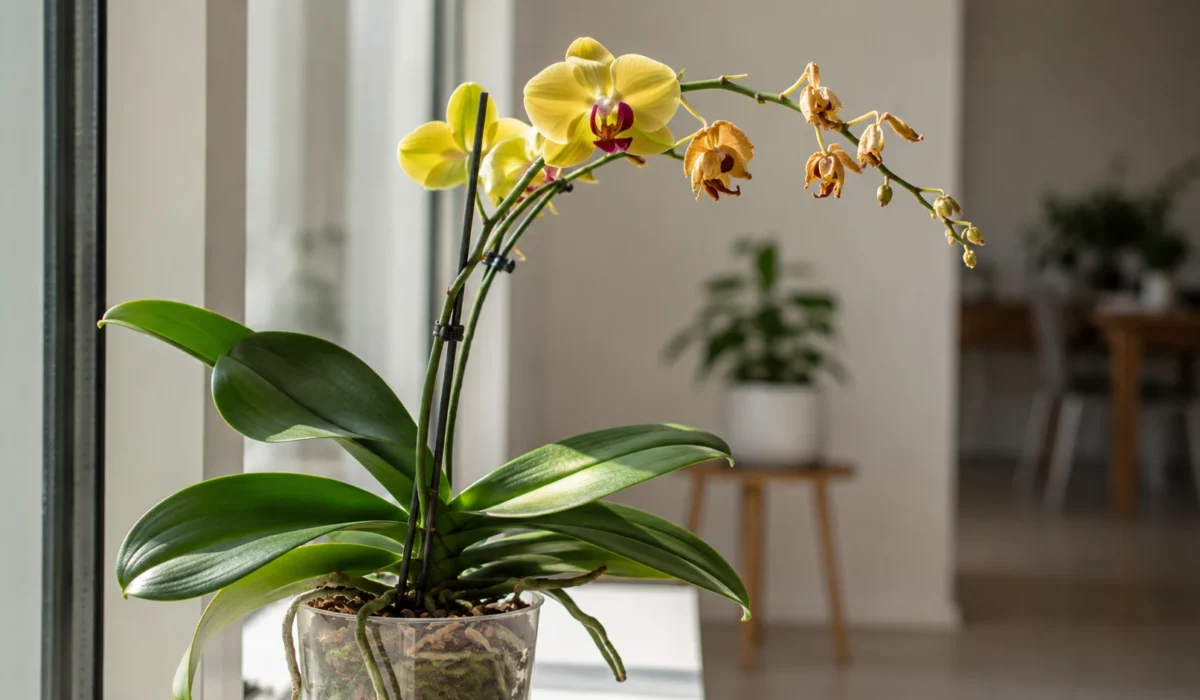
An orchid stem turning yellow is a common issue in Phalaenopsis orchids and often signals a shift in the plant’s lifecycle or health status. In many cases, yellowing is completely natural after flowering, but it can also indicate stress conditions such as overwatering, nutrient imbalance, or light damage. Understanding what causes orchid stem yellowing is essential because the correct response depends entirely on diagnosis. Acting too early or incorrectly can reduce future flowering potential and weaken overall plant health.
This guide explains the meaning behind orchid stem colour changes, how to identify the cause, and what actions to take. It focuses on clear diagnosis so growers can maintain healthy orchids and encourage reliable reblooming. The most commonly grown indoor orchids belong to the genus Phalaenopsis, which is widely cultivated for its long-lasting blooms and adaptability in home environments.
Quick Summary
- A yellow orchid stem most commonly indicates the bloom cycle has ended and the stem is dying back naturally
- Yellow stems can also be caused by overwatering, root rot, excess light, or nutrient deficiency
- Whether to cut the stem depends on its condition — a fully yellow or brown stem should be removed; a partially yellow stem may still rebloom
- Cutting an orchid stem correctly is essential to prevent infection and encourage future flowering
What Colour Should a Healthy Orchid Stem Be?
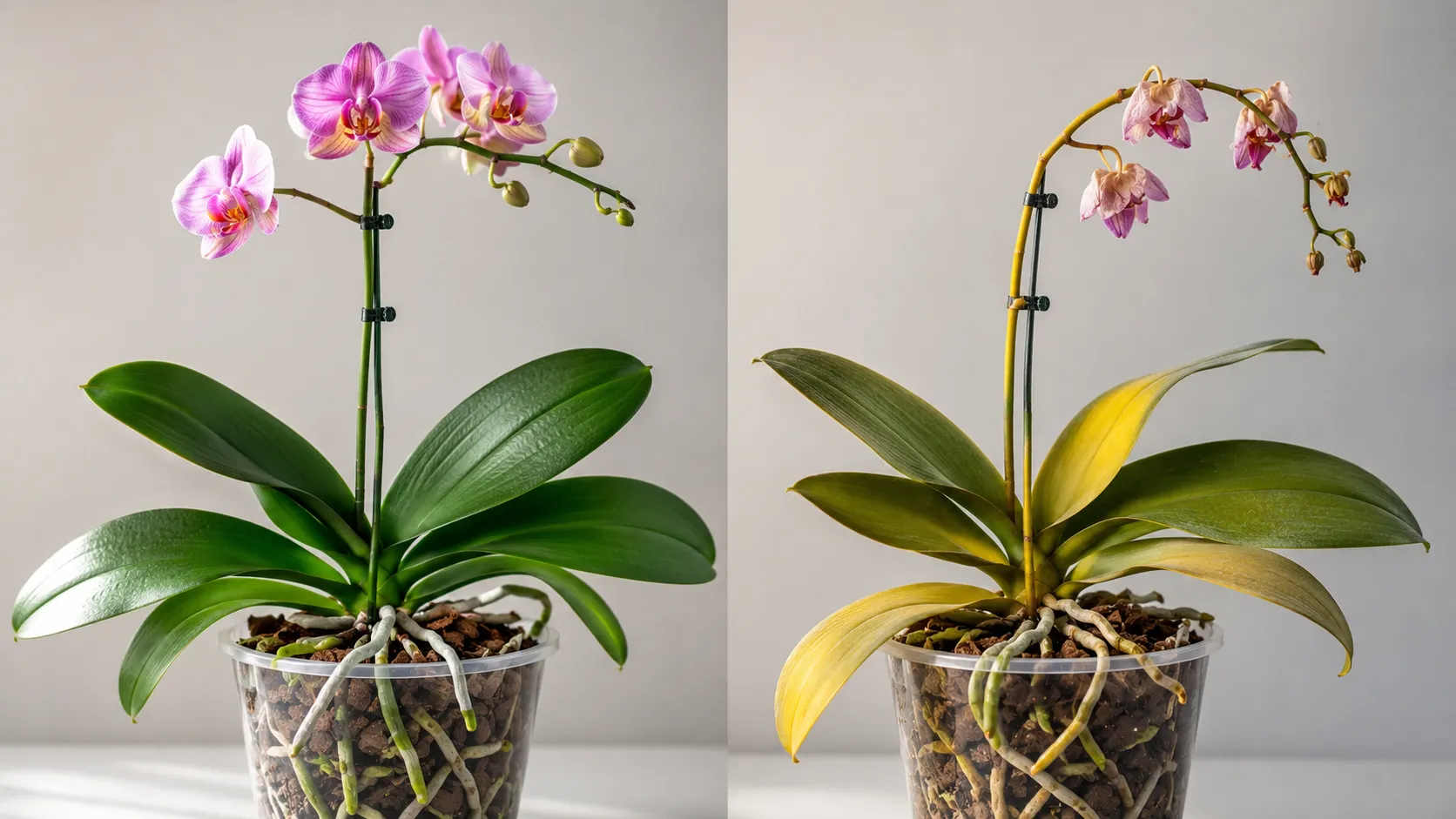
A healthy orchid stem is typically green or light green, especially in Phalaenopsis orchids, which are the most commonly grown indoor varieties. This green colour indicates active photosynthesis and efficient nutrient transport within the plant.
When an orchid stem begins turning yellow, it signals that the tissue is losing chlorophyll and the plant is either naturally completing its flowering cycle or responding to environmental stress. In healthy plants, the stem remains firm and green while supporting blooms. Once flowering ends, gradual yellowing is often part of natural senescence.
In our experience growing orchids in Australian indoor environments, stem colour is one of the most reliable early indicators of plant status. A sudden shift from green to yellow should always prompt a quick check of watering habits, root condition, and light exposure.
Why Is My Orchid Stem Turning Yellow? Common Causes Explained
The Bloom Cycle Has Ended (Natural Yellowing)
A yellow orchid stem most commonly appears after the flowering period has finished, marking the natural end of the bloom cycle. At this stage, the plant redirects energy from flower maintenance back into root and leaf development.
Yellowing usually begins at the base of the stem and moves upward gradually. This pattern strongly indicates natural dieback rather than disease. No immediate intervention is required except deciding whether to prune the stem. In most cases, this is a normal and healthy part of the orchid’s lifecycle.
Overwatering and Root Rot
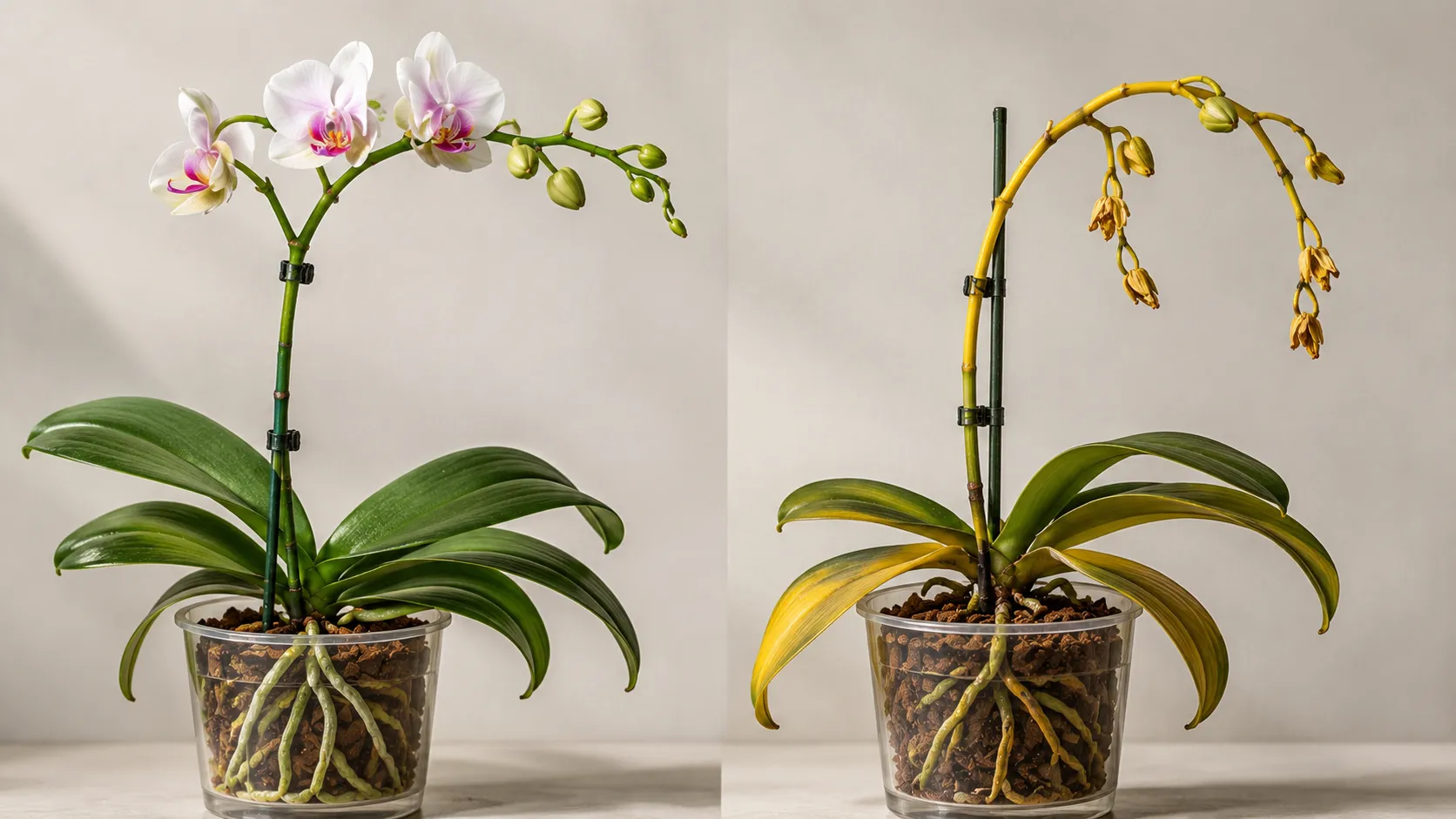
Overwatering is one of the most common causes of orchid stem yellowing, particularly in Australian homes where humidity is often misunderstood as a substitute for proper watering control.
Excess moisture suffocates orchid roots, preventing them from absorbing oxygen and nutrients. As root health declines, the stem begins to yellow due to nutrient starvation. Over time, roots become brown, mushy, and foul-smelling, indicating root rot.
Common signs include:
- Yellowing leaves and stem
- Soggy or decomposed orchid bark
- Brown or mushy roots
In practice, orchids should only be watered when the potting medium is nearly dry. Many growers mistakenly water on a fixed schedule, which accelerates decline.
Too Much Direct Sunlight
Orchids prefer bright but indirect light. Excessive direct sunlight, especially harsh afternoon sun through windows, can cause stress that leads to stem and leaf yellowing. Similar light sensitivity can also be seen in other popular indoor plants like Dracaena, which also prefer bright indirect light and can show yellowing or stress when exposed to harsh sun.
Direct light damages chlorophyll in plant tissues, resulting in bleaching or uneven discolouration. In severe cases, stems may become pale yellow and leaves may develop scorched patches. In Australian climates, east-facing windows are typically safest, while west-facing exposure often requires shading to prevent heat stress.
Nutrient Deficiency
A lack of essential nutrients, particularly nitrogen, can cause orchid stems to yellow even when the plant otherwise appears healthy.
Orchids grown in bark-based media often require supplemental feeding because bark does not retain nutrients long-term. Without regular fertilising, nutrient depletion gradually affects stem health and flowering capacity.
A balanced orchid fertiliser applied at reduced strength during the growing season is generally recommended. Over-fertilising should be avoided as it can cause salt buildup and root damage.
Temperature Stress and Environmental Shock
Sudden environmental changes can trigger orchid stem yellowing. These include cold draughts, rapid temperature drops, or placement near air conditioning vents. Many indoor foliage plants such as Monstera Albo Variegata react in a similar way, where sudden temperature changes or low humidity can cause visible stress symptoms like yellowing and slowed growth.
Temperature stress affects the plant’s metabolic stability, leading to visible symptoms such as:
- Yellowing stems and leaves
- Limp or drooping foliage
- Slowed growth
Orchids thrive in stable indoor temperatures. Frequent relocation or exposure to fluctuating conditions increases stress significantly.
Orchid Base Turning Yellow
It is important to distinguish between stem yellowing and yellowing at the base or crown of the orchid. A yellow base can indicate crown rot, which is more serious than normal stem dieback.
Crown rot often develops from water sitting in the plant’s centre or prolonged overwatering. Early intervention is critical, as damage to the crown can severely affect plant survival.
Orchid Stem Turning Yellow and Brown — What’s the Difference?
An orchid stem turning yellow and brown usually indicates progression from early stress or natural dieback into full tissue death or disease. Yellow stems are often still partially functional or in transition, while brown stems are typically dead, dehydrated, or infected.
A yellow orchid stem with flowers falling off is most commonly part of the normal post-bloom cycle. However, when yellowing progresses into brown and becomes dry or shrivelled, the tissue is no longer viable and should be removed.
Stem Condition Guide
| Stem Condition | Likely Cause | Recommended Action |
| Fully yellow, no nodes | Natural end of bloom cycle | Cut at base |
| Partially yellow, nodes present | Stress or early dieback | Monitor, cut to healthy node |
| Yellow with brown tips | Dehydration or disease | Assess roots, trim affected area |
| Brown and shrivelled | Dead stem or rot | Remove completely |
| Yellow stem, green leaves | Localised stress or natural cycle | Investigate watering and light |
In our experience growing Phalaenopsis orchids in indoor Australian conditions, stems rarely transition to brown unless watering issues or prolonged neglect are involved. Acting during the yellow stage often prevents full deterioration.
Orchid Stem Turning Yellow and Flowers Falling Off
When an orchid stem turns yellow and flowers fall off at the same time, it is usually a clear sign that the bloom cycle has ended. Phalaenopsis orchids naturally shed flowers after several weeks to months of blooming.
This is a normal part of the plant’s lifecycle and not necessarily a sign of poor health. The plant is simply redirecting energy from flower maintenance into root and leaf growth.
However, premature flower drop combined with yellowing can indicate stress. Common causes include:
- Sudden temperature changes
- Inconsistent watering
- Low humidity or dry indoor air
- Root damage or rot
Elemo Baker recommends observing whether the yellowing begins after flowering ends. If so, no corrective action is needed beyond routine pruning and care adjustments.
When and Where to Cut a Yellow Orchid Stem
Should You Cut Off a Yellow Orchid Stem?
A completely yellow or brown orchid stem should always be cut off because it will not produce new flowers and continues to drain energy from the plant. Removing it allows the orchid to redirect resources toward root and leaf development.
A partially yellow stem may still contain healthy nodes, which can sometimes produce a secondary flower spike. In this case, selective pruning is preferred over full removal.
Where to Cut an Orchid Stem — Step by Step
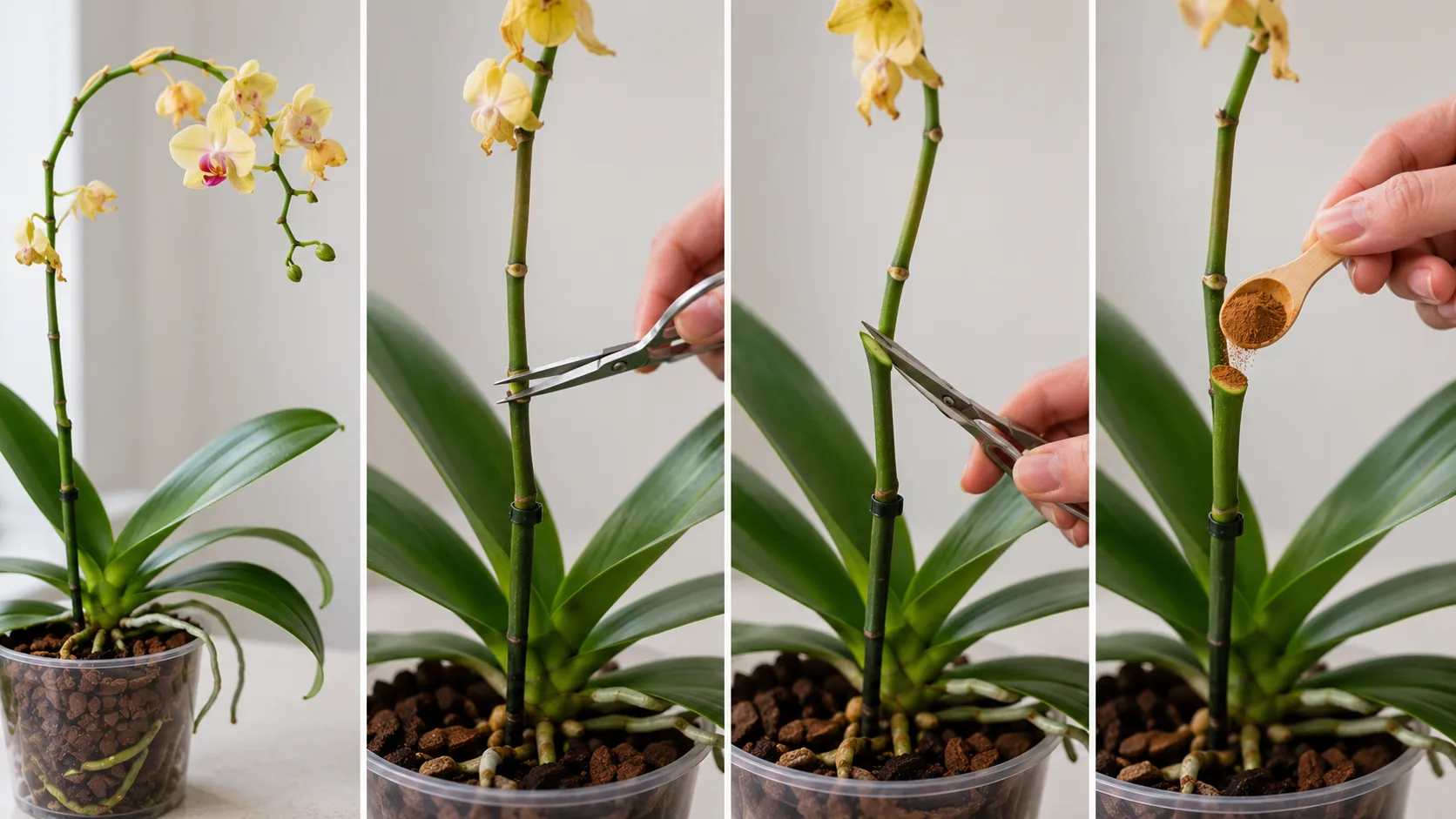
Cutting an orchid stem correctly is essential to prevent infection and encourage healthy regrowth.
- Identify whether the stem is fully yellow or partially green
- Locate the lowest healthy node on a partially yellow stem
- Use sterilised scissors or pruning snips (commonly available at Bunnings)
- Cut 1–2 cm above the node at a 45-degree angle
- Seal the cut using ground cinnamon or activated charcoal to reduce fungal risk
- If the stem is fully yellow or dead, cut as close to the base as possible without damaging the crown
Proper sterilisation of tools is critical. Unclean blades can introduce bacteria or fungal spores into fresh cuts, especially in humid indoor environments.
Should You Cut Back a Dead Orchid Stem?
Yes, a dead orchid stem should always be removed. Leaving dead tissue attached increases the risk of fungal infection and pest attraction. It also diverts energy away from root recovery and future growth.
A dead stem is typically:
- Brown throughout
- Dry and brittle
- Detached easily from the plant structure
It should not be confused with a dormant stem, which remains green and firm but temporarily inactive after flowering.
Can You Cut an Orchid Stem and Put It in Water?
Cut orchid stems from Phalaenopsis orchids cannot be propagated in water. Unlike some houseplants, orchid flower spikes do not root or produce new plants when placed in water.
However, in some cases, orchids may produce small plantlets called keikis along the stem before it fully dies. These keikis can be separated and potted once they develop sufficient roots, but the cut stem itself is not viable for propagation.
How to Revive a Dying Orchid Stem
Reviving an orchid with a declining or yellowing stem depends on identifying and correcting the underlying cause rather than treating the stem itself. Once an orchid stem turns yellow, it cannot return to green, so recovery efforts focus on the roots and overall plant health.
Start by assessing root condition, as healthy roots are essential for nutrient and water uptake. In many Australian indoor environments, orchids decline due to compacted or decomposed bark media that restricts airflow.
Key recovery steps include:
- Inspect roots and remove any brown, mushy, or hollow sections
- Repot the orchid into fresh orchid bark if the medium has broken down
- Adjust watering to once every 7–10 days, ensuring the medium dries between watering
- Place the plant in bright, indirect light, avoiding direct afternoon sun
- Hold off fertiliser until new root or leaf growth is visible
In our experience, orchids recover best when environmental stability is restored first, particularly consistent light and controlled watering rather than frequent intervention.
Orchid Leaves Turning Yellow — Is It Related?
Orchid leaves turning yellow can be directly or indirectly related to a yellowing stem, as both symptoms often share underlying causes such as overwatering, root rot, or light stress. However, leaf and stem yellowing do not always occur together.
Lower leaf yellowing is often a natural part of aging, where older leaves are gradually shed as the plant produces new growth. This is not usually a concern. In contrast, upper leaf yellowing is more serious and often indicates stress or nutrient imbalance.
Common shared causes include:
- Overwatering leading to root damage
- Inadequate light exposure or excessive direct sun
- Nutrient deficiency in depleted potting media
A yellow orchid stem with green leaves typically suggests a normal bloom cycle rather than systemic decline, whereas simultaneous yellowing of both structures indicates a deeper health issue.
Common Orchid Care Mistakes That Cause Yellowing
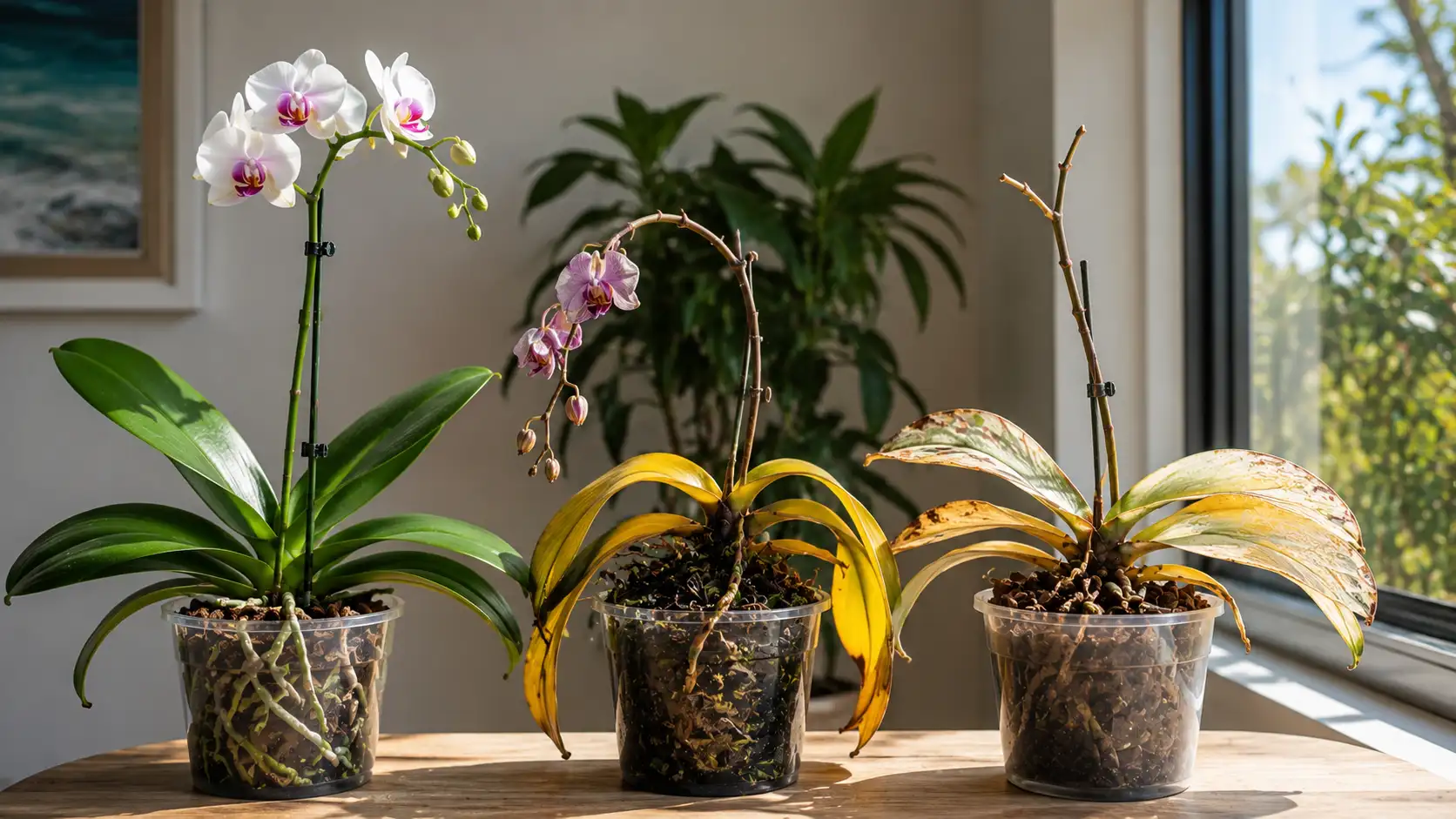
Many cases of orchid stem yellowing are linked to routine care mistakes rather than disease. These errors are especially common among beginner growers. In some cases, pest activity may also contribute to plant stress, and identifying early signs can be easier using a general reference like a garden pest identification guide for Australian gardens.
Key mistakes include:
- Watering on a fixed daily schedule instead of checking moisture levels
- Using tap water high in fluoride or chlorine, which can stress sensitive roots
- Planting orchids in standard potting mix instead of breathable orchid bark
- Exposing plants to direct afternoon sunlight through windows
- Handling flowers frequently, which can accelerate natural bloom drop
- Overfertilising, leading to salt buildup and root burn
In Australian homes, overwatering combined with low airflow indoors is one of the most frequent causes of long-term orchid decline. Overwatering issues are also common in other indoor plants such as the Money Tree, where excessive moisture can quickly lead to root decline and yellowing leaves.
Natural Orchid Care Additives — What Actually Works?
What Does Cinnamon Do for Orchids?
Ground cinnamon acts as a natural antifungal agent when applied to cut orchid stems or exposed roots. It helps reduce the risk of infection after pruning by creating a dry, antimicrobial barrier.
It is widely available in Australian supermarkets such as Coles and Woolworths and is commonly used by growers after trimming yellow or damaged stems.
What Do Coffee Grounds Do for Orchids?
Coffee grounds are sometimes used in gardening to improve soil structure and slightly acidify growing media. However, for orchids, their use is limited and must be extremely cautious.
While small amounts may add organic matter, excess coffee grounds can:
- Retain too much moisture
- Encourage mould growth
- Disrupt airflow in orchid bark
They are not a substitute for balanced orchid fertiliser and should not be relied upon for nutrient supply.
What Does Baking Soda Do for Orchids?
A diluted baking soda solution is occasionally used as a mild fungicidal spray for orchid leaves. It can help control surface-level fungal issues when used sparingly.
However, baking soda increases alkalinity, and overuse can damage roots or disrupt nutrient absorption. It should only be used as a short-term, low-frequency treatment rather than a regular care practice.
Conclusion
An orchid stem turning yellow is most often a natural part of the plant’s post-bloom cycle, but it can also signal stress caused by watering issues, light imbalance, or environmental changes. Correct diagnosis is essential because treatment depends entirely on the underlying cause.
Whether the stem should be cut depends on its condition — fully yellow or brown stems should be removed cleanly, while partially yellow stems may still support future growth if pruned correctly. By focusing on root health, stable conditions, and proper pruning techniques, orchid growers can maintain strong plants capable of regular reblooming.
Understanding what your orchid stem is telling you allows for better long-term care and healthier flowering cycles.
Frequently Asked Questions
1. What should I do when my orchid stem turns yellow?
Check whether the orchid has recently finished flowering. If yes, the yellowing is natural and the stem should be cut at the base. If not, inspect watering, roots, and light conditions for stress signs.
2. Where exactly should I cut a yellow orchid stem?
Cut fully yellow stems at the base. For partially yellow stems, cut 1–2 cm above the lowest healthy node using sterilised tools.
3. Why is my orchid stem turning yellow but the leaves are still green?
This usually indicates a natural end-of-bloom cycle where only the flower spike dies back while the plant remains healthy overall.
4. What does an overwatered orchid look like?
Signs include yellowing stems and leaves, mushy roots, soggy bark media, and a general decline in plant firmness.
5. Can I put a cut orchid stem in water to propagate it?
No. Phalaenopsis orchid stems do not root in water. Only keikis (baby plantlets) that form on the stem can be propagated separately.
6. Should I water my orchid every day?
No. Most orchids should be watered every 7–10 days depending on indoor conditions. Overwatering is a major cause of decline in Australian homes.
7. Why is my orchid stem turning brown?
A brown stem usually indicates a dead or severely damaged flower spike, often following prolonged yellowing, dehydration, or disease, and should be removed.
2 Comments