

Acmena Smithii Minor Allyn Magic: Care & Growth Guide
Introduction
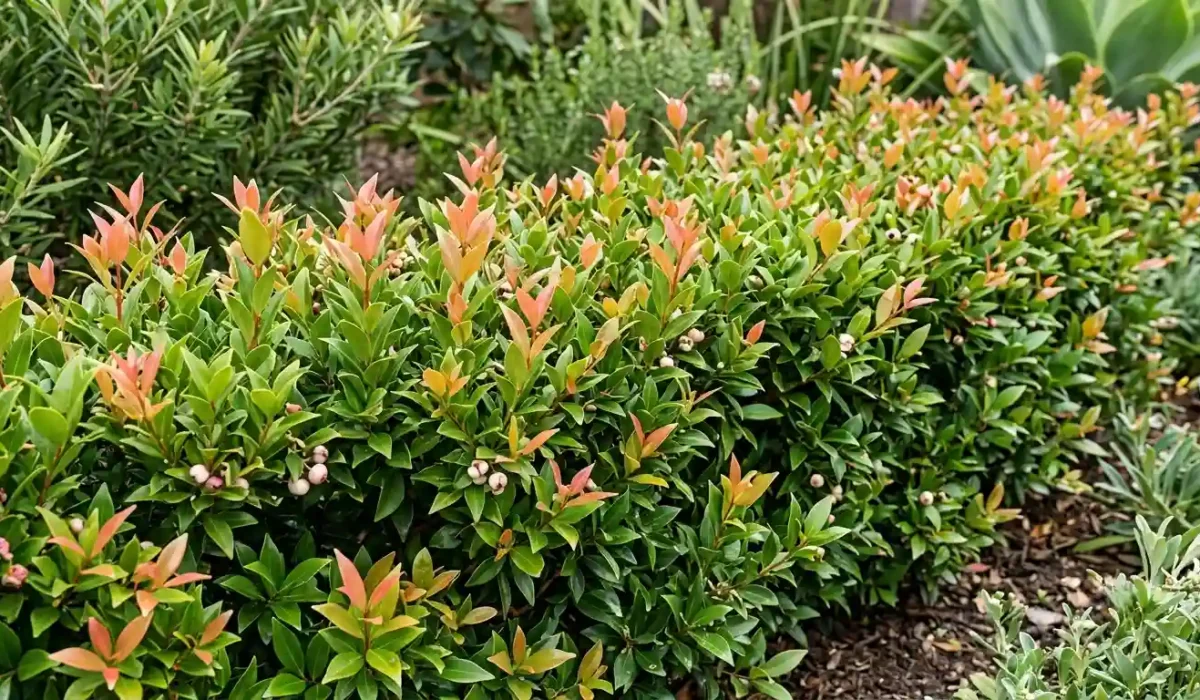
Acmena smithii minor ‘Allyn Magic’ is a naturally dwarf lilly pilly cultivar that grows as a compact native shrub, usually reaching around 0.5–1m tall and wide. It is recognised for its attractive bronze-pink new growth, dense foliage, and suitability for low hedges, borders, containers, and small gardens. Unlike the larger standard Acmena smithii species, this PBR-protected cultivar was selected for its naturally smaller growth habit and tidy form. The acmena allyn magic plant is popular among Australian gardeners who want the appearance and resilience of a lilly pilly without the maintenance demands of a large hedge. This guide explains lilly pilly allyn magic size, care requirements, growth habits, and common growing considerations. Choosing the right native shrub is an important part of creating a balanced landscape, and our guide to Best Trees and Shrubs for Australian Gardens covers more suitable options for different garden styles and conditions.
Quick Summary
- Acmena smithii minor ‘Allyn Magic’ is a naturally dwarf lilly pilly reaching approximately 0.5–1m tall and wide.
- It is ideal for low hedging, garden borders, pots, and compact landscape designs.
- Bronze-pink new foliage appears after pruning, creating strong ornamental appeal.
- It grows moderately in full sun to part shade with well-drained soil.
- Plant approximately 30–50cm apart for a dense low hedge.
What Is Acmena Smithii Minor ‘Allyn Magic’?
Acmena smithii minor ‘Allyn Magic’ is a dwarf cultivar of Acmena smithii, a native Australian lilly pilly species in the Myrtaceae family. It is commonly sold as Dwarf Lilly Pilly and is valued for its compact growth, dense leaves, and colourful new shoots. Acmena smithii belongs to the Myrtaceae family and is part of the wider group of Australian native plants commonly known as lilly pillies, a group with a long history of horticultural use.
The cultivar was selected as a naturally smaller form of Acmena smithii and is protected under Plant Breeder’s Rights (PBR), meaning it is a recognised cultivated variety rather than simply a smaller plant grown from seed.
The name acmena smithii minor allyn magic is commonly used by nurseries and gardeners searching for this specific compact lilly pilly. In botanical literature, many plants previously classified under the genus Acmena have increasingly been reclassified into the genus Syzygium, so this plant may also appear under updated taxonomic references. However, Australian horticultural suppliers commonly continue using the Acmena name when describing this cultivar.
The Allyn Magic plant is different from the standard Acmena smithii species because it maintains a much smaller mature size, making it more suitable for modern gardens where space is limited.
Acmena Smithii vs Minor vs ‘Allyn Magic’ — What’s the Difference?
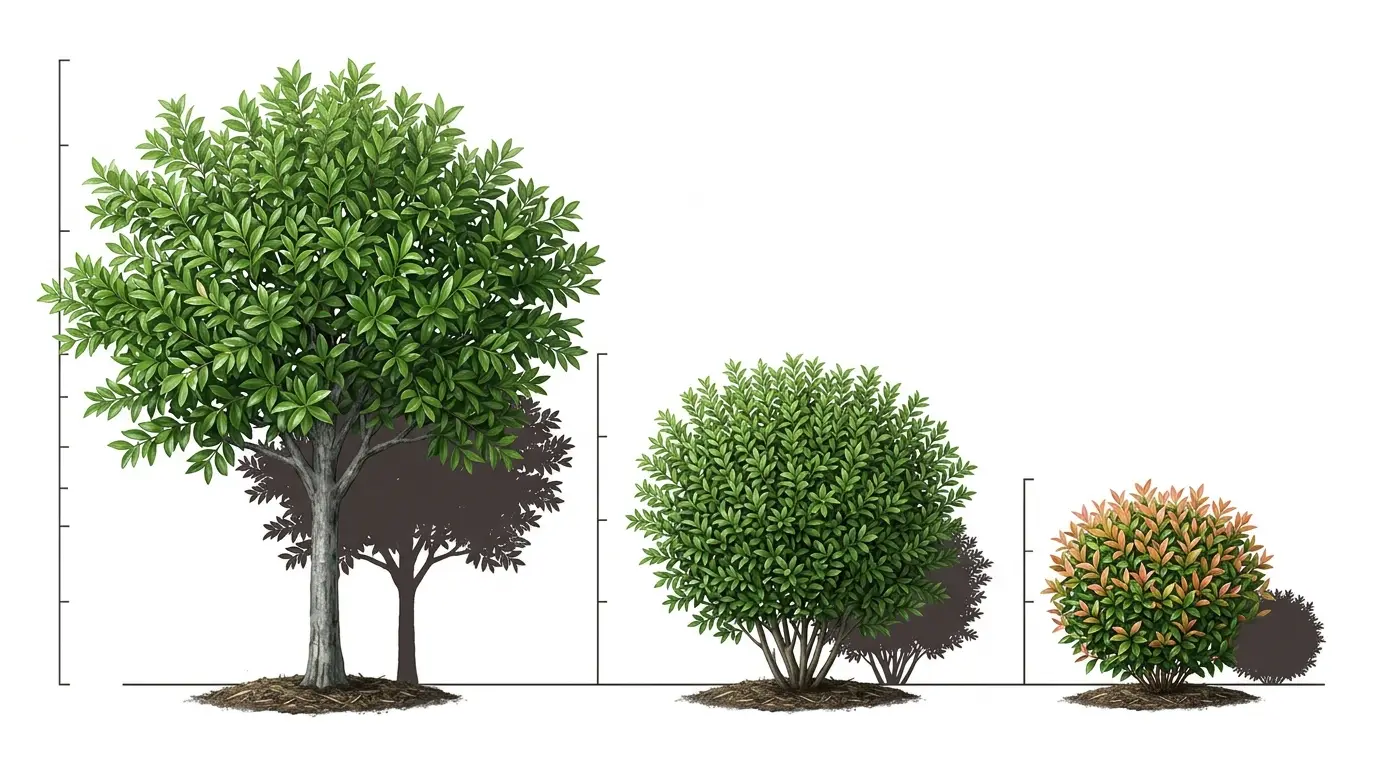
The main difference between Acmena smithii, Acmena smithii ‘Minor’, and Acmena smithii minor ‘Allyn Magic’ is their mature size and growth habit. The straight species develops into a much larger shrub or small tree, while ‘Allyn Magic’ remains naturally compact.
| Variety | Mature Height | Growth Habit |
| Acmena smithii (species) | 3–5m+ | Tree or large shrub |
| Acmena smithii ‘Minor’ | 2–3m | Compact shrub-tree |
| Acmena smithii minor ‘Allyn Magic’ | 0.5–1m | Dwarf, dense shrub |
The question “What is the difference between Acmena smithii and minor?” is mainly answered by size. The term “Minor” refers to a smaller-growing form, while ‘Allyn Magic’ is an even more compact selected cultivar designed specifically for small spaces and low-maintenance planting.
Compared with the larger species, Allyn Magic requires less pruning to maintain a neat shape and is better suited to areas where a tall hedge would become impractical.
How Big Does Allyn Magic Lilly Pilly Get?
Allyn Magic lilly pilly typically grows to around 0.5–1m high and 0.5–1m wide at maturity when grown under suitable conditions. Some plants may develop slightly wider growth depending on soil quality, sunlight, rainfall, and pruning practices.
The compact size makes Acmena smithii minor Allyn Magic suitable for:
- Low garden edging
- Small privacy borders
- Decorative pots
- Courtyard gardens
- Front garden planting
- Formal low hedges
Unlike standard Acmena smithii trees, which can exceed several metres in height, the Allyn Magic cultivar remains naturally dwarf.
For container growing, the plant usually stays smaller because root space limits overall growth. A well-sized pot on a patio or balcony can help maintain its compact appearance, although container plants require more consistent watering than plants growing in garden soil.
Several environmental factors influence final size:
- Sun exposure: More sunlight generally encourages denser, more compact growth.
- Pruning frequency: Regular trimming maintains shape and encourages branching.
- Soil quality: Nutrient-rich, well-drained soil supports healthier growth.
- Water availability: Consistent moisture during establishment improves development.
In our experience growing compact lilly pillies, plants maintained with light pruning from an early stage usually develop a much denser structure than those left untouched for long periods.
Growth Rate of Acmena Allyn Magic
Acmena Allyn Magic has a moderate growth rate, although some growers describe it as moderate-to-fast when planted in favourable conditions. It grows slower than larger lilly pilly varieties commonly used for tall screening hedges because its natural growth habit focuses on compact density rather than rapid height increase.
New growth is one of its main ornamental features. After pruning, the plant produces fresh bronze-pink foliage that gradually matures into deeper green leaves.
Growth speed is influenced by:
- Amount of sunlight received
- Soil fertility
- Water availability
- Climate conditions
- Pruning practices
The plant generally produces stronger growth during warmer months, especially in spring and summer when temperatures and sunlight support active growth.
The question “Is Acmena smithii fast growing?” depends on the variety. Standard Acmena smithii can grow quickly into a larger shrub or tree, but Acmena smithii minor Allyn Magic is better described as a moderate grower due to its dwarf habit.
Elemo Baker recommends focusing on consistent care rather than encouraging excessive speed, as compact growth and strong branching create the best appearance for low hedges and ornamental planting.
Care Guide for Acmena Smithii Minor Allyn Magic
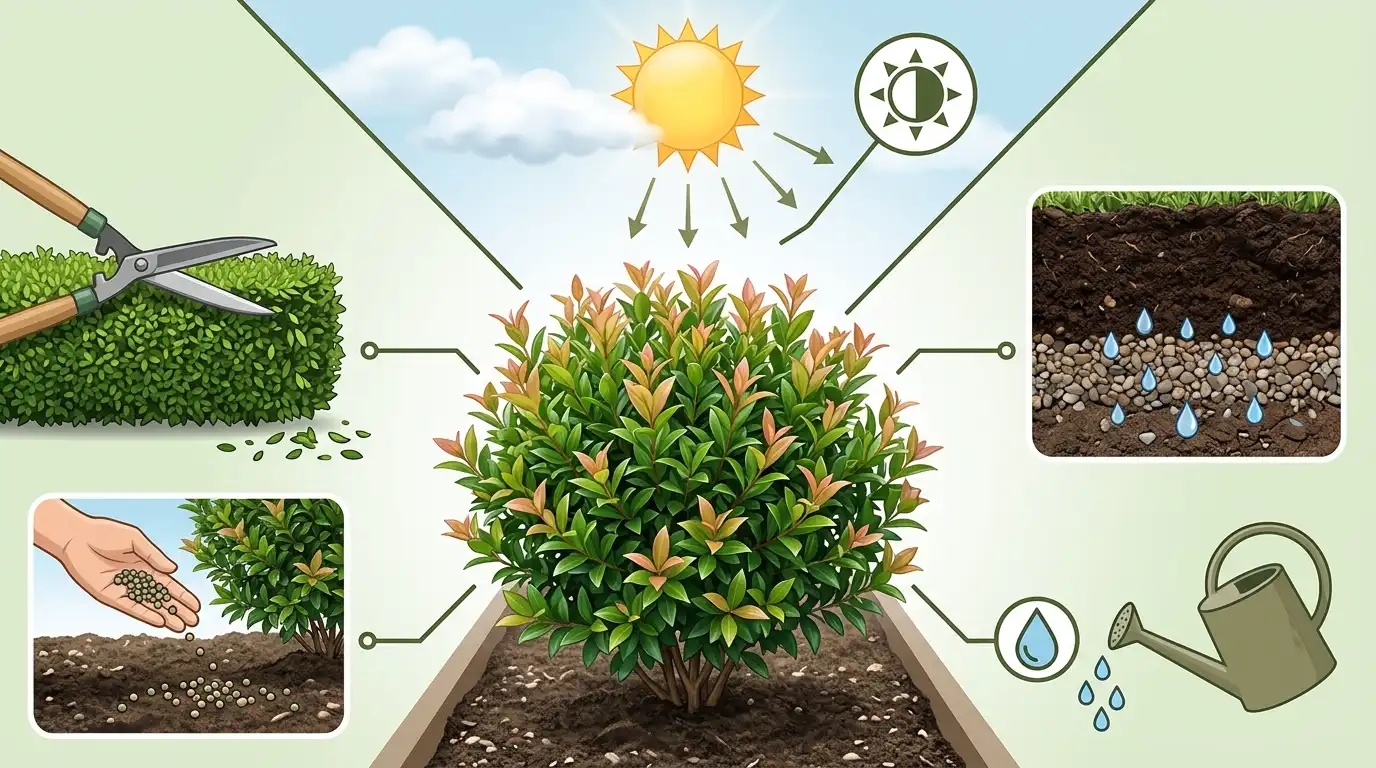
Acmena smithii minor Allyn Magic is considered a low-maintenance native shrub when planted in suitable conditions. It adapts well to many Australian gardens and responds positively to regular watering, pruning, and balanced nutrition.
Light and Position
Acmena smithii minor Allyn Magic grows best in full sun to part shade. Full sun usually produces the strongest foliage colour, better density, and more vibrant bronze-pink new growth.
A position receiving several hours of direct sunlight each day is ideal, particularly when the plant is being grown as a hedge.
It can tolerate partial shade, but deeper shade may result in:
- Less colourful new growth
- Reduced density
- Slower growth
- Fewer flowers and berries
For the most compact form, choose a bright position with good airflow.
Soil Requirements
Acmena smithii prefers well-drained soil but is adaptable to different soil types, including sandy, loamy, and clay soils.
The ideal soil conditions include:
- Good drainage
- Organic matter or compost enrichment
- Moderate moisture retention
- Slightly acidic to neutral soil conditions
A humus-rich soil helps support healthy foliage production and reduces stress during dry periods.
When planting in heavier clay soils, improving drainage with organic matter or planting on a slight mound can help prevent waterlogging.
Watering
Newly planted Allyn Magic lilly pillies require regular watering while their root system establishes. Once established, they are moderately drought tolerant but perform best with consistent moisture.
General watering guidance:
- Water deeply and regularly during the first growing season.
- Reduce frequency once roots become established.
- Apply mulch around the base to conserve moisture.
Avoid keeping the soil constantly saturated, as poor drainage can contribute to yellow leaves and root stress.
Fertilising
Acmena smithii minor Allyn Magic benefits from regular feeding during active growth periods. A slow-release native fertiliser is generally recommended because it provides steady nutrients without encouraging excessive soft growth.
The best feeding periods are:
- Spring: Supports new foliage growth and seasonal colour development.
- Autumn: Helps maintain plant health before cooler weather.
Avoid using excessive amounts of high-phosphorus fertilisers, as Australian native plants generally perform better with fertilisers formulated specifically for native species.
Signs that the plant may need improved nutrition include:
- Pale or yellowing foliage
- Reduced new growth
- Weak branching
- Poor foliage colour
A balanced approach is important because over-fertilising can cause stress and may encourage soft growth that is more vulnerable to environmental problems.
Pruning
Pruning is one of the best ways to maintain the dense appearance of Allyn Magic lilly pilly. The plant responds well to light, regular trimming, especially when used as a low hedge or formal border plant.
Regular pruning encourages:
- Bushier branching
- More compact growth
- Fresh bronze-pink foliage flushes
- A cleaner hedge shape
For the strongest colour display, prune lightly during active growing periods when new shoots can develop quickly.
Common pruning practices include:
- Remove damaged or dead branches when needed.
- Trim hedge plants lightly several times during the growing season.
- Avoid removing large amounts of foliage at once unless renovation pruning is required.
In our experience with dwarf lilly pillies, frequent light pruning usually creates a thicker, healthier hedge compared with occasional heavy cutting.
Climate and Frost Tolerance
Acmena smithii minor Allyn Magic is well suited to many Australian climates. It tolerates a range of conditions, including coastal environments and urban gardens.
The plant can handle:
- Mild coastal exposure
- Warm temperate climates
- Urban pollution
- Light frost once established
Young plants may need extra protection during severe frost events until their root systems become established.
Good placement improves climate tolerance. Avoid exposed positions with extreme drying winds, and maintain adequate moisture during hot periods.
As of winter 2026, Australian gardeners continue to favour compact native hedging plants like Allyn Magic because smaller gardens and water-conscious landscaping designs increasingly require plants that remain manageable without intensive maintenance.
Planting and Spacing Guide
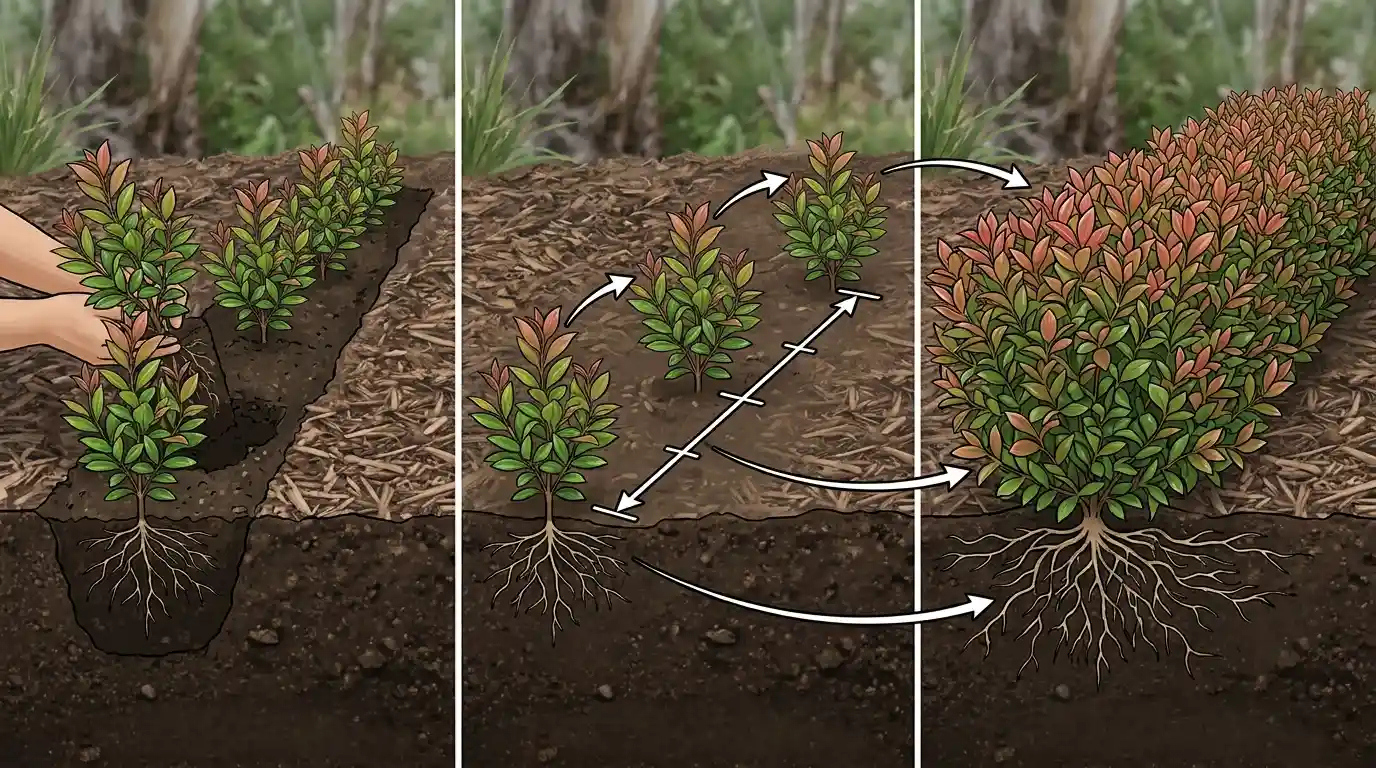
The recommended spacing for Acmena smithii minor Allyn Magic depends on the purpose of planting. For a dense low hedge, plants are usually positioned 30–50cm apart.
This spacing allows plants to grow together while maintaining healthy airflow.
| Planting Purpose | Recommended Spacing |
| Dense formal low hedge | 30–50cm apart |
| Informal hedge or border | 50–80cm apart |
| Individual feature plants | Allow enough space for mature width |
The question “How far apart should I plant Acmena?” depends on how quickly you want the hedge to become dense. Closer spacing creates faster coverage but requires more plants, while wider spacing reduces initial cost but takes longer to form a solid screen.
When planting:
- Prepare soil with organic matter if needed.
- Dig a hole slightly wider than the root ball.
- Position the plant at the same depth as it was growing in its container.
- Water deeply after planting.
- Apply mulch while keeping it away from the main stem.
Does Allyn Magic Have Invasive Roots?
Acmena smithii minor Allyn Magic does not generally have invasive roots. Lilly pillies are commonly considered suitable for planting near paths, garden structures, and other landscaped areas when planted with appropriate spacing.
However, like all plants, roots will grow according to available moisture, soil conditions, and surrounding structures.
Good planting practices include:
- Avoid planting directly against foundations.
- Allow enough space for mature growth.
- Maintain healthy soil conditions.
- Consider underground pipes and drainage when planning large-scale planting.
The compact size of Allyn Magic makes it less likely to create problems compared with larger tree-form species.
Is Acmena Smithii Minor Allyn Magic Suitable for Hedging?
Yes, Acmena smithii minor Allyn Magic is highly suitable for hedging, particularly for low formal hedges, borders, and compact garden designs. For larger screening projects, gardeners can also consider training techniques used with Pleached Lilly Pilly: Training & Screening Guide, especially when creating structured privacy screens.
Its main hedge advantages include:
- Naturally dense growth habit
- Small mature size
- Attractive bronze-pink new foliage
- Good response to pruning
- Evergreen appearance
It works well for:
- Front garden borders
- Pathway edging
- Courtyard screening
- Mass planting
- Decorative topiary forms
- Container hedging
Unlike larger lilly pilly varieties that may require frequent height control, Allyn Magic naturally stays within a manageable range.
For gardeners wanting the traditional lilly pilly appearance without a large hedge dominating the garden, this dwarf cultivar provides a practical solution.
Will Acmena Smithii Grow in Shade?
Acmena smithii minor Allyn Magic can tolerate part shade, but it performs best in full sun where it receives stronger light levels.
In bright conditions, the plant usually develops:
- Better bronze-pink new growth
- Denser branching
- Stronger foliage colour
- More compact growth
In deeper shade, it may still survive but commonly shows:
- Reduced growth rate
- Less vibrant foliage
- A more open or sparse structure
- Reduced flowering and berry production
For the healthiest appearance, choose a location with morning sun or several hours of direct sunlight.
Are Acmena Smithii Berries Edible? What Do They Taste Like?
Acmena smithii berries are generally regarded as edible and non-toxic, and they are also valued as a food source for birds. The berries produced by lilly pillies are traditionally used in some Australian native food applications.
The flavour of lilly pilly fruit is commonly described as:
- Mildly tart
- Slightly acidic
- Similar to apple or spice-like fruit flavours
Taste can vary between different lilly pilly species, cultivars, and growing conditions.
Before consuming any plant fruit, correct identification is important. This information is general guidance only and should not replace professional advice regarding plant identification, allergies, or food safety.
The question “Can you eat lilly pilly berries?” is generally answered as yes for correctly identified edible lilly pilly species, but gardeners should always confirm the exact plant variety before eating fruit.
What Is the Common Name for Acmena Smithii?
The common name for Acmena smithii minor Allyn Magic is Dwarf Lilly Pilly.
The wider Acmena smithii group is commonly known as:
- Lilly pilly
- Creek lilly pilly
- Monkey apple (in some regions)
The term “lilly pilly” is shared by many Australian native plants from the Myrtaceae family, including species now classified under both Acmena and Syzygium.
For this particular cultivar, “Dwarf Lilly Pilly” describes its compact growth habit and helps distinguish it from taller lilly pilly varieties used for screening.
Acmena vs Syzygium — What’s the Difference?
Acmena and Syzygium are closely related plant groups within the Myrtaceae family. The main difference historically relates to botanical classification, leaf characteristics, and horticultural traits.
Traditionally:
| Feature | Acmena Types | Syzygium Types |
| Growth habit | Often dense and upright | Wide range from shrubs to trees |
| Leaves | Generally smaller and compact | Often larger and more varied |
| Flowers | Usually less showy | Often larger and more noticeable |
| Psyllid resistance | Often considered more resistant | Some varieties more affected |
Many plants previously placed in Acmena have been reclassified into Syzygium smithii in modern botanical treatments. However, Australian nurseries still commonly use the Acmena name because it remains familiar to gardeners.
The question “What is the difference between Acmena and Syzygium?” is therefore partly botanical and partly horticultural. They are closely related, but nursery terminology often continues to separate them based on traditional naming and gardening characteristics.
Common Acmena Allyn Magic Problems (Troubleshooting)
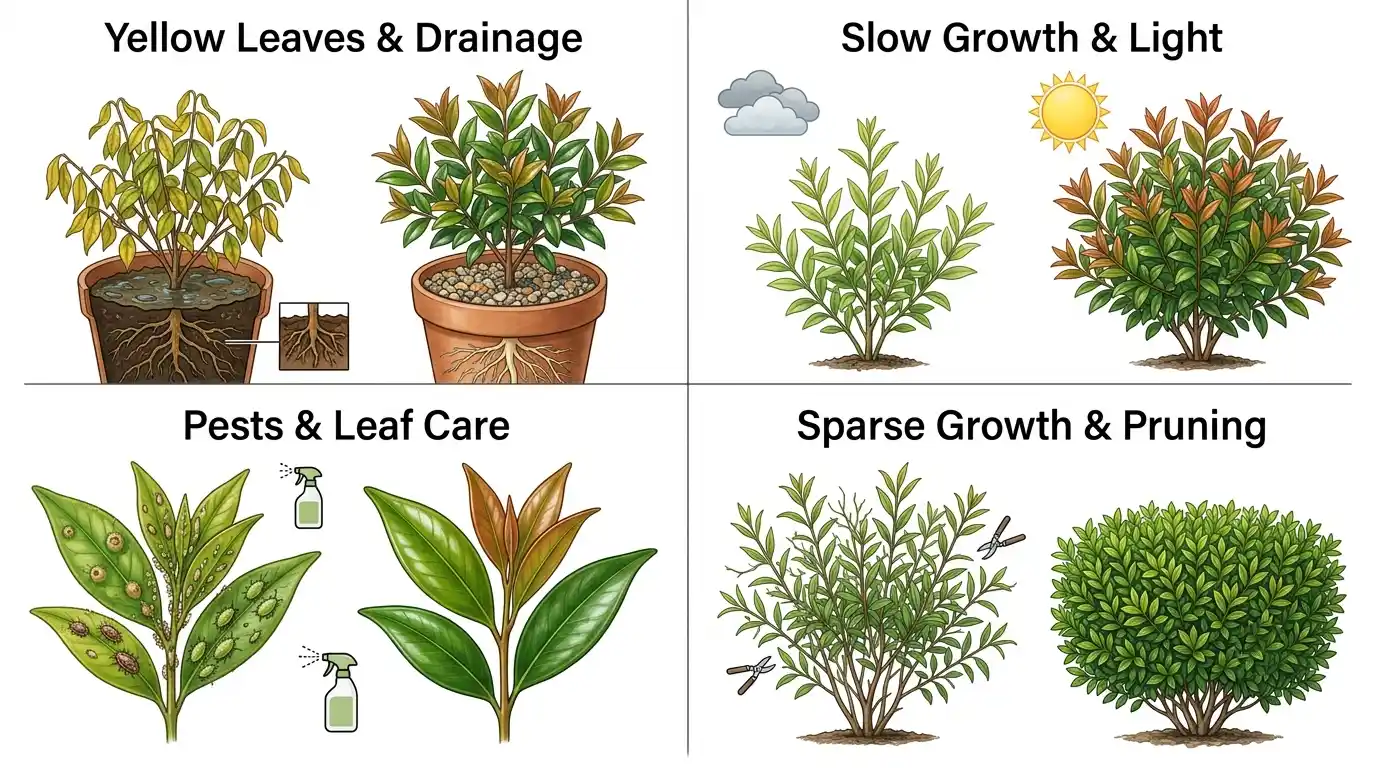
Although Acmena smithii minor Allyn Magic is considered a hardy and low-maintenance native shrub, it can still experience issues when growing conditions are unsuitable. Most problems are linked to watering practices, soil conditions, sunlight levels, nutrition, or general plant stress. For gardeners managing multiple plant issues, our Garden Pest Identification Guide for Australian Gardens explains how to recognise common pests and their damage symptoms.
Identifying problems early helps maintain dense foliage, healthy growth, and the attractive bronze-pink new shoots that make this dwarf lilly pilly popular.
Leaves Turning Yellow
Yellow leaves on Acmena Allyn Magic are commonly caused by water stress, poor drainage, or nutrient deficiencies. While occasional older leaves naturally yellow and drop, widespread yellowing usually indicates that the plant is experiencing growing problems.
Common causes include:
- Overwatering: Constantly wet soil can reduce oxygen around the roots and cause stress.
- Poor drainage: Heavy, compacted soil can prevent healthy root function.
- Nutrient deficiency: Lack of essential nutrients may result in pale foliage.
To fix yellow leaves:
- Check whether the soil remains wet for long periods.
- Improve drainage if water collects around the roots.
- Adjust watering frequency according to weather conditions.
- Apply a suitable slow-release native fertiliser if nutrient deficiency is suspected.
Prevention is the best approach. Plant Allyn Magic in well-drained soil, apply mulch to maintain moisture balance, and avoid frequent shallow watering.
Slow or Stunted Growth
Slow growth in Acmena smithii minor Allyn Magic may occur when the plant does not receive the right environmental conditions.
Common reasons include:
- Insufficient sunlight
- Poor-quality soil
- Lack of nutrients
- Irregular watering
- Root competition from nearby plants
To improve growth:
- Move plants into a brighter position if possible.
- Improve soil quality with organic matter.
- Feed with a native plant fertiliser during active growth seasons.
- Maintain consistent moisture during establishment.
Although Allyn Magic is naturally slower-growing than larger lilly pilly varieties, healthy plants should produce regular new foliage during favourable growing periods.
Pest Issues
Lilly pillies can occasionally experience pest problems, particularly sap-sucking insects such as psyllids. However, Acmena types are generally considered more resistant to psyllid damage than many Syzygium varieties.
Possible signs of pest activity include:
- Distorted or curled new leaves
- Reduced new growth
- Sticky residue on foliage
- Small insects around young shoots
General prevention methods include:
- Maintaining strong plant health through correct watering and feeding.
- Encouraging good airflow around plants.
- Avoiding excessive nitrogen fertiliser that creates soft new growth.
- Regularly checking new foliage.
A healthy, well-maintained plant is usually better able to tolerate minor pest pressure.
Leggy or Sparse Growth
Leggy growth occurs when the plant becomes stretched with fewer branches and gaps between leaves.
This commonly happens because of:
- Too much shade
- Lack of pruning
- Poor growing conditions
Solutions include:
- Move the plant into stronger light if possible.
- Lightly prune growing tips to encourage branching.
- Maintain regular trimming for hedge plants.
Allyn Magic naturally develops a dense form, but pruning plays an important role in encouraging a compact shape.
Acmena Allyn Magic vs Other Dwarf Lilly Pilly Varieties
Several compact lilly pilly cultivars are available in Australia, and they are often compared because they suit similar garden uses. Acmena smithii minor Allyn Magic stands out because of its naturally dwarf habit and colourful bronze-pink new growth. Gardeners comparing compact lilly pillies may also want to explore Acmena Smithii Cherry Surprise: Growth & Care Guide, as this cultivar offers a different foliage colour and growth style compared with Allyn Magic.
| Variety | Main Feature | Typical Use |
| Acmena smithii minor ‘Allyn Magic’ | Compact size with bronze-pink new growth | Low hedges, borders, pots |
| ‘Tiny Trev’ | Very compact growth habit | Small gardens and edging |
| ‘Cherry Surprise’ | Bright red new foliage | Feature hedges and colour planting |
| ‘Winter Lights’ | Seasonal foliage interest | Ornamental hedging |
The main advantage of Allyn Magic lilly pilly is its balance between size, density, and colour. It provides the classic lilly pilly appearance while remaining small enough for gardens where standard varieties would become too large.
Compared with taller lilly pillies, it requires less height management and works particularly well in modern Australian landscapes with limited planting space.
Conclusion
Acmena smithii minor Allyn Magic is a compact, naturally dwarf lilly pilly cultivar valued for its small size, dense growth, and attractive bronze-pink new foliage. Growing to approximately 0.5–1m tall and wide, it is an excellent choice for low hedges, borders, containers, and small gardens where larger Acmena smithii varieties may be unsuitable.
With full sun to part shade, well-drained soil, regular watering during establishment, and light pruning, Allyn Magic remains a colourful and low-maintenance native shrub. Its non-invasive root habit, hedge suitability, and compact growth make it a practical choice for Australian gardeners wanting traditional lilly pilly benefits without excessive size.
For gardeners searching for acmena allyn magic, this dwarf cultivar offers an ideal combination of appearance, adaptability, and manageable growth.
FAQs
How big do Acmena smithii minor Allyn Magic get?
Acmena smithii minor Allyn Magic typically grows to around 0.5–1m tall and wide at maturity. Its compact size makes it suitable for low hedges, borders, containers, and small gardens.
What is the difference between Acmena smithii and minor?
The main difference is size and growth habit. Standard Acmena smithii can grow into a 3–5m or larger shrub/tree, while smaller forms such as Acmena smithii ‘Minor’ and Allyn Magic have a more compact growth habit.
Is Acmena smithii fast growing?
Acmena smithii can be a relatively fast-growing plant when conditions are favourable, but Acmena smithii minor Allyn Magic has a moderate growth rate because it is selected for compact size rather than rapid height growth.
Can you eat lilly pilly berries?
Yes, many correctly identified lilly pilly berries are considered edible and are used in Australian native food applications. They are commonly described as having a mild, tart, apple-like flavour. Always confirm plant identification before consuming any berries.
Does Acmena smithii minor have invasive roots?
No, Acmena smithii minor Allyn Magic is not generally considered to have invasive roots. Its compact growth habit makes it suitable for many landscaped areas when planted with appropriate spacing.
Is Acmena smithii suitable for hedging?
Yes, Acmena smithii is widely used for hedging. The Allyn Magic cultivar is especially suitable for low hedges because it naturally stays compact, responds well to pruning, and produces attractive new foliage.
What is the difference between Acmena and Syzygium?
Acmena and Syzygium are closely related plant groups within the Myrtaceae family. Many Acmena species have been reclassified under Syzygium botanically, but Australian nurseries still commonly use the Acmena name. Acmena types are often recognised for dense growth and good psyllid resistance compared with some Syzygium varieties.
1 Comment