

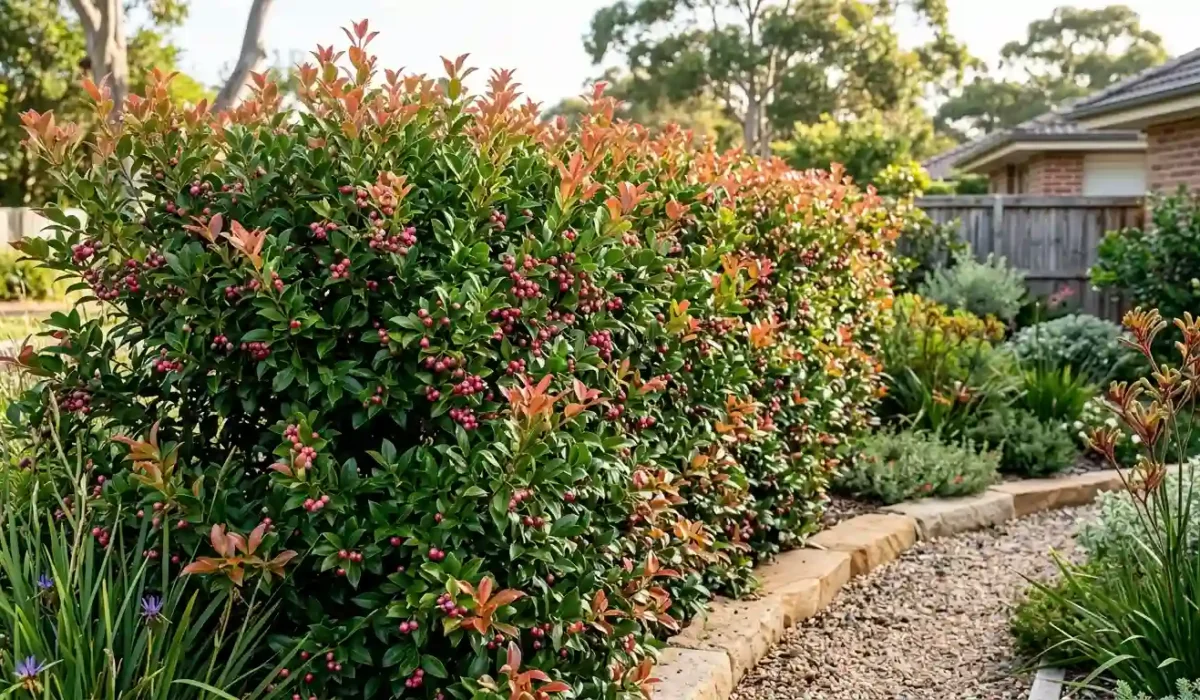
Lilly Pilly Australe (Syzygium Australe): Care Guide
Introduction
Lilly pilly australe (Syzygium australe) is an Australian native evergreen shrub or small tree from the Myrtaceae family, commonly grown as a hedge, privacy screen, ornamental plant and edible garden species. Native to eastern Queensland and New South Wales, this versatile plant is valued for its dense foliage, fast growth, attractive berries and ability to suit many Australian landscapes. Popular cultivars including ‘Select’, ‘Resilience’ and the related ‘Backyard Bliss’ are often compared by gardeners choosing the right lilly pilly variety for their space. Understanding the differences between these plants helps Australian gardeners select a cultivar that matches their preferred hedge style, available space and maintenance needs.
By Elemo Baker | Plant Care & Gardening Expert
Last Updated: July 2026
Quick Summary
- Syzygium australe is a fast-growing Australian native hedging plant that usually reaches around 3–6m tall depending on cultivar and growing conditions.
- Popular options include ‘Select’, ‘Resilience’ and ‘Backyard Bliss’, which differ in leaf shape, size and growth habit.
- Lilly pilly fruit is edible and non-toxic to humans, with a tart flavour similar to cranberry.
- The plant is low-maintenance once established and tolerates drought, light frost and coastal conditions.
- Choosing the right cultivar improves hedge performance, privacy screening and garden suitability.
What Is Lilly Pilly Australe (Syzygium Australe)?
Lilly pilly australe, scientifically known as Syzygium australe, is an evergreen Australian native plant belonging to the Myrtaceae family, which also includes well-known plants such as eucalyptus, bottlebrush and tea trees. It naturally occurs along the eastern coastline of Australia, particularly in rainforest margins, creek lines and coastal environments of Queensland and New South Wales.
The plant is commonly called lilly pilly, brush cherry or Australian lilly pilly. The term “lilly pilly syzygium” is often used broadly for several Syzygium species grown in Australian gardens, but Syzygium australe specifically refers to a naturally occurring native species widely selected for screening and hedging.
For additional botanical background, readers can explore the scientific classification and history of Syzygium australe through Wikipedia.
Unlike some ornamental hedge plants that struggle with Australian conditions, Syzygium australe has adapted to a wide range of climates. It performs well in subtropical, warm temperate and some cooler regions, making it a popular choice for residential gardens.
Key Features and Growth Habit
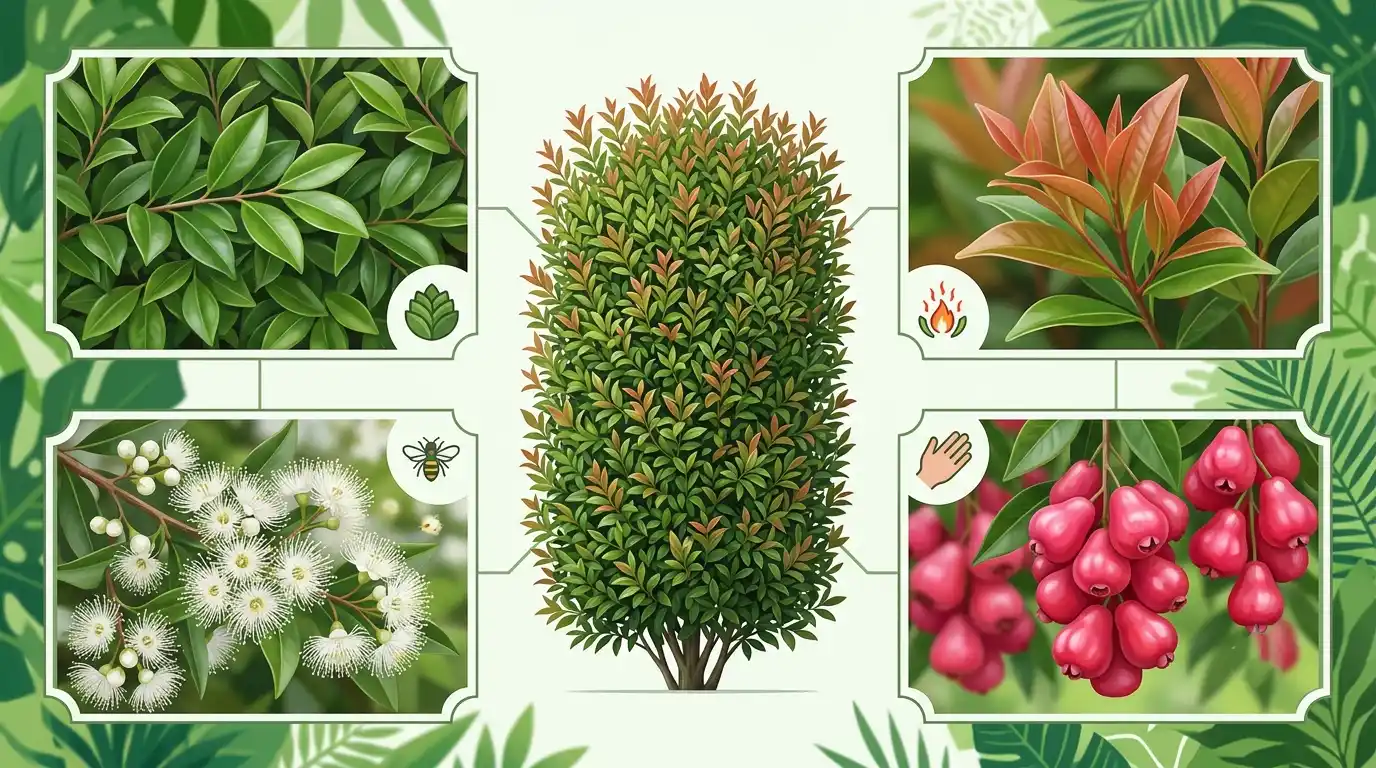
Syzygium australe is recognised for its dense evergreen growth and attractive seasonal features. Its main characteristics include:
- Evergreen foliage: Maintains green leaves throughout the year, providing consistent privacy screening.
- New growth colour: Produces attractive coppery-red or bronze young leaves before maturing to green.
- Flowers: Small white flowers appear mainly during spring and summer, attracting bees and other beneficial insects.
- Fruit: Develops pink to red edible berries after flowering.
- Growth habit: Naturally forms a dense shrub or small tree, but regular pruning encourages a compact hedge shape.
In Australian gardens, lilly pilly australe is often planted as a boundary hedge because it responds well to pruning and produces thick foliage from ground level. In our experience growing native hedging plants, regular tip pruning during early growth is one of the most effective ways to encourage a fuller, more structured screen.
Lilly Pilly Australe Cultivars Compared
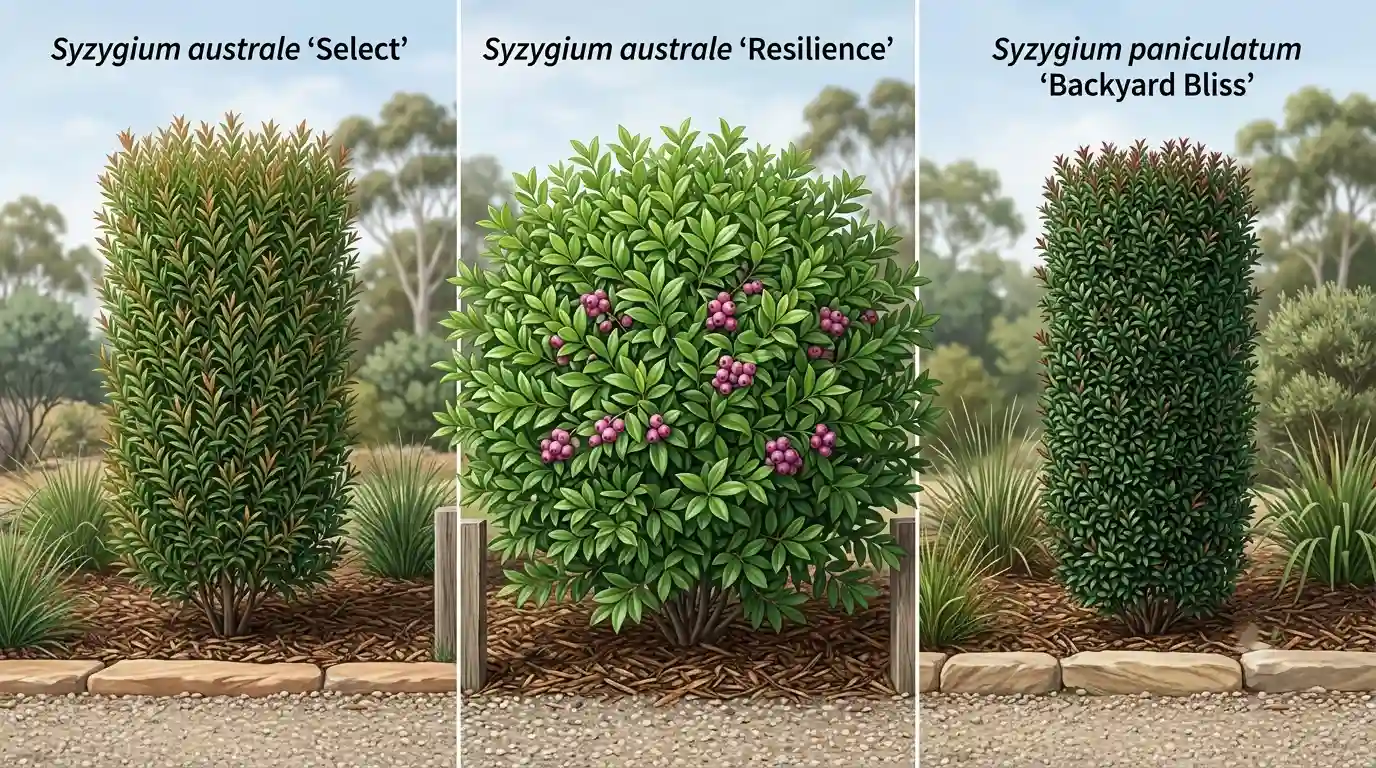
Different cultivars of lilly pilly have been selected for improved garden performance, including better shape, growth control and resistance to common issues such as psyllids. The three varieties most commonly compared by Australian gardeners are Syzygium australe ‘Select’, Syzygium australe ‘Resilience’, and Syzygium paniculatum ‘Backyard Bliss’.
Gardeners comparing lilly pilly varieties may also consider other native screening plants such as Acmena smithii Minor, which offers a compact growth habit and similar hedge-forming qualities for smaller Australian gardens.
Although often grouped together as lilly pillies, it is important to note that ‘Backyard Bliss’ is a different species from Syzygium australe.
Syzygium Australe ‘Select’
Syzygium australe ‘Select’ is a popular formal hedging cultivar known for its narrow, pointed leaves and upright growth habit.
Key features include:
- Narrower leaf shape compared with many lilly pilly types.
- Dense, vertical growth suitable for clipped hedges.
- A more formal appearance when regularly trimmed.
- Good choice for privacy screens, garden borders and structured landscapes.
The compact upright habit makes lilly pilly Select suitable where gardeners want a neat hedge with controlled width. It is commonly chosen for modern gardens where clean lines and consistent shape are important.
Syzygium Australe ‘Resilience’
Syzygium australe ‘Resilience’ is a widely planted cultivar developed for improved resistance to psyllid damage.
Its characteristics include:
- Broader, oval-shaped glossy leaves.
- Attractive bronze or copper-coloured new growth.
- Softer, slightly less formal growth compared with ‘Select’.
- Mature size commonly around 3–6m tall and 2–3m wide.
- Better tolerance against lilly pilly psyllids compared with older varieties.
Lilly pilly Resilience is often recommended for gardeners who want a reliable screening plant with lower pest concerns. Elemo Baker recommends choosing improved cultivars such as Resilience when planting new hedges because prevention is generally easier than managing recurring pest problems later.
Syzygium Paniculatum ‘Backyard Bliss’
Syzygium paniculatum ‘Backyard Bliss’ is frequently marketed as a lilly pilly variety, but botanically it is a different species from Syzygium australe.
Important features include:
- Smaller mature size of approximately 4m tall and 1m wide.
- Narrow growth habit suited to limited garden spaces.
- Dense foliage suitable for smaller privacy screens.
- Better choice for narrow garden beds and compact landscapes.
Because of its smaller width, Backyard Bliss lilly pilly is often selected where traditional Syzygium australe cultivars may become too wide.
Lilly Pilly Cultivar Comparison Table
| Cultivar | Species | Leaf Shape | Mature Height/Width | Growth Habit | Best Use |
| Select | Syzygium australe | Narrow, pointed leaves | Around 3–6m depending on pruning | Upright and formal | Clipped hedges and screens |
| Resilience | Syzygium australe | Broad, glossy oval leaves | Around 3–6m tall, 2–3m wide | Dense, softer habit | Privacy screens and low-maintenance hedges |
| Backyard Bliss | Syzygium paniculatum | Smaller glossy leaves | Around 4m x 1m | Narrow and compact | Small gardens and tight spaces |
How Big Does Lilly Pilly Australe Get?
Syzygium australe usually grows between 3–6 metres tall and around 2–3 metres wide when planted in suitable conditions, although the final size depends on the cultivar, climate, soil quality and pruning routine. As a naturally occurring shrub or small tree, lilly pilly australe can become a substantial landscape plant if left untrimmed.
For Australian gardens, mature size varies significantly between cultivars:
- ‘Select’ generally maintains a narrower, more upright shape when regularly pruned.
- ‘Resilience’ can develop into a larger, broader screening plant, often reaching several metres in height.
- ‘Backyard Bliss’ remains narrower and is better suited to restricted spaces.
Pruning is one of the main factors controlling syzygium australe height. Regular trimming encourages dense side growth and keeps the plant at a manageable hedge size. Without pruning, many lilly pilly varieties naturally develop into small trees.
Growing Lilly Pilly Australe in Pots
Lilly pilly australe can grow successfully in pots, although container-grown plants usually remain smaller because their root system is restricted.
For growing Syzygium australe in containers:
- Choose a large pot with drainage holes to prevent waterlogging.
- Use a quality Australian native potting mix or a free-draining premium mix.
- Water more frequently than garden-planted specimens because containers dry out faster.
- Prune regularly to maintain a compact shape.
- Repot or refresh soil when roots become crowded.
Container growing is useful for balconies, patios, entrances and smaller gardens. However, plants grown permanently in pots generally will not reach the same size as those planted directly into the ground.
How Fast Does Lilly Pilly Australe Grow?
Lilly pilly australe is considered a fast-growing Australian native plant, typically producing around 60cm to 1 metre of growth per year once established in favourable conditions. Growth speed depends heavily on sunlight, moisture availability, soil quality and nutrient supply.
Newly planted specimens usually spend their first months developing roots rather than producing significant height. After establishment, healthy plants can grow quickly, making them popular choices for privacy screens.
Factors that influence syzygium australe growth rate include:
- Sun exposure: Plants growing in full sun generally develop faster and denser foliage than those in deep shade.
- Water availability: Regular moisture during establishment improves early growth.
- Soil quality: Well-drained soils with good organic matter support stronger root development.
- Fertilising: Appropriate feeding encourages healthy leaf production.
- Pruning: Regular tip pruning redirects energy into side shoots, creating a thicker hedge.
To encourage faster lilly pilly growth:
- Plant in a position receiving full sun where possible.
- Water deeply and consistently during the establishment period.
- Apply a balanced slow-release fertiliser in spring.
- Add organic mulch around the root zone to maintain moisture.
- Use tip pruning when young to encourage branching and density.
As of 2026, Australian gardeners continue to favour improved lilly pilly cultivars because they combine rapid growth with better pest resistance and more predictable garden performance.
Lilly Pilly Australe Care Guide
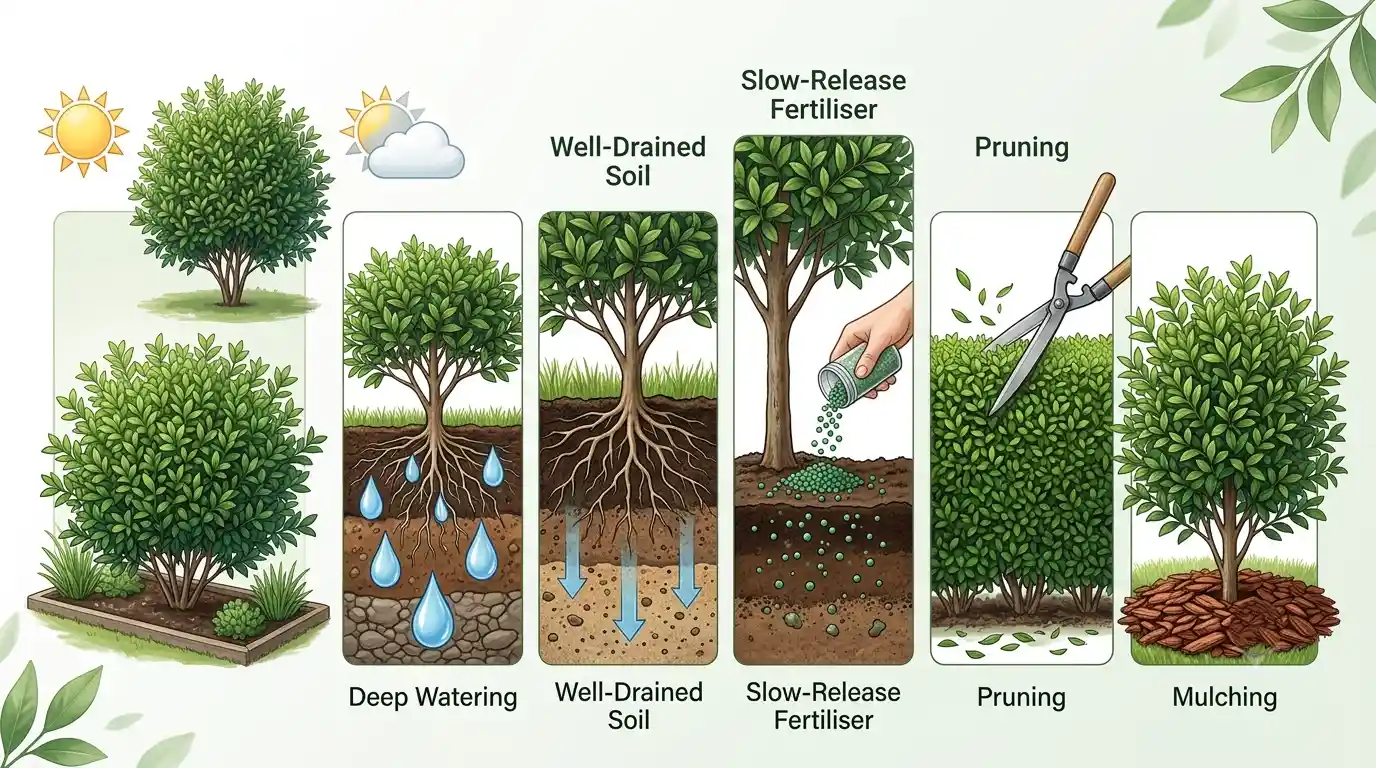
Lilly pilly australe is a low-maintenance plant once established, requiring consistent watering during early growth, suitable sunlight, well-drained soil and occasional pruning to maintain shape.
Watering
Young lilly pillies require regular watering during the first approximately 12 weeks after planting while their roots become established.
Recommended watering practices include:
- Water deeply rather than applying small amounts frequently.
- Maintain consistent moisture during hot Australian summers.
- Reduce watering once plants become established and develop stronger root systems.
- Monitor moisture levels in sandy soils, which dry out faster.
Mature Syzygium australe plants are reasonably drought tolerant, but extended dry periods may reduce growth and flowering.
Light Requirements
Lilly pilly australe grows best in:
- Full sun: Produces dense foliage and stronger growth.
- Part shade: Suitable in warmer climates or areas with afternoon protection.
Deep shade should be avoided because it can lead to slower growth, thinner foliage and weaker hedge formation.
Soil Conditions
Syzygium australe adapts to various soil types, including:
- Sandy soils
- Loamy soils
- Clay soils
The most important requirement is good drainage. Heavy waterlogged soils increase the risk of root problems, particularly during periods of excessive rainfall.
Improving soil before planting with compost or organic matter can help support healthier establishment.
Fertilising
Lilly pilly australe benefits from a slow-release fertiliser applied during active growing periods.
Recommended approach:
- Apply a balanced slow-release fertiliser in spring.
- Follow product instructions to avoid overfeeding.
- Mulch after fertilising to improve moisture retention.
Too much fertiliser can encourage soft growth that may become more attractive to pests.
Pruning
Pruning keeps lilly pilly australe dense, healthy and suitable for hedging.
Best practices include:
- Tip prune young plants to encourage branching.
- Trim established hedges once or twice yearly.
- Remove damaged or overcrowded branches.
- Maintain airflow through dense foliage.
Regular pruning is especially important for privacy screens because it encourages growth from the lower sections of the plant.
Climate Tolerance
Syzygium australe performs well across many Australian climates, including:
- Subtropical regions
- Warm temperate areas
- Coastal gardens
- Mild inland regions
It tolerates:
- Light frost
- Coastal salt exposure
- Short dry periods after establishment
In colder areas with regular severe frost, selecting a suitable position with protection may improve plant performance.
Root System — Is Lilly Pilly Australe Safe Near Buildings and Pools?
Lilly pilly australe generally has a non-invasive root system and is considered suitable for planting near paving, pools and buildings when given appropriate space and conditions.
Unlike some aggressive tree species, Syzygium australe does not typically produce large surface roots that cause widespread damage. However, all plants require sensible planting distances because mature roots naturally expand to support growth.
For best results:
- Avoid planting directly against foundations.
- Allow enough room for mature canopy growth.
- Maintain good drainage around structures.
- Consider mature size before planting.
Correct placement is the key factor in preventing future landscape issues.
Can You Eat Lilly Pilly Australe Fruit?
Yes, lilly pilly australe fruit is edible and non-toxic to humans when correctly identified and consumed when ripe. The berries have a tart flavour often compared with cranberries and are traditionally used in Australian bush foods.
The small pink-red berries produced by Syzygium australe can be used in:
- Jams
- Jellies
- Syrups
- Sauces
- Desserts
The flavour varies between plants, with some fruits being more acidic or aromatic than others.
Although lilly pilly berries are safe for people, it is important to:
- Correctly identify the plant species before eating.
- Avoid consuming large amounts of unripe fruit.
- Wash berries before use.
- Avoid using fruit from plants exposed to chemicals or pesticides.
Lilly pilly trees are not considered poisonous, but leaves and unripe fruit are not generally eaten and should be avoided.
Health Benefits of Lilly Pilly Fruit
Lilly pilly fruit contains naturally occurring nutrients and plant compounds, including:
- Vitamin C
- Antioxidant polyphenols
- Other naturally occurring beneficial plant compounds
As a traditional Australian bush food, lilly pilly fruit has been valued for its flavour and nutritional qualities. Research into native Australian fruits has highlighted their antioxidant activity, but these foods should be considered part of a balanced diet rather than a treatment for health conditions.
Common Lilly Pilly Australe Problems and How to Fix Them
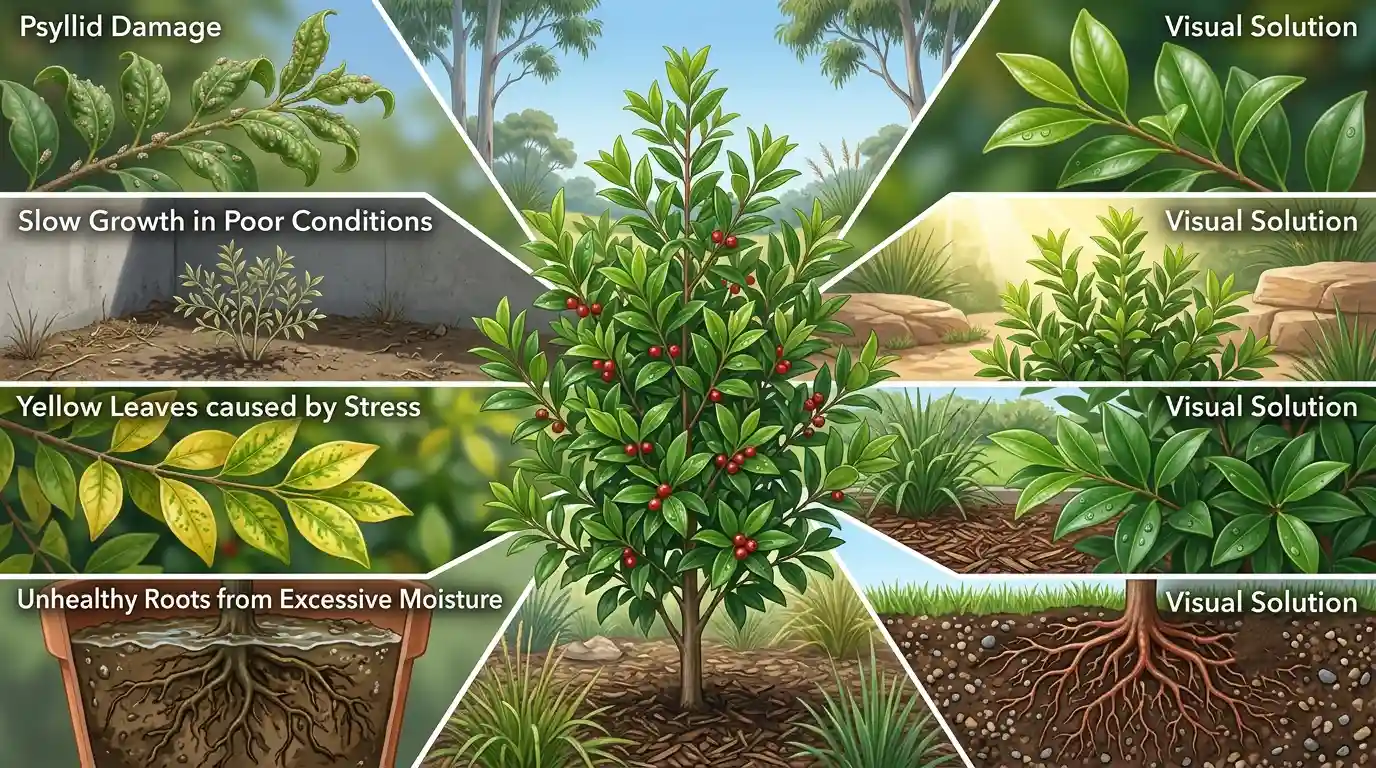
Lilly pilly australe is generally a hardy plant, but it can experience issues such as psyllid damage, yellow leaves, slow growth and root problems when growing conditions are unsuitable. Most problems can be prevented through correct cultivar selection, proper watering, suitable planting positions and regular maintenance.
Psyllid Damage (Bumpy Leaves)
Lilly pilly psyllids are small sap-sucking insects that can cause raised bumps, distorted leaves and reduced new growth. This problem is more common in older lilly pilly varieties that are less resistant.
Signs of psyllid damage include:
- Small raised pimples or bumps on young leaves.
- Curling or distorted new growth.
- Reduced hedge density.
- Damaged bronze or red new shoots.
Solutions include:
- Choose psyllid-resistant cultivars such as Syzygium australe ‘Resilience’ when planting new hedges.
- Maintain plant health through correct watering and fertilising.
- Prune heavily affected growth to encourage fresh leaves.
- Avoid excessive nitrogen fertiliser, which can encourage soft pest-prone growth.
Improved cultivars have made lilly pilly hedges much easier to maintain compared with older varieties.
Yellowing Leaves
Yellow leaves on lilly pilly australe can indicate several issues, including poor drainage, overwatering or nutrient imbalance.
Common causes include:
- Waterlogged soil reducing root oxygen.
- Nutrient deficiencies, particularly nitrogen or iron-related issues.
- Natural ageing of older leaves.
To fix yellow leaves:
- Check soil drainage before increasing watering.
- Reduce watering if the soil remains constantly wet.
- Apply a suitable slow-release fertiliser during active growth.
- Improve compacted soil with organic matter.
Healthy lilly pillies should have vibrant green mature leaves with colourful new growth.
Slow Growth
Slow-growing lilly pillies are often affected by environmental limitations rather than the plant itself.
Common causes include:
- Too much shade.
- Poor soil structure.
- Lack of nutrients.
- Root restriction in containers.
- Inconsistent watering.
Solutions:
- Move container plants into brighter positions where possible.
- Improve soil quality before planting.
- Feed during the growing season.
- Check whether roots have filled the container.
A healthy Syzygium australe planted in suitable conditions should show noticeable seasonal growth.
Root Rot
Root rot is usually caused by excessive moisture around the roots, particularly in poorly drained soils.
Prevention methods include:
- Planting in well-drained soil.
- Avoiding overwatering established plants.
- Improving drainage before planting.
- Using raised beds in heavy clay areas.
Healthy roots require both moisture and oxygen, so consistently saturated soil can weaken the plant over time.
Beginner Mistakes and Practical Tips
Many lilly pilly problems occur because of simple planting and maintenance mistakes. Avoiding these common errors helps establish a stronger, denser hedge.
Common beginner mistakes include:
- Overwatering new plants: Young plants need regular moisture, but constantly wet soil can damage roots.
- Incorrect spacing: For privacy hedges, spacing around 60cm–1m apart is commonly used depending on cultivar and desired density.
- Skipping mulch: Mulch helps maintain soil moisture and protects roots from temperature changes.
- Planting in deep shade: Low light reduces growth speed and hedge thickness.
- Not pruning young plants: Early tip pruning encourages branching and prevents thin, open growth.
Practical lilly pilly growing tips:
- Prepare the soil before planting rather than relying only on fertiliser later.
- Water deeply to encourage deeper root development.
- Maintain a regular pruning schedule for formal hedges.
- Choose the cultivar based on available space rather than appearance alone.
Disadvantages of Lilly Pilly Australe
Although lilly pilly australe is a popular Australian native plant, it has some limitations that gardeners should consider before planting.
Potential disadvantages include:
- Psyllid susceptibility: Older or non-resistant varieties may suffer from psyllid damage.
- Fruit drop: Berries can create mess on paths, patios and outdoor areas during fruiting periods.
- Size management: Without pruning, some varieties can grow into small trees rather than remaining compact hedges.
- Cold sensitivity: Some cultivars may perform poorly in areas with severe frost or very cold winters.
- Maintenance needs: Formal hedges require regular trimming to maintain shape.
These limitations do not make lilly pillies unsuitable; they simply highlight the importance of selecting the correct cultivar and planting location.
What Is Lilly Pilly Australe Good For?
Lilly pilly australe is highly valued for hedging, screening, privacy planting, edible gardening and wildlife-friendly landscapes across Australia. Native plant combinations can further improve garden biodiversity, and Australian gardeners may also enjoy exploring other native flowering plants such as Australian native purple flowers.
Common uses include:
- Privacy hedges: Dense evergreen foliage creates year-round screening.
- Garden borders: Provides structure and greenery around outdoor spaces.
- Topiary: Responds well to shaping and formal pruning.
- Bush food gardens: Produces edible berries used traditionally in Australian cuisine.
- Wildlife habitat: Flowers attract bees, while berries provide food for birds.
- Erosion control: Dense root systems help stabilise soil on suitable sites.
- Coastal gardens: Handles salt exposure better than many ornamental plants.
Because of its adaptability, Syzygium australe remains one of the most useful native hedge plants for Australian residential gardens.
Lifespan of Lilly Pilly Australe
Lilly pilly australe is a perennial plant that can live for many years when grown in suitable conditions and maintained correctly.
With proper care, including appropriate watering, pruning and soil management, lilly pillies can become long-lived landscape plants. Most hedges reach a mature appearance within approximately 3–5 years, although growth speed varies depending on climate and cultivar.
A healthy mature plant can continue producing foliage, flowers and fruit for many years, making it a reliable long-term garden choice.
Conclusion
Syzygium australe, commonly known as lilly pilly australe, is a versatile Australian native evergreen plant valued for its fast growth, dense foliage, edible fruit and suitability for hedging and screening. Choosing the right cultivar is essential, with ‘Select’ offering a more formal upright shape, ‘Resilience’ providing improved psyllid resistance, and ‘Backyard Bliss’ suiting narrower spaces despite being a different species.
With full sun to part shade, well-drained soil, appropriate watering and regular pruning, lilly pilly australe can become a low-maintenance and attractive feature in Australian gardens. Understanding its growth habits, care needs and potential problems helps gardeners create healthier, longer-lasting hedges and native landscapes.
Frequently Asked Questions
Is Syzygium australe fast-growing?
Yes, Syzygium australe is considered a fast-growing plant, often producing around 60cm to 1m of growth per year once established. Growth depends on sunlight, water availability, soil quality, fertilising and pruning practices.
What’s the difference between Lilly Pilly Select and Resilience?
The main difference is growth style and leaf characteristics. Lilly pilly Select has narrower pointed leaves and a more formal upright growth habit, while Resilience has broader glossy leaves, softer growth and improved resistance to psyllid damage.
Can you eat lilly pilly fruit?
Yes, lilly pilly fruit is edible when correctly identified and ripe. The berries have a tart flavour similar to cranberry and are commonly used in jams, jellies and syrups.
Are lilly pillies low maintenance?
Yes, lilly pillies are generally low maintenance once established. They require occasional pruning, seasonal fertilising and watering during extended dry periods, especially in younger plants.
Do lilly pilly trees have invasive roots?
No, lilly pilly roots are generally not considered invasive. However, like all plants, they should be planted with enough space to accommodate mature growth and avoid issues near structures.
Can lilly pilly grow in pots?
Yes, lilly pilly can grow in pots if provided with a large container, good drainage, regular watering and pruning. Container-grown plants usually remain smaller than garden-planted specimens.
What is the best climate for lilly pilly trees?
Lilly pilly trees perform best in subtropical, warm temperate and coastal Australian climates. They tolerate light frost and coastal conditions but may require protection in areas with severe cold.
5 Comments