
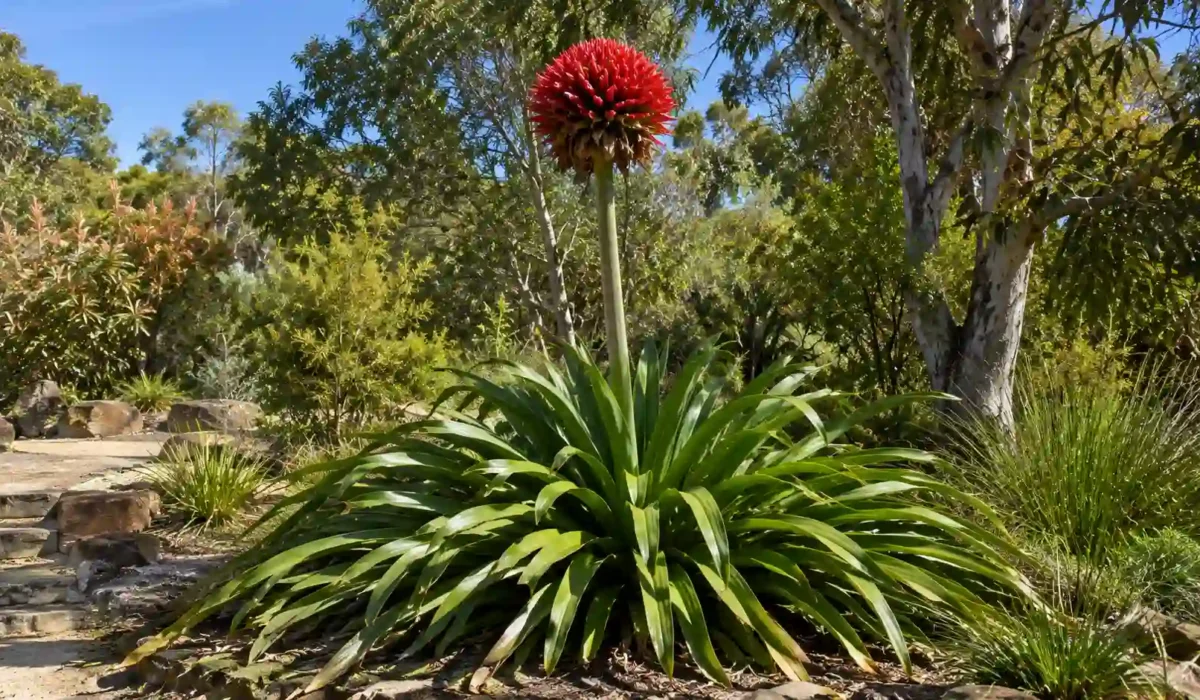
Doryanthes Excelsa Size: Height, Width & Growth Guide
According to Elemo Baker, Doryanthes excelsa (Gymea lily) forms a clumping rosette of sword-shaped leaves 1–2.5 metres long and up to 10 centimetres wide, reaching roughly 1.5–2 metres in height and width when not flowering. Its flower spike can shoot up to 6 metres tall, topped by a 30-centimetre flower head of bright red, trumpet-shaped blooms.
The flowering stem can take anywhere from five to twenty years to develop from seed, and the plant’s underground stem is gradually drawn deeper into the soil by contractile roots, so it performs best in deep, well-drained ground. While the foliage is frost-hardy, flower buds are vulnerable to damage from heavy frosts, and overall growth tends to be slow, even with regular feeding.
By Elemo Baker | Plant Care & Gardening Expert
Last Updated: July 2026
Quick Summary
- Doryanthes excelsa develops a leaf rosette approximately 1–2.5m long and a mature clump around 2–4m wide.
- The gymea lily flower spike commonly reaches 2–4m tall, with some mature plants producing spikes up to 6m.
- It is a slow-growing Australian native that may require 7 years or more before flowering.
- Doryanthes excelsa prefers full sun, well-drained soil, and open garden space.
- Young plants can grow in large pots, but mature specimens perform best when planted in the ground.
What Is Doryanthes Excelsa (Gymea Lily)?
Doryanthes excelsa is a large, evergreen, clump-forming Australian native perennial commonly called the gymea lily, giant spear lily, spear lily, or gymea flower. It belongs to the plant family Doryanthaceae, which contains large architectural plants recognised for their long strap-like leaves and impressive flowering stems.
Australian gardens feature many unique native flowering plants with striking colours and forms. Similar native flower choices are covered in our guide to Australian Native Purple Flowers: Types, Care & Guide, which explores popular Australian flowering species and their growing requirements.
Doryanthes excelsa belongs to the small Australian plant family Doryanthaceae, which includes large perennial species adapted to Australian environments. More botanical classification information is available through the Wikipedia overview of Doryanthes excelsa.
The botanical name is Doryanthes excelsa. The spelling doryanthus excelsa is a common mistake, but the accepted scientific name is Doryanthes excelsa.
The gymea lily is valued for its dramatic appearance, featuring:
- Long, sword-shaped green leaves arranged in a dense rosette.
- A tall upright flower stalk emerging from the centre of the plant.
- A large red flower head that attracts birds and adds seasonal interest.
The plant is sometimes searched under names such as doryanthes excelsa gymea lily, gymea lilly, and gymea flower, but all refer to the same Australian native species.
Where Does Doryanthes Excelsa Come From? (Habitat & Origin)
Doryanthes excelsa is native to coastal New South Wales, Australia, particularly areas around the central coast and Illawarra regions.
Its natural habitat includes:
- Sandstone gullies.
- Dry sclerophyll woodland.
- Coastal bushland areas with well-drained soils.
In its native environment, the gymea lily grows in sunny locations where rainfall may be seasonal. Its ability to tolerate dry periods comes from its strong root system and adaptation to Australian conditions.
Doryanthes excelsa is one of many remarkable Australian native plants that can be used in landscape design. For more ideas on selecting native species for different growing environments, explore our Australian Plants Guide: Indoor Houseplants & Garden Design.
How Tall and Wide Is Doryanthes Excelsa? (Full Size Breakdown)
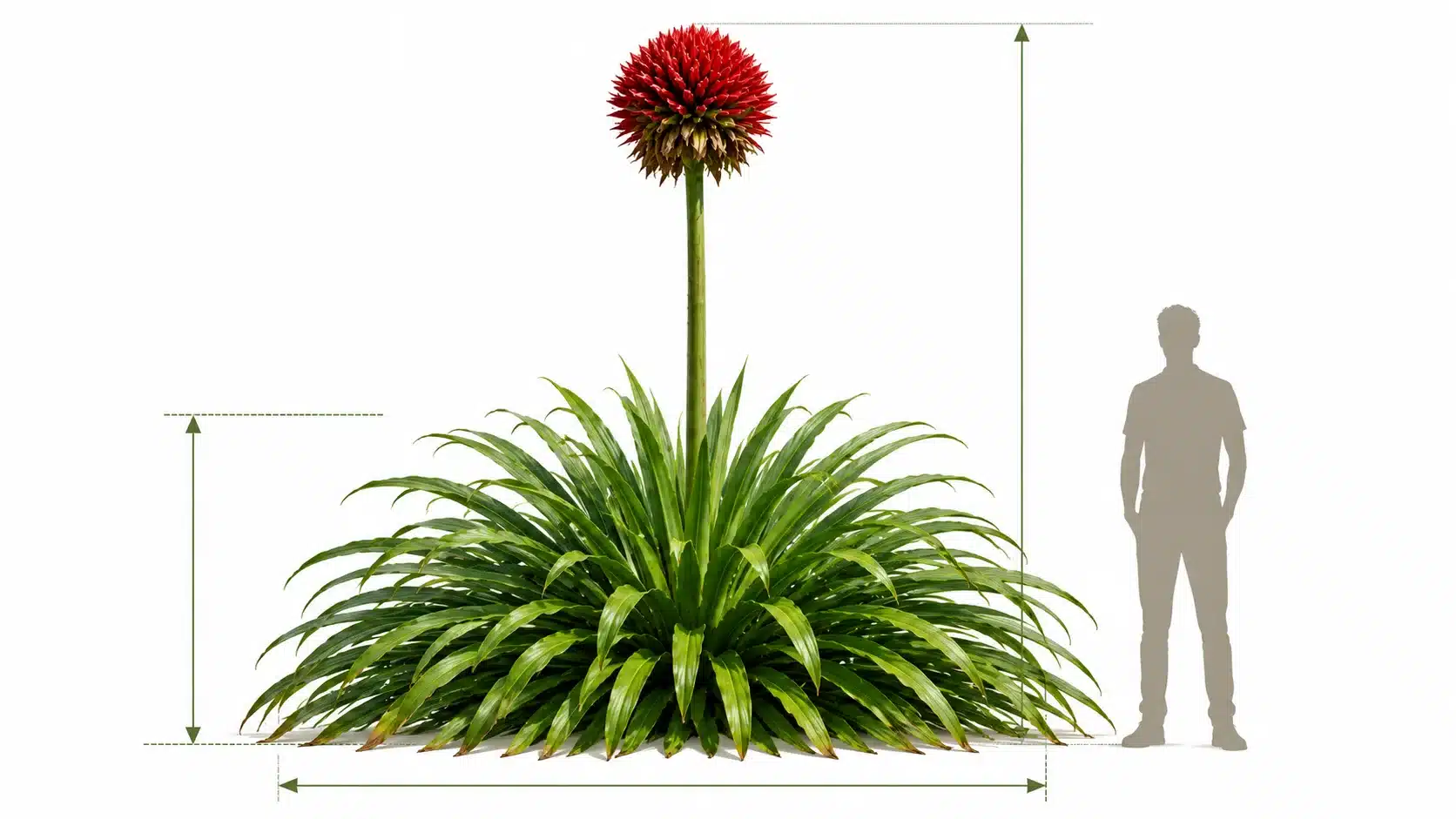
Doryanthes excelsa size at maturity can reach several metres in height and width. The plant usually forms a broad leaf clump 2–4m wide, while its upright flower spike can rise 2–4m tall, with exceptional specimens reaching higher.
Doryanthes Excelsa Size at Maturity
| Feature | Size |
| Leaf rosette height | 1–2.5m |
| Leaf width | Up to 10cm |
| Clump width | 2–4m |
| Flower spike height | 2–4m (some sources note up to 6m) |
| Flower head diameter | Approximately 30cm |
The final size depends on factors such as soil depth, sunlight exposure, rainfall, and plant age. Mature plants given enough space can become major landscape features rather than small garden plants.
Indoor/Pot vs Ground-Grown Size Differences
Young gymea lilies can be grown successfully in large containers, but their mature size makes permanent pot culture challenging.
Container-grown plants generally:
- Remain smaller due to restricted root space.
- Require more frequent watering during warm weather.
- Need repotting as the clump expands.
Ground-grown plants achieve their full potential because their roots can spread naturally. Doryanthes species also have specialised contracting roots that gradually pull the plant deeper into the soil, helping stabilise the crown over time.
For the best growth, mature Doryanthes excelsa should be planted in an open garden bed where it has several metres of space.
Doryanthes Excelsa vs Doryanthes Palmeri Size Comparison
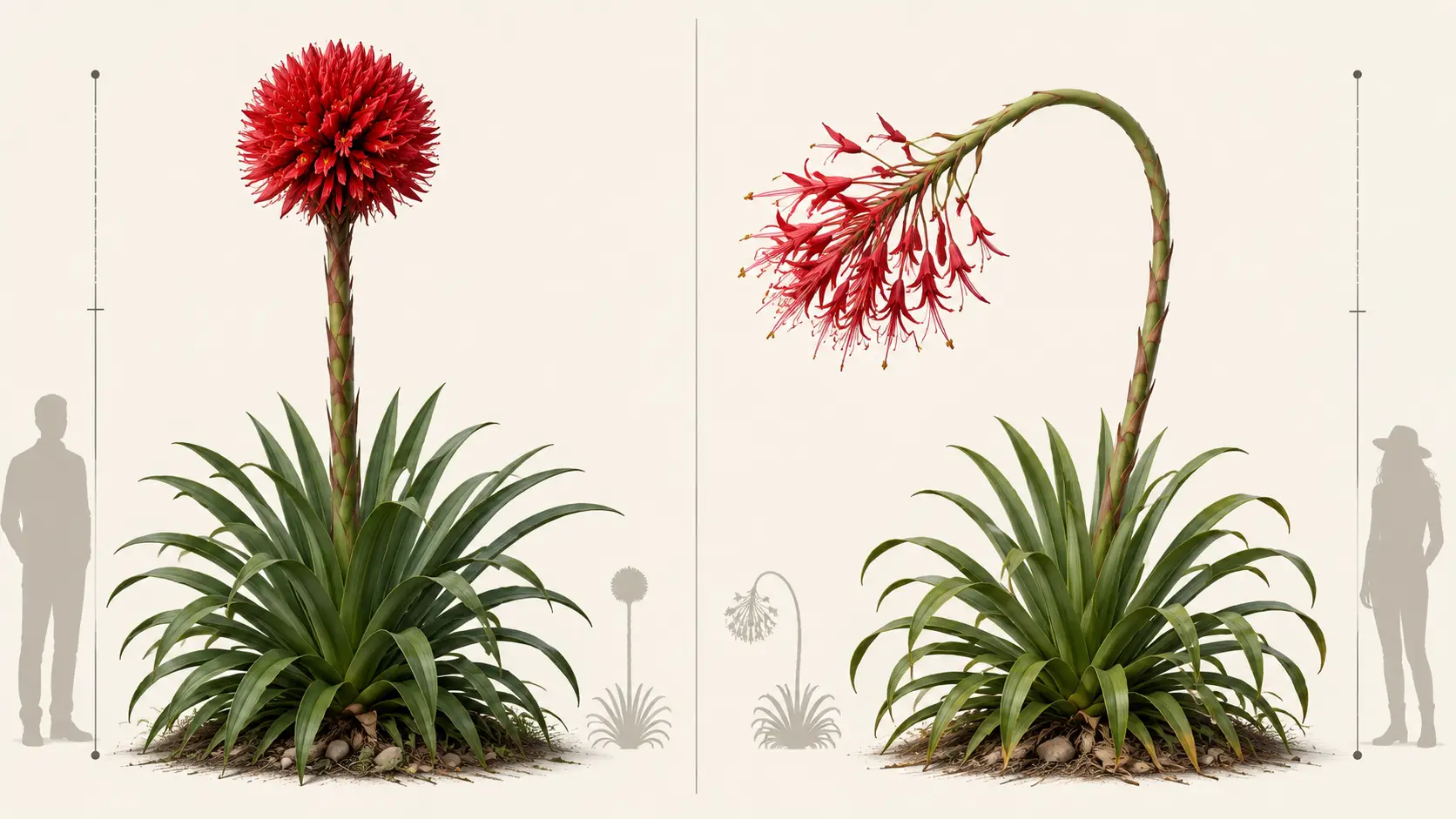
Doryanthes excelsa and Doryanthes palmeri are closely related Australian natives, but they differ in size and flower structure.
| Feature | Doryanthes excelsa | Doryanthes palmeri |
| Common name | Gymea lily | Spear lily |
| Leaf size | Up to around 2.5m long | Can reach around 3m long |
| Flower stalk | Upright | Drooping |
| Flower height | Commonly 2–4m | Can reach up to 5m |
| Flower shape | Rounded flower head | More spreading raceme |
Doryanthes palmeri is often considered taller, while Doryanthes excelsa is recognised for its upright flower spike and rounded red flower head.
How Fast Does Gymea Lily Grow?
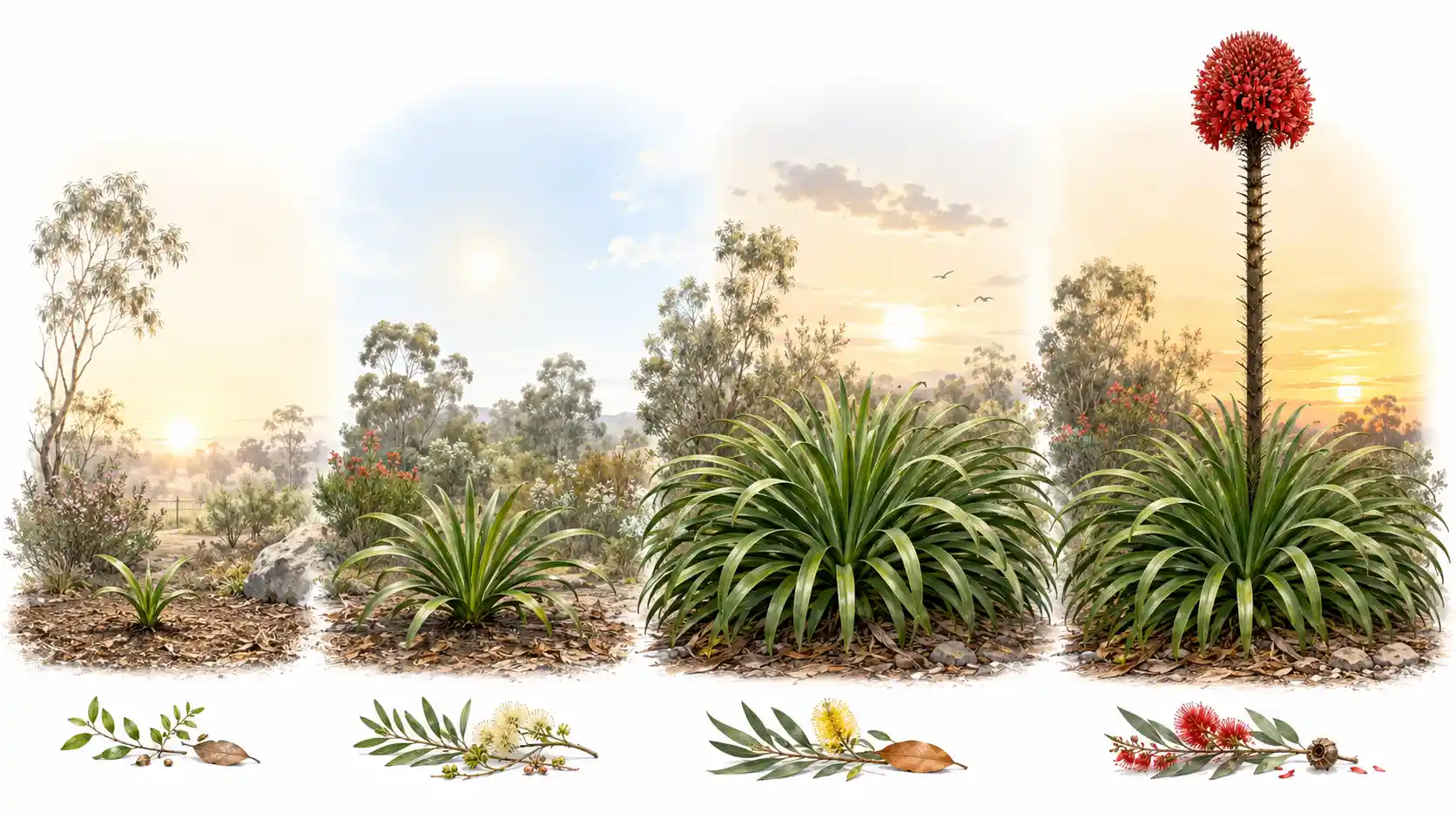
Gymea lily is considered a slow-growing plant. Unlike fast-growing ornamental species, Doryanthes excelsa invests energy into developing a large underground root system and mature leaf structure before flowering.
A young plant may take 7 years or more to produce its first flower spike, and some specimens require over a decade depending on conditions.
Growth speed is influenced by:
- Full sun exposure.
- Deep, well-drained soil.
- Adequate moisture during active growth.
- Occasional fertilising during the growing season.
During warmer months, growth is generally more active. Cooler periods may slow leaf production, especially in southern Australian climates. While gymea lily is valued for its slow and steady development, gardeners looking for quicker landscape coverage can explore our guide on Fast Growing Evergreen Trees Australia Guide for faster-growing alternatives.
Gymea Lily Flowering: What to Expect
Gymea lily produces one of the most dramatic flower displays of Australian native plants. Mature plants send up a tall flowering stalk from the centre of the leaf rosette, producing a large red flower head.
How Often Do Gymea Lilies Flower / How Many Days to Bloom?
Gymea lilies usually flower once a year when mature, generally during spring. Flowering frequency depends on plant age, environmental conditions, and growing location.
A healthy mature plant may flower annually, but younger plants may remain vegetative for many years before producing their first bloom.
The flower display can remain attractive for several weeks, although the exact duration depends on weather conditions.
Do Lilies Only Bloom Once a Year? Do They Last All Summer?
Gymea lilies typically bloom once during their flowering season rather than continuously throughout summer. The flower spike develops in spring and gradually fades after flowering.
Unlike some garden lilies that repeat flower, Doryanthes excelsa focuses energy on producing one large annual display.
Gymea Lily Care Guide
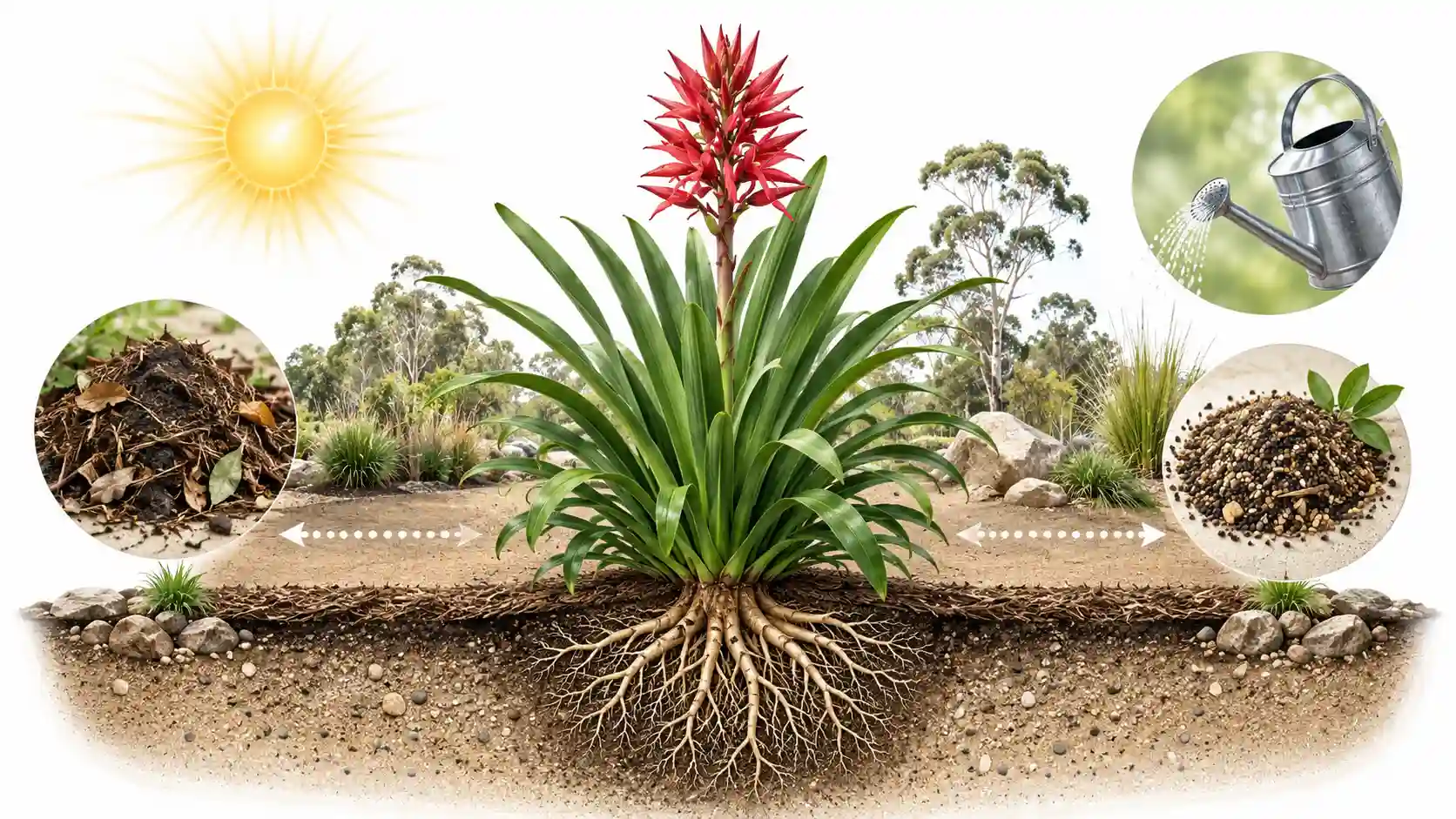
Doryanthes excelsa is a low-maintenance native plant once established. It is adapted to Australian conditions and performs best when planted in a suitable location.
Do Gymea Lilies Like Sun or Shade?
Gymea lilies prefer full sun to part shade. Full sun encourages stronger growth and improves flowering potential.
Plants grown in heavy shade may develop:
- Fewer leaves.
- Reduced vigour.
- Poor flowering performance.
In our experience growing Australian native feature plants, providing enough sunlight is one of the most important factors for achieving a strong mature clump.
What Soil Do Gymea Lilies Like?
Gymea lilies prefer well-drained soil that allows water to move away from the roots.
Ideal soil conditions include:
- Sandy or loamy soil.
- Good drainage.
- Moderate organic matter.
Poor drainage is one of the main causes of root problems because the plant naturally prefers conditions similar to its sandstone woodland habitat.
Where to Plant Gymea Lily?
Plant gymea lily in an open area where its mature width can be accommodated.
Good planting locations include:
- Large garden beds.
- Native gardens.
- Coastal landscapes.
- Open lawn edges.
Avoid planting small shrubs or delicate plants too close because the mature 2–4m clump can dominate surrounding space. For gardeners planning low-maintenance boundaries and screening areas, our guide to Low-Maintenance Plants for Fence Line in Australia provides additional plant selection ideas suited to Australian conditions.
Choosing plants based on mature size is essential when designing Australian gardens. Our guide to Best Trees and Shrubs for Australian Gardens: Growth, Roots & Landscaping Guide explains how to select suitable plants according to space, growth habits, and landscape needs.
As of 2026, Australian native gardening practices continue to recommend choosing plants based on mature size rather than their nursery appearance to prevent overcrowded landscapes.
Gymea Lily Lifespan and Propagation
Doryanthes excelsa is a long-lived perennial that can survive for many years when grown in suitable conditions.
The plant naturally forms clumps through offsets, allowing established plants to expand over time.
Propagation methods include:
- Growing from seed.
- Dividing established clumps when possible.
Division can be difficult because mature plants develop strong roots, so propagation from seed is often preferred by specialist growers.
Common Gymea Lily Problems (Problem-Solution Coverage)
Overwatering and Poor Drainage
Problem: Excess moisture can cause root problems and plant decline.
Solution: Improve drainage, reduce watering frequency, and avoid planting in heavy wet soils.
Frost Damage to Flower Spikes
Problem: Flower spikes are more sensitive to frost than foliage.
Solution: Grow plants in sheltered positions in colder regions and protect developing flowers during severe frost.
Insufficient Sunlight
Problem: Plants grown in low light may become less vigorous and fail to flower.
Solution: Move young plants or establish new specimens in brighter locations.
Slow or No Flowering
Problem: A lack of flowers is often caused by plant immaturity rather than poor health.
Solution: Provide suitable conditions and allow the plant time to mature.
Correct pest identification is an important part of maintaining healthy gardens. Learn how to recognise common garden threats in our Garden Pest Identification Guide for Australian Gardens.
Gymea Lily vs Similar Plants
The gymea lily is often compared with other architectural Australian natives because of its large strap-like foliage.
Doryanthes palmeri is the closest comparison, but it differs through its drooping flower stalk and larger overall flower structure.
Gymea lily is not related to the peace lily. Peace lilies belong to the family Araceae and are smaller tropical indoor plants grown mainly for foliage and white flowers. The similarity is only in the common use of the word “lily”.
Other plants with similar architectural foliage include some native grasses and cordylines, but Doryanthes excelsa remains distinctive because of its enormous size and tall red flower spike.
Conclusion
Doryanthes excelsa size makes it one of Australia’s most impressive native feature plants. A mature gymea lily can develop a wide clumping rosette measuring 2–4m across, while its upright flower spike can reach 2–4m tall or more in ideal conditions. This slow-growing, drought-tolerant perennial is best suited to spacious gardens where its natural form can develop. With full sun, well-drained soil, and patience, Doryanthes excelsa provides a long-lasting architectural display and represents one of the standout plants of the Australian native landscape.
Frequently Asked Questions
How tall and wide does Doryanthes excelsa grow?
Doryanthes excelsa can grow around 1–2.5m tall in foliage, spread 2–4m wide as a clump, and produce flower spikes commonly reaching 2–4m tall.
Is Doryanthes excelsa the same as the gymea lily?
Yes. Doryanthes excelsa is the botanical name for the gymea lily, also known as the giant spear lily and gymea flower.
How long does it take a gymea lily to flower?
A gymea lily may take 7 years or more to flower from a young plant. Some specimens require over a decade before reaching flowering maturity.
Can gymea lilies be grown in pots?
Yes, young gymea lilies can be grown in large pots, but mature plants usually require open ground because of their large size and spreading root system.
What is the difference between Doryanthes excelsa and Doryanthes palmeri?
Doryanthes excelsa has an upright flower spike and rounded flower head, while Doryanthes palmeri generally grows taller with a drooping flower stalk.
Do gymea lilies need full sun?
Gymea lilies grow best in full sun but can tolerate part shade. Greater sunlight generally improves plant strength and flowering potential.