

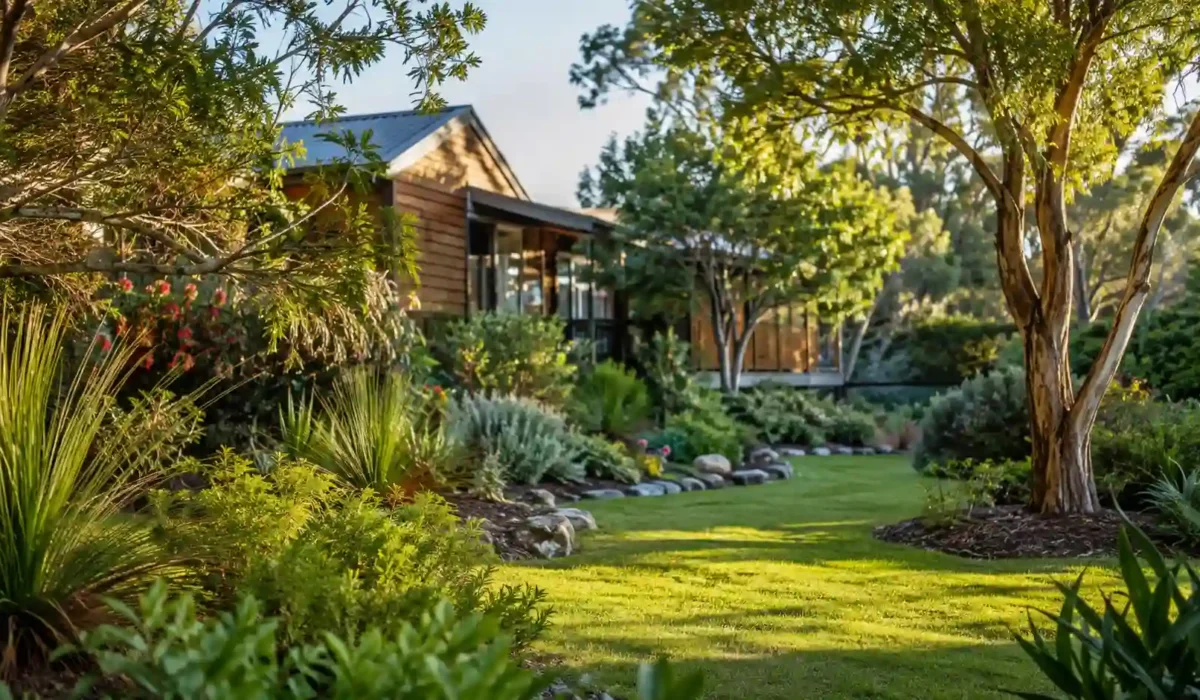
Growth Rate, Root Spread & Plant Sizing Guide
Growth rate, root spread and mature size are the three figures on a plant tag that determine whether a tree or shrub will actually fit its spot — and most planting mistakes happen because gardeners read them in isolation rather than together. This guide zooms in on one part of a much bigger picture — for the full rundown on choosing, planting and maintaining your garden, see our complete plant care and growing guide. A plant’s growth rate (slow, moderate or fast) tells you how quickly it reaches its mature size (height and width), while its root spread — often 1.5 to 2 times the width of its canopy — determines how close it can safely sit to a fence, pipe, pool or foundation. Reading all three together, before planting, is the single most reliable way to avoid a costly removal or repair job later.
By Elemo Baker | Plant Care & Gardening Expert
Last Updated: August 2026
Quick Summary
- Root spread typically reaches 1.5–2 times the mature canopy width, and often extends well beyond the drip line.
- Trunk diameter is a genuinely useful predictor of root spread in young trees, though the relationship weakens with age.
- First-year growth is almost always slower than the advertised rate because the plant is establishing roots, not growing top growth.
- Soil, sun exposure and water availability shift a plant’s real-world growth rate up or down from its labelled “ideal” range.
- Container plants need gradual pot upsizing (roughly 2–4 inches at a time) rather than one big jump, and in-ground plants need spacing based on mature size, not current size.
What “Growth Rate” and “Mature Size” Actually Mean
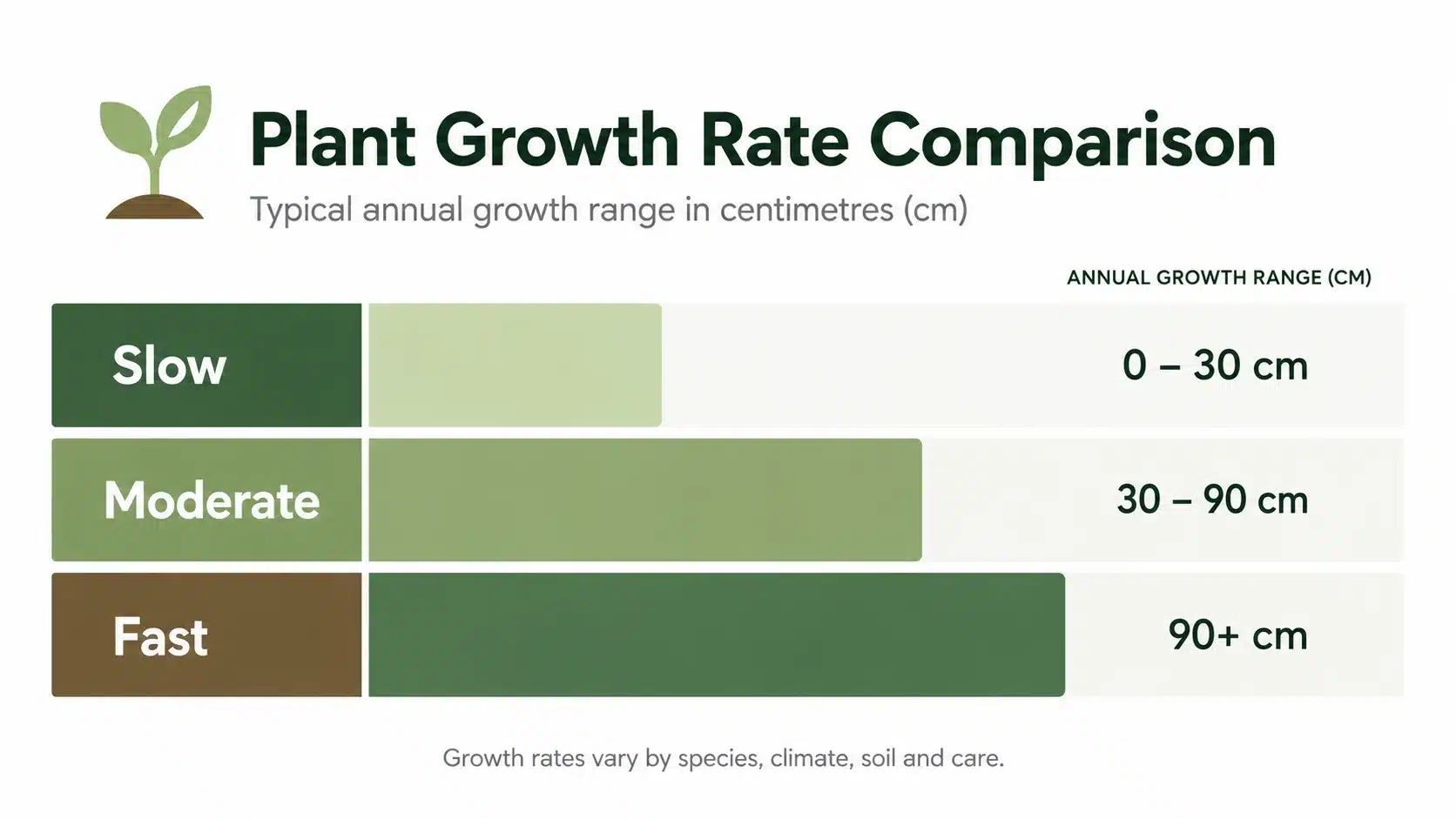
A plant tag’s growth rate category (slow, moderate or fast) is a shorthand for how many centimetres of new growth to expect per year once the plant is established — not from day one. Mature size, usually shown as height × width, is the plant’s expected dimensions at full maturity, which for many trees is a ten-year figure rather than a lifetime maximum.
Reading H × W measurements correctly
The first number is height, the second is spread (canopy width). Both matter for spacing: a plant that stays low but spreads wide can still crowd a path or garden bed even if it never threatens a roofline. Species like Lemon Myrtle and Doryanthes excelsa are useful examples of plants where the width figure matters just as much as the height when planning garden bed spacing.
Slow vs moderate vs fast growth rate categories
| Growth rate category | Typical annual growth (trees/shrubs) | Typical annual growth (perennials) |
| Slow | Under 30 cm/year | Under 15 cm/year |
| Moderate | 30–60 cm/year | 15–30 cm/year |
| Fast | 60 cm+/year | 30 cm+/year |
Our average tree growth rate chart for Australian conditions breaks this down further by species, since local soil and climate shift these ranges more than most nursery labels admit. Pittosporum Silver Sheen is a good real-world example of a “moderate” grower that behaves closer to “fast” under good coastal conditions.
Crepe myrtle varieties can differ substantially in mature height and canopy spread, so comparing the sizes and growth habits of Australian crepe myrtle varieties can help you match the tree to the space available.
Why First-Year Growth Is Slower Than the Label Promises
In our experience growing a wide range of Australian natives and exotics, almost every new planting appears to stall in its first year — and this is normal, not a sign of failure. The plant is spending its energy establishing a functional root system before it invests in visible top growth.
The establishment phase
Elemo Baker recommends judging a new planting’s health by leaf colour and turgor in year one, not by height gained. A widely used rule of thumb allows roughly one year of establishment for every inch (2.5 cm) of trunk calliper before a tree begins putting on its “labelled” growth rate. Tuckeroo and Elaeocarpus eumundi both show this pattern clearly — slow visible movement for the first season, followed by a noticeable acceleration once roots are established.
Soil, sun and water: the Australian conditions factor
As of 2026, growers across much of Australia are adjusting expectations for “ideal” growth rates in light of tighter water restrictions and increasingly variable rainfall. Heavy clay soils slow root establishment and can push a “fast” grower toward moderate; sandy, free-draining soils with reliable water can do the opposite. Full sun accelerates growth in sun-loving species but can stress a young plant if watering isn’t consistent through establishment.
Does Trunk Diameter Predict Root Spread?
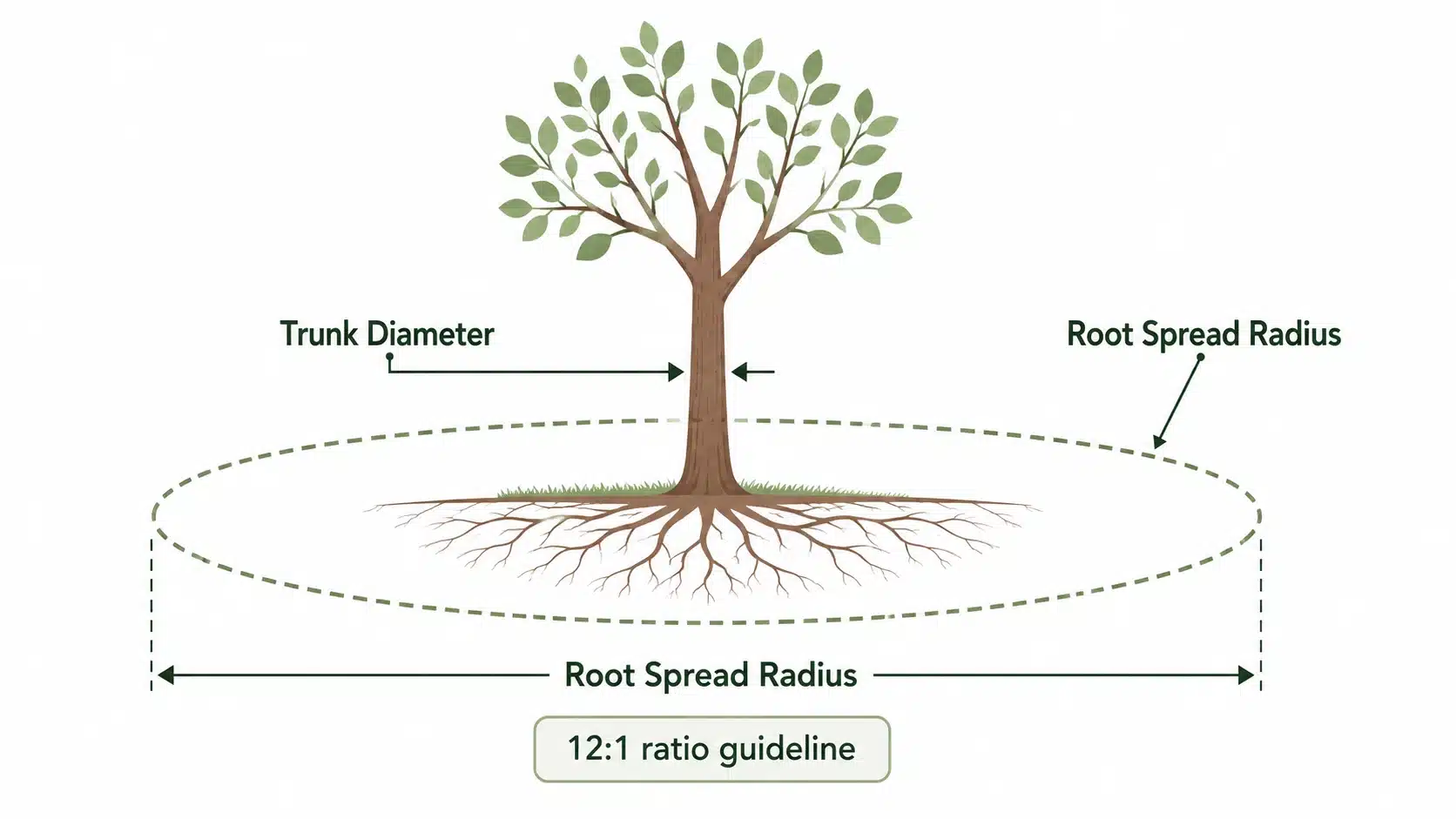
Yes, with some caveats — trunk diameter is one of the better available predictors of root spread for young trees, and it’s a figure home gardeners can actually measure themselves without an arborist.
The trunk-diameter-to-root-radius rule of thumb
Arborists commonly use a tree protection zone radius of around one foot for every inch of trunk diameter (roughly a 12:1 ratio), while landscape references often use 1.5 times the mature canopy width as a simpler working estimate. Both are guidelines rather than guarantees, and the ratio narrows considerably in older, established trees, since root growth slows relative to trunk growth over time.
Applying this to home planting decisions
For species with vigorous or well-documented root systems — such as the gum tree, Poinciana, Teddy Bear Magnolia and species with roots noted for running deep, like Crepe Myrtle — measuring trunk diameter (or checking expected mature calliper) gives a far more reliable planting-distance estimate than eyeballing the canopy alone.
How Far to Plant Trees and Shrubs From Structures
Distances from foundations, fences and pools
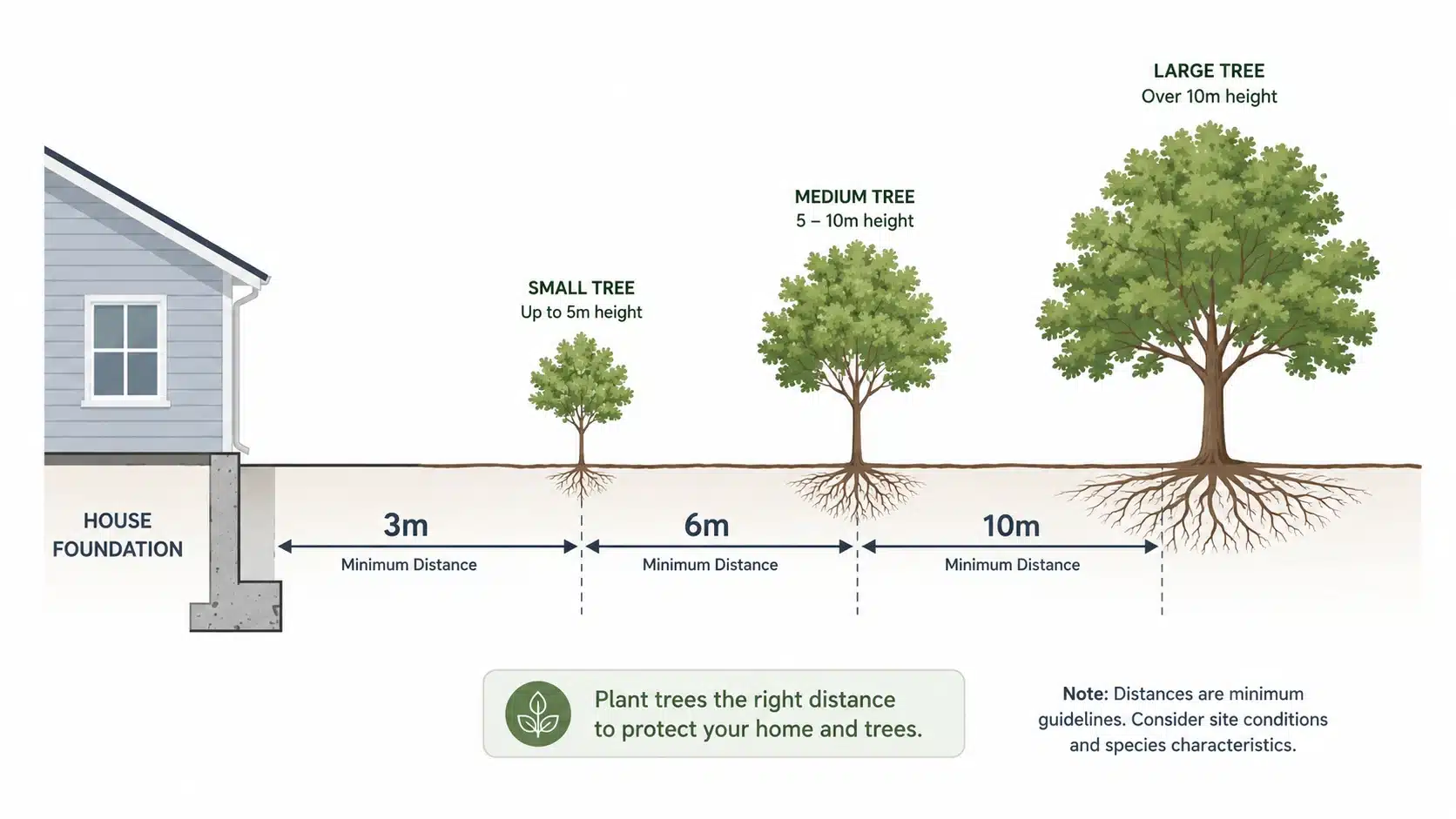
Australian Standard AS 2870-2011 addresses tree placement relative to footings on reactive soils, and as a practical baseline, small trees under 8 m mature height are generally safer at 3–4 m from structures, while larger trees are best kept 8–15 m away depending on species and soil type.
| Mature height | Minimum distance from structures |
| Under 5 m (shrubs, small trees) | 2–3 m |
| 5–10 m (medium trees) | 4–8 m |
| Over 10 m (large trees) | 8–15 m |
Silver birch is a useful example of why mature dimensions and root behaviour should be considered together; see our Silver Birch Tree Australia guide for its expected size, root characteristics and planting considerations.
Root behaviour near pipes and underground services
Roots don’t seek out pipes deliberately, but they exploit existing cracks and moisture, which is why species with documented aggressive or shallow lateral roots — like the gum tree and Poinciana — warrant extra clearance near sewer and stormwater lines, even where the canopy itself looks compact.
Container Sizing: Matching Pot to Root Ball
Root ball to container ratio
As a general rule, a new pot should be roughly 2–4 inches (5–10 cm) wider in diameter than the current root ball — enough to allow real growth without leaving so much excess soil that it stays waterlogged. Unusual or fibrous root systems, such as those on the Firestick plant, still follow this principle even though the above-ground growth habit looks nothing like a typical shrub.
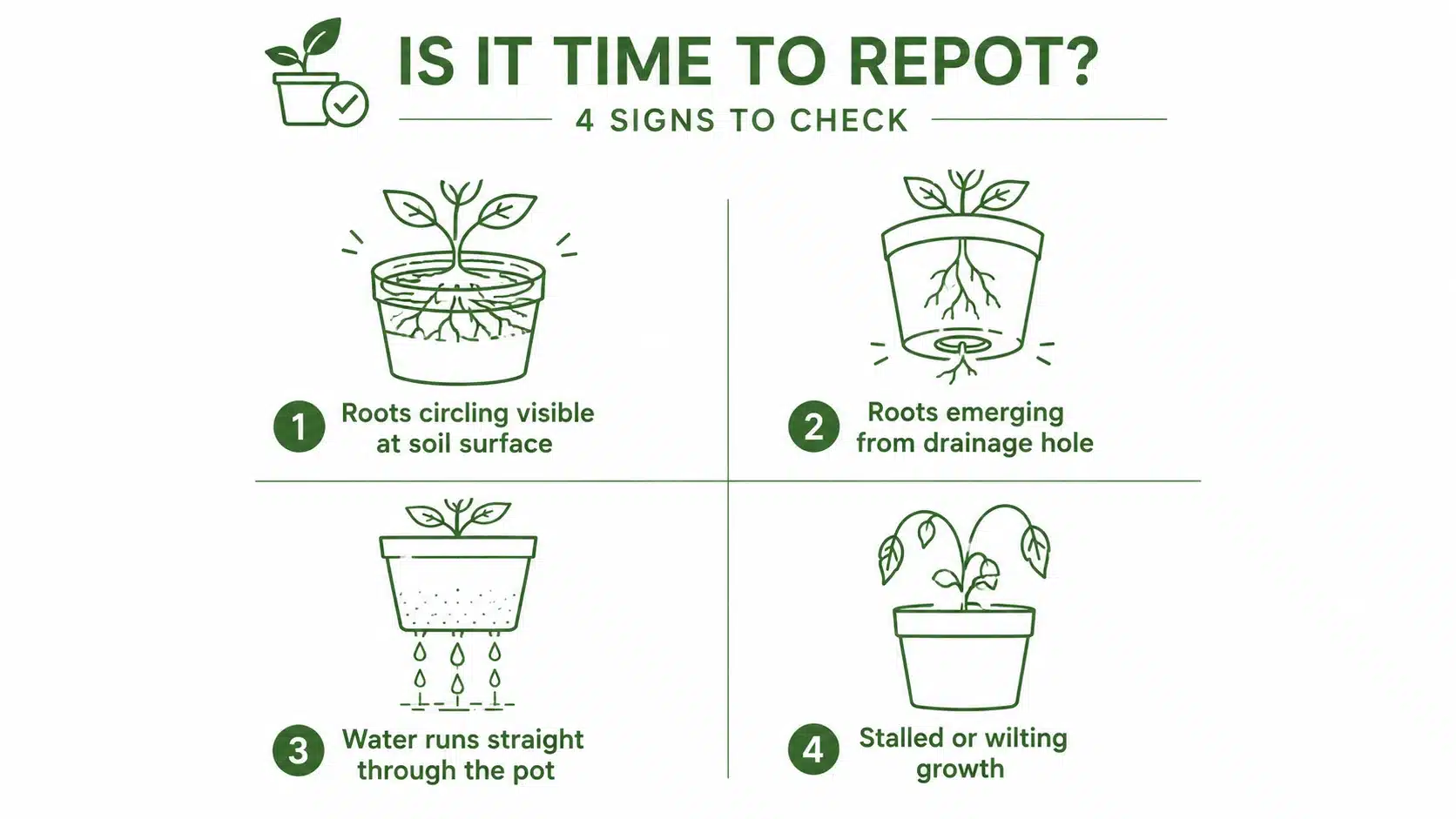
Signs a plant needs repotting or more ground space
- Roots visible circling the surface or emerging from drainage holes
- Water running straight through without being absorbed
- Growth stalling despite consistent watering and feeding
- The root ball holding the pot’s shape once removed
In-Ground vs Container: Which Suits Your Plant?
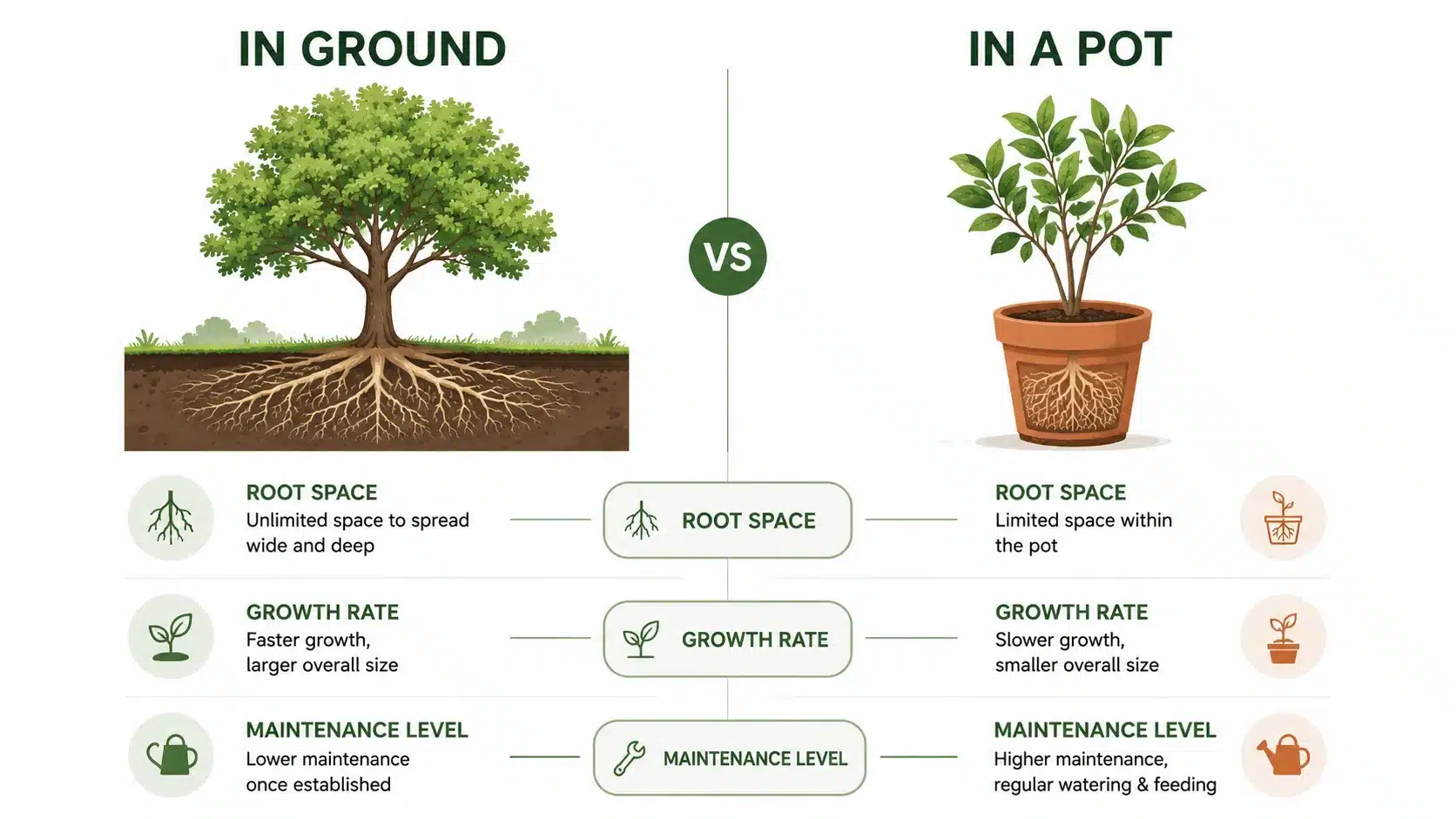
| Factor | In-ground | Container |
| Root space | Effectively unlimited, growth matches labelled potential | Limited by pot size, naturally restricts final size |
| Growth rate | Tracks labelled rate closely given good soil | Often slower once root-bound |
| Maintenance | Occasional pruning for spacing | Regular repotting or root pruning needed |
| Best suited to | Species needing full mature size and spread | Smaller cultivars, patios, rentals, indoor specimens |
A Practical Framework: Reading Any Plant Tag Before You Buy
- Note the mature H × W figure and treat the width as your minimum spacing requirement.
- Check the growth rate category and translate it into an approximate annual growth figure.
- Estimate root spread at 1.5–2 times canopy width, or use trunk diameter if it’s a young, well-documented species.
- Decide in-ground or container based on available root space, not just visible space.
- Apply the relevant distance guide to structures, pipes and boundaries before digging.
Conclusion
Growth rate, root spread and mature size aren’t three separate facts to look up — they’re one decision. A plant’s tag tells you how big it will get and how fast; its likely root spread tells you how far it needs to sit from anything valuable; and knowing which of the two applies to a container specimen versus an in-ground planting tells you whether you’re choosing a pot size or a planting distance. Read together, these figures turn a plant tag from a rough guess into a reliable planning tool — and they’re the difference between a specimen that thrives in its spot for decades and one that needs removing in five years.
FAQs
How do I know how big a plant will really get?
Check the mature height × width figure on the label or supplier listing, and treat it as a ten-year estimate rather than an absolute ceiling — some long-lived trees continue growing slowly well beyond that point.
Does trunk diameter tell you root spread?
Yes, for young trees trunk diameter is a reasonably reliable predictor, commonly estimated at around a 12:1 root-radius-to-trunk-diameter ratio, though the relationship weakens as trees mature.
How far should trees be from a house in Australia?
As a baseline guided by AS 2870-2011 principles, small trees need 2–3 m clearance, medium trees 4–8 m, and large trees 8–15 m, adjusted for soil type and species root habit.
How often should I repot a plant?
Most actively growing plants benefit from repotting every 1–2 years, or as soon as roots circle the pot’s edge or emerge from drainage holes, using a pot only 2–4 inches wider than the current one.
Why is my new tree or shrub growing slower than the label said?
New plantings are usually in an establishment phase, directing energy into root development rather than visible top growth, which can take a full growing season or more before labelled growth rates apply.
3 Comments