

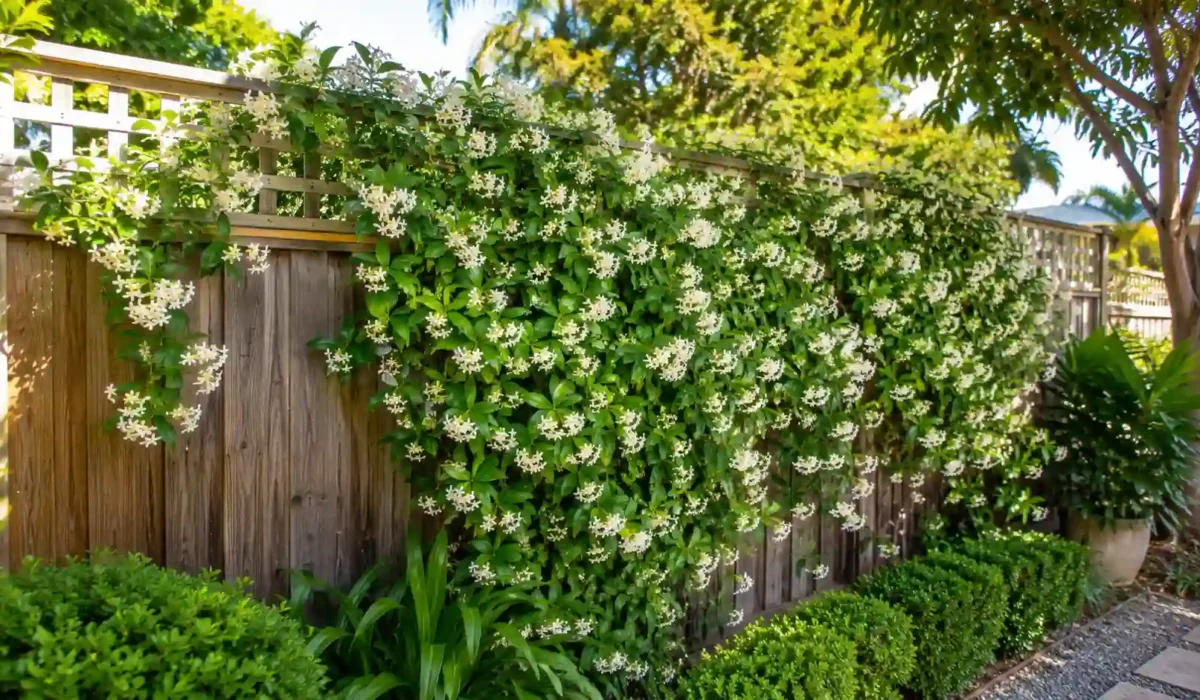
Star Jasmine Brisbane: Growth, Care & Plant Guide
According to Elemo Baker, star jasmine (Trachelospermum jasminoides) thrives in Brisbane’s subtropical climate, growing best in full sun to part shade with moist, well-drained soil. This evergreen climber produces masses of fragrant white star-shaped flowers from spring into summer, reaches 3–6 metres as a climber, and tolerates Brisbane’s frost-free conditions and humidity with minimal maintenance once established.
Beyond its climbing habit, star jasmine can be clipped into a low hedge or trained as a groundcover reaching just 0.5 metres, and it’s often considered possum-resistant, a useful trait for Brisbane gardens bordering bushland. New growth typically emerges bronze before deepening to glossy green, and the plant’s milky sap can cause mild skin irritation for sensitive gardeners during pruning.
Brisbane gardeners can explore more suitable plant choices and design ideas in our Australian Plants Guide: Indoor Houseplants & Garden Design, which covers indoor and outdoor plant selections for Australian conditions.
By Elemo Baker | Plant Care & Gardening Expert
Last Updated: July 2026
Quick Summary
- Star jasmine thrives in Brisbane’s subtropical climate, growing well in full sun to part shade.
- It is a vigorous evergreen climber that can also be trained as ground cover or a hedge plant.
- Established plants can produce 2–5m of growth in the first few years when given suitable support.
- Fragrant white flowers appear mainly from spring through summer.
- Regular pruning and correct positioning help maintain healthy growth and flowering.
Does Star Jasmine Grow Well in Brisbane?
Yes, star jasmine grows very well in Brisbane because the city’s warm subtropical conditions closely match the plant’s preferred environment. It handles humid summers, mild winters, and coastal conditions, making it one of the best evergreen climbers for many Brisbane gardens.
Brisbane’s climate provides:
- Warm temperatures that encourage active growth.
- Mild winters with very low frost risk.
- Good conditions for flowering from spring into summer.
- Coastal tolerance when planted in suitable soil.
In exposed coastal gardens, young plants may benefit from protection against strong winds and salt spray. In cooler inland Brisbane areas, frost is uncommon, but protecting newly planted vines during rare cold events can improve establishment.
For gardeners planning a layered landscape design, combining climbing plants with larger evergreen species can create year-round structure, similar to the options discussed in our Fast Growing Evergreen Trees Australia Guide.
What Is Star Jasmine? (Botanical Overview)
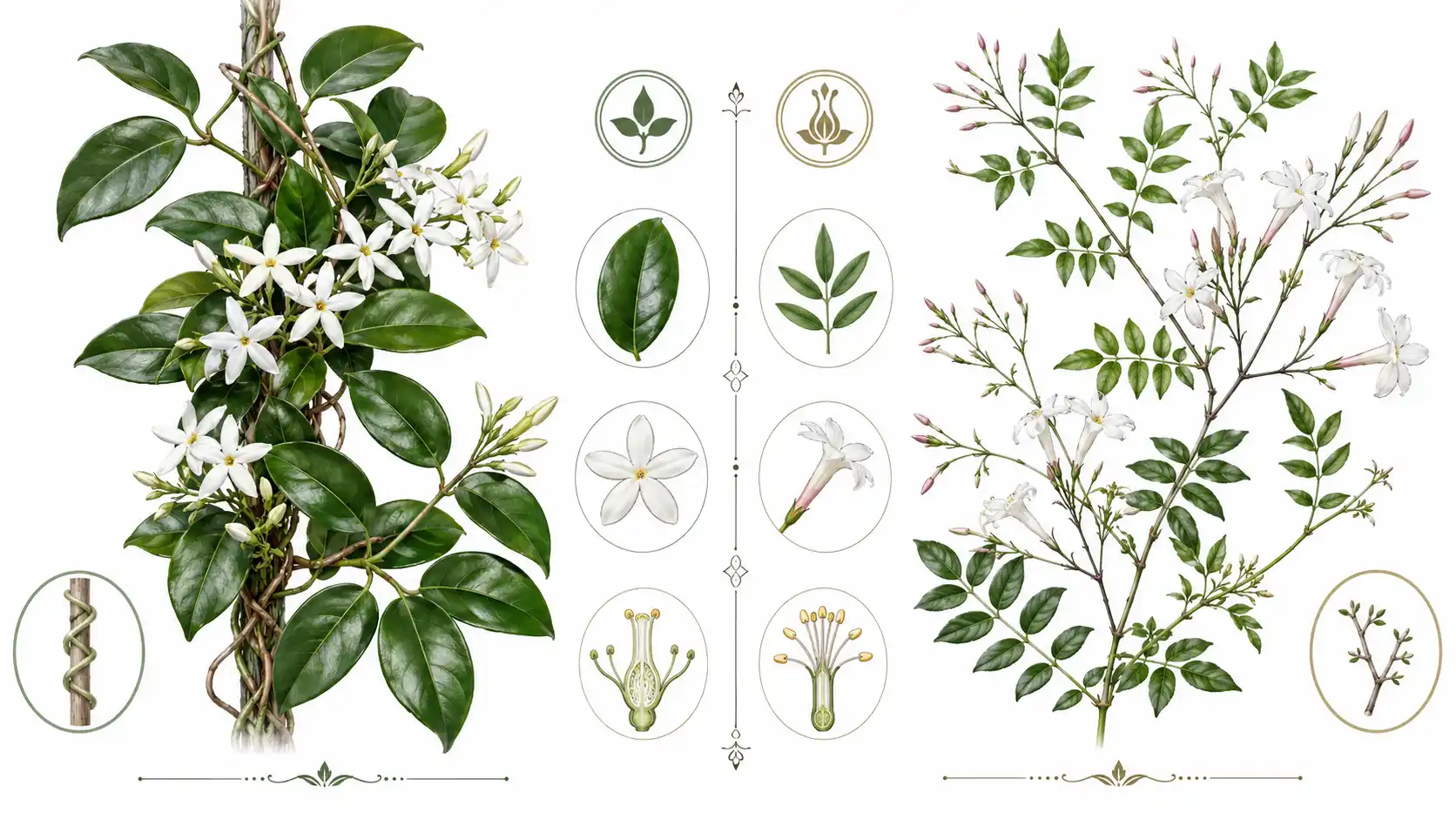
Star jasmine (Trachelospermum jasminoides) is an evergreen climbing vine native to parts of China, Korea, and Japan. It produces glossy green leaves and clusters of highly fragrant, white, pinwheel-shaped flowers.
Although called jasmine, it is botanically different from true jasmine species.
Star Jasmine vs True Jasmine
Star jasmine and true jasmine belong to different plant groups:
| Feature | Star Jasmine | True Jasmine |
| Botanical name | Trachelospermum jasminoides | Jasminum species |
| Plant family | Apocynaceae | Oleaceae |
| Flower appearance | White star-shaped flowers | Usually white or yellow flowers |
| Growth habit | Evergreen climbing vine | Varies by species |
| Fragrance | Strong sweet scent | Often highly fragrant |
Some Jasminum species are considered environmental weeds in parts of Australia, which contributes to questions about why some jasmine flowers are restricted. Star jasmine itself is generally not classified in the same way and is widely grown as an ornamental evergreen jasmine.
How Fast Does Star Jasmine Grow in Australia?
Star jasmine is considered a vigorous, fast-growing climber once established. In Australian gardens, it commonly reaches 2–5m of climbing growth within the first few years when planted in suitable conditions with support, sunlight, and regular care.
During the first 12 weeks after planting, growth is usually focused on root establishment. Once the root system develops, above-ground growth becomes noticeably faster.
Growth speed depends on:
- Amount of sunlight received.
- Soil quality and drainage.
- Water availability.
- Temperature and seasonal conditions.
As ground cover, growth is slower and more spreading, often forming a dense mat rather than climbing vertically.
How Big Does Star Jasmine Get?
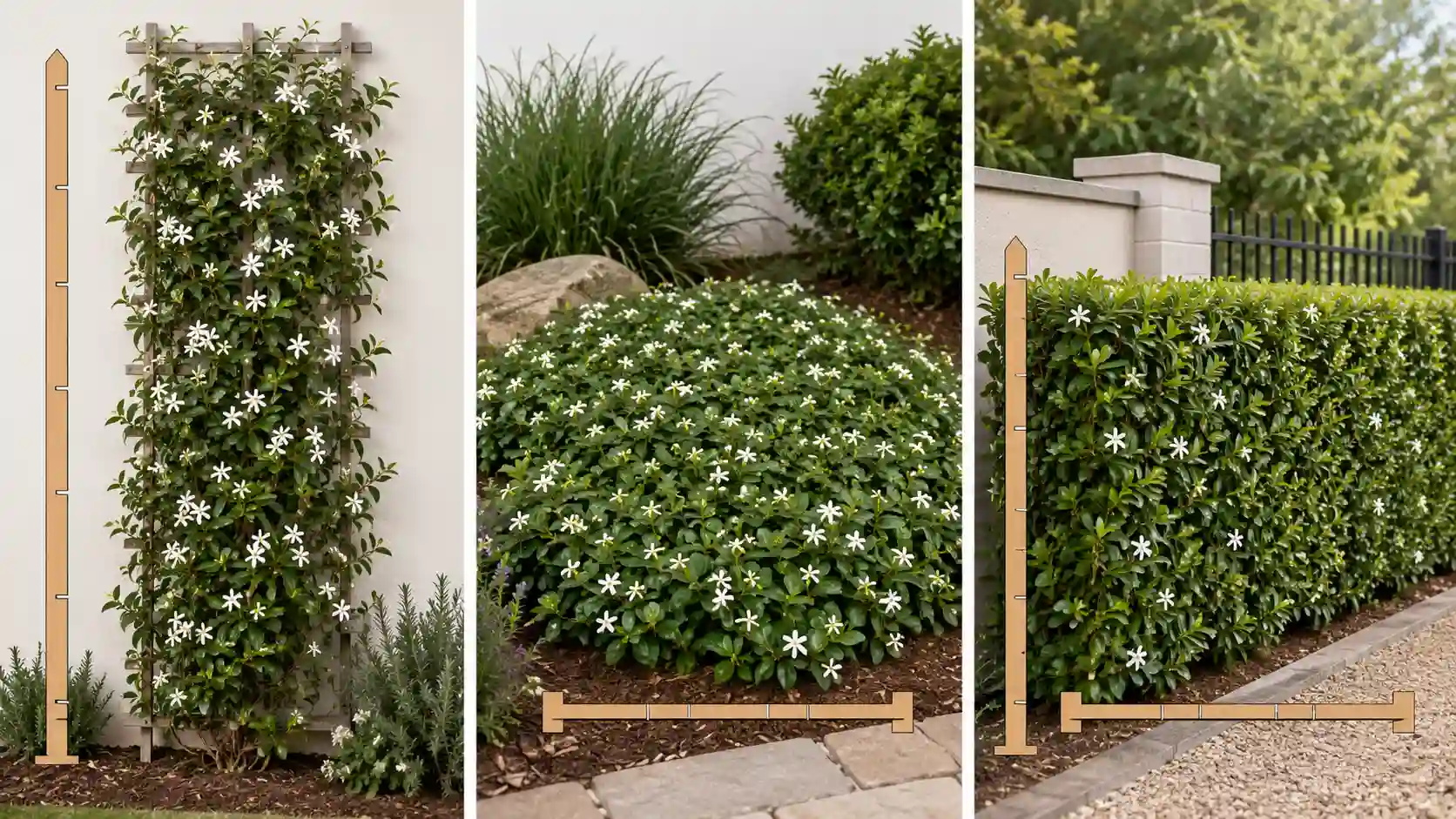
Star jasmine size depends greatly on how it is grown and supported.
As a Climber
When trained vertically, star jasmine typically reaches 3–6m high, although mature plants can climb higher with strong structures. Some established vines may reach around 9–10m when supported by sturdy frameworks.
Typical climbing dimensions:
- Height: 3–6m commonly
- Possible height: up to 9–10m
- Spread: around 1–2m
As Ground Cover
When allowed to spread horizontally, star jasmine remains much lower. It can be maintained under 50cm high and creates a dense evergreen carpet.
| Growth Habit | Height | Spread | Support Needed | Ideal Use |
| Climber | 3–6m | 1–2m | Trellis or wires | Walls, fences, pergolas |
| Ground cover | Under 50cm | Spreading | No support | Slopes, garden beds |
| Hedge | 1–3m managed height | Controlled width | Optional | Screening and borders |
Star Jasmine Growing Conditions and Care Guide
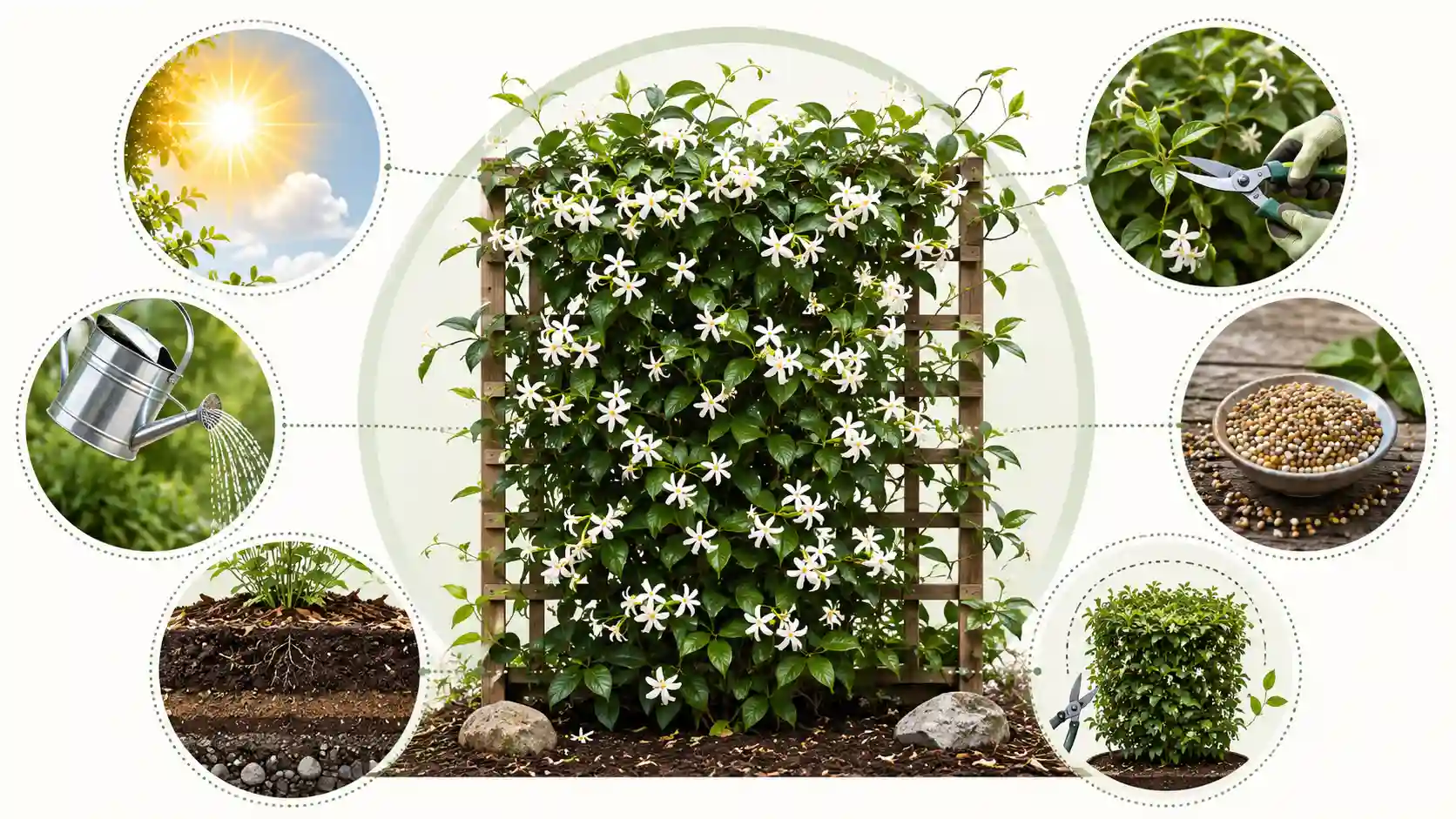
Star jasmine care is relatively simple once the plant is established. Providing the correct growing conditions encourages stronger growth and better flowering.
Sunlight
Star jasmine grows best in full sun to part shade. At least several hours of direct sunlight daily encourages heavier flowering.
Deep shade may result in:
- Reduced flowers.
- Thin, stretched growth.
- Slower establishment.
Soil
Star jasmine prefers fertile, well-drained soil but adapts to many soil types, including:
- Sandy soil.
- Loamy soil.
- Improved clay soil.
Poor drainage is the main soil issue to avoid.
Watering
Young plants need regular watering while establishing. Once mature, star jasmine becomes moderately drought tolerant.
A practical approach:
- Water deeply after planting.
- Maintain consistent moisture during the first growing season.
- Reduce watering once roots are established.
Fertilising
Apply a balanced slow-release fertiliser in spring to support active growth and flowering.
Avoid excessive nitrogen because it can encourage leaves rather than flowers.
Pruning
Light pruning after flowering helps maintain shape and encourages bushier growth. Star jasmine also tolerates harder pruning when plants become overgrown.
In our experience growing vigorous climbers, regular light maintenance is usually easier than waiting until the plant requires major cutting back.
Does Star Jasmine Need a Trellis?
Yes, star jasmine needs a trellis, wires, or another support structure when grown as a climbing plant. Its twining stems naturally wrap around nearby structures and use small aerial rootlets to help attach to surfaces.
A support system is recommended for:
- Fence coverage.
- Wall training.
- Pergolas.
- Privacy screens.
For ground cover planting, no trellis is required because the plant spreads horizontally.
Pruning and Maintenance
Does Star Jasmine Need to Be Cut Back Every Year?
Star jasmine does not have to be cut back every year, but annual or twice-yearly pruning is recommended to maintain shape and control vigorous growth.
The best pruning time in Australia is usually:
- After the main flowering period.
- During active growing seasons for shaping.
Regular pruning helps:
- Maintain a dense hedge.
- Prevent tangled growth.
- Encourage new flowering stems.
Star Jasmine in Pots vs In the Ground
Star jasmine can grow successfully in containers or directly in garden soil.
| Feature | Pots | Ground |
| Growth control | Easier to control | More vigorous growth |
| Mobility | Can be moved | Permanent planting |
| Flowering | Good with care | Usually heavier |
| Water needs | Higher | Lower once established |
Container Growing
For star jasmine in pots:
- Use a quality potting mix.
- Choose a container of at least 3 gallons.
- Provide drainage holes.
- Add support if training upward.
In-Ground Growing
Garden planting allows roots to spread naturally and usually produces faster growth and larger plants.
Gardeners looking for alternative hedge plants with dense foliage may also compare star jasmine with traditional screening shrubs such as Photinia Fraseri Robusta.
How Many Years Does It Take for Jasmine to Flower?
Star jasmine usually flowers within 1–2 growing seasons after planting when conditions are suitable. Established plants produce their strongest flowering display from spring through summer.
Flowering depends on:
- Sun exposure.
- Plant maturity.
- Pruning timing.
- Nutrition.
Some plants may produce occasional flowers outside the main flowering season in warm climates.
Star Jasmine in Winter
Star jasmine is evergreen and normally keeps its leaves throughout winter. Unlike deciduous climbers, it does not lose its foliage completely.
During cooler periods:
- Leaves may develop bronze or reddish tones.
- Growth slows naturally.
- Young plants may need frost protection in colder areas.
Brisbane winters are generally mild enough for star jasmine to remain healthy outdoors.
Star Jasmine Root System — What to Know
Star jasmine does not typically develop the aggressive underground root systems associated with some large invasive vines or trees.
Its climbing ability comes mainly from:
- Twining stems.
- Aerial rootlets that help attach to surfaces.
As ground cover, stems touching soil may develop roots along runners, allowing the plant to spread.
Elemo Baker recommends planting with enough space because although it is not generally considered invasive in Australia, it can become vigorous in warm climates.
What Not to Plant Near Jasmine
Avoid planting star jasmine directly beside other vigorous climbers because they may compete for:
- Light.
- Water.
- Support structures.
Small delicate plants may become overwhelmed if star jasmine is left unmanaged.
Keep spacing between:
- Other climbing vines.
- Slow-growing shrubs.
- Small ornamental plants.
Planning plant spacing is an important part of successful landscaping, and our guide to Best Trees and Shrubs for Australian Gardens covers selecting suitable plants based on growth habits and garden conditions.
Tricolour and Variegated Star Jasmine Varieties
Trachelospermum jasminoides ‘Tricolour’
Tricolour jasmine is a slower-growing decorative form with attractive variegated leaves featuring cream and pink tones.
Characteristics:
- Lower growing habit.
- Usually kept around 50cm high.
- Suitable as ground cover.
- Less vigorous than standard star jasmine.
Asiatic Jasmine (Trachelospermum asiaticum)
Asiatic jasmine is a related species with smaller leaves and flowers. It is generally more compact and slower growing than Trachelospermum jasminoides.
| Feature | T. jasminoides | ‘Tricolour’ | T. asiaticum |
| Leaf type | Glossy green | Cream/pink variegated | Smaller green leaves |
| Growth rate | Fast | Slow | Moderate |
| Cold tolerance | Good | Good | Slightly higher |
| Best use | Climbing and screening | Ground cover | Containers and compact areas |
Is Star Jasmine Toxic to Pets?
Star jasmine is commonly listed by many pet plant references as non-toxic to cats and dogs. However, the plant produces a milky sap that may irritate skin, and eating unfamiliar plant material can still cause mild digestive discomfort.
Pet owners should:
- Prevent excessive chewing.
- Wash skin after handling sap.
- Contact a veterinarian if unusual symptoms appear.
Common Star Jasmine Problems and How to Fix Them
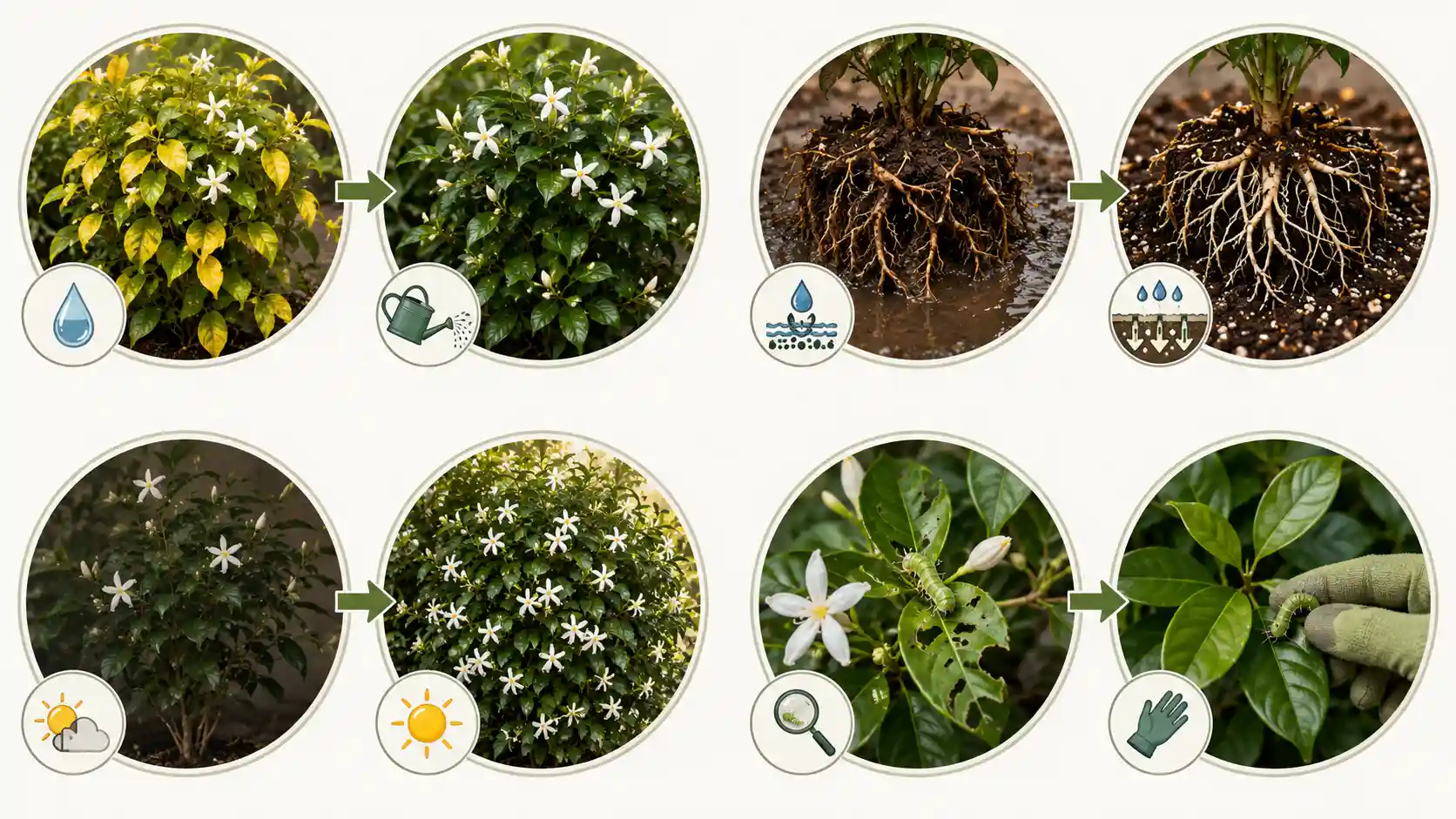
Yellowing Leaves
Yellow leaves are often caused by overwatering or poor drainage.
Fix:
- Improve drainage.
- Reduce watering frequency.
- Check soil moisture before watering.
Root Rot
Root rot occurs when roots remain in waterlogged soil.
Prevention:
- Use well-drained soil.
- Avoid heavy watering.
- Plant in raised beds if drainage is poor.
Reduced Flowering
Low flower production is commonly caused by insufficient sunlight.
Solution:
- Move plants to brighter locations where possible.
- Reduce heavy shade from nearby plants.
Pests
Star jasmine is generally low maintenance, but occasional pests such as caterpillars may appear.
Although star jasmine is generally low-maintenance, identifying pests early is important for maintaining plant health; our Garden Pest Identification Guide for Australian Gardens explains common garden pests and their management.
Monitor plants and remove pests early.
Beginner Mistakes to Avoid With Star Jasmine
Common mistakes include:
- Overwatering established plants.
- Growing in deep shade and expecting heavy flowering.
- Failing to install climbing support early.
- Forgetting mulch during Brisbane summers.
Mulching helps conserve soil moisture and protects roots from heat.
Star Jasmine as a Screen, Hedge or Fence Cover in Brisbane Gardens
Star jasmine is one of the most useful plants for Brisbane screening because it creates dense evergreen coverage.
It can be trained over:
- Fences.
- Trellises.
- Walls.
- Garden structures.
For privacy planting, regular pruning encourages thick growth rather than a sparse climbing habit. Star jasmine is one of many reliable options for boundary planting; gardeners comparing different screening choices can also explore our guide to low-maintenance plants for fence line in Australia.
While star jasmine works well as a climbing screen, upright evergreen shrubs such as Pittosporum Silver Sheen can also be considered when a free-standing hedge is preferred.
Where to Buy Star Jasmine in Brisbane
When selecting star jasmine, choose plants with:
- Healthy green foliage.
- Strong stems.
- A well-established root system.
- No signs of pests or disease.
Larger plants establish faster, but smaller healthy plants often adapt well when planted correctly.
Conclusion
Star jasmine brisbane is an excellent choice for gardeners wanting a fragrant, evergreen, low-maintenance plant suited to subtropical conditions. Trachelospermum jasminoides performs well as a climber, hedge, fence cover, or ground cover when provided with suitable sunlight, drainage, and support.
The key to successful growth is planting it in the right position, installing climbing structures early, maintaining balanced watering, and pruning regularly. With proper care, star jasmine can provide years of dense foliage and seasonal white flowers in Brisbane gardens.
Frequently Asked Questions
Does star jasmine grow well in Brisbane’s climate?
Yes, star jasmine grows very well in Brisbane because it tolerates warm humid summers, mild winters, and low frost conditions.
How fast does star jasmine grow once established?
Once established, star jasmine grows quickly and can produce 2–5m of climbing growth within the first few years under suitable conditions.
Does star jasmine need a trellis to climb?
Yes, star jasmine needs a trellis, wires, or another support structure when grown vertically. It does not need support when used as ground cover.
Is star jasmine invasive or does it have damaging roots?
Star jasmine is not generally considered invasive in Australia, but it can become vigorous. Its roots are usually not considered damaging when planted appropriately.
Is star jasmine toxic to pets?
Star jasmine is commonly regarded as non-toxic to cats and dogs, but its sap may irritate skin and eating plant material may cause digestive upset.
How often should star jasmine be pruned?
Star jasmine benefits from light pruning once or twice yearly, especially after flowering, to maintain shape and encourage dense growth.
What’s the difference between star jasmine and tricolour/Asiatic jasmine?
Standard star jasmine grows faster and is better for climbing, while Tricolour jasmine is a slower decorative ground cover and Asiatic jasmine is more compact with smaller leaves.
1 Comment