
Pink Fringe Flower: Care, Growth & Hedge Guide
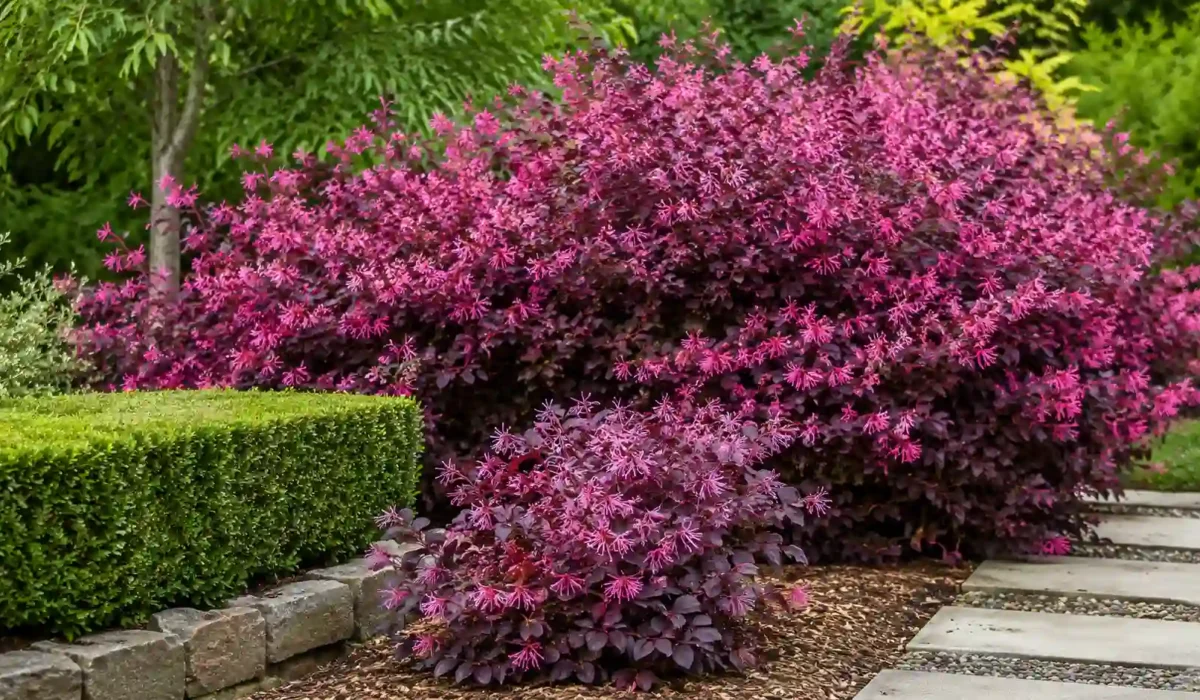
According to Elemo Baker, the pink fringe flower is Loropetalum chinense var. rubrum, an evergreen shrub in the witch hazel family (Hamamelidaceae) native to China and Japan. It produces clusters of narrow, strap-like pink to red flowers from late winter through spring against burgundy-purple foliage, growing 1–4 metres tall depending on cultivar.
The true species Loropetalum chinense actually bears white flowers on green foliage; the pink form sold widely today is the purple-leaved var. rubrum, a sport not introduced from Asia until roughly a century after the white type reached Western gardens. Popular pink cultivars such as ‘Sizzling Pink’ and ‘Zhuzhou’ rebloom sporadically into autumn in milder climates and tolerate hard shearing, making them a favoured hedging or espalier choice in Australian gardens.
By Elemo Baker | Plant Care & Gardening Expert
Last Updated: July 2026
Quick Summary
- Pink fringe flower (Loropetalum chinense var. rubrum) is an evergreen shrub with burgundy foliage and pink spider-like flowers.
- It grows best in full sun to part shade with acidic, well-drained soil.
- Popular Australian varieties include China Pink, Plum Gorgeous, and Sizzling Pink.
- Loropetalum has a slow to moderate growth rate and requires minimal care once established.
- It works well as a hedge, screen plant, or colourful garden feature.
What Is a Pink Fringe Flower?
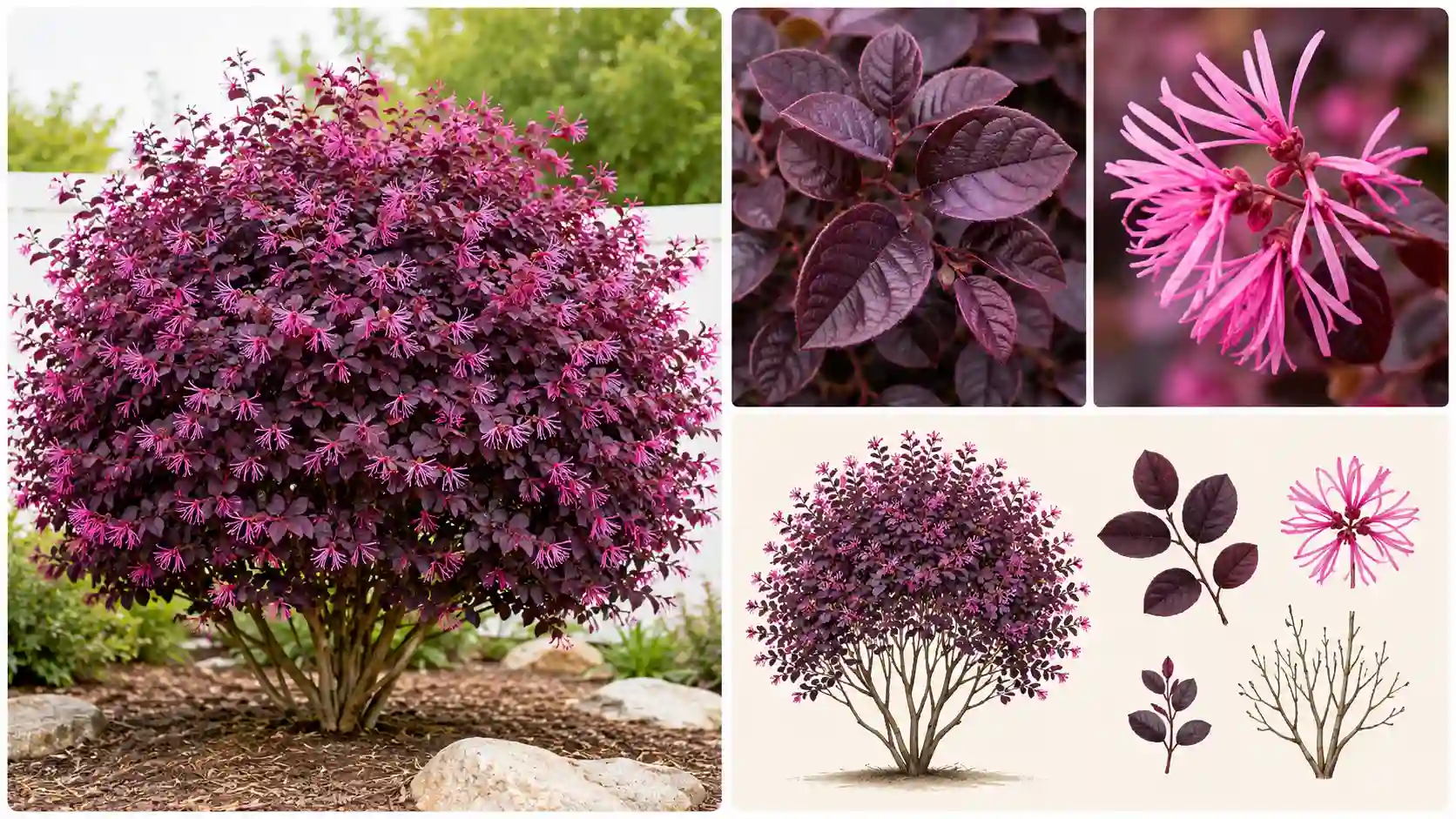
A pink fringe flower is an ornamental form of Loropetalum chinense, specifically Loropetalum chinense var. rubrum, grown for its coloured foliage and pink fringe-like flowers. The plant belongs to the Hamamelidaceae family, which also includes witch hazels.
The botanical classification and natural history of Loropetalum chinense are documented in botanical references, including its relationship within the witch hazel family.
The botanical name is sometimes incorrectly written as Loropetalum chinensis, but the accepted scientific name is Loropetalum chinense.
Common names include:
- Fringe flower
- Chinese fringe flower
- Chinese witch hazel
- Strap flower
Loropetalum originates from China and Japan, where it naturally grows in woodland environments. Today, it is cultivated globally, including Australia, where it is valued for hedges, borders, and feature planting.
The flowers appear as narrow, ribbon-like petals that create a spider-shaped appearance. The red-purple foliage of many cultivars provides colour throughout the year, especially in warmer climates.
Is There a Pink Fringe Tree?
A pink fringe tree is not a separate species. Loropetalum is naturally a shrub, but mature plants can be trained into a small multi-stemmed tree form through selective pruning.
An unpruned or older specimen may develop a woody trunk structure and resemble a small pink Chinese fringe tree. However, most garden plants are maintained as shrubs or hedges.
What Is the Pink Flowered Tree in Australia?
The pink-flowering tree commonly called a pink fringe tree in Australia usually refers to Loropetalum. However, gardeners may also confuse it with other pink-flowering trees such as crepe myrtle (Lagerstroemia) or tabebuia (Handroanthus).
Loropetalum differs because it produces small tassel-like flowers combined with colourful purple foliage, while many flowering trees develop larger canopy structures and showier blooms.
Popular Pink Fringe Flower Varieties in Australia
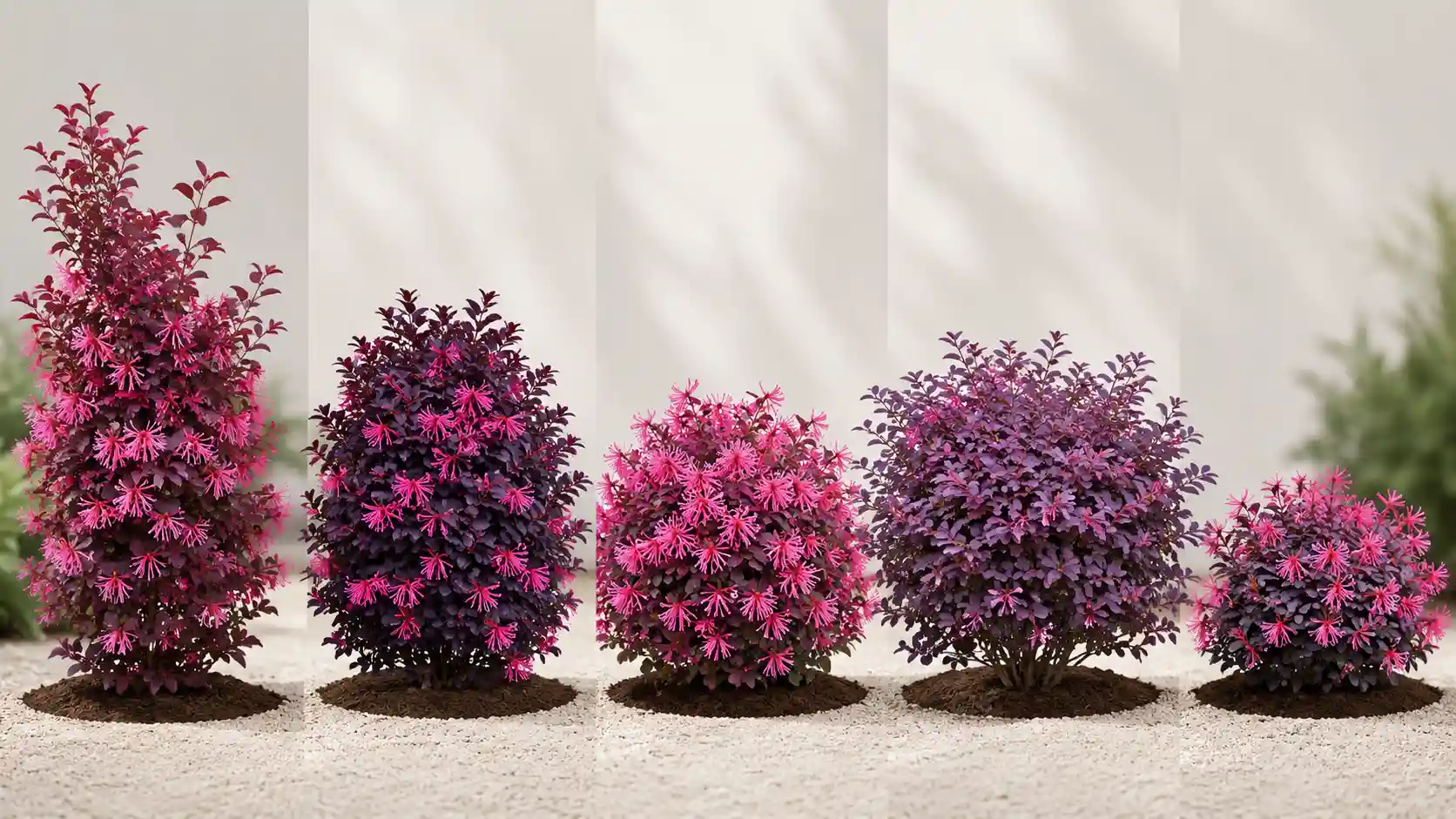
Several Loropetalum cultivars are available in Australia, offering different sizes, foliage colours, and flowering intensity.
| Variety | Mature Size | Foliage | Flower Colour | Best Use |
| China Pink | Around 2m H x 1.5m W | Pinky-brown to burgundy | Vibrant pink | Hedging, feature planting |
| Plum Gorgeous | 1.5–2m H x 1.5–2m W | Deep plum-purple | Magenta pink | Low hedge, pots |
| Sizzling Pink | Compact habit | Burgundy new growth, purple mature leaves | Deep pink | Mass planting |
| Purple Prince | Medium-sized | Dark purple foliage | Bright pink | Feature shrub |
| Bobz Pink | Compact | Purple-red foliage | Pink flowers | Small gardens |
Which Loropetalum Is Best?
The best Loropetalum variety depends on garden size, colour preference, and purpose.
- China Pink is ideal for traditional hedges and larger garden spaces.
- Plum Gorgeous suits gardeners wanting intense purple foliage and container growing.
- Sizzling Pink works well for borders and mass planting where compact growth is preferred.
- Purple Prince is suitable as a feature shrub with strong colour contrast.
Where Does Loropetalum Grow Best?
Loropetalum grows best in locations that provide bright light, good drainage, and slightly acidic soil. In Australia, it performs well across many temperate and subtropical regions. In colder Australian regions, Loropetalum can be planted alongside other frost tolerant plants in Australia to create a resilient garden suited to cooler conditions.
Ideal growing conditions include:
- Full sun to part shade
- Moist but well-drained soil
- Acidic soil with a pH between approximately 5.5 and 6.5
- Protection from harsh winds
- Shelter from severe frost when young
Avoid planting Loropetalum in heavy clay soils that remain wet or alkaline soils containing excess lime.
Does Loropetalum Like Sun or Shade?
Loropetalum prefers full sun to part shade. More sunlight generally produces stronger purple foliage colour and better flowering.
Plants grown in deep shade may survive but often develop greener leaves and fewer flowers.
How to Grow and Care for Pink Fringe Flower
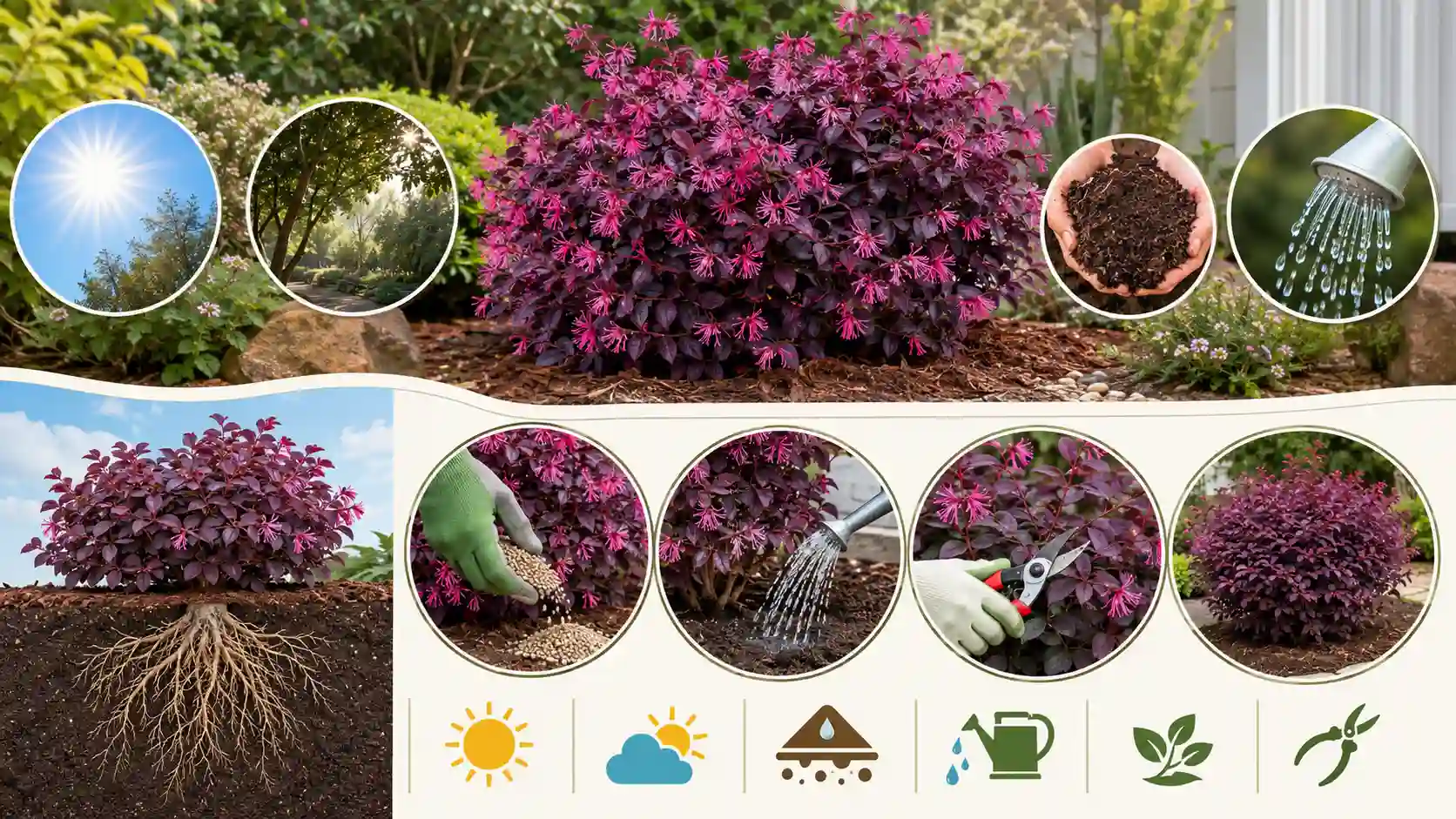
Pink fringe flower is considered an easy-care shrub when planted in suitable conditions.
Watering
Young plants require regular watering while establishing roots. Once mature, Loropetalum becomes moderately drought tolerant.
A practical watering approach:
- Water deeply once or twice weekly during establishment.
- Reduce watering after the root system develops.
- Increase watering during extended heat or drought.
Light
Full sun encourages the strongest foliage colours, while part shade can help protect plants in very hot climates.
Soil
The ideal soil is:
- Free-draining
- Humus-rich
- Slightly acidic
- Moisture-retentive without becoming waterlogged
Fertilising
Apply a balanced slow-release fertiliser in spring to encourage healthy foliage and flowering.
Pruning
Prune after flowering to maintain shape and encourage dense growth. Regular clipping is useful for hedges.
Climate Tolerance
Established Loropetalum plants tolerate moderate frost and a range of Australian climates. Young plants may need protection during severe cold conditions.
Is Loropetalum Low Maintenance?
Yes, Loropetalum is considered low maintenance once established. It requires occasional pruning, moderate watering, and basic soil management.
In our experience growing ornamental hedging plants, Loropetalum performs best when gardeners avoid excessive watering and focus on improving drainage.
Does Loropetalum Need a Lot of Water?
No. Loropetalum has moderate water requirements. It needs more water during establishment but becomes more drought tolerant as roots mature.
Loropetalum Growth Rate and Size
Loropetalum has a slow to moderate growth rate. Growth speed depends on sunlight, soil quality, climate, and cultivar.
Typical outdoor sizes range from:
- Small cultivars: under 1.5m
- Medium shrubs: 1.5–2m
- Larger forms: above 2m with pruning
Loropetalum is rarely grown indoors because it requires strong light and outdoor conditions to maintain colour and flowering.
How Fast Does Loropetalum Grow? / Is Loropetalum a Fast Growing Plant?
Loropetalum is not considered a fast-growing plant. It usually grows slowly to moderately, with faster growth occurring in warm climates with good sunlight and fertile acidic soil.
How Big Do Loropetalum Bushes Get?
Most Loropetalum bushes grow between 1 and 2 metres tall, although size varies by cultivar and pruning style.
Pruning Pink Fringe Flower
Pruning helps maintain shape, improve density, and encourage flowering.
Loropetalum can be:
- Lightly trimmed after flowering
- Shaped into formal hedges
- Reduced in size when necessary
Can Loropetalum Be Pruned to the Ground? Will It Grow Back?
Yes, established Loropetalum can tolerate hard pruning and may regrow from the base. However, cutting a plant completely to ground level should only be done when necessary, as recovery depends on plant health and environmental conditions.
Can Loropetalum Be Kept Small?
Yes. Regular pruning and choosing compact cultivars allow Loropetalum to remain small. Dwarf varieties are especially useful for small gardens and containers.
Using Pink Fringe Flower as a Hedge
Loropetalum is an excellent hedge plant because of its colourful foliage and dense branching. When planning a boundary planting, pink fringe flower can be combined with other low-maintenance plants for fence lines in Australia to create privacy while reducing ongoing garden maintenance.
Recommended spacing:
- Small cultivars: around 60–80cm apart
- Medium hedges: around 80cm–1.2m apart
Closer planting creates faster screening but increases competition for water and nutrients. For gardeners comparing colourful screening plants, other popular Australian hedge choices such as Photinia Fraseri Robusta also provide dense growth, attractive foliage, and year-round garden structure.
Common Pink Fringe Flower Problems (Problem–Solution Coverage)
Common problems usually occur because of incorrect planting conditions rather than serious disease issues.
- Plant dying: Often caused by overwatering, poor drainage, alkaline soil, or frost injury.
- Leaf drop: Can occur naturally in colder climates or due to stress.
- Poor flowering: Usually linked to insufficient sunlight.
- Dull foliage: Often caused by shade or unsuitable soil conditions.
While Loropetalum is generally resistant to many pests, gardeners should still monitor leaves regularly and use a garden pest identification guide for Australian gardens to recognise common insect problems early.
Does Loropetalum Lose Its Leaves in Winter?
Yes, some leaf loss can occur during winter. Although generally evergreen, Loropetalum may behave as semi-evergreen in colder Australian areas.
Heavy leaf loss may indicate frost damage, root stress, or watering problems.
What Are Common Problems With Loropetalum?
The most common issues include:
- Waterlogged roots
- Poor soil drainage
- High soil pH
- Too much shade
- Severe frost exposure
How to Make Loropetalum More Purple/Pink
Strong foliage colour depends mainly on sunlight and plant health.
To improve colour:
- Provide more direct sunlight.
- Maintain slightly acidic soil.
- Apply suitable fertiliser during active growth.
- Avoid excessive nitrogen, which can encourage green growth.
Loropetalum is one of the most popular choices for colourful screening, similar to other purple hedge plants in Australia that are selected for their foliage colour and landscape appeal.
Are Fringe Flowers Toxic to Pets?
Loropetalum is generally considered non-toxic or low risk to pets according to common horticultural references. However, pets should still be supervised because eating large amounts of any plant material may cause digestive discomfort.
Does Loropetalum Have Invasive Roots?
No. Loropetalum has a fibrous, relatively shallow root system and is not considered invasive. It is generally safe near pathways and garden structures when planted with appropriate spacing.
Companion Plants for Pink Fringe Flower
Good companion plants include:
- Grevilleas for native Australian texture
- Ornamental grasses for movement
- Silver foliage plants for contrast
- Lavender for colour variation
These combinations highlight Loropetalum’s purple foliage and pink flowers.
Benefits and Cons of Growing Loropetalum
Benefits
- Year-round colourful foliage
- Attractive pink flowers
- Low maintenance requirements
- Suitable for hedges and screens
- Good drought tolerance once established
- Generally resistant to many common pests
Cons
- Slow to moderate growth
- Colour fades in low light
- Young plants can be frost sensitive
- Requires acidic soil for best performance
Beginner Mistakes With Pink Fringe Flower
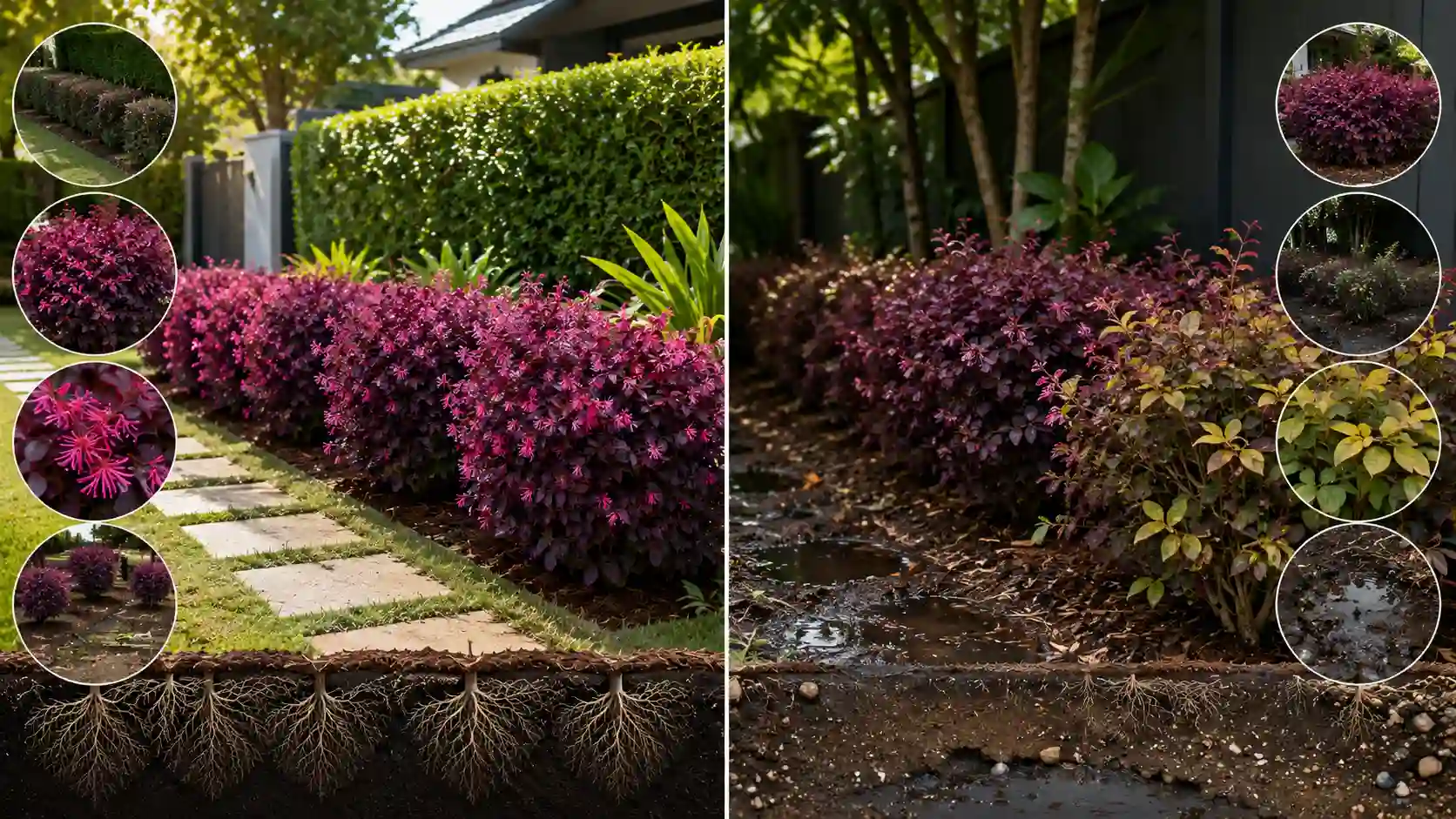
Common beginner mistakes include:
- Overwatering plants in poorly drained soil
- Growing Loropetalum in deep shade and expecting bright foliage
- Planting hedges too closely together
- Skipping pruning after flowering
- Ignoring soil acidity requirements
Elemo Baker recommends checking sunlight exposure and drainage before planting because these two factors have the biggest effect on long-term performance.
Conclusion
The pink fringe flower, or Loropetalum chinense var. rubrum, is a colourful, low-maintenance shrub that suits Australian gardens as a hedge, screen, or feature plant. Its success depends mainly on three factors: providing enough sunlight, maintaining well-drained acidic soil, and pruning correctly after flowering. Choosing the right cultivar, such as China Pink, Plum Gorgeous, or Sizzling Pink, helps match the plant to available space and garden style.
FAQs
What is a pink fringe flower?
A pink fringe flower is Loropetalum chinense var. rubrum, an ornamental shrub known for pink tassel-like flowers and burgundy-purple foliage.
Does Loropetalum like full sun or shade?
Loropetalum prefers full sun to part shade. More sunlight usually improves foliage colour and flowering.
How fast does Loropetalum grow?
Loropetalum grows slowly to moderately, depending on cultivar, climate, soil quality, and care.
Is Loropetalum low maintenance?
Yes. Loropetalum is low maintenance once established and mainly requires occasional pruning, moderate watering, and suitable soil conditions.
Why does my Loropetalum keep losing leaves?
Leaf loss may occur due to winter conditions, frost, overwatering, poor drainage, alkaline soil, or general plant stress.
Are fringe flowers toxic to pets?
Fringe flowers are generally considered non-toxic or low risk to pets, but excessive plant consumption should still be avoided.
Can Loropetalum be pruned to the ground?
Yes, established Loropetalum can tolerate hard pruning and may regrow, although recovery depends on plant health.
What is the best Loropetalum variety for a hedge?
China Pink is one of the most popular hedge varieties because of its size, dense growth, and vibrant pink flowers.