

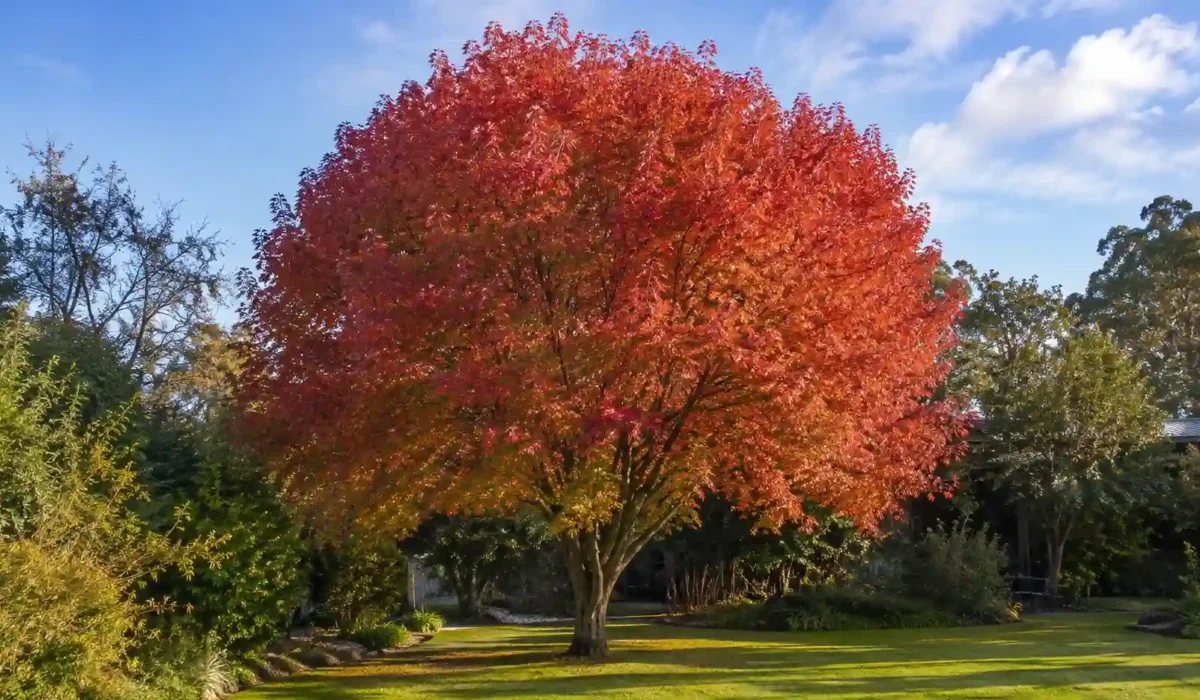
Autumn Blaze Maple Australia: Care, Size & Roots
According to Elemo Baker, Autumn Blaze maple (Acer × freemanii ‘Jeffersred’) grows well across temperate Australian gardens, including Adelaide Hills, Tasmania and southern Victoria, reaching 12-15m tall with a fast growth rate of 60-100cm+ per year. This red maple-silver maple hybrid needs full sun, well-drained soil and a distinct winter chill for its brilliant orange-red autumn colour.
The cultivar was selected in Ohio in the late 1960s and rarely flowers or fruits, making it a comparatively low-litter shade tree next to true red or silver maple. It performs poorly in Australia’s humid subtropical and tropical zones, where insufficient winter chill dulls autumn colour and heavy clay or alkaline soils can trigger iron chlorosis, while its rapid growth can produce weak branch unions that benefit from early structural pruning.
Choosing the right feature tree is an important part of Australian garden planning, and understanding suitable species through guides like Best Trees and Shrubs for Australian Gardens can help homeowners select plants that match their climate and available space.
By Elemo Baker | Plant Care & Gardening Expert
Last Updated: August 2026
Quick Summary
- Autumn Blaze maple (Acer × freemanii ‘Jeffersred’) is a fast-growing hybrid maple valued for vibrant autumn colour and shade.
- Mature trees generally reach 13–20m tall and 7–10m wide, with growth of approximately 1–1.5m per year.
- Its roots are shallow and wide-spreading, so planting 5–7m away from foundations, pools, pipes, and paving is recommended.
- The tree performs best in full sun and cooler Australian climates such as Victoria, Tasmania, ACT, and NSW Tablelands.
- Fairview Flame Maple, Lipstick Maple, and Jeffersred Maple are names often associated with Autumn Blaze, although some refer to different cultivars.
What Is the Autumn Blaze Maple? (Acer × freemanii)
The Autumn Blaze maple (Acer × freemanii ‘Jeffersred’) is a hybrid deciduous tree developed from two North American maple species: red maple (Acer rubrum) and silver maple (Acer saccharinum). It was bred by horticulturist Oliver Freeman at the United States National Arboretum to combine the desirable traits of both parent trees. Autumn Blaze maple belongs to the Freeman maple group (Acer × freemanii), a hybrid maple classification created from red maple and silver maple species.
The hybrid inherits its rapid growth rate mainly from silver maple, while red maple contributes improved branch structure, stronger form, and reliable autumn foliage colour. This combination made Autumn Blaze one of the most widely planted hybrid maples in landscapes where quick shade and seasonal interest are required.
In Australian gardens, the tree is mainly valued for:
- Bright red to orange autumn foliage.
- Faster establishment compared with many traditional ornamental maples.
- A tall upright canopy suitable for large gardens.
- Adaptability to different soil conditions when drainage is adequate.
Although commonly called a maple tree, it is important to identify it botanically as Acer × freemanii ‘Jeffersred’. The “×” indicates that it is a hybrid between two different maple species.
Elemo Baker recommends choosing planting locations carefully because this tree develops a large mature canopy. In our experience growing feature trees, many planting problems occur when fast-growing trees are placed too close to structures without considering their future size.
Other Names for Autumn Blaze Maple
The Autumn Blaze maple is also known by several common names, including:
- Fairview Flame Maple
- Lipstick Maple
- Lipstick Maple Tree
- Jeffers Red Maple
- Jeffersred Maple
However, these names can sometimes create confusion. Jeffersred Maple specifically refers to the Autumn Blaze cultivar (Acer × freemanii ‘Jeffersred’). Fairview Flame and Lipstick Maple are names associated with red maple selections and are sometimes marketed alongside Autumn Blaze because they share similar autumn colour characteristics.
When purchasing a tree, checking the botanical label is the most reliable way to confirm that you are buying Acer × freemanii ‘Jeffersred’.
How Big Do Autumn Blaze Maples Get?
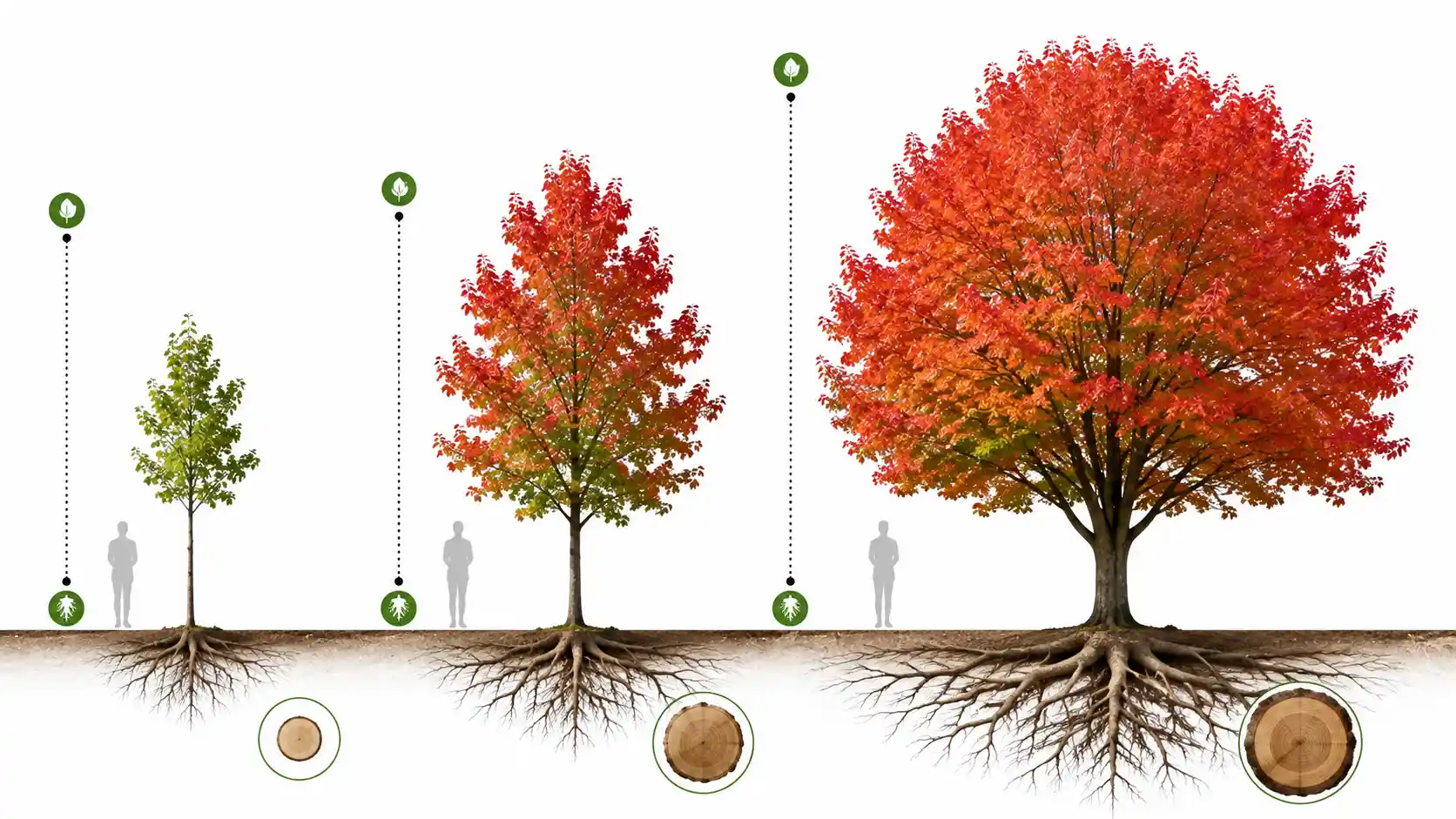
Autumn Blaze maple Australia size depends on climate, soil quality, available moisture, and planting space. A mature Autumn Blaze maple generally grows between 13 and 20 metres tall with a canopy spread of approximately 7 to 10 metres. Gardeners comparing large deciduous feature trees may also find the Liquid Amber Tree Australia: Size, Roots & Care Guide useful for understanding another popular autumn-colour tree option.
Australian nursery descriptions may list slightly smaller mature sizes because growth is influenced by local conditions, including rainfall patterns, temperature, and available root space. In ideal conditions, especially in cooler temperate regions, the tree can approach the larger end of its expected range.
A mature Autumn Blaze maple typically has:
| Feature | Approximate Size |
| Mature height | 13–20m |
| Mature canopy width | 7–10m |
| Growth habit | Upright, rounded canopy |
| Growth speed | Fast, around 1–1.5m per year |
| Leaf colour | Green in summer, red-orange in autumn |
A full-sized tree creates significant shade and visual impact, but it also requires enough space to develop naturally. Planting too close to buildings, fences, or paved areas can create future maintenance issues.
Growth Timeline
The growth speed of an Autumn Blaze maple is one of its main attractions. Under favourable conditions, it can grow approximately 1–1.5 metres per year during active growth periods.
Growth varies depending on:
- Amount of sunlight received.
- Soil moisture availability.
- Soil fertility.
- Climate suitability.
- Root space.
A young tree may appear slow during establishment because it is developing its root system before producing rapid canopy growth.
| Tree Age | Approximate Height |
| 2 years old | Around 2–4m depending on nursery size and growing conditions |
| 5 years old | Approximately 5–8m with good care |
| Mature tree | Around 13–20m after several decades |
As of 2026, gardeners are increasingly considering mature tree dimensions before planting due to smaller residential blocks and increasing awareness of root management. Planning for the final size rather than the current nursery size helps prevent costly relocation or pruning issues later.
Autumn Blaze Maple Root System — Are the Roots Invasive?
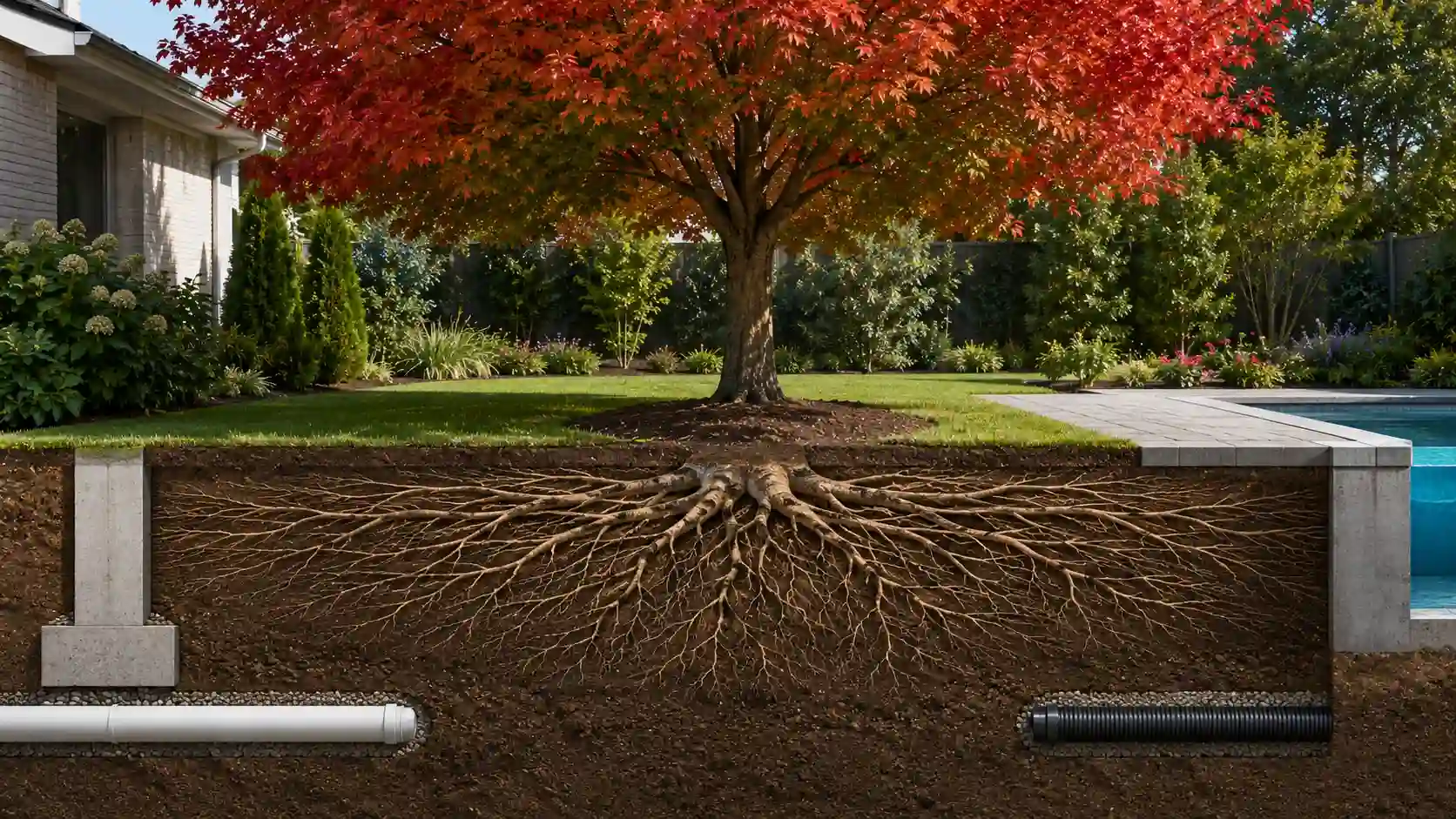
The Autumn Blaze maple root system is generally shallow and wide-spreading rather than deep-growing. Like many fast-growing maples, it develops a network of lateral roots that can extend beyond the canopy area when space and moisture are available. These roots may occasionally become visible above the soil surface, especially in compacted soils or areas with shallow topsoil. Understanding root behaviour is essential when selecting large landscape trees, especially in Australia where species such as gum trees can also develop extensive root systems. Our guide on Gum Tree Root System: Root Spread, Problems & Safe Distances explains how different tree roots affect foundations, pipes, and garden structures.
Autumn Blaze maple roots are considered moderately aggressive, but they are usually less problematic than the roots of its silver maple parent (Acer saccharinum). Compared with silver maple, Autumn Blaze has improved root behaviour and stronger structure, but it still requires thoughtful placement.
Common root characteristics include:
- Shallow, spreading root growth.
- Potential for surface roots in restricted areas.
- Competition with lawns and nearby plants for moisture.
- Greater impact when planted close to paving, drainage systems, or foundations.
Autumn Blaze maple does not typically develop a deep taproot system. Instead, it relies on a broad network of feeder roots near the soil surface to absorb water and nutrients.
Can I Plant a Maple Tree Close to My House?
An Autumn Blaze maple should not be planted too close to buildings because its mature root spread and canopy size need adequate space. A conservative Australian recommendation is to plant the tree at least 5–7 metres away from houses, pools, pipes, retaining walls, and major paving areas.
International planting guidance often suggests around 3–5 metres minimum spacing, but Australian gardens benefit from additional distance because many residential soils are compacted and summer conditions can encourage roots to search for moisture.
Avoid planting Autumn Blaze maple:
- Directly beside house foundations.
- Over underground drainage or sewer lines.
- Between narrow pathways where roots cannot expand.
- In small garden beds with limited soil volume.
A suitable planting position allows the tree to develop naturally while reducing future maintenance problems.
Autumn Blaze Root Aggressiveness Compared With Other Maples
| Maple Type | Root Behaviour | Growth Speed | Suitable Spacing |
| Autumn Blaze Maple (Acer × freemanii) | Moderate, shallow-spreading roots | Fast | 5–7m from structures |
| Silver Maple (Acer saccharinum) | More aggressive surface roots | Very fast | Requires large open areas |
| Japanese Maple (Acer palmatum) | Less aggressive, compact roots | Slow to moderate | Suitable for smaller gardens |
| Sugar Maple (Acer saccharum) | Deep and extensive root system | Moderate | Needs large landscapes |
Among these common maple types, silver maple generally has the most invasive root reputation. Autumn Blaze offers a better balance between fast growth and manageable structure.
Where Is the Best Place to Plant an Autumn Blaze Maple Tree?
The best location for an Autumn Blaze maple tree is an open area receiving full sunlight with enough room for the mature canopy and root system. Full sun exposure is especially important because strong light helps develop the intense red-orange autumn foliage that makes this tree desirable. For homeowners planning a colourful landscape, exploring different options in the Flowering Trees Australia: Best Species Guide can help compare seasonal interest, growth habits, and garden suitability.
Ideal planting conditions include:
- Full sun for at least 6 hours daily.
- Well-drained soil.
- Adequate root space.
- Protection from extreme environmental stress.
- Open areas away from buildings and infrastructure.
Autumn Blaze maple adapts to different soil types, including clay soils, provided drainage is reasonable. However, constantly waterlogged locations should be avoided because prolonged saturated soil can reduce root health.
For feature planting, street planting, or driveway areas, allow approximately 5–7 metres between trees to provide enough canopy development space.
Climate Suitability in Australia
Autumn Blaze maple Australia climate suitability is strongest in cooler and temperate regions where seasonal temperature changes encourage reliable autumn colour.
The tree generally performs best in:
- Victoria.
- Tasmania.
- Australian Capital Territory.
- NSW Tablelands.
- Cooler parts of southern Australia.
In these regions, autumn conditions often produce stronger foliage colour because the tree experiences suitable temperature changes before leaf drop.
In tropical and subtropical areas, the tree may survive but autumn colour can be inconsistent. Warmer climates may reduce the intensity of red foliage because cooler nights are an important factor in autumn pigment development.
Gardeners in warmer regions should also consider:
- Increased summer watering requirements.
- Reduced autumn colour performance.
- Potential heat stress during extreme temperatures.
Autumn Blaze Maple Care Guide
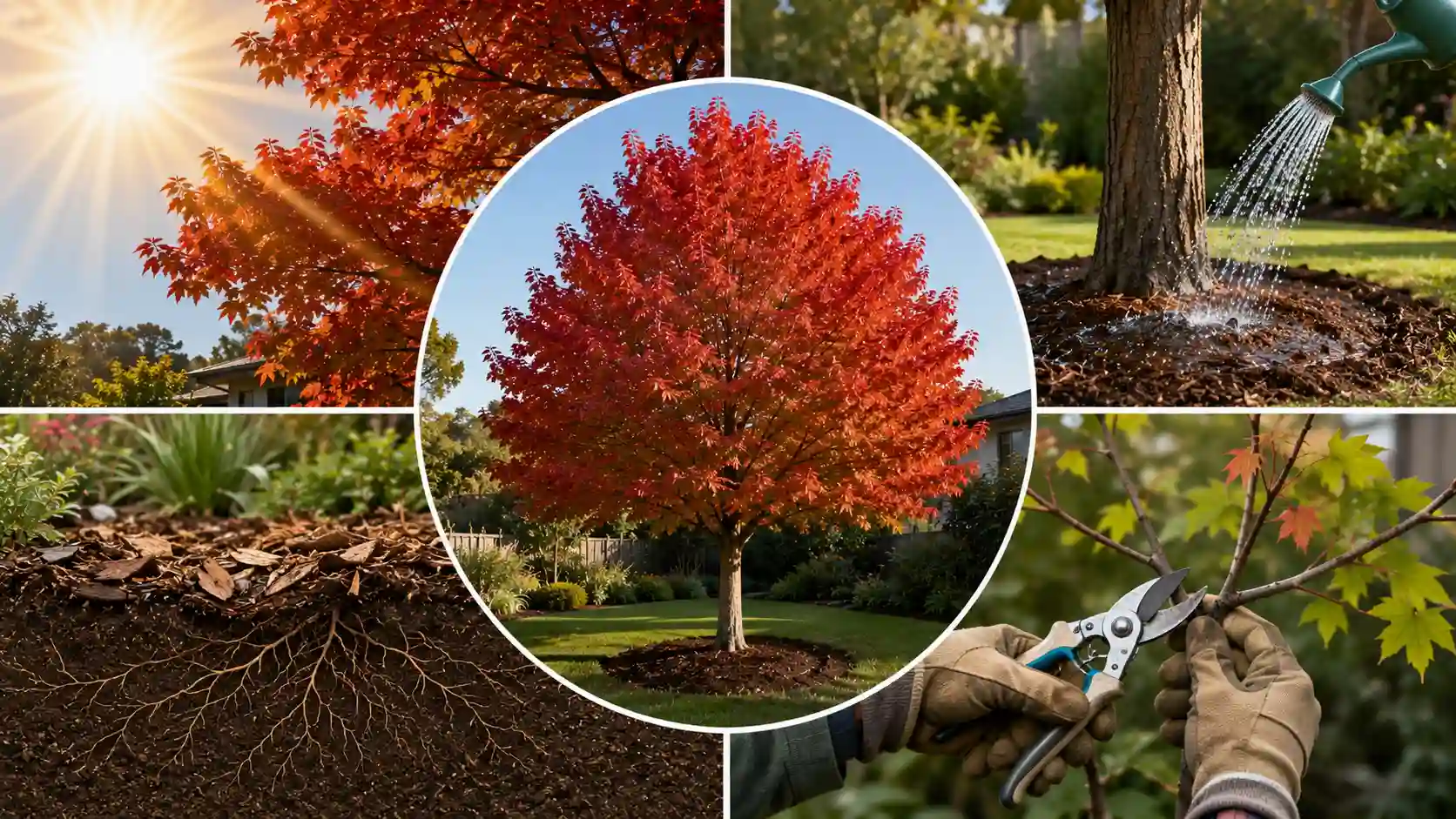
The Autumn Blaze maple care guide focuses on providing sufficient sunlight, balanced moisture, suitable soil, and correct pruning practices. Although this maple is considered adaptable, proper establishment during its early years strongly influences long-term performance.
Watering
Young Autumn Blaze maples require consistent watering while developing their root systems.
During the first few years after planting:
- Water deeply once per week during dry periods.
- Increase frequency during hot Australian summers.
- Apply water slowly to encourage deeper root development.
Once established, the tree becomes moderately drought tolerant, but it performs best with consistent soil moisture. Extended drought can reduce growth and cause premature leaf stress.
A practical gardening approach is to monitor soil moisture rather than watering by calendar alone. Soil should remain slightly moist but never permanently saturated.
Light Requirements
Autumn Blaze maple requires full sun for the best growth and autumn colour.
A minimum of 6 hours of direct sunlight daily supports:
- Strong canopy development.
- Faster growth.
- More intense seasonal foliage colour.
Trees grown in heavy shade may become thinner, grow unevenly, and produce less dramatic autumn colour.
Soil Conditions
Autumn Blaze maple is adaptable and can grow in various soil types, including clay soils.
However, it performs best in:
- Well-drained loam.
- Slightly acidic to neutral soil.
- Soil with good organic matter.
High soil pH can cause iron or manganese availability problems, leading to yellow leaves between green veins, a condition known as chlorosis.
Improving soil structure with organic matter and avoiding excessive alkalinity can help maintain healthy foliage.
Fertilising
Established Autumn Blaze maples usually do not require heavy fertilisation. Excess fertiliser can encourage rapid soft growth that may be weaker and more vulnerable to stress.
A balanced approach includes:
- Testing soil before adding nutrients.
- Applying compost or organic matter when improving soil.
- Using fertiliser only if nutrient deficiencies are confirmed.
Healthy soil conditions are generally more important than frequent feeding.
Pruning
Pruning should focus on developing a strong framework when the tree is young.
Recommended pruning practices:
- Remove damaged or crossing branches.
- Maintain a balanced branch structure.
- Prune during dormancy when possible.
Can I cut the top off my maple tree?
No, topping an Autumn Blaze maple is not recommended. Removing the main top growth can create weak shoots, disrupt natural shape, and increase the risk of structural problems. Proper selective pruning is healthier than removing large sections of the canopy.
Climate Tolerance
Autumn Blaze maple is highly cold hardy but has only moderate drought tolerance.
It handles:
- Cold winters well.
- Frost conditions better than many ornamental trees.
- Normal seasonal rainfall patterns.
However, prolonged heat and drought can cause:
- Leaf scorch.
- Reduced autumn colour.
- Slower growth.
- Increased stress-related problems.
Growth Rate and Lifespan of the Autumn Blaze Maple
The Autumn Blaze maple growth rate is considered fast compared with many other ornamental maple varieties. Under favourable conditions, Acer × freemanii ‘Jeffersred’ can grow approximately 1–1.5 metres per year during active growth periods, particularly when young and planted in suitable soil with adequate moisture. If fast growth is the main priority but year-round foliage is preferred, evergreen alternatives can also be considered through the Fast Growing Evergreen Trees Australia Guide.
This rapid growth comes largely from its silver maple parentage, while its red maple genetics contribute improved structure and stronger seasonal colour performance.
Factors that influence growth include:
- Full sunlight exposure.
- Consistent soil moisture.
- Available root space.
- Soil quality and drainage.
- Climate suitability.
The Autumn Blaze maple lifespan averages around 60 years, although individual trees may live longer when planted in ideal conditions and maintained correctly.
A healthy lifespan depends on:
- Avoiding root damage.
- Preventing poor planting locations.
- Maintaining good structural pruning practices.
- Managing drought stress during extreme conditions.
Elemo Baker’s practical observation is that many fast-growing trees fail prematurely not because of their genetics, but because they are planted in restricted spaces that limit healthy root development.
Autumn Blaze Maple Problems (Troubleshooting)
Although Autumn Blaze maple is generally reliable, it can experience several problems related to soil conditions, environmental stress, and early establishment. Identifying the cause quickly helps maintain healthy growth.
Yellowing Leaves (Chlorosis)
Yellow leaves on an Autumn Blaze maple are often caused by chlorosis, a condition where the tree cannot access enough iron or manganese from the soil. This commonly occurs in soils with high alkalinity (high pH).
Symptoms may include:
- Yellow leaves with green veins.
- Reduced growth.
- Pale foliage during the growing season.
Common causes:
- High soil pH.
- Poor nutrient availability.
- Compacted soil conditions.
- Root stress.
Solutions include:
- Testing soil pH before treatment.
- Improving soil structure with organic matter.
- Correcting nutrient deficiencies based on soil results.
- Avoiding excessive lime applications.
Simply adding fertiliser without identifying the cause may not solve chlorosis because the issue is often nutrient availability rather than nutrient absence.
Leaves Turning Red Early / In Summer
Why is my Autumn Blaze maple turning red in summer?
Early red leaves during summer are usually a sign of environmental stress rather than normal autumn colour. Heat, drought, damaged roots, or sudden weather changes can trigger premature leaf colour changes.
Possible causes include:
- Lack of water during hot periods.
- Extreme summer temperatures.
- Root disturbance.
- Leaf stress after planting.
To improve tree health:
- Provide deep watering during dry conditions.
- Apply mulch around the root zone while keeping it away from the trunk.
- Avoid damaging roots through construction or soil compaction.
True autumn colour normally develops as temperatures cool and daylight decreases.
Root Girdling and Surface Roots
Root girdling occurs when roots grow around the trunk or other major roots, restricting water and nutrient movement. This problem is more common in poorly planted trees or those grown in restricted containers.
Warning signs include:
- Reduced canopy growth.
- Thin or declining foliage.
- Early leaf stress.
- Visible roots wrapping around the trunk.
Prevention methods include:
- Inspecting root systems before planting.
- Correcting circling roots when the tree is young.
- Providing adequate planting space.
Surface roots can also appear naturally as the tree matures, particularly in compacted soils or areas with limited soil depth.
Pest Susceptibility in Young Trees
Young Autumn Blaze maples are generally more vulnerable to pests and environmental stress than established trees.
Potential issues may include:
- Sap-feeding insects.
- Leaf damage from general garden pests.
- Stress-related pest outbreaks.
Healthy establishment is the best prevention method. Proper watering, suitable planting conditions, and avoiding unnecessary stress help young trees develop stronger resistance.
Are Autumn Blaze maple leaves toxic?
Autumn Blaze maple leaves are not generally considered highly toxic to humans, but caution is advised around livestock and pets because some maple species can be associated with health concerns under specific circumstances. Avoid allowing animals to consume large amounts of fallen leaves, and seek professional advice if unusual symptoms occur.
Autumn Blaze Maple vs Other Red-Colour Maples
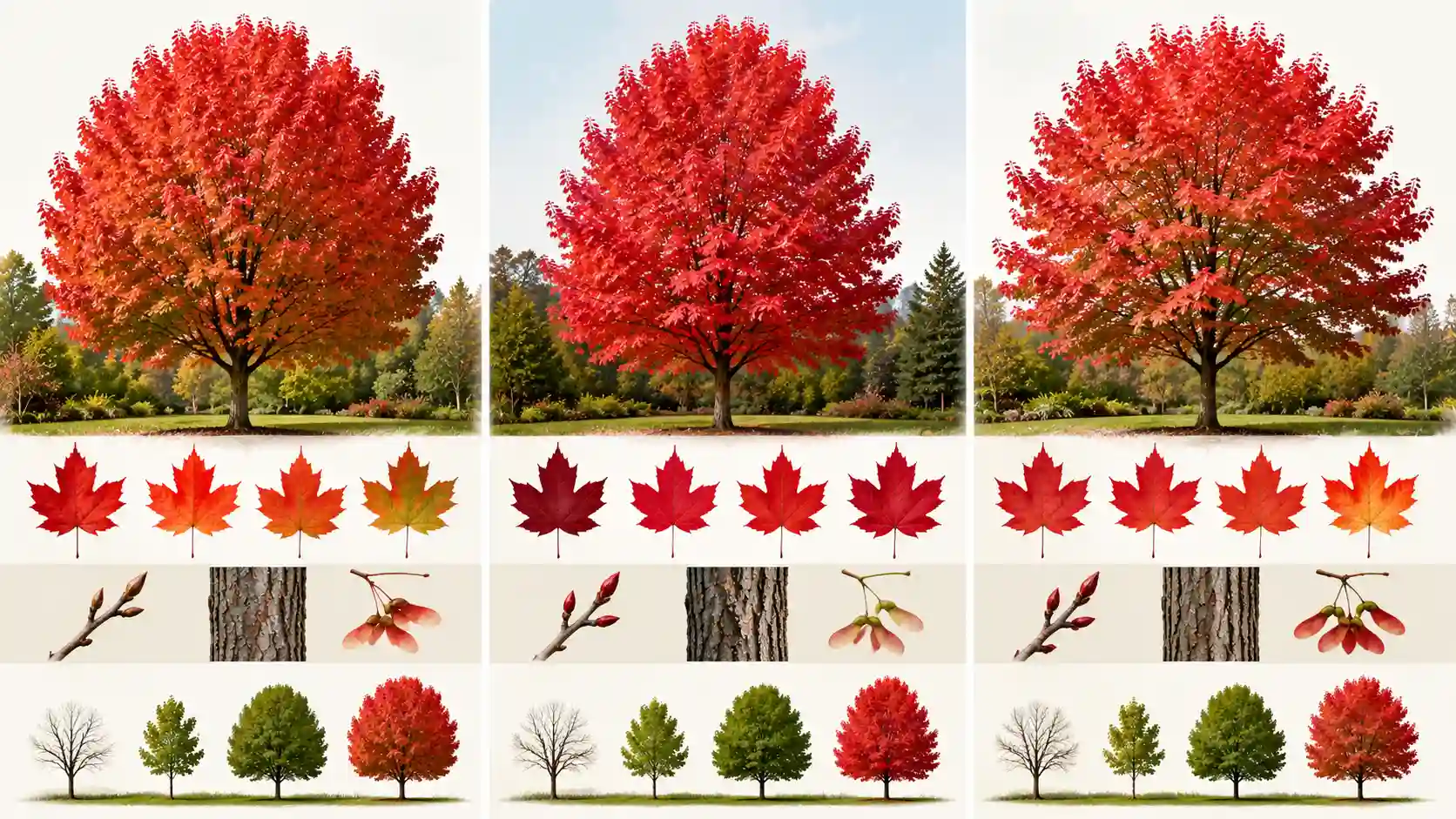
When choosing a red-colour autumn tree, gardeners often compare Autumn Blaze maple, October Glory maple, and Red Sunset maple. Each variety has different growth habits, colour timing, and environmental preferences. Gardeners looking beyond autumn foliage may also explore other ornamental tree choices, such as those covered in the Tree With Pink Flowers Australia: Identification Guide, which highlights species valued for seasonal colour.
| Feature | Autumn Blaze Maple | October Glory Maple | Red Sunset Maple |
| Botanical name | Acer × freemanii ‘Jeffersred’ | Acer rubrum ‘October Glory’ | Acer rubrum ‘Franksred’ |
| Growth rate | Fast | Moderate to fast | Fast |
| Mature size | 13–20m tall | Around 12–18m tall | Around 12–18m tall |
| Autumn colour | Bright red-orange | Deep red, often later season | Brilliant red |
| Root behaviour | Moderate, shallow spreading | Moderate | Moderate |
| Drought tolerance | Moderate once established | Moderate | Moderate |
Which Is Better: Autumn Blaze or Red Sunset Maple?
The better choice depends on the garden situation.
Autumn Blaze maple advantages:
- Faster early growth.
- Strong hybrid structure.
- Reliable colour in suitable climates.
Red Sunset maple advantages:
- Excellent red autumn display.
- Strong performance as a red maple cultivar.
October Glory maple advantages:
- Often holds leaves later into the autumn season.
- Attractive deep red colour.
For Australian gardens requiring quicker shade development, Autumn Blaze is often preferred. For gardeners prioritising specific autumn colour timing, red maple cultivars may also be suitable.
Pros and Cons of Autumn Blaze Maple
The Autumn Blaze maple pros and cons should be considered before planting because this tree offers outstanding visual benefits but requires adequate space.
Pros
- Fast growth rate compared with many ornamental trees.
- Spectacular red-orange autumn foliage.
- Stronger branch structure than silver maple.
- Adaptable to various soil types.
- Provides significant shade once mature.
- Moderately drought tolerant after establishment.
Cons
- Requires large planting space due to mature size.
- Surface roots may become an issue in restricted areas.
- Can develop chlorosis in alkaline soils.
- Young trees require careful establishment.
- Not ideal for small urban gardens.
Conclusion
The Autumn Blaze maple Australia is a fast-growing hybrid maple that combines rapid growth, attractive structure, and outstanding autumn colour. Acer × freemanii ‘Jeffersred’ can become an impressive feature or shade tree in Australian temperate gardens when planted in full sun with enough space for its mature canopy and root system.
The most important consideration is choosing the right location. Providing adequate distance from buildings, paving, and underground services allows the tree to develop naturally and reduces future maintenance problems. With suitable soil, consistent early watering, and correct pruning, Autumn Blaze maple can provide decades of seasonal beauty.
The key takeaway is simple: the right tree in the right location creates the best long-term result — always plan for mature size and root spread before planting.
Frequently Asked Questions (FAQ)
What are the disadvantages of the Autumn Blaze maple tree?
The main disadvantages of Autumn Blaze maple are its large mature size, shallow spreading roots, need for significant planting space, and potential chlorosis problems in alkaline soils. Young trees also require careful watering during establishment.
How big do Autumn Blaze maples get in Australia?
Autumn Blaze maples generally grow around 13–20 metres tall and 7–10 metres wide in suitable Australian conditions. Cooler temperate regions often provide the best growth and autumn colour.
Do Autumn Blaze maples have invasive roots?
Autumn Blaze maple roots are moderately aggressive rather than highly invasive. They are shallow and spreading, so they should be planted away from foundations, pipes, pools, and paving areas.
How far should I plant an Autumn Blaze maple from my house?
A practical Australian recommendation is to plant an Autumn Blaze maple around 5–7 metres away from houses and major structures. This provides room for mature roots and canopy development.
What is another name for the Autumn Blaze maple tree?
Autumn Blaze maple is also called Jeffersred Maple or Jeffers Red Maple. Names such as Fairview Flame Maple and Lipstick Maple are sometimes associated with similar red-colour maple cultivars but may not always refer to the exact same tree.
Is Autumn Blaze a good tree for Australian gardens?
Yes, Autumn Blaze maple can be an excellent choice for Australian gardens in cooler temperate regions. It performs best where it receives full sun, adequate moisture, and enough space to grow.
Why is my Autumn Blaze maple turning red in summer instead of autumn?
Summer red leaves are usually caused by stress, such as drought, heat, or root problems, rather than normal autumn colouring. Improving watering consistency and reducing environmental stress can help restore healthy growth.