
Desert Star Plant Care, Growth & Hedge Guide
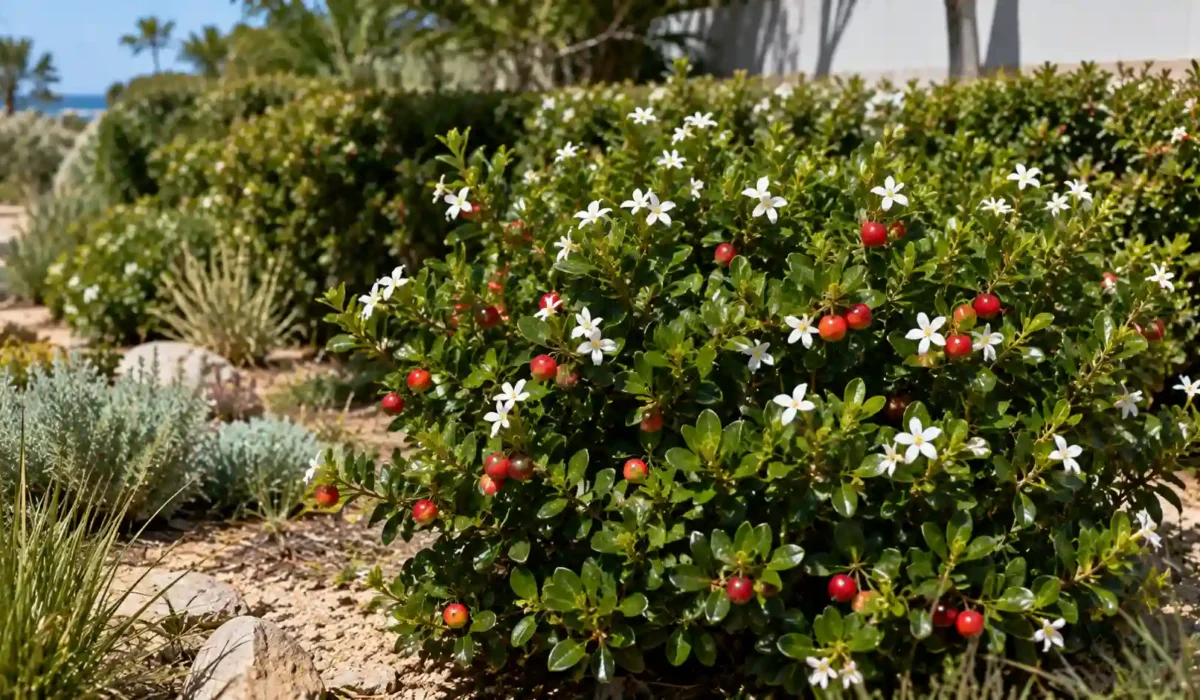
Desert Star is a compact cultivar of Carissa macrocarpa (Natal plum), an evergreen shrub native to South Africa’s east coast. According to Elemo Baker, it typically grows 0.5–1m tall and 1–1.5m wide, forming a dense, glossy-leafed shrub with fragrant white star-shaped flowers followed by small red, plum-like fruit, ideal for hedging, borders, and coastal or drought-tolerant gardens.
Its stems carry small thorns, so growers keep it clear of paths and play areas despite its neat habit. The plant is considered toxic to dogs and cats, even though the ripe fruit is safely eaten by people. Nurseries sometimes still list the species under its older synonym, Carissa grandiflora.
If you are planning a low-maintenance Australian garden, explore more suitable species in our guide to Best Trees and Shrubs for Australian Gardens, which covers hardy trees and shrubs for different landscapes and climates.
By Elemo Baker | Plant Care & Gardening Expert
Last Updated: August 2026
Quick Summary
- Desert Star (Carissa macrocarpa ‘Desert Star’) is a dwarf, spiny evergreen shrub with white star-shaped flowers and red fruit.
- It typically grows around 1–2 metres tall and wide, depending on climate, soil, pruning, and growing conditions.
- The plant performs best in full sun to part shade and tolerates drought, coastal exposure, and moderate heat.
- Growth is generally slow to moderate, making it a low-maintenance choice for borders and hedges.
- Pet toxicity information varies between sources, so owners should treat ingestion as a caution point and seek veterinary advice if concerned.
What Is a Desert Star Plant?
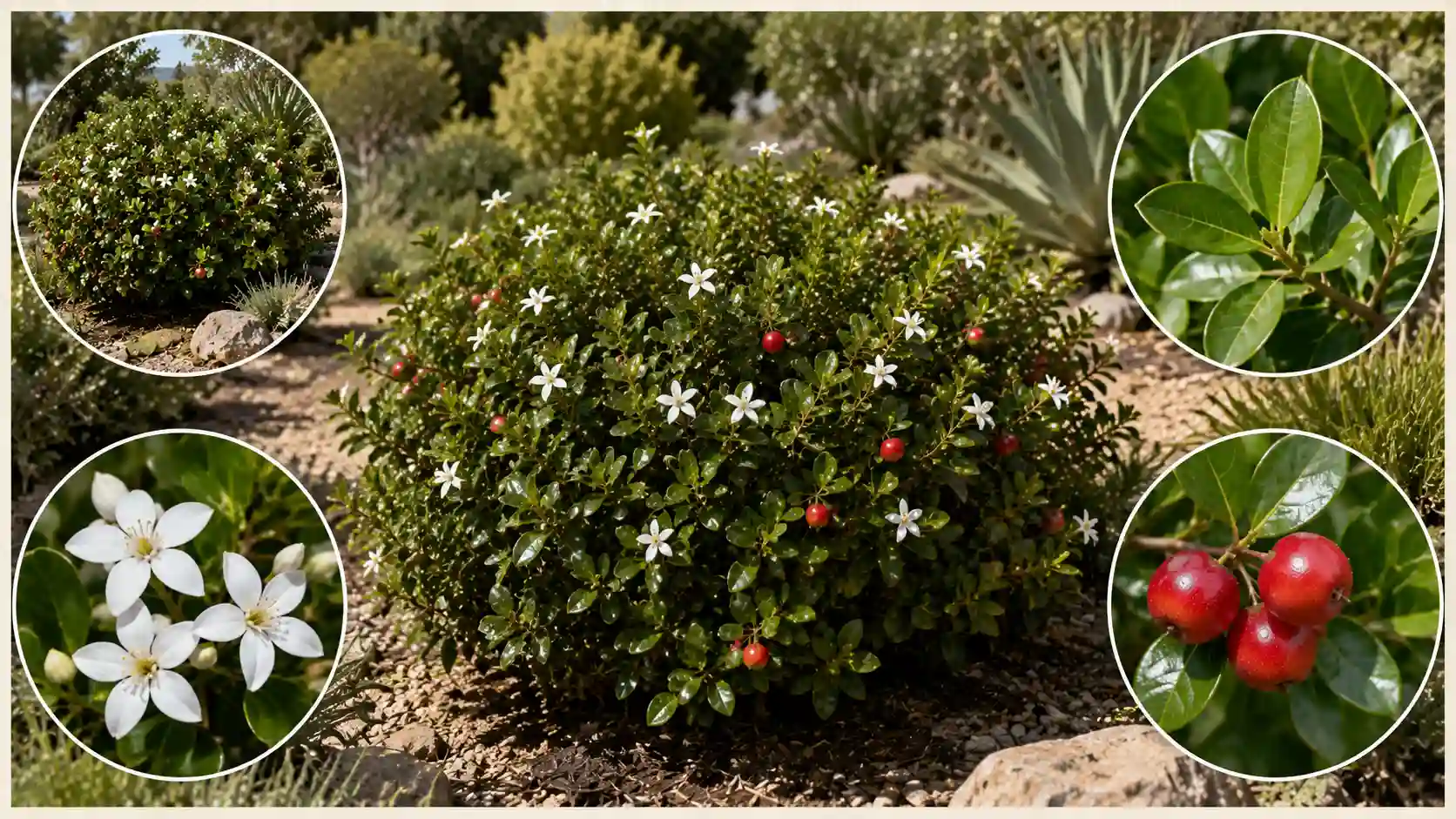
The Desert Star plant is a compact evergreen shrub cultivar of Carissa macrocarpa ‘Desert Star’, commonly known as Natal Plum. It belongs to the Apocynaceae family, which includes many flowering shrubs and plants known for their milky sap. Gardeners interested in compact Australian-friendly shrubs may also compare Desert Star with other hardy choices such as Leptospermum Dwarf Red Tea Tree, which offers similar suitability for borders and smaller landscapes.
Desert Star belongs to the Carissa genus, which includes Natal Plum (Carissa macrocarpa), a flowering shrub native to southern Africa with edible fruit and ornamental value.
Native to southern Africa, Carissa macrocarpa has naturally adapted to warm, dry conditions, sandy soils, and coastal environments. The Desert Star cultivar was selected for its smaller, more manageable growth habit compared with the standard species, making it suitable for residential gardens throughout Australia.
The name “Desert Star” refers to two key characteristics:
- Star-shaped white flowers that appear against dark green foliage.
- Drought tolerance that allows the plant to handle dry conditions once established.
Common names and related terms include:
- Desert star
- Carissa desert star
- Natal plum
- Carissa plant
- Carissa macrocarpa
- Carissa grandiflora (an older botanical name sometimes used in horticultural references)
The plant is valued for its combination of ornamental appeal, toughness, and compact form. It is commonly used for:
- Low hedges
- Garden borders
- Coastal landscaping
- Wildlife-friendly gardens
- Containers and decorative pots
Desert Star vs Standard Carissa macrocarpa
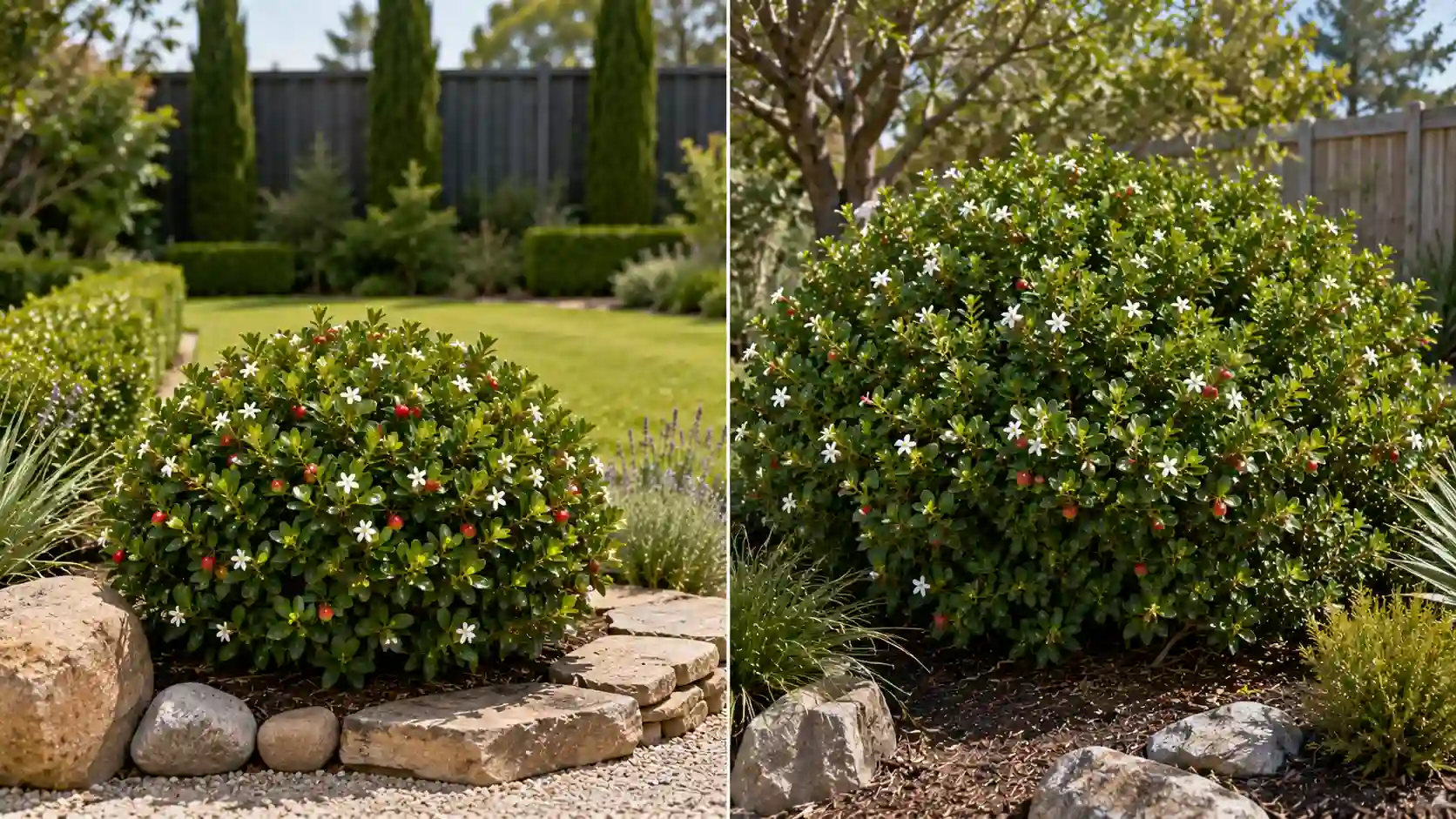
The main difference between Desert Star and standard Carissa macrocarpa is size and growth habit. The cultivar is bred to remain more compact, while the species form can become much larger if left unpruned.
| Feature | Desert Star (Carissa macrocarpa ‘Desert Star’) | Standard Carissa macrocarpa |
| Growth habit | Compact dwarf shrub | Larger evergreen shrub |
| Mature height | About 1–2m | Can exceed 2m |
| Width | Around 1m or more depending on pruning | Often broader and more spreading |
| Growth rate | Slow to moderate | Moderate |
| Best use | Borders, small hedges, pots | Large hedges, screens, coastal planting |
For smaller Australian gardens, the Desert Star cultivar is often easier to maintain because it needs less frequent heavy pruning.
How Big Does the Desert Star Plant Get?
The Desert Star plant generally reaches around 1–2 metres tall and approximately 1 metre wide, although final size depends on climate, soil quality, watering, and pruning practices. If faster-growing evergreen screening is required, gardeners can explore other options in our guide to Fast Growing Evergreen Trees Australia, while Desert Star remains a slower-growing compact choice.
The carissa desert star height is usually smaller than mature standard Natal Plum varieties, making it suitable for gardeners who want an evergreen shrub without excessive growth.
Size differences can occur based on growing conditions:
| Growing Condition | Effect on Plant Size |
| Full sun and fertile soil | Stronger growth and fuller shape |
| Regular watering during establishment | Faster early development |
| Regular pruning | Maintains a compact size |
| Poor soil or low light | Smaller, slower growth |
Indoor vs Outdoor Size Differences
Desert Star is primarily an outdoor plant. Although young plants can be grown temporarily in containers, they generally perform best when planted outdoors where they receive direct sunlight and good airflow.
Indoor growth is usually limited because homes often do not provide enough light intensity for dense foliage and flowering.
Growth Rate — How Quickly Does a Desert Star Grow?
The Desert Star plant has a slow to moderate growth rate. Growth speed varies between growing regions, but most plants establish steadily rather than rapidly.
During spring and summer, warmer temperatures and longer daylight hours encourage active growth. In cooler months, growth commonly slows as the plant enters a less active period.
Factors that influence growth rate include:
- Amount of sunlight received
- Soil drainage and fertility
- Water availability
- Regular fertilising
- Climate conditions
- Pruning frequency
In our experience growing compact evergreen shrubs like Carissa cultivars, plants that receive adequate sunlight and consistent moisture during establishment develop a denser shape faster than those planted in shaded areas.
Gardeners should avoid overwatering in an attempt to speed up growth, as excessive moisture can weaken roots and slow development.
Desert Star Plant Care Guide
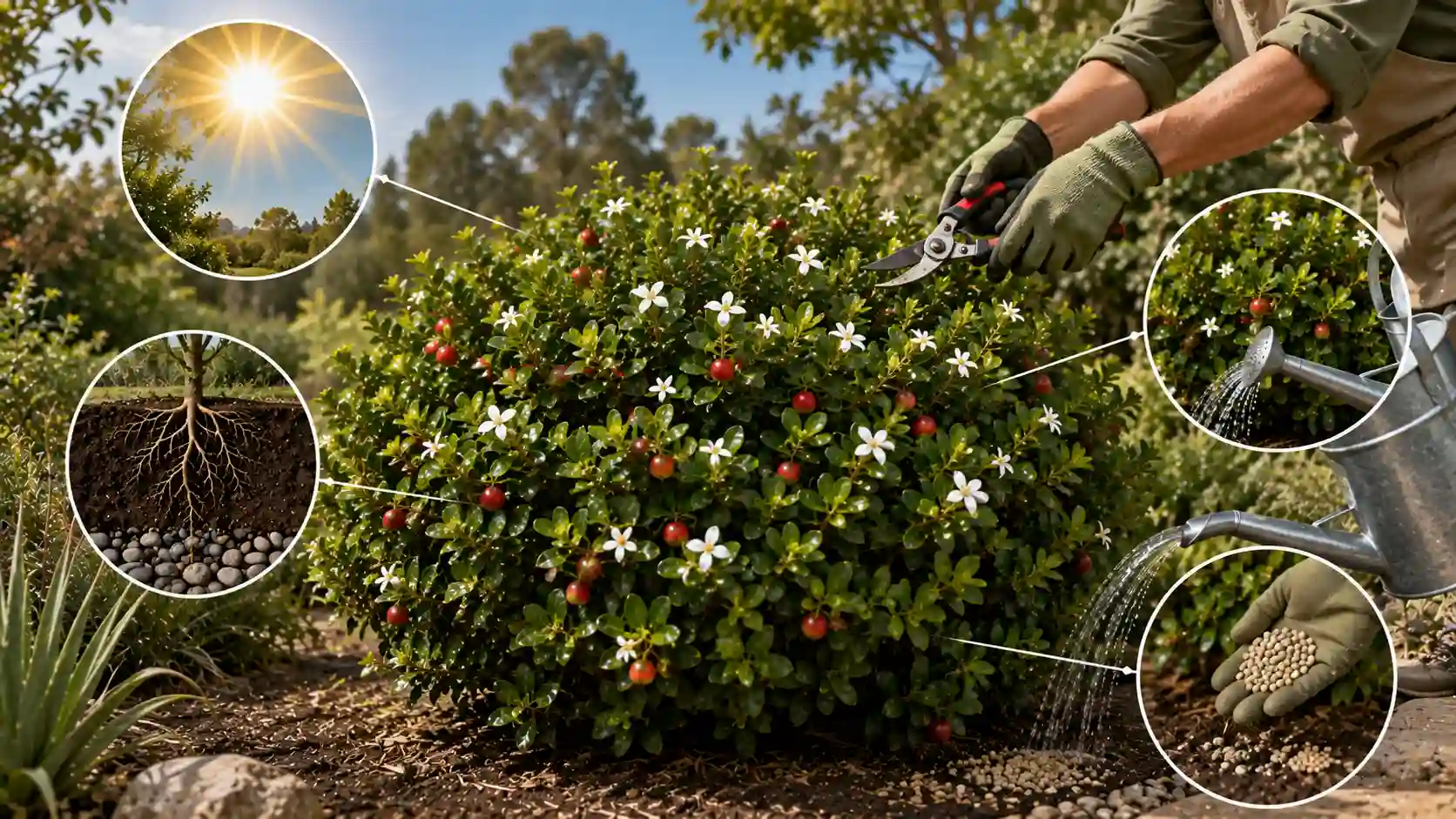
The Desert Star plant is considered easy to grow once established because it tolerates dry conditions, coastal winds, and different soil types. However, correct planting conditions help maintain healthy foliage, flowering, and fruit production.
Light Requirements — Does Desert Star Need Full Sun?
Desert Star grows best in full sun but can tolerate part shade. For the strongest flowering, compact growth, and healthiest foliage, gardeners should provide several hours of direct sunlight daily.
Ideal conditions include:
- Full sun positions with good airflow
- Morning sun with afternoon protection in very hot climates
- Bright light areas when grown in containers
Too much shade may result in:
- Reduced flowering
- Looser growth
- Less dense foliage
Elemo Baker recommends planting Desert Star in the sunniest practical position available, especially when using it as a hedge where dense growth is important.
Soil Preferences — What Is the Best Soil for Desert Star?
The best soil for Desert Star is well-drained soil with organic matter, although the plant is adaptable and can tolerate poorer soils once established.
Recommended soil conditions:
- Good drainage
- Moderate fertility
- Slightly sandy or loamy texture
- Added compost or organic matter before planting
Poor drainage is one of the main causes of problems because waterlogged soil can damage the root system.
Watering Needs — How Much Water Does Desert Star Need?
Desert Star is drought-tolerant once established, but young plants need regular watering while developing their root system. Consistent moisture during the first growing period helps encourage stronger growth and better establishment.
General watering guidance:
- Water newly planted shrubs deeply when the soil begins to dry.
- Reduce watering frequency once the plant becomes established.
- Provide extra water during extended periods of heat or drought.
- Avoid keeping the soil constantly wet, as poor drainage can lead to root problems.
Established plants in Australian gardens often survive on natural rainfall in suitable climates, although occasional deep watering during very dry periods can improve plant health.
Fertilising — What Fertiliser Does Desert Star Need?
Desert Star benefits from a balanced, slow-release fertiliser applied during the active growing season, especially in spring.
Good fertilising practices include:
- Apply slow-release fertiliser in spring according to product instructions.
- Add compost or organic mulch around the root zone to improve soil quality.
- Avoid excessive fertiliser application, which can encourage weak growth.
A spring feeding is usually enough for established plants growing in reasonably fertile soil.
Pruning — How Do I Prune a Desert Star Plant?
Desert Star responds well to light pruning and can be shaped to maintain a compact appearance. The best time to prune is generally after flowering, allowing gardeners to maintain form without removing too many developing blooms.
Pruning tips:
- Remove dead, damaged, or overcrowded branches.
- Lightly trim new growth to encourage bushiness.
- Maintain hedge shapes with regular trimming.
- Avoid severe pruning unless necessary.
Can you prune a Desert Star? Yes. Its naturally compact habit makes it suitable for shaping, borders, and low formal hedges.
Climate Tolerance — Can Desert Star Handle Australian Conditions?
Desert Star is well suited to many Australian climates because it tolerates heat, coastal conditions, and wind exposure. Its natural adaptation to southern African coastal environments makes it a reliable choice for challenging garden locations.
It can tolerate:
- Coastal salt exposure
- Strong winds
- Warm temperatures
- Periods of drought
- Light frost in suitable locations
In colder regions, protection from heavy frost may be needed, especially for young plants.
Does the Desert Star Plant Have Thorns?
Yes, the Desert Star plant has small spines or thorns on its stems. These spines are a natural defence feature of Carissa macrocarpa varieties and should be considered when choosing a planting location.
Because of its thorny growth, avoid placing Desert Star:
- Along narrow pathways
- Near children’s play areas
- Beside frequently used seating areas
- Where people regularly brush against the plant
The thorns can also make it useful as a protective hedge plant in some garden designs.
How to Propagate a Desert Star Plant
The Desert Star plant can generally be propagated through semi-hardwood cuttings or seeds from ripe fruit. These are common propagation methods used for Carissa species.
Propagation from Semi-Hardwood Cuttings
Semi-hardwood cuttings are commonly used because they maintain the characteristics of the parent plant.
General nursery guidance includes:
- Select healthy semi-mature stems.
- Prepare suitable propagation conditions with good drainage.
- Maintain consistent moisture without waterlogging.
Propagation from Seeds
Seeds can be collected from ripe fruit and used for growing new plants. However, plants grown from seed may not always develop exactly like the parent cultivar.
Propagation success can vary depending on environmental conditions, timing, and plant health.
Is the Desert Star Plant Toxic to Dogs?
The toxicity of Desert Star (Carissa macrocarpa) to dogs is not completely clear because different sources provide different guidance. The American Society for the Prevention of Cruelty to Animals lists Carissa grandiflora as non-toxic to dogs, cats, and horses, while some horticultural references advise caution because plants in the Apocynaceae family may contain irritating sap and some plant parts may cause digestive issues if eaten.
For pet owners, the safest approach is to treat Desert Star as a plant that should not be intentionally consumed.
Important considerations:
- Avoid allowing pets to chew large amounts of foliage or fruit.
- Be cautious with unripe fruit and plant sap.
- Contact a veterinarian if a pet shows unusual symptoms after eating plant material.
Rather than classifying the plant as definitely poisonous or completely harmless, gardeners should use practical caution when planting around pets.
Common Problems With Carissa Desert Star Plants in Australia
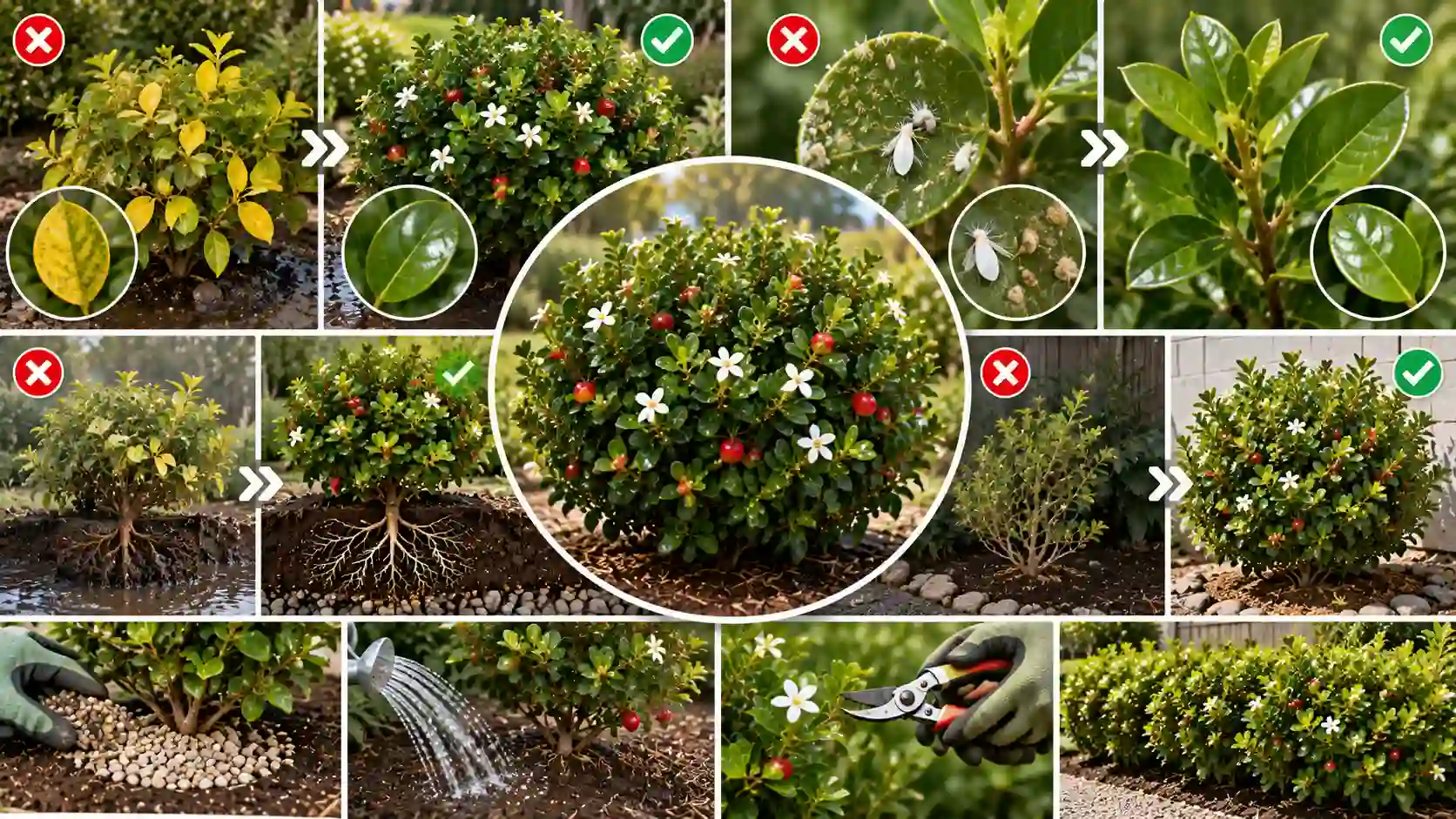
Although Desert Star is generally hardy, some growing problems can occur when environmental conditions are unsuitable. Correct pest identification is important when treating issues such as scale, mites, thrips, and whitefly, and our Garden Pest Identification Guide for Australian Gardens explains how to recognise common garden pests.
Yellowing Leaves
Cause:
Yellow leaves are often linked to overwatering, poor drainage, or stressed roots.
Solution:
- Allow soil to dry slightly between watering.
- Improve drainage if soil stays wet.
- Check that irrigation is not excessive.
Prevention:
- Plant in well-drained soil.
- Avoid waterlogged garden beds.
Scale, Mites, Thrips and Whitefly
Cause:
Sap-feeding pests may appear when plants are stressed or growing in poor conditions.
Solution:
- Inspect leaves and stems regularly.
- Remove heavily affected growth where practical.
- Use appropriate horticultural pest management methods if needed.
Prevention:
- Maintain good airflow.
- Avoid excessive nitrogen fertilising.
- Keep plants healthy through correct watering.
Root Rot and Fungal Problems
Cause:
Waterlogged soil and poor drainage create conditions where fungal root problems can develop.
Solution:
- Improve soil drainage.
- Reduce unnecessary watering.
- Remove severely damaged plants if root systems are affected.
Prevention:
- Choose a suitable planting position.
- Avoid heavy clay soils without improving drainage.
Slow or Stunted Growth
Cause:
Slow growth may occur because of insufficient sunlight, poor nutrients, compacted soil, or environmental stress.
Solution:
- Move plants to brighter locations where possible.
- Improve soil quality.
- Apply suitable fertiliser during active growth.
Desert Star as a Hedge
The Desert Star plant is a suitable choice for low hedges because of its dense evergreen foliage, compact growth habit, and ability to handle pruning. Like other popular screening plants such as Photinia Fraseri Robusta, Desert Star can be shaped into a dense hedge when planted at suitable spacing and maintained with regular pruning.
For a desert star hedge, spacing depends on the desired density and how quickly coverage is needed.
| Hedge Purpose | Recommended Spacing |
| Dense formal hedge | Around 50cm apart |
| Medium screening hedge | Around 75cm apart |
| Lower-maintenance planting | Around 1m apart |
Benefits as a hedge plant include:
- Evergreen coverage throughout the year
- Compact growth habit
- White flowers and decorative fruit
- Tolerance of coastal conditions
Regular light pruning encourages a thicker hedge structure and maintains a neat appearance. For gardeners designing a low-care boundary planting, Desert Star is one option among other low-maintenance plants for fence lines in Australia that tolerate common garden conditions.
Desert Star Varieties & Where to Buy
The dwarf Desert Star plant is mainly valued for its compact form compared with larger Natal Plum types. It is commonly available through Australian garden centres, including large retailers such as Bunnings Group, as well as specialist plant nurseries.
When selecting a plant, gardeners should consider:
- Young plants for pots and small gardens
- Larger specimens for faster hedge establishment
- Container-grown plants for flexible placement
The dwarf form is particularly suitable for:
- Patio containers
- Small gardens
- Border planting
- Low hedges
Full Sun and Shade Tolerance
Desert Star performs best in full sun, although it can tolerate part shade. It is not considered a shade-loving plant and may become less dense when grown in areas with limited light.
For the healthiest growth:
- Choose a position receiving several hours of direct sunlight.
- Use part shade only where necessary in very hot climates.
- Avoid deep shade, which reduces flowering and compact growth.
While some plants tolerate full sun all day, Desert Star is especially suited to bright Australian garden conditions where heat and sunlight are common.
Conclusion
The Desert Star plant is a hardy, compact cultivar of Carissa macrocarpa that suits many Australian gardens due to its evergreen foliage, drought tolerance, coastal adaptability, and low-maintenance growth habit. It typically reaches around 1–2 metres tall, performs best in full sun to part shade, and works well as a border plant or low hedge.
Its thorny stems, propagation requirements, and varying pet safety information should be considered before planting. With suitable drainage, occasional pruning, and basic care, Desert Star provides reliable structure, flowers, and fruit for residential landscapes.
FAQs
What is the common name for the Carissa Desert Star plant?
The common name for the Carissa Desert Star plant is Natal Plum. It is a compact cultivar of Carissa macrocarpa selected for its smaller size and ornamental features.
Is Carissa Desert Star easy to grow?
Yes, Carissa Desert Star is generally easy to grow because it tolerates drought, coastal conditions, and different soil types once established. Good drainage and adequate sunlight are the main requirements.
Does Carissa need full sun?
Carissa plants grow best in full sun but can tolerate part shade. Desert Star usually produces better flowering and denser growth when grown in a bright, sunny position.
What is the lifespan of a Desert Star plant?
A Desert Star plant can live for many years when planted in suitable conditions. Its lifespan depends on climate, soil quality, watering practices, and general maintenance.
Do Desert Star plants do better in pots or in the ground?
Desert Star can grow in pots, especially in its dwarf form, but it usually performs best in the ground where roots have more space to develop. Container plants require more regular watering and nutrient management.
Is Carissa a flower name?
Carissa is a botanical plant name rather than only a flower name. It comes from the genus Carissa, which includes flowering shrubs such as Natal Plum (Carissa macrocarpa).