

Ligularia Reniformis Designer Verde Care Guide
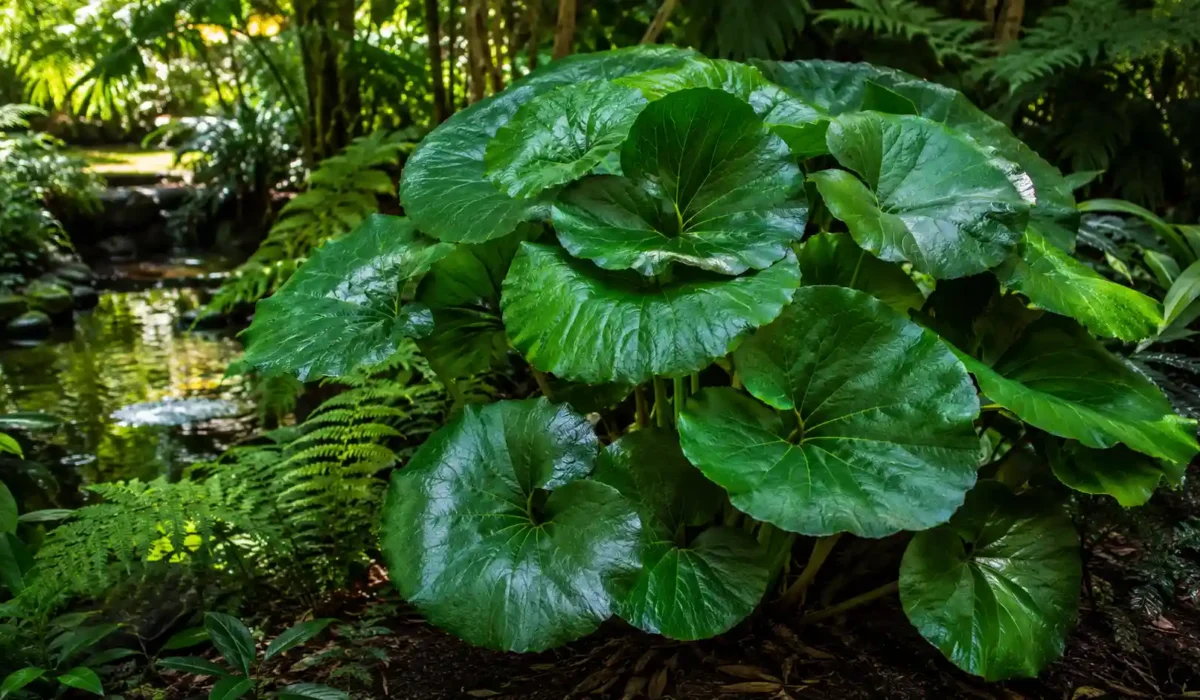
Ligularia reniformis ‘Designer Verde’, commonly known as the Tractor Seat Plant, is a shade-loving perennial grown for its large, glossy, kidney-shaped leaves that form a dense, mounding clump. According to Elemo Baker, it produces tall spikes of yellow-orange, daisy-like flowers through summer and typically reaches around 70cm in both height and width in part-shade to shaded Australian gardens.
In the Australian nursery trade, this cultivar is inconsistently labelled — some suppliers sell it as Farfugium japonicum (a genus once merged with Ligularia) or as Ligularia dentata ‘Designer Verde’, so gardeners should check the plant tag rather than assume a single correct name. It needs humus-rich, consistently moist, well-drained soil to avoid leaf scorch, with foliage prone to bronzing in cooler weather. The plant is also considered toxic to pets if eaten in quantity.
By Elemo Baker | Plant Care & Gardening Expert
Last Updated: August 2026
Quick Summary
- Designer Verde is a glossy, large-leaved shade perennial commonly called the Tractor Seat Plant.
- Part shade to full shade, consistent moisture and good drainage provide the most reliable growing conditions.
- Mature plants commonly reach about 60 cm–1 m tall and wide, depending on climate and growing conditions.
- The plant is clump-forming rather than an aggressive runner, making it suitable for feature planting.
- Australian nursery naming is inconsistent, so checking the plant’s trade name and foliage is useful when buying.
What Is Ligularia Reniformis ‘Designer Verde’? (And Why Its Name Is Confusing)
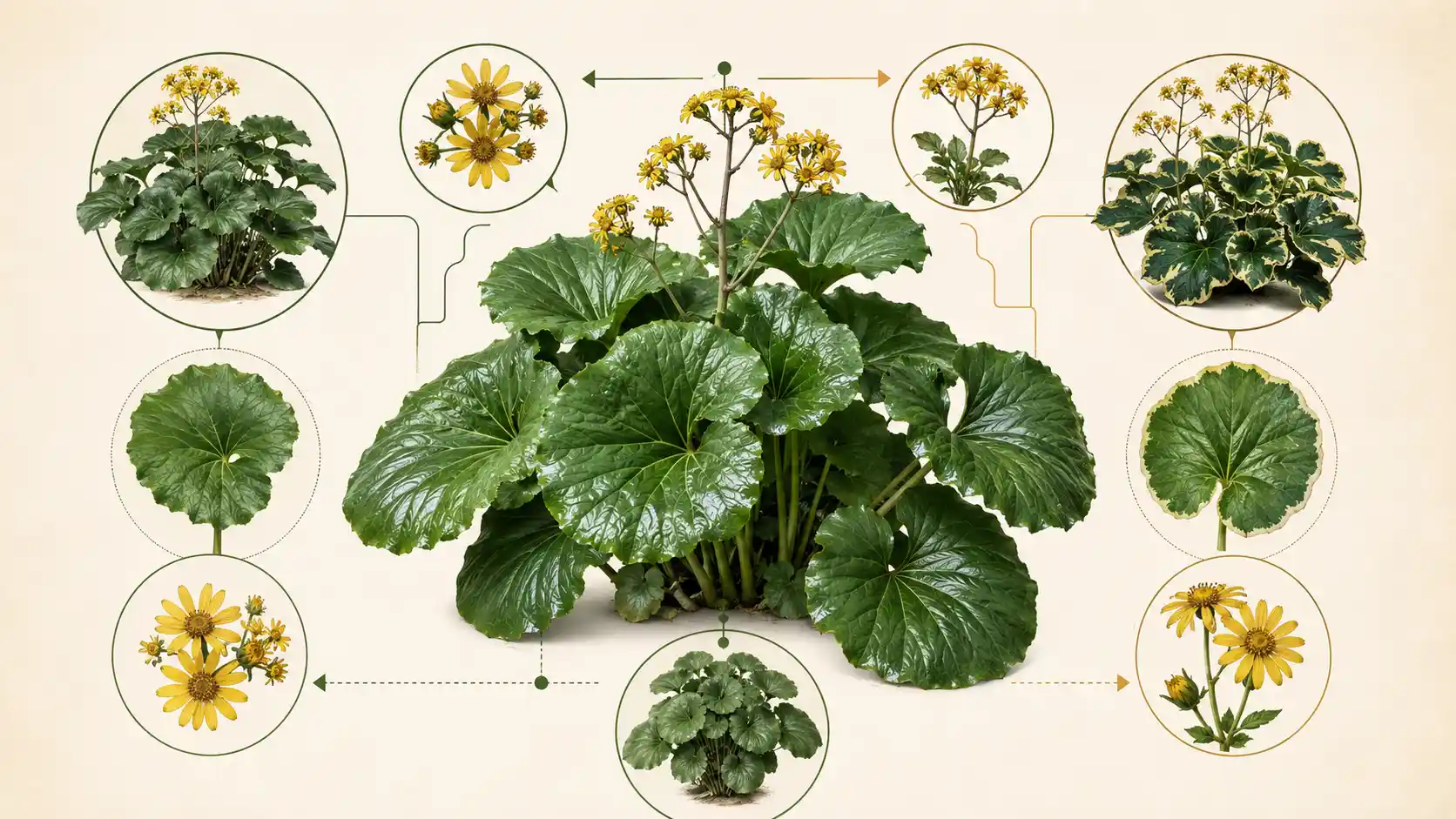
‘Designer Verde’ is a cultivated ornamental foliage plant in the daisy family, Asteraceae, recognised for large, glossy, rounded to kidney-shaped green leaves and yellow daisy-like flowers. Australian nursery sources commonly list it as Ligularia reniformis ‘Designer Verde’, while other retailers use Ligularia dentata ‘Designer Verde’.
The important point for gardeners is that the trade name is more consistent than the Latin name. This explains why searches for Ligularia reniformis Designer Verde can produce apparently different botanical identities.
The Ligularia vs Farfugium Naming Mix-Up, Explained
There are two separate naming issues that should not be confused. Kew’s Plants of the World Online treats Ligularia reniformis DC. as a synonym of Cremanthodium reniforme, a Himalayan species. For additional botanical background on Farfugium japonicum, its synonyms and its characteristic Tractor Seat Plant form, see the Wikipedia entry for Farfugium japonicum.
The ornamental Tractor Seat Plant sold in Australian horticulture is instead commonly associated with Farfugium japonicum, particularly the large-leaved Farfugium japonicum var. giganteum. Kew currently accepts Farfugium japonicum as the species name and recognises var. giganteum within it.
This means the nursery label Ligularia reniformis should not automatically be interpreted as the current formal botanical identity of the Himalayan Cremanthodium species.
For gardeners, the practical takeaway is simple: when buying Designer Verde, use ‘Designer Verde’ and Tractor Seat Plant alongside the nursery’s botanical label, rather than assuming every Latin-name variation represents a different garden plant.
Designer Verde vs Ligularia Dentata ‘Designer Verde’ — Same Plant?
Australian retailers do use Ligularia dentata ‘Designer Verde’ for the same trade plant sold elsewhere as Ligularia reniformis Designer Verde.
That does not mean the names are botanically interchangeable in a strict taxonomic sense. It means gardeners are likely to encounter both labels for the same horticultural offering. Elemo Baker recommends checking the characteristic glossy green, kidney-shaped foliage and the cultivar name before treating a differently labelled plant as a different variety.
Where Is the Best Place to Plant Ligularia ‘Designer Verde’?
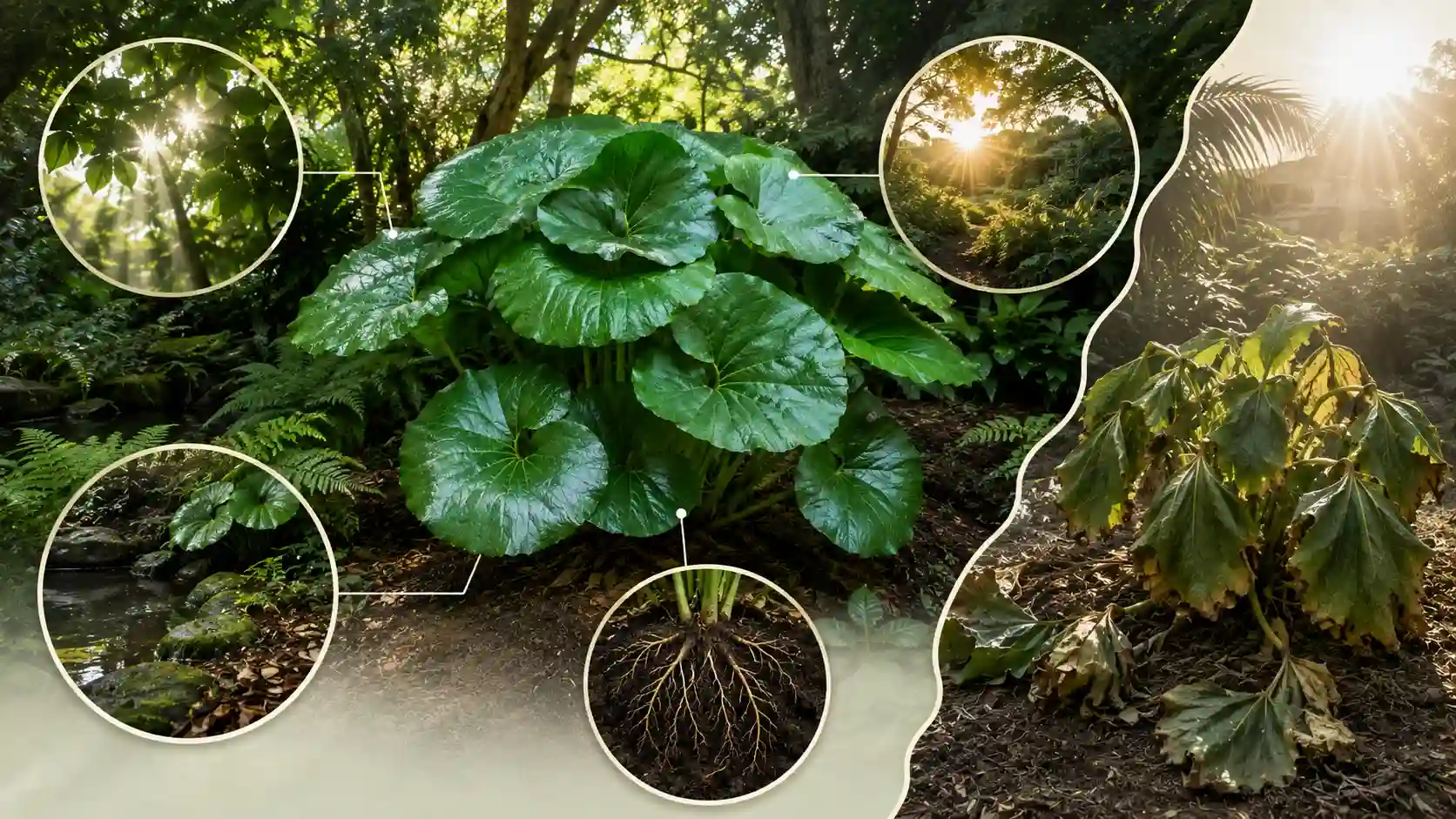
The best position is part shade to full shade with protection from harsh afternoon sun and dependable soil moisture. Although some Australian nurseries describe the plant as tolerant of broader light conditions, intense heat and direct afternoon sun can cause substantial leaf wilting or scorching.
Sun and Shade Requirements
Bright dappled light, gentle morning sun and afternoon shade are generally better than exposed western sun. Large leaves lose water quickly during hot weather, so a shaded position reduces heat stress.
A practical observation for Australian gardens is that a plant receiving too little light may remain alive but produce weaker growth and fewer flowers, while one receiving too much hot sun can look dramatically wilted during the day. The useful middle ground is bright shade with consistent moisture.
Ideal Garden Settings
Designer Verde works particularly well in:
- Shaded courtyards
- Woodland-style borders
- Under suitable trees
- Pond and water-feature margins
- Moist, protected garden beds
- Large decorative containers
Its oversized foliage also makes it an effective structural contrast against fine-leaved plants. For broader ideas on selecting plants for Australian landscapes, see our guide to best trees and shrubs for Australian gardens.
Ligularia Reniformis ‘Designer Verde’ Size, Height and Growth Rate
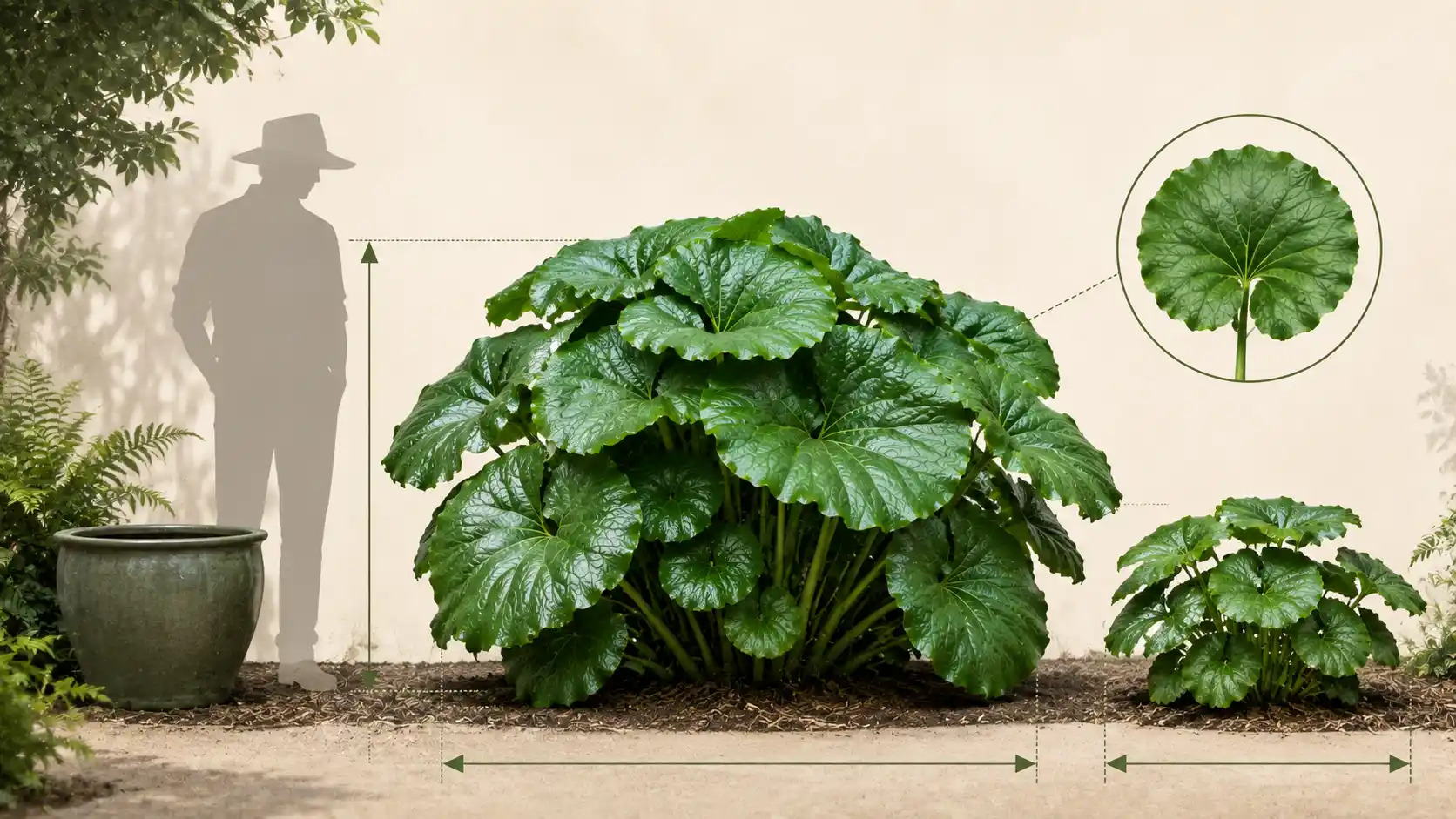
Designer Verde generally forms a broad foliage mound rather than a tall upright shrub. Australian nursery information places mature height and width around 60 cm to 1 m, although actual dimensions vary with climate, moisture, soil and container restriction.
| Measurement | Typical range |
| Mature height | 60 cm–1 m |
| Mature spread | 60 cm–1 m |
| Individual leaf size | About 20–40 cm across |
| Growth rate | Slow to moderate |
Some cultivated Tractor Seat forms can develop leaves approaching 40 cm or more under favourable conditions, demonstrating how strongly mature leaf size depends on growing conditions.
Does Ligularia Spread Easily? Is It Invasive?
Designer Verde is generally clump-forming rather than aggressively spreading. It develops from a crown and can be propagated by division rather than behaving like a rapidly running groundcover.
This distinction matters: a plant can become a substantial clump without being invasive. It should still be monitored in gardens where conditions are exceptionally favourable, but its normal horticultural habit is a manageable foliage mound.
How to Plant Ligularia ‘Designer Verde’
Plant Designer Verde where the soil can retain moisture without remaining waterlogged.
- Choose a shaded or partly shaded position protected from harsh afternoon heat.
- Improve poor soil with well-decomposed organic matter.
- Dig a planting hole slightly wider than the root ball.
- Position the plant at approximately the same depth as it was growing in its container.
- Backfill firmly without compacting the soil excessively.
- Water thoroughly after planting.
- Apply an organic mulch layer while keeping mulch away from the crown.
Good drainage remains important because moisture-loving does not mean permanently saturated. Poorly drained soil can encourage root problems.
Ligularia ‘Designer Verde’ Care Guide
Watering Needs
Consistent moisture is one of the most important requirements. Water deeply when the upper soil begins to dry rather than allowing the root zone to repeatedly become bone dry. Mulching helps moderate soil temperature and reduce evaporation.
During hot Australian summers, plants in containers or exposed positions may require substantially more frequent watering than established plants in deep garden soil.
Light Requirements
Follow the light guidance above: bright shade, dappled light or gentle morning sun with afternoon protection is a reliable target. Avoid assuming that a plant described as shade-tolerant will perform well in intense western sun.
Soil Preferences
A rich, humus-heavy soil that holds moisture while draining excess water is ideal. Loam is particularly suitable, but clay can work if drainage is adequate.
Fertilising
Apply a light, balanced fertiliser during active growth, following the product’s directions. Excessive fertilisation is unnecessary and can produce soft, overly vigorous foliage.
Pruning and Cutting Back
Remove yellow, damaged or badly scorched leaves as necessary. Deadheading spent flower stems improves appearance and can redirect plant resources towards continued growth.
In warmer, frost-free Australian regions, Designer Verde may remain evergreen rather than requiring the hard winter cutback used for some herbaceous perennials in colder climates.
Climate Tolerance in Australia
Designer Verde can perform well in warm Australian conditions when afternoon shade and moisture are maintained. Cold tolerance varies with the particular plant and local conditions; protected positions are preferable where severe frost occurs. Australian plant suppliers also describe the plant as capable of handling warm conditions when adequately watered.
As of August 2026, Australian nursery listings continue to use multiple botanical names for this plant, so checking the cultivar name ‘Designer Verde’ remains particularly useful when purchasing.
Common Problems With Ligularia Reniformis ‘Designer Verde’
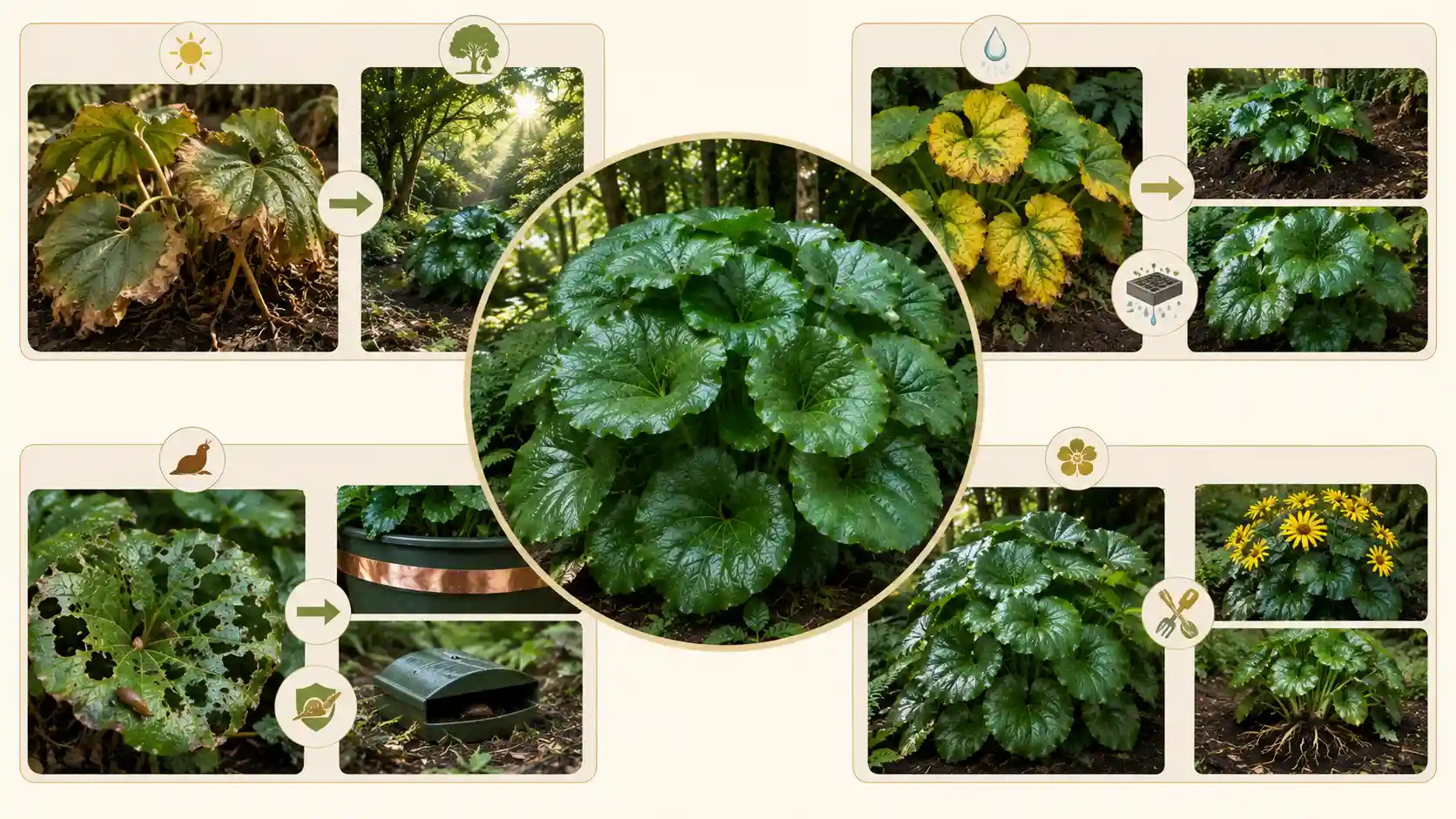
Leaf Scorch and Wilting in Sun
Hot direct sunlight is a common cause of dramatic daytime wilting and scorched foliage. Move the plant into afternoon shade or increase overhead protection. If the plant recovers as temperatures fall, heat stress is a strong possibility.
Yellowing Leaves
Yellow leaves can result from several conditions, including excessive moisture, poor drainage, nutrient shortage or excessive sunlight. Check the soil before adding fertiliser: treating a watering problem as a nutrient deficiency can make the underlying issue worse. The same diagnostic approach used for yellowing foliage on houseplants—checking moisture, drainage, light and nutrition—can also help when diagnosing yellow leaves on outdoor plants; see Yellow Leaves Indoor Plant Australia.
For indoor gardeners, the same diagnostic principle applies to many houseplants with yellow foliage: assess moisture, drainage, light and roots before reaching for supplements.
Slugs and Snails
Large, soft leaves can attract slugs and snails, particularly in damp shaded gardens. Regular inspection, removal of hiding places and appropriate non-toxic physical or biological controls can reduce damage. For help distinguishing slugs, snails and other common garden pests, see our Garden Pest Identification Guide for Australian Gardens.
Why Isn’t My Ligularia Blooming?
The most common causes are insufficient suitable light, inconsistent moisture or an old congested clump. Keep the root zone evenly moist and provide bright dappled light rather than deep, dry shade. If an established clump has become crowded, division can restore vigour.
Is Ligularia ‘Designer Verde’ Toxic to Dogs and Other Pets?
Pet-safety information for Designer Verde is inconsistent between retail sources. One Australian nursery currently describes the plant as non-toxic to cats and dogs, while other sources associate Tractor Seat Plant material with toxicity.
Because the published information is not sufficiently consistent to make a definitive safety claim for every plant sold under this trade name, the cautious approach is to prevent pets from chewing unfamiliar ornamental plants. If ingestion occurs, contact a veterinarian for advice rather than relying on internet plant lists.
Can You Divide Ligularia Plants?
Yes. Division is a practical way to propagate and rejuvenate an established clump. Carefully lift the plant, expose the crown and separate it into sections, ensuring each division has viable roots and growing points.
In Australian gardens, spring or early autumn is generally preferable because moderate temperatures reduce transplant stress. Replant divisions promptly, water thoroughly and maintain consistent moisture while roots establish.
Best Companion Plants for Ligularia ‘Designer Verde’
Choose companions with similar shade and moisture requirements.
Suitable options include:
- Ferns
- Clivias
- Bromeliads
- Tree ferns
- Cordylines
- Dwarf mondo grass
- Hostas in suitable cooler climates
- Astilbes where summer conditions are appropriate
Australian climate matters. Traditional shade combinations such as hostas and astilbes can struggle through hot, humid or dry Australian summers, whereas clivias, selected bromeliads and other warm-climate foliage plants can provide more reliable companions in subtropical gardens. Dwarf mondo grass can provide a useful low-growing contrast beneath larger foliage plants; see our Mondo Grass Garden care guide for Australian growing conditions. For another Australian-friendly groundcover option, Hibbertia scandens can provide a different texture around larger feature plants.
Best Ligularia and Farfugium Varieties
For Australian gardeners, variety selection should consider both foliage appearance and climate.
| Variety | Leaf colour | Best suited to |
| ‘Designer Verde’ | Glossy mid-green | Warm and humid gardens; protected shade |
| Farfugium ‘Aureomaculatum’ | Green with yellow spots | Warm climates; feature foliage |
| Ligularia dentata ‘Britt-Marie Crawford’ | Chocolate-purple | Cooler climates |
| Ligularia dentata ‘Othello’ | Dark mahogany | Cooler gardens with suitable summer conditions |
Farfugium japonicum var. giganteum is another important Tractor Seat Plant form, recognised for exceptionally large leaves and use beside ponds, in containers and in shaded plantings.
For many Australian gardens outside cool highland areas, Designer Verde is a practical choice when the priority is large green foliage rather than unusual leaf colour.
Common Beginner Mistakes With Ligularia ‘Designer Verde’
The biggest mistakes are usually environmental rather than complicated care errors:
- Planting in full afternoon sun: large leaves can scorch and wilt.
- Allowing repeated drying: moisture stress quickly affects oversized foliage.
- Keeping roots permanently waterlogged: moisture retention still requires drainage.
- Assuming every Latin label is botanically current: nursery naming varies considerably.
- Ignoring old congested clumps: division can restore vigour.
- Over-fertilising: more fertiliser is not a substitute for correct light, moisture and soil.
Elemo Baker recommends getting the position right before adjusting fertiliser or watering routines. For this plant, location is often the most important part of successful care.
Conclusion
Ligularia reniformis Designer Verde is a striking Tractor Seat Plant valued for its huge glossy foliage, manageable clumping habit and strong performance in protected, moist shade. Its biggest challenge is not complicated maintenance but choosing the correct environment: bright shade, reliable moisture, rich soil and protection from harsh afternoon heat.
The botanical naming is genuinely confusing. Current taxonomic resources distinguish Ligularia reniformis from the Farfugium japonicum group associated with the ornamental Tractor Seat Plant, while Australian nurseries continue to use overlapping names.
The clearest takeaway is simple: buy and identify the plant by the trade name ‘Designer Verde’, then provide shade, moisture and good drainage for the best foliage.
FAQs
1. Where is the best place to plant Ligularia?
The best place is a shaded or partly shaded garden position with rich, moisture-retentive but well-drained soil. Protect it from harsh afternoon sun, particularly in hot Australian climates.
2. Does Ligularia reniformis prefer sun or shade?
It generally prefers part shade to full shade, although gentle morning sun or bright dappled light can be beneficial. Hot afternoon sunlight can cause wilting and leaf scorch.
3. Is Ligularia invasive?
Designer Verde is generally a clump-forming ornamental rather than an aggressive spreading plant. It expands through its crown and is normally managed by division when the clump becomes too large or congested.
4. Do you cut back Ligularia?
You can remove damaged, yellow or spent foliage as required and cut away old flower stems after flowering. In frost-free Australian areas, a complete winter cutback is usually unnecessary if the foliage remains healthy.
5. Is Ligularia toxic to dogs?
Available information is inconsistent for plants sold under the Ligularia/Tractor Seat Plant names. Some Australian nursery information describes Designer Verde as non-toxic, while other sources report toxicity. Prevent pets from chewing unfamiliar ornamental plants and consult a veterinarian if ingestion is suspected.
6. Can you divide Ligularia plants?
Yes. Established plants can be divided by lifting the crown and separating sections with healthy roots and growing points. Spring or early autumn is generally suitable in Australia, followed by thorough watering.
7. Why isn’t my Ligularia blooming?
Poor flowering is commonly associated with unsuitable light, insufficient moisture or an old congested clump. Provide bright dappled light, maintain even moisture and divide an overcrowded plant when necessary.