
Yellow Leaves Indoor Plant Australia: Causes & Fixes
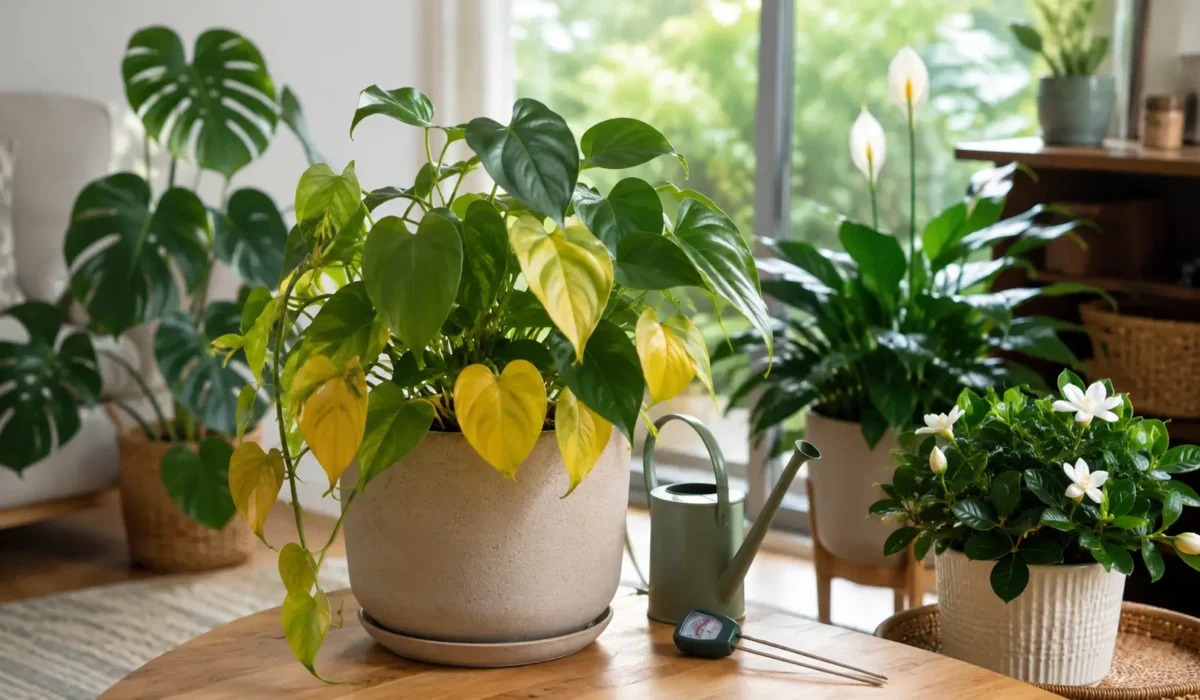
According to Elemo Baker, yellow leaves on Australian indoor plants most often signal overwatering, where waterlogged soil starves roots of oxygen and triggers rot. Leaves yellow across the whole blade rather than just the tips. Check soil moisture with a finger test before watering, and confirm pots have adequate drainage holes.
Underwatering produces a different pattern — yellowing concentrated at leaf tips and edges alongside bone-dry soil, a common issue in Melbourne and Sydney apartments once ducted heating switches on over winter. Nitrogen deficiency and natural leaf ageing both cause the lowest, oldest leaves to yellow and drop first, even when watering and light conditions are otherwise correct.
Australian homes can support a wide range of houseplants, but choosing plants suited to your available light, temperature and indoor conditions is an important first step; see our Australian Plants Guide: Indoor Houseplants & Garden Design for a broader overview of suitable choices.
By Elemo Baker | Plant Care & Gardening Expert
Last Updated: August 2026
Quick Summary
- Overwatering is one of the most common causes of yellowing in indoor plants, particularly when pots have poor drainage or remain wet for long periods.
- Yellowing patterns matter: older leaves, new leaves, whole-leaf yellowing and green-veined chlorosis can point towards different causes.
- Epsom salt supplies magnesium; it should not be treated as a general cure for yellow leaves and is most appropriate when magnesium deficiency is established or strongly indicated.
- A yellow leaf normally will not turn green again. Successful treatment is shown by healthier new growth and the cessation of further yellowing.
- Gardenias require special attention because high root-zone pH can restrict iron availability and cause interveinal chlorosis on young leaves.
What Does It Mean When Indoor Plant Leaves Turn Yellow?
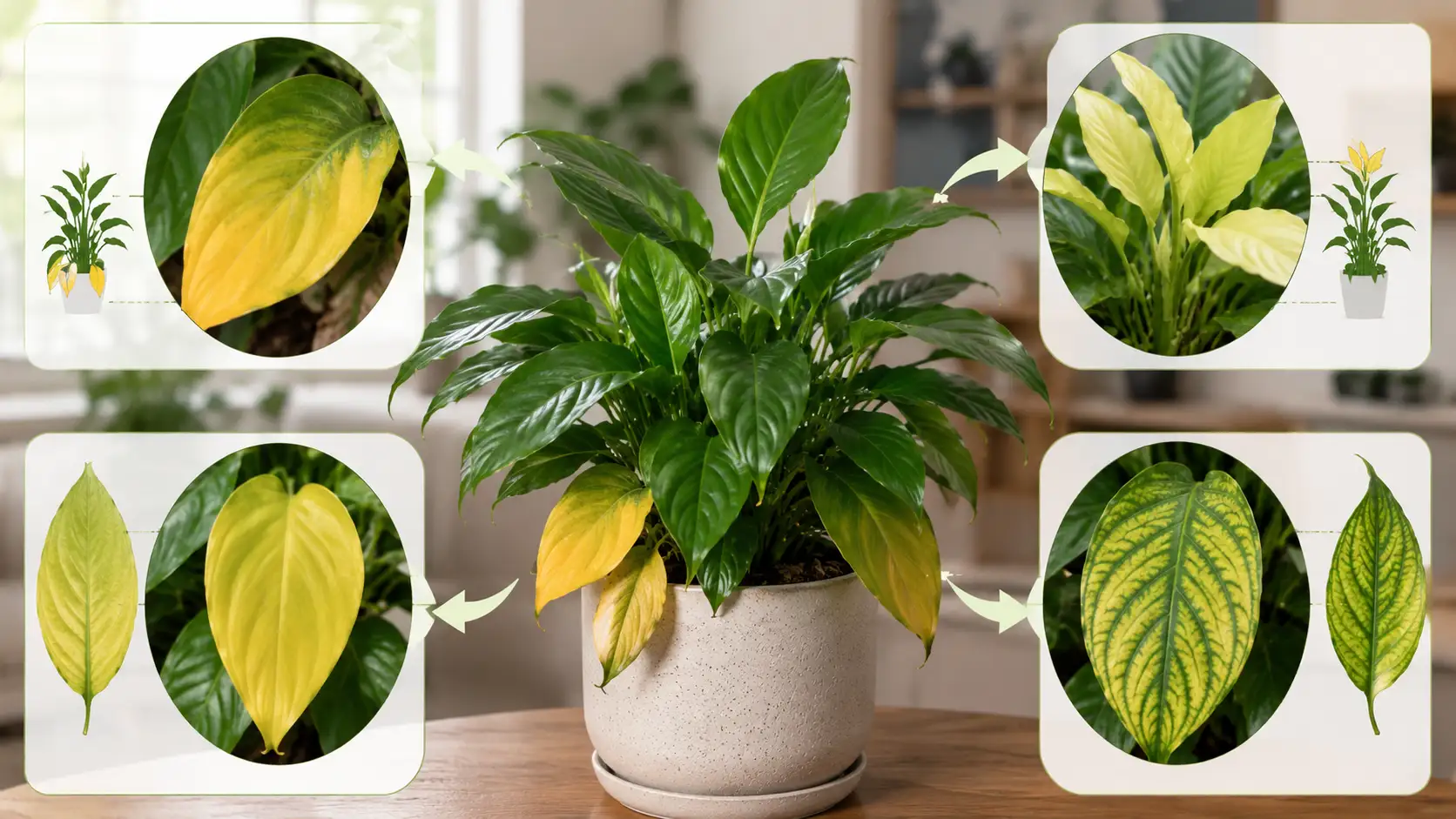
Yellowing leaves, technically called chlorosis, occur when green chlorophyll is reduced in leaf tissue. The symptom does not identify one disease by itself. Instead, the affected leaf’s age, pattern, position and surrounding conditions help determine whether the problem is related to roots, water, light, nutrients, insects or natural leaf turnover.
Yellowing leaves, technically called chlorosis, occur when green chlorophyll is reduced in leaf tissue; chlorosis is a symptom that can result from several different underlying conditions.
Yellow leaves do not automatically mean an indoor plant is dying. An occasional old leaf turning yellow and dropping can be part of normal ageing. However, rapid yellowing across several leaves, yellowing of new growth or yellowing accompanied by soft stems, wet soil, pests or stunted growth indicates that the plant should be investigated.
The same diagnostic principle applies to other popular indoor plants; for example, our guide to Orchid Stem Turning Yellow: Causes & Fix explains why yellowing plant tissue should be assessed according to its location and surrounding symptoms.
Old Growth vs New Growth Yellowing
Older leaves yellowing first often points towards mobile nutrient deficiencies such as nitrogen or magnesium, although overwatering and normal ageing can produce similar symptoms.
New leaves yellowing first are more suggestive of problems affecting nutrients that are less mobile within the plant, including iron. Root-zone pH can also prevent iron from becoming available even when the growing medium contains iron.
As a practical diagnostic step, compare one yellowing older leaf with the newest leaves before adding fertiliser.
Whole-Leaf Yellowing vs Yellowing Between Veins
Uniform yellowing across the leaf can occur with nitrogen deficiency, overwatering, inadequate light or natural ageing.
Interveinal chlorosis, where the tissue becomes yellow while the veins remain noticeably green, points more strongly towards a nutrient-availability problem such as magnesium or iron deficiency. The leaf’s age helps distinguish them: magnesium deficiency commonly affects older foliage, while iron deficiency generally appears first in young growth.
The Most Common Causes of Yellow Leaves in Australian Homes
Overwatering
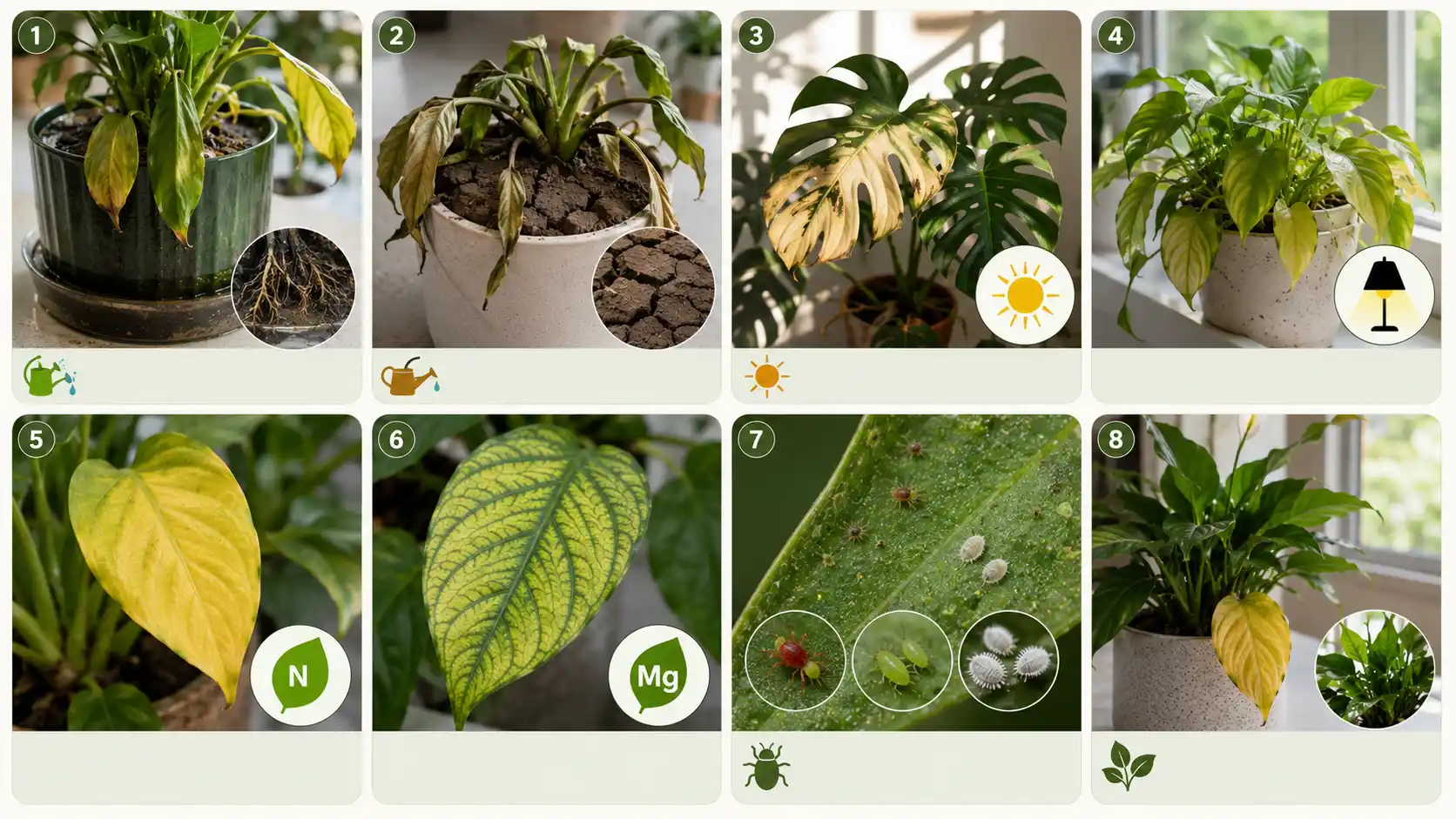
Overwatering is a major cause of yellow leaves because saturated potting mix contains less air for roots. Prolonged waterlogging can damage roots and contribute to root rot. The problem is especially likely when indoor plants are watered on a fixed schedule instead of according to soil moisture.
Fix: Check the potting mix before watering. If it is still moist, wait. Make sure drainage holes are open and never leave the pot standing in water.
Underwatering
Underwatering deprives roots of the moisture required for normal growth. Yellowing may occur alongside wilting, dry potting mix, curling leaves and crispy brown margins.
Fix: Water thoroughly when the plant’s moisture requirement indicates it is due, allowing excess water to drain away. Do not compensate for prolonged dryness with a permanent schedule of frequent watering.
Too Much or Too Little Light
Excessive direct sunlight can produce pale or bleached areas, particularly where strong sunlight reaches the foliage through glass. Insufficient light can cause weak growth and gradual loss of green colour.
Fix: Match light intensity to the plant species. Avoid suddenly moving a shade-adapted indoor plant into intense outdoor or window sunlight; gradual acclimatisation reduces stress.
Temperature can also influence indoor plant stress, particularly when plants are exposed to air conditioning, heating or sudden environmental changes; our Philodendron Temperature Range Guide for Healthy Growth provides a useful example of species-specific temperature requirements.
Nutrient Deficiency
Nitrogen deficiency generally produces more uniform yellowing, particularly on older leaves. Magnesium deficiency more typically produces yellowing between the veins of older leaves.
Fix: Check the plant’s fertilising history and growing medium before adding a nutrient. Correct diagnosis is preferable to repeatedly adding supplements.
Pests
Aphids, spider mites and scale insects can damage foliage by feeding on plant sap. Look closely at leaf undersides, stems, growing points and leaf axils. Fine stippling, sticky residue, webbing or visible insects can help distinguish pest damage from a nutritional problem.
Fix: Isolate affected plants where practical, physically remove pests when possible and use an appropriate treatment according to the plant and pest. Scale and mealybugs are recognised indoor-plant pests in Australian horticultural guidance.
If you are unsure whether yellowing is caused by insects rather than a watering or nutrient problem, our Garden Pest Identification Guide for Australian Gardens can help you identify common garden and plant pests from their symptoms.
Natural Leaf Ageing
An occasional oldest leaf turning yellow before dropping can be completely normal, particularly when the plant is producing healthy new foliage. If only one or two old leaves are affected and new growth remains healthy, intervention may not be necessary.
Yellow Leaves: Symptom Comparison
| Symptom | Likely Cause | Quick Fix |
| Several leaves yellow with wet soil | Overwatering | Allow appropriate drying and improve drainage |
| Yellowing with very dry soil | Underwatering | Rehydrate thoroughly, then adjust watering |
| Bleached or scorched patches | Excess light | Move from harsh direct sun |
| Pale growth in a dark room | Insufficient light | Increase suitable indirect light |
| Older leaves uniformly yellow | Nitrogen deficiency or ageing | Assess nutrition and leaf age |
| Older leaves yellow between green veins | Magnesium deficiency | Confirm deficiency before supplementing |
| Young leaves yellow with green veins | Iron availability problem | Check pH and root conditions |
| Yellowing with stippling/webbing/scale | Pests | Inspect and treat the pest |
| One old leaf yellowing | Natural ageing | Monitor rather than overcorrect |
Nutrient Deficiency and Yellow Leaves
A nutrient deficiency should not be diagnosed from colour alone because watering, pH, root damage and light stress can produce similar symptoms.
Nitrogen Deficiency Pattern
Nitrogen is required for healthy foliage development and chlorophyll production. A deficiency commonly causes older leaves to become progressively pale or yellow because nitrogen is mobile within the plant and can be redistributed to younger tissues.
If the entire plant is pale, also consider inadequate light, root problems or an unsuitable fertilising regime rather than assuming nitrogen is the cause.
Magnesium Deficiency Pattern
Magnesium forms the central component of chlorophyll, and deficiency commonly appears as interveinal chlorosis on older leaves. The veins may remain green while the tissue between them turns yellow.
However, this pattern is not exclusive to magnesium. Soil or potting-mix testing and consideration of pH, fertiliser history and plant species provide a more reliable diagnosis.
Does Epsom Salt Actually Fix Yellow Leaves?
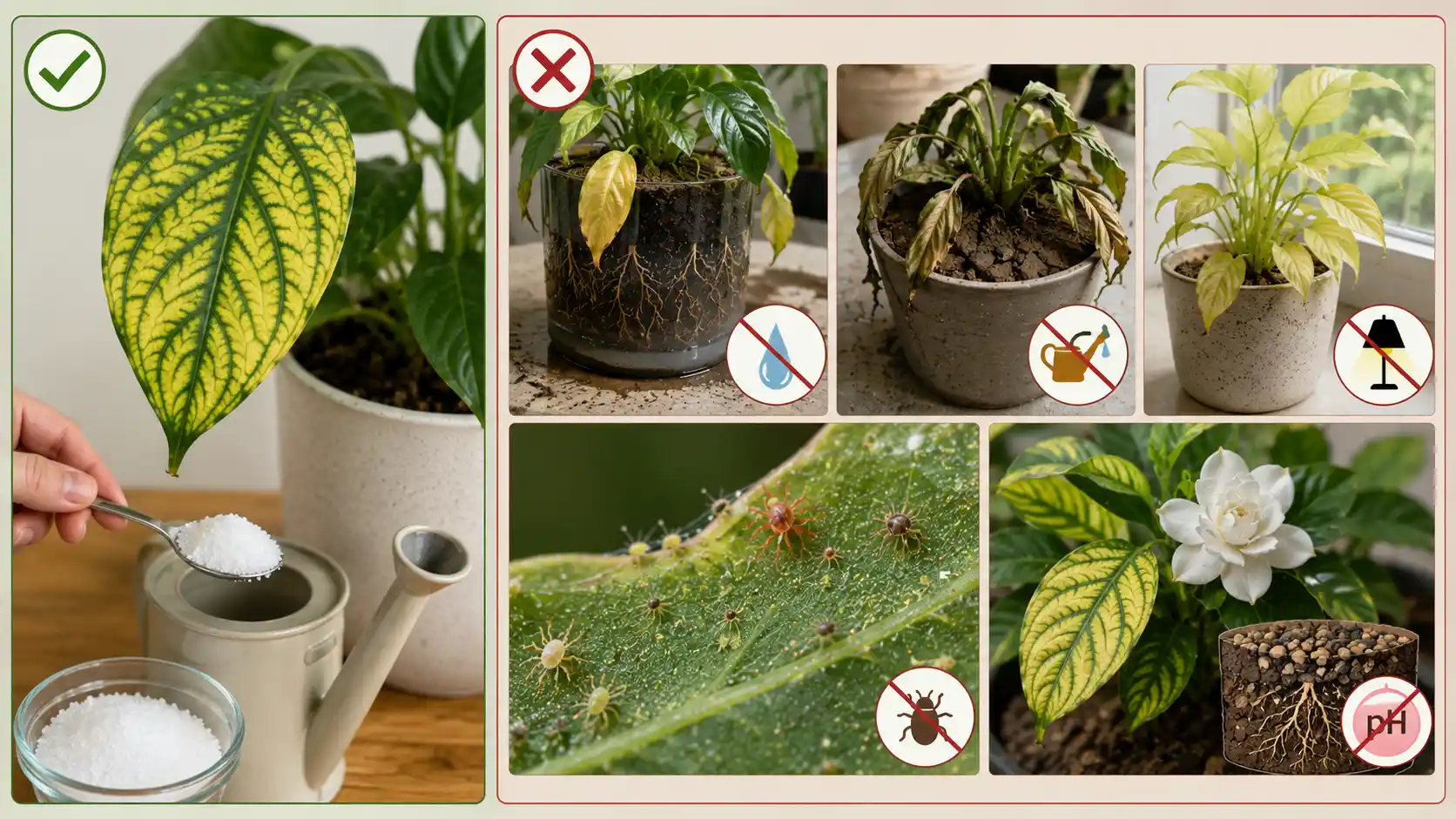
Epsom salt can help yellow leaves caused by genuine magnesium deficiency, but it does not generally fix yellowing caused by overwatering, underwatering, poor light, pests or root damage. Adding magnesium when it is not required can create nutrient imbalances and may interfere with calcium uptake.
How to Apply Epsom Salt Correctly
For a confirmed magnesium deficiency, Australian Gardening Australia guidance has described a conservative foliar mixture of 1 teaspoon of Epsom salt per litre of water, applied to foliage about once a month during summer in suitable conditions.
For houseplants, however, diagnosis should come first. Foliar applications should be made in cool, low-light conditions rather than intense sunlight because concentrated sprays can scorch leaves.
Which Plants Benefit From Epsom Salt
Plants benefit from Epsom salt only when additional magnesium is actually needed. It is not a routine requirement for healthy houseplants receiving an appropriate complete fertiliser.
Which Plants to Avoid Using Epsom Salt On
Do not automatically use Epsom salt on:
- Australian native plants simply because their leaves are yellow
- Succulents and drought-adapted plants without evidence of magnesium deficiency
- Acid-loving plants such as azaleas unless the diagnosis supports magnesium treatment
- Carnivorous plants, which have specialised nutrient requirements
Grevilleas and banksias deserve particular caution with fertilisers because many members of the Proteaceae are sensitive to excess phosphorus. This is separate from magnesium deficiency but demonstrates why indiscriminate fertilising can be harmful.
Signs You’re Using Too Much
Repeated Epsom salt applications without a demonstrated deficiency can increase soluble salts and disturb nutrient balance. If leaf margins begin to scorch or the plant declines after repeated treatments, stop supplementing and reassess the root-zone conditions.
Case Study — Why Gardenia Leaves Turn Yellow
Gardenias are a useful example of why yellow leaves require diagnosis rather than a generic Epsom-salt treatment.
Why Gardenias Are Prone to Yellowing
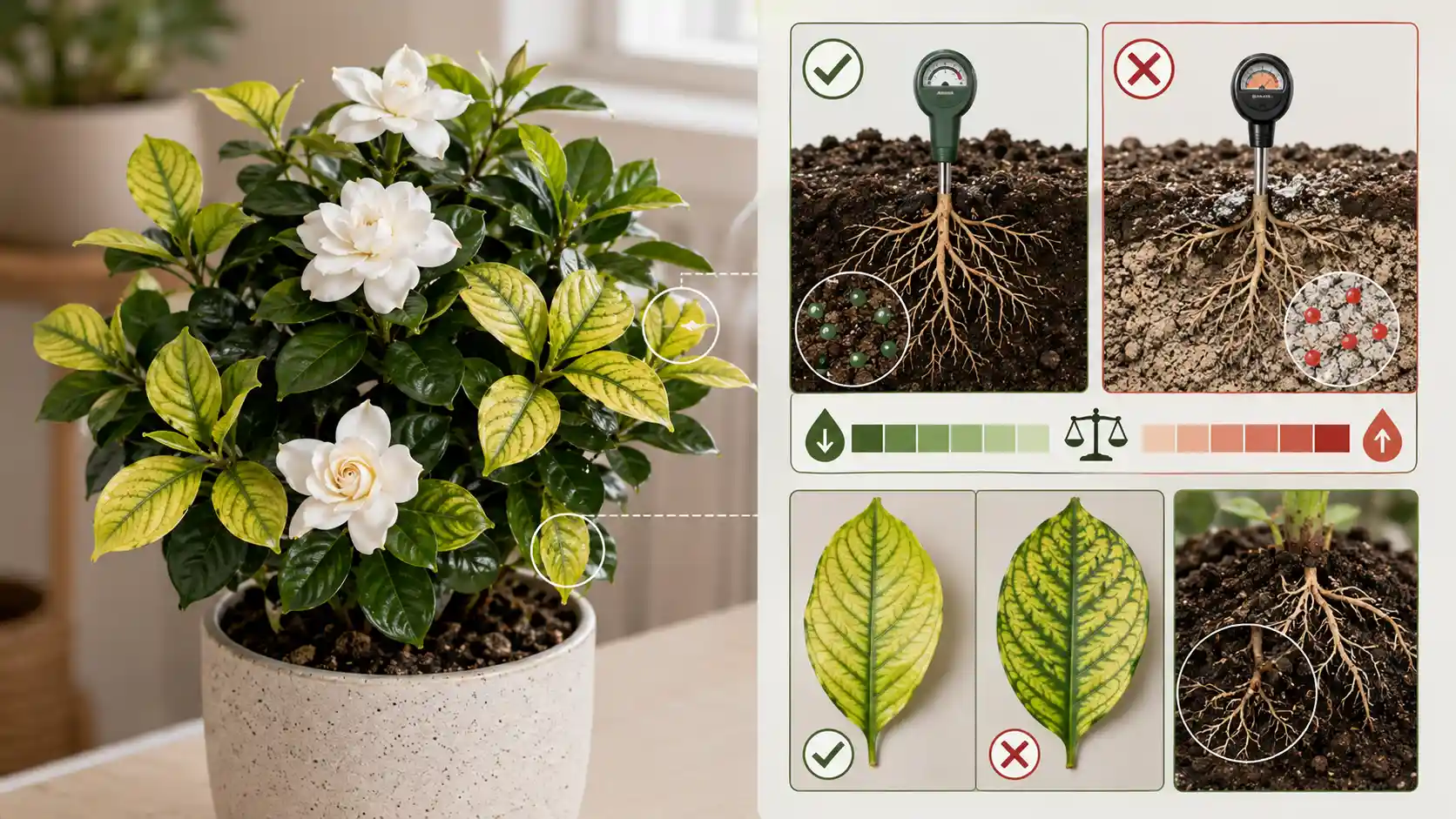
Gardenia jasminoides is acid-loving and performs best in an acidic root environment. When pH becomes too high, iron can become chemically unavailable even when iron is present in the growing medium. Young leaves may then develop yellow tissue while the veins remain green — classic iron chlorosis.
This is fundamentally different from assuming every yellow gardenia leaf represents magnesium deficiency.
Fixing Yellow Leaves on Gardenias Specifically
First check drainage, watering, light and root condition. If young foliage shows interveinal chlorosis, test the growing medium’s pH where possible. If high pH is confirmed, correct the root-zone conditions and use an appropriate iron treatment such as chelated iron according to the product label. Gardening Australia identifies iron chelates as a treatment for lime-induced chlorosis.
How to Fix and Prevent Yellow Leaves — Step by Step
Should You Cut Off Yellow Leaves?
Yes, a completely yellow or dying leaf can be removed with clean scissors. Removing a damaged leaf improves appearance and allows the plant to stop allocating resources to tissue that is already deteriorating. Do not remove large amounts of foliage simply because a few leaves have changed colour.
How Often Should You Water Indoor Plants in Australia?
There is no reliable universal watering interval for Australian indoor plants. Watering frequency changes with plant species, pot size, potting mix, season, light, temperature and humidity.
Instead of watering every Sunday or every few days, check the growing medium. Gardening Australia recommends checking around 2 cm into the soil and watering when it feels dry for plants with that moisture preference.
As a practical rule, many common indoor plants prefer a cycle from thoroughly watered to moderately moist rather than permanently saturated. Succulents and cacti require substantially drier conditions, while moisture-loving plants require more consistent moisture.
Can Yellow Leaves Turn Green Again?
Usually, a completely yellow leaf will not return to its original green colour. The goal is to stop the cause of the yellowing and protect healthy tissue. Successful recovery is demonstrated by stable existing foliage and normal, healthy new growth.
In our experience, checking the soil before reaching for fertiliser prevents many unnecessary treatments. A second useful habit is to inspect roots and drainage whenever yellowing occurs alongside persistently wet soil.
Common Mistakes Australian Plant Owners Make
Australian indoor gardeners commonly run into a few preventable diagnostic errors:
- Following a fixed watering calendar: indoor plants do not all dry at the same rate.
- Adding water whenever leaves look yellow: yellow leaves can result from overwatering as well as drought.
- Using Epsom salt as a universal cure: magnesium cannot correct root rot, pest damage or unsuitable light.
- Ignoring drainage: a decorative cachepot can hide a pot sitting in stagnant water.
- Fertilising before diagnosing: excess nutrients can create additional root-zone problems.
- Ignoring seasonal changes: heating and air conditioning can alter evaporation and humidity, while seasonal light changes affect plant water use.
- Moving plants abruptly: major changes in light and temperature can trigger foliage yellowing.
As of August 2026, the most useful approach remains diagnosis before treatment: check moisture, drainage, light, pests, leaf age and nutrient patterns rather than relying on a single remedy.
Conclusion
Yellow leaves indoor plant Australia problems are best treated as diagnostic clues rather than a single condition. Overwatering, underwatering, unsuitable light, nutrient deficiencies, pests and natural ageing can all produce yellow foliage. The fastest route to recovery is to identify the pattern first: old or new leaves, whole-leaf yellowing or green-veined chlorosis, and wet or dry root conditions. Epsom salt has a specific role in correcting magnesium deficiency, but it should not be used as a universal yellow-leaf treatment. When the cause is corrected early, the plant can often resume healthy growth even though already-yellow leaves remain discoloured.
Maintaining healthy foliage is an important part of successful indoor gardening, and our Benefits of Indoor Plants: 10 Science-Backed Reasons explores why people commonly grow indoor plants and the evidence behind their benefits.
FAQs
What is the most common reason for yellowing leaves on indoor plants?
Overwatering is one of the most common causes of yellowing indoor plant leaves. Persistently wet potting mix can reduce oxygen around the roots and contribute to root damage. Always check soil moisture and drainage before adding more water.
Should I cut yellow leaves off my plant?
Yes, completely yellow or dying leaves can be removed with clean scissors. Removing severely damaged foliage is mainly a maintenance measure; it does not correct the underlying cause, so watering, light, pests or nutrition must still be investigated.
Can a plant recover from yellow leaves, or is it too late?
Many plants can recover from yellow leaves when the underlying stress is corrected early. Existing yellow tissue usually remains yellow, but healthy new growth can develop once the root, water, light or nutrient problem has been resolved.
How often should I water my indoor plants in Australia?
Water indoor plants according to soil moisture and species requirements rather than a fixed calendar. For many common houseplants, checking the upper few centimetres of potting mix is more reliable than watering on a set weekly schedule.
Is Epsom salt safe to use on all indoor plants?
No. Epsom salt should not be routinely applied to every indoor plant. It supplies magnesium and can be useful where magnesium deficiency is confirmed, but unnecessary applications can contribute to nutrient imbalance and plant damage.
What’s the difference between yellow leaves from overwatering and underwatering?
Overwatered plants often have persistently moist soil and may show yellowing, wilting, brown patches or soft roots, whereas underwatered plants generally have dry soil and may wilt, curl or develop crispy leaf edges. Because symptoms can overlap, check the root-zone moisture before watering again.