
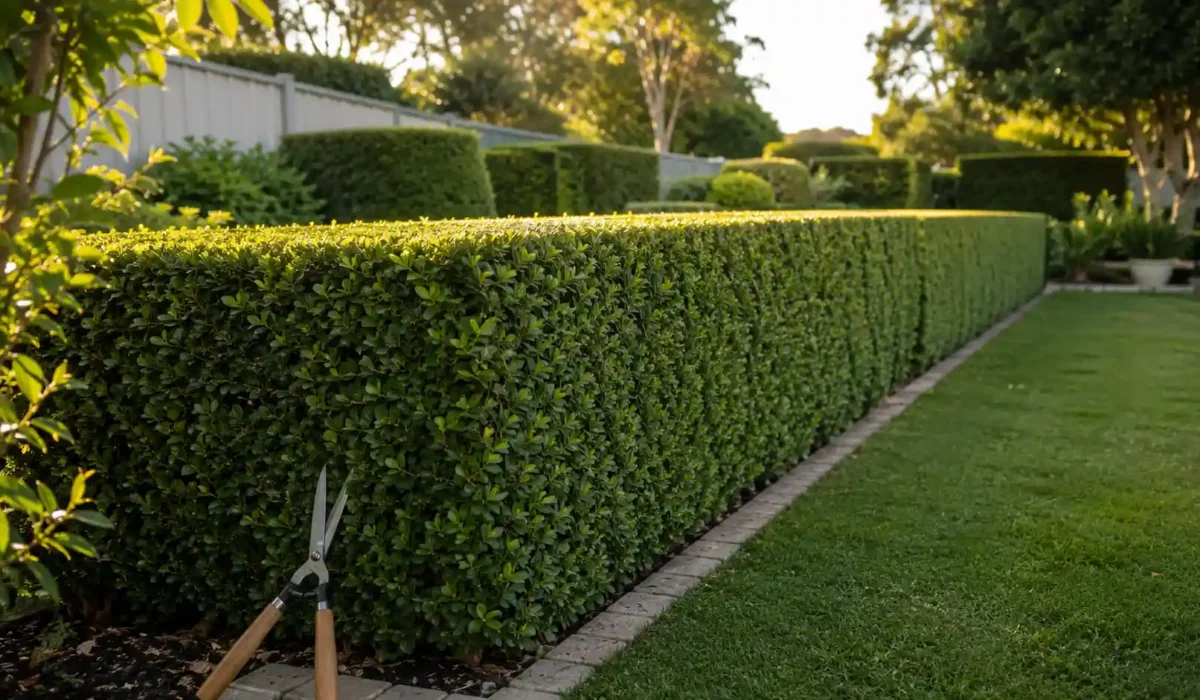
How to Prune Hedge Plants in Australia (Complete Guide)
According to Elemo Baker, Australian hedges are best pruned in late winter to early spring, before new growth emerges, cutting stems back by roughly a third and tapering the sides so the base is wider than the top — a batter shape that lets light reach lower foliage. Formal hedges then need light trims every 4–8 weeks through the growing season.
Conifer hedges are the exception: they won’t reshoot from bare wood, so cuts must stay within the green growth rather than into old timber. Flowering hedges such as viburnum or murraya respond better to pruning straight after their bloom than to a fixed calendar, and trimming should always be avoided during extreme heat, dry spells, or frost, when fresh cuts are slow to recover.
By Elemo Baker | Plant Care & Gardening Expert
Last Updated: August 2026
Quick Summary
- Best time to prune: late winter to early spring for most Australian hedges, with light maintenance trims through the growing season.
- Safe cutting limit: never remove more than one-third of the plant’s foliage in a single session.
- New hedges: avoid cutting at all in year one; formative shaping starts in year two.
- Tools: manual shears for precision and small hedges, powered trimmers for larger or overgrown ones — with proper PPE either way.
- Biggest mistake: cutting on a rigid annual schedule instead of reading the plant’s growth stage and local climate.
If you’d rather scan the numbers than read prose, our hedge pruning quick-reference spreadsheet lays out timing, cut-back limits, and frequency by species in one sortable table.
It mirrors the species table further down the page but in an editable, filterable format.
When Is the Best Time to Prune Hedges in Australia?
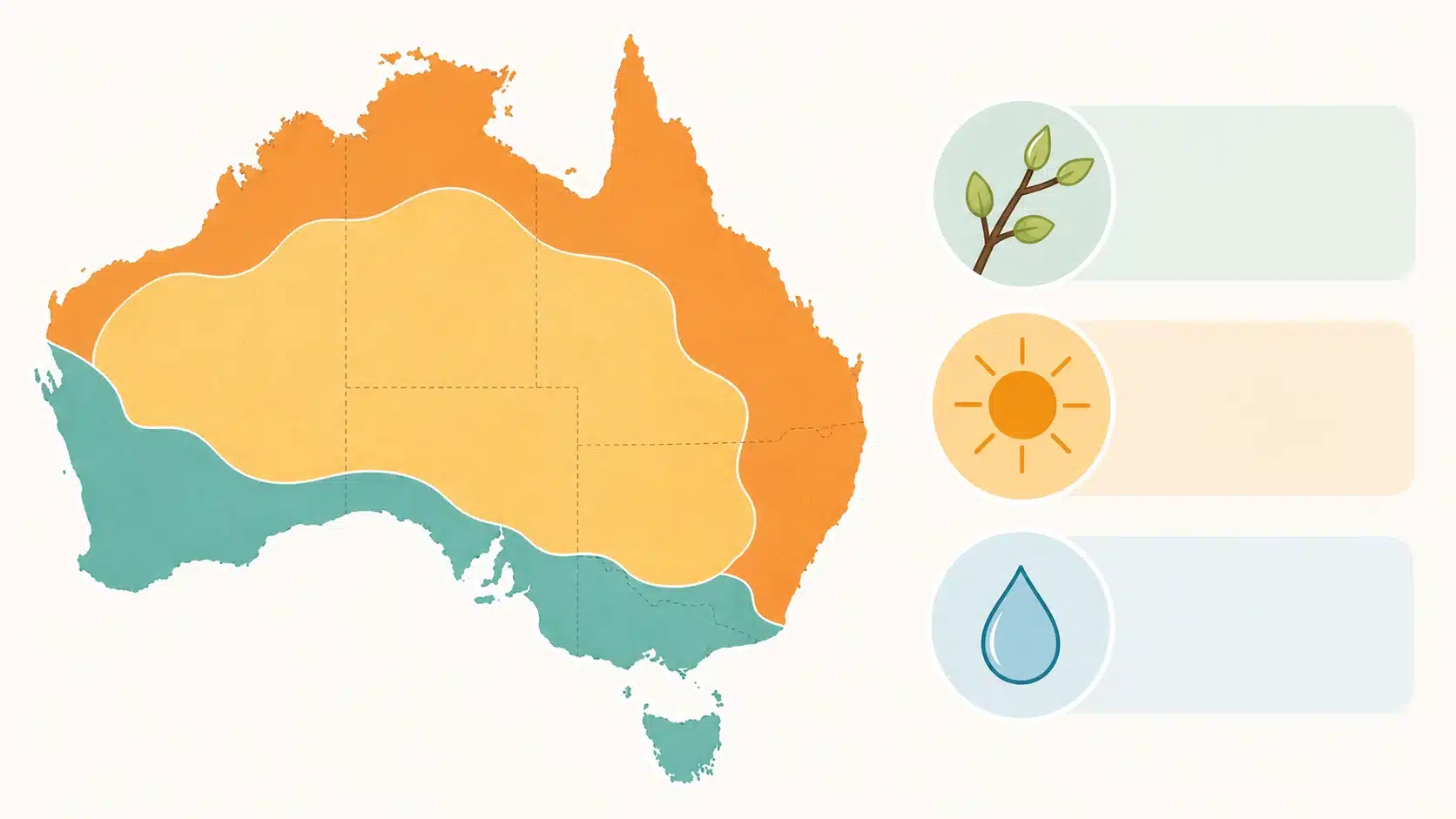
Australia’s size means there’s no single “correct” month — a hedge in tropical Queensland behaves differently to one in frost-prone Victoria or Tasmania.
By climate zone:
- Temperate and cool regions (VIC, TAS, southern NSW): prune in late winter to early spring, before new growth starts.
- Warm and subtropical regions (QLD, northern NSW): light trims can continue almost year-round, but avoid cutting during peak summer heat stress.
- Arid and semi-arid regions: time pruning around rainfall rather than season, since drought-stressed plants recover poorly from hard cuts.
When you should not prune:
- During active flowering, if you want to keep blooms — wait until just after flowering finishes.
- In peak summer heat or drought, when cuts increase water loss and stress.
- In deep winter frost zones, since exposed cuts are vulnerable to frost damage.
- During bird nesting season, as many hedges shelter active nests through spring.
| Season | Recommended Action |
| Spring | Main formative or maintenance prune as growth resumes |
| Summer | Light shaping trims only; avoid hard cuts in heat |
| Autumn | Light tidy-up, remove dead or damaged growth |
| Winter | Minimal pruning; dormant plants recover slowly |
Formative Pruning for Newly Planted Hedges
A newly planted hedge (Buxus, Murraya, Lilly Pilly, or otherwise) needs a different approach to an established one, and this is where most beginner mistakes start.
- Year one: avoid pruning altogether, aside from removing damaged or dead tips. The plant needs to establish roots before it can recover from cuts.
- Year two: begin light formative pruning to encourage lateral branching. Cut just above a leaf node to trigger side shoots rather than upward growth.
- Leader growth: for hedges that need height, leave the central leading stem uncut until the hedge reaches your target height, then remove it to force outward branching at the top.
In our experience growing formal hedges from young stock, skipping formative pruning in year two is the single biggest reason a hedge ends up thin and gappy at maturity — density is built early, not fixed later.
How to Prune a Hedge Correctly (Step-by-Step for Beginners)
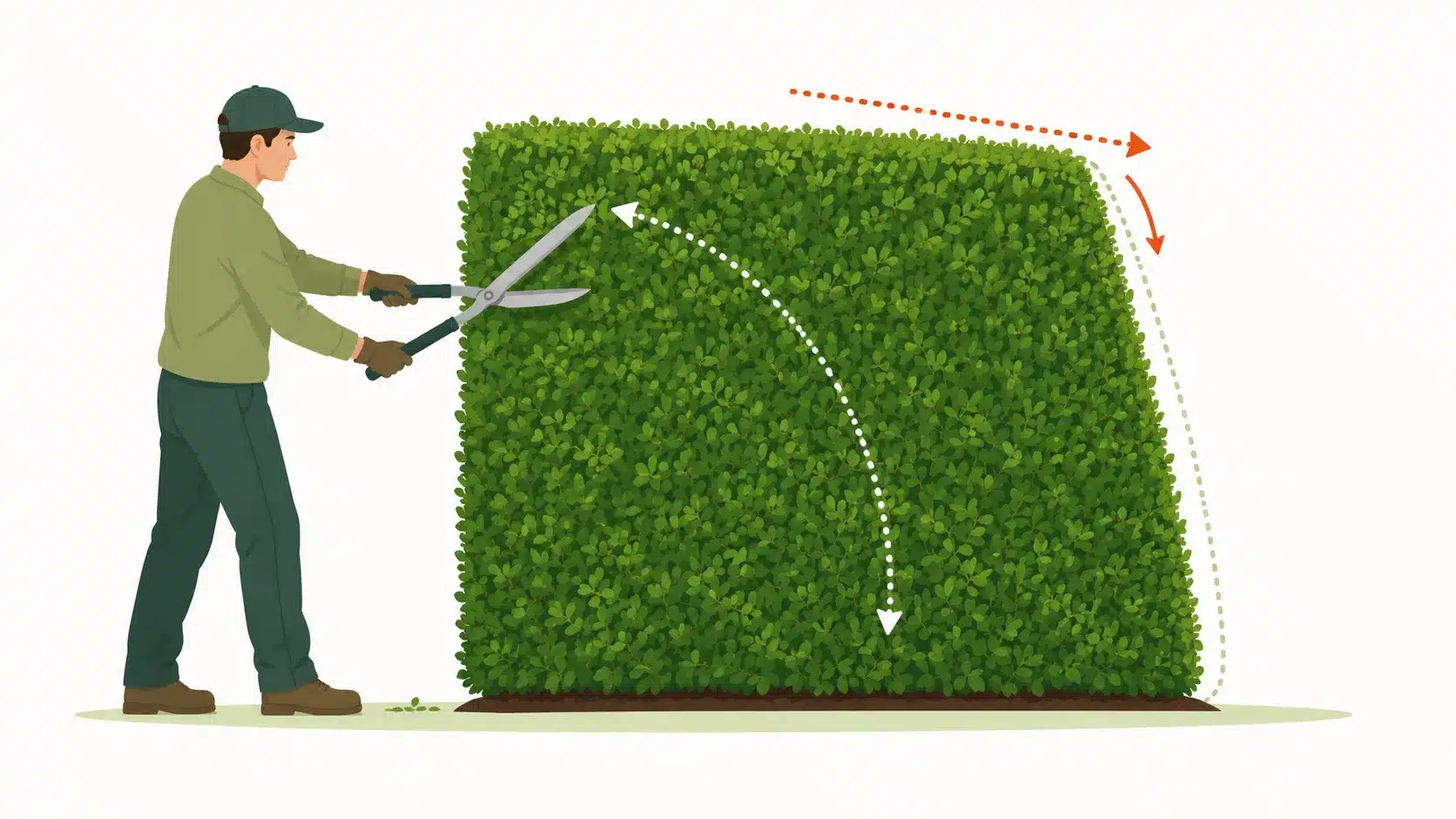
If you’re pruning for the first time, work methodically rather than freehand.
- Set a guide line. Drive a stake into the ground at each end of the hedge and run a taut string at your target height. For long hedges, add a middle stake to stop the line sagging.
- Decide cutting order based on height. For hedges around chest height, cut the sides first, working in a sweeping arc from back to front, then finish with the top. For taller hedges, cut the top first at a slight angle, then move to the sides. This order keeps your reference points consistent and avoids removing too much from one side before you’ve levelled the whole hedge.
- Angle your cuts slightly inward at the top so the base is a little wider than the crown — this lets light reach the lower branches and prevents thinning near the ground.
- Cut gradually. Take shallow passes rather than trying to reach the final shape in one go.
Pruning is a well-established horticultural technique (see Wikipedia’s overview of pruning) used to control plant shape, size, and health — hedges simply apply it on a larger, repeated scale.
Best Tools for Trimming Hedges
- Manual shears — best for small hedges, precision edges, and beginners learning to read the plant as they cut.
- Powered hedge trimmers — faster for long or overgrown hedges, but easier to over-cut if you’re not experienced.
- Loppers or a pruning saw — needed for thick, woody stems that shears can’t handle cleanly.
| Tool | Best For | Trade-off |
| Manual shears | Small hedges, detail work | Slower on large jobs |
| Powered trimmer | Large or overgrown hedges | Easier to remove too much at once |
| Loppers/pruning saw | Thick woody growth | Not suited to fine shaping |
Safety note: whichever tool you use, wear safety glasses, gloves, and ear protection with powered trimmers, and a dust mask if the hedge is dry or dusty. Clean, sharp blades also matter for plant health — dull blades tear stems rather than cutting cleanly, which opens the plant to disease.
How to Trim an Overgrown Hedge Without Damaging It
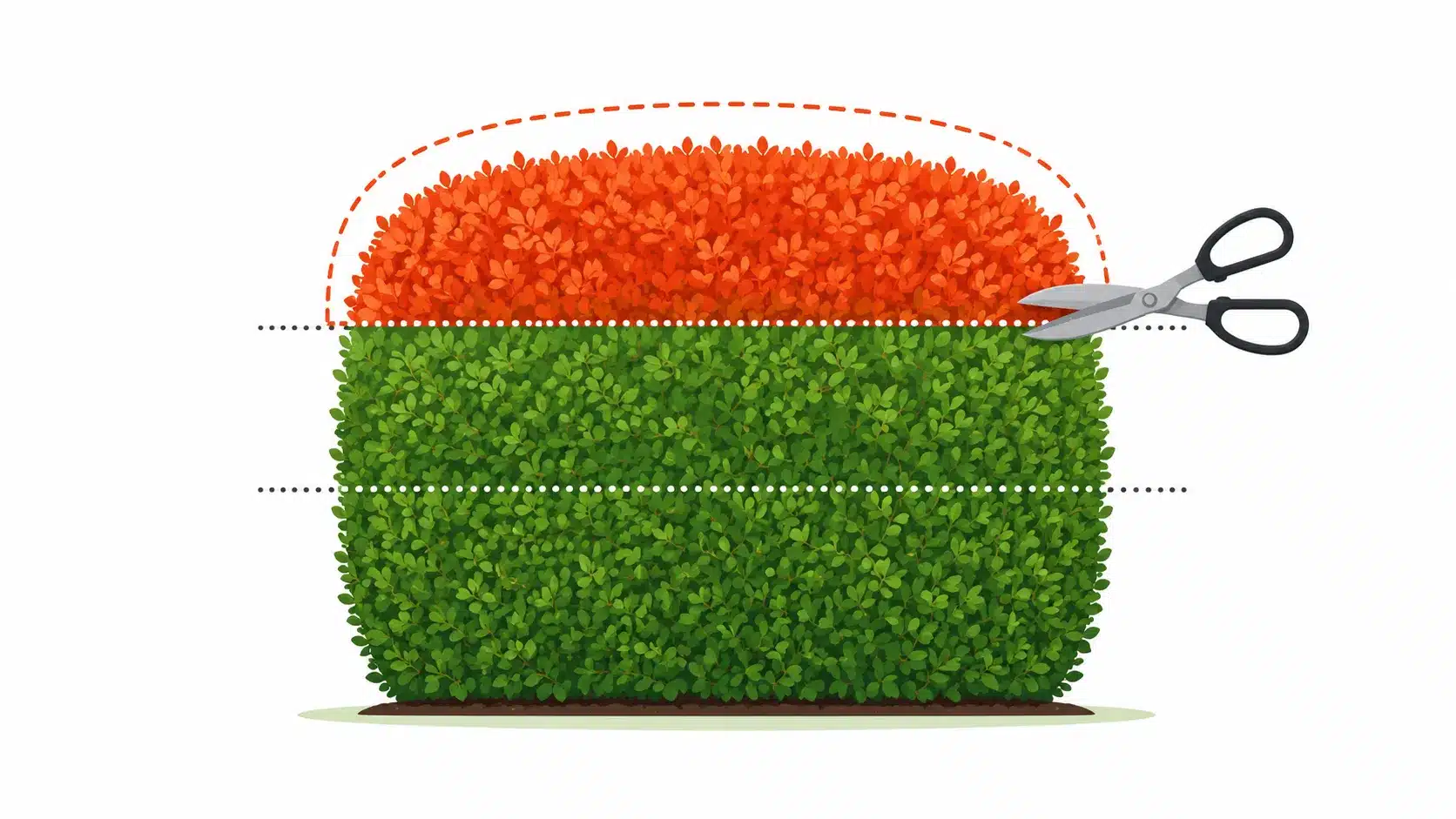
The one-third rule: as a general safety limit, avoid removing more than a third of the plant’s total foliage in one session, regardless of species. Cutting harder than this can shock the plant and delay recovery by a full growing season.
Reducing height safely: if a hedge has become significantly overgrown, reduce it in stages across two or three seasons rather than cutting it back to the final height immediately. This lets the plant redirect energy gradually instead of trying to recover from a single severe cut.
Will it grow back?
Most common Australian hedge species — including box, lilly pilly, murraya, and privet — recover well from a hard prune if it’s timed correctly and followed by adequate water. Recovery is typically visible within 4–8 weeks during the growing season, slower in cooler months.
Common Hedge Trimming Mistakes
- Pruning on a fixed calendar date instead of reading the plant’s growth stage.
- Using dull blades, which tear stems instead of cutting cleanly and invites disease.
- Cutting the top wider than the base, which shades and eventually kills lower growth.
- Ignoring the interior of the hedge, leading to a thin outer shell with no structure underneath.
- Removing more than a third of the foliage in a single cut.
- Skipping formative pruning in the first two years, which limits density for the hedge’s entire life.
Can you over-prune a hedge?
Yes. Repeated heavy cuts without recovery time weaken the root system, produce sparse regrowth, and in severe cases can kill sections of the plant permanently, especially older woody stems that don’t reshoot easily.
Hedge Problems After Pruning: Troubleshooting Guide
| Problem | Likely Cause | Fix |
| Yellowing leaves | Nutrient deficiency or stress from a badly timed cut | Feed with a balanced fertiliser and adjust next pruning timing |
| Bare, sparse base | Top consistently cut wider than the base, shading lower growth | Reshape with a tapered profile so light reaches the base |
| No regrowth after a hard cut | Pruned during dormancy or drought stress | Water consistently and wait for the next active growth period |
| Slow or patchy growth | Poor soil, compacted roots, or over-pruning | Mulch, improve soil, and reduce pruning frequency temporarily |
If yellowing or patchy growth persists after feeding and adjusting your pruning timing, check our garden pest identification guide to rule out pest damage. For a deeper diagnostic breakdown by symptom and species, our Australian hedge pruning database cross-references common post-pruning issues with likely causes.
It’s organised so you can search by symptom rather than scrolling a static table.
Shaping and Maintaining Hedge Density
A slightly tapered shape — narrower at the top, wider at the base — keeps a hedge dense from top to bottom by allowing light to reach the lower branches. Flat-topped, boxy shapes look neat but tend to shade out the base over time. For gaps that are too large to fill through trimming alone, our guide to fast-growing screening trees covers species that establish density quickly.
What to put at the base of a hedge: a layer of organic mulch helps retain soil moisture and suppress weeds, while gaps in an established hedge line can be filled by encouraging low lateral growth through selective light trimming rather than replanting, where possible.
Elemo Baker recommends pruning lightly but more frequently rather than trimming hard once a year — frequent light cuts encourage branching, which is what creates density.
Pruning Frequency: How Often Should You Trim?
Formal, tightly shaped hedges generally need trimming three to four times during the growing season to hold their line. Informal or naturalistic hedges usually only need one to two prunes a year, focused on shape and removing dead wood rather than maintaining a crisp edge.
Pruning Guide by Popular Australian Hedge Species
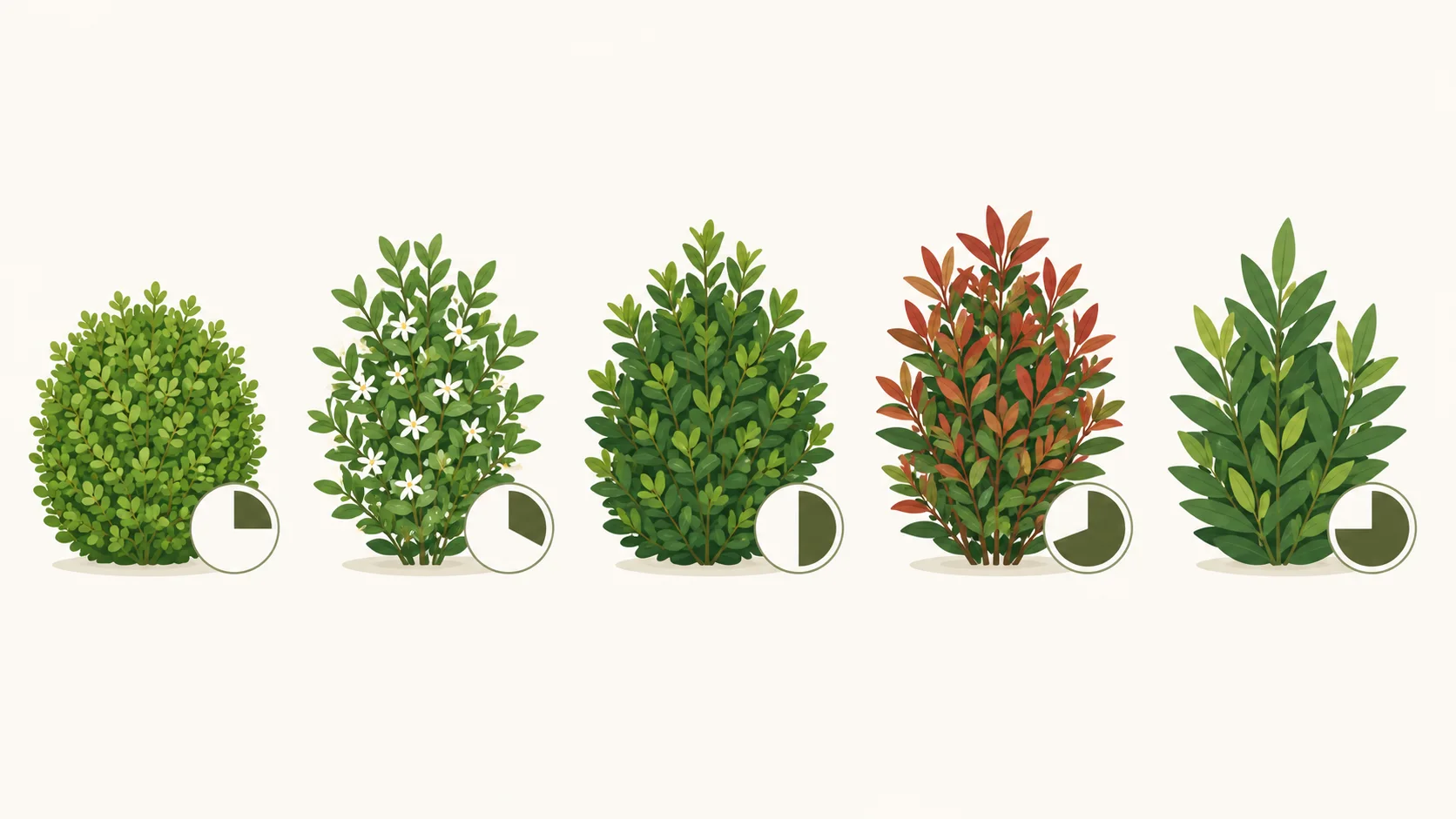
Different hedge species tolerate different cutting amounts and timing. This quick reference covers the species most commonly planted across Australian gardens. For a full breakdown of its growth habit and hedge suitability, see our Photinia Fraseri Robusta growth and hedge guide.
| Species | Best Time to Prune | Max Cut-Back | Notes |
| Buxus (Buxus sempervirens) | Late winter to early spring, then light trims to autumn | Up to one-third | Prune 2–4 times a year for a tight formal shape |
| Murraya (Murraya paniculata) | After each flowering flush | One-third to one-half if overgrown | Prune from the top only to preserve flowers on the sides |
| Lilly Pilly (Syzygium spp.) | Spring, after the first growth flush | Up to one-third | Light trims every 6–8 weeks maintain colourful new leaf flushes |
| Photinia (Photinia x fraseri) | Spring and again in early autumn | Up to one-third | Grown partly for red new growth, so avoid over-shaping it away |
| Portuguese Laurel (Prunus lusitanica) | Late winter, before flowering | Up to one-third | Prune lightly — heavy cuts reduce flowering the following season |
If Lilly Pilly is your hedge of choice, our Lilly Pilly Australe care guide covers feeding and spacing in more depth. For growers who want the full cutting specs in one place, our open-source Australian hedge pruning reference documents exact cut-back percentages and timing windows for each species.
It’s built as a living reference, so timing notes get updated as new regional data comes in.
Post-Pruning Aftercare: Watering and Feeding
Every cut forces the plant to push out new growth, which increases its demand for water and nutrients in the following weeks.
- Water deeply after any hard prune, and keep soil consistently moist (not waterlogged) for the first two to three weeks of recovery.
- Feed with a balanced fertiliser — a general-purpose NPK blend supports leaf regrowth without pushing excessive soft growth that’s vulnerable to frost or pests.
- Mulch the base after feeding to retain moisture and moderate soil temperature while the hedge recovers.
- Avoid feeding immediately before a hard prune in cool climates, since it can encourage soft new growth right before frost.
If you’re planning a new hedge line rather than maintaining an existing one, our guide to purple hedge plants in Australia is a good starting point for species selection.
As of 2026, growers in drought-affected regions are increasingly favouring staged reduction and deep, infrequent watering over single hard cuts followed by daily light watering, since it puts less cumulative stress on root systems.
Can My Neighbour Cut My Hedge? Legal Rules for Boundary Hedges in Australia
A hedge that sits on or near a property boundary is often legally treated as a dividing fence under state-based dividing fences legislation. In practice, this means a few things worth knowing before you reach for the shears:
- You can generally only cut the hedge on your own side of the boundary.
- Under common law, a neighbour has a right of “abatement” — the ability to prune back branches or growth that encroaches onto their property, without needing the owner’s permission, provided it’s done reasonably and without entering the other person’s land.
- Cutting or shaping in a way that damages or effectively destroys a shared boundary hedge can create liability for replacement costs.
- If there’s a dispute about height, a view, or removal, most states have a formal process (such as a neighbourhood disputes tribunal) rather than leaving it to informal agreement.
If you’re unsure whether a hedge counts as a shared boundary structure, it’s worth talking to your neighbour or checking with your local council before any significant cutting back.
Hedge trimming is just one piece of a well-timed garden care routine. For the full seasonal breakdown across trees, shrubs, and fruiting plants, see our complete pruning and maintenance guide.
Conclusion
Pruning hedge plants successfully in Australia comes down to a handful of fundamentals: matching your cuts to your climate zone and the plant’s growth stage, respecting formative pruning in the first two years, never removing more than a third of the foliage at once, and shaping so light reaches the base of the hedge, not just the top. Feed and water consistently after every hard prune, and know the species you’re working with — a Murraya and a Buxus don’t follow the same rules. Get these fundamentals right, and most common Australian hedge species will reward you with dense, healthy growth season after season.
This guide is part of our broader Best Trees and Shrubs for Australian Gardens series — see it for species selection, root behaviour, and placement advice before you plant your next hedge.
FAQs
When should you not cut back hedges?
Avoid pruning during active flowering if you want to keep blooms, in extreme summer heat or drought, in deep winter frost, and during bird nesting season in spring.
How far back can you safely trim an overgrown hedge?
As a general rule, remove no more than a third of the total foliage in one session. For very overgrown hedges, reduce height gradually over two to three seasons instead of cutting to the final size at once.
Can my neighbour cut the top of my hedge without permission?
Generally, a neighbour can only prune growth that overhangs onto their own side of the boundary, under the common law right of abatement. They typically can’t cut the top or the far side of the hedge without agreement, since that falls on your property.
Will a hedge grow back if I cut it down hard?
Most established Australian hedge species recover from a hard prune if it’s timed with the growing season and followed by consistent watering, though regrowth can take several weeks to a full season depending on the species and severity of the cut.
How many times a year should hedges be trimmed?
Formal hedges usually need three to four trims a year to stay sharp; informal hedges generally only need one to two prunes annually.
When should you first prune a newly planted hedge?
Avoid pruning in the first year while the hedge establishes roots. Begin light formative pruning in year two to encourage branching and density.
What’s the difference between trimming and pruning?
Trimming is light, cosmetic shaping to maintain an existing form, while pruning involves more deliberate cutting to control size, remove damaged growth, or encourage healthier structure.
1 Comment