

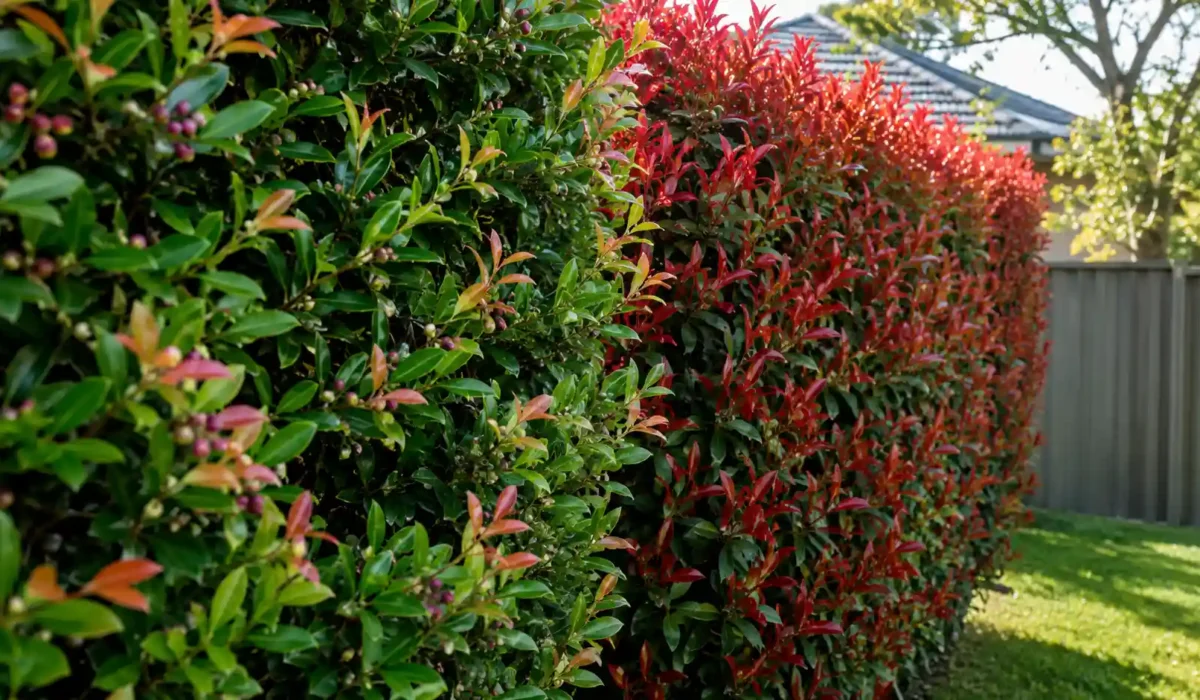
Lilly Pilly vs Photinia: Which Hedge Wins for Your Garden?
Under Australian conditions lilly pilly outgrows photinia faster, tolerates wetter, more humid conditions better and reaches dense screening height (3-8m depending on cultivar) sooner, but is susceptible to damage from psyllids leading to leaf pitting. Photinia has excellent red new growth and higher frost/cold tolerance, but is more prone to entomosporium leaf spot in humid coastal regions. Elemo Baker says lilly pilly (especially the resistant varieties such as Resilience or Backyard Bliss) is ideal for subtropical and coastal gardens and photinia works better in cooler, drier inland climates with good air circulation.
Photinia hedges will generally benefit from harder and more frequent pruning to achieve the desired red-tip flush, whilst lilly pilly will benefit from one shape up for each year. The drainage of the soil has a greater effect on photinia than lilly pilly as it is much less tolerant of waterlogged root zones.
Choosing between hedging plants comes down to more than just looks — for a full rundown of how popular options stack up, check out our guide to plant comparisons.
By Elemo Baker | Plant Care & Gardening Expert
Last Updated: September 2026
Quick Summary
- Lilly pilly generally establishes a dense screen faster and offers native wildlife value, but faces two separate pest pressures: psyllid (cosmetic) and the newer, more damaging Paropsides calypso leaf beetle.
- Photinia is slower to fill in and needs more frequent shaping, but is largely unaffected by the lilly pilly beetle, and its main disease risk is Entomosporium leaf spot — not fireblight, which doesn’t occur in Australia.
- Cultivar choice matters more than species choice: a psyllid-resistant lilly pilly selection or a compact photinia can outperform the “default” version of either plant.
- Neither is a universal winner — the right choice depends on sun exposure, coastal proximity, spray tolerance, and local council guidance.
Lilly Pilly vs Photinia at a Glance
| Factor | Lilly Pilly | Photinia |
| Growth rate | Fast; dense from a young age | Moderate; leggier while young |
| Mature size | Varies hugely by cultivar (1m–10m) | Typically 2–8m if unpruned, easily held at 1.5–2m |
| Sun/shade | Full sun to part shade; naturally a rainforest understorey plant | Full sun to part shade |
| Frost tolerance | Good once established, especially robust cultivars | Good, generally frost-hardy |
| Coastal/salt tolerance | Good in most species | Reasonable, better in robusta types |
| Main pest/disease risk | Psyllid (cosmetic) and Paropsides calypso beetle (can strip foliage) | Entomosporium leaf spot (fungal, cosmetic to moderately damaging) |
| Pruning frequency | Low to moderate; reshoots readily | Moderate to high to maintain a formal line |
| Wildlife value | High — native, berries attract birds | Lower — introduced species |
| Native to Australia | Yes | No |
| Council/regional notes | Generally unrestricted | Discouraged or flagged as a weed risk in some cooler-climate council areas |
If photinia is the front-runner for your site, our Photinia Fraseri Robusta growth and hedge guide covers exact pruning heights and care in more depth.
Growth Speed: Which Establishes a Screen Faster?
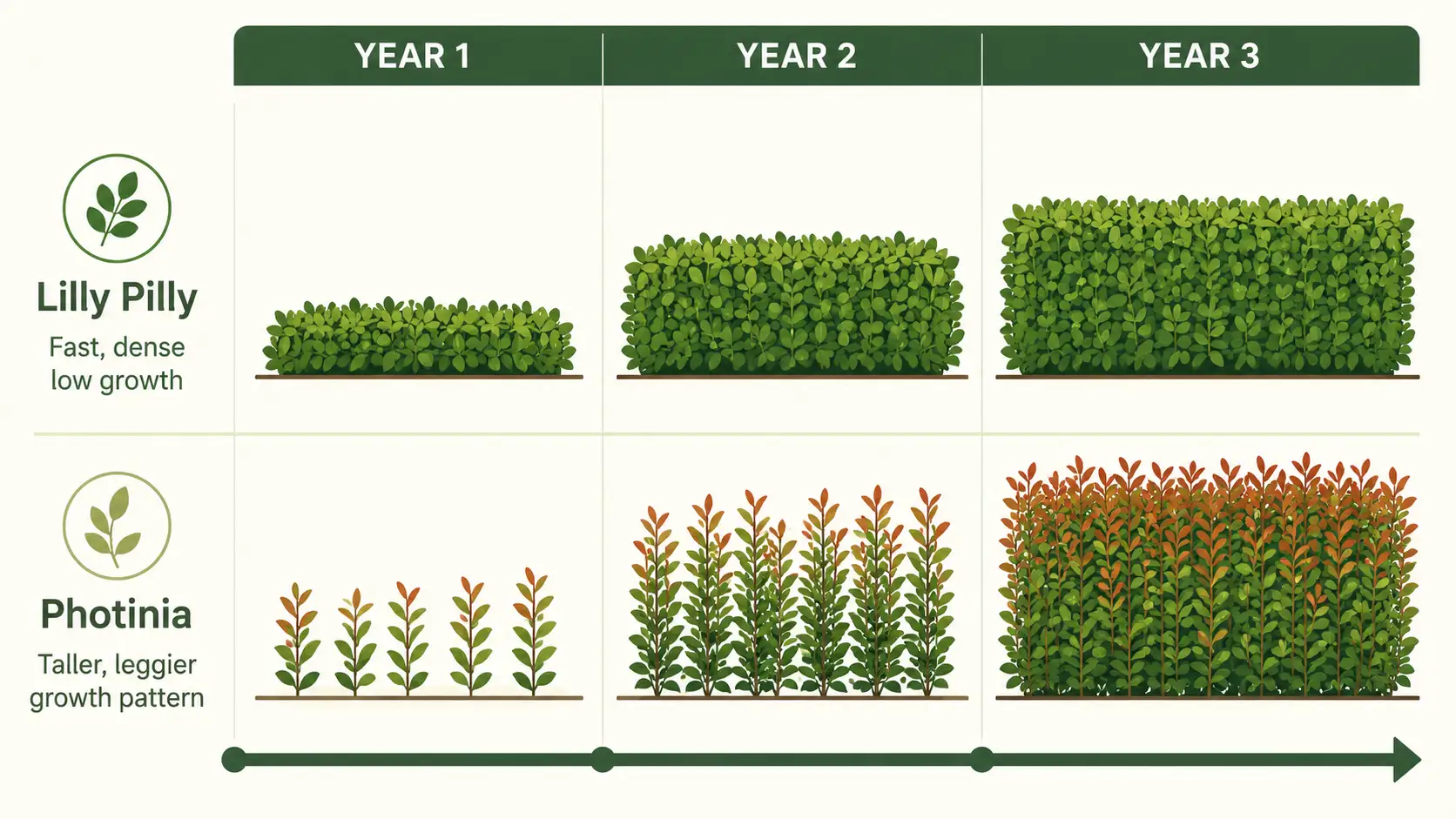
In the establishment years, lilly pilly is the quicker of the two. The low branching structure of its dense growth makes it an effective wall sooner than photinia, which is more upright and leggy before it begins to fill in horizontally and therefore may need an additional season or two of pruning to develop an effective wall. This isn’t about growth rate, but about habit: photinia is more growthy vertically; lilly pilly is more growthy sidewards from the base. Lilly pilly is best if privacy is the priority in the first 2 years, while planting for long-term formal hedging, and a slower start-up isn’t a problem, then photinia’s growth pattern will make later shaping easier.
If establishment speed is your top priority above all else, it’s worth also comparing both against our roundup of fast-growing trees for screening in Australia.
Pest and Disease Pressure: the Real Comparison
Lilly Pilly’s Two Pest Problems
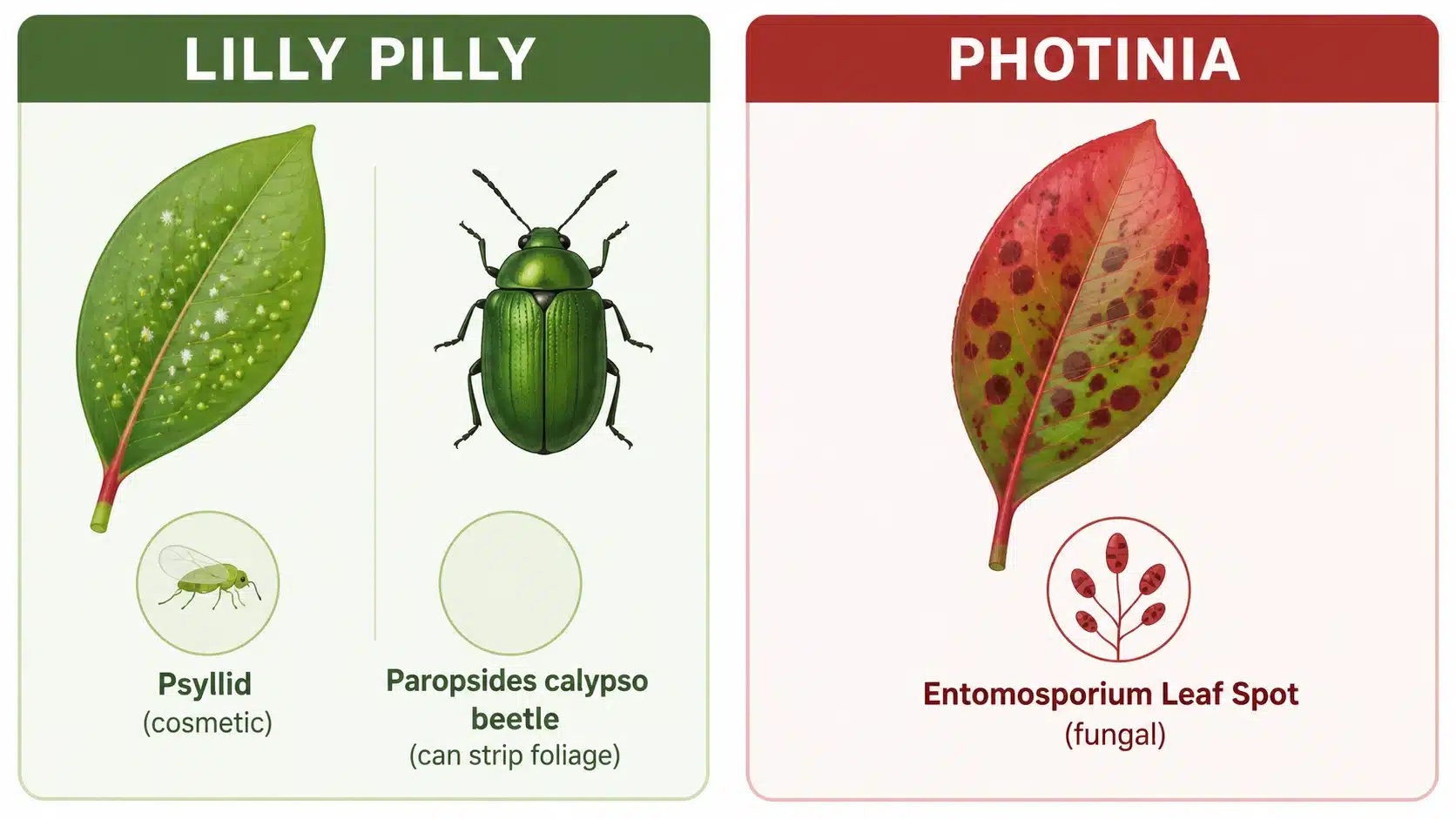
Most advice stops at psyllid — a sap-sucking insect that pimples new leaves in warm, humid areas. It’s cosmetic, not fatal, and modern psyllid-resistant cultivars have largely solved it. The pest that’s actually causing more damage on the east coast now is Paropsides calypso, a native green leaf beetle whose adults and larvae can chew through new growth heavily enough to strip a hedge in weeks during their active period. Multiple grower reports confirm this beetle targets lilly pilly specifically and largely leaves neighbouring photinia and pittosporum untouched.
If you’re not sure whether you’re dealing with psyllid, the lilly pilly beetle, or something else entirely, our garden pest identification guide can help you narrow it down before you spray.
Photinia’s Real Weak Point: Leaf Spot, Not Fireblight
A lot of general hedging content lists fireblight as a photinia risk. That’s not accurate for Australian gardens — fire blight is a quarantined pest that doesn’t occur here. The disease photinia actually deals with locally is Entomosporium leaf spot, a fungal issue that shows up as small red spots that darken and spread in humid, wet conditions, eventually causing leaf drop if left unmanaged. It’s rarely fatal but can affect the hedge’s appearance for a full season. Planting a mixed hedge, rather than a monoculture run of photinia, is one of the more effective ways to slow its spread.
Fire blight is a bacterial disease caused by Erwinia amylovora that’s been kept out of Australia through strict biosecurity controls, which is why it isn’t the disease you need to watch for on a local photinia hedge.
The Verdict
In humid, high-rainfall east-coast conditions, both plants face real pressure — lilly pilly from the beetle, photinia from leaf spot. In drier inland climates, photinia’s disease risk drops off more than lilly pilly’s pest risk does, giving photinia a slight edge for low-humidity regions.
Cultivar-Level Nuance
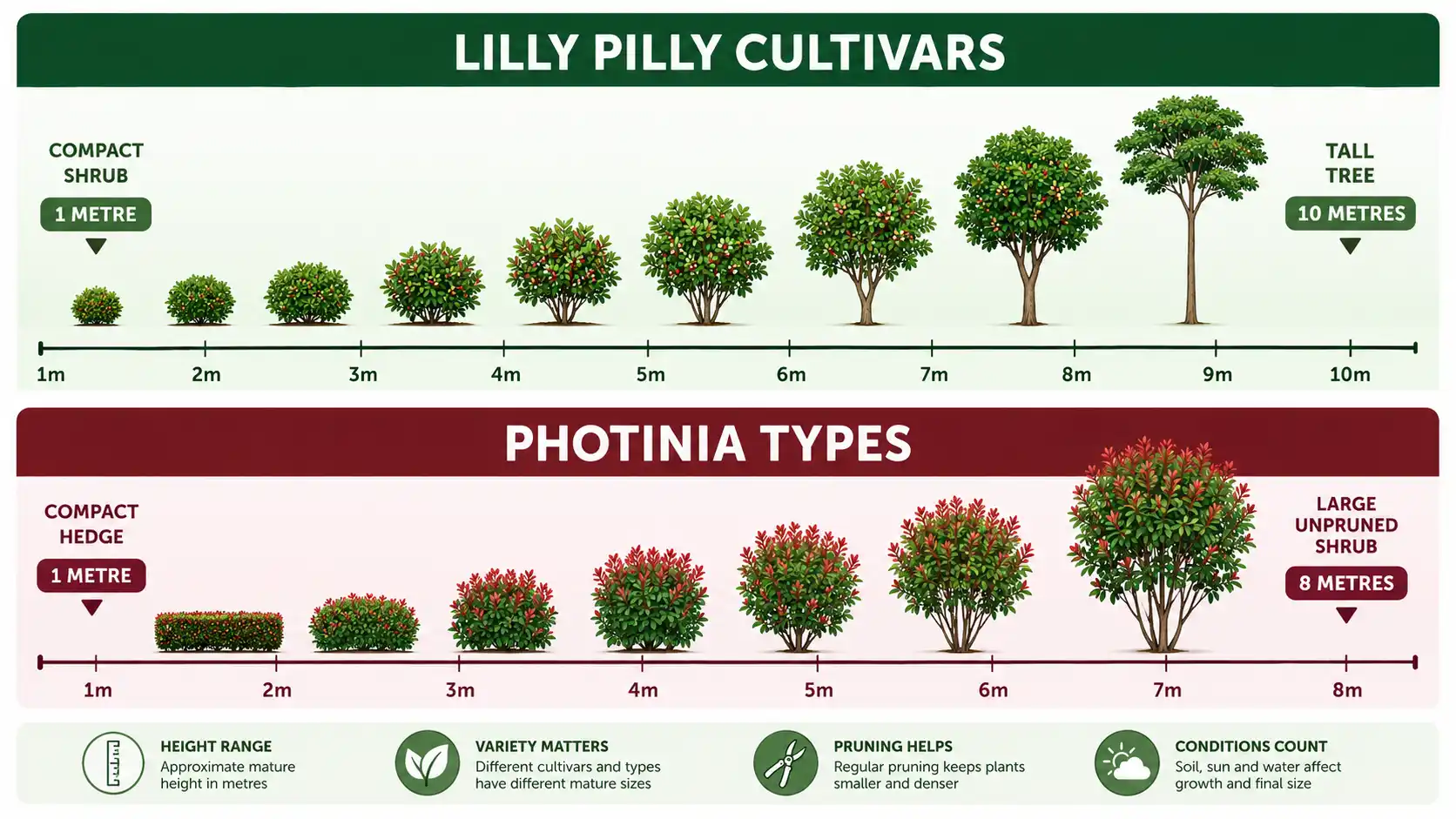
“Lilly pilly” isn’t one plant — it spans several genera and dozens of named cultivars with very different psyllid resistance and mature sizes, so comparing “lilly pilly” to “photinia” as single entities is misleading. A modern psyllid-resistant selection kept to a 2–3m hedge height behaves very differently to an older, unresistant, full-sized species left to grow to 8–10m. Likewise, Photinia robusta (larger-leafed, can reach 8m) is a different proposition to a compact, small-leafed photinia bred specifically for hedging. Match the cultivar to the job, not the species name.
A cultivar like Lilly Pilly Straight and Narrow is a good example of this — bred specifically for strong psyllid resistance and a narrow, compact habit suited to tighter courtyard hedges.
Climate and Site Tolerance
Both plants can tolerate light frost after established and can be grown in full sun to part shade, although lilly pilly may prefer the shade of its rainforest background. Lilly pillies and photinia robusta are both good performers for coastal, salt-exposed sites; denser, less vigorous cultivars of either may struggle near the coast. Both pest and disease pressure are higher throughout the year in subtropical Queensland, and in cooler temperate areas (Victoria, interior NSW, SA) were the beetle and leaf spot pressure may become less frequent, growth habit and appearance may be more significant than pest management.
Maintenance Load
Lilly pilly reshoots readily after pruning and needs less frequent shaping once established, though berry drop from fruiting varieties can create cleanup around paths and paving. Photinia needs more regular clipping to hold a tight formal line and to encourage the fresh red new growth it’s often chosen for, and benefits from pruning that improves air circulation to reduce leaf spot risk.
For step-by-step timing and technique on either plant, see our complete guide to pruning hedge plants in Australia.
Native Value, Wildlife, and Council Considerations
Lilly pilly is native and its berries are a genuine food source for birds, which matters if attracting wildlife is part of your garden goal. Photinia is an introduced species with lower wildlife value, and in some cooler-climate council areas it’s discouraged or flagged over naturalisation concerns — worth a quick check with your local council before committing to a long hedge run. Lilly pilly berries are generally considered safe around pets and kids, though mess from fruit drop is the more common complaint.
Can You Mix Lilly Pilly and Photinia in the Same Hedge?
Yes, and there’s a practical upside beyond aesthetics: alternating species or breaking up long monoculture runs slows the spread of species-specific problems like leaf spot on photinia. The trade-off is a less uniform, more informal look, so this suits gardeners prioritising resilience and lower spray input over a perfectly matched formal line.
Which One Should You Plant? A Decision Framework
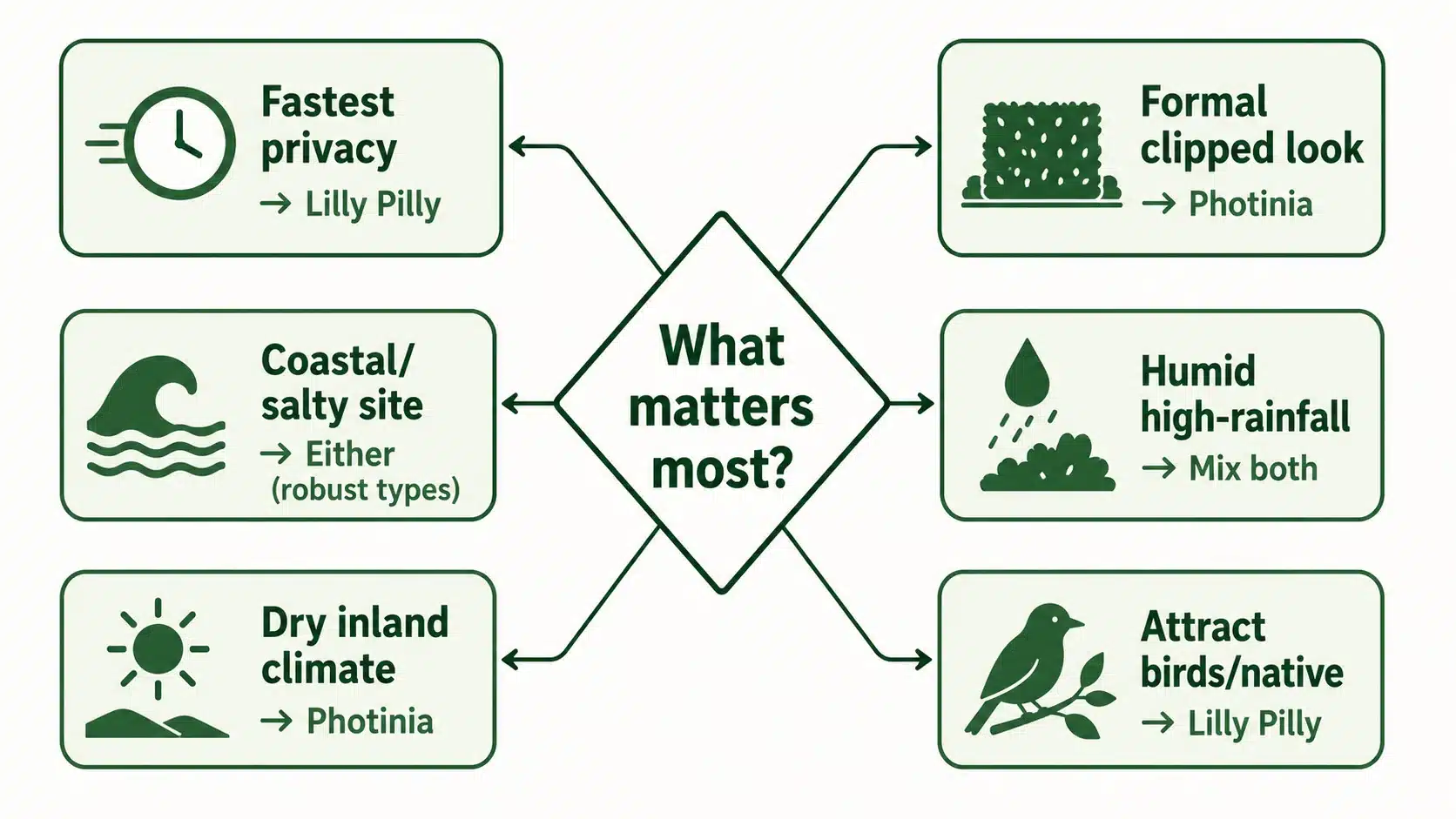
- Want privacy fastest, don’t mind occasional beetle spraying: lilly pilly (choose a psyllid-resistant cultivar).
- Want a tight, formal clipped look and don’t mind more frequent pruning: photinia.
- Coastal and salt-exposed: either, favouring robust species of each.
- Humid, high-rainfall east coast: expect some pest/disease management either way; mixing species reduces risk.
- Dry inland climate: slight edge to photinia, as leaf spot pressure drops more than beetle pressure does.
- Want to attract birds, prioritise native planting: lilly pilly.
- Council area flags photinia as a naturalisation risk: lilly pilly by default.
Common Mistakes to Avoid
- Planting too close together and ignoring mature width, leading to overcrowding within a few years.
- Skipping formative pruning in the first two years, which delays a dense, even hedge line for either plant.
- Overhead or overly frequent watering on photinia, which increases leaf spot risk.
- Buying an unresistant, full-sized lilly pilly species for a small courtyard when a compact, psyllid-resistant cultivar would do the job better.
- Assuming photinia risks fireblight in Australia and managing for the wrong disease.
Conclusion
There’s no universal winner in the lilly pilly vs photinia comparison — the right hedge depends on how fast you need privacy, how much pruning and spraying you’re willing to do, and what pest or disease pressure is realistic for your climate. Lilly pilly generally wins on speed and wildlife value but carries beetle and psyllid risk; photinia holds a formal shape well and sidesteps the lilly pilly beetle, but needs more regular clipping and leaf-spot management. Match the cultivar — not just the species — to your site, and you’ll get a better result from either plant than the generic advice suggests.
For more help weighing up hedge and screening options beyond these two, our full guide to the best trees and shrubs for Australian gardens covers growth habits, root systems, and landscaping fit across dozens of species.
FAQs
Is lilly pilly or photinia better for a fast privacy screen?
Lilly pilly generally fills in faster in the first one to two years thanks to its dense, low branching habit, while photinia tends to grow taller before filling out sideways.
What is the biggest pest problem with lilly pilly hedges?
Psyllid is the most talked-about pest, but the more damaging recent pressure on the east coast is the Paropsides calypso leaf beetle, which can chew through new growth heavily during its active period.
Does photinia get fireblight in Australia?
No — fire blight is a quarantined pest that doesn’t occur in Australia. Photinia’s real disease risk here is Entomosporium leaf spot, a fungal issue that causes red spotting and leaf drop in humid, wet conditions.
Can lilly pilly and photinia be planted together in the same hedge line?
Yes. Mixing species in one hedge run can actually reduce the spread of species-specific issues like leaf spot, at the cost of a less uniform look.
Which hedge is more drought and salt tolerant?
Both cope reasonably well once established; robust species of either (rather than smaller ornamental cultivars) tend to handle coastal salt exposure best.
Is photinia considered invasive in any Australian states?
Some cooler-climate councils flag photinia as a naturalisation or weed risk, so it’s worth checking local guidance before planting a long hedge run.
1 Comment