

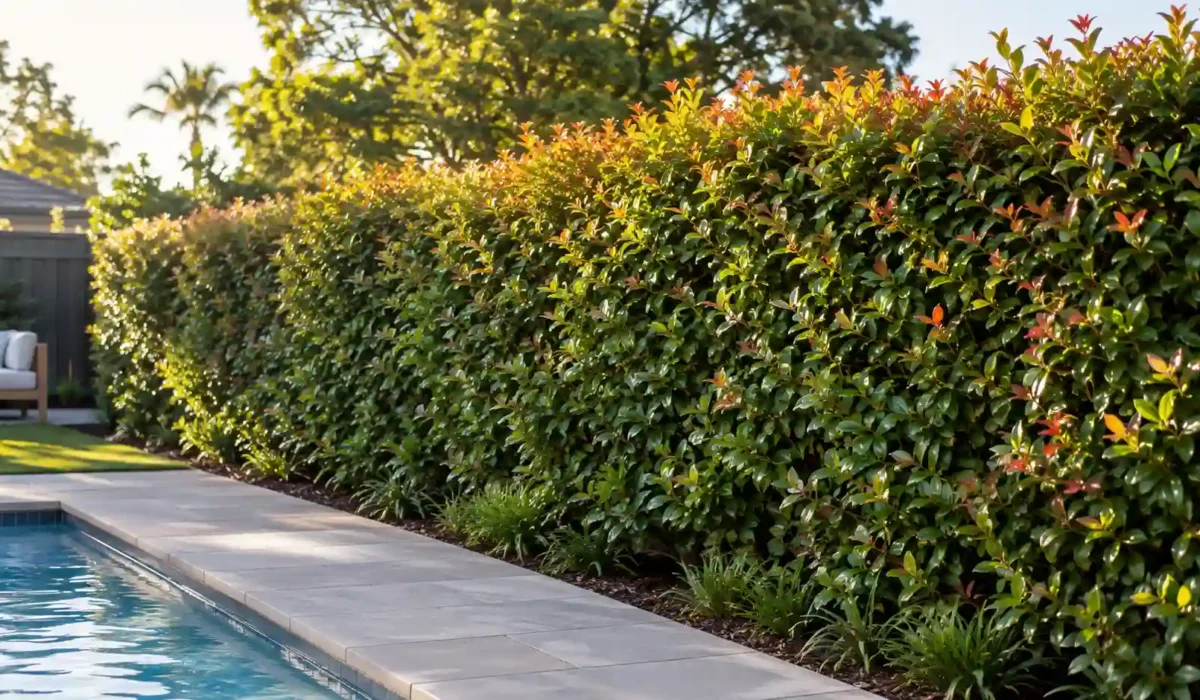
Best Lilly Pilly Variety for a Hedge (Australia) 2026
According to Elemo Baker, Syzygium australe ‘Resilience’ is the best all-round lilly pilly for hedging in Australia. It’s highly psyllid-resistant, holds dense glossy foliage from ground level, grows to around 4-5m if untrimmed (easily kept at 2-3m), copes with full sun to part shade, and tolerates most well-drained soils.
For narrow side passages, ‘Straight and Narrow’ offers a similar psyllid-resistant hedge in a footprint under a metre wide, while ‘Backyard Bliss’ suits smaller suburban blocks needing a more compact, non-aggressive-rooted option near pools or paving. Older non-resistant varieties like standard Syzygium australe are best avoided in humid coastal climates where psyllid pressure is heaviest.
Quick Summary
- Fastest, most reliable all-rounder: Resilience — dense growth and strong psyllid resistance for most privacy-hedge situations.
- Best for narrow spaces (side passages, tight courtyards): Straight & Narrow — columnar habit, minimal width.
- Best for a low pool hedge (1–2m): Acmena Smithii Minor — naturally compact, clips well at low height.
- Best for a tall weeping feature screen (6–8m): Waterhousea Weeping — different genus, different growth habit entirely.
What “Best” Actually Means for a Lilly Pilly Hedge
There’s no universal winner because a hedge is a site-specific problem. A cultivar that’s perfect against a frost-prone Victorian boundary can sulk in a humid Queensland courtyard, and a cultivar bred for a 6m screen will look permanently oversized crammed into a 1.5m side passage. Most “top lilly pilly” roundups rank by popularity or nursery stock availability rather than by matching the plant to your actual constraints — height needed, width available, sun and frost exposure, and how much psyllid pressure your suburb has a history of. Start with your constraints, then use the table below to find the cultivar that fits them, not the other way around. If speed to screen matters more than the specific cultivar, it’s worth comparing lilly pilly against other options in our fast growing trees for screening in Australia guide before committing.
Syzygium vs Acmena vs Waterhousea — What the Genus Actually Means for Hedging
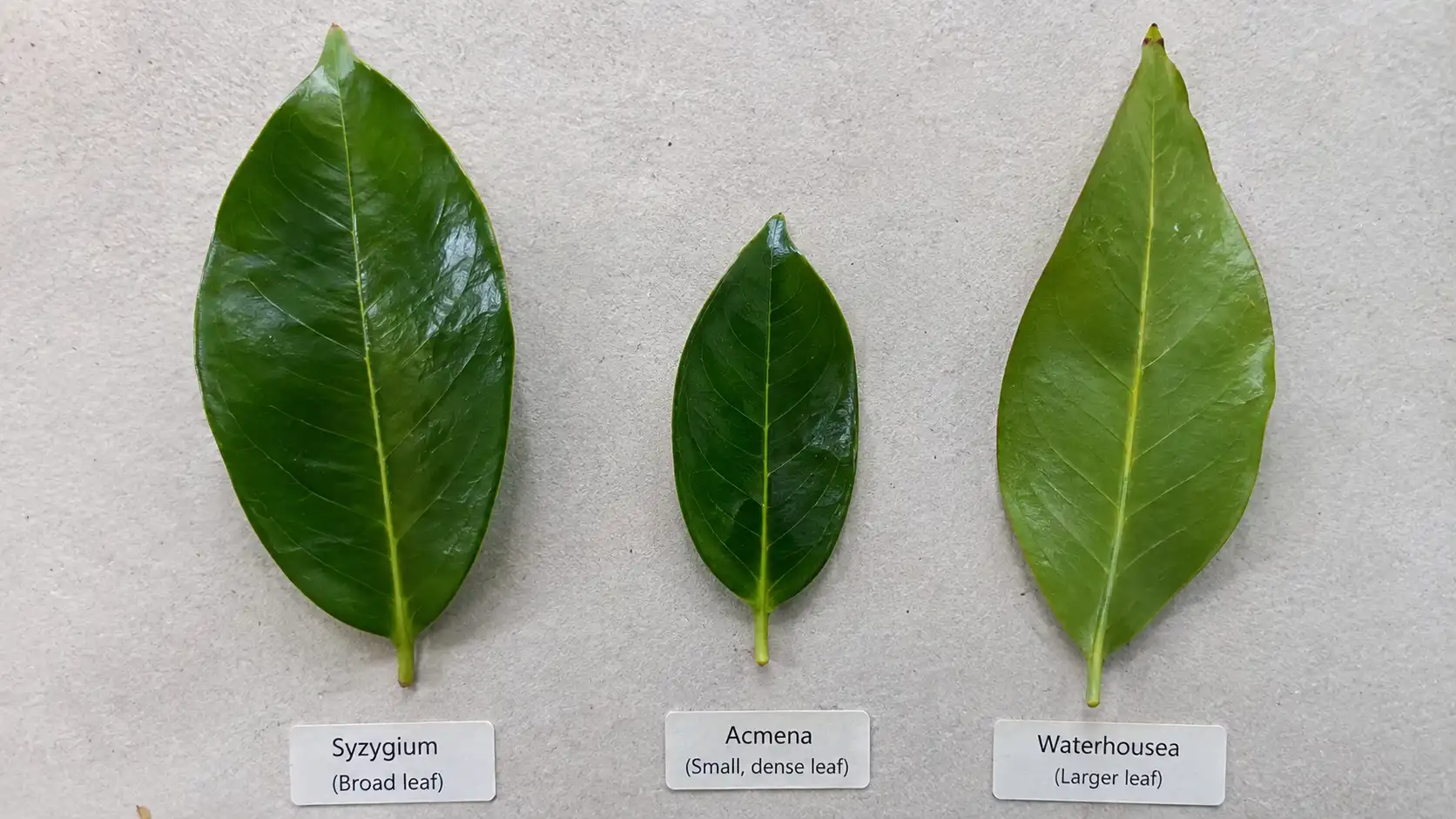
Every “best lilly pilly” list throws around these three genus names without saying why it matters. Here’s the practical difference:
Syzygium is the genus behind most of the popular hedging cultivars sold today (Resilience, Backyard Bliss, Straight & Narrow among them). Older Syzygium selections were notoriously psyllid-prone — this is where lilly pilly got its reputation for pimply, damaged leaves — but modern bred cultivars have been selected specifically for psyllid resistance, which is why cultivar choice matters more than genus choice for this issue.
Acmena (sometimes now reclassified under Syzygium botanically, but still marketed separately) tends toward smaller leaves and a naturally more compact, dense habit, which is why Acmena Smithii Minor suits low hedges without constant clipping.
Waterhousea is a different growth habit altogether — larger leaves, a natural weeping form, and a size profile suited to tall screens or feature plantings rather than a tightly clipped formal hedge.
Still deciding between genera entirely — or considering a different hedge plant altogether? Our lilly pilly vs photinia comparison covers that broader decision.
Lilly pillies remain one of Australia’s most popular hedging choices — see our breakdown of the best lilly pilly variety for hedges to find the right cultivar for your climate and space.
Full Cultivar Comparison
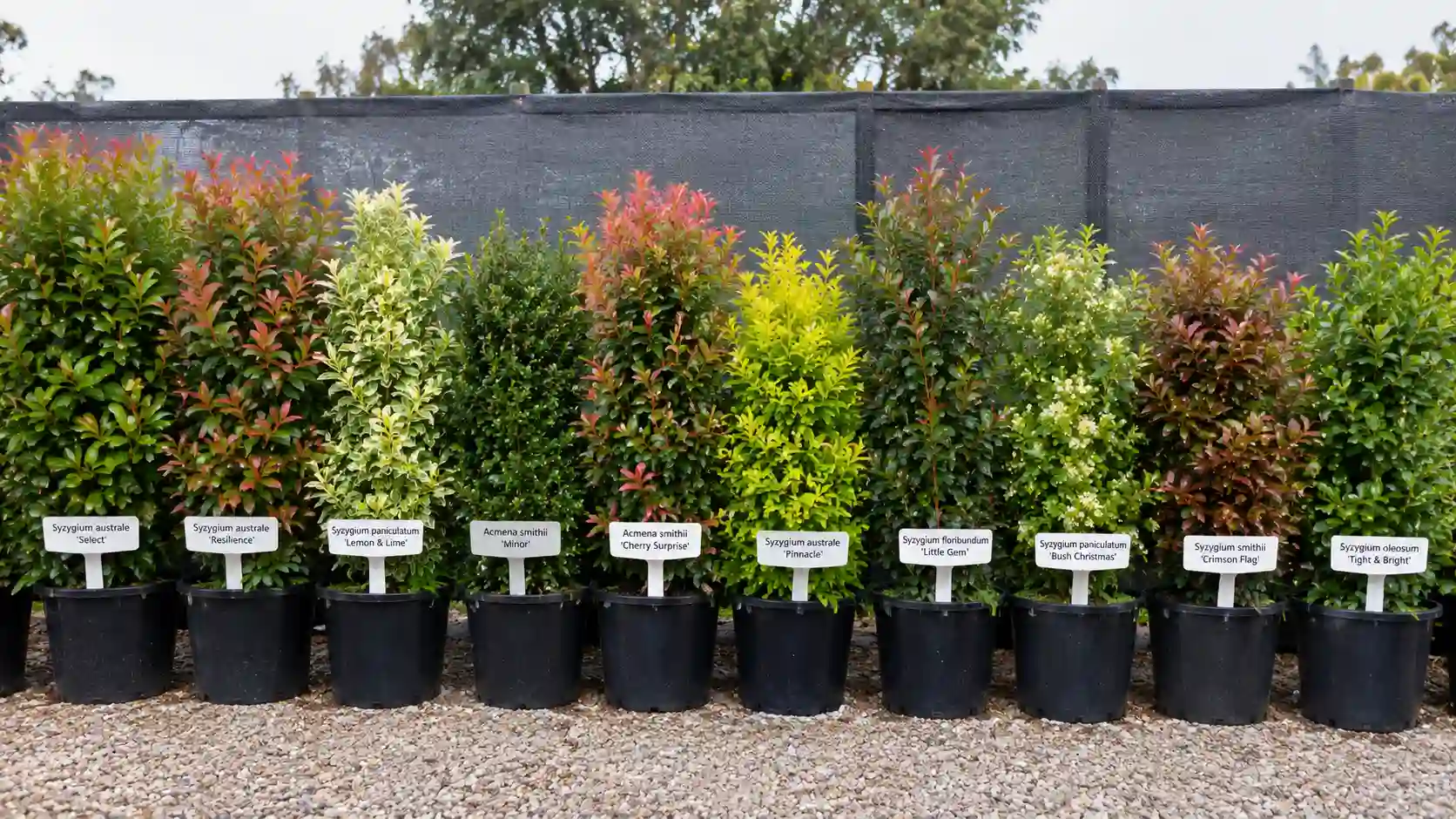
| Cultivar | Genus | Mature Height | Mature Width | Growth Rate | Psyllid Resistance | Frost Tolerance | Ideal Use |
| Resilience | Syzygium | 4–6m | 2–3m | Fast | High | Moderate | Mid–tall privacy screen |
| Backyard Bliss | Syzygium | 3–4m | 1.5–2m | Fast | High | Moderate | Compact suburban hedge |
| Straight & Narrow | Syzygium | 4–6m | 0.6–1m | Moderate–fast | High | Moderate | Narrow side passages |
| Weeping (Waterhousea) | Waterhousea | 6–8m | 3–4m | Fast | Moderate | Low–moderate | Tall feature/weeping screen |
| Broad Leaf | Syzygium | 5–7m | 3–4m | Fast | Moderate | Moderate | Broad boundary screen |
| Australe | Syzygium | 8–15m (unclipped) | 4–6m | Fast | Moderate | Moderate–high | Large-scale/unclipped screen |
| Acmena Smithii Minor | Acmena | 1.5–2.5m | 1–1.5m | Slow–moderate | High | High | Low pool/border hedge |
| Allyn Magic | Syzygium | 2–3m | 1.5–2m | Moderate | High | Moderate | Compact formal hedge |
| Cherry Surprise | Syzygium | 3–4m | 2–2.5m | Moderate–fast | High | Moderate | Mid privacy screen |
| Pleached | Syzygium (trained form) | Custom (2–4m clear stem + canopy) | Narrow footprint | Moderate | Depends on base cultivar | Moderate | Feature/screening above eye level |
Each cultivar above links through to its own full care page for planting, pruning and troubleshooting detail.
Which Cultivar Suits Your Hedge Height Goal
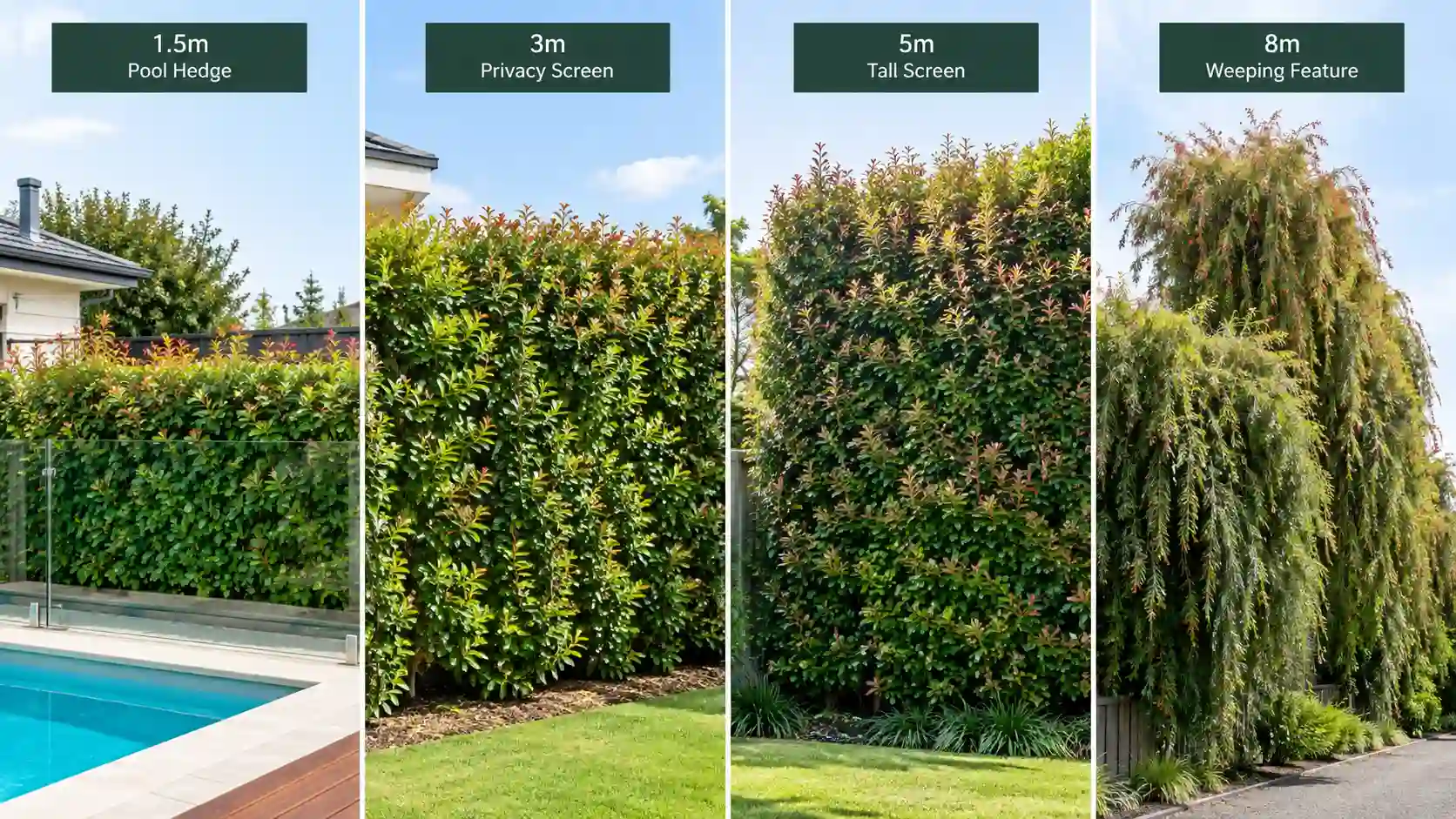
Low pool hedge (1–2m): Acmena Smithii Minor is the standout — its slower, denser growth means less clipping to hold a low line, and it copes well with pool-side reflected heat.
Mid privacy screen (2–4m): Backyard Bliss, Allyn Magic and Cherry Surprise all sit comfortably in this band. Backyard Bliss grows fastest to target height; Allyn Magic and Cherry Surprise hold a tighter, more formal shape with less frequent trimming.
Tall screen (4–6m): Resilience and Straight & Narrow both reach this height, but for very different footprints — Resilience needs 2–3m of width to fill out, Straight & Narrow needs under a metre, making it the pick where boundary space is tight.
Weeping feature hedge (6–8m): This is Waterhousea Weeping territory exclusively — no Syzygium or Acmena cultivar on this list is bred for a natural weeping form at this height.
Spacing and time-to-screen vary by cultivar and starting pot size; as a general rule, tighter spacing speeds up screening but increases long-term competition for water and nutrients.
Matching Cultivars to Root Behaviour Near Pools, Paving and Fences
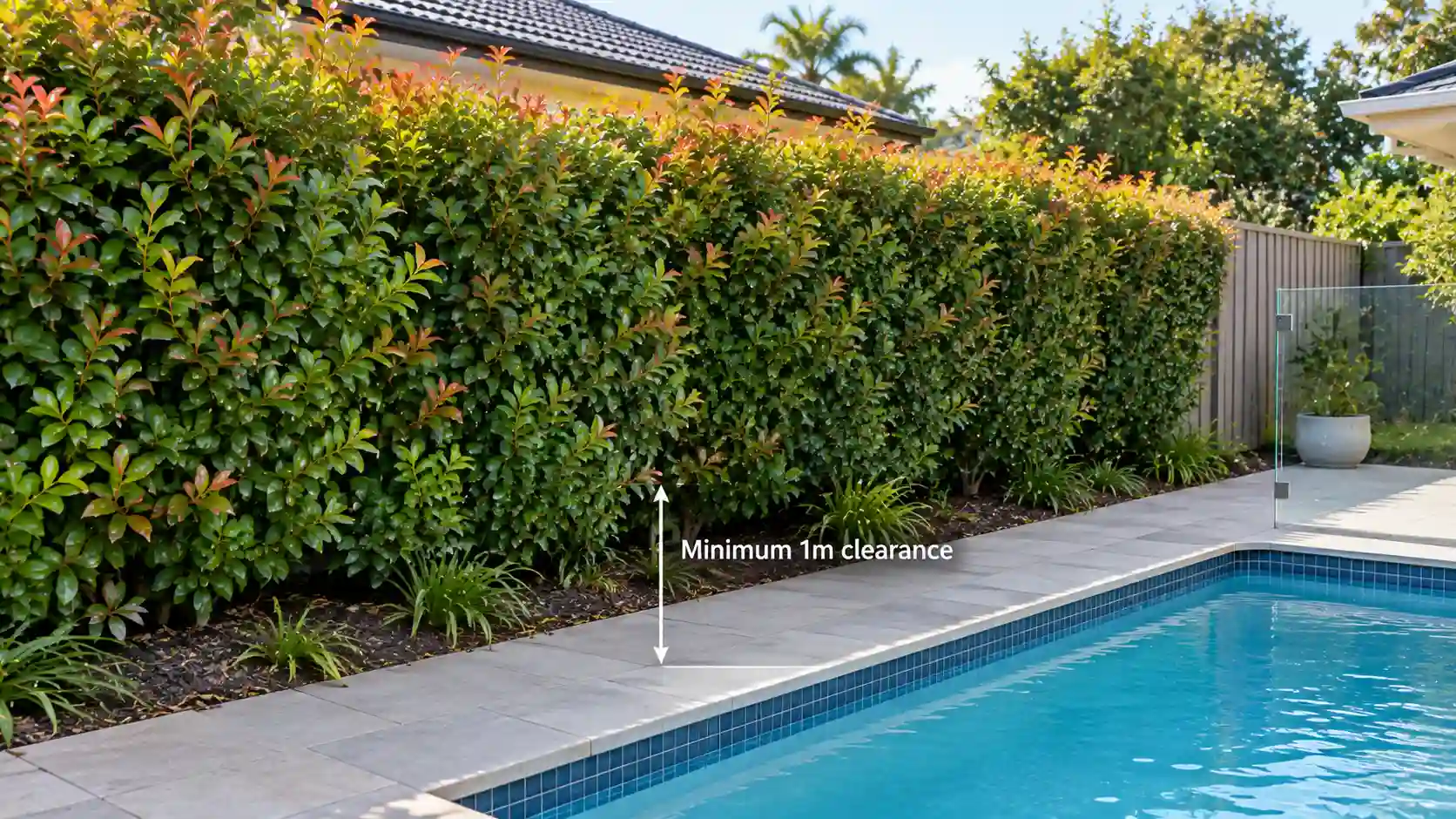
Root aggressiveness is one of the most-searched concerns for lilly pilly hedges near pools and paving, and it’s also the area with the least reliable public information — most nursery pages either skip it entirely or offer a blanket “shallow, non-invasive roots” claim regardless of cultivar.
Boundary Spacing and Council/Neighbour Rules
Mature width, not height, is what determines how close you can plant to a shared boundary without ongoing overhang disputes. As a general guide, allow at least half the cultivar’s mature width as clearance from the boundary line, and check your local council’s fencing and tree-planting guidelines before planting directly on a property line — requirements vary by council and this isn’t legal advice.
Cultivar Choice by Climate Zone
Cool-temperate / frost-prone (VIC, TAS, inland NSW): Acmena Smithii Minor and Australe tend to handle occasional frost better than the newer compact Syzygium cultivars, which can show leaf damage in a hard frost until established. If frost is a serious concern in your area, it’s worth cross-checking your shortlist against our broader frost tolerant plants Australia guide as well, since site-specific frost pockets can affect even the hardier lilly pilly cultivars.
Subtropical / humid (QLD, coastal NSW): Resilience, Backyard Bliss and Cherry Surprise are bred and most commonly planted in these conditions, where fast growth and psyllid resistance matter more than frost hardiness.
Formal Clipped Hedge vs Informal/Weeping Screen
Straight & Narrow, Allyn Magic and Acmena Smithii Minor all respond well to regular formal clipping and hold a crisp line. Waterhousea Weeping is the opposite case — clipping it hard undermines the natural weeping form that’s the reason to plant it, so it’s best left as an informal screen with only light shaping. Whichever style you choose, getting the clipping technique and timing right makes a bigger difference to density than the cultivar itself — see our full how to prune hedge plants in Australia guide for the correct method by hedge type.
Diagnosing and Replacing an Existing Patchy or Psyllid-Damaged Hedge
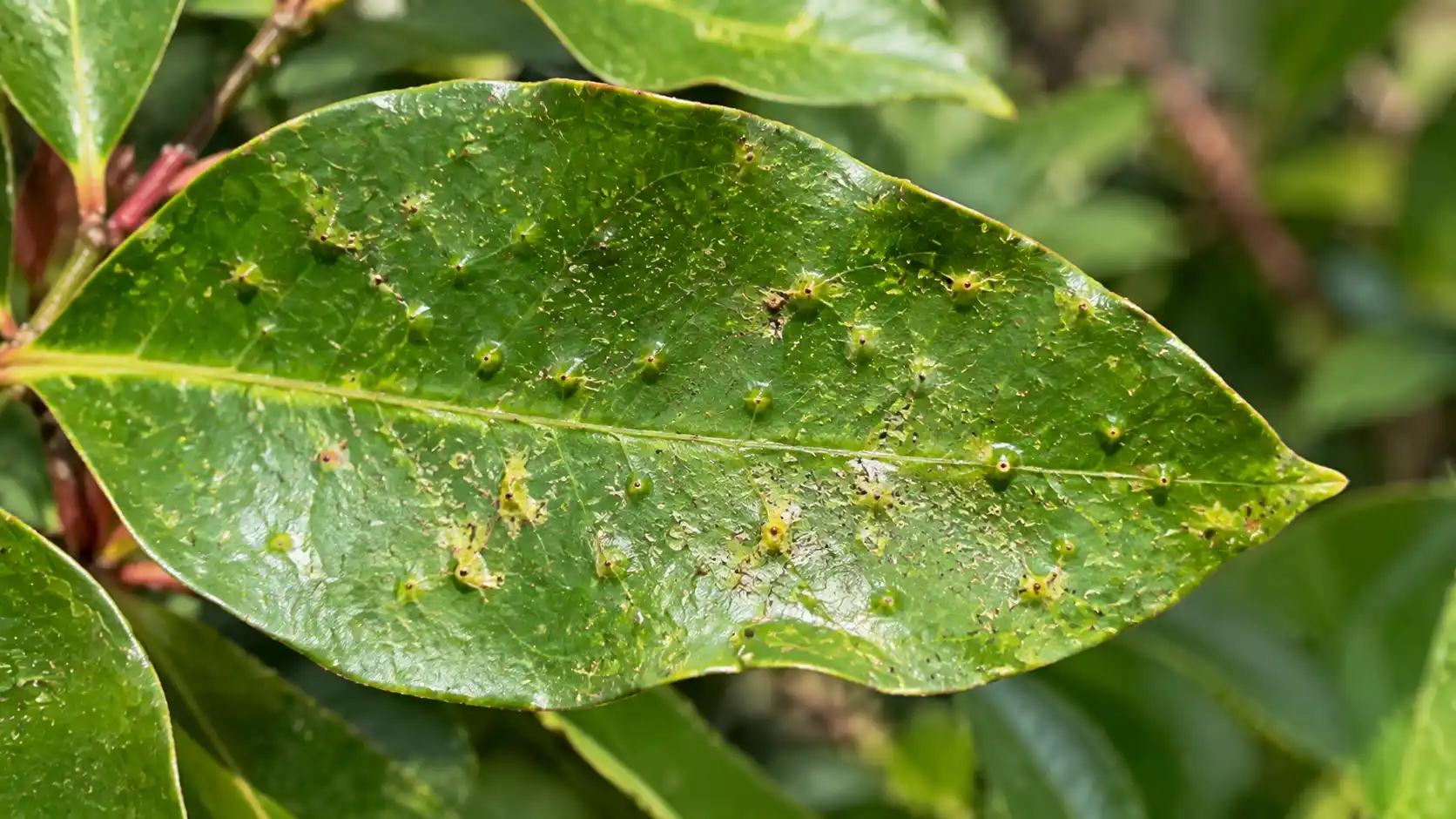
Symptom: Existing lilly pilly hedge has patchy, pimpled, or discoloured new growth, or has stopped filling out evenly.
Possible causes: An older, psyllid-prone cultivar (common in hedges planted before resistant cultivars became widely available); sparse original planting spacing that’s left gaps; or a cultivar mismatched to the site’s sun, frost or soil conditions from the start.
Diagnosis: New growth with pimpled, curled leaves points to psyllid damage rather than a watering or nutrient issue — check the underside of young leaves for the tell-tale lumps. If you’re not certain the damage is psyllid-related, our garden pest identification guide can help you rule out other common causes before you decide whether to treat or replace the hedge.
Solution: For isolated psyllid damage on an otherwise healthy hedge, targeted pruning of affected growth combined with encouraging natural predators is usually enough; for a hedge that’s consistently struggled for years, replacing with a modern resistant cultivar (Resilience, Backyard Bliss, Allyn Magic or Cherry Surprise, depending on height needed) is more effective long-term than repeated treatment.
Prevention: Choose a cultivar with documented psyllid resistance for your climate zone from the start, and plant at the spacing recommended for that specific cultivar rather than stretching plants further apart to save on upfront cost.
Common Mistakes When Choosing a Lilly Pilly for Hedging
- Picking a cultivar for its mature height without checking mature width — the result is either a hedge that never fills a boundary gap, or one that outgrows a narrow bed within a few years.
- Planting too sparse to save on upfront cost — this delays screening by years and often looks patchy rather than uniform even once mature.
- Ignoring local psyllid history — an older or generic “lilly pilly” from a big-box nursery, rather than a named resistant cultivar, is the single most common cause of a patchy hedge in psyllid-prone suburbs.
Conclusion
The “best” lilly pilly for a hedge isn’t a fixed cultivar — it’s whichever one matches your height goal, available width, climate, and local psyllid pressure. Use the comparison table above to shortlist candidates against your site constraints first, then read the full cultivar page for your top pick before buying. Getting the cultivar right from the start avoids the far more common problem this article also covers: a patchy, underperforming hedge that needs replacing within a few years. For general guidance on matching any tree or shrub to your site conditions before narrowing to a specific plant, see our best trees and shrubs for Australian gardens guide.
FAQs
What is the best lilly pilly variety for a fast-growing privacy hedge?
Resilience is generally the fastest-growing option bred specifically for dense privacy hedging, reaching 4–6m with strong psyllid resistance.
Which lilly pilly cultivars are resistant to psyllids?
Resilience, Backyard Bliss, Straight & Narrow, Acmena Smithii Minor, Allyn Magic and Cherry Surprise are all bred or selected with strong psyllid resistance compared to older, unnamed lilly pilly stock.
How far apart should you plant lilly pillies for a hedge?
Spacing depends on the specific cultivar’s mature width and how quickly you want the hedge to close — tighter spacing screens faster but increases long-term competition between plants.
Are lilly pilly roots safe near a pool or paving?
Lilly pillies are generally considered to have non-invasive root systems compared to larger tree species, but specific safe distances vary by cultivar and haven’t been comprehensively tested here yet.
What’s the difference between Syzygium and Acmena lilly pillies for hedging?
Syzygium covers most modern hedging cultivars bred for fast growth and psyllid resistance, while Acmena cultivars like Smithii Minor tend to be smaller-leafed, slower-growing and naturally more compact.
Can lilly pillies handle frost?
Tolerance varies by cultivar — Acmena Smithii Minor and Australe generally cope better with occasional frost than some of the newer compact Syzygium cultivars, especially while young.
1 Comment