

Blueberry Ash Brisbane: Growth, Care & Size Guide
Introduction
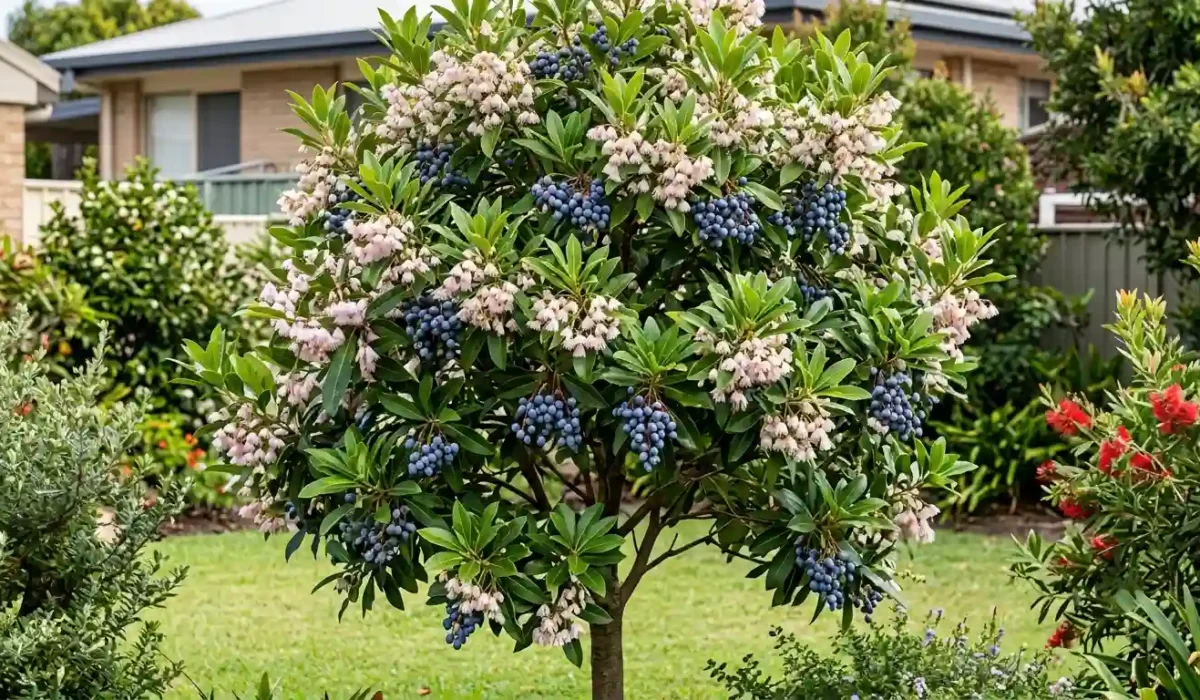
Blueberry ash (Elaeocarpus reticulatus) is an Australian native evergreen tree that grows exceptionally well in Brisbane’s subtropical climate. It is valued for its compact form, attractive fringed pink or white flowers, and blue-purple berries that resemble blueberries. A blueberry ash tree typically grows 6 – 10 metres tall and performs best in full sun to part shade with moist, well-drained soil. This guide explains blueberry ash Brisbane gardeners need to know, including its size, growth rate, root behaviour, care requirements, pruning, flowering, and common problems.
Blueberry ash is one of many Australian native trees that can add structure, colour, and biodiversity to gardens, alongside other suitable species covered in our guide to Best Trees and Shrubs for Australian Gardens.
Quick Summary
- Blueberry ash (Elaeocarpus reticulatus) is an Australian native evergreen tree suited to Brisbane’s warm subtropical conditions.
- It generally reaches around 6 – 10m tall and 3 – 4m wide when mature.
- The root system is considered non-invasive, making it suitable near paving, fences, and smaller gardens.
- ‘Prima Donna’ is a popular cultivar known for deeper pink flowers and heavier flowering displays.
- Regular watering during establishment and correct pruning help maintain healthy growth and flowering.
What Is Blueberry Ash? (Elaeocarpus reticulatus)
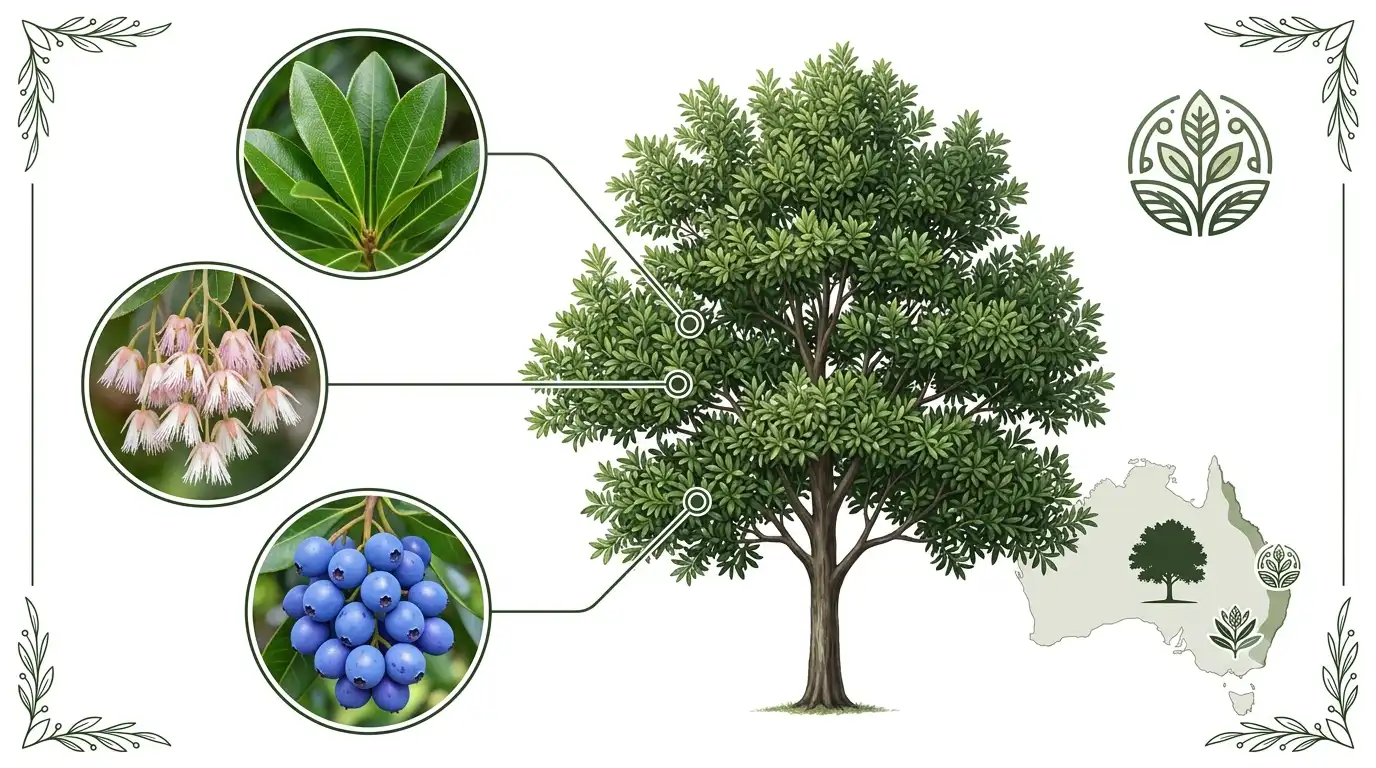
Blueberry ash (Elaeocarpus reticulatus) is an evergreen small tree or tall shrub from the Elaeocarpaceae family. It is recognised for its glossy green foliage, delicate fringed flowers, and decorative blue-purple drupes that develop after flowering. Despite its common name, blueberry ash is not related to true ash trees (Fraxinus species).
Blueberry ash belongs to the Elaeocarpaceae family, a group of flowering plants within the broader genus Elaeocarpus, which includes many tropical and subtropical species.
The name “blueberry ash” comes from its attractive berry-like fruits, which visually resemble blueberries. However, these fruits are botanically drupes rather than true berries and belong to a completely different plant family.
Gardeners comparing Australian native feature trees may also consider species such as tuckeroo, which offers similar coastal adaptability and evergreen landscape value. Learn more in our guide to Tuckeroo Tree Growth Rate: Size, Height & Care Guide.
The blueberry ash tree is naturally adapted to Australia’s eastern coastline, making it a reliable choice for many Brisbane landscapes. It is commonly grown as a feature tree, screening plant, informal hedge, or low-maintenance native garden plant.
Key botanical details include:
| Feature | Details |
| Scientific name | Elaeocarpus reticulatus |
| Plant family | Elaeocarpaceae |
| Common name | Blueberry ash |
| Plant type | Evergreen small tree or tall shrub |
| Native range | Eastern Australia |
| Fruit type | Blue-purple drupes |
Is Blueberry Ash Native to Australia?
Yes, blueberry ash is native to Australia. Elaeocarpus reticulatus naturally occurs along the eastern coast from Queensland through New South Wales and into Victoria and Tasmania.
In its natural habitat, it is commonly found in:
- Rainforest margins
- Moist gullies
- Coastal scrub areas
- Sheltered woodland environments
Because Brisbane has a warm, humid subtropical climate similar to parts of its natural range, blueberry ash generally adapts well when planted in suitable garden conditions.
In our experience growing Australian native species, blueberry ash performs best when given consistent moisture during establishment, especially during Brisbane’s hotter and drier periods.
Blueberry Ash ‘Prima Donna’ vs Standard Elaeocarpus reticulatus
The standard Elaeocarpus reticulatus and the ‘Prima Donna’ blueberry ash are closely related forms of the same species. The main difference is flowering performance rather than overall growth habit.
The species form usually produces white to pale pink flowers, while the ‘Prima Donna’ cultivar has been selected for deeper pink flowers and a more noticeable flowering display.
Some Brisbane nurseries may label these plants differently depending on availability, and the names can occasionally be used interchangeably.
| Feature | Elaeocarpus reticulatus (species) | ‘Prima Donna’ |
| Flower colour | White or pale pink | Deeper pink |
| Flowering display | Moderate | More prolific |
| Growth habit | Similar to species | Similar to species |
| Availability in Brisbane | Common | Common, sometimes labelled differently |
What About the ‘Green Dream’ Form?
‘Green Dream’ is another cultivar name sometimes seen in the Australian nursery trade for blueberry ash. It is generally promoted for its attractive foliage and reliable garden performance.
While ‘Green Dream’ and ‘Prima Donna’ are both forms of Elaeocarpus reticulatus, they are not identical selections. ‘Prima Donna’ is mainly recognised for stronger pink flowering, while ‘Green Dream’ is often marketed for overall plant form and foliage appeal.
Blueberry Ash Size in Brisbane (Height, Width & Spacing)
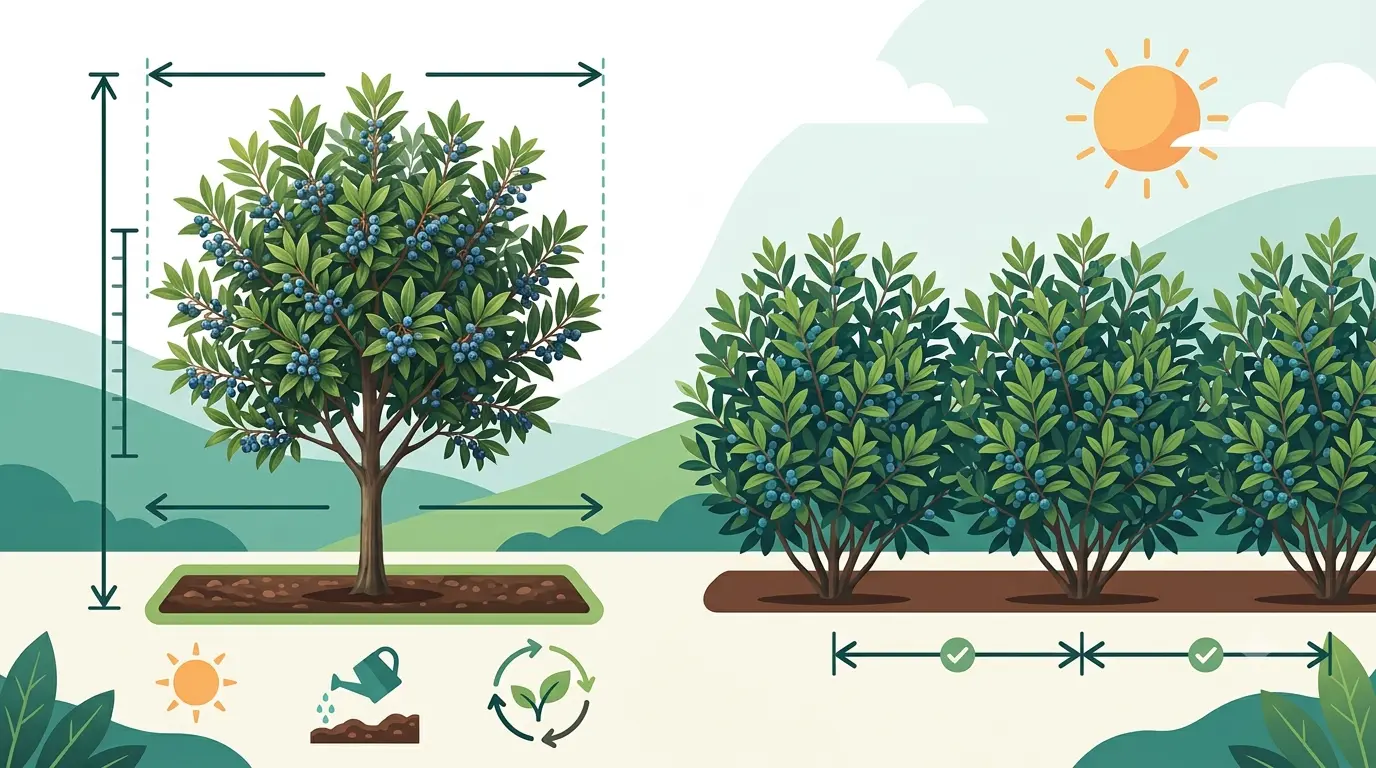
A full grown blueberry ash tree in Brisbane usually reaches around 6 – 10 metres in height with a width of approximately 3 – 4 metres. In highly favourable conditions, such as rich rainforest-like soils with consistent moisture, some plants may grow taller.
When planning a native garden, understanding mature dimensions is important, as shown in other Australian tree guides such as Lemon Myrtle Height and Width: Complete Australian Size Guide.
Brisbane’s warm temperatures and longer growing season can encourage stronger growth compared with cooler regions. However, final size depends on factors such as soil quality, sunlight exposure, available moisture, and maintenance.
Blueberry ash is an outdoor landscape plant and is not considered suitable as an indoor tree because of its mature size and natural growth requirements.
| Plant Size Factor | Typical Range |
| Mature height | 6 – 10m |
| Possible height in ideal conditions | Up to 15m |
| Mature width | 3 – 4m |
| Hedge spacing | Around 1.5 – 2m apart |
For screening or hedge planting, spacing blueberry ash plants around 1.5 – 2 metres apart allows enough room for healthy development while still creating a dense visual barrier over time.
Growth Rate — Is Blueberry Ash Fast Growing?
Blueberry ash has a moderate growth rate, although it can grow faster when planted in ideal Brisbane conditions. Once established, a healthy blueberry ash tree may grow approximately 40 – 60cm per year, depending on soil quality, moisture availability, sunlight, and general care.
In Brisbane gardens with fertile, humus-rich soil and consistent moisture, some growers observe stronger growth, particularly during the warmer months. However, it is not considered one of the fastest-growing screening plants compared with some tropical species.
The main growth factors include:
| Growth Factor | Effect on Blueberry Ash |
| Soil quality | Rich, organic soils encourage stronger growth |
| Water availability | Consistent moisture improves establishment and growth |
| Sunlight | Full sun generally supports better growth and flowering |
| Climate | Brisbane’s warm conditions support active growth |
Seasonal Growth Pattern
Blueberry ash typically experiences its strongest growth during spring and summer when temperatures increase and rainfall is more reliable.
Growth usually slows during:
- Cooler winter periods
- Extended dry periods
- Times of environmental stress after planting
Elemo Baker recommends focusing on establishment care during the first few years, as a strong root system is the foundation for faster long-term growth.
Are Blueberry Ash Roots Invasive?
No, blueberry ash roots are generally considered non-invasive and non-aggressive. The root system makes it suitable for Brisbane gardens where space is limited, including areas near paving, fences, and property boundaries.
Unlike some unrelated true ash trees (Fraxinus species), which may develop more aggressive root systems, blueberry ash does not have the same reputation for structural root problems.
Blueberry ash roots usually spread in a controlled manner when planted in normal garden conditions. However, like any tree, roots may extend further when planted in very fertile soil with abundant moisture.
Benefits of its root behaviour include:
- Suitable for smaller suburban gardens
- Lower risk around paving and pathways
- Suitable near fence lines when correctly spaced
- Easier to manage than many larger tree species
Questions such as “do ash trees have invasive roots?” often refer to true ash trees rather than blueberry ash. The two plants are botanically unrelated.
Blueberry Ash Care Guide for Brisbane Gardens
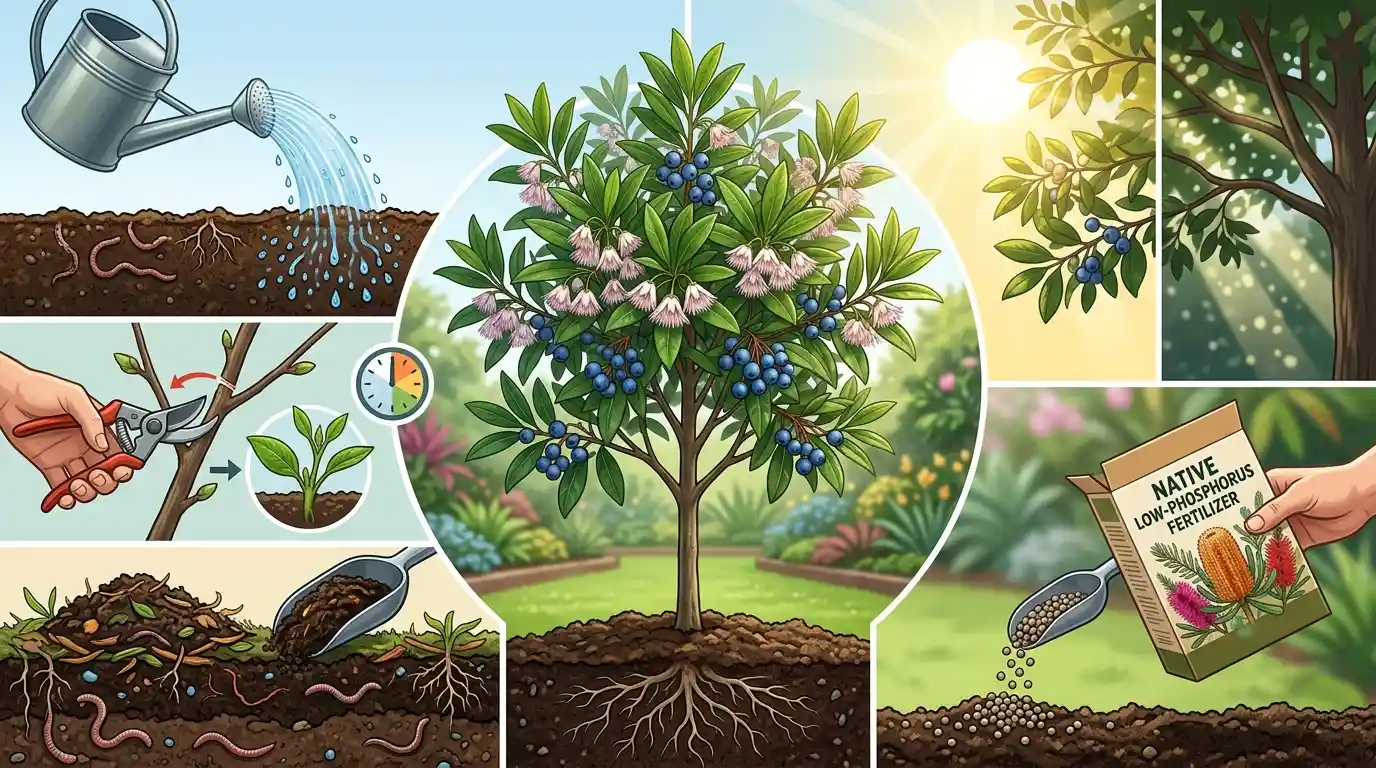
Blueberry ash is well suited to Brisbane’s subtropical climate and is considered a relatively low-maintenance Australian native tree. It performs best when planted in conditions that replicate its natural preference for moist, fertile environments.
| Care Requirement | Recommendation |
| Watering | Regular during establishment, moderate once mature |
| Light | Full sun to part shade |
| Soil | Well-drained, humus-rich soil |
| Fertiliser | Low-phosphorus native fertiliser |
| Pruning | After flowering |
| Climate | Suitable for Brisbane subtropical conditions |
Watering Requirements
Young blueberry ash trees require regular watering while their root systems develop. During Brisbane’s hotter months, newly planted trees benefit from deep watering rather than frequent shallow watering.
Once established, blueberry ash becomes moderately drought tolerant but performs better with occasional deep watering during extended dry periods.
Avoid prolonged waterlogging, especially in Brisbane areas with heavy clay soils, as poor drainage can lead to root stress.
Light Requirements
Blueberry ash grows well in:
- Full sun
- Filtered sunlight
- Part shade
For stronger flowering and denser growth, a position receiving several hours of direct sunlight is generally preferred.
Soil Requirements
The ideal soil for blueberry ash is:
- Well drained
- Rich in organic matter
- Slightly acidic to neutral
Although it can tolerate less-than-perfect soils, adding compost or organic matter before planting improves moisture retention and soil structure, particularly in Brisbane’s clay-heavy garden soils.
Fertilising Requirements
Use a native plant fertiliser with low phosphorus levels during the active growing season.
Excess phosphorus can be harmful to many Australian native plants, so avoid general-purpose fertilisers that are high in phosphorus.
Pruning Requirements
Blueberry ash requires minimal pruning when grown as a feature tree.
Pruning is mainly used to:
- Maintain shape
- Remove damaged branches
- Control hedge growth
- Improve airflow
The best pruning time is generally after flowering.
Avoid removing the main growing tip unnecessarily, as blueberry ash can respond poorly to hard pruning in this area.
Can You Prune Blueberry Ash?
Yes, you can prune blueberry ash, but it should be done carefully. Light pruning after flowering is the preferred method because it allows the plant to maintain its natural shape while encouraging healthy regrowth.
Avoid excessive cutting of the central growing tip, as aggressive pruning can reduce future growth and affect the plant’s structure.
Recommended pruning practices include:
- Remove dead or damaged branches
- Lightly shape plants after flowering
- Avoid severe top pruning
- Do not prune heavily before flowering season
Can You Hedge Blueberry Ash?
Yes, blueberry ash can be used as a hedge or screening plant. It is commonly grown in Brisbane gardens as an informal or lightly clipped hedge because of its evergreen foliage and dense branching habit.
For hedge planting:
- Space plants around 1.5 – 2 metres apart
- Prune lightly to encourage branching
- Avoid excessive clipping that removes natural growth structure
A blueberry ash hedge provides year-round greenery while also producing flowers and berries that add seasonal interest.
Blueberry Ash Flowers, Berries & Wildlife Value
Blueberry ash is valued for its ornamental flowers and attractive fruit. The tree produces small, bell-shaped flowers with fringed petals, creating a delicate appearance during flowering periods.
Flowers are typically:
- White in the species form
- Pale pink in some varieties
- Deeper pink in ‘Prima Donna’
Flowering generally occurs from spring into summer, followed by the development of blue-purple drupes.
The berries provide additional garden value by attracting fruit-eating birds and adding colour after flowering has finished.
The blueberry ash’s natural features make it useful for:
- Wildlife-friendly gardens
- Native landscapes
- Screening areas
- Feature planting
Can You Eat the Berries From Blueberry Ash?
Yes, blueberry ash berries are considered edible, but they are not similar in taste to cultivated blueberries. The flavour is generally mild and subtle rather than sweet and juicy.
The fruits are more commonly valued for their wildlife benefits, especially because they attract fruit-eating birds.
Gardeners should avoid assuming that all blue-coloured fruits are identical to blueberries, as blueberry ash belongs to a completely different botanical group.
Are Blueberry Ash Trees Deciduous?
No, blueberry ash trees are evergreen. They retain their leaves throughout the year rather than dropping them seasonally like deciduous trees.
This evergreen habit makes blueberry ash particularly useful in Brisbane gardens where gardeners want:
- Year-round screening
- Continuous foliage cover
- A permanent feature plant
Some seasonal leaf changes can occur, but normal leaf turnover does not mean the tree is deciduous.
What Are the Benefits of Blueberry Ash?
Blueberry ash offers several benefits for Australian gardens:
- Native plant value: It supports Australian biodiversity and suits local conditions.
- Evergreen screening: Its foliage provides privacy throughout the year.
- Ornamental appeal: Flowers and berries add seasonal colour.
- Low maintenance: It requires less care once established.
- Wildlife attraction: Fruits attract birds.
- Suitable roots: Its generally non-invasive root system suits suburban gardens.
For Brisbane gardeners seeking a reliable native tree with year-round interest, blueberry ash is a practical and attractive option.
Common Blueberry Ash Problems (Troubleshooting)
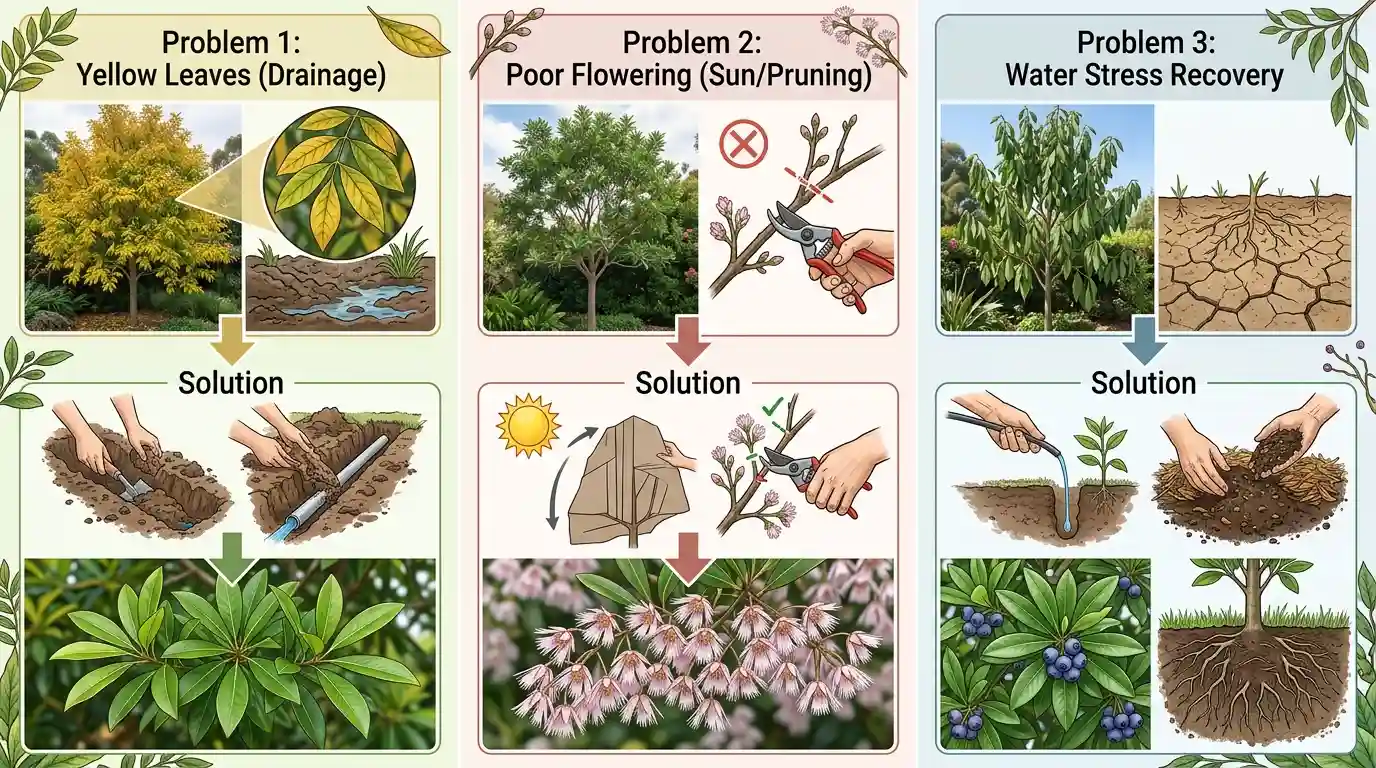
Blueberry ash is generally a hardy Australian native tree with few serious pest or disease problems. However, Brisbane gardeners may occasionally experience issues related to watering, soil conditions, pruning practices, or unsuitable planting positions.
Understanding the cause of a problem is the first step toward restoring healthy growth.
Why Is My Blueberry Ash Not Flowering?
A blueberry ash may fail to flower because of insufficient sunlight, inconsistent watering, environmental stress, or incorrect pruning. The tree requires suitable growing conditions and enough mature growth to produce regular flowers.
Common causes include:
- Insufficient light: Plants grown in heavy shade often produce fewer flowers.
- Improper watering: Both drought stress and waterlogged soil can reduce flowering.
- Temperature stress: Extreme conditions can affect flower development.
- Over-pruning: Removing flowering wood or cutting at the wrong time can reduce blooms.
To encourage flowering:
- Plant blueberry ash in full sun to part shade.
- Maintain consistent moisture during dry periods.
- Avoid heavy pruning before the flowering season.
- Improve soil quality with organic matter where needed.
Brisbane’s spring flowering period is an important time to monitor plant health. Pruning immediately before this period may remove developing flower buds.
Other Common Blueberry Ash Problems
| Problem | Possible Cause | Solution |
| Yellowing leaves | Poor drainage, overwatering, nutrient imbalance | Improve drainage and adjust watering |
| Slow growth | Poor soil, low sunlight, lack of moisture | Improve soil and growing conditions |
| Reduced flowering | Heavy pruning or insufficient light | Provide better light and prune after flowering |
| Leaf stress | Heat, drought, or transplant shock | Maintain consistent watering |
Yellow leaves: In Brisbane gardens, yellowing leaves are often linked to excessive moisture, especially in heavy clay soils with poor drainage. Adding organic matter and improving drainage can help prevent root stress.
Slow growth: A blueberry ash may establish slowly if planted in compacted soil or a low-light position. Growth usually improves once the root system becomes established and conditions are corrected.
Pests and diseases: Blueberry ash generally has good natural resistance, although occasional minor pest issues may occur depending on local conditions.
Are There Any Disadvantages to Blueberry Ash?
Blueberry ash is considered a reliable native tree, but it does have some limitations that gardeners should understand before planting.
The main disadvantages include:
- Slow establishment: Young plants may take time to develop strong growth.
- Sensitivity to waterlogging: Poor drainage can affect root health.
- Pruning sensitivity: Incorrect hard pruning can damage the natural growth habit.
- Space requirements: Although manageable, mature trees still require enough room to grow.
Some online searches about ash tree disadvantages relate to true ash trees (Fraxinus species), including questions about invasive roots, removal, or lifespan. These concerns do not directly apply to blueberry ash because Elaeocarpus reticulatus is a completely different species.
A well-positioned blueberry ash is usually a low-maintenance choice for Brisbane gardens.
Propagating Blueberry Ash
Blueberry ash can be propagated through seed or semi-hardwood cuttings, although propagation requires patience. Most gardeners prefer purchasing established plants because young seedlings can take considerable time to develop.
Semi-Hardwood Cutting Propagation
Semi-hardwood cuttings are commonly taken during warmer months when the plant is actively growing.
The general process involves:
- Selecting healthy semi-mature stems
- Removing lower leaves
- Planting cuttings into a suitable propagation mix
- Maintaining consistent moisture and humidity
Success rates can vary, and rooting may take time.
Seed Propagation
Blueberry ash can also be grown from seed, but germination is slow. Seeds may require suitable conditions and can take a long period to establish.
Seed-grown plants may take up to two years or more to become well established, making this method better suited for patient gardeners or plant enthusiasts.
Where to Plant Blueberry Ash in a Brisbane Garden
The best place to plant blueberry ash is a position that provides adequate sunlight, good drainage, and enough room for its mature size.
Suitable planting locations include:
- Feature tree positions
- Privacy screens
- Garden boundaries
- Fence lines
- Driveway edges
- Native garden areas
Because blueberry ash has a generally non-invasive root system, it is suitable for many suburban Brisbane properties where larger trees may create space concerns.
For screening purposes, planting multiple blueberry ash trees at approximately 1.5 – 2 metre spacing can create a dense evergreen barrier over time.
When selecting a planting position, consider:
- Future height and width
- Access to sunlight
- Drainage conditions
- Nearby structures
Brisbane’s subtropical climate is naturally compatible with blueberry ash, especially in gardens where soil moisture can be maintained without creating waterlogged conditions.
For narrow boundaries and privacy screens, some gardeners also compare blueberry ash with other evergreen screening plants such as Ficus Hillii ‘Flash’. Read our guide to Ficus Hillii ‘Flash’ Care, Growth & Hedge Guide for another screening option.
Buying Blueberry Ash in Brisbane (What to Know Before You Buy)
When choosing blueberry ash in Brisbane, gardeners should consider plant size, cultivar selection, and overall plant health rather than focusing only on price.
The cost of blueberry ash can vary depending on:
- Pot size
- Plant maturity
- Cultivar type
- Availability
- Nursery production methods
The ‘Prima Donna’ cultivar may sometimes have different pricing compared with standard Elaeocarpus reticulatus because of its selected flowering characteristics.
Before purchasing, check:
- Healthy green foliage
- Strong branching structure
- No signs of root problems
- Correct cultivar labelling
- A healthy, well-developed root system
Some plants may be labelled differently between suppliers, particularly with names such as ‘Prima Donna’ and standard blueberry ash, so checking the botanical name helps avoid confusion.
What Most Blueberry Ash Guides Miss
Many blueberry ash guides provide basic planting information but overlook practical details that affect long-term performance in Brisbane gardens. Understanding these small factors can prevent common mistakes and improve plant health.
Beginner Mistake: Over-Clipping the Main Growing Tip
One common mistake is heavily cutting the main growing tip to control height. While blueberry ash responds well to light shaping, excessive removal of the central leader can permanently affect its natural growth structure.
For healthier development:
- Use light pruning rather than severe cutting.
- Remove only unwanted branches or excessive growth.
- Maintain the natural upright form of the tree.
- Prune after flowering to avoid removing developing flower buds.
A blueberry ash tree is naturally attractive when allowed to develop its layered branching habit, so regular hard clipping is usually unnecessary unless it is being maintained as a hedge.
Practical Tip: Improve Brisbane Clay Soils Before Planting
Many Brisbane gardens have clay-heavy soils that can hold too much water after rainfall. Although blueberry ash prefers moisture, prolonged waterlogging can reduce root health and slow growth.
Before planting, improve heavy soils by:
- Adding compost or organic matter.
- Improving drainage where necessary.
- Avoiding planting in areas where water remains after rain.
Organic matter helps create a healthier soil structure by improving both moisture retention and drainage.
Seasonal Consideration: Pruning Around Brisbane’s Flowering Window
Timing pruning correctly is important because blueberry ash produces flowers on mature growth.
For Brisbane gardens:
- Avoid heavy pruning before spring flowering.
- Complete shaping after flowering has finished.
- Monitor growth during warmer months when the plant is actively developing.
This approach helps maintain both the plant’s appearance and its seasonal flowers.
Troubleshooting: Normal Leaf Changes vs Stress Symptoms
Blueberry ash may naturally replace older leaves throughout the year, which can cause occasional leaf colour changes. Not every yellow or reddish leaf indicates a serious problem.
Normal seasonal changes usually involve:
- Older leaves gradually changing colour before dropping.
- Minor leaf turnover during growth cycles.
Stress-related symptoms are more likely when:
- Many leaves turn yellow suddenly.
- Leaves appear weak or wilted.
- Growth slows significantly.
- Soil remains constantly wet.
Checking watering habits, soil drainage, and sunlight exposure is the best starting point when diagnosing problems.
Conclusion
Blueberry ash (Elaeocarpus reticulatus) is a versatile Australian native tree that suits Brisbane’s subtropical climate and provides year-round garden interest. With evergreen foliage, attractive fringed flowers, blue-purple berries, and a generally non-invasive root system, it is suitable for feature planting, screening, and hedging.
A blueberry ash tree typically grows 6 – 10 metres tall with moderate growth, although conditions such as soil quality, moisture, and sunlight influence its final size. Brisbane gardeners can achieve the best results by providing well-drained soil, consistent watering during establishment, and careful pruning after flowering.
For gardeners wanting a low-maintenance native tree with ornamental value and wildlife benefits, blueberry ash Brisbane gardens can be a reliable and attractive choice.
Frequently Asked Questions
Are blueberry ash tree roots invasive?
No, blueberry ash tree roots are generally considered non-invasive. Elaeocarpus reticulatus develops a manageable root system that is suitable for many Brisbane gardens, including areas near paving and boundaries when planted with appropriate spacing.
Is blueberry ash fast growing?
Blueberry ash has a moderate growth rate. Once established, it can grow around 40 – 60cm per year in favourable conditions, with faster growth possible in rich, moist soils with adequate sunlight.
Can you hedge blueberry ash?
Yes, blueberry ash can be used as a hedge or screening plant. It responds well to light pruning and is commonly planted in Brisbane gardens for evergreen privacy screening.
Can you eat the berries from blueberry ash?
Yes, blueberry ash berries are edible, but they have a mild flavour and are not as sweet as true blueberries. The fruits are more commonly valued because they attract fruit-eating birds.
Is blueberry ash native to Australia?
Yes, blueberry ash is native to Australia. Elaeocarpus reticulatus naturally occurs along the eastern coast from Queensland through New South Wales and into Victoria and Tasmania.
Why is my blueberry ash not flowering?
A blueberry ash may not flower because of insufficient sunlight, inconsistent watering, stress, or pruning at the wrong time. Providing suitable light conditions and pruning after flowering can improve blooming.
Are blueberry ash trees deciduous?
No, blueberry ash trees are evergreen. They retain their leaves throughout the year, although normal seasonal leaf replacement may occur.
How do you propagate blueberry ash?
Blueberry ash can be propagated through semi-hardwood cuttings or seeds. Cuttings are usually taken during warmer months, while seed propagation is slower and may take up to two years or more for establishment.