

Broadleaf Lady Palm: Care, Size & Growing Guide
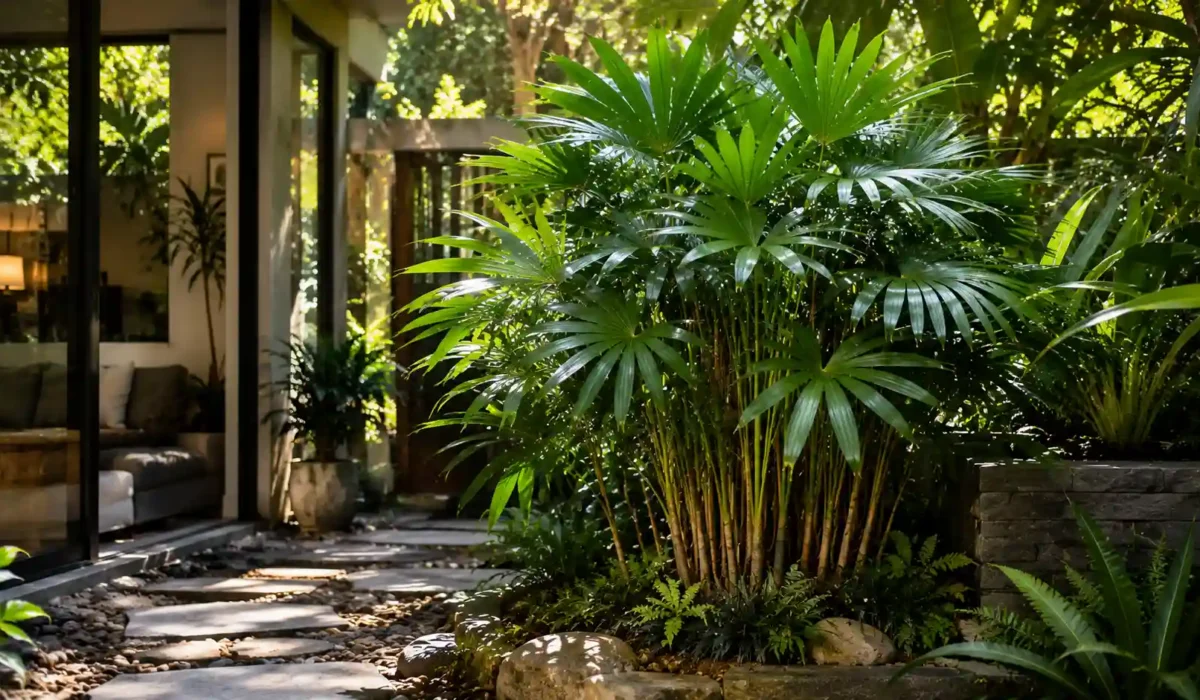
According to Elemo Baker, the broadleaf lady palm (Rhapis excelsa) is a slow-growing, clumping fan palm native to southern China and Taiwan, prized for its dark green, palmate leaves with broad, ribbed segments. Multi-stemmed and shade-tolerant, it typically reaches 2–4 metres outdoors, making it a popular low-light indoor and understorey plant.
No wild populations of Rhapis excelsa have ever been documented — every specimen in cultivation traces back to Chinese nursery stock, which is what distinguishes it from the narrower-leafleted Rhapis humilis (slender lady palm). It’s also non-toxic to pets, cold hardy to around USDA zone 9a, and dioecious, needing both a male and female plant present to set its small white fruits.
Quick Summary
- Broadleaf lady palm (Rhapis excelsa) is also known as lady palm, lady finger palm, and rhapis palm.
- It is a slow-growing clumping palm that usually reaches 2–4 metres outdoors and stays smaller in containers.
- The plant prefers bright indirect light indoors or part to full shade outdoors and is considered non-toxic to cats and dogs.
- Broadleaf lady palm is widely used as an indoor feature plant, shaded courtyard specimen, or tropical screening plant.
What Is a Broadleaf Lady Palm? (Common Names & Botanical Identity)
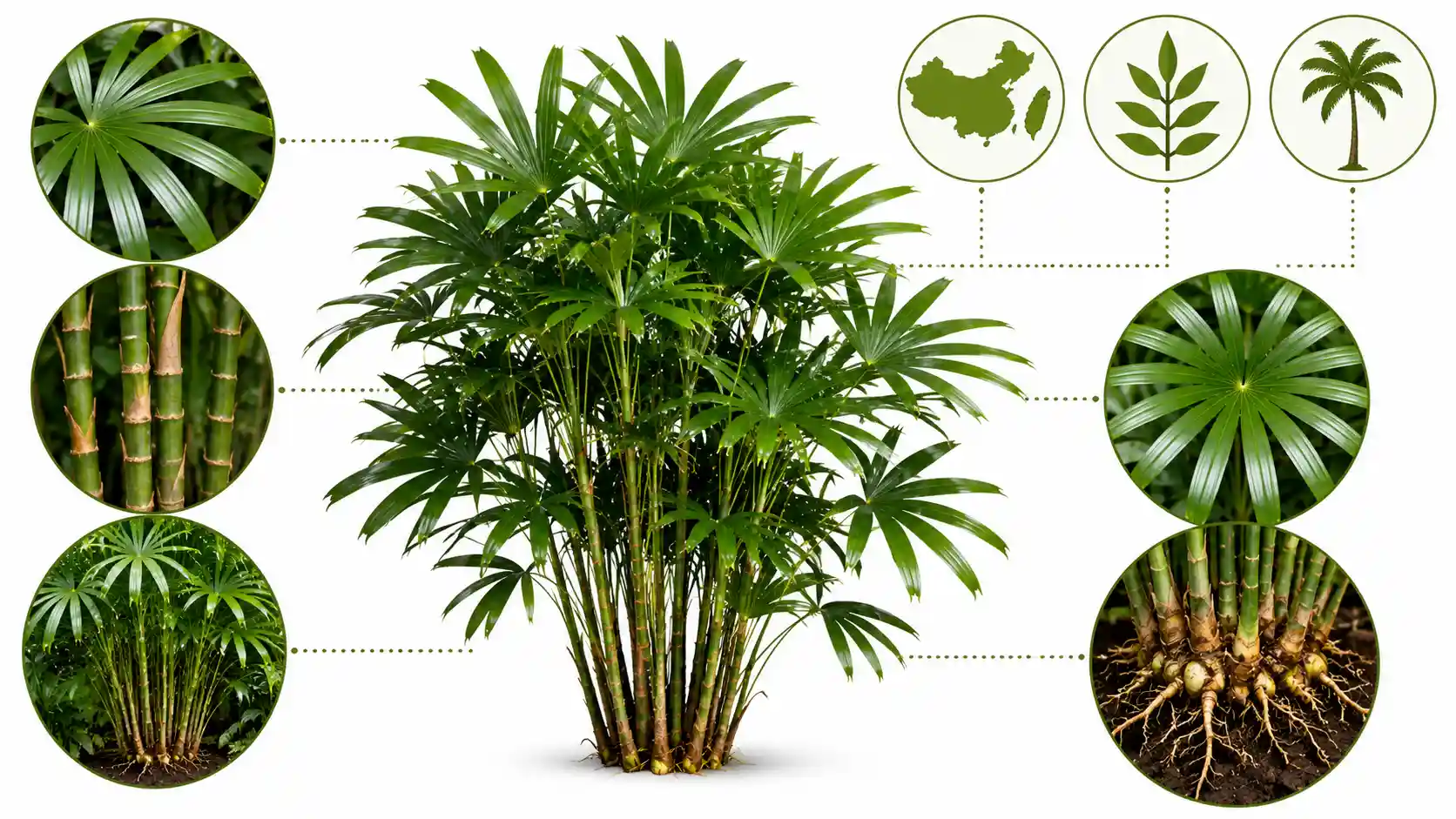
Broadleaf lady palm is the common name for Rhapis excelsa, a clumping evergreen palm belonging to the family Arecaceae. It originates from southern China and Taiwan, where it naturally grows in shaded forest environments. The plant is recognised by its multiple cane-like stems and fan-shaped leaves divided into wide, blunt-ended segments. Broadleaf lady palm belongs to the Arecaceae family and is scientifically classified as Rhapis excelsa, a species recognised in botanical references for its ornamental value and clumping growth habit.
The botanical name Rhapis excelsa is used worldwide by horticulturists, while common names include:
- Lady palm
- Broadleaf lady palm
- Lady finger palm
- Rhapis palm
- Rafus palm (a common misspelling of rhapis palm)
The term “broadleaf” refers to its wider leaf segments compared with some other Rhapis varieties that have narrower, more delicate-looking foliage. These broad segments give the plant a fuller and more tropical appearance, especially when grown indoors.
Unlike single-trunk palms, broadleaf lady palm grows as a clump. New stems emerge from underground rhizomes, gradually creating a dense group of upright canes covered with dark green leaves.
Rhapis excelsa vs Other Rhapis Varieties
Rhapis excelsa is one of the most popular lady palm species because of its larger leaf segments and reliable indoor performance. Other Rhapis varieties may have narrower leaves, smaller growth habits, or more specialised availability.
| Variety | Main Features | Growth Habit |
| Rhapis excelsa | Broad fan leaves, strong indoor performance | Medium clumping palm |
| Narrow-leaf Rhapis varieties | Slimmer leaf segments | More delicate appearance |
| Dwarf cultivars | Smaller mature size | Compact and slower growing |
Broadleaf lady palm is generally chosen when gardeners want a fuller, more substantial palm for indoor spaces or shaded gardens.
How Big Do Broadleaf Lady Palms Get? (Size & Growth Rate)
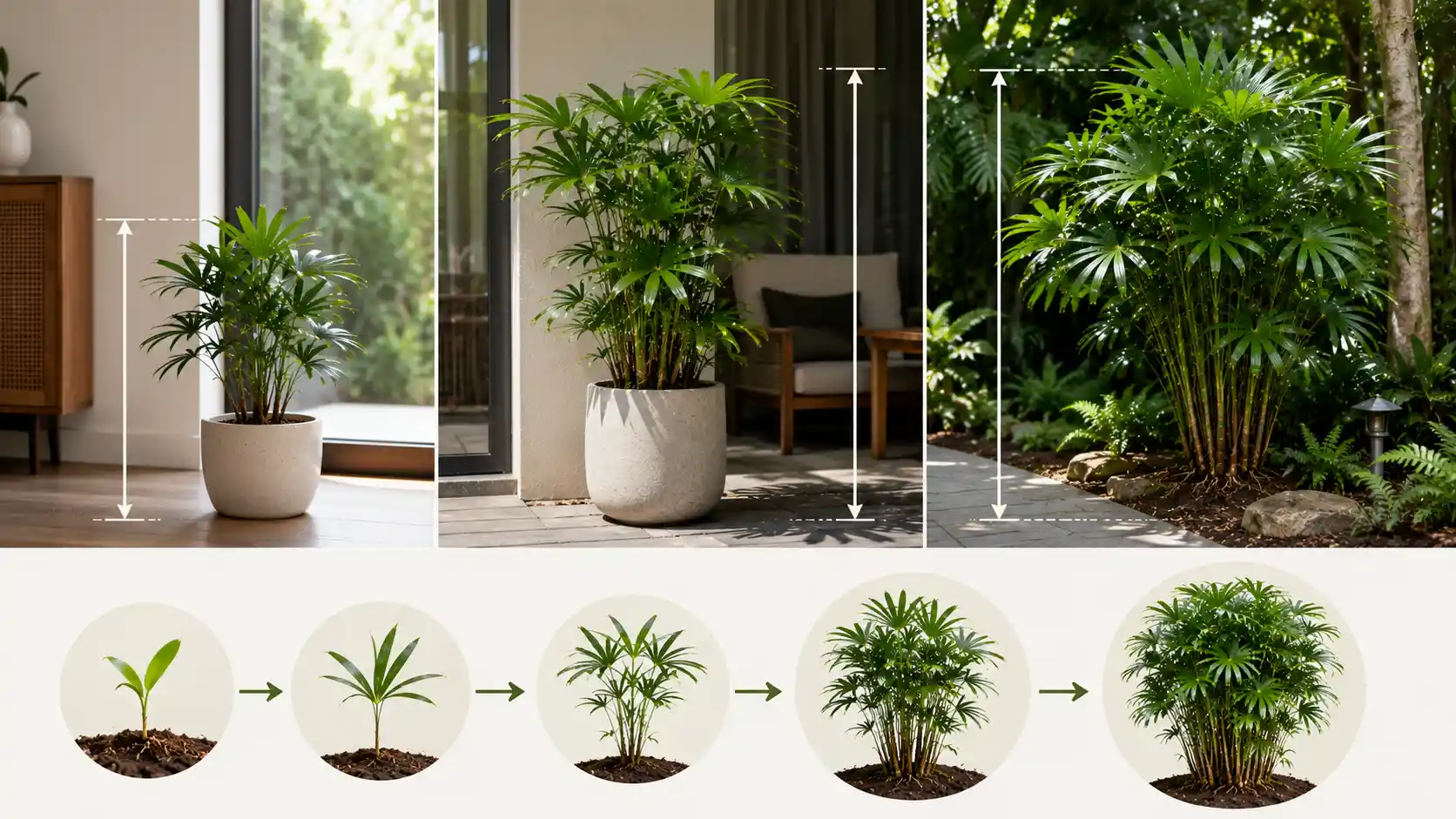
Broadleaf lady palm is a slow-growing palm that develops gradually over many years. Mature outdoor plants commonly reach around 2–4 metres tall, although exceptionally established specimens may grow slightly taller in ideal conditions.
Indoor plants remain much smaller because container size restricts root growth. A potted broadleaf lady palm commonly reaches approximately 1–2 metres tall, depending on the pot size, light conditions, and age of the plant.
Lady palms are not considered fast-growing palms. Commercial growers typically observe growth of around 20–30 centimetres per year under good conditions, while indoor plants often grow even slower due to reduced light and restricted roots.
Factors affecting growth speed include:
- Amount of available light
- Watering consistency
- Soil quality
- Fertiliser availability
- Temperature and climate
- Container size
In practical gardening experience, broadleaf lady palm rewards patience. Its slow growth is one reason mature specimens can become valuable and expensive compared with faster-growing palms.
| Growing Situation | Typical Height | Growth Rate |
| Indoor container plant | 1–2 metres | Slow, often less than outdoor plants |
| Outdoor shaded garden | 2–4 metres | Approximately 20–30 cm per year in good conditions |
| Mature established clump | Up to 4 metres or more | Achieved gradually over many years |
Indoor vs Outdoor Size Differences
Outdoor broadleaf lady palms generally become larger because they have more root space, natural rainfall, and better seasonal growth conditions. In shaded garden beds, they can develop wide clumps that work well as screening plants.
Indoor specimens remain compact because:
- Pots limit root expansion
- Indoor light levels are usually lower
- Growth seasons are less pronounced
- Regular pruning keeps plants manageable
For indoor growing, choosing a suitable pot size is important. A container that is too large can hold excess moisture, while a very small pot may restrict healthy growth.
Is There a Dwarf Lady Palm?
Yes, dwarf lady palm cultivars exist, including varieties such as ‘Koban’, but they are less commonly available than standard Rhapis excelsa. These compact forms grow more slowly and are often more expensive because they take longer to reach a saleable size.
Dwarf cultivars are suitable for:
- Small indoor spaces
- Apartments
- Desks and compact plant displays
- Small shaded courtyards
Their slower growth and limited availability often explain the higher price compared with regular lady palms.
Broadleaf Lady Palm Care Guide
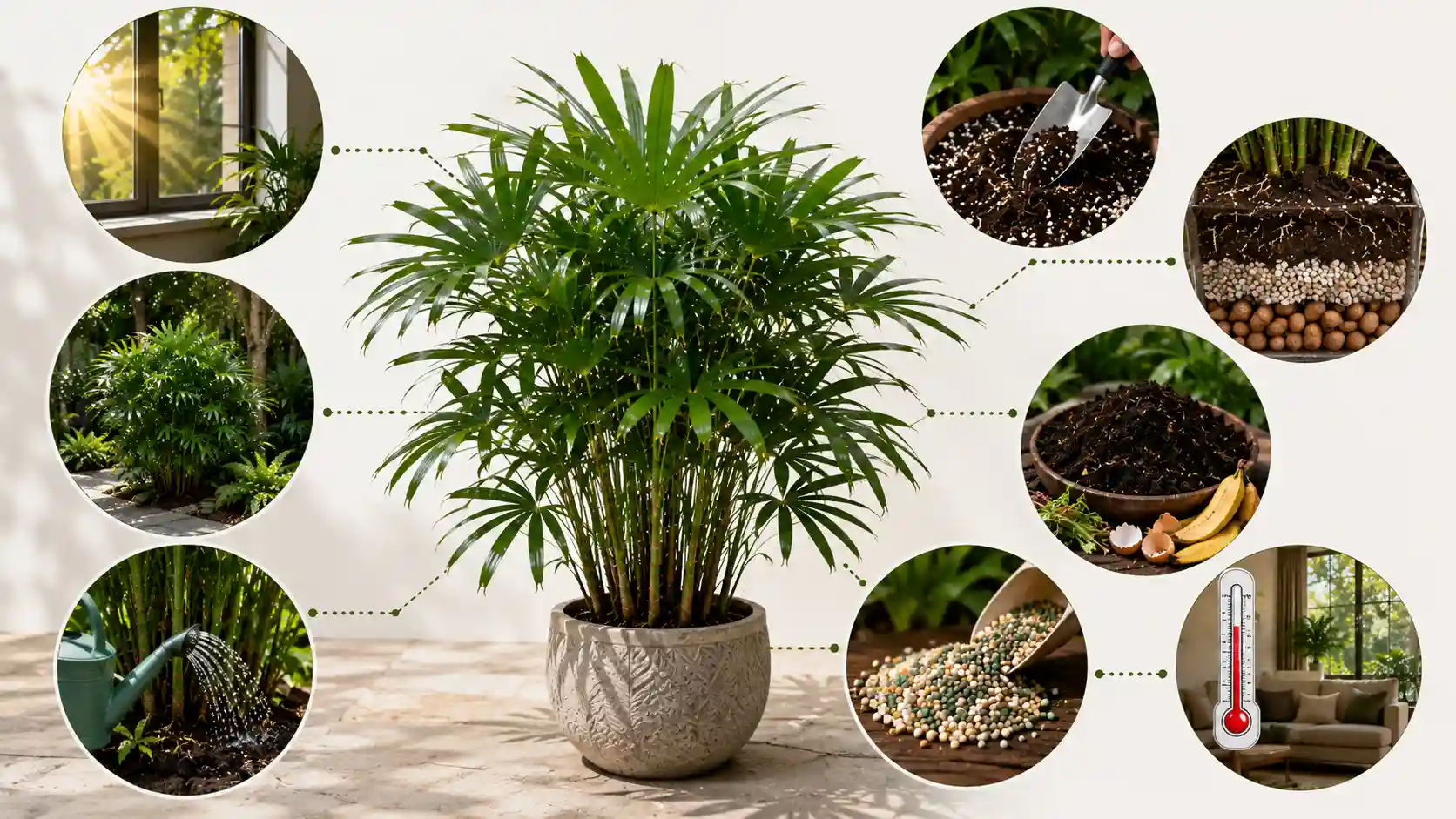
Broadleaf lady palm care is relatively simple because Rhapis excelsa naturally adapts to shaded environments. It performs best when provided with consistent moisture, filtered light, and well-draining soil.
Light Requirements
Broadleaf lady palm prefers bright indirect light indoors and part shade to full shade outdoors.
It can tolerate lower light conditions better than many tropical palms, making it one of the most reliable indoor palms. However, extremely dark locations may result in slow growth and weaker foliage.
Direct full sun is generally not recommended, especially in Australian climates with intense summer sunlight.
Excessive direct exposure can cause:
- Yellowing leaves
- Brown patches
- Leaf scorching
For outdoor planting, a position protected by trees, structures, or shade cloth provides ideal conditions.
Watering Needs
Water broadleaf lady palm when the top layer of soil becomes slightly dry. The plant prefers evenly moist soil but does not tolerate constant waterlogging.
Overwatering is one of the most common causes of problems because saturated soil can lead to root damage.
Good watering practices include:
- Checking soil moisture before watering
- Ensuring drainage holes are clear
- Reducing watering during cooler months
- Avoiding leaving pots sitting in water
In our experience growing indoor palms, consistent moderate watering produces healthier foliage than frequent heavy watering.
Soil & Potting Mix
Broadleaf lady palm grows best in a rich, well-draining potting mix that allows oxygen around the roots.
A suitable mix can include:
- Quality indoor potting soil
- Organic compost
- Perlite or coarse material for drainage
Heavy clay soils should be improved before planting outdoors because poor drainage can weaken the root system.
Fertilising
Broadleaf lady palm benefits from light feeding during the active growing season, usually spring and summer in Australia.
Use:
- A balanced slow-release palm fertiliser
- Diluted liquid fertiliser when needed
Some gardeners use products such as Seasol or Epsom salts, but these should not replace a complete fertiliser program. Seasol can support general plant health, while magnesium supplements should only be used when a deficiency is identified.
Over-fertilising can damage roots and cause leaf issues, so following product instructions is important.
Pruning & Shaping
Broadleaf lady palm requires minimal pruning. Remove:
- Yellow or damaged leaves
- Old stems that reduce airflow
- Dead growth from the base
To encourage a healthier clump, gardeners can remove weak old canes and divide overcrowded plants. Avoid excessive pruning because healthy green leaves provide energy for growth.
Temperature & Frost Tolerance
Broadleaf lady palm prefers warm, sheltered conditions but is one of the more cold-tolerant indoor-style palms.
It performs well in many temperate Australian climates when protected from:
- Heavy frost
- Cold drying winds
- Sudden temperature changes
Light frost may be tolerated, but prolonged freezing conditions can damage foliage and slow recovery.
Growing Broadleaf Lady Palm Indoors vs Outdoors
Broadleaf lady palm can be grown successfully both indoors and outdoors, but its growing conditions and uses differ depending on the environment. Indoors, Rhapis excelsa is valued as an elegant foliage plant for homes and offices, while outdoors it is commonly used in shaded gardens, courtyards, and tropical-style landscapes.
The main difference is that indoor plants rely on controlled conditions, while outdoor plants benefit from natural seasonal cycles and greater root space.
| Growing Condition | Indoor Broadleaf Lady Palm | Outdoor Broadleaf Lady Palm |
| Light | Bright indirect light near windows | Part shade to full shade |
| Main use | Feature plant, home décor, office greenery | Screening plant, courtyard specimen, shaded garden planting |
| Growth rate | Slower due to limited light and pot size | Faster but still considered slow-growing |
| Water needs | Regular checking because containers dry differently | Less frequent once established, depending on rainfall |
| Size | Usually 1–2 metres | Commonly 2–4 metres |
When growing indoors, place the palm near filtered natural light rather than directly beside strong afternoon sun. Rotate the pot occasionally to encourage even growth.
Outdoor planting is best in sheltered areas where the palm receives protection from harsh sunlight, strong winds, and frost. In Australian gardens, broadleaf lady palm performs particularly well beneath trees, along shaded pathways, and in protected courtyards.
Using Lady Palms as a Hedge or Screening Plant
Broadleaf lady palm is a useful screening plant because it forms dense clumps of upright stems and evergreen foliage. It provides year-round privacy without the aggressive root behaviour of some larger palms. For gardeners planning a low-maintenance boundary planting, broadleaf lady palm can be considered alongside other suitable fence-line plants for Australian conditions.
For a hedge effect, planting spacing depends on the desired density:
- Closer spacing (around 60–90 cm apart): Creates a faster-forming screen.
- Wider spacing (around 1–1.5 metres apart): Allows individual clumps to develop naturally.
Elemo Baker recommends allowing enough space for airflow between plants, especially in humid climates, as crowded palms can experience increased pest and fungal problems.
A broadleaf lady palm hedge is best suited to:
- Shaded fence lines
- Courtyard borders
- Tropical garden designs
- Low-maintenance privacy screens
Common Problems With Broadleaf Lady Palm
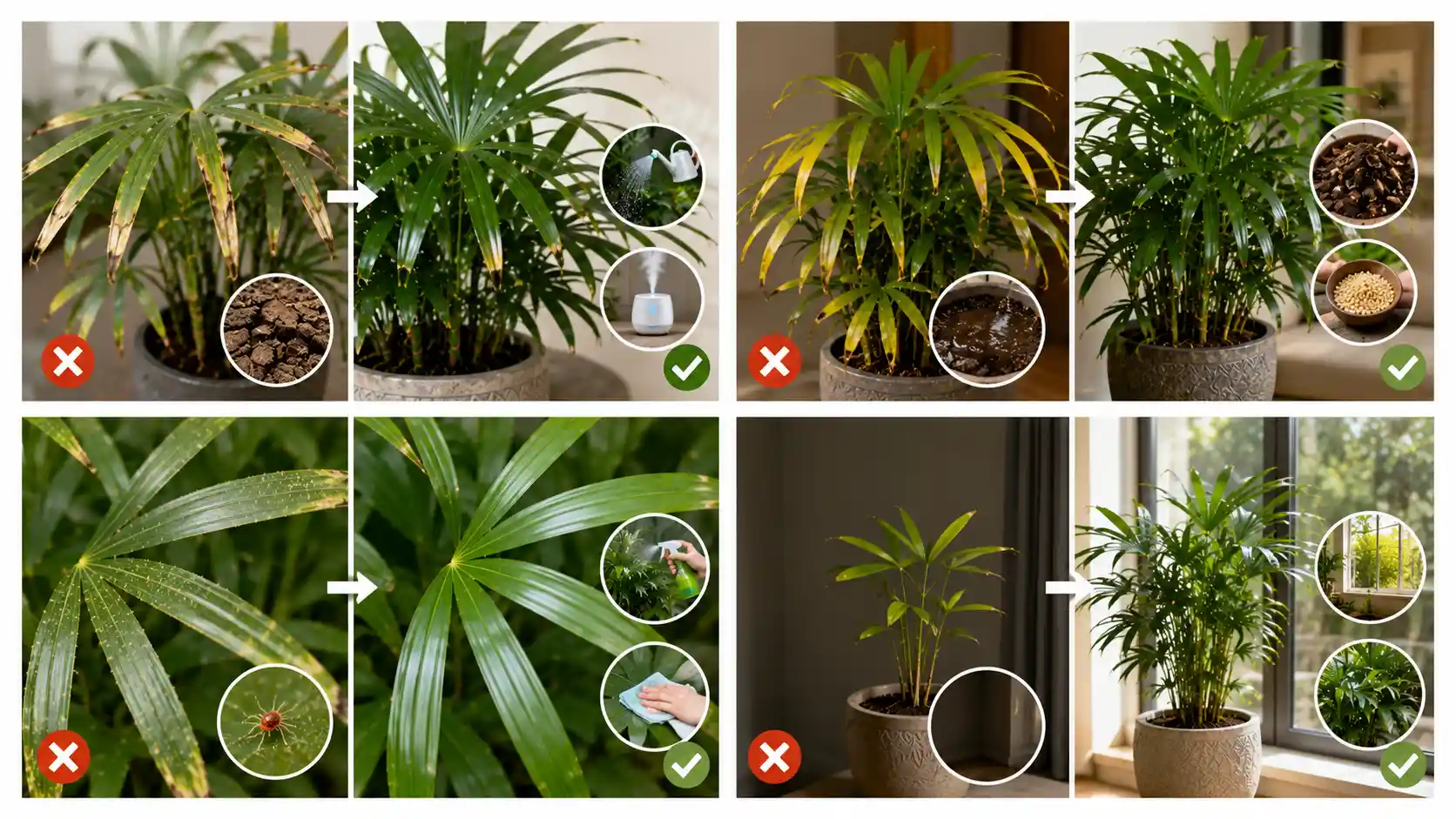
Broadleaf lady palm is generally hardy, but incorrect watering, unsuitable light, and dry indoor conditions can cause common problems. Identifying the cause early helps prevent long-term damage.
Brown Leaf Tips
Brown leaf tips are usually caused by inconsistent moisture, dry air, or low humidity.
Common causes:
- Soil drying out completely between watering
- Indoor heating or air conditioning
- Low humidity
- Excess fertiliser salts
Fix:
- Maintain more consistent watering
- Increase humidity around indoor plants
- Flush excess fertiliser salts from the soil occasionally
- Remove severely damaged leaves
Prevention:
Keep the plant away from direct air vents and maintain stable growing conditions.
Yellowing Leaves
Yellow leaves can indicate watering issues, poor drainage, or nutrient deficiencies.
Common causes:
- Overwatering
- Poor-quality drainage
- Lack of nutrients
- Natural ageing of older leaves
Fix:
- Check soil moisture before watering again
- Improve drainage if soil remains wet
- Apply a balanced palm fertiliser during active growth
Prevention:
Use a well-draining soil mix and avoid keeping the root zone constantly saturated.
Pest Problems
Spider mites are the most common pest issue affecting broadleaf lady palms, especially when grown indoors in dry air.
Signs of spider mites include:
- Fine webbing between leaves
- Speckled or faded foliage
- Reduced plant vigour
Fix:
- Wipe leaves with a damp cloth
- Increase humidity
- Use suitable horticultural treatments if infestation becomes severe
Prevention:
Regularly inspect leaves and maintain adequate humidity, particularly during cooler months when indoor heating dries the air.
Identifying common garden pests early is important, especially when spider mites or other plant pests begin affecting ornamental plants.
Slow or Stunted Growth
Slow growth is normal for broadleaf lady palm, but extremely poor growth may indicate unsuitable conditions.
Possible causes:
- Insufficient light
- Lack of nutrients
- Root restriction
- Poor watering habits
Fix:
- Move indoor plants to brighter filtered light
- Refresh old potting mix
- Provide light fertilising during the growing season
Prevention:
Maintain consistent care rather than trying to accelerate growth with excessive fertiliser.
Propagating Broadleaf Lady Palm
The easiest way to propagate broadleaf lady palm is through division of rhizome offshoots. Because the plant naturally forms clumps, new stems can be separated from the parent plant and replanted.
Division Propagation Method
The basic process involves:
- Carefully removing the mature plant from its container or soil.
- Identifying healthy offshoots with attached roots.
- Separating the new clump using clean tools.
- Planting the division into fresh, well-draining soil.
- Keeping the new plant evenly moist while roots establish.
Division is preferred because it produces a mature-looking plant much faster than growing from seed.
Seed propagation is possible but uncommon. It is rarely used by home gardeners because seeds germinate slowly and young plants require many years to reach a useful size.
In practical gardening, purchasing or dividing established clumps is the most reliable way to grow broadleaf lady palm.
Are Broadleaf Lady Palms Safe for Pets? (Toxicity)
Yes, broadleaf lady palm (Rhapis excelsa) is considered non-toxic to cats and dogs. It is listed as a safe ornamental palm by organisations such as the American Society for the Prevention of Cruelty to Animals (ASPCA).
This makes it a popular choice for pet-friendly homes where indoor greenery is desired.
However, pets should still be discouraged from chewing on any houseplant because:
- Plant material may cause mild digestive upset
- Soil and fertilisers may contain unsuitable substances
- Excessive chewing can damage the plant
For households with cats or dogs, broadleaf lady palm is one of the safer indoor palm options.
Root System — Are Lady Palm Roots Invasive?
No, lady palm roots are generally not invasive. Broadleaf lady palm develops a compact, clumping rhizomatous root system rather than aggressive spreading roots.
Unlike some large palms and trees that develop extensive root systems, Rhapis excelsa is usually safe to plant near:
- Paved areas
- Garden paths
- Building foundations
- Courtyard structures
Its underground rhizomes allow the plant to slowly expand into a thicker clump, but they do not typically create major structural problems.
For best results, provide adequate planting space so the clump can mature naturally without overcrowding.
Why Are Lady Palms So Expensive?
Broadleaf lady palms are often more expensive than common fast-growing plants because they require significant time and labour to produce.
The main reasons include:
- Slow growth: Plants take years to reach large saleable sizes.
- Manual propagation: Many plants are produced through careful division rather than rapid seed production.
- Mature appearance: Larger multi-stem clumps have greater ornamental value.
- Rare cultivars: Special forms may be harder to source.
When searching for “lady palm Bunnings” or other retail suppliers, availability and pricing often depend on plant size, cultivar, and seasonal stock levels.
A small young plant may be affordable, while a mature specimen with multiple established stems can command a much higher price because of the years involved in growing it.
Benefits of Growing a Broadleaf Lady Palm
Broadleaf lady palm (Rhapis excelsa) is valued for its combination of attractive foliage, adaptability, and low-maintenance nature. It is especially popular among gardeners who want reliable greenery in areas where many other plants struggle due to limited sunlight. Like other popular indoor foliage plants such as Dracaena marginata, broadleaf lady palm is valued for its attractive greenery, low-maintenance nature, and ability to enhance indoor living spaces.
Key benefits of growing broadleaf lady palm include:
- Excellent indoor performance: It adapts well to bright indirect light and indoor environments.
- Low maintenance: Once established, it requires minimal pruning and routine care.
- Pet-friendly option: It is considered non-toxic to cats and dogs.
- Natural screening value: Dense clumping growth makes it useful for shaded privacy screens.
- Ornamental appeal: Glossy fan-shaped leaves add a tropical appearance to homes and gardens.
Broadleaf lady palm is also often associated with improved indoor air quality because many indoor plants are popularly recognised for their ability to contribute to healthier indoor environments. However, it should be viewed primarily as a decorative plant rather than a replacement for ventilation or air purification systems. Adding plants indoors can also support a healthier living environment, and understanding the wider benefits of indoor plants helps gardeners choose suitable species for their homes.
Some cultures consider lady palm a lucky plant because palms are traditionally associated with prosperity, peace, and positive energy. This is a cultural belief and not a scientifically proven property of the plant.
For Australian gardeners, one of the biggest advantages is its ability to provide tropical-style foliage in shaded locations where sun-loving plants may fail.
Broadleaf Lady Palm vs Other Popular Palms
Broadleaf lady palm is best suited for gardeners who value shade tolerance, compact growth, and easy maintenance rather than rapid height development. When compared with faster-growing outdoor palms, Rhapis excelsa grows much more slowly but offers better performance in protected, low-light areas. Unlike fast-growing evergreen species used for rapid landscape coverage, broadleaf lady palm is selected mainly for shade tolerance, compact growth, and long-term reliability.
The fastest-growing palm options in Australia are generally larger outdoor species that require more sunlight, space, and maintenance. Broadleaf lady palm is not chosen for speed; it is chosen for reliability, appearance, and suitability for shaded gardens.
| Feature | Broadleaf Lady Palm (Rhapis excelsa) | Fast-Growing Outdoor Palm Alternative |
| Growth rate | Slow-growing | Moderate to fast-growing |
| Sun tolerance | Prefers shade or filtered light | Usually prefers more sunlight |
| Mature size | Around 2–4 metres outdoors | Often much taller |
| Root behaviour | Compact clumping roots | Depends on species |
| Best use | Indoor plants, shaded gardens, screening | Large landscapes and open areas |
For homeowners asking “which palm is best for outdoor planting,” the answer depends on the location. Broadleaf lady palm is one of the best choices for shaded courtyards, sheltered gardens, and areas beneath trees. However, gardeners wanting rapid growth or tall tropical features may need to consider other palm species better suited to open sunny conditions.
Elemo Baker recommends choosing palms based on the growing environment rather than appearance alone. A shade-loving palm planted in harsh sun may struggle, while a suitable palm placed in the correct position can remain healthy for many years.
Conclusion
Broadleaf lady palm (Rhapis excelsa) is a slow-growing, shade-loving clumping palm that combines attractive tropical foliage with easy care requirements. It grows well indoors as a feature plant and outdoors in shaded Australian gardens, courtyards, and screening areas.
With its bamboo-like stems, broad fan-shaped leaves, non-invasive root system, and pet-safe reputation, broadleaf lady palm is an excellent choice for gardeners seeking long-lasting greenery without high maintenance needs. However, it is not the right option for those wanting fast growth or quick landscape coverage.
Providing filtered light, well-draining soil, and consistent watering will help this elegant palm remain healthy for decades. For low-light spaces, indoor gardens, and shaded outdoor areas, broadleaf lady palm remains one of the most reliable and attractive palm choices. Broadleaf lady palm is one of the many adaptable plants featured in Australian indoor and garden design, where choosing the right species for light, space, and climate conditions is essential.
Frequently Asked Questions (FAQs)
How big do broadleaf lady palms get?
Broadleaf lady palms typically grow between 2 and 4 metres tall outdoors when planted in suitable shaded conditions. Indoor plants usually remain smaller, commonly reaching around 1–2 metres depending on pot size, light, and care.
Are lady palms fast growing?
No, lady palms are considered slow-growing palms. Under good growing conditions, they may gain around 20–30 centimetres of height per year, while indoor plants often grow more slowly due to lower light levels and restricted root space.
Can lady palms take full sun?
Lady palms generally do not perform well in full sun, especially in hot Australian climates. Direct sunlight can cause leaf scorching, yellowing, and damage. They grow best in bright indirect light indoors or part shade outdoors.
Are broadleaf lady palms toxic to cats?
No, broadleaf lady palms (Rhapis excelsa) are considered non-toxic to cats and dogs. They are a popular choice for pet-friendly homes, although pets should still be discouraged from chewing excessive amounts of any plant material.
How often should I water a lady palm?
Water a lady palm when the top layer of soil becomes slightly dry. The plant prefers consistent moisture but should not remain waterlogged. During cooler months, watering frequency should usually be reduced because growth slows.
Are lady palm roots invasive?
No, lady palm roots are generally not invasive. They form a compact clumping rhizome system that spreads gradually and is usually safe near paving, pathways, and building foundations.
Is there a dwarf lady palm?
Yes, dwarf lady palm cultivars such as ‘Koban’ exist, but they are less common and usually more expensive because they grow slowly and take longer to reach a mature size.