

Guyana Cherry: Tree, Fruit, Care & Growing Guide
Introduction
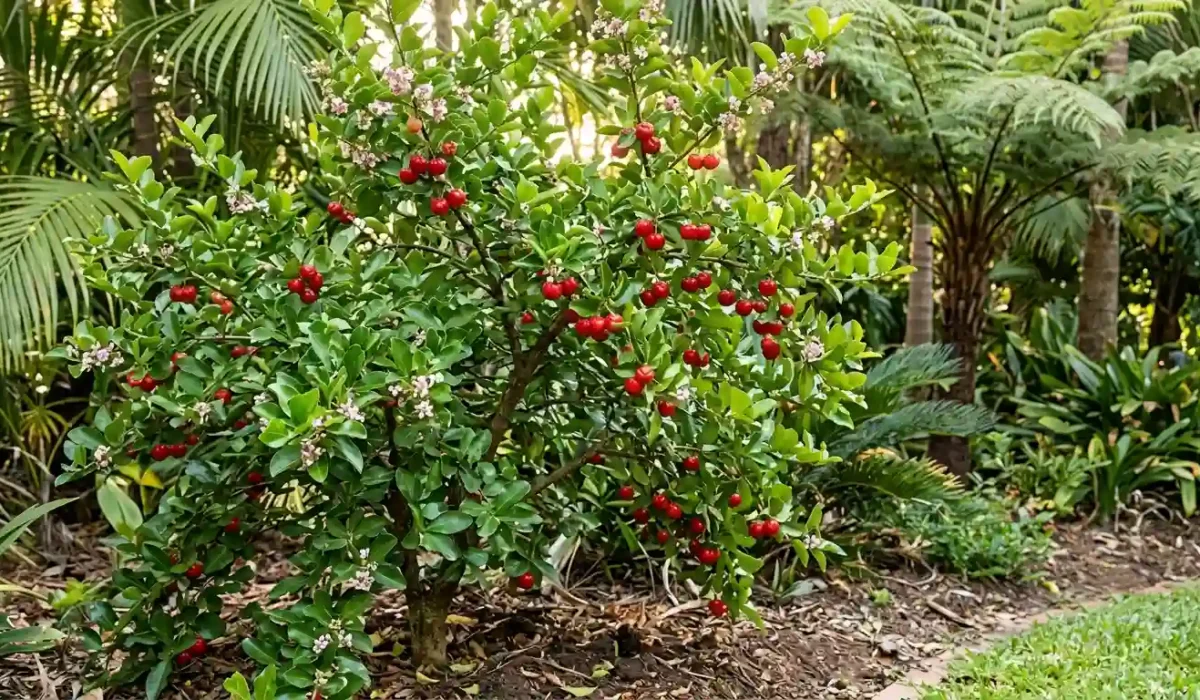
Guyana cherry is a common name used for small tropical cherry-like fruits, most commonly referring to acerola (Malpighia emarginata), a vitamin C-rich fruiting shrub or small tree native to tropical regions of the Americas. The name can also refer to Surinam cherry (Eugenia uniflora), creating confusion between two botanically different plants. Guyana cherry, also called Guyanese cherry, West Indian cherry, Caribbean cherry, or Barbados cherry in different regions, is valued for its edible fruit, attractive flowers, and suitability for warm Australian gardens. This guide explains what Guyana cherry is, how it grows, how to care for it, and how Australian gardeners can successfully cultivate it.
Quick Summary
- Guyana cherry usually refers to acerola (Malpighia emarginata), a tropical fruit tree known for exceptionally high vitamin C levels.
- The name may also describe Surinam cherry (Eugenia uniflora), which is a different species from a different plant family.
- Guyana cherry grows best in warm, frost-free areas of Australia, including tropical and subtropical regions.
- It produces small red fruits with a tart to sweet flavour and attractive pink or white flowers.
- Proper sunlight, drainage, watering, and pruning improve fruit production and plant health.
What Is a Guyana Cherry?
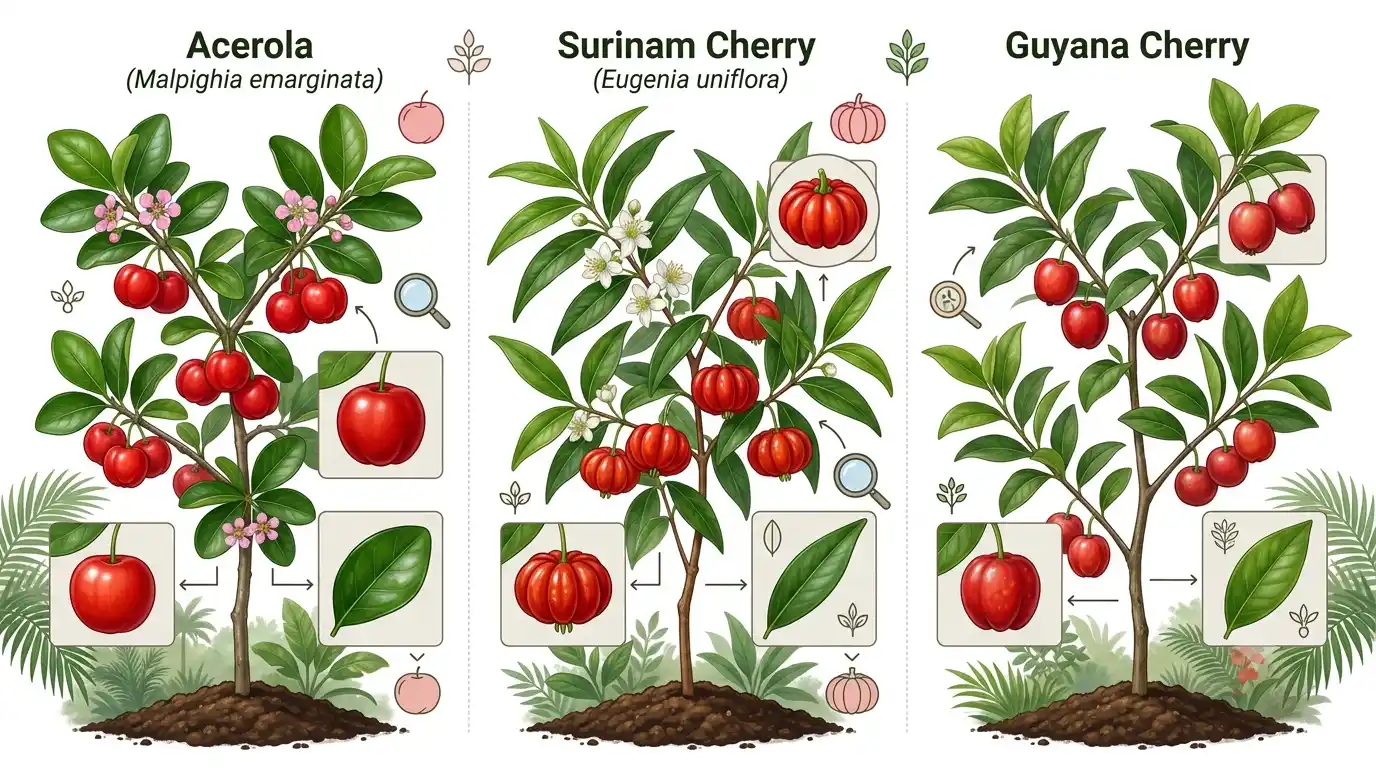
Guyana cherry is a regional common name most often used for acerola (Malpighia emarginata), a tropical fruiting plant in the Malpighiaceae family. It is a small evergreen shrub or tree that produces bright red, cherry-like fruits with a soft texture and a naturally high concentration of vitamin C.
The term “Guyana cherry” is not a formal botanical name, meaning it does not identify one single species worldwide. Depending on location, the name may refer to different tropical fruits, especially in the Caribbean, South America, and tropical gardening communities.
The botanical classification of acerola places it within the genus Malpighia, a group of tropical flowering plants native to the Americas. More information about the species classification can be found on Wikipedia’s page about Acerola.
The most recognised plant associated with Guyana cherry is:
- Acerola (Malpighia emarginata)
- Family: Malpighiaceae
- Native range: Tropical Americas and Caribbean regions
- Common names: Acerola cherry, Barbados cherry, West Indian cherry
Another fruit sometimes called Guyana cherry is:
- Surinam cherry (Eugenia uniflora)
- Family: Myrtaceae
- Native range: South America
- Common name: Pitanga or Brazilian cherry
Although both produce small red fruits, they are botanically unrelated.
The names Guyanese cherry, Guyanese cherries, West Indian cherry, Caribbean cherry, Barbados cherry, and acerola are often used interchangeably in gardening discussions, which is why identifying the scientific name is important before purchasing a plant.
Guyana Cherry vs Acerola vs Surinam Cherry — What’s the Difference?
Guyana cherry is a common name rather than a specific botanical species. Acerola and Surinam cherry are two different plants with different families, growth habits, and fruit characteristics.
| Common Name | Botanical Name | Family | Flavour |
| Acerola / Barbados Cherry | Malpighia emarginata | Malpighiaceae | Tart, slightly sweet |
| Surinam Cherry / Pitanga | Eugenia uniflora | Myrtaceae | Sweet to resinous |
Acerola generally has softer fruits and is especially valued for its vitamin C content. Surinam cherry has a more distinctive ribbed fruit shape and can have a stronger aromatic flavour.
For Australian gardeners, checking the botanical name before buying is the best way to avoid receiving a different “cherry” plant than expected.
What Are Jamaican Cherries Called?
Jamaican cherries are commonly called acerola, West Indian cherry, Barbados cherry, or cerise, depending on local usage. The exact name varies between Caribbean islands and gardening communities.
In many Caribbean regions, acerola (Malpighia emarginata) is recognised as the plant most closely associated with these names because of its tropical origin and cherry-like fruit.
What Is a Caribbean Cherry?
A Caribbean cherry is a general term for tropical cherry-like fruits grown in Caribbean climates, most commonly referring to acerola (Malpighia emarginata). It is not a true cherry from the Prunus genus like traditional sweet cherries.
Guyana Cherry Tree: Appearance and Growth Habit
The Guyana cherry tree is usually a compact evergreen shrub or small tree with dense foliage and attractive ornamental qualities. Acerola produces glossy green leaves, small pink or white flowers, and clusters of bright red fruits that mature quickly after flowering. When planning a garden with small productive trees, understanding mature height and spacing is essential. Similar considerations apply to other compact fruiting trees such as the Miniature Mulberry Tree Guide, which covers size, care, and fruit production.
The plant is valued in gardens because it combines edible fruit production with decorative features. In warm climates, it can flower and fruit multiple times throughout the year when conditions are favourable.
Elemo Baker’s gardening observations show that acerola performs best when planted in full sun with consistent moisture during establishment. Plants grown in shaded areas often survive but usually produce fewer flowers and less fruit.
Plant Size
A mature Guyana cherry tree generally reaches:
- Height: 2–6 metres
- Width: 2–5 metres depending on variety and pruning
Size varies significantly based on climate, soil quality, water availability, and pruning practices.
| Growing Condition | Effect on Size |
| Deep fertile soil | Encourages stronger growth |
| Regular pruning | Maintains compact shape |
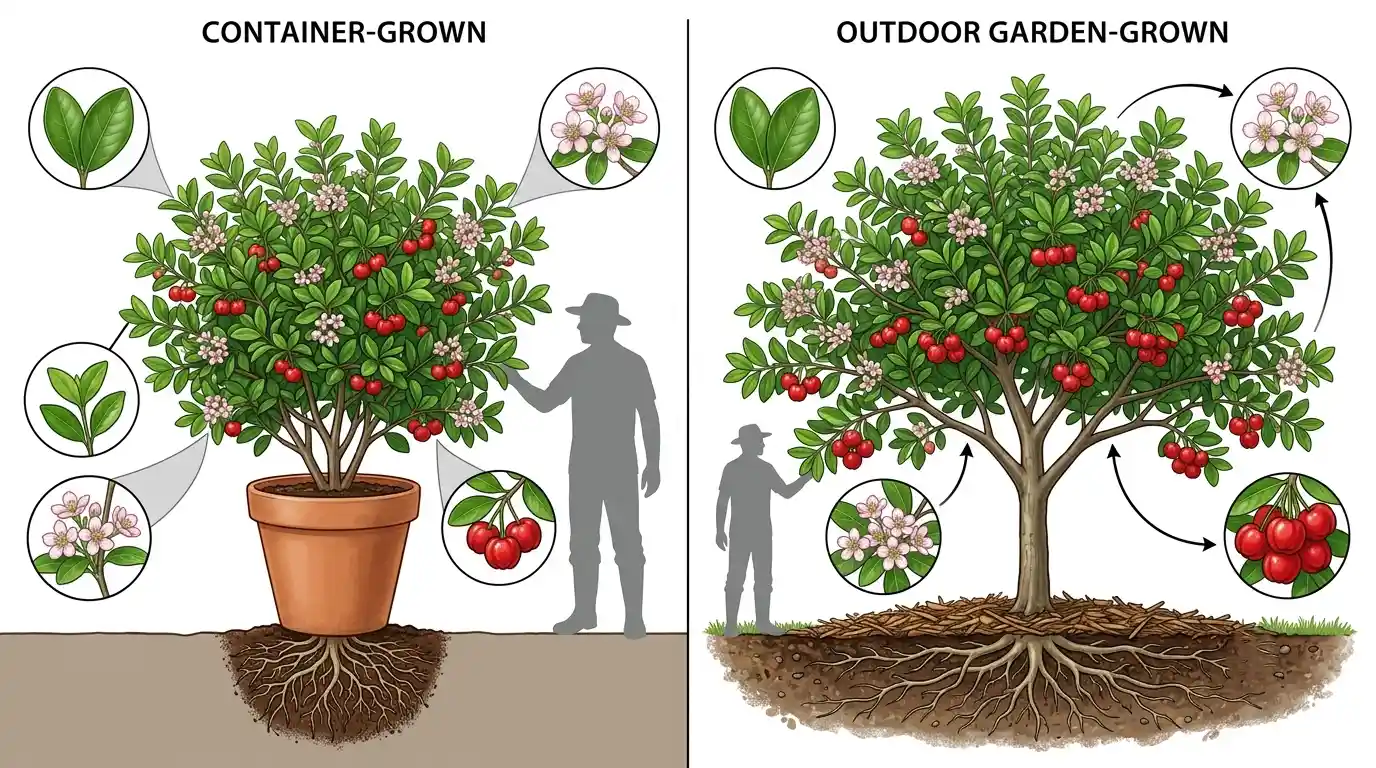
| Container growing | Limits overall height and spread |
| Frost exposure | Reduces growth and may damage branches |
In Australia, acerola is rarely grown indoors because it requires strong sunlight for healthy growth and fruit production. However, it can be grown successfully in large containers in cooler regions if protected during cold periods.
Growth Rate
Guyana cherry has a fast to moderate growth rate when grown in warm, suitable conditions.
Growth is usually strongest during:
- Warm spring and summer months
- Periods of regular rainfall or irrigation
- Active fertilising periods
Factors affecting growth include:
- Temperature
- Sunlight exposure
- Soil drainage
- Nutrient availability
- Water consistency
In tropical and subtropical Australian climates, acerola can establish quickly. Growth slows during cooler months, especially in areas with winter temperatures below its preferred range.
Where Guyana Cherry Grows Best in Australia
Guyana cherry grows best in Australia’s warm, frost-free regions. Acerola prefers tropical and subtropical environments similar to its native growing conditions.
The most suitable regions include:
- Queensland coastal areas
- Northern New South Wales
- Northern Territory tropical regions
- Warm sheltered gardens in other frost-free locations
The plant tolerates heat and humidity well but is sensitive to frost. Temperatures near freezing can damage young plants, flowers, and developing fruit. Guyana cherry is one of many productive tropical fruit trees that can be grown in suitable Australian climates. Gardeners exploring more edible options can also learn about other suitable species in our guide to Fruit Trees for Australian Gardens: Complete 2026 Guide.
Australian gardeners searching for acerola cherry Australia, acerola Australia, or Surinam cherry Australia should consider whether the plant matches their local climate before planting.
Can You Grow Guyana Cherry in Cooler Climates?
Yes, Guyana cherry can be grown in cooler climates with protection, although fruit production may be reduced.
Helpful strategies include:
- Growing the plant in a large container
- Moving containers into protected areas during frost
- Planting near north-facing walls for warmth
- Using greenhouse or sheltered growing environments
In cooler Australian regions, container cultivation allows gardeners to control temperature and protect the plant during winter.
How to Grow and Care for a Guyana Cherry Tree
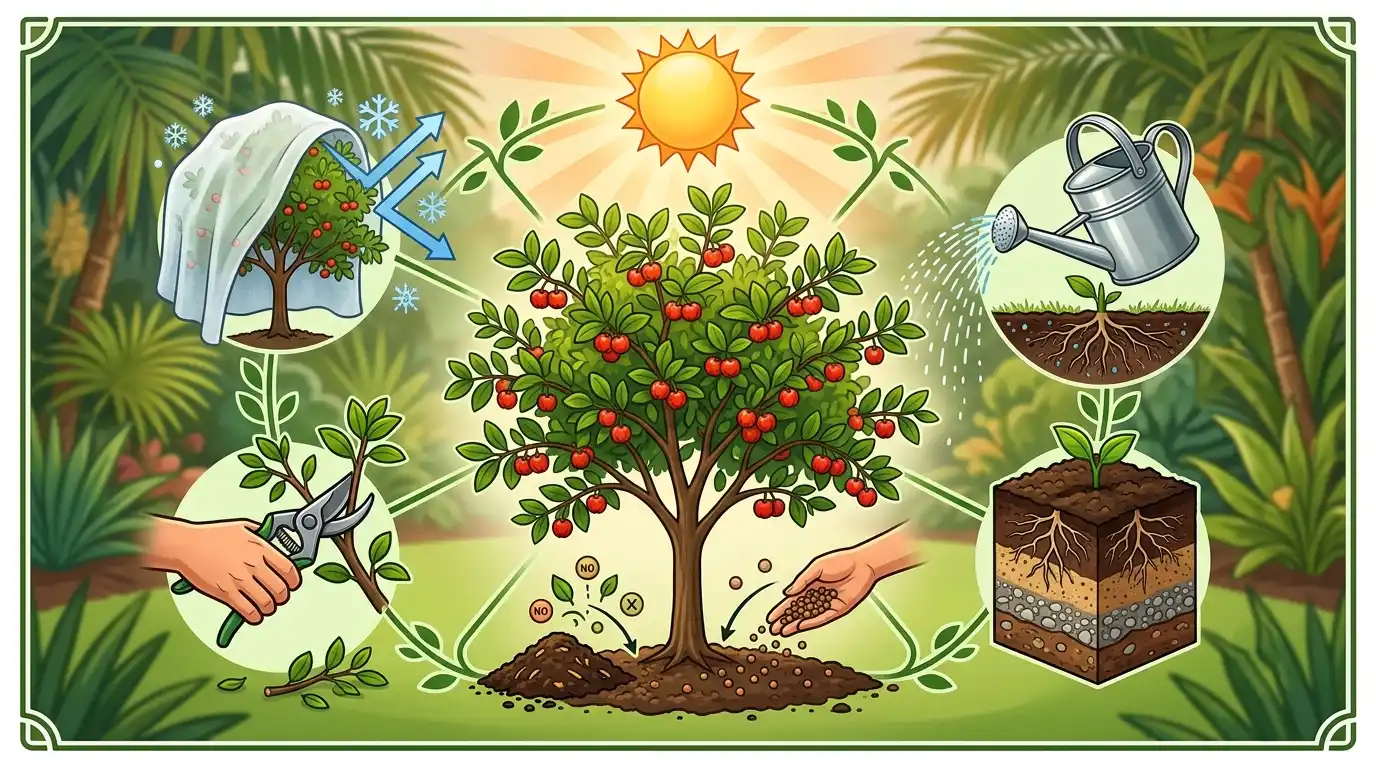
Guyana cherry is relatively easy to grow when its basic tropical requirements are met. It needs sunlight, good drainage, regular moisture during establishment, and protection from frost.
Key care requirements include:
- Light: Full sun for maximum flowering and fruiting
- Water: Regular watering when young; moderately drought tolerant once established
- Soil: Well-drained soil with slightly acidic to neutral pH
- Fertiliser: Balanced fertiliser during active growing seasons
- Pruning: Light pruning to maintain shape and encourage productive growth
- Climate: Warm conditions with protection from frost
Overwatering is a common mistake among beginners. Although acerola appreciates moisture, constantly wet soil can reduce root health and encourage problems such as yellowing leaves. Similar to other tropical and subtropical fruiting plants, Guyana cherry benefits from correct sunlight, soil preparation, and seasonal care. For gardeners interested in another warm-climate fruit tree, our Super Dwarf Cavendish Banana Growing Guide Australia explains how to grow compact tropical fruit plants successfully.
Elemo Baker recommends allowing the soil surface to dry slightly between watering while maintaining deeper moisture around established roots.
Growing Guyana Cherry from Seed
Guyana cherry can be grown from seed, but seed propagation is not always the preferred method for gardeners wanting reliable fruit production.
Important points about seeds:
- Fresh seeds have better germination potential.
- Germination can take several weeks.
- Seed-grown plants may vary in fruit quality.
- Plants may take longer to produce fruit compared with propagated varieties.
Many growers prefer cuttings or grafted plants because these methods provide more predictable fruit characteristics and earlier production.
Search terms such as Guyana cherry seeds, acerola seeds, and Barbados cherry seeds commonly refer to acerola propagation methods.
Common Guyana Cherry Growing Problems (and How to Fix Them)
Guyana cherry is generally hardy, but incorrect growing conditions can lead to several common issues.
Yellowing Leaves
Yellow leaves are often caused by:
- Overwatering
- Poor drainage
- Nutrient deficiencies
- Root stress
Solutions include:
- Improving soil drainage
- Reducing watering frequency
- Applying a balanced fertiliser if nutrients are lacking
- Checking roots for signs of damage
Poor Fruiting
Poor fruit production is commonly linked to:
- Insufficient sunlight
- Excessive shade
- Nutrient imbalance
- Pollination challenges
Planting in full sun and maintaining healthy growth usually improves flowering and fruit development.
Pest Infestations
Common pests include:
- Scale insects
- Aphids
Control methods include:
- Removing heavily affected leaves
- Using horticultural oils or insecticidal soap
- Encouraging beneficial insects
Identifying pests early is important for maintaining healthy fruit trees. Australian gardeners can also use our Garden Pest Identification Guide for Australian Gardens to recognise and manage common garden pests.
Slow Growth
Slow growth is often caused by:
- Cold stress
- Poor drainage
- Limited sunlight
- Low soil fertility
Improving warmth, soil conditions, and nutrition usually helps restore healthy growth.
Guyana Cherry Nutrition and Health Benefits
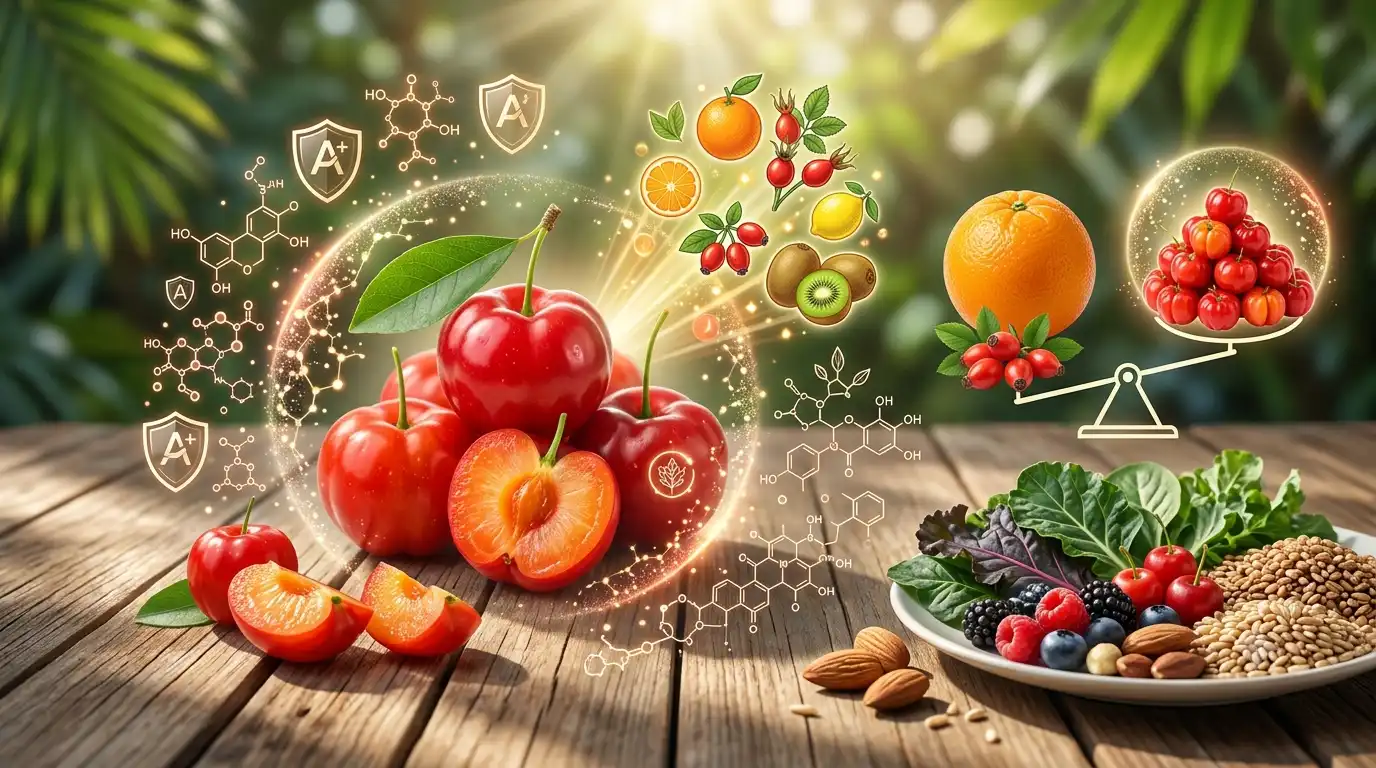
Guyana cherry, particularly acerola (Malpighia emarginata), is recognised as one of the richest natural fruit sources of vitamin C. The fruit also contains other beneficial plant compounds, including antioxidants such as carotenoids and polyphenols, which contribute to its nutritional value.
Acerola fruit is typically eaten fresh, processed into juices, or used in products where its natural vitamin C content is valued. The exact nutrient levels vary depending on factors such as variety, ripeness, growing conditions, and harvesting time.
Key nutritional features of acerola include:
- Very high vitamin C concentration compared with many common fruits
- Antioxidant compounds that help protect plant cells from oxidative damage
- Dietary fibre that supports normal digestion
- Small amounts of vitamins and minerals naturally present in the fruit
Although Guyana cherry has impressive nutritional qualities, it should be considered part of a balanced diet rather than a treatment or cure for health conditions.
Do Cherries Help Lower Cholesterol or A1C?
Cherries and cherry-like fruits may support general health as part of a nutrient-rich diet, but Guyana cherry should not be considered a specific treatment for cholesterol or blood sugar conditions.
Research on traditional sweet and tart cherries (Prunus species) has explored potential links between cherry consumption, antioxidant activity, inflammation markers, and cardiovascular health. However, acerola (Malpighia emarginata) is a different plant with a different nutritional profile.
For people managing cholesterol, diabetes, or A1C levels:
- Fruit intake should be considered within an overall balanced eating pattern.
- Portion size and total carbohydrate intake are important.
- Medical advice should be followed for managing diagnosed conditions.
Guyana cherry can provide valuable nutrients, but it does not replace prescribed treatments or professional dietary guidance.
When Should You Not Eat Cherries? / Is 20 Cherries a Day Too Much?
Guyana cherries are generally safe as a food for most people when eaten in normal amounts. However, individual tolerance can vary depending on allergies, digestive sensitivity, and overall diet.
General considerations include:
- People with fruit allergies should avoid any fruit that causes reactions.
- Eating very large quantities of fruit may contribute to excessive sugar or digestive discomfort.
- Fresh fruit should be washed properly before consumption.
- People with specific medical dietary restrictions should follow advice from a healthcare professional.
There is no universal limit that applies to everyone, as nutritional needs vary between individuals. Moderate consumption as part of a varied diet is usually the most appropriate approach.
Guyana Cherry vs Other Popular Cherries
The word “cherry” can create confusion because Guyana cherry is not the same as traditional cherries from the Prunus genus. Searches for the “best cherries in the world,” “sweetest cherry,” or “most expensive cherry” usually refer to true cherries such as sweet cherry (Prunus avium) or sour cherry (Prunus cerasus). Tropical fruit plants are often compared based on flavour, climate suitability, and garden performance. A similar comparison approach can be found in our guide covering Soursop vs Custard Apple: Key Differences Explained.
Guyana cherry belongs to a tropical fruit group and is valued mainly for its vitamin C content, adaptability in warm climates, and ornamental appearance.
| Feature | Guyana Cherry (Acerola) | Sweet Cherry | Sour Cherry |
| Botanical Name | Malpighia emarginata | Prunus avium | Prunus cerasus |
| Plant Family | Malpighiaceae | Rosaceae | Rosaceae |
| Climate Preference | Tropical and subtropical | Cool temperate | Cool temperate |
| Fruit Taste | Tart to mildly sweet | Sweet | Sour/tangy |
| Main Growing Regions | Caribbean, tropical Americas, warm climates | Europe, North America, parts of Australia | Europe and North America |
Traditional cherries often require colder winter conditions, while Guyana cherry is better suited to frost-free climates. For Australian gardeners in tropical or subtropical regions, acerola may be a more suitable choice than traditional cherry trees.
The “best” cherry depends on the purpose:
- For vitamin C content: Acerola is highly valued.
- For classic dessert cherries: Sweet cherry varieties are preferred.
- For cooking and preserves: Sour cherries are commonly used.
Fun Facts — Guyana’s National Fruit and Fruit Culture
Guyana is known for a diverse tropical fruit culture influenced by its South American and Caribbean connections. While Guyana has many important native and cultivated fruits, acerola is associated with the wider Caribbean region rather than being officially recognised everywhere as Guyana’s national fruit.
When people ask, “What is the national fruit of Guyana?” the answer is often linked to regional discussions about important local fruits, but official national symbols should be confirmed through government sources.
Guyana is rich in agricultural diversity, including tropical fruits, root crops, vegetables, and forest resources. The country’s warm climate supports the growth of many fruiting plants that are also popular among tropical gardeners worldwide.
The cultural connection behind names such as Guyana cherry, Guyanese cherry, and Caribbean cherry shows how common plant names often develop from regional use rather than strict botanical classification.
Conclusion
Guyana cherry is a useful term for tropical cherry-like fruits, most commonly referring to acerola (Malpighia emarginata), a small evergreen fruiting plant known for its exceptional vitamin C content. Although the name can also refer to Surinam cherry, understanding the botanical differences helps gardeners choose the correct plant.
For Australian gardeners, Guyana cherry is best suited to warm, frost-free areas where it can receive full sun, well-drained soil, and consistent care. With proper watering, pruning, and climate protection, acerola can provide attractive foliage, colourful fruit, and a productive addition to tropical and subtropical gardens.
FAQs
What is a Guyana cherry?
Guyana cherry is a common name usually referring to acerola (Malpighia emarginata), a tropical fruiting shrub or small tree that produces small red fruits rich in vitamin C. In some regions, the name may also refer to Surinam cherry.
Is Guyana cherry the same as acerola?
Yes, in most gardening and fruit-growing contexts, Guyana cherry refers to acerola (Malpighia emarginata). Acerola is also known as Barbados cherry and West Indian cherry, although common names can vary between regions.
Can you grow Guyana cherry in Australia?
Yes, Guyana cherry can be grown in Australia, especially in tropical and subtropical regions such as Queensland, northern New South Wales, and the Northern Territory. In cooler areas, it can be grown in containers with frost protection.
How long does it take for a Guyana cherry tree to fruit?
A Guyana cherry tree may begin producing fruit within a few years, depending on whether it is grown from seed or from a cutting/grafted plant. Propagated plants generally fruit earlier and more reliably than seed-grown plants.
Is Guyana cherry the same as Surinam cherry?
No, Guyana cherry and Surinam cherry are different plants. Guyana cherry usually refers to acerola (Malpighia emarginata) from the Malpighiaceae family, while Surinam cherry is Eugenia uniflora from the Myrtaceae family.
What does Guyana cherry taste like?
Guyana cherry, especially acerola, has a tart to slightly sweet flavour. The taste becomes sweeter as the fruit ripens but often retains a refreshing acidity.
Are Guyana cherries good for you?
Yes, Guyana cherries such as acerola provide valuable nutrients, especially vitamin C and antioxidant compounds. They can be part of a healthy balanced diet, but they should not be considered a replacement for medical treatment or professional health advice.