

Mango Tree Philippines: Carabao Mango Growing Guide
Introduction
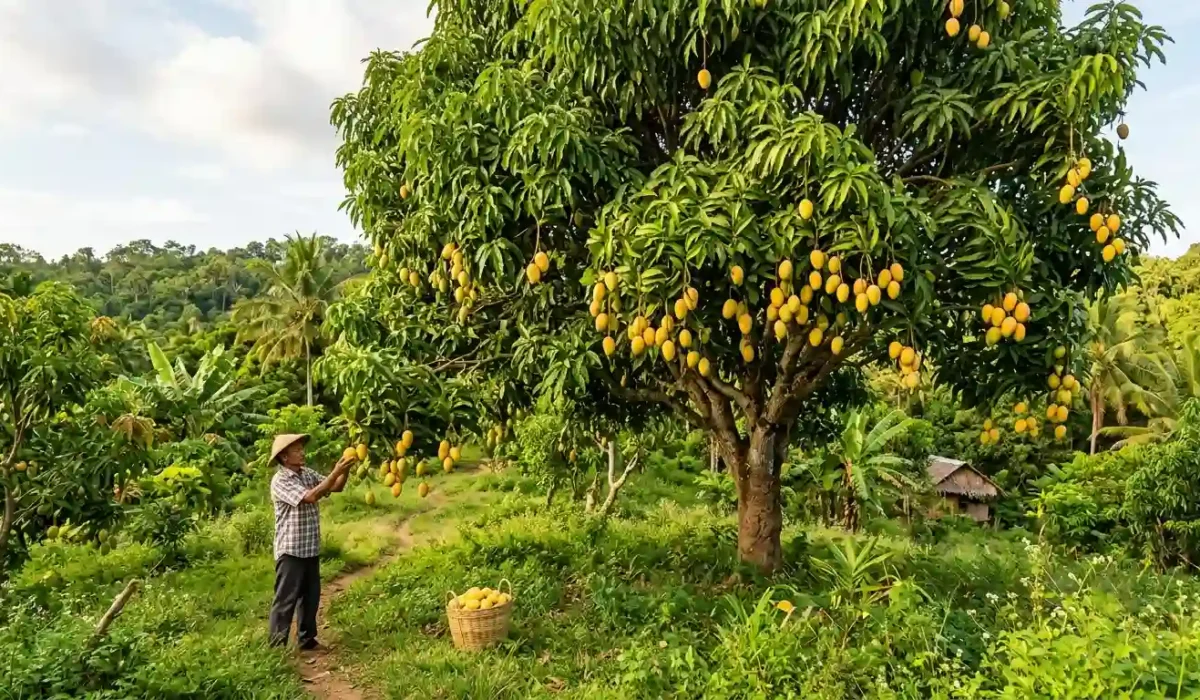
A mango tree Philippines refers mainly to the Carabao mango tree (Mangifera indica), the country’s most famous mango cultivar and national fruit. The Carabao mango is recognised worldwide for its exceptionally sweet flavour, smooth texture, and importance in Filipino agriculture and culture. A carabao mango tree produces the mangoes commonly known as Philippine mangoes or Manila mangoes, which are grown commercially and in home gardens throughout tropical regions. This guide explains how to identify a Philippine mango tree, understand its growth habits, provide proper care, learn about mango season in the Philippines, and explore its cultural significance.
Quick Summary
- The Carabao mango, also called the Philippine or Manila mango, is the Philippines’ national fruit and most widely cultivated mango variety.
- Grafted mango trees usually produce fruit within 2–3 years, while seed-grown trees often require much longer.
- The typical Philippine mango season occurs from March to July, with peak harvest commonly around April and May.
- Guimaras is widely known as the “Mango Capital of the Philippines,” while Zambales and Pangasinan are also major mango-growing areas.
- Proper sunlight, drainage, nutrition, and pruning are essential for healthy mango tree growth and fruit production.
What Is a Mango Tree in the Philippines?
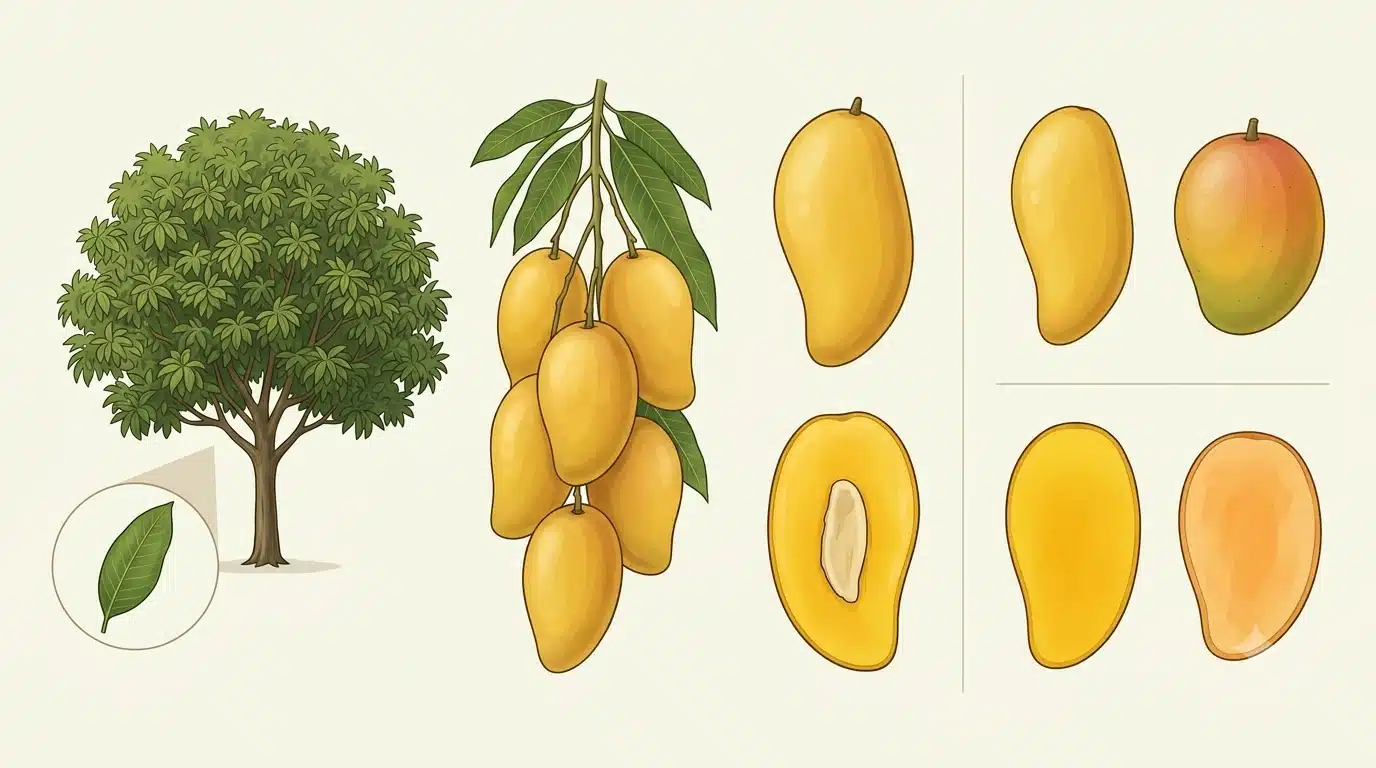
The Philippine mango tree is primarily the Carabao mango (Mangifera indica), a tropical fruit tree belonging to the family Anacardiaceae. Although many mango varieties are grown in the Philippines, the term “mango tree Philippines” commonly refers to the Carabao cultivar because it dominates local production and represents the country’s mango identity.
The Carabao mango is also called the Manila mango or Filipino mango. It produces medium to large fruits with a thin yellow skin when ripe, soft golden flesh, low fibre content, and a naturally sweet flavour. These qualities have made it one of the most valued mango varieties in international markets.
Mango trees are evergreen and can live for many decades when planted in suitable conditions. In the Philippines, they thrive because the climate provides warm temperatures, seasonal rainfall, and a dry period that encourages flowering and fruit development.
Carabao Mango vs Other Philippine Mango Varieties
The Philippines grows several mango varieties, but Carabao remains the most recognised. Other varieties are also valued for different characteristics, including flavour, size, and regional importance.
| Mango Variety | Fruit Characteristics | Sweetness | Main Growing Regions |
| Carabao Mango | Medium-sized, yellow skin, smooth flesh, low fibre | Very high sweetness | Guimaras, Zambales, Pangasinan, nationwide |
| Pico Mango | Smaller fruit, firm flesh, slightly fibrous texture | Sweet with mild acidity | Luzon regions |
| Katchamita Mango | Rounder fruit with firm texture | Sweet and aromatic | Various tropical areas |
| Huani (Kuwini) Mango | Larger fruit, stronger flavour, often eaten fresh or processed | Sweet and tangy | Southern Philippines |
The Carabao mango is generally preferred for fresh eating because of its texture and sweetness, while other varieties may be selected for processing, local markets, or specific growing conditions.
Why the Carabao Mango Is Called the Philippine National Fruit
The Carabao mango became the Philippine national fruit because of its deep connection with Filipino agriculture, cuisine, and cultural identity. It represents tropical abundance and is one of the country’s most recognisable agricultural products.
The name “Carabao mango” comes from the carabao, the Philippine national animal, reflecting the variety’s local heritage. In 1995, a Carabao mango from the Philippines was recognised by Guinness World Records for its exceptional sweetness, further strengthening its international reputation.
Beyond commercial value, the fruit plays an important role in Filipino celebrations, markets, desserts, and traditional food culture. It is often associated with hospitality because offering fresh mangoes to guests is a common expression of generosity.
Mango Tree Size and Growth Habit
Mango trees (Mangifera indica) are naturally large tropical trees that can develop broad canopies and extensive root systems. A mature carabao mango tree commonly reaches around 20–40 feet (6–12 metres) in height, although size varies depending on pruning, soil quality, climate, and growing space.
In commercial orchards, growers often control tree height through regular pruning to make harvesting easier and improve sunlight penetration. Without maintenance, mango trees can become very large with dense branches. For gardeners interested in growing mangoes in smaller spaces, a small mango tree with fruits can be a practical option, especially when choosing grafted varieties and managing tree size through regular pruning.
The term dwarf mango tree Philippines usually refers to smaller grafted mango varieties or mango trees maintained through pruning rather than naturally small-growing trees. True dwarf mango types are less common than standard mango trees. Understanding tree size, root development, and landscape placement is important when selecting large garden plants, similar to choosing suitable species discussed in our guide to the best trees and shrubs for Australian gardens.
Factors affecting mango tree size include:
- Soil quality: Deep, fertile, well-drained soil encourages stronger root development.
- Climate: Warm tropical conditions support vigorous growth.
- Pruning: Regular pruning controls height and improves airflow.
- Water availability: Consistent moisture supports growth, while excessive water can weaken roots.
For indoor or container growing, mango trees remain much smaller. However, they usually require outdoor conditions for healthy long-term growth because mangoes need strong sunlight and adequate space for root development.
Growth Rate and Time to Fruit
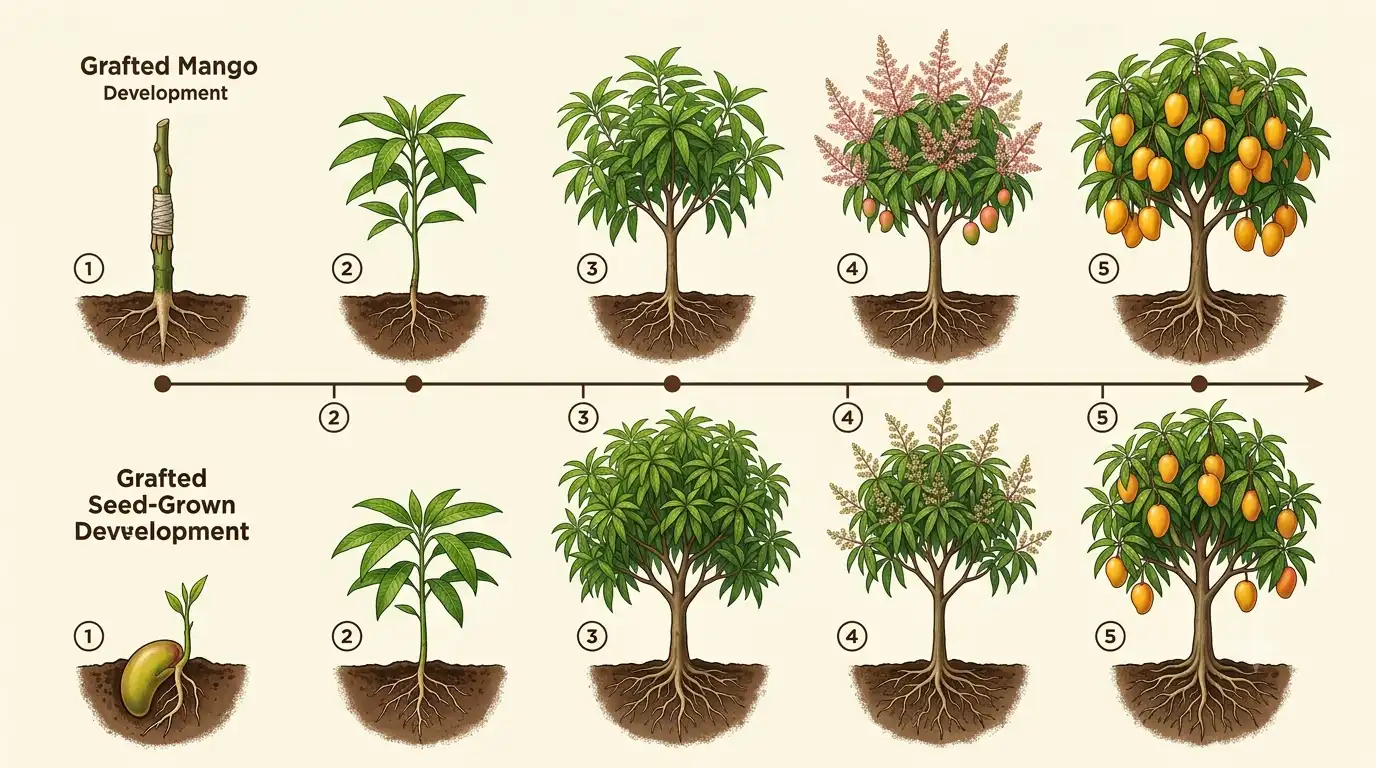
A common question among growers is: How many years does it take for a mango tree to give fruit? A grafted mango tree usually produces fruit within 2–3 years after planting, while a seed-grown mango tree may take 5–8 years or longer depending on genetics and growing conditions.
Grafted trees are preferred because they combine a productive mango variety with a strong root system, resulting in earlier and more predictable fruiting. Seed-grown trees can vary significantly because the new plant may not exactly reproduce the qualities of the parent tree.
Mango trees experience seasonal growth flushes, where new leaves and branches develop rapidly during warm, favourable conditions. Flowering generally occurs after a cooler, drier period, which helps trigger the reproductive cycle.
Growth speed depends on:
- Full sunlight exposure
- Balanced fertiliser application
- Adequate water without waterlogging
- Healthy soil structure
- Proper pest and disease management
In practical gardening experience, young mango trees often grow faster when gardeners focus on establishing a strong root system first rather than encouraging early fruit production. Healthy vegetative growth during the first years usually leads to better long-term harvests.
How to Take Care of Mango Trees in the Philippines
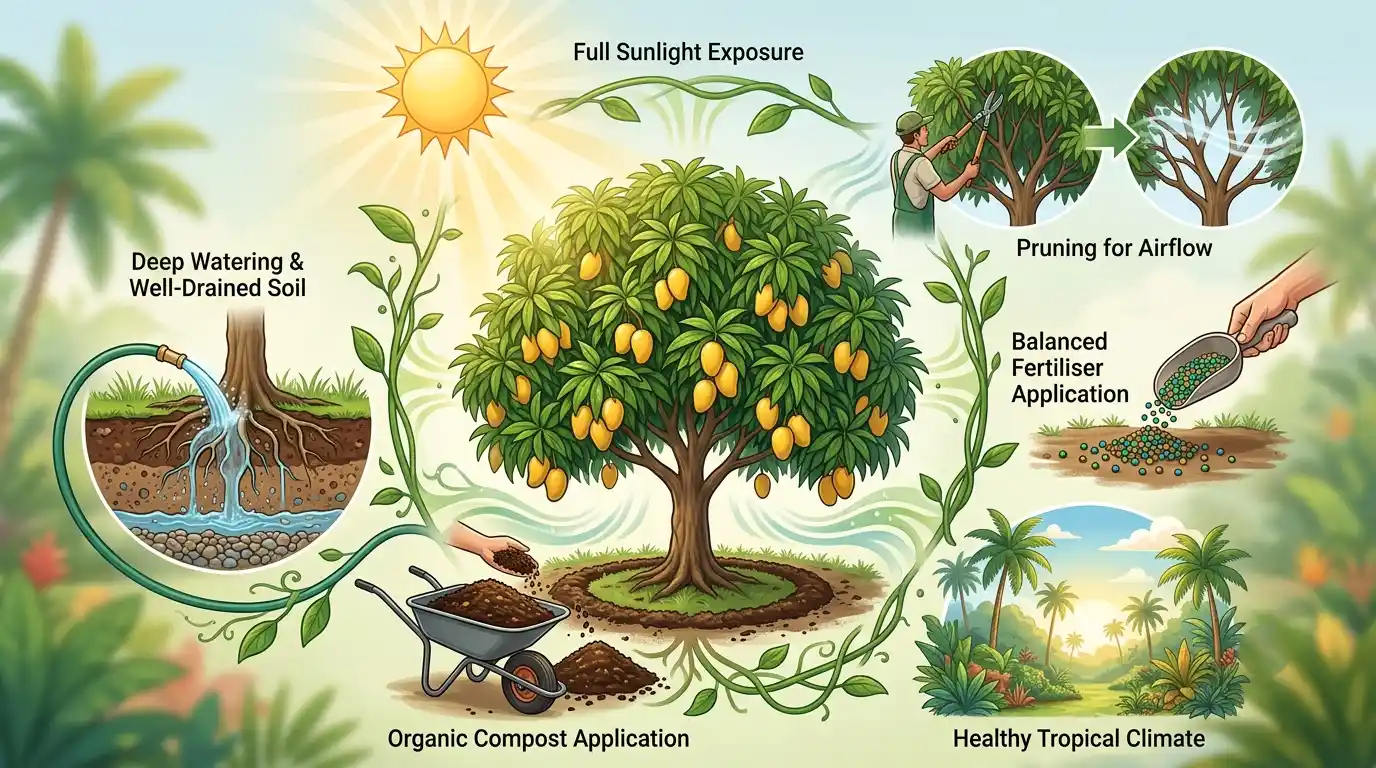
Proper care is essential for maintaining a productive carabao mango tree. Mango trees are naturally adapted to tropical climates, but they still require suitable watering, soil conditions, nutrition, pruning, and pest management to produce healthy fruit.
Watering Requirements
Mango trees prefer consistent moisture during active growth but require excellent drainage. Young mango trees need more frequent watering to establish roots, while mature trees are more drought-tolerant.
Recommended watering practices include:
- Water young trees regularly during dry periods.
- Allow the soil surface to partially dry between watering.
- Reduce watering before flowering because a drier period helps encourage flower production.
- Avoid waterlogged soil, which can cause root problems.
In our experience growing tropical fruit trees, many beginners overwater mango trees because they associate tropical plants with constant moisture. Mango trees actually perform better when their roots receive both water and oxygen.
Light Requirements
Mango trees require full sun for healthy growth and fruit production. A location receiving at least 6–8 hours of direct sunlight daily supports stronger branches, better flowering, and sweeter fruit.
Trees grown in shaded areas often develop weak growth, fewer flowers, and reduced fruit quality because mangoes depend heavily on sunlight for energy production.
Soil Preferences
Mango trees grow best in:
- Well-drained sandy loam or loamy soil
- Slightly acidic to neutral soil (approximately pH 5.5–7.5)
- Soil rich in organic matter
Heavy clay soils that retain excessive moisture should be improved with organic material and better drainage before planting.
Fertilisation and Nutrient Needs
Mango trees benefit from balanced fertilisation, especially during active growth periods. Young trees need nutrients that support leaf and branch development, while mature fruiting trees require nutrients that support flowering and fruit formation.
Common fertilisation practices include:
- Applying balanced fertiliser during growth flushes
- Adding compost or organic matter to improve soil health
- Reducing excessive nitrogen before flowering because it can encourage leaves instead of flowers
Pruning Practices
Pruning helps maintain tree structure, improve airflow, and reduce disease risk. Commercial mango growers commonly prune trees to keep canopies open and manageable.
Pruning benefits include:
- Better sunlight penetration
- Easier harvesting
- Improved air circulation
- Removal of damaged or diseased branches
Elemo Baker recommends pruning mango trees after harvest because this timing allows new growth to develop before the next flowering period.
Climate Tolerance
Mango trees are tropical and subtropical plants that prefer warm temperatures. They are sensitive to frost and prolonged cold conditions.
Ideal conditions include:
- Warm temperatures between approximately 24–30°C
- A distinct dry season for flowering
- Protection from strong cold winds
- Adequate rainfall or irrigation during growth periods
Best Growing Conditions Across Philippine Regions
Different regions of the Philippines provide suitable mango-growing environments because of their climate and soil conditions.
| Region | Growing Advantage |
| Guimaras | Warm climate and dry periods support sweet Carabao mango production |
| Zambales | Known for quality mango production and commercial orchards |
| Pangasinan | Large-scale mango farming with favourable growing conditions |
| Other tropical areas | Suitable where sunlight, drainage, and seasonal dryness are available |
Mango Season in the Philippines
The mango season Philippines typically occurs from March to July, with peak harvesting commonly happening between April and May. The exact timing depends on location, climate conditions, flowering patterns, and farm management practices.
When asking “when is mango season in the Philippines?”, the answer depends on regional conditions. Mango trees generally flower during the cooler, drier months, often around November to February, before fruits mature for harvesting several months later.
Why Mango Season Varies by Region
Mango production timing changes between regions because flowering depends strongly on environmental conditions.
Factors affecting mango season include:
- Temperature changes
- Length and intensity of the dry season
- Rainfall patterns
- Orchard management techniques
- Mango variety differences
For example, farms in Guimaras, Zambales, and Pangasinan may experience slightly different harvest periods due to local climate variations.
As of 2026, growers continue to focus on climate-aware orchard management because changing rainfall patterns can influence mango flowering and fruit development.
Where Philippine Mangoes Are Grown
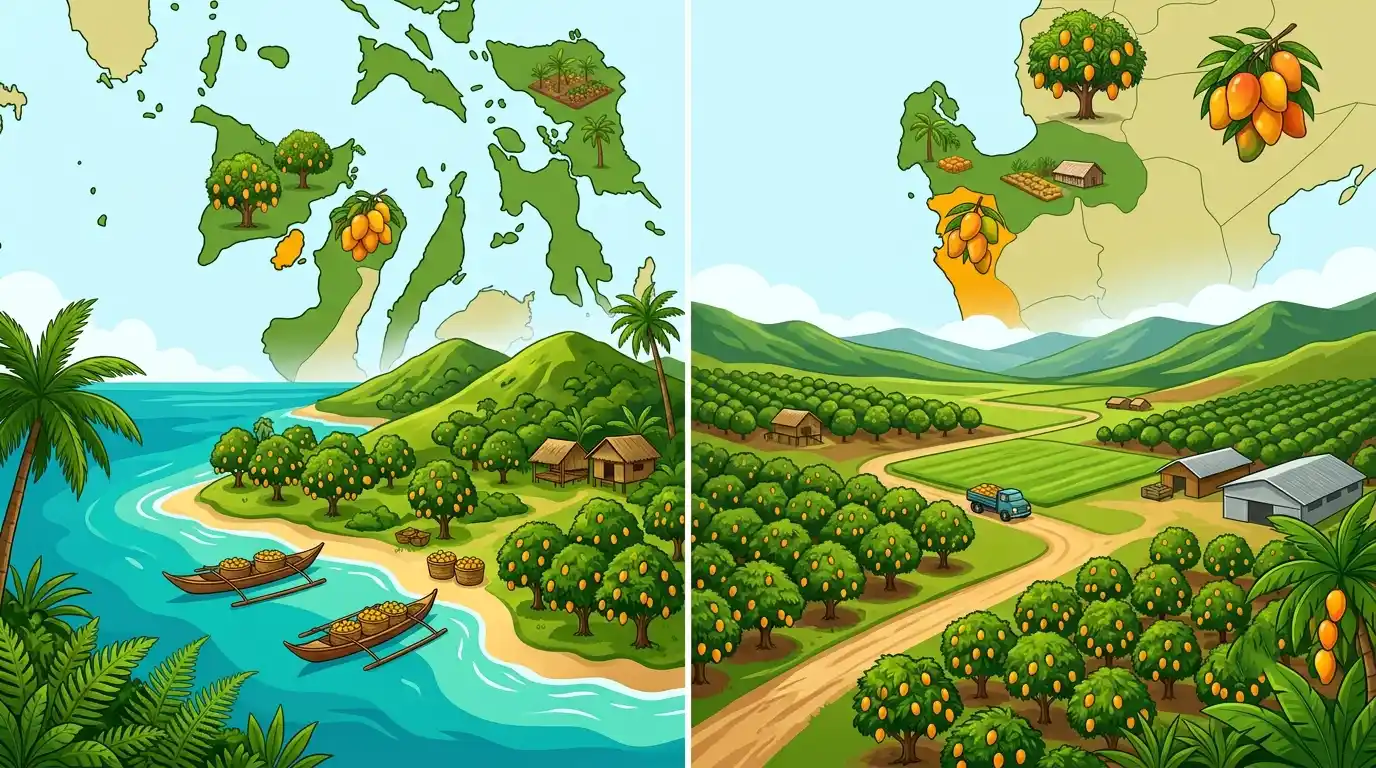
The Philippines has several important mango-growing regions, with Guimaras being the most internationally recognised.
When people ask “What is the mango capital of the Philippines?”, the answer is commonly Guimaras, a province famous for producing high-quality Carabao mangoes.
Guimaras has developed a strong reputation because of its sweet mangoes, traditional farming practices, and annual mango celebrations. However, other areas such as Zambales and Pangasinan also contribute significantly to national mango production.
Guimaras vs Zambales Mangoes
| Feature | Guimaras Mangoes | Zambales Mangoes |
| Reputation | Famous internationally for sweetness | Known for commercial quality |
| Main Variety | Carabao mango | Carabao and local strains |
| Growing Conditions | Island climate with seasonal dryness | Mainland agricultural areas |
| Special Recognition | Known as the “Mango Capital of the Philippines” | Famous for Dinamulag/Sweet Elena mango strains |
Both regions produce excellent mangoes, although flavour differences can occur due to soil, climate, and cultivation methods.
Common Mango Tree Problems and Solutions
Mango trees are generally hardy, but several issues can affect growth and fruit production. Understanding the cause is the first step toward solving these problems.
Slow Growth or Delayed Fruiting
Slow growth or delayed fruiting can happen because of:
- Growing from seed instead of using grafted plants
- Insufficient sunlight
- Poor soil nutrition
- Overwatering
- Lack of proper pruning
Solutions:
- Provide full sunlight.
- Improve soil fertility with compost and balanced nutrients.
- Choose grafted mango trees for earlier fruit production.
- Maintain proper watering practices.
A common beginner mistake is expecting seed-grown mango trees to fruit quickly. Seedlings naturally require more time and may not produce fruit identical to the parent tree.
Pests That Damage Mango Trees
Several insects can affect mango trees and fruit quality.
When asking “What bugs eat mangos?”, common pests include:
- Mango seed weevils
- Fruit flies
- Mealybugs
- Thrips
Problems caused by pests:
- Damaged fruit
- Reduced harvest quality
- Leaf damage
- Weak tree growth
Prevention methods include:
- Removing fallen fruit
- Monitoring trees regularly
- Maintaining good airflow through pruning
- Using appropriate pest management methods when needed
Identifying insects early is important for protecting fruit crops, and gardeners can learn more about common garden pests through our garden pest identification guide for Australian gardens.
Fruit Cracking, Poor Fruit Set, or Alternate Bearing
Mango fruit problems can occur due to environmental stress, irregular watering, nutrient imbalance, or natural growth cycles.
Common causes include:
- Sudden changes in soil moisture
- Poor pollination conditions
- Nutrient deficiencies
- Excessive fruit production one year followed by reduced flowering
Solutions include maintaining consistent care, improving soil health, and avoiding extreme watering changes during fruit development.
Mango Symbolism and Cultural Significance
The mango tree holds strong cultural importance in the Philippines and is widely recognised as a symbol of sweetness, hospitality, and agricultural abundance. As the Philippine national fruit, the Carabao mango represents the country’s tropical identity and the importance of farming communities that cultivate this valuable crop.
In Filipino culture, sharing mangoes with family, friends, and visitors is often associated with generosity and hospitality. The fruit’s sweetness has become connected with positive qualities such as warmth, celebration, and togetherness.
The broader mango symbolism and mango tree symbolism found in different cultures often relate to:
- Prosperity and abundance
- Love and friendship
- Fertility and growth
- Good fortune and celebration
These meanings are cultural interpretations rather than scientific properties. The symbolic value of mango trees comes from their long history, importance in agriculture, and role in traditional practices.
Mangoes, Wildlife, and Curious Facts
Mango trees attract various forms of wildlife because their flowers, leaves, and fruits provide food sources within tropical ecosystems. Understanding these interactions helps gardeners better manage mango orchards and home-grown trees.
Which Animals Are Attracted to Mangoes?
When asking “Which animals love mangoes?”, the answer includes birds, bats, monkeys, and many insects that are naturally attracted to ripe mango fruit.
Common mango visitors include:
- Birds: Many bird species feed on ripe mango flesh and may spread seeds.
- Bats: Fruit-eating bats can visit mango trees, especially at night.
- Monkeys: In some tropical regions, monkeys may eat mango fruits where they have access.
- Insects: Bees and other pollinators visit mango flowers, while some insects feed on leaves or fruit.
Gardeners can reduce unwanted damage by harvesting ripe fruit promptly, protecting valuable branches, and maintaining orchard cleanliness.
Do Snakes Go Near Mango Trees?
Snakes are not attracted to mangoes or the fruit itself. The idea that snakes “like mangoes” is a common misconception.
However, snakes may sometimes be found near mango orchards because these environments can provide:
- Shelter among branches or vegetation
- Access to rodents
- Access to small birds or other prey
Keeping orchards clean, removing unnecessary ground cover, and controlling rodents can help reduce conditions that attract snakes.
What Does the Code on a Mango Sticker (e.g., 4959) Mean?
The number found on fruit stickers, such as a PLU code like 4959, is used for product identification in the food supply chain. These codes help retailers and suppliers identify produce varieties and growing information.
A mango sticker code does not indicate a special Philippine designation, sweetness level, or guarantee of quality. It is simply a classification system used for commercial produce handling.
Mango Nutrition: Common Questions, Answered Responsibly
Mangoes are popular worldwide because of their flavour and nutritional content. They provide carbohydrates, fibre, vitamins, minerals, and plant compounds that contribute to a balanced diet.
Nutrition information should be understood generally, and individual health concerns should always be discussed with a qualified health professional.
Is Mango Good for Cholesterol and Heart Health?
Mango may support a balanced diet because it contains dietary fibre and nutrients such as vitamin C and other plant compounds. Fibre is generally recognised as an important part of healthy eating patterns.
However, claims that mango directly lowers cholesterol or “flushes cholesterol out of the body” are too specific without considering an individual’s overall diet, genetics, lifestyle, and health conditions.
A healthy approach includes:
- Eating a variety of fruits and vegetables
- Maintaining a balanced diet
- Following professional medical advice for cholesterol management
What Organ Benefits Most From Eating Mango?
Mango does not benefit only one specific organ. It provides nutrients that support general nutritional needs.
Mango contains:
- Vitamin A-related compounds: Important for normal body functions.
- Vitamin C: Supports normal immune system function.
- Dietary fibre: Helps support normal digestive health.
Rather than focusing on one organ, mango is best viewed as one nutritious fruit within an overall balanced eating pattern.
Is It True You Shouldn’t Eat Mango at Night?
The belief that mango should not be eaten at night is mainly a traditional or cultural belief rather than a widely supported scientific rule.
For most people, eating mango at night is not automatically harmful. Factors such as portion size, total daily food intake, and personal digestion preferences matter more than the time of day.
This myth highlights the difference between:
- Folklore: Traditional beliefs passed through generations.
- Evidence-based nutrition: Guidance supported by scientific research.
Fastest-Growing and Easiest Fruit Trees Compared to Mango
Mango trees are rewarding fruit trees, but they are not among the fastest fruit producers. Growers looking for quicker harvests may choose fruit trees that mature earlier. Mango trees are one option among many edible plants, and gardeners exploring suitable fruiting species can also compare them with other fruit trees for Australian gardens based on climate, growth rate, and maintenance needs.
The question “What is the quickest fruit tree to grow?” depends on the species and growing conditions, but papaya, banana, and calamansi generally produce fruit sooner than mango. Other popular citrus fruit trees, such as imperial mandarins, are also commonly grown for home harvests, and understanding their fruit characteristics can help gardeners choose suitable options.
| Fruit Tree Type | Typical Time to First Fruit |
| Papaya | Around 8–18 months |
| Banana | Around 9–18 months |
| Calamansi | Around 2–3 years |
| Grafted Mango | Around 2–3 years |
| Seed-grown Mango | Around 5–8+ years |
Mango trees require more patience because they invest significant energy into developing a large structure before producing consistent harvests. However, mature mango trees can provide decades of fruit production when properly maintained.
Conclusion
The mango tree Philippines represents one of the most important fruit trees in Filipino agriculture, with the Carabao mango standing as the country’s most recognised and valued cultivar. Known for its exceptional sweetness, cultural importance, and commercial success, the Carabao mango tree continues to define Philippine mango production.
Growing a mango tree requires patience, proper sunlight, well-drained soil, balanced nutrition, and thoughtful pruning. Grafted trees can produce fruit within a few years, while seed-grown trees require more time and uncertainty. For home gardeners and mango enthusiasts, understanding the tree’s growth habits and care requirements is the key to enjoying healthy harvests of this iconic tropical fruit.
Frequently Asked Questions
Are there mango trees in the Philippines?
Yes, mango trees are widely grown throughout the Philippines. The most important variety is the Carabao mango (Mangifera indica), which is recognised as the country’s national fruit and is cultivated in regions including Guimaras, Zambales, and Pangasinan.
How many years does it take for a mango tree to give fruit?
A grafted mango tree usually produces fruit within 2–3 years after planting. Seed-grown mango trees generally take longer, often around 5–8 years or more, depending on variety, climate, and growing conditions.
What is the mango capital of the Philippines?
Guimaras is popularly known as the “Mango Capital of the Philippines” because of its famous Carabao mango production and reputation for producing exceptionally sweet mangoes.
When is mango season in the Philippines?
The Philippine mango season usually runs from March to July, with peak harvest commonly occurring around April and May. Timing varies depending on region, weather patterns, and orchard management.
How do you take care of a mango tree in the Philippines?
A mango tree needs full sunlight, well-drained soil, regular but controlled watering, balanced fertilisation, and pruning to maintain healthy growth. Reducing water before flowering can help support flower development.
What is the difference between a Carabao mango and other mango varieties?
The Carabao mango is known for its very sweet flavour, smooth flesh, low fibre content, and importance as the Philippine national fruit. Other varieties, such as Pico and Katchamita, differ in size, texture, flavour, and growing regions.
Do animals or pests commonly affect mango trees?
Yes, mango trees can be affected by animals and pests. Birds, bats, and insects may feed on fruit, while pests such as mango seed weevils, fruit flies, mealybugs, and thrips can damage crops. Proper monitoring and orchard care help reduce problems.