
Most Masculine Flower: Meaning, Symbolism & Best Choices
Introduction
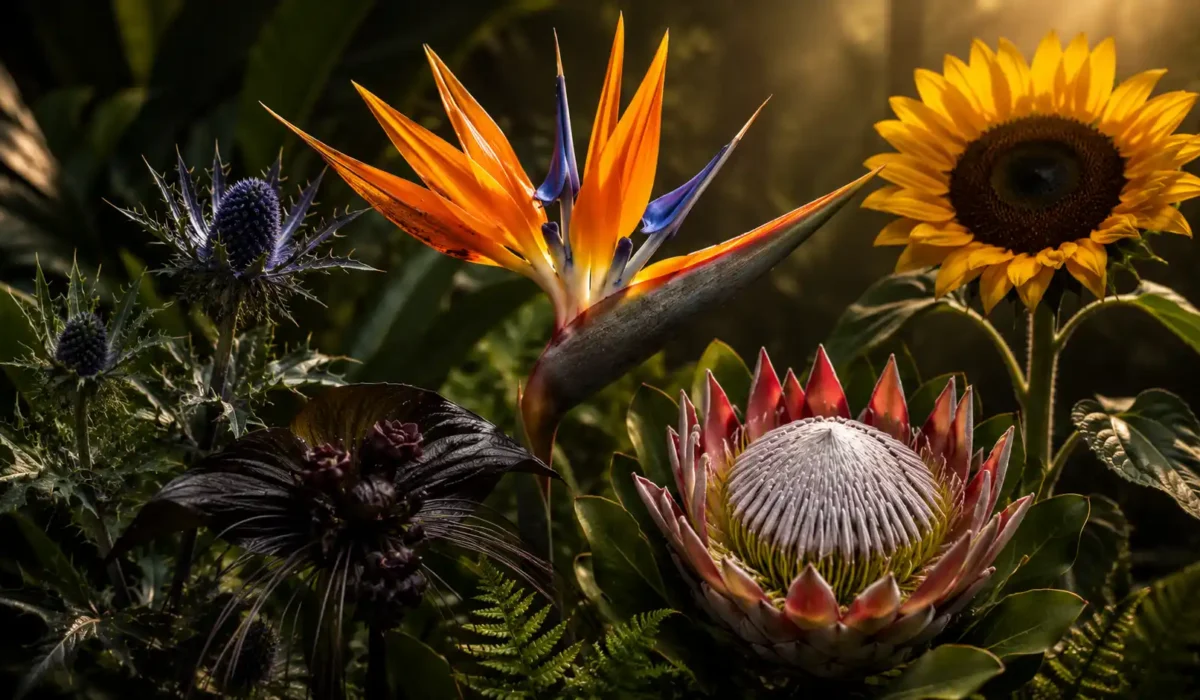
The most masculine flower is widely considered to be the Bird of Paradise because of its bold architectural form, vibrant colours, and long-standing symbolism of confidence, strength, and individuality. In floral symbolism, masculinity is not a botanical characteristic but a cultural interpretation based on features such as strong structure, dramatic shapes, deep colour palettes, and historical associations with courage, resilience, and leadership rather than delicacy. This article explains which flowers are traditionally regarded as masculine, why they have earned that reputation, and what they symbolise. It also explores the difference between symbolic masculinity and the biological characteristics of flowering plants, helping readers understand both the cultural and scientific perspectives.
Quick Summary
- The most masculine flower is widely considered to be the Bird of Paradise due to its bold, structural, sword-like form.
- Masculine flowers are typically defined by strong colours such as deep red, orange, and black, along with rigid structure and symbolism connected to strength, courage, or power.
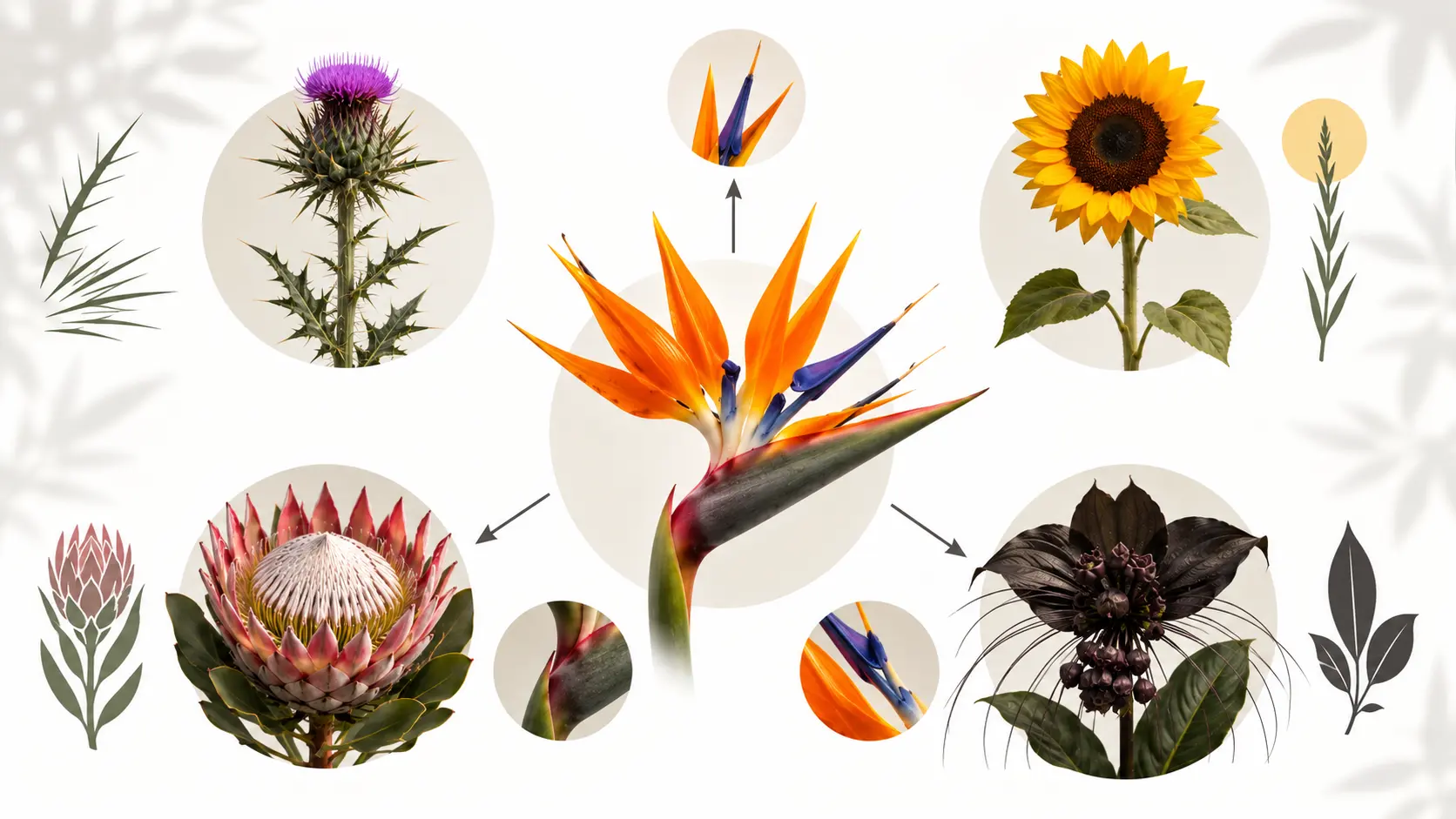
- Other commonly recognised masculine flowers include thistle, king protea, sunflower, and black bat flower.
- Floral masculinity is a cultural and symbolic concept rather than a botanical one, as most flowering plants contain both male and female reproductive organs.
What Makes a Flower “Masculine”?
A flower is considered “masculine” because of its symbolic appearance and cultural associations rather than its biological sex. Across different cultures and floral traditions, blooms with bold silhouettes, upright growth habits, striking colours, and architectural forms are more likely to be associated with qualities such as strength, resilience, courage, and confidence.
These associations have developed through art, mythology, national symbolism, and traditional flower meanings. For example, rugged flowers with strong stems often symbolise endurance, while dramatic blooms may represent leadership or individuality.
It is important to distinguish symbolic masculinity from plant biology. Most flowers naturally contain both male and female reproductive organs, making their symbolic gender entirely separate from their botanical characteristics.
Colour and Symbolism
Colour strongly influences how flowers are perceived.
Deep, saturated tones have historically been linked with authority, power, and determination, making them more commonly associated with masculine symbolism than softer pastel shades.
Colours frequently associated with masculine flowers include:
- Deep red for courage and determination.
- Burnt orange for confidence and vitality.
- Dark purple for dignity and achievement.
- Black or near-black tones for mystery, authority, and strength.
- Rich green foliage for stability and resilience.
High-contrast flowers also create a visually stronger impression. Bold colour combinations naturally draw attention and reinforce the structural appearance of the bloom.
In our experience selecting flowers for contemporary gardens and floral arrangements, darker colour palettes often create a stronger visual impact than pastel combinations when the goal is to convey confidence or sophistication.
Shape and Structure
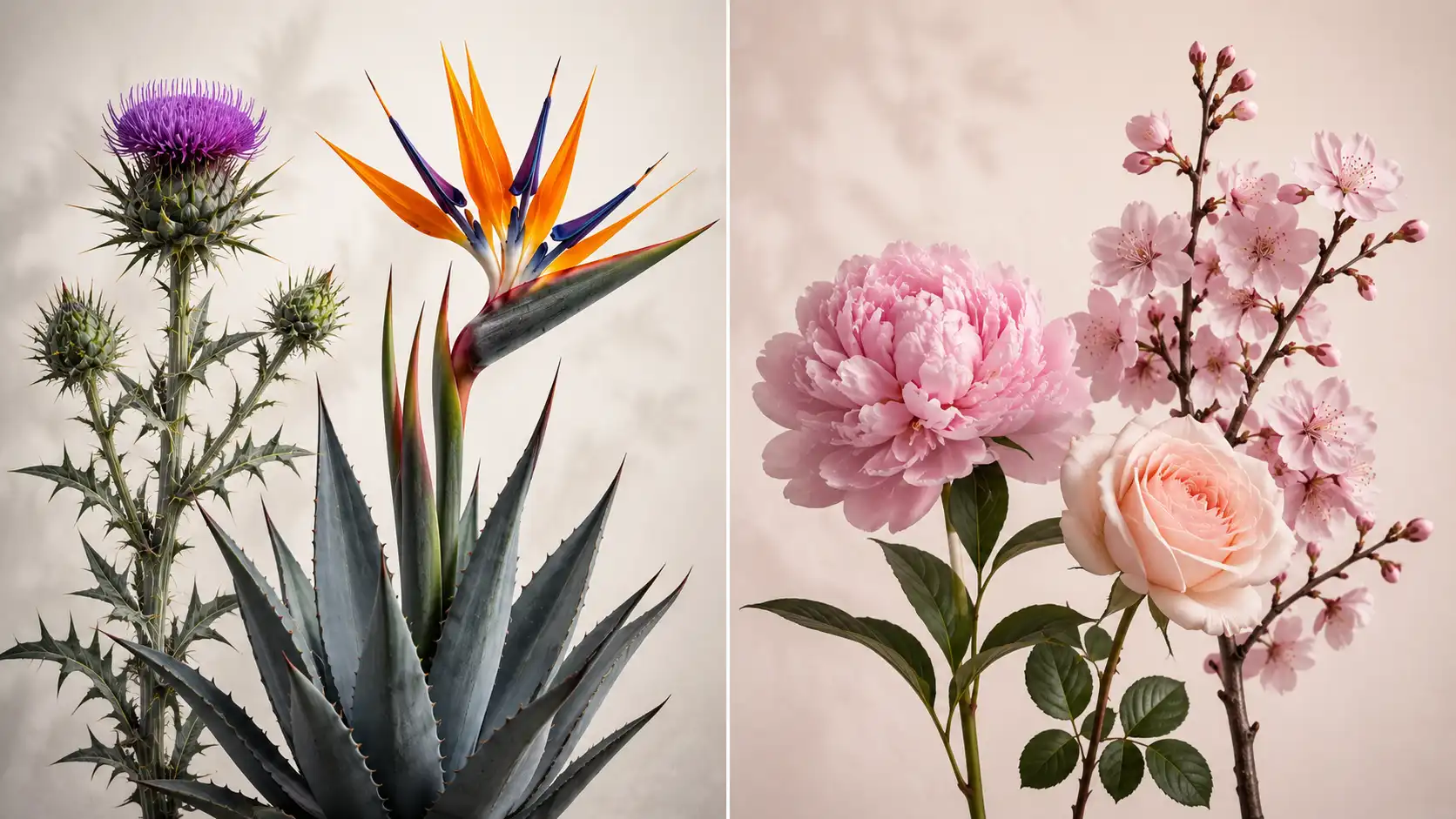
The physical structure of a flower contributes just as much to its masculine symbolism as its colour.
Flowers commonly viewed as masculine often feature:
- Thick, upright stems.
- Angular or pointed petals.
- Sculptural or architectural growth habits.
- Spiky or textured flower heads.
- Large, commanding blooms.
Examples include the rugged spikes of the thistle and the dramatic form of the Bird of Paradise. Their strong geometry creates an impression of resilience and stability.
By comparison, flowers traditionally regarded as feminine, such as peonies or many roses, typically have rounded petals, softer forms, and layered blossoms that are culturally associated with romance or gentleness.
These symbolic interpretations are shaped by tradition and aesthetics rather than science, which is why the same flower may carry different meanings across cultures.
The Most Masculine Flower — Top Contenders
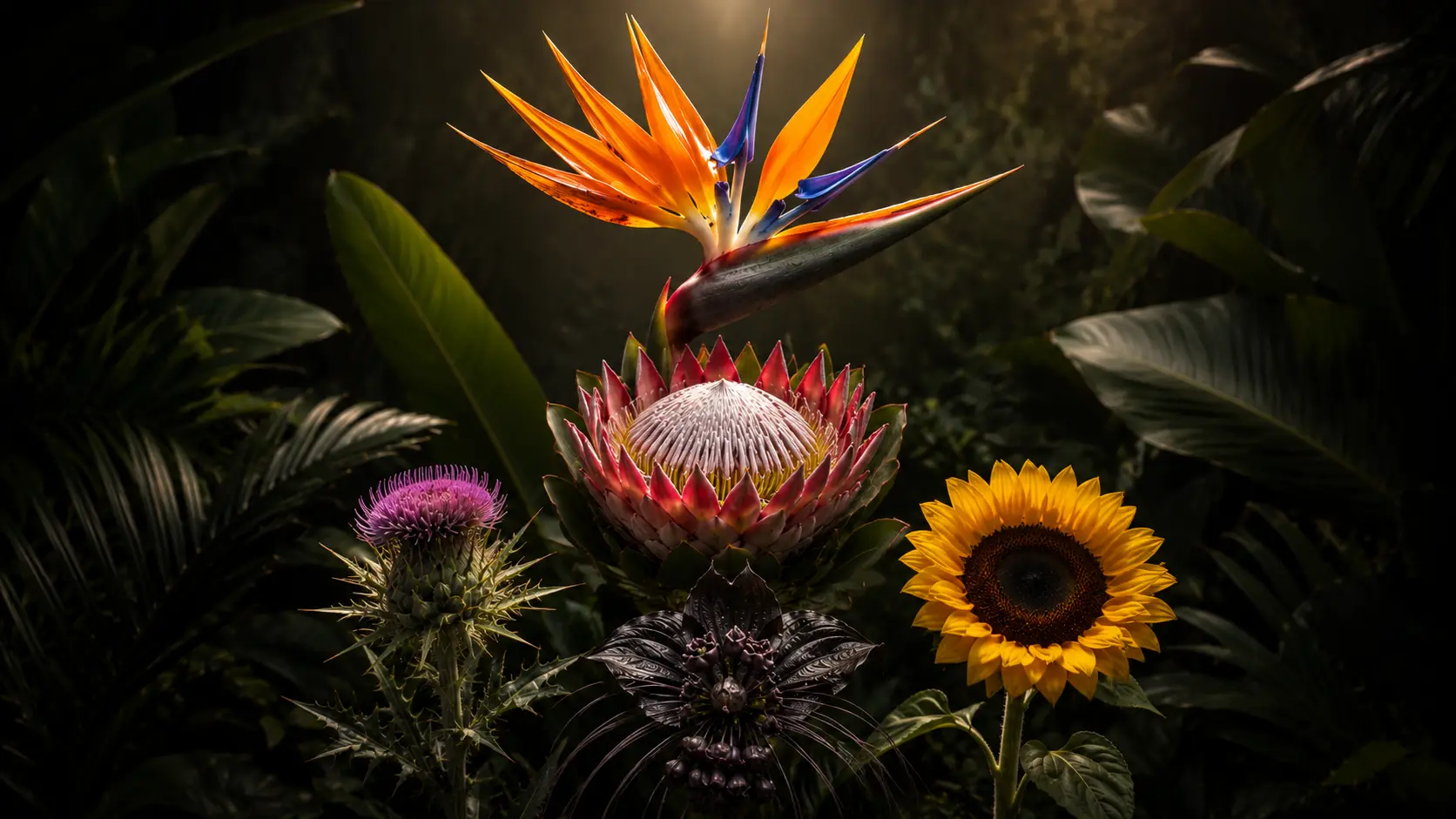
Several flowers are regularly recognised for their bold appearance and powerful symbolism. While opinions differ, the following blooms are among the strongest contenders for the title of the most masculine flower.
Bird of Paradise is also commonly included in broader discussions of structural greenery, as seen in guides like Masculine Plants Guide: Best Indoor & Outdoor Options, which explores other strong, architectural plant choices for indoor and outdoor spaces.
Bird of Paradise
The Bird of Paradise (Strelitzia reginae) is widely regarded as the most masculine flower.
Its dramatic, sculptural bloom resembles the head of an exotic bird, while its sword-like leaves and upright stems create an unmistakably architectural appearance.
It has become associated with:
- Confidence.
- Individuality.
- Achievement.
- Freedom.
- Bold self-expression.
The combination of vivid orange and blue flowers with rigid structure makes it stand out in gardens, landscaping, and floral arrangements.
Elemo Baker recommends Bird of Paradise for gardeners wanting a statement plant that combines striking appearance with relatively straightforward care in warm Australian climates.
Thistle
The thistle is one of history’s strongest symbols of resilience.
Its sharp spines and hardy nature have made it a long-standing emblem of defence, determination, and endurance. It is especially recognised as the national emblem of Scotland, where it symbolises courage and protection.
Characteristics that reinforce its masculine symbolism include:
- Spiky flower heads.
- Rugged growth habit.
- Exceptional toughness.
- Ability to thrive in difficult conditions.
Rather than delicate beauty, the thistle represents strength earned through resilience.
King Protea
The King Protea (Protea cynaroides) is admired for its enormous flower head and architectural structure.
Native to South Africa but successfully grown in suitable Australian climates, it symbolises:
- Courage.
- Diversity.
- Transformation.
- Inner strength.
Its thick stems, leathery foliage, and substantial bloom give it a commanding presence unlike many traditional ornamental flowers.
In our experience growing proteas, patience is rewarded. Although they establish slowly, mature plants produce some of the most impressive flowers available for both gardens and long-lasting cut arrangements.
Sunflower
The sunflower (Helianthus annuus) is often associated with positivity, but its physical characteristics also contribute to a masculine image.
Its tall stems, large flower heads, and upright growth symbolise:
- Loyalty.
- Vitality.
- Strength.
- Optimism.
Unlike more delicate flowering plants, sunflowers project stability and confidence through their size and structure.
Their ability to follow sunlight throughout the day has also connected them with perseverance and purpose in many cultural traditions.
Black Bat Flower / Black Dahlia
Dark flowers carry an entirely different symbolic message from brightly coloured blooms.
The Black Bat Flower (Tacca chantrieri) and dark varieties of Black Dahlia are frequently associated with:
- Mystery.
- Power.
- Authority.
- Sophistication.
- Independence.
Their near-black colouring creates dramatic contrast, making them popular choices for bold floral displays and contemporary gardens.
Although these flowers represent strength through colour rather than physical ruggedness, they remain among the most distinctive masculine flowers in symbolic floral language.
| Flower | Why It’s Considered Masculine | Key Symbolism |
| Bird of Paradise | Bold architectural form | Confidence, individuality |
| Thistle | Rugged, defensive structure | Resilience, defence |
| King Protea | Large, commanding bloom | Courage, diversity |
| Sunflower | Tall, strong stem | Loyalty, vitality |
| Black Bat Flower / Black Dahlia | Deep, dramatic colour | Power, mystery |
Masculine Flowers and What They Symbolise
Flowers associated with masculinity are valued for the qualities they represent rather than their biological characteristics. While symbolism varies between cultures, certain blooms consistently represent strength, courage, loyalty, and resilience because of their appearance, history, or traditional meanings.
Strength
Flowers that symbolise strength often have robust growth habits, upright stems, or the ability to thrive in challenging conditions.
Common examples include:
- Thistle – Represents resilience, defence, and perseverance.
- Oak-leaf geranium (Pelargonium quercifolium) – Symbolises endurance and stability through its hardy nature.
- King Protea – Associated with courage, transformation, and inner strength.
These flowers are frequently chosen for gardens and floral arrangements intended to communicate determination or resilience.
Courage
Flowers connected with courage often feature bold colours or upright forms that command attention.
The most recognised example is:
- Red Gladiolus – Traditionally symbolises courage, honour, integrity, and strength of character. Its tall flower spikes have long been associated with warriors and victory.
Power and Mystery
Dark-coloured flowers naturally evoke authority, sophistication, and intrigue.
Popular examples include:
- Black Dahlia – Represents mystery, personal strength, and elegance.
- Black Bat Flower – Symbolises individuality, confidence, and the unknown because of its dramatic appearance.
Loyalty and Vitality
Some masculine flowers communicate reliability and positive energy.
The most notable example is:
- Sunflower – Represents loyalty, vitality, optimism, and steadfast devotion through its tall stems and consistent movement towards sunlight.
Masculine Flowers and Their Symbolic Meaning
| Flower | Symbolic Meaning | Visual Trait |
| Bird of Paradise | Confidence, individuality | Bold, sculptural |
| Thistle | Resilience, defence | Spiky, rugged |
| King Protea | Courage, diversity | Large, architectural |
| Sunflower | Loyalty, vitality | Tall, strong stem |
| Black Dahlia | Power, mystery | Deep, dark tone |
Masculine vs Feminine Flowers — What’s the Difference?
Masculine and feminine flowers are distinguished by cultural symbolism rather than botanical science. These interpretations have developed through art, literature, mythology, and traditional floral meanings. For a broader overview of visually striking flowering species used in landscaping, see Flowering Trees Australia: Best Species Guide, which highlights how structural blooms influence garden aesthetics.
Comparison Block
| Masculine Flowers | Feminine Flowers |
| Bird of Paradise | Rose |
| King Protea | Peony |
| Thistle | Cherry Blossom |
| Gladiolus | Camellia |
| Sunflower | Sweet Pea |
Traditionally, feminine flowers are associated with:
- Softness
- Romance
- Beauty
- Grace
- Delicacy
Examples include roses, peonies, cherry blossoms, and camellias, all of which feature rounded petals and softer forms.
Masculine flowers are more commonly associated with:
- Strength
- Confidence
- Courage
- Leadership
- Resilience
They generally feature stronger architectural shapes, upright stems, and bold colours.
It is worth emphasising that these distinctions are entirely symbolic. Botanically, flowers are not masculine or feminine because of their appearance, and personal preference should always take precedence over traditional symbolism.
Do Flowers Actually Have a Gender? (The Botanical Reality)
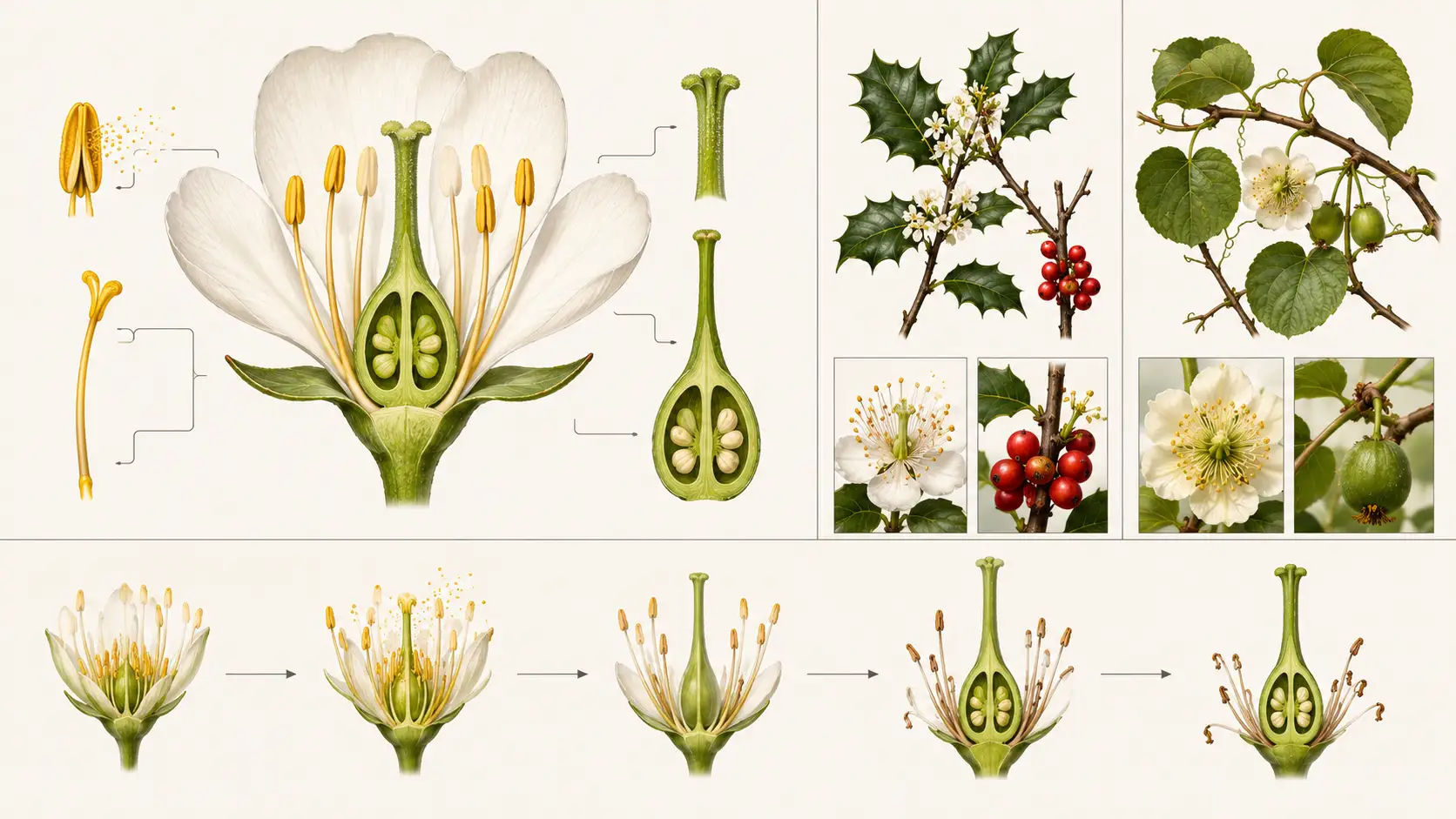
- From a botanical perspective, flowers are not classified as masculine or feminine based on their appearance.
- Most flowering plants produce what botanists call perfect flowers, meaning each bloom contains both male and female reproductive organs.
- The male reproductive structure is the stamen, which produces pollen.
- The female reproductive structure is the pistil, which receives pollen and develops seeds after fertilisation.
- This means that the majority of flowering plants possess both reproductive structures within a single flower.
- Some plants, however, are dioecious, meaning individual plants are either male or female.
For a broader understanding of how plants are classified and designed in landscaping, you can explore this comprehensive guide on Australian Plants Guide: Indoor Houseplants & Garden Design for a deeper look at native and ornamental plant selection in Australia. For a scientific breakdown of plant reproduction structures, see Plant_reproductive_morphology, which explains how male and female reproductive parts function in flowering plants.
Examples include:
- Holly
- Kiwi vines
- Willow
- Ginkgo
In these species, separate male and female plants are required for reproduction.
Some flowering plants also demonstrate forms of sequential hermaphroditism, where reproductive function changes during development.
Certain orchids, aroids, and related plant groups may produce male flowers before female flowers or vice versa. This natural process helps improve pollination efficiency and genetic diversity.
This phenomenon is entirely separate from the cultural idea of a “masculine flower.”
The phrase “queer flower” is occasionally used in botanical or cultural discussions to describe plants that do not fit simple binary reproductive systems or to explore symbolic interpretations of plant diversity. It is not a formal botanical classification but an informational term used in specific academic and cultural contexts.
As of 2026, botanists continue to recognise the remarkable diversity of flowering plant reproductive systems, reinforcing that symbolic flower meanings and plant biology are two distinct concepts.
Flowers and Names Associated With Masculinity
Although flower-inspired names have historically been more common for girls, several names connected with plants and flowers have long been used for boys and men.
Examples include:
- Basil – Derived from the herb and flowering plant, also linked with royalty through its Greek origin.
- Florian – Originating from the Latin floris, meaning flower.
- Jasper – While primarily associated with the gemstone, it also has historical links with botanical naming traditions.
Flower-inspired masculine names tend to emphasise history, strength, or nobility rather than delicate floral imagery.
This differs from names such as Rose, Lily, Daisy, or Violet, which have traditionally become associated with feminine naming conventions.
Today, floral names are increasingly chosen for their symbolism rather than traditional gender expectations, allowing greater flexibility in personal naming choices.
Common Mistakes When Choosing “Masculine” Flowers
Choosing flowers to create a masculine aesthetic involves more than selecting darker colours.
Some of the most common mistakes include:
- Focusing only on colour. Structure and overall form often contribute more to masculine symbolism than colour alone.
- Ignoring foliage. Architectural greenery, succulents, and bold foliage plants can strengthen masculine floral displays.
- Choosing overly delicate blooms. Small, ruffled flowers may conflict with a bold, structured design if the goal is to create a traditionally masculine arrangement.
- Overcrowding arrangements. Simpler designs with fewer statement flowers often produce a stronger visual impact.
- Overlooking symbolism. Selecting flowers purely for appearance without considering their traditional meanings may weaken the intended message.
In our experience creating garden displays, combining sculptural flowers with textured foliage usually produces a more balanced and visually striking result than relying on flower colour alone.
Care Tips for Popular Masculine Flowers
Plant Size
The Bird of Paradise is a large evergreen perennial that typically reaches 1.5–2 metres indoors under favourable conditions. Outdoors in warm climates, mature plants can exceed 2 metres in height with an equally impressive spread.
The King Protea grows as a shrub and can reach 2–4 metres outdoors in suitable Australian climates, depending on the variety and growing conditions.
Growth Rate
Bird of Paradise has a moderate to slow growth rate indoors, particularly when grown in containers. Plants grow much faster outdoors where they receive abundant warmth, sunlight, and humidity.
King Protea grows slowly to moderately, with growth largely influenced by climate, soil quality, and drainage. Although establishment takes time, mature shrubs reward gardeners with spectacular blooms.
Care Guide
Bird of Paradise
- Water when the top few centimetres of soil become dry.
- Grow in bright light with several hours of direct sunlight each day.
- Use fertile, well-drained potting mix.
- Feed during spring and summer with a balanced fertiliser.
- Protect from frost in cooler regions.
King Protea
- Plant in full sun.
- Use well-drained, low-phosphorus soil suitable for Australian native plants.
- Water regularly during establishment, then only during prolonged dry periods.
- Avoid excessive fertiliser, particularly products high in phosphorus.
- Prune lightly after flowering to encourage healthy new growth.
Indoor-grown Bird of Paradise is often featured in wellness-focused plant discussions, similar to insights found in Benefits of Indoor Plants: 10 Science-Backed Reasons, which explains how large structural indoor plants improve air quality and wellbeing. King Protea is often compared with other large structural flowering plants such as magnolias, which are covered in Fast Growing Magnolia Australia: Best Varieties & Care Guide, especially in landscape design contexts.
Elemo Baker recommends allowing proteas to establish naturally rather than encouraging rapid growth with heavy fertiliser applications, as healthy root development produces stronger flowering plants over time.
Troubleshooting Common Problems
Even hardy plants can develop problems if growing conditions are unsuitable.
Yellowing Leaves on Bird of Paradise
The most common causes include:
- Overwatering.
- Poor drainage.
- Insufficient sunlight.
- Waterlogged roots.
Allow the soil to partially dry between watering and ensure containers have effective drainage holes.
Poor Flowering on Protea
Proteas often fail to bloom because of:
- Excess phosphorus.
- Too much nitrogen fertiliser.
- Insufficient sunlight.
- Overly rich soils.
Using fertilisers formulated specifically for Australian native plants usually produces better flowering results.
Pest Issues
Common pests affecting these plants include:
- Aphids.
- Scale insects.
- Mealybugs.
- Spider mites.
Organic control methods include:
- Washing foliage with water.
- Applying horticultural oil.
- Using insecticidal soap where appropriate.
- Encouraging beneficial insects such as ladybirds in the garden.
Regular inspection allows pests to be managed before they become serious infestations, helping maintain vigorous, healthy plants throughout the growing season.
Conclusion
The most masculine flower is best understood as a symbolic rather than botanical concept. Among the many flowers associated with masculinity, the Bird of Paradise stands out as the strongest contender because of its bold architectural form, upright growth habit, and long-standing symbolism of confidence and individuality. Other flowers, including the thistle, king protea, sunflower, and black dahlia, are also widely recognised for representing qualities such as resilience, courage, loyalty, power, and strength.
Rather than relying solely on colour, masculine flowers are typically defined by a combination of striking structure, rugged appearance, and meaningful symbolism. Scientific botany also reminds us that these associations are cultural interpretations, as most flowering plants naturally contain both male and female reproductive organs.
Whether you are selecting flowers for a garden, bouquet, or meaningful gift, the best choice depends on the message you want to convey. A Bird of Paradise expresses confidence and individuality, a thistle symbolises resilience, and a king protea represents courage and transformation. Understanding these symbolic meanings makes it easier to choose a flower that reflects the qualities you wish to celebrate.
FAQs
What’s the most masculine flower?
The Bird of Paradise is widely regarded as the most masculine flower because of its bold, sculptural shape, sword-like foliage, and symbolism of confidence, strength, and individuality. Its dramatic appearance makes it one of the strongest representations of masculine floral symbolism.
What flowers are considered more masculine?
Flowers commonly considered masculine include:
- Bird of Paradise
- Thistle
- King Protea
- Sunflower
- Gladiolus
- Black Dahlia
- Black Bat Flower
These flowers are associated with strength, courage, resilience, loyalty, or power through their appearance and traditional symbolism.
Is there a flower that represents masculinity?
Yes. Several flowers symbolise masculinity, with the Bird of Paradise being the most frequently cited. Thistle represents resilience and defence, king protea symbolises courage and transformation, while gladiolus is associated with honour and strength of character.
What is the most masculine plant?
Beyond flowering plants, several plants are widely regarded as masculine because of their strong architectural forms and rugged appearance. Popular examples include Bird of Paradise, king protea, agave, yucca, cycads, and many large succulents. These plants are often chosen for landscapes that emphasise bold structure and low-maintenance design.
What flower is called the poor man’s rose?
The hibiscus is commonly referred to as the poor man’s rose in many regions because its large, colourful blooms resemble roses while the plant is generally easier to grow and more affordable. The nickname is informal rather than an official botanical term.
Which flower changes gender?
Some flowering plants can change their reproductive function during development through a process known as sequential hermaphroditism. Certain orchids, aroids, and other species may produce male flowers before female flowers or vice versa to improve pollination success. This biological process is unrelated to the symbolic idea of masculine or feminine flowers.
What’s the most feminine flower?
The rose is generally regarded as the most feminine flower because of its long-standing association with love, romance, beauty, and elegance. Other flowers commonly viewed as feminine include peonies, cherry blossoms, lilies, camellias, and sweet peas. These associations are cultural rather than scientific.
What is a masculine sounding flower name?
Several flower-inspired or botanical names have traditionally been used for boys or men, including Florian, Basil, and Jasper. Among actual flower names, Protea, Gladiolus, and Thistle are also perceived by many people as having a stronger, more masculine sound due to their historical symbolism and bold character.